The Irish Lights vessel Granuaile begins laying the cable a few hundred metres offshore. Divers pull the cable ashore while the ship continues laying to a point about 4 km offshore. From there another vessel, the Reliance, takes over the task, relay-race like, and begins laying further out towards the United States.
The fiber optic cable is owned and operated by Irish company Aqua Comms and will run directly from Ross Strand in Killala to Long Island, New York. It has the capacity to handle up to one third of the world’s telephone calls and can cover the entire Internet traffic of Europe and the United States. The system will enable 53.8 millisecond transfer speeds across the Atlantic Ocean when it goes live in early 2016.
Silicon Republic describes Mayo as “Europe’s entry point to a vastly superior service when construction is completed by next year.” These connections are expected to create “thousands of jobs” in data centre operations. It will have a 53.8 millisecond latency and be capable of handling a third of the world’s phone calls, with over 1.6 million simultaneous Ultra HD video channels, or over 32 million LTE wireless callers.
CEO Martin Roche says, “It will also be the most secure transatlantic cable system, due to the carefully mapped route and the design built into the construction of this project.”
TaoiseachEnda Kenny says, “This new digital infrastructure is essential to help create jobs and new business opportunities across Ireland.” He also added, “This is the most important landing since [French general] Humbert in 1798.”
Local councillor Jarlath Munnelly says the project could “transform” Killala and the north Mayo region. “This is an exciting project, which I am enthusiastically supportive of. It has the potential to transform North Mayo, not just Killala, by enhancing the telecommunications infrastructure in the area, and putting Ireland and Mayo into the centre of a global network,” said the councillor.
Hamilton is the fourth of nine children born to Sarah Hutton (1780–1817) and Archibald Hamilton (1778–1819). He is part of a small but well-regarded school of mathematicians associated with Trinity College, Dublin, which he enters at age eighteen. He is said to have shown immense talent at a very early age. Astronomer Bishop Dr. John Brinkley remarks of the 18-year-old Hamilton, “This young man, I do not say will be, but is, the first mathematician of his age.”
Trinity College awards him two Optimes, or off-the-chart grades. He studies both classics and mathematics, and is appointed Professor of Astronomy just prior to his graduation. He then takes up residence at Dunsink Observatory where he spends the rest of his life.
Although Hamilton regards himself as a pure mathematician rather than a physicist, his work is of major importance to physics, particularly his reformulation of Newtonian mechanics, now called Hamiltonian mechanics. This work has proven central to the modern study of classical field theories such as electromagnetism, and to the development of quantum mechanics. In pure mathematics, he is best known as the inventor of quaternions.
Hamilton’s scientific career includes the study of geometrical optics, classical mechanics, adaptation of dynamic methods in optical systems, applying quaternion and vector methods to problems in mechanics and in geometry, development of theories of conjugate algebraic couple functions, solvability of polynomial equations and general quintic polynomial solvable by radicals, the analysis on Fluctuating Functions, linear operators on quaternions and proving a result for linear operators on the space of quaternions, which is a special case of the general theorem which today is known as the Cayley–Hamilton theorem. He also invents Icosian calculus, which he uses to investigate closed edge paths on a dodecahedron that visit each vertex exactly once.
Hamilton retains his faculties unimpaired to the very last, and steadily continues the task of finishing the Elements of Quaternions which occupies the last six years of his life. He dies on September 2, 1865, following a severe attack of gout precipitated by excessive drinking and overeating. He is buried in Mount Jerome Cemetery in Dublin.
In 1879 Oldham becomes an assistant-superintendent with the Geological Survey of India (GSI), working in the Himalayas. He writes about 40 publications for the Survey on geological subjects including hot springs, the geology of the Son Valley and the structure of the Himalayas and the Indo-Gangetic plain. His most famous work is in seismology. His report on the 1897 Assam earthquake goes far beyond reports of previous earthquakes. It includes a description of the Chedrang fault, with uplift up to 35 feet and reported accelerations of the ground that have exceeded the Earth’s gravitational acceleration. His most important contribution to seismology is the first clear identification of the separate arrivals of P-waves, S-waves and surface waves on seismograms. Since these observations agree with theory for elastic waves, they show that the Earth can be treated as elastic in studies of seismic waves.
In 1903, Oldham resigns from the GSI due to ill health and returns to the United Kingdom, living in Kew and various parts of Wales. In 1906 he writes a paper analyzing seismic arrival times of various recorded earthquakes. He concludes that the earth has a core and estimates its radius to be less than 0.4 times the radius of the Earth.
In 1908 Oldham is awarded the Lyell Medal, in 1911 made a Fellow of the Royal Society and from 1920 to 1922 serves as the President of the Geological Society of London.
Richard Dixon Oldham dies at Llandrindod Wells in Wales on July 15, 1936.
Chapman has to wait two years for a donor to come forward. The hospital releases pictures of Adele in March 1998 in a bid to get donors to come forward. Her donor is of a similar age to her and also donates her heart and kidneys for transplants.
The youngest of five children, Chapman says the first thing she plans to do when she gets home is to “give my daddy and brothers and sisters a hug and a kiss.” Her mother Doreen says the family has been on a “roller coaster of emotion” over the past two years. At times, they had thought Adele would not survive. “Three months ago she was lying absolutely devastated on the bed and could not move. The transformation is just wonderful,” she said. “Now we are looking to the future.”
Chapman’s complex 10-hour operation is carried out by a team led by Jean de Ville de Goyet from Birmingham Children’s Hospital and David Mayer from the Queen Elizabeth Hospital in Birmingham. The Children’s Hospital is the only centre in the United Kingdom which can perform small intestine and liver transplants on children.
Chapman had a rare bowel disease which prevented her from eating solid food for two years. But only four weeks after her operation she is tucking into toast and doughnuts. Shortly after the surgery, the hospital says there has been no major medical or surgical problems as a result of the operation, although she still has a single feeding tube attached to her nose.
Chapman’s family calls for more donors to come forward. Donor organisations are trying to get more people signed up to the national organ donor register. The number of transplants has fallen by 10% in the years prior to 1998. Beverley Cornforth, a transplant educationalist, says the real problem is the 30% who say no to donating organs. This is often because people who die have not stated in advance that they would like to donate their organs and families are too distressed to decide for them.
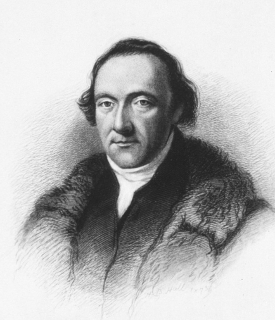
MacNeven is born on March 21, 1763, at Ballinahown, Aughrim, County Galway. The eldest of four sons, at the age of 12 MacNeven is sent by his uncle Baron MacNeven to receive his education abroad as the Penal Laws render education impossible for Catholics in Ireland. He makes his collegiate studies in Prague. His medical studies are made in Vienna where he is a pupil of Pestel and takes his degree in 1784. He returns to Dublin in the same year to practise.
In 1807, he delivers a course of lectures on clinical medicine in the recently established College of Physicians and Surgeons. Here in 1808, he receives the appointment of professor of midwifery. In 1810, at the reorganization of the school, he becomes the professor of chemistry, and in 1816 is appointed to the chair of materia medica. In 1826 with six of his colleagues, he resigns his professorship because of a misunderstanding with the New York Board of Regents and accepts the chair of materia medica at Rutgers Medical College, a branch of the New Jersey institution of that name, established in New York as a rival to the College of Physicians and Surgeons. The school at once becomes popular because of its faculty, but after four years is closed by legislative enactment on account of interstate difficulties. The attempt to create a school independent of the regents results in a reorganization of the University of the State of New York.
MacNeven, affectionately known as “The Father of American Chemistry,” dies in New York City on July 12, 1841. He is buried on the Riker Farm in the Astoria section of Queens, New York.
One of the oldest obelisks in New York City is dedicated to him in the Trinity Church, located between Wall Street and Broadway, New York. The obelisk is opposite to another commemorated for his friend Thomas Emmet. MacNeven’s monument features a lengthy inscription in Irish, one of the oldest existent dedications of this kind in the Americas.
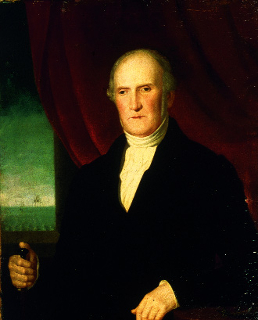
Mitchell is born in Dublin on April 13, 1780. His family moves to Belfast while he is a child. He receives his formal education at Belfast Academy where he excels in mathematics. He begins to notice that his eyesight is failing. By the age of 16 he can no longer read and by the age of 22 he is completely blind.
Undeterred, Mitchell borrows £100 and starts up a successful business making bricks in the Ballymacarrett area of Belfast. This enables him to start building his own houses and he completes approximately twenty in the city. It is during this period that his talent for inventing comes to the fore and he fabricates several machines for use in brickmaking and the building trade.
Mitchell patents the screw-pile in 1833, for which he later gains some fame. The screw-pile is used for the erection of lighthouses and other structures on mudbanks and shifting sands, including bridges and piers. His designs and methods are employed all over the world from the Portland, Mainebreakwater to bridges in Bombay. Initially it is used for the construction of lighthouses on Maplin Sands in the Thames Estuary in 1838, at Fleetwood Lancashire (UK) Morecambe Bay in 1839 and at Belfast Lough where his lighthouse is finished in July 1844.
In May 1851 Mitchell moves to Cobh to lay the foundation for the Spit Bank Lighthouse. The success of these undertakings leads to the use of his invention on the breakwater at Portland, the viaduct and bridges on the Bombay, Baroda and Central India Railway and a broad system of Indian telegraphs.
Alexander Mitchell dies at Glen Devis near Belfast on June 25, 1868, and is buried in the old Clifton graveyard in Belfast. His wife and daughter predecease him.
John Joly, Irish physicist famous for his development of radiation therapy in the treatment of cancer, is born in Bracknagh, County Offaly, on November 1, 1857. He is also known for developing techniques to accurately estimate the age of a geological period, based on radioactive elements present in minerals.
Joly is a second cousin of Charles Jasper Joly, the astronomer. He enters Trinity College, Dublin in 1876, graduating in Engineering in 1882 in first place with various special certificates in branches of engineering, at the same time obtaining a First-Class Honours in modern literature. He works as a demonstrator in Trinity’s Engineering and Physics departments before succeeding William Johnson Sollas in the Chair of Geology and Mineralogy in 1897, a position which he holds until his death in 1933.
Joly joins the Royal Dublin Society in 1881 while still a student and is a frequent contributor of papers. During his career he writes over 270 books and scientific papers.
On May 17, 1899, Joly reads his paper “An Estimate of the Geological Age of the Earth” to the Royal Dublin Society. In it, he proposes to calculate the age of the earth from the accumulation of sodium in the waters of the oceans. He calculates the rate at which the oceans should have accumulated sodium from erosion processes and determines that the oceans are about 80 to 100 million years old. The paper is quickly published, appearing four months later in the Society’s Scientific Transactions. Although this method is later considered inaccurate and is consequently superseded, it radically modifies the results of other methods in use at the time.
In 1903 he publishes an article in Nature in which he discusses the possibility of using radium to date the Earth and goes on to study the radioactive content of the Earth’s crust to formulate a theory of thermal cycles and examines the radioactive constituents of certain rocks as a means of calculating their age. Working in collaboration with Sir Ernest Rutherford, he uses radioactive decay in minerals to estimate, in 1913, that the beginning of the Devonian period could not be less than 400 million years ago, an estimate which is in line with modern calculations.
Joly serves as President of Section C (Geology) when the British Association for the Advancement of Science meets in Dublin in 1908, during which he presents his paper “Uranium and Geology” in an address to the society. This work describes radioactive materials in rocks and their part in the generation of the Earth’s internal heat.
Along with his friend Henry Horatio Dixon, Joly also puts forward the cohesion-tension theory which is now thought to be the main mechanism for the upward movement of water in plants.
In 1914 Joly develops a method of extracting radium and applies it in the treatment of cancer. As a Governor of Dr. Steevens’ Hospital in Dublin, in collaboration with Walter Stevenson, he devises radiation therapy methods and promotes the establishment by the Royal Dublin Society of the Irish Radium Institute where they pioneer the “Dublin method” of using a hollow needle for deep radiation therapy, a technique that later enters worldwide use. The Radium Institute also supplies capillary tubes containing radon to hospitals for some years for use in the treatment of tumours.
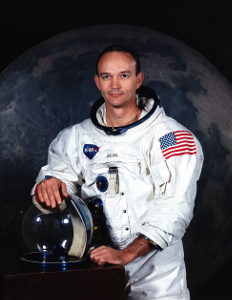
Collins makes the decision to become an astronaut after watching John Glenn‘s Mercury-Atlas 6 flight. He applies for the second group of astronauts that same year but is not accepted. Disappointed, but undaunted, Collins enters the USAF Aerospace Research Pilot School as the Air Force begins to research space. That year, NASA once again calls for astronaut applications, and Collins is more prepared than ever. In 1963 he is chosen by NASA to be part of the third group of astronauts.
Collins makes two spaceflights. The first, on July 18, 1966, is the Gemini 10 mission, where Collins performs a spacewalk. The second is the Apollo 11 mission on July 20, 1969, the first lunar landing in history. Collins, accompanied by Neil Armstrong and Edwin “Buzz” Aldrin, remains in the Command Module while his partners walk on the moon’s surface. Collins continues circling the moon until July 21, when Armstrong and Aldrin rejoin him. The next day, he and his fellow astronauts leave lunar orbit. They land in the Pacific Ocean on July 24. Collins, Armstrong and Aldrin are all awarded the Presidential Medal of Freedom by Richard Nixon. However, Aldrin and Armstrong end up receiving a majority of the public credit for the historic event, although Collins is also on the flight.
Collins leaves NASA in January 1970, and one year later, he joins the administrative staff of the Smithsonian Institution in Washington, D.C. In 1980, he enters the private sector, working as an aerospace consultant. In his spare time, Collins says he stays active and spends his days “worrying about the stock market” and “searching for a really good bottle of cabernet under ten dollars.”
Collins and his wife, Patricia Finnegan, have three children. The couple lived in both Marco Island, Florida, and Avon, North Carolina until her death in April 2014.
On April 28, 2021, Collins dies of cancer at his home in Naples, Florida, at the age of 90. Buzz Aldrin, who becomes the last survivor of Apollo 11, says that “wherever [Collins has] been or will be, you will always have the Fire to Carry us deftly to new heights and the future.”
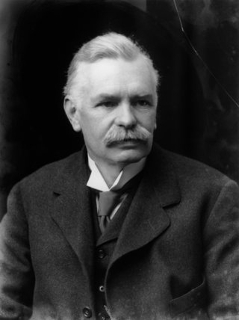
At the University of Glasgow, he does important work in the mathematical analysis of electricity and formulation of the first and second laws of thermodynamics and does much to unify the emerging discipline of physics in its modern form. He works closely with mathematics professor Hugh Blackburn in his work. He also has a career as an electrical telegraph engineer and inventor, which propels him into the public eye and ensures his wealth, fame and honour. For his work on the transatlantic telegraph project, he is knighted in 1866 by Queen Victoria, becoming Sir William Thomson. He has extensive maritime interests and is most noted for his work on the mariner’s compass, which had previously been limited in reliability.
Absolute temperatures are stated in units of kelvin in his honour. While the existence of a lower limit to temperature (absolute zero) is known prior to his work, Thomson is widely known for determining its correct value as approximately −273.15 degree Celsius or −459.67-degree Fahrenheit.
Thomson is ennobled in 1892 in recognition of his achievements in thermodynamics, and of his opposition to Irish Home Rule, becoming Baron Kelvin, of Largs in the County of Ayr. He is the first British scientist to be elevated to the House of Lords. The title refers to the River Kelvin, which flows close by his laboratory at the University of Glasgow. His home is the imposing red sandstone mansion Netherhall, in Largs. Despite offers of elevated posts from several world-renowned universities, Thomson refuses to leave Glasgow, remaining Professor of Natural Philosophy for over 50 years, until his eventual retirement from that post. The Hunterian Museum at the University of Glasgow has a permanent exhibition on the work of Thomson including many of his original papers, instruments and other artifacts such as his smoking pipe.
Always active in industrial research and development, he is recruited around 1899 by George Eastman to serve as vice-chairman of the board of the British company Kodak Limited, affiliated with Eastman Kodak.
In November 1907 he catches a chill, and his condition deteriorates until he dies at his Scottish residence, Netherhall, in Largs on December 17.
Lord Kelvin is an elder of St. Columba’s Parish Church (Church of Scotland) in Largs for many years. It is to that church that his remains are taken after his death. Following the funeral service, his body is taken to Bute Hall in his beloved University of Glasgow for a service of remembrance before being taken to London for interment at Westminster Abbey, near the final resting place of Sir Isaac Newton.
Ellison comes from a clerical family, his father Humphrey Eakins Ellison having been Dean of Ferns, County Wexford. He gains a sizarship of classics at Trinity College, Dublin in 1883, becomes a Scholar of the House in 1886 and graduates in 1887 with junior moderatorships in classics and experimental science. In 1890 he takes Holy Orders and moves to England, where he becomes the Curate of Tudhoe and Monkwearmouth. In 1894 he takes his MA and BD degrees and in the following year wins the Elrington Theological Prize.
In 1899 he returns to Ireland to become secretary of the Sunday School Society, a post which he holds for three years before accepting the incumbency of Monart, Enniscorthy, moving in 1908 to become Rector of Fethard-on-Sea with Tintern in Wexford. Ellison develops an interest in astronomy, having been introduced to practical optics by Dr. N. Alcock of Dublin and sets up his first observatory at Wexford. He becomes highly adept at making lenses and mirrors and writes several books and articles on the subject, including major contributions to the Amateur Telescope Making series, the Journal of the British Astronomical Association, and the weekly newspaper The English Mechanic. His book The Amateur’s Telescope (1920) is still considered a standard for telescope-makers and a forerunner of the more extensive series on the same topic by Albert Graham Ingalls.
On September 2, 1918 Ellison is appointed Director of the Armagh Observatory. He finds the Observatory in a state of disrepair and sets about repairing the instruments and the observatory dome. On January 3, 1919 he deeds a telescope of his own to the observatory, an 18-inch reflecting telescope, which is still there.
Ellison is a highly regarded planetary and binary star observer. Working with his son Mervyn, he makes many measurements of binary stars using the observatory’s 10-inch Grubbrefracting telescope and even discovers a new one close to Beta Lyrae, and according to Patrick Moore, is one of the few people to have observed an eclipse of Saturn’s moon Iapetus by Saturn’s outermost ring on February 28, 1919.
In 1934 Ellison becomes Canon and Prebendary of Ballymore, Armagh Cathedral. He dies on December 31, 1936, having held the office of Director of the observatory for nearly twenty years.