seamus dubhghaill

Promoting Irish Culture and History from Little Rock, Arkansas, USA


Leave a comment

Birth of Maureen Potter, Actor & Comedienne

maureen-potter

Maria Philomena Potter, singer, actor, comedian and performer known as Maureen Potter, is born on January 3, 1925 in Fairview, Dublin.

Potter is educated at St. Mary’s school in Fairview. She has a long career in Irish theatre, mainly as Ireland’s première comedienne, but also as a straight actress. She first appears professionally with Jimmy O’Dea in pantomime and appears frequently on television and in cabaret. She is a regular performer at the Gaiety Theatre in Dublin and for many years stars in Christmas pantomime. She becomes the first star to have a bronze cast of her handprints outside the theatre. She marries Jack O’Leary in 1959, an Irish army officer whom she had first met in 1943, and he writes most of her comedic material.

Among Potter’s many dramatic roles in the theatre is that of Maisie Madigan in Juno and the Paycock. While still a teenager, she tours abroad before World War II as a singer and dancer with Jack Hylton and his orchestra. On a tour of Germany, they once perform in front of Adolf Hitler and other Nazis. She plays the role of Dante Riordan in Joseph Strick‘s film, A Portrait of the Artist as a Young Man (1977). In September 1938, she appears on the BBC Television Service with Jack Hylton and his band. Film of her performance is held by the Alexandra Palace Television Society. In 2001, the Archivist of the Alexandra Palace Television Society gives Potter a copy of her 1938 television appearance.

Potter is conferred with the Freedom of the City of Dublin in 1984, and is later awarded an honorary degree from Trinity College, Dublin. She dies in her sleep at her home in Clontarf on April 7, 2004, at the age of 79. She is survived by her husband Jack O’Leary, and her sons John and Hugh.

Leave a comment

Birth of David Fulton, 4th Mayor of the Town of Little Rock

david-fulton

David Fulton, the fourth and final mayor of the Town of Little Rock, Arkansas, before it is incorporated, is born in the Parish of Templemore, County Donegal on January 2, 1771. He serves as mayor from January 1835 through November 1835, his term cut short by the transition of Little Rock from town to city status. Once that occurs in November 1835, a new election has to be held.

Fulton is also proprietor of the Tan Yard, a tanning operation in Little Rock. He later serves as a judge and is appointed as Surveyor General of Public Lands in Arkansas by U.S. President Martin Van Buren in 1838.

Fulton marries Elizabeth Savin in June 1795 in Maryland. She dies in November 1829, while they reside in Alabama. One of their children, William Savin Fulton (for whom Fulton County, Arkansas is named), serves as the fourth Territorial Governor of Arkansas in 1835 and 1836 and is one of Arkansas’ first United States Senators upon statehood in 1836. Fulton is serving as Mayor at the same time his son is Governor.

Fulton comes to Little Rock in 1833. His daughter, Jane Juliet Shall, and her four children come to Little Rock as well. The family makes the move to be nearer to the future governor. The Fultons and Shalls rent the Hinderliter House, now part of Historic Arkansas Museum, in 1834. One of his descendants, Louise Loughborough, is the person who saves the Hinderliter House from destruction and is founder of what is now Historic Arkansas Museum.

In addition to serving as Mayor, Fulton is president of the Anti-Gambling Society and a Pulaski County Justice of the Peace. From 1836 until 1838, he is County Judge of Pulaski County.

David Fulton dies in Little Rock on August 7, 1843 and is buried at Mount Holly Cemetery as are several other members of his family.

(From: “Little Rock Look Back: David Fulton, LR’s 4th Mayor” by Scott Whiteley Carter, Little Rock Culture Vulture blog, January 2, 2019)


Leave a comment

Birth of Charles O’Conor, Writer & Antiquarian

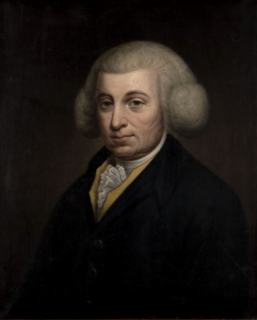
charles-o-conor-of-belanagareCharles O’Conor, Irish writer and antiquarian who is enormously influential as a protagonist for the preservation of Irish culture and history in the eighteenth century, is born on January 1, 1710 in Killintrany, County Sligo. He combines an encyclopaedic knowledge of Irish manuscripts and Gaelic culture in demolishing many specious theories and suppositions concerning Irish history.

O’Conor is born into a cadet branch of the land-owning family of O’Conor Don and is sent for his education to Father Walter Skelton’s school in Dublin. He grows up in an environment that celebrates Gaelic culture and heritage. He begins collecting and studying ancient manuscripts at an early age.

His marriage brings him financial stability so that he can devote himself to his writing, but he is widowed in 1750, within a year of his father’s death. When his eldest son Denis marries in 1760, he gives up the residence at Bellanagare to him and moves into a small cottage that he had built on the estate. He devotes the remainder of his life to the collection and study of Irish manuscripts, to the publication of dissertations, and especially to the cause of Irish and Catholic emancipation.

O’Conor is well known in Ireland from his youth as a civil-tongued, but adamant, advocate of Gaelic culture and history. He garners fame outside Ireland through his Dissertations on the ancient history of Ireland (1753), which is generally well received. When Samuel Johnson is made aware of it, he is moved to write a letter to O’Conor in 1755, complimenting the book, complimenting the Irish people, and urging O’Conor to write on the topic of Celtic languages.

The book is less well received in some Scottish circles, where there exists a movement to write Celtic history based upon Scottish origins. When James Macpherson publishes a spurious story in 1761 about having found an ancient Gaelic (and Scottish) cycle of poems by a certain “Ossian“, among the critics who rejects it as false is O’Conor, as an inclusion in the 1766 rewrite of his 1753 work. While the issue was laid to public rest by others, notably Samuel Johnson, the issue is laid to intellectual rest by O’Conor in 1775, with the publication of his Dissertation on the origin and antiquities of the antient Scots. The fact that the issue occurs provides O’Conor the opportunity to establish Ireland as the source of Gaelic culture in the minds of the non-Irish general public.

O’Conor’s later life is that of the respected dean of Irish historians. He continues to write as always in favour of ideas that he favours and are consistent with the historical record, and against any and all ideas that are inconsistent with the historical record, including those of other Irish historians. Such is his esteemed reputation that even those whom he challenges would include his challenges in the next edition of their own books. He continues to collect, study, and annotate Irish manuscripts. Upon his death in Bellanagare, County Roscommon on July 1, 1791, his collection becomes the first part of the Annals of the Four Masters at the Stowe Library. In 1883 these are returned to the Royal Irish Academy library.

His unfinished History of Ireland, that Johnson had encouraged in 1777, is destroyed on his instructions at his death.


Leave a comment

Birth of Francis Sylvester Mahony, Humorist & Journalist

francis-sylvester-mahony

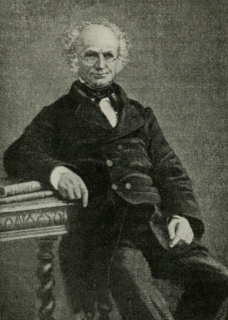
Francis Sylvester Mahony, Irish humorist and journalist also known by the pen name Father Prout, is born on December 31, 1804, in Cork, County Cork.

Mahony is born to Martin Mahony and Mary Reynolds. He is educated at the Jesuit Clongowes Wood College, in County Kildare, and later in the Abbey of Saint-Acheul, a similar school in Amiens, France and then at Rue de Sèvres, Paris, and later in Rome. He begins teaching at the Jesuit school of Clongowes as master of rhetoric but is soon after expelled. He then goes to London and becomes a leading contributor to Fraser’s Magazine, under the signature of “Father Prout” (the original Father Prout, whom Mahony knew in his youth, born in 1757, was parish priest of Watergrasshill, County Cork). At one point he is director of this magazine.

Mahony is witty and learned in many languages. One form which his humour takes is the professed discovery of the originals in Latin, Greek, or mediaeval French of popular modern poems and songs. Many of these jeux d’esprit are collected as Reliques of Father Prout. He pretends that these poems had been found in Fr. Prout’s trunk after his death. He wittily describes himself as “an Irish potato seasoned with Attic salt.” Later he acts as foreign correspondent to various newspapers, and during the last eight years of his life his articles form a main attraction of The Globe.

In his native Cork Mahoney is best remembered for his poem “The Bells of Shandon” and his penname is synonymous with the city and the Church of St. Anne, Shandon.

Mahony spends the last two years of his life in a monastery and dies on May 18, 1866, in Paris reconciled to the Church.

The Reliques of Father Prout originally appear in two volumes in 1836 with illustrations by Maclise. They are reissued in Henry George Bohn‘s Bohn’s Libraries in 1860. Another volume, Final Reliques, is edited by Douglas Jerrold and published in 1876. The Works of Father Prout, edited by Charles Kent, is published in 1881. Facts and Figures from Italy (1847) is made from his Rome letters to London’s The Daily News.


Leave a comment

March to Mark the 400th Anniversary of the O’Sullivan Beare Exodus

o-sullivan-beare-march-2002

On December 30, 2002, to mark the 400th anniversary of the exodus of the O’Sullivan Beare clan from West Cork to Leitrim, a group of 40 people begin walking the entire 260-mile route which takes them through eleven counties over a two-week period. Over the course of 15 days, the route takes them through Cork, Limerick, Tipperary, Offaly, Galway, Roscommon and Sligo.

The group, including O’Sullivan Beare descendants from the United States, set out from the ruins of Dunboy Castle, Castletownbere, which was the seat of the chieftain Donal Cam O’Sullivan Beare and was destroyed after the defeat of the Irish and Spanish forces in the Battle of Kinsale in 1602. Author Deirdre Purcell launches the march at 9:00 AM. The group meets up with others from Tuosist and Kenmare in the oak woods near Glengarriff in the evening to commemorate the gathering of the clan from the peninsula before setting off for Leitrim on their winter march exactly four hundred years earlier.

The group averages 15 miles per day, with the longest leg being 30 miles and the shortest just 6.5 miles. Many join the walk for local legs.

Among the walkers setting out for the entire route is Dara O’Sullivan, age 21, the first O’Sullivan in 400 years to walk the historic route, according to Jim O’Sullivan, the co-ordinator of the project. The chieftain of the O’Sullivan clan, Michael O’Sullivan, also participates in the march.

The walkers carry two wooden staffs upon which brass rings from each town and village along the route are placed. The clan staffs of each area are also collected. Of the 1,000 people who originally set out 400 years earlier, only 35, among them only one woman, arrive at their destination.

In the summer of 2002, a series of festivals and events supported by national tourism, heritage and cultural as well as community organisations are organised in recognition of the O’Sullivan Beare march.

Beara-Breifne Way, a trail that closely follows the line of the historical march of O’Sullivan Beare opens in 2004, forming part of the European Greenways network.


Leave a comment

The Constitution of Ireland Comes Into Force

constitution-of-ireland-1937

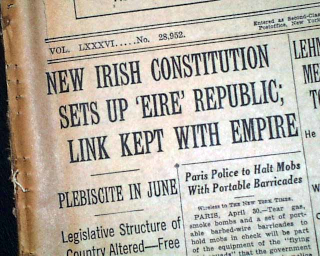
The Constitution of Ireland, the second constitution of the Irish state since independence, comes into force on December 29, 1937, following a statewide plebiscite held on July 1, 1937, replacing the 1922 Constitution of the Irish Free State. It asserts the national sovereignty of the Irish people. The constitution falls broadly within the tradition of liberal democracy, being based on a system of representative democracy. It guarantees certain fundamental rights, along with a popularly elected non-executive president, a bicameral parliament based on the Westminster system, a separation of powers and judicial review. The Constitution may be amended solely by a national referendum.

The Constitution of Ireland replaces the Constitution of the Irish Free State which had been in effect since the independence, as a dominion, of the Irish state from the United Kingdom on December 6, 1922. There are two main motivations for replacing the constitution in 1937. Firstly, the Statute of Westminster 1931 grants parliamentary autonomy to the six British Dominions (now known as Commonwealth realms) within a British Commonwealth of Nations. This has the effect of making the dominions sovereign nations in their own right. The Irish Free State constitution of 1922 is, in the eyes of many, associated with the controversial Anglo-Irish Treaty. The anti-treaty faction, who oppose the treaty initially by force of arms, is so opposed to the institutions of the new Irish Free State that it initially takes an abstentionist line toward them, boycotting them altogether. However, the largest element of this faction becomes convinced that abstentionism cannot be maintained forever. This element, led by Éamon de Valera, forms the Fianna Fáil party in 1926, which enters into government following the 1932 Irish general election.

After 1932, under the provisions of the Statute of Westminster, some of the articles of the original Constitution which were required by the Anglo-Irish Treaty are dismantled by acts of the Oireachtas of the Irish Free State. Such amendments remove references to the Oath of Allegiance, appeals to the United Kingdom’s Judicial Committee of the Privy Council, the British Crown and the Governor-General of the Irish Free State. The sudden abdication of Edward VIII in December 1936 is quickly used to redefine the Royal connection. Nevertheless, the Fianna Fáil government still desires to replace the constitutional document they see as having been imposed by the British government in 1922.

The second motive for replacing the original constitution is primarily symbolic. De Valera wants to put an Irish stamp on the institutions of government and chooses to do this in particular through the use of Irish Gaelic nomenclature.

The text of the draft constitution, with minor amendments, is approved on June 14, 1937, by Dáil Éireann, then the sole house of parliament as the Seanad had been abolished the previous year.

The draft constitution is then put to a plebiscite on July 1, 1937, the same day as the 1937 Irish general election, when it is passed by a plurality of 56% of the voters, comprising 38.6% of the whole electorate. The constitution formally comes into force on December 29, 1937.

Among the groups who oppose the constitution are supporters of Fine Gael and the Labour Party, Unionists, and some independents and feminists. The Seal of the President of Ireland is also adopted in the same year. Ireland does not become a republic until 1948.

(Pictured: Headline from The New York Times, May 1, 1937)


Leave a comment

Death of William Sampson, United Irishman, Author & Lawyer

william-sampson

William Sampson, member of the Society of United Irishmen, author and Irish Protestant lawyer known for his defence of religious liberty in Ireland and the United States, dies in New York City on December 28, 1836.

Sampson is born in Derry, County Londonderry, to an affluent Anglican family. He attends Trinity College Dublin and studies law at Lincoln’s Inn in London. In his twenties, he briefly visits an uncle in North Carolina. In 1790 he marries Grace Clark, and they have two sons, William and John, and a daughter, Catherine Anne.

Admitted to the Irish Bar, Sampson becomes Junior Counsel to John Philpot Curran and helps him provide legal defences for many members of the Society of United Irishmen. A member of the Church of Ireland, he is disturbed by anti-Catholic violence and contributes writings to the Society’s newspapers. He is arrested at the time of the Irish Rebellion of 1798, imprisoned, and compelled to leave Ireland for exile in Europe.

Shipwrecked at Pwllheli in Wales, Sampson makes his way to exile in Porto, Portugal, where he is again arrested, imprisoned in Lisbon, and then expelled. After living some years in France, and then Hamburg, he flees to England ahead of the approach of Napoleon‘s armies where he is re-arrested. After unsuccessfully petitioning for a return to Ireland, he arrives in New York City on July 4, 1806.

In the United States, Sampson successfully continues his career in the law, eventually sending for his family. He sets up a business publishing detailed accounts of the court proceedings in cases with popular appeal. In 1809 he reports on the case of a Navy Lieutenant Renshaw prosecuted for dueling. That same year he handles a case against Amos and Demis Broad, accused of brutally beating their slave, Betty, and her 3-year-old daughter where Sampson succeeded in having both slaves manumitted. The authorities in Ireland had disbarred Sampson, which causes him some bitter amusement, as it does not affect his work in the United States.

Sampson’s most important case in the United States is in 1813 and is referred to as “The Catholic Question in America.” Police investigating the misdemeanor of receiving stolen goods question the suspects’ priest, the Reverend Mr. Kohlman. He declines to give any information that he has heard in confession. The priest is called to testify at the trial in the Court of General Sessions in the City of New York. He again declines. The issue whether to compel the testimony is fully briefed and carefully argued on both sides, with a detailed examination of the common law. In the end, the confessional privilege is accepted for the first time in a court of the United States.

William Sampson dies on December 28, 1836, and is buried in the Riker Family graveyard on Long Island in what is now East Elmhurst, Queens, New York. He is later reinterred in Green-Wood Cemetery in Brooklyn, where he is now buried in the same plot as Matilda Witherington Tone and William Theobald Wolfe Tone, the wife and son of the Irish revolutionary Wolfe Tone, and his daughter Catherine, the wife of William Theobald Wolfe Tone.


4 Comments

Death of Pat Gillen, Irish D-Day Survivor

pat-gillen

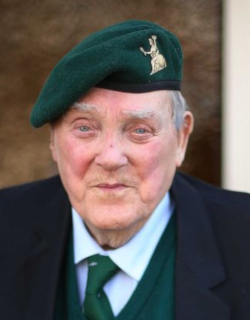
Former Commando Pat Gillen, one of the last surviving Irish D-Day veterans, dies at the age of 89 at his home in Cork, County Cork on December 27, 2014. He is among the first wave of troops to land on Sword Beach in Normandy on June 6, 1944.

A rifleman in the 6 Commando unit charged with securing the strategically important Pegasus Bridge near Caen, Gillen is never injured despite making a six-mile trek through marshland from the beach to Caen and spending weeks in the trenches at Saulnier. More than half his brigade falls in the face of vicious fire from German forces.

On his return to Ireland, Gillen applies for a job as a male stenographer with Ford Motor Company in Cork, where the company’s first plant outside the United States employs thousands of workers in the 1930s. Having studied Pitman shorthand, typing and bookkeeping at school, he is called for an interview that includes a shorthand test in which the only word “I could just not get right was carburetor.”

Not alone does Gillen land the job with the U.S. car and tractor firm, he also meets Rita, the daughter of his B&B landlady, whom he marries two years later. Blessed with a lively sense of humour, he has a natural flair for getting on with people and is assigned to Ford’s public relations division.

Gillen’s ease when dealing with journalists is an attribute that serves him well during an 11-year spell as Ford’s press officer, especially in the turbulent times leading up to its decision to close the Cork manufacturing plant in 1984, when he also retires after 38 years with the company.

A witty, unassuming man, Gillen’s abiding interests are gardening, his twelve grandchildren, the FCA, and letter-writing to wartime comrades, a practice he keeps up until weeks before his death.

On December 8, 2014, just over two weeks before his death and surrounded by his family in an emotional ceremony at the Mercy University Hospital in Cork, Gillen is presented with the Chevalier de la Légion d’honneur by the French ambassador to Ireland, Jean-Pierre Thébault, in recognition of his courage and gallantry in the liberation of France. It is the highest French honour.

With characteristic generosity, Gillen dedicates the medal to fellow countrymen, including two cousins who fought in but did not survive World War II. “This award is as much theirs as mine,” he said. “By the grace of God, I survived to be here today while many of my friends sleep in the fields of France.”

At the time of his passing Gillen is surrounded by his family. Predeceased by Rita, he is survived by their four children, Robin, Mary, Patricia, and Gerard, his sister, Mary, and brothers Michael (“Chick”), Liam and Bobby. His sister Angela Scully also predeceases him.

(From: D-Day veteran who became Ford’s PR man in Cork, The Irish Times, January 17, 2015)


Leave a comment

Birth of Dion Boucicault, Playwright & Actor

dionysius-boucicault

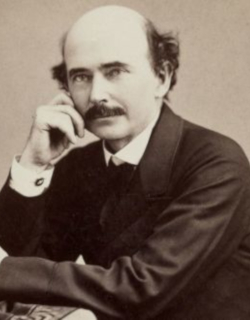
Dionysius Lardner “Dion” Boucicault, Irish American playwright and actor and a major influence on the form and content of American drama, is born in Dublin on December 26, 1820.

Educated in England, Boucicault begins acting in 1837 and in 1840 submits his first play to Lucia Elizabeth Vestris at Covent Garden, however it is rejected. His second play, London Assurance (1841), which foreshadows the modern social drama, is a huge success and is frequently revived into the 20th century. Other notable early plays were Old Heads and Young Hearts (1844) and The Corsican Brothers (1852).

In 1853 Boucicault and his second wife, Agnes Robertson, arrive in New York City, where his plays and adaptations are long popular. He leads a movement of playwrights that produces in 1856 the first copyright law for drama in the United States. His play The Poor of New York, based on the panics of 1837 and 1857, has a long run at Wallack’s Theatre in 1857 and is presented elsewhere as, for example, The Poor of Liverpool. The Octoroon (1859) causes a sensation with its implied attack on slavery.

Boucicault and his actress wife join Laura Keene’s theatre in 1860 and begin a series of his popular Irish plays — The Colleen Bawn, or The Brides of Garryowen (1860), Arrah-na-Pogue (1864), The O’Dowd (1873), and The Shaughraun (1874). Returning to London in 1862, he provides Joseph Jefferson with a successful adaptation of Rip Van Winkle (1865). In 1872 he returns to the United States, where he remains, except for a trip to Australia that results in his third marriage (for which he renounced the legitimacy of his second marriage). Among his associates in the 1870s is the young David Belasco. At the time of his death on September 18, 1890, in New York City, he is a poorly paid teacher of acting. He is buried in Mount Hope Cemetery, Hastings, Westchester County, New York.

About 150 plays are credited to Boucicault, who, as both writer and actor, raises the stage Irishman from caricature to character. To the American drama he brings a careful construction and a keen observation and recording of detail. His concern with social themes prefigures the future development of drama in both Europe and America.

(Pictured: Dionysius Boucicault, taken 1890 or before. Photograph: Harvard Theatre Collection/Wikimedia Commons)


Leave a comment

Birth of Brigadier General Thomas Alfred Smyth

thomas-alfred-smyth

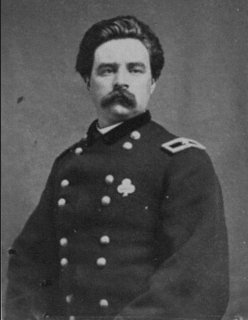
Thomas Alfred Smyth, brigadier general in the Union Army during the American Civil War, is born in Ballyhooly, County Cork on December 25, 1832. He is the last Union general killed in the war. In March 1867, he is nominated and confirmed a brevet major general of volunteers posthumously to rank from April 7, 1865.

Smyth works on his father’s farm in Ireland as a youth. He emigrates to the United States in 1854, settling in Philadelphia, Pennsylvania. He participates in William Walker‘s expedition to Nicaragua. He is employed as a wood carver and coach and carriage maker. In 1858, he moves to Wilmington, Delaware.

In 1861 Smyth enlists in the Union army in an Irish American three-months regiment, the 24th Pennsylvania, and is quickly made a captain. He is later commissioned as a major of the 1st Delaware Infantry, a three-years regiment. He serves at the battles of Chancellorsville and Fredericksburg, following which he is promoted to lieutenant colonel and then to colonel. During the Gettysburg campaign, he commands the 2nd Brigade, 3rd Division of the II Corps. During the Battle of Gettysburg, his men help defend Cemetery Ridge and advance to the area of the Bliss farm to oust enemy sharpshooters. He is wounded on the third day of the battle and relinquishes command briefly.

Smyth retains brigade command during the reorganization of II Corps before Ulysses S. Grant‘s Overland Campaign. He leads the second brigade of the first division from March 25 to May 17, 1864. When Colonel Samuel S. Carroll is wounded, Smyth is transferred to his command, the third brigade of second division, the Gibraltar Brigade. In October 1864, he is promoted to brigadier general during the Siege of Petersburg. He retains command of his brigade throughout the siege.

Between July 31, 1864, and August 22, 1864, and between December 23, 1864, and February 25, 1865, Smyth commands the 2nd division of the corps. In April 1865 near Farmville, Virginia, he is shot through the mouth by a sniper, with the bullet shattering his cervical vertebra and paralyzing him. He dies two days later at Burke’s Tavern, concurrent with the surrender of Robert E. Lee and his Confederate States Army at Appomattox Court House.

On March 18, 1867, President Andrew Johnson nominates Smyth for posthumous appointment to the grade of brevet major general of volunteers to rank from April 7, 1865, the date he was mortally wounded, and the United States Senate confirms the appointment on March 26, 1867. He is the last Union general killed or mortally wounded during the war and is buried in Wilmington and Brandywine Cemetery in Wilmington, Delaware.