In 1948 he is joint composer of music for a song in a play by Irish playwrightTeresa Deevy called Light Falling. This is performed by the Abbey Experimental Theatre Company in the Peacock Theatre, Dublin.
The Gerard Victory Commission is a prize named in his honour that is awarded to the most promising individual composer.
Gerard Victory dies in Dublin on March 14, 1995. His papers are held in Trinity College and a number of his scores are held at the Contemporary Music Centre.
Samuel Madden, writer, economist, and philanthropist commonly called “Premium” Madden, is born in Dublin on December 23, 1686. His father is John Madden, and his mother is Mary Molyneux.
In 1729, Madden writes a tragedy entitled Themistocles, the Lover of His Country. In 1733, he writes Memoirs of the Twentieth Century, one of the first science fiction novels. However, it is suppressed by Sir Robert Walpole, and is now very rare. A reprint of the original sheets appears with publishing company Garland Science in 1972 (ISBN 0824005708). The work is originally designed to have six volumes yet is discontinued after the first volume.
In 1738, Madden writes his most famous work, Reflections and Resolutions Proper for the Gentlemen of Ireland, in which he describes the poor living conditions in Ireland at the time.
Dr. Samuel Johnson writes of Madden, “His was a name which Ireland ought to honour.” He suggests that the Royal Dublin Society initiate a scheme to fund improvements in agriculture and arts in Ireland via the use of premiums – the source of his nickname Premium.
Samuel Madden dies at the age of 79 on December 31, 1765, at Manor Waterhouse in County Fermanagh.
(Pictured: Portrait of Samuel Madden wearing clerical robes, Oil on Canvas,Philip Hussey (Irish, 1713–1783))
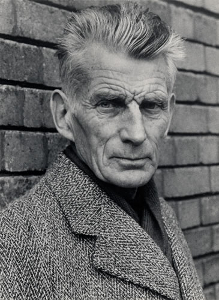
Beckett is born on Good Friday, April 13, 1906, in Foxrock, Dublin. His father, William Frank Beckett, works in the construction business and his mother, Maria Jones Roe, is a nurse. Beckett attends Earlsfort House School in Dublin and then, at age 14, he goes to Portora Royal School, the same school attended by Oscar Wilde. He receives his bachelor’s degree from Trinity College, Dublin in 1927. In his youth he periodically experiences severe depression keeping him in bed until mid-day. This experience later influences his writing.
In 1928, Beckett finds a welcome home in Paris where he meets and becomes a devoted student of James Joyce. In 1931, he embarks on a restless sojourn through Great Britain, France and Germany. He writes poems and stories and does odd jobs to support himself. On his journey, he comes across many individuals who inspire some of his most interesting characters.
In 1937, Beckett settles in Paris. Shortly thereafter, he is stabbed by a pimp after refusing his solicitations. While recovering in the hospital, he meets Suzanne Dechevaux-Dumesnuil, a piano student in Paris. The two become life-long companions and eventually marry. After meeting with his attacker, Beckett drops the charges, partly to avoid the publicity.
During World War II, Beckett’s Irish citizenship allows him to remain in Paris as a citizen of a neutral country. He fights in the resistance movement until 1942 when members of his group are arrested by the Gestapo. He and Suzanne flee to the unoccupied zone until the end of the war.
After the war, Beckett is awarded the Croix de Guerre for bravery during his time in the French resistance. He settles in Paris and begins his most prolific period as a writer. In five years, he writes Eleutheria, Waiting for Godot, Endgame, the novels Molloy, Malone Dies, The Unnamable, and Mercier et Camier, two books of short stories, and a book of criticism.
Beckett’s first publication, Molloy, enjoys modest sales, but more importantly praise from French critics. Soon, Waiting for Godot, achieves quick success at the small Theatre de Babylone putting Beckett in the international spotlight. The play runs for 400 performances and enjoys critical praise.
Beckett writes in both French and English, but his most well-known works, written between World War II and the 1960s, are written in French. Early on he realizes his writing has to be subjective and come from his own thoughts and experiences. His works are filled with allusions to other writers such as Dante Alighieri, René Descartes, and James Joyce. Beckett’s plays are not written along traditional lines with conventional plot and time and place references. Instead, he focuses on essential elements of the human condition in dark humorous ways. This style of writing has been called “Theater of the Absurd” by Martin Esslin, referring to poet Albert Camus’ concept of “the absurd.” The plays focus on human despair and the will to survive in a hopeless world that offers no help in understanding.
The 1960s are a period of change for Beckett. He finds great success with his plays across the world. Invitations come to attend rehearsals and performances which lead to a career as a theater director. In 1961, he secretly marries Suzanne Dechevaux-Dumesnuil who takes care of his business affairs. A commission from the BBC in 1956 leads to offers to write for radio and cinema through the 1960s.
Beckett continues to write throughout the 1970s and 1980s, mostly in a small house outside Paris. There he can give total dedication to his art of evading publicity. In 1969, he is awarded the Nobel Prize in Literature, though he declines accepting it personally to avoid making a speech at the ceremonies. However, he should not be considered a recluse. He often times meets with other artists, scholars and admirers to talk about his work.
By the late 1980s, Beckett is in failing health and is moved to a small nursing home. His wife Suzanne dies on July 17, 1989. His life is confined to a small room where he receives visitors and writes. Suffering from emphysema and possibly Parkinson’s disease, he dies on December 22, 1989.
Samuel Haughton, scientist, mathematician, and doctor, is born in Carlow, County Carlow on December 21, 1821. He is “famous” for calculating the drop required to kill a hanged man instantly.
Haughton has a distinguished career at Trinity College, Dublin and in 1844 he is elected a fellow. Working on mathematical models under James MacCullagh, he is awarded in 1848 the Cunningham Medal by the Royal Irish Academy. In 1847 he has his ordination to the priesthood, but he is not someone who preaches. He is appointed as professor of geology at Trinity College in 1851 and holds the position for thirty years. He begins to study medicine in 1859. He earns his MD degree in 1862 from the University of Dublin.
Haughton becomes registrar of the Medical School. He focuses on improving the status of the school and representing the university on the General Medical Council from 1878 to 1896. In 1858 he is elected fellow of the Royal Society. He gains honorary degrees from Oxford, Cambridge and Edinburgh. At Trinity College Dublin he moves the first-ever motion at the Academic Council to admit women to the University on March 10, 1880. Through his work as Professor of Geology and his involvement with the Royal Zoological Society, he has witnessed the enthusiasm and contribution of women in the natural sciences. Although thwarted by opponents on the Council he continues to campaign for the admission of women to TCD until his death in 1897. It is 1902 before his motion is finally passed, five years after his death.
In 1866, Haughton develops the original equations for hanging as a humane method of execution, whereby the neck is broken at the time of the drop, so that the condemned person does not slowly strangle to death. “On hanging considered from a Mechanical and Physiological point of view” is published in the London, Edinburgh, and Dublin Philosophical Magazine and Journal of Science, Vol. 32 No. 213 (July 1866), calling for a drop energy of 2,240 ft-lbs. From 1886 to 1888, he serves as a member of the Capital Sentences Committee, the report of which suggests an Official Table of Drops based on 1,260 ft-lbs. of energy.
Haughton is president of the Royal Irish Academy from 1886 to 1891, and secretary of the Royal Zoological Society of Ireland for twenty years. In 1880 he gives the Croonian Lecture on animal mechanics to the Royal Society.
Haughton is also involved in the Dublin and Kingstown Railway company, in which he looks after the building of the first locomotives. It is the first railway company in the world to build its own locomotives.
Samuel Haughton dies on October 31, 1897, and is buried in the Church of the Holy Cross Cemetery in Killeshin, County Laois.
The UDA is formed in September 1971 during one of the most violent phases of The Troubles right after internment without trial is introduced when a number of Loyalist Defense groups combine together. They form a paramilitary wing, the UFF, in 1972 so the organisation can use the UFF name to carry out violent acts and kill people while keeping the UDA name legal by not involving the UDA name with attacks.
The UDA/UFF claim to be combating the Provisional Irish Republican Army (IRA) but approximately 85% of its victims are innocent Catholic civilians. The UDA carries out its first killing on April 20, 1972, when they shoot dead taxi driver Gerard Donnelly in Ardoyne, Belfast. In October, the group is responsible for the deaths of two small girls when they detonate a car bomb outside an Irish nationalist pub in Sailortown, Belfast. The girls killed are Clare Hughes, age 4, and Paula Strong, age 6.
On December 20, 1972, along the Strabane Old Road, Annie’s Bar is packed with customers watching a football match. At about 10:30 PM two men from the UDA burst into the bar, one of them carrying a Sterling submachine gun and the other holding a pistol. Both are wearing hoods to disguise their identities. The men instantly and indiscriminately spray the main room in the bar with bullets. The attack is reported to have lasted less than a minute, but it still manages to leave five people dead, and four others wounded. Those killed in the attack are all males and include, Charlie McCafferty (31), Frank McCarron (58), Charles Moore (31), Barney Kelly (26) and Michael McGinley (37). At the time this is the largest and most deadly attack carried out by the UDA. They do not carry out another attack of this size until February 1992, when they shoot dead five civilians and injure nine in the Sean Graham bookmakers’ shooting on the Ormeau Road in Belfast.
The year 1972 in Derry begins with the Bloody Sunday shooting which occurs in the Bogside area and ends with the Annie’s Bar shooting. Nobody is ever charged in connection with the Annie’s Bar murders, although in recent years relatives of those murdered have been calling for a fresh investigation to take place.
The attack is carried out by members from the UDA’s “North Antrim & Londonderry Brigade.” Although this is one of the UDA’s smaller brigades it also carries out the October 1993 Greysteel massacre which is the UDA’s worst ever attack, in which eight people are killed and 19 others are injured. The Greysteel shooting happens about 9-10 miles away from Annie’s Bar.
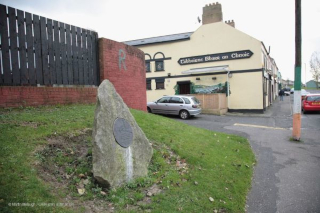
(Pictured: Annie’s Bar Memorial stone located at Strabane Old Road, Top of the Hill, Waterside, Derry, County Derry, Northern Ireland. Annie’s Bar is in the background. Photo taken by Martin Melaugh, November 20, 2008.)
Seven Republican fighters, all from County Kildare, are executed in the Glasshouse in the Curragh Camp on December 19, 1922. The Glasshouse is a small stone and brick military prison where the military usually houses their own prisoners. It consists of two floors enclosed within a twelve foot high walled enclosure with cells for 64 prisoners. During the Irish Civil War, and afterwards, it is used as a punishment block for Republican prisoners.
The seven, Patrick Bagnall, Patrick Mangan, Joseph Johnston, Bryan Moore, Patrick Nolan, Stephen White and James O’ Connor, are all veteran Irish Republican Army (IRA) men and belong to a column of ten which operates against railways, goods trains and some shops in the vicinity of Kildare. Five of them are involved in the derailment of engines at Cherryville on December 11 when they make a serious attempt to dislocate the whole railway service on the Great Southern and Western Railway. Two engines are taken out of a shed at Kildare and sent down the line by Cherryville. One engine runs out of steam and does no harm, while the other overturns and blocks the line for a considerable time.
The column is also responsible for an ambush on National troops at the Curragh Siding on November 23 when a large party of troops are returning to Dublin after escorting prisoners to the Curragh Camp. On their return journey the troops are fired on at the Curragh Siding and two are wounded. In the confusion a policeman is accidentally shot by a National soldier.
The seven, along with Commandant Thomas Behan, are found in a dug-out at Mooresbridge, on the edge of the Curragh, on the night of December 13. They are under the command of Commandant Bryan Moore, a veteran IRA officer, and comprise a section of the 6th Battalion Column. They are armed with rifles bought from a soldier stationed in Naas Barracks.
When they surrender, Behan is struck with a rifle butt, breaking his arm. When the captives are ordered into the back of a truck he cannot climb aboard because of his arm. He is struck again on the head with a rifle butt and dies at the scene.
The remaining seven men are charged before a Military Committee with being in possession, without proper authority, of ten rifles, 200 rounds of ammunition, four bomb detonators and one exploder. They are found guilty and sentenced to death. Father Donnelly, chaplain to the troops, administers to the seven volunteers before their executions. They are executed one by one by firing squad on the morning of December 19 and are buried in the yard adjacent to the Glasshouse.
Hely-Hutchinson enters the Army as a cornet in the 18th Royal Hussars in 1774, rising to a lieutenant the following year. In 1776 he is promoted to become a captain in the 67th (South Hampshire) Regiment of Foot, and a major there in 1781. He moves regiments again in 1783, becoming a lieutenant-colonel in, and colonel-commandant of, the 77th Regiment of Foot, which is, however, disbanded shortly afterwards following an earlier mutiny. He spends the next 11 years on half-pay, studying military tactics in France before serving as a volunteer in the Flanders campaigns of 1793 as aide-de-camp to Sir Ralph Abercromby.
Hely-Hutchinson is second-in-command of the 1801 expedition to Egypt, under Abercromby. Following Abercromby’s death in March after being wounded at the Battle of Alexandria, he takes command of the force. From then he is able to besiege the French firstly at Cairo which capitulates in June and then besieges and takes Alexandria, culminating in the capitulation of over 22,000 French soldiers. In reward for his successes there, the Ottoman SultanSelim III makes him a Knight, 1st Class, of the Order of the Crescent.
On December 18, 1801, Hely-Hutchinson is created Baron Hutchinson in the Peerage of the United Kingdom, gaining a seat in the House of Lords. In recognition of his “eminent services” during the “late glorious and successful campaign in Egypt,” at the request of the King, the Parliament of the United Kingdom settles on Lord Hutchinson and the next two succeeding male heirs of his body an annuity of £2000 per annum, paid out of the Consolidated Fund.
Hely-Hutchinson is promoted lieutenant-general in September 1803 and made a full general in June 1813. In 1806, he becomes colonel of the 57th (West Middlesex) Regiment of Foot, transferring in 1811 to be colonel of the 18th Regiment of Foot, a position he holds until his death. He also holds the position of Governor of Stirling Castle from 1806 until his death.
Hely-Hutchinson sits as Member of Parliament (MP) for Lanesborough from 1776 to 1783 and for Taghmon from 1789 to 1790. Subsequently, he represents Cork City in the Irish House of Commons until the Act of Union 1800 and is then member for Cork City in the after-Union Parliament of the United Kingdom until 1802.
Hely-Hutchinson dies on June 29, 1832, never having married.
Harrison goes to Westminster School and then to Balliol College, Oxford. While there he develops an admiration for Charles Stewart Parnell and becomes secretary of the Oxford University Home Rule League. At this time, the Land War is in progress and in 1889 he goes to Ireland to visit the scene of the evictions in Gweedore, County Donegal. He becomes involved in physical confrontations with the Royal Irish Constabulary and as a result becomes a Nationalist celebrity overnight. The following May, Parnell offers the vacant parliamentary seat of Mid Tipperary to Harrison, who leaves Oxford at age 22, to take it up, unopposed.
Only six months later, following the divorce case involving Katharine O’Shea, the Irish Parliamentary Party splits over Parnell’s leadership. Harrison strongly supports Parnell, acts as his bodyguard and aide-de-camp, and after Parnell’s death devotes himself to the service of his widow Katharine. From her he hears a completely different version of the events surrounding the divorce case from that which had appeared in the press, and this is to form the seed of his later books.
Harrison then makes a return to Irish politics, working with Sir Horace Plunkett as Secretary of the Irish Dominion League, an organisation campaigning for dominion status for Ireland within the British Empire. He is a lifelong opponent of Irish partition. He is Irish correspondent of The Economist from 1922 to 1927 and owner-editor of Irish Truth from 1924 to 1927.
Harrison’s two books defending Parnell are published in 1931 and 1938. They have had a major impact on Irish historiography, leading to a more favourable view of Parnell’s role in the O’Shea affair. F. S. L. Lyons comments that he “did more than anyone else to uncover what seems to have been the true facts” about the Parnell-O’Shea liaison. The second book, Parnell, Joseph Chamberlain and Mr Garvin, is written in response to J. L. Garvin‘s biography of Joseph Chamberlain, which had ignored his first book, Parnell Vindicated: The Lifting of the Veil. Later, he successfully repulses an attempt in the official history of The Times to rehabilitate that newspaper’s role in using forged letters to attack Parnell in the late 1880s. In 1952 he forces The Times to publish a four-page correction written by him as an appendix to the fourth volume of the history.
During the difficult years of the Anglo-Irish Trade War over the land purchase annuities, declaration of the Republic, Irish neutrality during World War II, and departure from the Commonwealth, Harrison works to promote good relations between Britain and Ireland. He publishes various books and pamphlets on the issues in dispute and writes numerous letters to The Times. He also founds, with General Sir Hubert Gough, the Commonwealth Irish Association in 1942.
At the time of his death on February 20, 1954, Harrison is the last survivor of the Irish Parliamentary Party led by Parnell, and as a member of the pre-1918 Irish Parliamentary Party, he seems to have been outlived only by John Patrick Hayden, who dies a few months after him in 1954 and by Patrick Whitty and John Lymbrick Esmonde who are only MPs for a very short time during World War I. He is buried in Holywood, County Down.
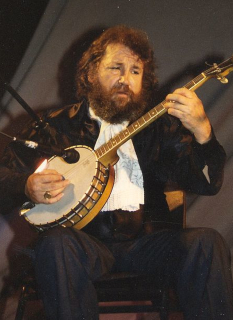
McKenna plays the banjo from an early age, initially because he cannot afford to buy the instrument of his choice, a mandolin. He is a member of The Dubliners from 1962 and is the only living member of the original formation at the time of his death. Prior to joining the Dubliners, he spends a few months in The Chieftains. In addition to his work on traditional Irish music, he also plays jazz on occasion.
McKenna uses GDAE tuning on a 19-fret tenor banjo, an octave below fiddle/mandolin and, according to musician Mick Moloney, is single-handedly responsible for making the GDAE-tuned tenor banjo the standard banjo in Irish music.
McKenna remains a great favourite with live audiences, and some of the loudest and most affectionate applause follows the tunes and songs on which he is the featured performer. He is well known for his unaccompanied renditions of songs such as “South Australia” and “I Wish I Had Someone to Love Me.” His banjo solos on tunes such as “The Maid Behind the Bar,” “The High Reel” and “The Mason’s Apron,” where he is usually accompanied by Eamonn Campbell on guitar, are often performed to cries of “C’mon Barney!” from audience or band members. Another featured spot in Dubliners performances is the mandolin duet that he plays with John Sheahan, again with Eamonn Campbell providing guitar accompaniment. As he often points out to the audience, “It’s an Irish duet, so there’s three of us going to play it.”
McKenna’s tendency to relate funny, and often only marginally believable, stories is legendary amongst Dubliners fans and friends. These anecdotes become known as Barneyisms, and his friend and former Dubliners bandmate Jim McCann collects them for the book An Obstacle Confusion: The Wonderful World of Barney McKenna.
McKenna dies unexpectedly on the morning of April 5, 2012 after collapsing in the kitchen of his home in Howth, County Dublin. He is buried at St. Loman’s Cemetery in Trim, County Meath, on April 9, 2012. Initially it is unclear whether The Dubliners will continue their 50th Anniversary Tour in the wake of McKenna’s death. However they soon confirm that they would “do their best to honour all the concert dates for the rest of the year [2012].”
Early on the morning of December 15, Major General Arthur Henry Seton Hart-Synnot, commander of the 5th (Irish) Infantry Brigade, gives his men half an hour’s parade ground drill, then leads them in close column towards the Bridle Drift. However, his locally recruited guide, who speaks no English, leads the brigade towards the wrong ford, the Punt Drift at the end of a loop in the river. Louis Botha, commander of the Boers on this front, orders his men to hold their fire until the British attempt to cross the river. However Hart-Synnot’s brigade, jammed into the loop of the river, is too good a target to miss and the Boers open fire. Hart-Synnot’s brigade suffers over 500 casualties before they can be extricated. The battalions repeatedly try to extend to the left and locate the Bridle Drift. On each occasion, Hart-Synnot recalls them and sends them back into the loop.
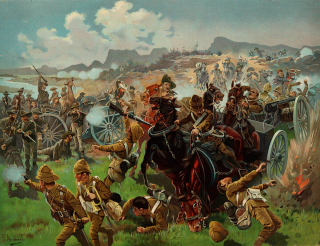
Meanwhile, as Major-General Henry J. T. Hildyard moves his 2nd Infantry Brigade towards Colenso, the two batteries of field guns under Colonel Charles James Long forge ahead of him and deploy in the open well within rifle range of the nearest Boers. Once again, this is too tempting a target, and the Boers open fire. The British gunners fight on, even though suffering heavy casualties, but ammunition cannot be brought to them and they are eventually forced to take shelter in a dry stream bed behind the guns. The bullock-drawn naval guns have not been able to keep up with the field pieces, but are able to come into action 1,500 metres from the Boer trenches.
General Sir Redvers Buller, who has also heard that his light horse are pinned down at the foot of the hill known as Hlangwane south of the river and unable to advance, decides to call the battle off at this point, even though Hildyard’s men, advancing in open order, have just occupied Colenso. He goes forward, being slightly wounded himself, and calls for volunteers to recover Long’s guns. Two teams approach them, hook up and bring away two weapons. A second attempt to recover the rest of guns fails when horses and volunteers are shot down by Boer rifle fire.
During the afternoon, the British fall back to their camp, leaving ten guns, many wounded gunners and some of Hildyard’s men behind to be captured during the night. Although Buller had committed few of his reserves, he reasons that a full day under a boiling sun would have sapped their morale and strength. Major General Neville Lyttelton (4th Infantry Brigade) commits some of his troops to help Hart’s brigade withdraw, but the cautious Major General Geoffrey Barton (6th Infantry Brigade) refuses to support Lord Dundonald‘s or Hildyard’s hard-pressed troops.
Buller’s army loses 143 killed, 756 wounded and 220 captured. Boer casualties are eight killed and 30 wounded.
After the battle of Colenso, four soldiers are awarded the Victoria Cross, the highest decoration for gallantry that can be awarded to British forces. All crossed an exposed area of intense Boer fire and rescued two of the twelve guns of the 14th and 66th Batteries when their crews had become casualties or were driven from their weapons. They are Captain Walter Norris Congreve, Captain Harry Norton Schofield, Corporal George Edward Nurse and Lieutenant Frederick Hugh Sherston Roberts, son of Field Marshal Frederick Sleigh Roberts, who died of his wounds two days later.
(Pictured: Boers capturing the British guns at the Battle of Colenso on December 15, 1899 in the Boer War. Picture by Fritz Neumann.)

 The prolific Irish composer Thomas Joseph Gerard Victory is born in Dublin on December 24, 1921. He writes over two hundred works across many genres and styles, including tonal, serial, aleatoric and electroacoustic music.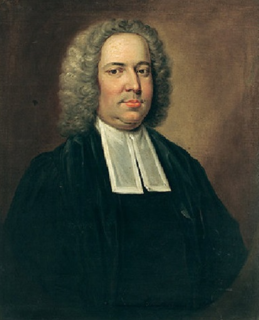



 On December 15, 1899, Irish units of the
  seamus dubhghaill