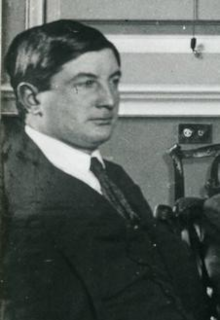
Ó Máille is critical of the proposed Irish Boundary Commission and resigns from Cumann na nGaedheal and founds a new political party called Clann Éireann in 1926.
On each of these occasions Ó Máille is subjected to a smear campaign by his former party colleagues who his pro-Treaty stance during the civil war against him. It is alleged that he had personally selected his fellow county man Liam Mellows for execution. These smears persist despite denials from the Mellows family and from Ó Máille himself. In fact, Mellows is executed in reprisal for the attack on Ó Máille and Sean Hales on December 8, 1922.
Ó Máille serves as a Fianna Fáil Senator in Seanad Éireann from 1934 to 1936. He is re-elected to the new Seanad in 1938 on the Agricultural Panel. From 1939 until his death in 1946 he is re-appointed to the Seanad as a nominee of the TaoiseachÉamon de Valera. He is Leas-Chathaoirleach (Deputy chairman) of the Seanad from May to November 1938.
Ó Máille dies on January 19, 1946. Accorded a guard of honour by the Dublin brigade, he is buried at Glencullen Cemetery, County Dublin.
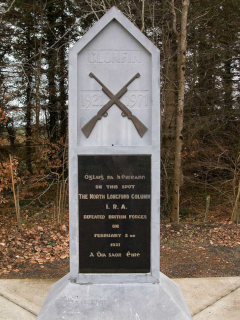
The Clonfin Ambush is carried out by the Irish Republican Army (IRA) on February 2, 1921, during the Irish War of Independence. It takes place in the townland of Clonfin between Ballinalee and Granard in County Longford. The IRA ambushes two lorries carrying members of the British Auxiliary Division, sparking a lengthy gun battle in which four Auxiliaries are killed and eight wounded. The Auxiliaries eventually surrender, and their weapons are seized. The IRA commander, Seán Mac Eoin, wins some praise for helping the wounded Auxiliaries. Following the ambush, British forces burn a number of houses and farms in the area, and shoot dead an elderly farmer.
The IRA’s North Longford Flying Column, twenty-one strong and led by Seán Mac Eoin, is formed in late 1920. In that year they kill four Royal Irish Constabulary (RIC) constables. In November, a company of the Auxiliary Division – a paramilitary police force made up of ex-military officers – has been stationed in the county to put down the local IRA and are reinforced in January 1921. Whereas previously the IRA had tried to operate in relatively large numbers, often attacking police barracks, from this point forward, their GHQ in Dublin orders smaller but more frequent attacks to be made.
The ambush site, on the road between Granard and Ballinalee, is well chosen. Mac Eoin selects a position where the ambushers have excellent cover and are barely visible to the British. The plan is to explode a mine as the lorries pass. The British assessment is that “the ambush was most cleverly laid.”
The IRA detonates the roadside improvised explosive device (IED) as two British lorries are passing a bridge, killing the driver of the first lorry instantly. The IRA unit then opens fire on the lorries, triggering a firefight lasting two hours. One of the Auxiliaries gets away and manages to summon reinforcements.
During the fighting, four members of the IRA party work their way around the flank of the Auxiliaries, killing their commander, Lt. Commander Francis Craven. After his death, the remaining policemen surrender. A total of four Auxiliaries are killed and eight wounded.
MacEoin’s treatment of his prisoners is humane. He congratulates them on the fight they had put up and prevents his fighters from assaulting the Auxiliaries. He also has water brought from nearby houses for the British wounded. When he is later captured by the British, three Auxiliaries testify at his court-martial to his generous treatment of them at Clonfin. Mac Eoin’s humane treatment reportedly delays the IRA’s getaway, and they are almost caught by 14 lorries of British reinforcements as they escape across Clonfin Wood. The IRA had captured 18 rifles, 20 revolvers ammunition, a Lewis gun and 800 rounds of ammunition.
In the aftermath of the ambush, British forces raid the nearby towns of Killoe, Ballinamuck, Drumlish, Ballinalee, Edgeworthstown, Granard and Ardagh. A number of houses and farms are burned. They shoot dead an elderly farmer, Michael Farrell, in reprisal for the ambush.
The IRA flying column lays low after the ambush and does not attempt any more attacks until the end of the month. MacEoin, the Longford IRA leader, is captured at Mullingar railway station in early March and charged with the murder of RIC DI MGrath. He is released in July under the terms of the Truce which ends hostilities. In his absence, the Longford IRA are not able to sustain the intensity of their campaign.
A stone monument is erected at the site of the ambush in 1971 to mark the 50th anniversary of the event. The IRA combatants are MacEoin (Ballinalee), Sean Duffy (Ballinalee), James J. Brady (Ballinamuck), Tom Brady (Cartronmarkey), Paddy Callaghan (Clonbroney), Seamus Conway (Clonbroney), Pat Cooke (Tubber), Seamus Farrelly (Purth), Paddy Finnegan (Molly), Larry Geraghty (Ballymore), Mick Gormley (Killoe), Hugh Hourican (Clonbroney), Jack Hughes (Scrabby), Mick Kenny (Clonbroney), Paddy Lynch (Colmcille), John McDowell (Clonbroney), Jack Moore (Streete), Mick Mulligan (Willsbrook), Michael F. Reynolds (Killoe), Sean Sexton (Ballinalee) and Jim Sheeran (Killoe).
(Pictured: The stone monument located at Clonfin, near the village of Ballinalee, County Longford, marking the site of the ambush. Erected in 1971 to mark the 50th anniversary of the event, the limestone monument features strong military, anti-British language and symbolism.)
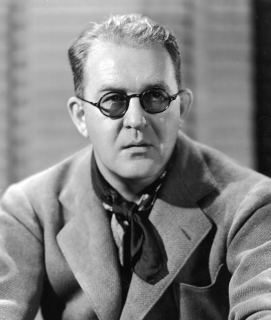
From an early age Ford has an interest in painting and sailing, and in July 1914 moves to California, where his older brother Francis is an actor with a small film company. Adopting the name ‘Jack Ford,’ he learns his trade as a filmmaker and acts in a number of silent pictures. Reveling in his Irish heritage, he makes his director’s debut with The Tornado (1917) and follows it with more than forty movies over the next six years. On July 3, 1920, he marries Mary McBryde Smith, a former officer in the army medical corps. They meet at a party thrown by the director Rex Ingram and have one son and one daughter.
In 1921 Ford visits Ireland for the first time and later claims to have travelled on the same boat that brought Michael Collins back from the treaty negotiations. He meets his relatives at Spiddal, falls in love with the countryside, and becomes a fervent Irish nationalist. It is later claimed that he brought over funds for his cousin Martin Feeney, a member of an Irish Republican Army (IRA) flying column.
Returning to Hollywood, Ford becomes friends with the retired marshal Wyatt Earp and makes a number of commercially successful films, now as ‘John Ford’. In 1926 he directs The Shamrock Handicap, a horse-racing yarn partly set in Ireland. In 1928 he shoots Mother Machree, a movie about Irish emigration, starring Victor McLaglen, a regular collaborator. McLaglen also stars in Hangman’s House, made the same year, Ford’s first major movie about Ireland.
In 1934 Ford purchases a luxury yacht which he names the Araner after the Aran Islands. He also begins shooting The Informer, a film set in Ireland during the Irish War of Independence, and based on a short novel by Liam O’Flaherty. The picture is a major box office success and wins four Academy Awards, including Best Director. O’Flaherty is so impressed with the film that he dedicates his next book, Famine, to Ford.
In 1934 Ford visits Ireland for the second time, and approaches Seán O’Casey about directing a version of The Plough and the Stars. Released in 1936, the film stars Barry Fitzgerald as Fluther, but it is reedited by the studio, much to Ford’s fury, and is a commercial and critical flop.
In 1952 Ford returns to Ireland to film The Quiet Man, starring Wayne, McLaglen, and Maureen O’Hara. Shot at Ashford Castle, County Mayo, the picture becomes one of the most popular Irish films of all time. He is immensely proud of the work and is in tears leaving Ireland. The following year he makes Mogambo, with Clark Gable, Grace Kelly and a young English actor, Donald Sinden, who later recalls that Ford berated him personally for all the problems of Ireland from the time of William of Orange. Ford’s strong sense of Irishness is central to his character and is crucial for any understanding of his work. Back in Ireland in 1956, he shoots The Rising of the Moon, a portmanteau film for which he takes no salary, starring Tyrone Power, Cyril Cusack, and Noel Purcell. A minor film, it makes no impact at the box office.
Two of Ford’s finest movies are made in his later years. The Searchers (1956) is a powerful study of vengeance, while The Man Who Shot Liberty Valance (1962) is an elegiac revisionist western which concludes with the famous line, “When the legend becomes fact, print the legend.”
Struck with cancer in his final years, Ford dies on August 31, 1973 at his home in Palm Desert, California, and is buried at Holy Cross Cemetery, Culver City. His will disinherits his son, Michael Patrick Roper, and leaves everything to his wife, daughter, and grandchildren.
When asked to name the finest American directors, Orson Welles replies simply, “John Ford, John Ford, and John Ford.” An alcoholic, Ford is a difficult and often tyrannical director, but he makes films of extraordinary power and vision. He ranks as one of the greatest film-makers of the twentieth century. As Frank Capra concludes, “John is half-tyrant, half-revolutionary; half-saint, half-Satan; half-possible, half-impossible; half-genius, half-Irish.”
(From: “Ford, John,” contributed by Patrick M. Geoghegan, Dictionary of Irish Biography, http://www.dib.ie)
Gearóid O’Sullivan, soldier and politician, is born on January 28, 1891, at Coolnagrane, near Skibbereen, County Cork, fourth son among six sons and three daughters of Michael O’Sullivan, farmer, of Loughine, and Margaret Sullivan (née McCarthy) of Coolnagrane.
Christened Jeremiah but known in later life as Gearóid, O’Sullivan is an outstanding pupil at national school and secondary school in Skibbereen. Encouraged by his teachers, he acquires a love of the Irish language. Not yet ten, he joins the Gaelic League in Skibbereen in October 1900. He takes part in the Oireachtas debates of 1909. In 1911 he qualifies at St. Patrick’s College, Dublin, as a national schoolteacher and teaches at Kildorrery, County Cork, but returns to Dublin in 1912 to take up a post at St. Peter’s National School, Phibsborough. He takes an honours degree in Celtic studies at University College Dublin (UCD) (1913), an H.Dip.Ed. (1914), and an M.Ed. (1915). At the same time, he is an organiser and teacher with the Gaelic League, a member of its Keating branch at Parnell Square, Dublin, and a founder of the League’s “fáinne” proficiency badge.
O’Sullivan joins the F Company, 1st Battalion, Dublin Brigade of the Irish Volunteers at their foundation in November 1913, is aide-de-camp to Seán Mac Diarmada during the 1916 Easter Rising and is ordered by Patrick Pearse to raise the flag of rebellion over the General Post Office (GPO) stronghold in Dublin. Interned at Frongoch internment camp in Wales after the rising, he belongs to the Irish Republican Brotherhood (IRB) group of prisoners closely linked with Michael Collins, a proximity that continues throughout the crisis years to follow. Released in the amnesty of December 1916, he intensifies his Volunteer activity, playing a prominent role in Carlow Brigade, for which he is briefly detained while working as a teacher at St. Mary’s Knockbeg College, County Carlow. When the Irish Volunteers become the Irish Republican Army (IRA) in 1919, he is arrested again and goes on hunger strike at Mountjoy Prison, which leads to his release. Active throughout the Irish War of Independence (1919–21) and narrowly avoiding recapture during meetings with Collins, he joins the supreme council of the IRB in November 1921, remaining there for the remainder of his military career.
From February 1920, O’Sullivan replaces Collins as adjutant general of the IRA, a position he retains until the Anglo–Irish Treaty of December 1921 (which he supports), resuming it a month later as a lieutenant general of the new National Army, responsible for personnel and promotions. He is also elected to Dáil Éireann for Carlow–Kilkenny in 1921 and again in 1922, retiring in 1923. His intellectual and organisational abilities guarantee that his position within the army is safe after the death in August 1922 of Collins, to whom he owes much for his initial rise to prominence. On August 28 he is appointed to the newly created army council, whose most draconian prerogative becomes the military execution of republican prisoners.
After the Irish Civil War (1922–23), wholesale demobilisation of officers and other ranks takes place, but O’Sullivan and his council colleagues Richard Mulcahy, Seán Mac Mahon, and Seán Ó Murthuile survive the fiscal axe. Their privileged position angers some officers, led by Major GeneralLiam Tobin, alarmed at the rate of demobilisation and the state’s apparent abandonment of Collins’s republican ideals. Through the Irish Republican Army Organisation, they deplore the devaluation of their pre-treaty IRA service and the retention of certain former British Army officers and instructors. O’Sullivan’s brief time as adjutant general places him in the role of personnel manager. As the Defence Forces (Temporary Provisions) Act, 1923, transforms the National Army into the defence forces of an Irish dominion, he is clearly in the sights of those who disagree with how these forces took shape.
As demobilisation continues and former British personnel become more evident, O’Sullivan and his colleagues become targets of suspicion that a hostile IRB clique had controlled the army council since its formation after the death of Collins. Exaggerated or not, such claims precipitate the army crisis of March 1924, in which O’Sullivan personally orders a raiding party under Colonel Hugo MacNeill to arrest its leaders. To defuse the crisis, he and his army council colleagues are forced to stand down, while the arrested dissidents are summarily retired. The subsequent army inquiry (April–June 1924) absolves him and his colleagues of any wrongdoing, but their active military careers are over. O’Sullivan, however, is for some time secretary of the military service pensions board.
Civilian life treats O’Sullivan well, as he enters a legal career and in 1926 is called to the bar. In 1927 he is appointed Judge Advocate General and remains so until 1932. After the assassination of Minister for JusticeKevin O’Higgins in July 1927, he fills the vacated Dublin County seat in a by-election in August, retaining it at subsequent elections until 1937. In August 1928 he is a Free State delegate to the Empire Parliamentary Association conference in Canada. Openly supporting Gen. Eoin O’Duffy and the short-lived ‘Blueshirts’ vanguard of the fledgling Fine Gael party during 1933–34, he pointedly refuses to surrender his legally held revolver when gardaí demand it as a precaution against a feared Blueshirt coup d’étât. In 1937 he becomes a barrister on the western circuit, and in 1940 commissioner for special purposes of the income tax acts, a post he holds for life.
O’Sullivan lives at St. Kevin’s Park, Dartry, Dublin, where he dies at the age of 57 on March 26, 1948. His military funeral to Glasnevin Cemetery, with his coffin draped in the same flag that had covered the coffin of Michael Collins, reflects his high national profile.
In 1922, O’Sullivan marries Maude Kiernan, sister of Kitty Kiernan and daughter of Peter and Bridget Kiernan, whose family is closely involved with the Irish political leadership, notably Michael Collins and Harry Boland. After Maude’s death he marries Mary Brennan of Belfast. They have three daughters and a son, all of whom survive him. O’Sullivan is commemorated in County Cork by a plaque at Skibbereen town hall.
Gobnait Ní Bhruadair, Irish republican and lifelong radical, dies in Sneem, County Kerry, on January 16, 1955. She campaigns passionately for causes as diverse as the reform of nursing, protection and promotion of the Irish language and the freedom of Ireland from British rule.
Ní Bhruadair is born the Hon. Albinia Lucy Brodrick on December 17, 1861, at 23 Chester Square, Belgrave, London, the fifth daughter of William Brodrick, 8th Viscount Midleton (1830–1907), and his wife, Augusta Mary (née Freemantle), daughter of Thomas Fremantle, 1st Baron Cottesloe. She spends her early childhood in London until the family moves to their country estate in Peper Harow, Surrey in 1870. Educated privately, she travels extensively across the continent and speaks fluent German, Italian and French, and has a reading knowledge of Latin.
The polar opposite of Ní Bhruadair, her brother is consistent in his low opinion of the Irish and holds imperialist views that warmly embrace much of the jingoism associated with social Darwinism. The young Albinia Lucy Brodrick conforms to her familial political views on Ireland, if her authorship of the pro-Unionist song “Irishmen stand” is an indicator. However, by the start of the twentieth century she becomes a regular visitor to her father’s estate in County Cork. There she begins to educate herself about Ireland and begins to reject the views about Ireland that she had been raised on. In 1902 she writes about the need to develop Irish industry and around the same time she begins to develop an interest in the Gaelic revival. She begins to pay regular visits to the Gaeltacht where she becomes fluent in Irish and is horrified at the abject poverty of the people.
From this point on, Ní Bhruadair’s affinity with Ireland and Irish culture grows intensely. Upon her father’s death in 1907 she becomes financially independent and in 1908 purchases a home near West Cove, Caherdaniel, County Kerry. The same year she establishes an agricultural cooperative there to develop local industry. She organises classes educating people on diet, encourages vegetarianism and, during the smallpox epidemic of 1910, nurses the local people. Determined to establish a hospital for local poor people, she travels to the United States to raise funds.
There Ní Bhruadair takes the opportunity to study American nursing, meets leading Irish Americans and becomes more politicised to Ireland’s cause. Upon her return to Kerry, she establishes a hospital in Caherdaniel later in 1910. She renames the area Ballincoona (Baile an Chúnaimh, ‘the home of help’), but it is unsuccessful and eventually closes for lack of money. She writes on health matters for The Englishwoman and Fortnightly, among other journals, is a member of the council of the National Council of Trained Nurses and gives evidence to the royal commission on venereal disease in 1914.
Along with Dr. Kathleen Lynn she works with the Irish White Cross to distribute food to the dependents of IRA volunteers. By the end of the Irish War of Independence she has become hardened by the suffering she has seen and is by now implacably opposed to British rule in Ireland. She becomes one of the most vociferous voices against the Anglo-Irish Treaty of December 6, 1921. She becomes a firebrand speaker at meetings in the staunchly republican West Kerry area. In April 1923 she is shot by Irish Free State troops and arrested. She is subsequently imprisoned in the North Dublin Union, where she follows the example of other republicans and goes on hunger strike. She is released two weeks later. Following the formation of Fianna Fáil by Éamon de Valera in 1926, she continues to support the more hardline Sinn Féin.
In October 1926 Ní Bhruadair represents Munster at the party’s Ardfheis. She owns the party’s semi-official organ, Irish Freedom, from 1926–37, where she frequently contributes articles and in its later years acts as editor. Her home becomes the target of the Free State government forces in 1929 following an upsurge in violence from anti-Treaty republicans against the government. She and her close friend Mary MacSwiney leave Cumann na mBan following the decision by its members at their 1933 convention to pursue social radicalism. The two then establish an all-women’s nationalist movement named Mná na Poblachta, which fails to attract many new members.
Ní Bhruadair continues to speak Irish and regularly attends Conradh na Gaeilge branch meetings in Tralee. Although sympathetic to Catholicism, she remains a member of the AnglicanChurch of Ireland, and regularly plays the harmonium at Sneem’s Church of Ireland services. Described by a biographer as “a woman of frugal habits and decided opinions, she was in many ways difficult and eccentric.” She dies on January 16, 1955, and is buried in the Church of Ireland graveyard in Sneem, County Kerry.
In her will Ní Bhruadair leaves most of her wealth (£17,000) to republicans “as they were in the years 1919 to 1921.” The vagueness of her bequest leads to legal wrangles for decades. Finally, in February 1979, Justice Seán Gannon rules that the bequest is void for remoteness, as it is impossible to determine which republican faction meets her criteria.
Diarmuid O’Hegarty (Ó hÉigeartuigh), civil servant and revolutionary, is born Jeremiah Stephen Hegarty on December 26, 1892, in Lowertown, Skibbereen, County Cork, the eldest of seven children of Jeremiah Hegarty (1856–1934) and his wife Eileen (née Barry), both teachers. He is educated at the Christian Brothers school, St. Patrick’s Place, Cork, joins the civil service in 1910 and is posted to the Department of Agriculture and Technical Instruction, acquiring invaluable administrative experience as private secretary to T. P. Gill, secretary of the department.
O’Hegarty is a member of the Keating branch of the Gaelic League and the closely associated Teeling circle of the Irish Republican Brotherhood (IRB). In 1913 he becomes secretary and stage manager of a troupe of Gaelic players, Na hAisteoirí, which includes several who later become prominent revolutionaries: Piaras Béaslaí, Gearóid O’Sullivan, Fionán Lynch, and Con Collins. As second lieutenant of F Company, 1st Battalion, Dublin Brigade, Irish Volunteers, during the Easter Rising, he is in charge of barricades in Church Street, Mary Lane, Mary’s Abbey, and Jameson Distillery, an area which sees fierce fighting. Imprisoned in Knutsford (May 1-18), he is released in error and returns to his post in the civil service. On his return he is a key figure in the reorganisation of the Volunteers and IRB, becoming a member of the executive of the IRB’s supreme council along with Michael Collins and Seán Ó Murthuile. He also becomes a central figure in Kathleen Clarke‘s prisoner support group, the Irish Volunteer Dependents Fund, and when it amalgamates with the more moderate Irish National Aid Association to form the INA&VDF in August 1916, he helps to ensure that it is dominated by republicans.
O’Hegarty is very close to Michael Collins and Harry Boland and in 1918 this IRB triumvirate exercises considerable control in the nomination of Sinn Féin candidates for the 1918 Irish general election. In the same year he is dismissed from the civil service for refusing to take the oath of allegiance, but his administrative talents find ample outlet in the secretariat of the revolutionary Dáil and later in the service of the Irish Free State to such an extent that he has been called ‘the civil servant of the revolution’ and ‘the Grey Eminence of the Free State Government.’ As clerk of the First Dáil and secretary to the Dáil cabinet (1919–21), he is largely responsible for its success, organising meetings of the clandestine parliament and coordinating the work of various departments from his offices on the corner of O’Connell Street and Abbey Street and later in Middle Abbey Street. He is determined that the Dáil will demonstrate its worth by ‘functioning as any progressive government would be expected to function.’ He records the minutes and handles all correspondence of the Dáil cabinet. As the conduit through which the Dáil’s ministers communicate, his role is central to the effective operation of government on the run. The influence this gives him within the revolutionary movement is bolstered by his senior role within the IRB and the positions of military significance which he occupies. He is a member of the Volunteer Executive (Jun 1916–Nov 1921), Irish Republican Army (IRA) Director of Communications (Jul 1918–Mar 1920), and Director of Organisation (Mar 1920–Apr 1921). When convicted of illegal assembly and jailed in Mountjoy Prison (Nov 1919–Feb 1920), he immediately wields power within the prison, ordering Noel Lemass off a hunger strike.
O’Hegarty resigns his military duties in April 1921 to concentrate on his work in the Dáil secretariat and serves as secretary to the Irish delegation during the Anglo–Irish Treaty negotiations in London (Oct–Dec 1921). He is a vital voice for the Treaty within the IRB and is appointed secretary to the cabinet of the Provisional Government in 1922, participating in the unsuccessful army unification talks of May 1922. During the Irish Civil War, he is briefly seconded from his civil service post to serve as military governor of Mountjoy Prison (Jul-Aug 1922), where he threatens that prisoners who persist in leaning out of windows and talking to the public outside the prison will be shot. Peadar O’Donnell, who is a prisoner there at the time, remembers him as the focus of much ‘republican bitterness.’ A member of the army council during the Irish Civil War, he serves as Director of Organisation (Jul–Dec 1922) and Director of Intelligence (Dec 1922–May 1923), leaving the army with the rank of lieutenant general on May 1, 1923, to resume his civil service career.
O’Hegarty is secretary to the Executive Council of the Irish Free State (1923–32) and principal private secretary to its president, W. T. Cosgrave. Again, he records the cabinet minutes and is the administrative pivot upon which government turns. He serves as secretary to numerous governmental delegations and is widely praised for his work in this role at the 1926 Imperial Conference and the 1930 Imperial Conference. In 1927 he goes to New York to represent the government at a hearing into the fate of republican funds in the United States. His career is the prime example of the influence of revolutionary veterans within the higher civil service in the early years of the state. After the change of government following the 1932 Irish general election, he is one of the very few senior civil servants who is effectively removed from his position. He is appointed to be a commissioner of public works, becoming chairman in 1949, a position he holds until his retirement in 1957. In 1939–40 he serves on the Economy Committee established by the government to advise on wartime spending, and in 1941 is a member of a tribunal of inquiry into public transport, which is principally concerned with the poor financial state of Great Southern Railways.
On April 27, 1922, with Michael Collins as his best man, O’Hegarty marries Claire Archer, daughter of Edward Archer, a post office telegraph inspector from Dublin, and Susan Archer (née Matthews). Her brother is William (Liam) Archer. They live at 9 Brendan Road, Donnybrook, Dublin.
O’Connell is born to Jeremiah Ambrose and Winifred O’Connell. He is nicknamed “Ginger” because of his red hair. His father is a national school inspector, so the family lives in Sligo, Derry, Longford and Belfast, and he attends a succession of primary schools. He studies at University College Dublin (UCD) where he receives a BA and a first-class MA. He is a member of the Literary and Historical Society at UCD and has an interest in boxing.
O’Connell is living in Cavan with his father, his sister Mary Margaret, his brother John Aloysius and two servants, Mary Burke and Rose Anne O’Reilly, at the time of the 1911 census, when he is 23. He is working as a Solicitor’s Apprentice, can read and write as well as speak both English and Irish, and is single. His mother is not living as it is recorded that his father is a widower.
O’Connell spends some time in the United States Army, serving with the 69th New York Infantry Regiment between 1912 and 1914. He returns to Ireland in 1914 and joins the Irish Volunteers, becoming Chief of Inspection in 1915. He travels the country organising volunteer corps, as well as contributing to the Irish Volunteer’s journal and delivering lectures on military tactics to both the Volunteers and Fianna Éireann. He also delivers a series of lectures about the famous Irish battles to the Gaelic League in Dublin. He is not a member of the Irish Republican Brotherhood (IRB) as he believes that soldiers should not be a part of secret societies.
During the Irish War of Independence, O’Connell is a member of the Irish Republican Army (IRA) headquarters staff, as Assistant Director of Training and, after the killing of Dick McKee in 1920, as Director of Training. He coordinates, and is the principal lecturer, for a training course for military officers. The course is run clandestinely in the premises of the Topographical Society on Gardiner Street in Dublin. A sympathetic doorkeeper allows the group in at night when the society is not present. Topics delivered by O’Connell include tactics, ordinance and engineering.
In the IRA split after Dáil Éireann ratifies the Anglo-Irish Treaty, O’Connell takes the pro-Treaty side. He is made Deputy Chief of Staff in the National Army. On June 26, 1922, he is kidnapped by anti-treaty forces in reprisal for the arrest of an anti-treaty officer. His kidnapping is a precipitating factor in the formal outbreak of the Irish Civil War, when government pro-treaty forces two days later attack anti-treaty forces occupying the Four Courts. He survives the fighting and spends the rest of the civil war as General Officer Commanding the Curragh Command.
Following the Irish Civil War, the National Army is reorganised, and as part of that O’Connell is demoted from general to colonel. He subsequently holds a variety of positions: chief lecturer in the army school of instruction (1924–1929); director of no. 2 (intelligence) bureau (1929–1932); OC Irish Army Equitation School (March–June 1932); quartermaster-general (1932–1935) and director of the military archives (1935–1944). He also publishes articles on Irish and foreign military history and tactics in his time as a military historian. He marries Gertrude McGilligan, and they have two children together – one son and one daughter.
O’Connell dies of a heart attack at the age of 56 on February 19, 1944.
Barrett is the son of Richard Barrett, farmer, and Ellen Barrett (née Henigan). Educated at Knocks and Knockskagh national schools, he enters the De La Salle College, Waterford, where he trains to be a teacher. Obtaining a first-class diploma, he first teaches at Ballinamult, County Waterford but then returns to Cork in early 1914 to take up a position at the St. Patrick’s Industrial School, Upton. Within months he is appointed principal of Gurrane National School. Devoted to the Irish language and honorary secretary of KnockavillaGAA club, he does much to popularise both movements in the southern and western districts of Cork. He appears to have been a member of the Cork Young Ireland Society.
Through planning and participating in raids and gunrunning episodes, Barrett comes into close contact with many GHQ staff during the Irish War of Independence, thereby ensuring his own rapid promotion. He is an active Irish Republican Army (IRA) brigade staff officer and occasionally acts as commandant of the West Cork III Brigade. He also organises fundraising activities for the purchase of weapons and for comrades on the run. In July 1920, following the arrest of the Cork III Brigade commander Tom Hales and quartermaster Pat Harte, he is appointed its quartermaster. He is arrested on March 22, 1921, and imprisoned in Cork jail, later being sent to Spike Island, County Cork.
As one of the senior officers held in Spike Island, Barrett is involved in many of the incidents that occur during his time there. After the truce is declared on July 11, 1921, some prisoners go on hunger strike, but he calls it off after a number of days on instructions from outside as a decision had been made that able-bodied men are more important to the cause. In November, Barrett escapes by rowboat alongside Moss (Maurice) Twomey, Henry O’Mahoney, Tom Crofts, Bill Quirke, Dick Eddy and Paddy Buckley.
Following the Irish War of Independence, Barrett supports the Anti-Treaty IRA‘s refusal to submit to the authority of Dáil Éireann (civil government of the Irish Republic declared in 1919). He is opposed to the Anglo-Irish Treaty and calls for the total elimination of English influence in Ireland. In April 1922, under the command of Rory O’Connor, he, along with 200 other hardline anti-treaty men, take over the Four Courts building in the centre of Dublin in defiance of the new Irish government. They want to provoke British troops, who are still in the country, into attacking them. They hope this will restart the war with Britain and reunite the IRA against their common enemy. Michael Collins tries desperately to persuade O’Connor and his men to vacate the building. However, on June 28, 1922, after the Four Courts garrison had kidnapped J. J. O’Connell, a general in the new National Army, Collins’s soldiers shell the Four Courts with British artillery to spark off what becomes known as the Battle of Dublin. O’Connor surrenders following two days of fighting, and Barrett, with most of his comrades, is arrested and held in Mountjoy Gaol. This incident marks the official outbreak of the Irish Civil War, as fighting escalates around the country between pro- and anti-treaty factions.
After the death of Michael Collins in an ambush, a period of tit-for-tat revenge killings ensues. The government implements martial law and enacts the necessary legislation to set up military courts. In November, the government begins to execute Anti-Treaty prisoners, including Erskine Childers. In response, Liam Lynch, the Anti-Treaty Chief of Staff, gives an order that any member of the Dáil who had voted for the ‘murder legislation’ is to be shot on sight.
On December 7, 1922, Teachta Dála (TD) Sean Hales is killed by anti-Treaty IRA men as he leaves the Dáil. Another TD, Pádraic Ó Máille, is also shot and badly wounded in the incident. An emergency cabinet meeting is allegedly held the next day to discuss the assassination of Hales. It is proposed that four prominent members of the Anti-Treaty side currently held as prisoners be executed as a reprisal and deterrent. The names put forward were Barrett, O’Connor, Liam Mellows and Joe McKelvey. It is alleged that the four are chosen to represent each of the four provinces – Munster, Connacht, Leinster and Ulster respectively, but none of the four is actually from Connacht. The executions are ordered by Minister for JusticeKevin O’Higgins. At 2:00 AM on the morning of December 8, 1922, Barrett is awoken along with the other three and informed that they are all to be executed at 8:00 that morning.
Ironies stack one upon the other. Barrett is a member of the same IRA brigade as Hales during the Anglo-Irish War, and they were childhood friends. O’Connor had been best man at O’Higgins’ wedding a year earlier. The rest of Sean Hales’ family remains staunchly anti-Treaty, and publicly denounces the executions. In reprisal for O’Higgins’ role in the executions, the Anti-Treaty IRA kills his father and burns his family home in Stradbally, County Laois. O’Higgins himself dies by an assassin’s hand on July 10, 1927.
The executions stun Ireland, but in terms of halting the Anti-Treaty assassination policy, they have the desired effect. The Free State government continues to execute enemy prisoners, and 77 official executions take place by the end of the war.
Barrett is now buried in his home county, Cork, following exhumation and reinternment by a later government. A monument is erected by old comrades of the West Cork Brigade, the First Southern Division, IRA, and of the Four Courts, Dublin, garrison in 1922 which is unveiled on December 13, 1952, by the TánaisteSeán Lemass.
Fermanagh County Council is formed under orders issued in accordance with the Local Government (Ireland) Act 1898 which comes into effect on April 18, 1899. Elections are held using proportional representation until 1922 when it is abolished in favour of first-past-the-post voting. On December 15, 1921, shortly before the partition of Ireland and transfer of power from the Dublin Castle administration, Fermanagh County Council passes a resolution on a 13–10 majority not to recognise the newly formed Parliament of Northern Ireland and pledges their allegiance to the unrecognised republicanSecond Dáil of the self-proclaimed Irish Republic in Southern Ireland before the ratification of the Anglo-Irish Treaty. The resolution states, “We, the County Council of Fermanagh, in view of the expressed desire of a large majority of people in this county, do not recognise the partition parliament in Belfast and do hereby direct our Secretary to hold no further communications with either Belfast or British Local Government Departments, and we pledge our allegiance to Dáil Éireann.” In response, the Royal Irish Constabulary evict them from their council offices and confiscate official documents. As a result, the council is temporarily dissolved. The council are replaced by Commissioners appointed by Sir Dawson Bates.
The council is reformed by the time of the 1924 Northern Ireland local elections. As a protest against the abolition of proportional representation nationalist parties boycott the election, allowing unionist parties to take control of the council uncontested. Due to the abolition of proportional representation and gerrymandering, the council always has a unionist majority of councillors elected up until abolition. In 1967, the Government of Northern Ireland passes the County Fermanagh (Transfer of Functions) Order 1967. This makes Fermanagh County Council amalgamate with the smaller Enniskillen Borough Council and the rural district councils in Enniskillen, Irvinestown and Lisnaskea to turn Fermanagh County Council into a unitary authority.
In 1969, the Fermanagh Civil Rights Association publishes a booklet criticising the council and accusing them of favouring the Protestant community over the Catholic community. Some of the accusations include that the council deliberately hires Protestants for skilled local government and school jobs and that they propose to build a new village for Catholics in a gerrymandered district that already has a Catholic majority. The council is abolished in accordance with the Local Government Act (Northern Ireland) 1972 on October 1, 1973 and replaced by Fermanagh District Council.
(Pictured: Coat of arms of Fermanagh County Council, Northern Ireland)
The Northern state consists of the six northeastern counties of Ulster with a unionist majority. They are Antrim, Down, Armagh, Derry, Tyrone, and Fermanagh. Belfast is to be the seat of a government and hold limited devolved powers. The counties of Donegal, Cavan, and Monaghan are to be absorbed within the Irish Free State controlled from parliament in Dublin.
Irish nationalists are dismayed with the plan. Protestant Unionists, particularly those living within the boundaries of the new state, accept and start to implement the Act. Sectarian attacks are launched upon Catholic homes in Belfast, Derry, Banbridge, Lisburn, and Dromore. Catholics are driven from Belfast shipyards and from various engineering works in the city. Supposedly these attacks are in revenge for Irish Republican Army (IRA) assassinations.
The IRA continues the campaign to establish a republic with the Irish War of Independence. By the middle of 1921, both sides are exhausted, and a truce is called on June 9.
In July 1921, Éamon DeValera, the president of Dáil Éireann, goes to London to meet with Prime Minister Lloyd George. They agree an Irish delegation will come to London to discuss terms in the autumn.
During the debate, Lloyd George insists Ireland remain part of the Commonwealth and Dáil Éireann members take the oath of allegiance to the British throne. After a delay of two months, Lloyd George delivers the ultimatum on December 5, sign a treaty within three days or there will be war.
The Anglo-Irish Treaty is to give Ireland a 26 county Free State with Dominion status. The right to raise taxes, regulate foreign trade, independence in internal affairs, own an army, and the oath of allegiance is changed to one of fidelity.
The British are to retain three naval bases within the jurisdiction of the Free State, at Cobh, Lough Swilly, and Berehaven. The Northern Ireland boundary is to be determined by a commission. This gives false hope to large tracts of Tyrone, Fermanagh, Down, Armagh, and Derry City would be given to the Free State as they have Catholic majorities.
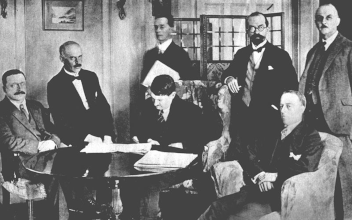
Just after 2:00 AM on December 6, 1921, the Irish delegation, without consulting the Dáil, finally sign a treaty with the British. Collins writes, prophetically, later on the day of the signing, “early this morning I signed my death warrant.”
The Treaty displeases the Catholics in the north and the unionists in the south. Meanwhile, many of those involved in the conflict are abhorred at the fact that not all of Ireland is to leave the United Kingdom.
(From: “The Anglo-Irish Treaty (1921)” by Brian O’Neill, Your Irish Culture, http://www.yourirish.com, May 20, 2020)