seamus dubhghaill

Promoting Irish Culture and History from Little Rock, Arkansas, USA


Leave a comment

Birth of Edward Plunkett, 18th Baron of Dunsany

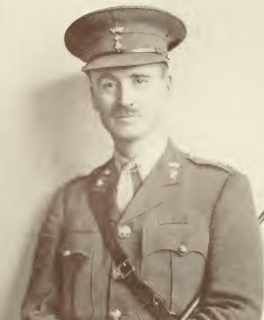
Edward John Moreton Drax Plunkett, 18th Baron of Dunsany FRSL, Anglo-Irish writer and dramatist, is born in London, England, on July 24, 1878. Over 90 volumes of fiction, essays, poems and plays appear in his lifetime, and a modest amount of material is published posthumously.

Plunkett, known to his family as “Eddie,” is the first son of John William Plunkett, 17th Baron of Dunsany (1853–1899), and his wife, Ernle Elizabeth Louisa Maria Grosvenor Ernle-Erle-Drax (née Burton) (1855–1916). From a historically wealthy and famous family, he is related to many well-known Irish figures. He is a kinsman of the Catholic Saint Oliver Plunkett, the martyred Archbishop of Armagh. He is also related to the prominent Anglo-Irish unionist and later nationalist Home Rule politician Sir Horace Plunkett and George Noble Plunkett, Papal Count and Republican politician, father of Joseph Plunkett, executed for his part in the 1916 Easter Rising.

Plunkett’s only grown sibling, a younger brother, from whom he is estranged from about 1916, for reasons not fully clear but connected to his mother’s will, is the noted British naval officer Sir Reginald Drax. Another younger brother dies in infancy.

Plunkett grows up at the family properties, notably, Dunstall Priory in Shoreham, Kent, and Dunsany Castle in County Meath, but also in family homes such as in London. His schooling is at Cheam School, Eton College and the Royal Military College, Sandhurst, which he enters in 1896.

The title passes to Plunkett at his father’s death in 1899 at a fairly young age. The young Lord Dunsany returns to Dunsany Castle in 1901 after war duty. In that year he is also confirmed as an elector for the Representative Peers for Ireland in the House of Lords.

In 1903, Plunkett meets Lady Beatrice Child Villiers (1880–1970), youngest daughter of Victor Child Villiers, 7th Earl of Jersey, who is then living at Osterley Park. They marry in 1904. Their one child, Randal, is born in 1906. Lady Beatrice is supportive of her husband’s interests and helps him by typing his manuscripts, selecting work for his collections, including the 1954 retrospective short story collection, and overseeing his literary heritage after his death.

The Plunketts are socially active in Dublin and London and travel between homes in Meath, London and Kent, other than during the First and Second World Wars and the Irish War of Independence. He circulates with many literary figures of the time. To many of these in Ireland he is first introduced by his uncle, the co-operative pioneer Sir Horace Plunkett, who also helps to manage his estate and investments for a time. He is friendly, for example, with George William Russell, Oliver St. John Gogarty, and for a time, W. B. Yeats. He also socialises at times with George Bernard Shaw and H. G. Wells and is a friend of Rudyard Kipling.

In 1910 Plunkett commissions a two-story extension to Dunsany Castle, with a billiard room, bedrooms and other facilities. The billiard room includes the crests of all the Lords Dunsany up to the 18th.

Plunkett serves as a second lieutenant in the Coldstream Guards in the Second Boer War. Volunteering in World War I and appointed Captain in the Royal Inniskilling Fusiliers, he is stationed for a time at Ebrington Barracks in Derry, Northern Ireland. Hearing while on leave of disturbances in Dublin during the Easter Rising of 1916, he drives in to offer help and is wounded by a bullet lodged in his skull. After recovery at Jervis Street Hospital and what is then the King George V Hospital (now St. Bricin’s Military Hospital), he returns to duty. His military belt is lost in the episode and later used at the burial of Michael Collins. Having been refused forward positioning in 1916 and listed as valuable as a trainer, he serves in the later war stages in the trenches and in the final period writing propaganda material for the War Office with MI7b. There is a book at Dunsany Castle with wartime photographs, on which lost members of his command are marked.

During the Irish War of Independence, Plunkett is charged with violating the Restoration of Order in Ireland Act 1920, tried by court-martial on February 4, 1921, convicted, and sentenced to pay a fine of 25 pounds or serve three months in prison without labour. The Crown Forces had searched Dunsany Castle and had found two double-barrelled shotguns, two rook rifles, four Very pistols, an automatic pistol and a large quantity of pistol ammunition, along with shotgun and rifle ammunition.

During World War II, Plunkett signs up for the Irish Army Reserve and the British Home Guard, the two countries’ local defence forces, and is especially active in Shoreham, Kent, the English village bombed most during the Battle of Britain.

Plunkett’s fame arises chiefly from his prolific writings. He is involved in the Irish Literary Revival. Supporting the Revival, he is a major donor to the Abbey Theatre, and he moves in Irish literary circles. He is well acquainted with W. B. Yeats, Lady Gregory, Percy French, George “AE” Russell, Oliver St. John Gogarty, Padraic Colum and others. He befriends and supports Francis Ledwidge, to whom he gives the use of his library, and Mary Lavin.

Plunkett makes his first literary tour to the United States in 1919 and further such visits up to the 1950s, in the early years mostly to the eastern seaboard and later, notably, to California. His own work and contribution to the Irish literary heritage are recognised with an honorary degree from Trinity College Dublin.

In 1940, Plunkett is appointed Byron Professor of English in the University of Athens in Greece. Having reached Athens by a circuitous route, he is so successful that he is offered a post as Professor of English in Istanbul. However, he has to be evacuated due to the German invasion of Greece in April 1941, returning home by an even more complex route, his travels forming a basis for a long poem published in book form (A Journey, in 5 cantos: The Battle of Britain, The Battle of Greece, The Battle of the Mediterranean, Battles Long Ago, The Battle of the Atlantic, special edition January 1944). Olivia Manning‘s character Lord Pinkrose in her novel sequence the Fortunes of War is a mocking portrait of Dunsany in that period.

In 1947, Plunkett transfers his Meath estate in trust to his son and heir and settles in Kent at his Shoreham house, Dunstall Priory, not far from the home of Rudyard Kipling. He visits Ireland only occasionally thereafter and engages actively in life in Shoreham and London. He also begins a new series of visits to the United States, notably California, as recounted in Hazel Littlefield-Smith’s biographical Dunsany, King of Dreams.

In 1957, Plunkett becomes ill while dining with the Earl and Countess of Fingall at Dunsany, in what proves to be an attack of appendicitis. He dies in hospital in Dublin, at the age of 79, on October 25, 1957. He is buried in the churchyard of the ancient church of St. Peter and St. Paul, Shoreham, Kent. His funeral is attended by many family members, representatives of his old regiment and various bodies in which he had taken an interest, and figures from Shoreham. A memorial service is held at Kilmessan in County Meath, with a reading of “Crossing the Bar,” which coincides with the passing of a flock of geese.

Beatrice survives Plunkett, living mainly at Shoreham and overseeing his literary legacy until her death in 1970. Their son Randal succeeds to the barony and is in turn succeeded by his grandson, the artist Edward Plunkett. Plunkett’s literary rights pass from Beatrice to Edward.


Leave a comment

Birth of Ernest Roland Ball, Singer & Songwriter

Ernest Roland Ball, American singer and songwriter, most famous for composing the music for the song “When Irish Eyes Are Smiling” in 1912, is born in Cleveland, Ohio, on July 22, 1878. He is not himself Irish.

Ball receives formal music training at the Cleveland Conservatory.

Ball’s growing career is much buoyed when James J. Walker, then a state senator of New York, asks him to write music for some lyrics he had written. He does, and the song “Will You Love Me In December as You Do In May?” becomes a hit. Walker later becomes known as “Dapper Jimmy Walker,” Mayor of New York City, a fortunate event for Ball’s career.

Ball accompanies singers, sings in vaudeville and writes sentimental ballads, mostly with Irish themes. He collaborates with Chauncey Olcott on many songs including “When Irish Eyes are Smiling,” for which Olcott writes the lyrics. He writes other Irish favorites including “Mother Machree,” “A Little Bit of Heaven,” “Dear Little Boy of Mine” and “Let the Rest of the World Go By.” “Mother Machree” is made popular by the famous Irish tenor, John McCormick. He also works with J. Keirn Brennan on songs like “For Dixie and Uncle Sam” and “Good Bye, Good Luck, God Bless You.”

Ball becomes a charter member of the American Society of Composers, Authors and Publishers (ASCAP) in 1907, and writes many American standards. He is also a fine pianist, and his playing is preserved on several piano roll recordings he makes for the Vocalstyle Music Company, based in Cincinnati in his home state of Ohio.

Ernest Ball dies on May 3, 1927, just after walking off stage at the Yost Theater in Santa Ana, California while on tour with “Ernie Ball and His Gang,” an act starring Ball and a male octet. He is posthumously inducted into the Songwriters Hall of Fame in 1970.

A 1944 musical Irish Eyes Are Smiling tells the story of Ball’s career and stars Dick Haymes and June Haver. His grandson is the guitar string entrepreneur Ernie Ball, great-grandson is singer-songwriter/content producer Sherwood Ernest Ball, and his great-great-granddaughters are actress Hannah Marks and singer/songwriter Tiare’ Ball.


Leave a comment

Death of John Henry Patterson, Army Officer, Hunter, Author & Zionist

John Henry Patterson, known as J. H. Patterson, Irish officer in the British Army, game hunter, author and Christian Zionist, dies in Bel Air, California, on June 18, 1947.

Patterson is born on November 10, 1867, at Forgney, Ballymahon, County Longford, the son of a Protestant father and a Roman Catholic mother. He joins the British Army at Dublin in 1885 and is posted with the 3rd Dragoon Guards to India. In 1892 he is seconded to the Indian military works department as a supervisor of civil engineering projects. In 1894 he marries Frances Helena Gray, daughter of William Gray of Cork and Belfast, a building surveyor who founded the free library movement in Belfast. She goes on to earn science and law degrees.

In 1898 Patterson is sent to British East Africa to supervise 3,000 Indian and African labourers who are building a railway bridge spanning the Tsavo River as part of the Mombasa to Lake Victoria line. Construction is interrupted when two man-eating lions repeatedly attack the labourers’ camp at night. He embarks on a lion hunt, but by the time he shoots the two lions they have mauled and mutilated between 130 and 140 labourers.

Patterson volunteers for service in the South African War in 1900. He is mentioned in dispatches by Lord Frederick Roberts and Lord Herbert Kitchener and is awarded the Distinguished Service Order (DSO). In 1902 he is appointed lieutenant colonel commanding the 33rd Battalion Imperial Yeomanry. While on a shooting trip in east Africa in 1906, he discovers a new species of eland, which is named Taurotragus oryx pattersonianus after him. His account of his adventures in Africa, The Man-Eaters of Tsavo, is published in 1907 to instant international acclaim. His exploits are twice made the subject of films: Bwana Devil (1952) and The Ghost and the Darkness (1996). In 1907 he is seconded as chief game warden, British East Africa Protectorate (Kenya), and he combines his work of conducting surveys with escorting private safari parties.

The following year Patterson leads a safari trip in the protectorate accompanied by Audley James Blyth, a son of James Blyth, 1st Baron Blyth, and his wife, Ethel Jane. During the expedition Blyth shoots himself in the head with a revolver and dies. Patterson claims that Blyth was suffering from heat stroke, but there are rumours of a romantic attachment between Patterson and Mrs. Blyth. The colonial secretary Lord Crewe exonerates Patterson in return for his resignation as chief game warden. The incident serves as the plot for Ernest Hemingway‘s short story “The Short Happy Life of Francis Macomber.”

In 1913 Patterson commands the West Belfast division of the Ulster Volunteer Force (UVF) and sees service in Flanders before being sent to Egypt in early 1915. In Alexandria, two Russian Jewish Zionists, the journalist Ze’ev Jabotinsky and veteran of the Russo–Japanese War Joseph Trumpeldor, ask General John Maxwell, commander of the British forces in Egypt, to establish a Jewish legion that will liberate the Holy Land from the Turks. Maxwell refuses, proposing instead that the Jews form a volunteer transport unit to serve in Gallipoli. Patterson, who is imbued with a deep knowledge of the Old Testament and draws spiritual sustenance from biblical heroes such as Joshua and Gideon, is appointed commander of the Assyrian Jewish refugee mule corps, a colonial corps of the Egyptian expeditionary force. He sails with the Zion Mule Corps, as it is popularly known, to Gallipoli in April 1915, where the corps serves with distinction, carrying water and ammunition to the Allied troops on the peninsula. He falls ill in November 1915 and is sent to convalesce in London. The Zion Mule Corps is evacuated from Gallipoli in December and disbanded in March 1916.

When manpower and political considerations persuade the British authorities to create the Jewish Legion in 1917, Patterson is appointed its commander. He marches his 38th Battalion Royal Fusiliers through the City of London and Whitechapel, cheered by a crowd of several thousand Jews. The Jewish Legion participates in General Edmund Allenby‘s sustained attack, which successfully pushes the Turks out of Palestine. His experiences with his Jewish soldiers turn him into a committed Zionist. In 1916 he writes With the Zionists in Gallipoli, and in 1922 With the Judaeans in the Palestine Campaign, which contain a scathing attack on Britain’s policy towards the Jews during and after World War I.

Throughout the 1920s and 1930s, Patterson increasingly allies himself with the revisionist Zionist agenda espoused by Jabotinsky’s New Zionist Organisation. When World War II breaks out, he travels with Jabotinsky to the United States, moving permanently to La Jolla, California, in 1940. With others, including the Irish Jew and later Lord Mayor of Dublin Robert Briscoe, he agitates for the formation of a large Jewish army that would fight with the Allies against Nazi Germany. After Jabotinsky’s death in 1940, he works with Benzion Netanyahu, the Palestinian Jewish executive director of the American revisionist Zionists. In 1946 he becomes godfather to Netanyahu’s first son, who is named Yonatan (the closest Hebrew name to John) in Patterson’s honour. Yonatan later leads Operation Entebbe, the successful 1976 Israeli raid on Entebbe Airport to free Israeli hostages.

On June 18, 1947, just a year before the establishment of the Zionist state of Israel, for which he had worked so hard, Patterson dies at Bel Air, California. A week later, the United Zionist Revisionists of Great Britain hold a memorial meeting at the Anglo–Palestinian Club near Piccadilly Circus in Patterson’s memory. His documents and personal effects are held at the Jabotinsky Institute and Museum in Tel Aviv. His uniform and other memorabilia are on display in Beit Hagdudim, the Jewish Legions Museum at Netanya, Israel. His two man-eating lions are on display in Chicago’s Field Museum of Natural History, where his son Bryan Patterson later serves as curator.

(From: “Patterson, John Henry” by Yanky Fachler, Dictionary of Irish Biography, http://www.dib.ie)


Leave a comment

Birth of John Treacy, Olympian & Former Athlete

John Treacy, Irish Olympian and former athlete, now a sporting administrator, is born in Villierstown, County Waterford, on June 4, 1957.

Treacy attends St. Anne’s Post-Primary School in Cappoquin, County Waterford, running more than seven miles to school every morning. He graduates from Providence College in Providence, Rhode Island. In 1978 and 1979 he wins the IAAF World Cross Country Championships in Glasgow, Scotland and Limerick respectively.

Treacy is known as a tenacious runner who does not have an especially sharp final kick in track races. In the 1978 European Athletics Championships in Prague, he places 11th in the fast 10,000-metre race and fourth in the slow and tactical 5,000-metre race, losing to Italy‘s Venanzio Ortis by just three tenths of a second. In the 5,000-metre final, he lingers behind Great Britain‘s Nick Rose on the final back straight just after Rose drops from the lead group.

In the 1980 Summer Olympics in Moscow, Treacy collapses in his 10,000-metre heat with only 200 metres left, a victim of heat paralysis and dehydration. Because he was running in fourth place when he collapses and because only the top four runners qualify directly for the final from the three heats, his collapse allows Finnish four-time Olympic champion Lasse Virén, who had been trailing him, to qualify directly for the final. Having recovered from his heat-induced collapse, Treacy places seventh in the 5,000-metre final of those Olympics.

In the 1983 World Championships in Athletics in Helsinki, Finland, Treacy is eliminated in the 10,000-metre heats.

In the 1984 Summer Olympics in Los Angeles, California, Treacy places ninth in the 10,000-metre final before crowning his athletics career with a silver medal in the men’s marathon. Winner Carlos Lopes of Portugal is largely unchallenged for much of the race, with Treacy down the field until entering the top six around the 20-kilometre mark. He continues to work his way up the rankings until entering Los Angeles Memorial Coliseum just behind second-place English athlete Charlie Spedding. He overtakes Spedding with 150m to go, during which the Irish television commentary of Jimmy Magee lists the previous Irish Olympic medal winners up to that time, before culminating, “And for the 13th time, an Olympic medal goes to John Treacy from Villierstown in Waterford, the little man with the big heart.” His silver medal places Ireland 33rd on the medals table.

After the Los Angeles Olympics, Treacy runs competitively until 1995, retiring following a road race held in his honour in Waterford, attended by the other two medalists from the 1984 Olympic marathon, Carlos Lopes and Charlie Spedding. While he does not win any more major international championships medals, he does win the 1992 Los Angeles Marathon. At the 1986 European Athletics Championships in Stuttgart, he places sixth in the 10,000-metre race. In the 1987 World Championships in Athletics in Rome, he places twenty-sixth in the 10,000-metre race and thirteenth in the 5,000-metre final. He fails to finish the marathon at the 1988 Summer Olympics in Seoul and places 51st in his final Olympic games, the 1992 Summer Olympics in Barcelona in 1992. He wins the 1993 Dublin Marathon.

Treacy is currently chief executive of Sport Ireland, a statutory authority that oversees, and partly funds, the development of sport within Ireland . He is married to Fionnuala and they have four children: Caoimhe, Deirdre, Sean, and Conor.


1 Comment

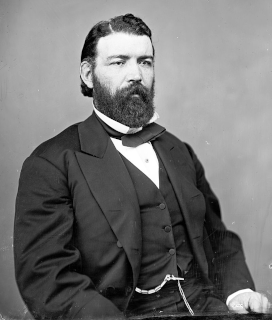
Birth of John Morrissey, Irish American Politician & Boxing Champion

John Morrissey, Irish American politician, bare-knuckle boxing champion and criminal also known as ‘Old Smoke,’ is born on February 12, 1831, at Templemore, County Tipperary.

Morrissey is the only son among eight children of Timothy Morrissey, factory worker, and Julia (or Mary) Morrissey. In 1834 the family emigrates to Canada and then the United States, settling at Troy, New York. From the age of ten he works, first in a mill, and then as an iron worker due to his size and strength. He becomes involved in various street gangs, developing a reputation as a pugilist of great strength and resolve. As leader of the Down-Town gang, he defeats six members of the rival Up-Town gang in a single afternoon in 1848. He takes work on a Hudson River steamer and marries Sarah Smith, daughter of the ship’s captain, around 1849. They have one child who dies before reaching adulthood.

In a New York saloon Morrissey challenges Charley ‘Dutch’ Duane to a prize fight and, when he is not to be found, with typical bravado he extends the challenge to everyone present. This impresses the owner, Isaiah Rynders, the Tammany Hall politician, and he employs Morrissey to help the Democratic Party, which involves intimidating voters at election time. A fistfight with gang rival Tom McCann earns him the nickname ‘Old Smoke.’ Mid-fight he is forced onto a bed of coals, but despite having his flesh burned, refuses to concede defeat. He fights his way back and beats McCann into unconsciousness. Stowing away to California to challenge other fighters, he begins a gambling house to raise money and embarks on a privateering expedition to the Queen Charlotte Islands in a quixotic attempt to make his fortune.

In his first professional prize fight on August 21, 1852, Morrissey defeats George Thompson at Mare Island, California, in dubious circumstances, and begins calling himself the ‘champion of America.’ However, it is only on October 12, 1853, that he officially earns this title, when he wins the heavyweight championship of America in a bout at Boston Corner, New York, against Yankee Sullivan. The fight lasts thirty-seven rounds, and Morrissey has the worst of most of them, but he is awarded the contest after a free-for-all in the ring.

Increasingly involved in New York politics, Morrissey and his supporters fight street battles against the rival gang of William Poole, known as ‘Bill the Butcher,’ a Know Nothing politician later fictionalised in the film Gangs of New York (2002). On July 26, 1854, the two men fight on the docks, but Morrissey is beaten badly and forced to surrender. This marks the beginning of a bitter feud between the two parties, with heavy casualties on both sides, which climaxes on March 8, 1855, when Poole is murdered. Morrissey is indicted as a conspirator in the crime but is soon released because of his political connections.

On October 20, 1858, Morrissey fights John C. Heenan (1835–73) in another heavyweight championship bout. Heenan breaks his hand early in the fight and is always at a disadvantage. After taking much punishment Morrissey finally makes his dominance count. There is a rematch on April 4, 1859, which Morrissey again wins, and after this he retires from the ring. Investing his prize money, he runs two saloons and a gambling house in New York. With the huge profits from his gambling empire, he invests in real estate in Saratoga Springs, New York, opening the Saratoga Race Course there in 1863 which has endured to become America’s oldest major sports venue.

A political career beckons as a reward for Morrissey’s consistent support for the Democratic Party. He is elected to the United States House of Representatives in 1866 representing New York’s fifth district, is re-elected the following year, and serves until March 3, 1871. He supports President Andrew Johnson against demands for his impeachment and is skeptical about the Radicals’ plans for reconstruction in the south. In his final years he serves in the New York State Senate (1875–78).

After contracting pneumonia, Morrissey dies at the Adelphi Hotel, Saratoga Springs, on May 1, 1878, and is buried at Saint Peter’s Cemetery, Troy. On the day of his funeral, flags at New York City Hall are lowered to half-mast, while the National Police Gazette declares on May 4, 1878, that “few men of our day have arisen from beginnings so discouraging to a place so high in the general esteem of the community.” His name is included in the list of ‘pioneer’ inductees in the International Boxing Hall of Fame in Canastota, New York, and each year the John Morrissey Stakes are held at Saratoga Race Course in honour of its founder.

(Pictured: John Morrissey, U.S. Representative from New York, circa 1870s, source Library of Congress)


Leave a comment

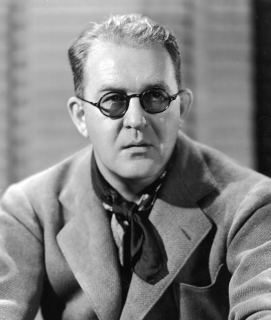
Birth of John Ford, Award Winning Irish American Film Director

John Ford, film director, is born as John Martin Feeney on February 1, 1894 at Cape Elizabeth, Maine. He is the fourth son among five sons and six daughters of Seán Feeney, Roman Catholic farmer and saloon-keeper, and Barbara ‘Abby’ Feeney (née Curran). His father had emigrated to the United States from Spiddal, County Galway, and his mother from Kilronan, Inishmore, one of the Aran Islands.

From an early age Ford has an interest in painting and sailing, and in July 1914 moves to California, where his older brother Francis is an actor with a small film company. Adopting the name ‘Jack Ford,’ he learns his trade as a filmmaker and acts in a number of silent pictures. Reveling in his Irish heritage, he makes his director’s debut with The Tornado (1917) and follows it with more than forty movies over the next six years. On July 3, 1920, he marries Mary McBryde Smith, a former officer in the army medical corps. They meet at a party thrown by the director Rex Ingram and have one son and one daughter.

In 1921 Ford visits Ireland for the first time and later claims to have travelled on the same boat that brought Michael Collins back from the treaty negotiations. He meets his relatives at Spiddal, falls in love with the countryside, and becomes a fervent Irish nationalist. It is later claimed that he brought over funds for his cousin Martin Feeney, a member of an Irish Republican Army (IRA) flying column.

Returning to Hollywood, Ford becomes friends with the retired marshal Wyatt Earp and makes a number of commercially successful films, now as ‘John Ford’. In 1926 he directs The Shamrock Handicap, a horse-racing yarn partly set in Ireland. In 1928 he shoots Mother Machree, a movie about Irish emigration, starring Victor McLaglen, a regular collaborator. McLaglen also stars in Hangman’s House, made the same year, Ford’s first major movie about Ireland.

In 1934 Ford purchases a luxury yacht which he names the Araner after the Aran Islands. He also begins shooting The Informer, a film set in Ireland during the Irish War of Independence, and based on a short novel by Liam O’Flaherty. The picture is a major box office success and wins four Academy Awards, including Best Director. O’Flaherty is so impressed with the film that he dedicates his next book, Famine, to Ford.

In 1934 Ford visits Ireland for the second time, and approaches Seán O’Casey about directing a version of The Plough and the Stars. Released in 1936, the film stars Barry Fitzgerald as Fluther, but it is reedited by the studio, much to Ford’s fury, and is a commercial and critical flop.

Stagecoach, shot in 1938, is one of Ford’s masterpieces. It was a western starring his protégé, John Wayne, and marks the beginning of his golden decade. In 1940 and 1941 he wins Best Director Oscars successively for The Grapes of Wrath and How Green Was My Valley. With American entry into World War II, he serves in the U.S. Navy, and makes important documentaries such as The Battle of Midway (1942).

In 1952 Ford returns to Ireland to film The Quiet Man, starring Wayne, McLaglen, and Maureen O’Hara. Shot at Ashford Castle, County Mayo, the picture becomes one of the most popular Irish films of all time. He is immensely proud of the work and is in tears leaving Ireland. The following year he makes Mogambo, with Clark Gable, Grace Kelly and a young English actor, Donald Sinden, who later recalls that Ford berated him personally for all the problems of Ireland from the time of William of Orange. Ford’s strong sense of Irishness is central to his character and is crucial for any understanding of his work. Back in Ireland in 1956, he shoots The Rising of the Moon, a portmanteau film for which he takes no salary, starring Tyrone Power, Cyril Cusack, and Noel Purcell. A minor film, it makes no impact at the box office.

Two of Ford’s finest movies are made in his later years. The Searchers (1956) is a powerful study of vengeance, while The Man Who Shot Liberty Valance (1962) is an elegiac revisionist western which concludes with the famous line, “When the legend becomes fact, print the legend.”

Struck with cancer in his final years, Ford dies on August 31, 1973 at his home in Palm Desert, California, and is buried at Holy Cross Cemetery, Culver City. His will disinherits his son, Michael Patrick Roper, and leaves everything to his wife, daughter, and grandchildren.

When asked to name the finest American directors, Orson Welles replies simply, “John Ford, John Ford, and John Ford.” An alcoholic, Ford is a difficult and often tyrannical director, but he makes films of extraordinary power and vision. He ranks as one of the greatest film-makers of the twentieth century. As Frank Capra concludes, “John is half-tyrant, half-revolutionary; half-saint, half-Satan; half-possible, half-impossible; half-genius, half-Irish.”

(From: “Ford, John,” contributed by Patrick M. Geoghegan, Dictionary of Irish Biography, http://www.dib.ie)


Leave a comment

Birth of Stephen Clegg Rowan, Vice Admiral in the U.S. Navy

Stephen Clegg Rowan, a vice admiral in the United States Navy, who serves during the Mexican–American War and the American Civil War, is born in Dublin on December 25, 1808. He has a 63-year career, which is one of the longest in the history of the United States Navy.

Rowan comes to the United States at the age of ten and lives in Piqua, Ohio. He is a graduate of Miami University and is appointed as a midshipman in the U.S. Navy on February 1, 1826, at the age of seventeen. Later, he takes an active role in the Mexican–American War, serving as executive officer of the sloop-of-war USS Cyane during the capture of Monterey, California on July 7, 1846, and in the occupation of both San Diego and Los Angeles. In January 1847 he leads a provisional battalion, with the nominal rank of major, of seven companies of naval infantry (along with a company of artillery and a company of sappers and miners) for the recapture of Los Angeles.

Captain of the steam sloop USS Pawnee at the outbreak of the American Civil War, he attempts to relieve Fort Sumter and burn the Norfolk Naval Shipyard. In the fall of 1861, he assists in the capture of the forts at Hatteras Inlet. Then, taking command of a flotilla in the North Carolina sounds, he cooperates in the capture of Roanoke Island in February 1862. Promoted simultaneously to captain and commodore for gallantry, he then supports the capture of Elizabeth City, Edenton, and New Bern. During the summer of 1863, he commands the broadside ironclad USS New Ironsides on blockade duty off Charleston, South Carolina and the following August assumes command of Federal forces in the North Carolina sounds. During this time the rebel semi-submersible CSS David attacks the USS New Ironsides with a spar torpedo. In the ensuing explosion, one man is killed, and a large hole is torn into the ironclad, but she continues her blockading duties.

Commissioned rear admiral on July 25, 1866, Rowan serves as commandant of the Norfolk Naval Shipyard until 1867, when he assumes command of the Asiatic Squadron. Returning in 1870, he is appointed vice admiral, following the death of Admiral David Farragut and the promotion of Vice Admiral David Dixon Porter in August of that year. In December 1870 he reaches the mandatory retirement age of 62 but, like admirals Farragut and Porter before him, he is allowed to remain on active duty.

Rowan serves as commandant of the New York Navy Yard from 1872 to 1876, as governor of the Philadelphia Naval Asylum at Philadelphia, Pennsylvania, in 1881, and as superintendent of the United States Naval Observatory, Washington, D.C., from 1882 until his retirement in 1889.

In 1882 Rowan is elected as a First Class Companion of the District of Columbia Commander of the Military Order of the Loyal Legion of the United States (MOLLUS). He is assigned MOLLUS insignia number 2510. His son, Hamilton Rowan, an officer in the United States Army, is elected as a Second Class Companion of MOLLUS and becomes a First Class Companion upon his father’s death.

Rowan dies at the age of 81 in Washington, D.C. on March 31, 1890.


Leave a comment

Death of Tom Clancy of the Irish Folk Group The Clancy Brothers

Thomas Joseph Clancy, a member of the Irish folk group the Clancy Brothers, dies in Cork, County Cork, on November 7, 1990. He has the most powerful voice of the brothers and has previously been an actor in numerous stage productions, appearing with Orson Welles in King Lear. He also performs often on television and occasionally in the movies.

Clancy is born on October 29, 1924, one of eleven children born to Johanna McGrath and Bob Clancy in Carrick-on-Suir, County Tipperary. After being apprenticed as a baker, he follows his older brother Patrick “Paddy” Clancy into the Royal Air Force (RAF) in 1943 during World War II, despite both having been members of the Irish Republican Army. In the RAF, he works as a radio operator on bombing runs over Germany.

Discharged from the RAF at the end of the war, Clancy tours with a British repertory company. In 1947 he and his brother Paddy emigrate to Canada. They then move to New York where he meets his first wife and his oldest daughter is born in 1950. They then soon move to Cleveland, Ohio, to live with relatives. He works for a while as a repertory actor at the Cleveland Play House, before returning temporarily to Ireland. While in Ireland, Clancy works for the Shakespeareana Internationale company run by English actor and manager Geoffrey Kendal. After Paddy sends him extra money, he returns to the United States. The brothers plan to move to California, but their car breaks down. They decide to try New York City instead and find work as actors, both on and off Broadway.

In 1956 their brother Liam Clancy joins them, accompanied by his friend Tommy Makem. Liam and Tommy begin singing together, and in 1959 are joined by the older Clancy brothers as The Clancy Brothers and Tommy Makem. The group performs together until Liam leaves in 1976. Makem had left in 1969 to be replaced for a brief time by Bobby Clancy and later Louis Killen.

Clancy continues singing with The Clancy Brothers until 1976, when the group is disbanded. The group reforms in 1977 with a new line-up. Clancy performs with his brothers Paddy and Bobby and their nephew Robbie O’Connell until his death. He also performs with Paddy, Liam, and Tommy Makem during their reunion tour from 1984 to 1985.

Clancy takes the lead vocals on many of the group’s songs, such as “The Rising of the Moon,” “The Moonshiner,” “Haul Away Joe,” “Red Haired Mary,” “The Barnyards of Delgaty,” “Carrickfergus,” “I Once Loved a Lass,” “The Bold Fenian Men,” among others.

Clancy continues to act during his singing career, appearing in the movies The Killer Elite (1975) and Swashbuckler (1976). He also appears on episodes of Little House on the Prairie, Starsky and Hutch, and The Incredible Hulk, among others. He acts in several TV movies as well.

After an absence of fifteen years, Clancy returns to Broadway in May 1974 in Eugene O’Neill‘s A Moon for the Misbegotten. The Irish Times reviews his performance of Phil Hogan: “In ‘Moon’ he deftly measures up to the formidable company in which he finds himself – a wily, sly rogue with a whimsical humour and a genuine concern for his daughter.” The play is a hit and wins three Tony Awards.

Clancy dies from stomach cancer at the age of 66 on November 7, 1990 at Mercy University Hospital in Cork, County Cork. He is survived by his wife Joan and their three daughters, Rayleen, Blawneen and Rosie. Prior to his marriage to Joan, he has children, Eileen and Thomas, with Yvonne Marcus, in Cleveland, Ohio. He also has a daughter, Cait, with his second wife Laine, in the mid-1950s.

Clancy’s last recording is made in 1988 with Robbie O’Connell, Bobby Clancy, and Paddy Clancy at Saint Anselm College in Goffstown, New Hampshire. Unfortunately, the recording is marred by unevenly mixed instruments and voices. After his death, Liam returns to the Clancy Brothers to fill in his place.


Leave a comment

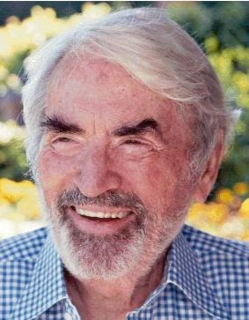
Death of Irish American Actor Gregory Peck

Actor Gregory Peck dies at his home in Los Angeles, California, from bronchopneumonia at the age of 87 on June 12, 2003.

Peck is born in La Jolla, California on April 5, 1916, to Bernice Mary (Ayres) and Gregory Pearl Peck, a chemist and pharmacist in San Diego. Through his Irish-born paternal grandmother, Catherine Ashe, Peck is related to Thomas Ashe, who takes part in the Easter Rising fewer than three weeks after Peck’s birth and dies while on hunger strike in 1917.

Peck’s parents divorce when he is five years old. An only child, he is sent to live with his grandmother. He never feels as though he has a stable childhood. His fondest memories are of his grandmother taking him to the movies every week and of his dog, which follows him everywhere.

At the age of ten Peck is sent to a Catholic military school, St. John’s Military Academy in Los Angeles. While he is a student there, his grandmother dies. At 14, he moves back to San Diego to live with his father and attends San Diego High School. After graduating he enrolls for one year at San Diego State Teacher’s College (now known as San Diego State University).

Peck studies pre-med at the University of California, Berkeley and while there is bitten by the acting bug and decides to change the focus of his studies. He enrolls in the Neighborhood Playhouse School of the Theatre in New York City and debuts on Broadway after graduation. His debut is in Emlyn Williams‘ play The Morning Star (1942). By 1943, he is in Hollywood, where he debuts in the RKO Pictures film Days of Glory (1944).

Stardom comes with Peck’s next film, The Keys of the Kingdom (1944), for which he is nominated for an Academy Award. Peck’s screen presence displays the qualities for which he becomes well known. He is tall, rugged and heroic, with a basic decency that transcends his roles. He appears in Alfred Hitchcock‘s Spellbound (1945) as an amnesia victim accused of murder. In The Yearling (1946), he is again nominated for an Academy Award and wins the Golden Globe Award. He is especially effective in westerns and appears in such varied fare as David O. Selznick‘s critically blasted Duel in the Sun (1946), the somewhat better received Yellow Sky (1948) and the acclaimed The Gunfighter (1950). He is nominated again for the Academy Award for his roles in Gentleman’s Agreement (1947), which deals with antisemitism, and Twelve O’Clock High (1949), a story of high-level stress in an Air Force bomber unit in World War II.

With a string of hits to his credit, Peck makes the decision to only work in films that interest him. He continues to appear as the heroic, larger-than-life figures in such films as Captain Horatio Hornblower R.N. (1951) and Moby Dick (1956). He works with Audrey Hepburn in her debut film, Roman Holiday (1953).

Peck finally wins the Oscar, after four nominations, for his performance as lawyer Atticus Finch in To Kill a Mockingbird (1962). In the early 1960s, he appears in two darker films than he usually makes, Cape Fear (1962) and Captain Newman, M.D. (1963), which deal with the way people live. He also gives a powerful performance as Captain Keith Mallory in The Guns of Navarone (1961), one of the biggest box-office hits of that year.

In the early 1970s, Peck produces two films, The Trial of the Catonsville Nine (1972) and The Dove (1974), when his film career stalled. He makes a comeback playing, somewhat woodenly, Robert Thorn in the horror film The Omen (1976). After that, he returns to the bigger-than-life roles he is best known for, such as MacArthur (1977) and the monstrous Nazi Dr. Josef Mengele in the huge hit The Boys from Brazil (1978). In the 1980s, he moves into television with the miniseries The Blue and the Gray (1982) and The Scarlet and the Black (1983). In 1991, he appears in the remake of his 1962 film, playing a different role, in Martin Scorsese‘s Cape Fear (1991). He is also cast as the progressive-thinking owner of a wire and cable business in Other People’s Money (1991).

In 1967, Peck receives the Academy’s Jean Hersholt Humanitarian Award. He has also been awarded the Presidential Medal of Freedom. Always politically progressive, he is active in such causes as anti-war protests, workers’ rights and civil rights. In 2003, Peck’s portrayal of Atticus Finch is named the greatest film hero of the past 100 years by the American Film Institute.

Peck dies in his sleep at his home in Los Angeles, California from bronchopneumonia at the age of 87 on June 12, 2003. He is entombed in the Cathedral of Our Lady of the Angels mausoleum in Los Angeles. His eulogy is read by Brock Peters, whose character, Tom Robinson, was defended by Peck’s Atticus Finch in To Kill a Mockingbird.


Leave a comment

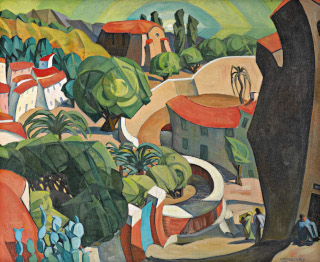
Birth of Mary Swanzy, Landscape & Genre Artist

Mary Swanzy, Irish landscape and genre artist, is born in Dublin on February 15, 1882. Noted for her eclectic style, she paints in many styles including cubism, futurism, fauvism, and orphism, she is one of Ireland’s first abstract painters.

Swanzy is the second of three daughters of Sir Henry Rosborough Swanzy, an eye surgeon, and his wife Mary (née Denham). She attends Alexandra College, Earlsfort Terrace, a finishing school at the Lycée in Versailles, France, and a day school in Freiburg, Germany. This education means that she is fluent in French and German. She goes on to take art classes at Mary Manning‘s studio, under the direction of John Butler Yeats. Manning encourages her to study modelling with John Hughes at the Dublin Metropolitan School of Art.

Living within walking distance of the National Gallery of Ireland, she spends a lot of time studying and copying the great masters. Her first exhibition is with the Royal Hibernian Academy (RHA) in 1905 with Portrait of a child, continuing to exhibit portraits every year until 1910. In 1905 she goes to Paris and works at the Académie Delécluse, an atelier-style art school. She goes on to attend the studio of Antonio de La Gándara in 1906 and takes classes at Académie de la Grande Chaumière and Académie Colarossi. While in Paris she is exposed to the works of Gauguin, Matisse, and Picasso, which make a lasting impression on her.

On her return to Dublin, Swanzy paints portraits and genre scenes and holds her first show at Mill’s Hall, Merrion Row in 1913. She holds another show there in 1919, where she exhibits nearly 50 pieces. This exhibition is reviewed by Sarah Purser who notes the lack of melancholy and light optimism in Swanzy’s Irish landscapes. Swanzy paints in a number of styles, often reflecting the major art developments in Paris.

After the deaths of her parents, she is financially independent and can travel, spending her time between Dublin and Saint-Tropez during World War I while continuing to paint. She also exhibits with the Société des Artistes Indépendants in 1914 and 1916, being elected to the committee in 1920. While visiting her sister who is involved with the Protestant relief mission in Yugoslavia and Czechoslovakia, she paints landscapes, village life, and peasant scenes. These works are shown in the autumn of 1921 in the Dublin Painters’ Gallery with six other artists including Jack Butler Yeats, Paul Henry, and Clare Marsh with whom she shares a studio.

Swanzy begins to travel to more exotic countries from the 1920s, Honolulu around 1923, and later Samoa. As a result, she paints local tropical flowers, trees, and native women, with a palette and style similar to that of Fauvism. She stays for a time in Santa Barbara, California, working in a local studio and exhibiting some of her Samoan work at the Santa Barbara Arts Club Gallery. She returns to Ireland in February 1925 and exhibits three of her Samoan paints at the RHA, and 14 at her one-woman show in the Galerie Bernheim-Jeune, Paris in October 1925. Gertrude Stein writes her to congratulate her on her Paris exhibition.

In the mid 1920s Swanzy settles in Blackheath, London, making regular trips to Dublin and abroad. In 1932 Purser holds an exhibition of Swanzy’s work for invited guests in her house. At this time her painting is influenced by orphism and is reviewed positively. Her work becomes more allegorical in later years, with The message in the Hugh Lane Gallery demonstrating this. During World War II she stays with her sister in Coolock for three years. In 1943, she holds a one-woman show at the Dublin Painters’ Gallery, and is also featured at the first Irish Exhibition of Living Art. She is exhibited at St. George’s Gallery, London in 1946 along with Henry Moore, Marc Chagall, and William Scott.

Swanzy is made an honorary member of the RHA in 1949, showing with them in 1950 and 1951. She does not exhibit in Ireland for a number of years, but the Hugh Lane Gallery holds a major retrospective of her work in 1968. Following this she holds two one-woman shows at the Dawson Gallery in 1974 and 1976. In 1975 she is featured at the Cork ROSC art exhibition and resumes showing with the RHA. She continues to paint until her death at her home in London on July 7, 1978.

In 1982 the Taylor Galleries holds an exhibition to mark the centenary of Swanzy’s birth. More recently she is featured in the Irish Museum of Modern Art (IMMA) 2013 exhibition Analysing Cubism. From October 2018-February 2019, also in IMMA, she is the subject of the solo exhibition Mary Swanzy Voyages.

(Pictured: Sunlit Landscape, oil-on-canvas, by Mary Swanzy)