seamus dubhghaill

Promoting Irish Culture and History from Little Rock, Arkansas, USA


Leave a comment

Death of James Orr, Weaver, Radical & Poet

James Orr, weaver, radical, and poet, dies on April 24, 1816.

Orr is the son of James Orr, who farms a few acres and is a linen weaver. His mother’s name is unknown. They live in the small village of Ballycarry, in the parish of Broadisland, County Antrim. He is an only child, born when his parents are middle-aged. They are unwilling to risk sending him to school, so they carefully educate him at home, his father having been very well educated. A near-contemporary source George Pepper (1829), claims that the youngster is something of a prodigy, able to read Spectator essays at the age of six. Later in life, partly thanks to membership of a local reading society, he is remarkably well read. Handloom weavers are reputedly one of the most literate and politically radical groups in the period, and he certainly fits the stereotype. Pepper also claims that William Orr is James Orr’s uncle, and that the younger man lives for three years with William Orr and his family, where his literary talents are nurtured and where he develops an interest in radical politics. Other sources do not support this account, but if there is a relationship it might explain an almost morbid interest in assizes, executions, and gallows, evident in several poems. This also might have been prompted by witnessing William Orr’s trial and execution.

Pepper “heard from good authority” that Orr in 1797 is secretary to the Antrim Association, of which William Orr is president; presumably this means the Society of United Irishmen. He sings a patriotic song called “The Irishman,” one of his most celebrated compositions, at a meeting of that body. The earliest publications traced are poems published pseudonymously (1796–97) in the Northern Star newspaper. This paper, edited by Samuel Neilson, is sympathetic to United Irish views, and it is clear that Orr, like many of his neighbours, is actively involved in the 1798 rebellion. Several poems dealing with the events of June 1798, provide a rare participant’s perspective. He takes part in the skirmish at Donegore, and flees after the defeat at the Battle of Antrim. Local sources record his successful efforts to prevent cruelty and looting by his colleagues. He goes into hiding in an Irish-speaking area, perhaps in the Glens of Antrim or in the Sperrin Mountains. After a short time, he escapes to the United States, but unlike many of his former comrades he finds himself unable to settle there, and very soon returns home to Ballycarry, and thenceforth makes his living as a weaver. In 1800, he seeks to join the militia set up to counter a feared Napoleonic invasion, but the local gentry in command rejects his application because of his United Irish associations.

Orr’s first verses are composed at meetings of a local singing school, where rival versifiers produce impromptu verses for the company to sing to the psalm tunes being practised, and he later writes songs for masonic meetings. He publishes poems in the Belfast newspapers. A few carefully written essays on morality and education, signed “Censor, Ballycarry,” are apparently also his work. A collection of poems is published in 1804, with almost 400 subscribers, and another selection is published in 1817 after his death by his friend Archibald McDowell. Orr had requested that the proceeds should go to help the poor of Ballycarry. His poems are an excellent source of information about the life and concerns of a fairly humble stratum of late eighteenth-century Ulster society.

Many of Orr’s best poems deal with subjects of interest to his community – weaving, social life, and farming – and are written in the Scots language still widely spoken in the area. He expertly uses Scots stanza forms, and joyously participates in the almost competitive composition of verse typical of the Scots tradition. Several of his poems rework themes found in Robert Burns or other earlier writers. His An Irish Cottier’s Death and Burial is derived from a Burns poem, The Cottier’s Saturday Night, but later critics acknowledge that the Orr poem is much more successful. He and his friend Samuel Thomson are pioneers in the use of written Scots in Ulster and are regarded as the two most skillful Scots poets in Ulster. Both are celebrated in their day, and their work in Scots has been rediscovered in the twentieth-century revival of interest in the traditional literature and history of the north of Ireland.

Orr’s verse in standard English is equally competent, even more ambitious and almost as interesting. The best of his work, particularly in Scots, is characterised by pleasing cadences and assured control of tone and technique. His novel and generally impressive experiments with soliloquies, verse epistles, and versified direct speech, in English and Scots, parallel his interest in extending the registers in which he could use the vernacular Scots language. He seems not to have known of William Wordsworth‘s poetry, but, apparently independently and arguably more successfully, produces verse written in “the language really used by men” (Wordsworth, preface to Lyrical Ballads (1798)). As well as fascinating foreshadowings of romanticism, his work more often reveals the influence of the enlightenment and of New Light presbyterianism. He is a member of the congregation of the Rev. John Bankhead, whose theological views are decidedly liberal, tending even towards unitarianism. His poems provide a great deal of evidence on his reading, interests, radical aspirations and convictions; and in them and in the prose essays, the reader encounters a humane and generous personality. Like many other United Irishmen, he is an enthusiastic freemason, and believes that freemasonry and education will help to usher in a peaceful millennium. His poetry reveals humanitarian concerns, not yet common in the period. He opposess slavery and cruelty to animals and children and expresses support for a contemporary popular rising in Haiti. In 1812, he signs a petition in favour of Catholic emancipation.

Orr never marries. His friend McDowell believes that the resulting lack of domestic comforts drives the poet to socialise in taverns, and it is said that local fame and popularity encourages his excessive drinking. He suffers from ill health in later life. A neglected cold in 1815 leads to tuberculosis. He dies on April 24, 1816, and is buried in the old Templecorran graveyard at Ballycarry. Some years later, freemasons erect an impressive monument over the grave.

Orr’s poems are republished by a group of local enthusiasts in 1935. Another selection appears in 1992. A plaque put up by the local district council commemorates “the bard of Ballycarry,” probably the most significant eighteenth-century English-language poet in Ulster.

(From: “Orr, James” by Linde Lunney, Dictionary of Irish Biography, http://www.dib.ie, October 2009)


Leave a comment

The Execution of William Joyce

William Brooke Joyce, an American-born fascist and Nazi propaganda broadcaster during World War II, is hanged in Wandsworth Prison by Albert Pierrepoint on January 3, 1946, making him the last person to be executed for treason in the United Kingdom.

Joyce is born on April 24, 1906, in Brooklyn, New York, the eldest of three sons of Michael Joyce, an Irish Catholic from a family of tenant farmers in Ballinrobe, County Mayo, and his wife, Gertrude (née Brooke), who although born in Shaw and Crompton, Lancashire, is from a well-off Anglican Anglo-Irish family of physicians associated with County Roscommon. The Joyces return to Ireland in 1909. William, a precocious child, attends Coláiste Iognáid SJ, a Jesuit school in County Galway, from 1915 to 1921. At the age of fourteen, he abandons Catholicism for Anglicanism, apparently after being told that all non-Catholics, including his mother, would be damned. In adult life he is nominally anglican, though his adherence to Christianity is tenuous.

The Joyces are unionists and teach their children fervent imperialism. During the Irish War of Independence, Joyce openly associates with the Black and Tans and acts as a scout for them. An acquaintance claims that his views are so extreme even loyalists dislike him. On December 9, 1921, he flees to England to join the Worcestershire Regiment and is followed to England in 1923 by the rest of the family. When he enlists, he claims to be eighteen, but after he contracts rheumatic fever, his age is discovered, and he is discharged in March 1922. For a time, he studies mathematics and chemistry at Battersea Polytechnic Institute as a pre-medical student (1922–23), but he leaves of his own accord, with a reputation for laziness and violent political views. His studies in English and history at Birkbeck College are more successful. He is a brilliant linguist and mathematician and graduates BA with first-class honours in 1927. He publishes an academic article on philology and considers progressing to an MA. He later falsely claims that his research had been plagiarised by a Jewish academic. In 1932, he enrolls at King’s College, London, for a Ph.D. in educational psychology.

Joyce is disturbed by the difference between depressed post-war Britain and the imperial ideal that he had imbibed in Galway and is mocked for his outspoken patriotism and obvious Irishness. He identifies strongly with Thomas Carlyle, an earlier angry anti-liberal from the provinces. His life is marked by repeated episodes of hero worship, followed by disillusion and bitter denunciation. In 1923, he joins the British Fascists, an organisation that has a significant Irish loyalist membership, and in 1924 he allies himself with a militant splinter group, the National Fascists. Most British fascists see themselves as Tory auxiliaries, and they often provide a security presence at conservative meetings. On October 22, 1924, while stewarding a meeting addressed by a Jewish conservative candidate, he has his face slashed and is left with a prominent scar across his right cheek. He joins the Conservative Party in 1928 and is active in the Chelsea constituency until 1930, when he is forced out because of his eccentricities and sexual misbehaviour. On April 30, 1927, he marries Hazel Kathleen Barr. They have two daughters but separate in 1935, largely because of his infidelities, heavy drinking, and temper. The marriage is dissolved in 1937.

In November 1933, Joyce abandons his Ph.D. studies to work for Sir Oswald Mosley‘s British Union of Fascists (BUF). By early 1934 he has become its paid publicity director, traveling throughout Britain to organise meetings. He is a powerful, rabble-rousing speaker, driven by an instinctive awareness that vitriolic verbal abuse gives speaker and audience a sense of power and solidarity. MI5 sees him as a compelling, though deranged, personality. On February 8, 1937, he marries Margaret Cairns White, a BUF activist from Lancashire, with whom he had cohabited since 1936.

Joyce leads a BUF faction that favours a recruitment strategy based on uncompromising ideological assertion. This is challenged by populists who prioritise marches and displays and hold that indoctrination should follow membership. In February 1937, he is BUF candidate for the London County Council in Shoreditch. The party wins 14 per cent of the vote. In March 1937, he, along with many full-time BUF staff, are sacked when the BUF cuts expenses. But his dismissal also reflects Mosley’s awareness that his obsessive rhetoric repels “respectable” recruits and that he is no longer a biddable, slavish admirer of “the Leader.” He later falsely claims near-exclusive credit for the BUF’s escalating antisemitism, a view that Mosley eventually finds it convenient to adopt in order to evade his own responsibility.

In April 1937, Joyce founds the National Socialist League, helped by a wealthy patron. He supports himself as a private tutor, refusing to take Jewish pupils. He is active in various antisemitic and pro-Nazi groups such as the Right Club and engages in “peace” campaigns based on the view that British interests lay with Germany against Russia. Political marginalisation intensifies his admiration for Nazi Germany and hero worship of Adolf Hitler. By the time of the Munich crisis in 1938, he has decided that if war comes, he will go to Germany, though he also considers moving to Ireland. He renews his British passport for one-year terms in August 1938 and August 1939.

On August 26, 1939, Joyce and his wife leave London for Berlin. He is allegedly tipped off about his impending arrest and internment by an MI5 officer, to whom he had supplied information on communists. His siblings, whom he recruited into his fascist organisations, are variously penalised for his activities. At a loose end in Berlin, he is persuaded by a British associate to become a radio announcer with the English-language service of the Reichs-Rundfunk-Gesellschaft (RRG). He makes his first broadcast on September 6, 1939, and receives a contract in October. He finds in radio an outlet for his forceful style and delight in saying the unsayable, and in the early years of the war takes an exultant pride in recounting Nazi victories. His performances are admired by Joseph Goebbels, whom Joyce, to his regret, never meets. On September 26, 1940, he acquires German citizenship.

The novel experience of hearing the enemy in one’s own living room attracts wide audiences in Britain. Joyce’s practice of naming newly captured prisoners of war in his broadcasts is also a compelling motive for listening. In fact, he tries to recruit British prisoners of war as collaborators. The name “Lord Haw-Haw,” invented by the Daily Express radio critic in September 1939, initially applies to several English-language broadcasters but in time becomes associated with Joyce. He is initially a figure of fun, imitated by comedians, but there are sinister undercurrents of terrifying omnipotence, intensified by his sneering, gloating delivery and his delighted deployment of the “big lie” technique. It is widely believed that British-based fifth columnists supply him with information, that he predicts air raids, and shows minute local knowledge. In time, fear and his growing notoriety feed popular hatred of him in Britain, though his anti-British taunts allegedly win appreciative Irish audiences. He exults that he is daily committing treason and rendering himself liable to the death penalty.

In 1940, Joyce publishes a commissioned self-justifying propaganda work, Twilight over England. His representation of himself echoes that of Hitler in Mein Kampf – the provincial patriot, whose martial sacrifices are betrayed by corrupt elites, learning through poverty the hollowness of bourgeois patriotism and the need to synthesise socialism with nationalism. He shares with his hero a paranoid belief in his own ability to create an alternative reality through language and obstinacy. He dreams of becoming the English Führer.

In Berlin, the Joyces’ marriage comes under increasing strain, marked by drunken rows, domestic violence, and infidelity on both sides, though they retain a fierce mutual fascination. They divorce on August 12, 1941, but remarry on February 11, 1942, while continuing their previous behaviour. As the Axis powers begin to fail, his broadcasts become more defensive, focusing on the Soviet threat. On October 14, 1944, he is awarded the German War Merit Cross, first class. On October 22, he is sworn into the Volkssturm (territorial army) and begins drilling. The Joyces are evacuated from Berlin in March 1945, initially to Apen near the Dutch border and then to Hamburg, where he makes a last, drunken, defiant broadcast on April 30, 1945, the day of Hitler’s death. After an unsuccessful attempt to escape to Sweden, the Joyces hide at Flensburg near the Danish border. On May 28, 1945, he is shot and captured while gathering firewood.

Joyce is brought back to Britain on June 16 after Parliament passed legislation simplifying treason trial procedures. At his September 17-20 trial, he proves his American citizenship, but the court holds that his illegally acquired British passport incurred duties of allegiance. His appeals are rejected by the Court of Appeal and the House of Lords. His fate is influenced by British public opinion, and possibly by a desire to avoid antagonising the Soviet Union. In his death cell he blames the defeat of national socialism on German limitations. He also fantasises that he could have saved Hitler from his incompetent subordinates.

Joyce is hanged at Wandsworth Prison on January 3, 1946. Unlike most of his fellow Nazis, he proclaims to the end his allegiance to national socialism and hatred of Jews. He corresponds cheerfully with Margaret, joking evasively about the death camps and expressing a belief that his spirit will survive, watch over her, and continue his work. To neo-Nazis he becomes a martyr. Even among those to whom his activities had been repellent, a significant body of opinion holds he should not have been condemned on a questionable and innovative technicality. The historian A. J. P. Taylor maintains that Joyce was executed for making a false declaration to obtain a passport, a misdemeanour that normally incurs a £2 fine.

In 1976, Joyce is reinterred in Galway as it is feared that a grave in England might become a fascist shrine. Thomas Kilroy‘s play Double Cross (1986) juxtaposes Joyce and Brendan Bracken as Irishmen who reinvented themselves through fantasies of Britishness. The BBC Sound Archive has recordings of some of Joyce’s broadcasts and transcripts of others, collected during the war as evidence for a future treason trial.

(From: “Joyce, William Brooke (‘Lord Haw-Haw’)” by Patrick Maume, Dictionary of Irish Biography, http://www.dib.ie, October 2009)


Leave a comment

Birth of Seán Hales, Political Activist & Member of Dáil Éireann

Seán Hales, Irish political activist and member of Dáil Éireann from May 1921 to December 1922, is born in Ballinadee, Bandon, County Cork, on March 30, 1880.

Hales is born John Hales, eldest child of five sons and four daughters of Robert Hales, a farmer, and Margaret (née Fitzgerald) Hales. He is educated at Ballinadee national school and Warner’s Lane school, Bandon. After leaving school he goes to work on his father’s farm. He plays hurling with Valley Rovers GAA club and is the Munster champion in the 56-lb. weight-throwing competition. From an early age he follows in his father’s footsteps and becomes involved in the republican movement.

Hales joins the Irish Volunteers in 1915 and becomes captain of the Ballinadee company in 1916. Arrested under the Defence of the Realm Act after the 1916 Easter Rising, he is imprisoned in Frongoch internment camp in Wales. After his release, in April 1917 he becomes executive of the short-lived Liberty League promoted by Count George Plunkett. When the League merges with Sinn Féin, he helps reorganise the Volunteers. With his brothers, Tom, William, and Donal, he continues his father’s fight on behalf of evicted tenants and becomes involved with the anti-British Bandon People’s Food Committee and the anti-landlord Unpurchased Tenants’ Association. He helps in the Sinn Féin takeover of The Southern Star newspaper and is a member of the new board of directors. In 1919 he becomes battalion commander of the first (Bandon) battalion 3rd Cork Brigade of the Irish Republican Army, the name by which the Irish Volunteers increasingly became known. He leads the attack on Timoleague Royal Irish Constabulary (RIC) barracks in February 1920, and the ambush of an Essex Regiment patrol at Brinny in August 1920. The military patrol at Brinny manages to surprise the ambushers and Lieutenant Tim Fitzgerald of Bandon is the first Volunteer to be killed in action in west Cork. Hales then commands the assault on two truckloads of British troops at Newcestown Cross in which a British officer is killed and several soldiers are wounded.

Hales is appointed section commander of the west Cork flying column in 1920 and takes part in the major action at Crossbarry on March 19, 1921. In retaliation for the burning of the Hales home in March 1921, he leads a contingent of Volunteers and burns Castle Bernard, the residence of the Earl of Bandon. The occupant, Lord Bandon, is held hostage until General Strickland, the British OC in Cork, guarantees he will not execute Volunteers in Cork prison. The British authorities yield and there is an end to the policy of executing prisoners of war in the Cork area.

At the 1921 Irish elections, Hales is elected to the Second Dáil as a Sinn Féin member for the Cork Mid, North, South, South East and West constituency.

At the 1922 Irish general election, Hales is elected to the Third Dáil as a pro-Treaty Sinn Féin Teachta Dála (TD) for the same constituency. He receives 4,374 first preference votes (7.9%). Shortly afterward, the Irish Civil War breaks out between the pro-Treaty faction, who are in favour of setting up the Irish Free State and the anti-Treaty faction, who would not accept the abolition of the Irish Republic.

On December 7, 1922, Hales is killed by anti-Treaty IRA men as he leaves the Dáil. Another TD, Pádraic Ó Máille, is also shot and badly wounded in the incident. His killing is in reprisal for the Free State’s execution of anti-treaty prisoners. In revenge for Hales’ killing, four republican leaders, Joe McKelvey, Rory O’Connor, Liam Mellows and Richard Barrett, are executed the following day, December 8, 1922.

Hales is given a military funeral to the family burial place at St. Patrick’s Cemetery, Bandon.

According to information passed on to playwright Ulick O’Connor, an anti-Treaty IRA volunteer named Owen Donnelly of Glasnevin is responsible for the killing of Hales. Seán Caffrey, an anti-treaty intelligence officer told O’Connor that Donnelly had not been ordered to kill Hales specifically but was following the general order issued by Liam Lynch to shoot all deputies and senators they could who had voted for the Public Safety Act (September 28, 1922) which established military courts with the power to impose the death penalty.

A commemorative statue of Hayes is unveiled at Bank Place in Bandon in 1930.


2 Comments

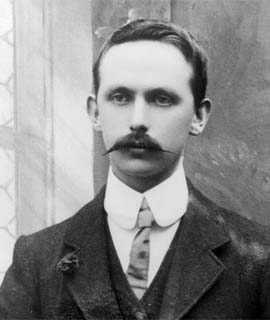
Execution of William Orr, Member of the United Irishmen

William Orr, a member of the United Irishmen, is executed by the British on October 14, 1797, in what is widely believed at the time to be “judicial murder” and whose memory leads to the rallying cry “Remember Orr” during the Irish Rebellion of 1798. He is regarded as the first United Irish martyr.

Little is known of Orr’s early life. He is born in 1766 to a Presbyterian farming family and bleach-green proprietor, at Ferranshane outside Antrim town. The family is in comfortable circumstances and, as a result, he receives a good education. His appearance and manner are at the time considered noteworthy as he stands 6′ 2″ in height and is always carefully and respectably dressed, a familiar feature in his apparel being a green necktie, which he wears “even in his last confinement.” His popularity amongst his countrymen is also noted, particularly among the Northern Presbyterian patriots. He becomes active in the Irish Volunteers and then joins the United Irishmen. Sometime in the mid-1790s, he contributes several articles to their newspaper, the Northern Star.

Orr is charged at Carrickfergus Town Hall with administering the United Irishmen oath to a soldier named Hugh Wheatly, an offence which had recently been deemed a capital charge under the 1796 Insurrection Act. The offence is aggravated from a legal point of view because of the allegation that it is a serving soldier whom he is alleged to have administered the oath to. The prosecution makes the most of this “proof” of the “treasonable” aim of the United Irishmen to “seduce from their allegiance” the “men who are the Kingdom’s only safeguard against the foreign foe.”

The United Irishmen know from the evidence of some of their own number that Orr had not administered the oath on the occasion alleged. They also have the evidence of another eyewitness, James “Jemmy” Hope. The soldier witness Wheatly perjures himself and it is proved he is of bad character. The person who did tender the oath is a well-known member of the Society, William McKeever, who subsequently escapes to the United States. It is widely believed at the time that the authorities wish to make an example of Orr to act as a deterrent to potential United Irishmen recruits.

The actual case, which does not appear in the course of the proceedings but everyone, according to T. A. Jackson, is “in the know” and fully aware that the United Irishmen’s oath had been administered to a soldier “whether it was Orr or another who administered the oath was merely incidental.”

Orr is represented by John Philpot Curran, and the trial leads to a speech, which, according to T. A. Jackson, “is among the most remarkable of his many remarkable speeches.” It is a charge of libel against the Press newspaper, the journal founded by Arthur O’Connor to replace the Northern Star. The Press had published an open letter to the Viceroy, remarking scornfully on his refusal to show clemency to Orr. Curran’s defence is a counter-attack — an indictment of the Government, root and branch.

The only evidence used against Orr is the unsupported evidence of the soldier Wheatly and after hearing Curran’s defence of the prisoner, “there could be no possible doubt of his innocence.” Even the presiding judge, Barry Yelverton, 1st Viscount Avonmore, is said to have shed tears at the passing of the death sentence, although Orr’s friend, the poet and United Irishman William Drennan expresses his disgust at this display with the words “I hate those Yelvertonian tears.”

The sentence was hardly passed on Orr when regret is to seize on those who had aided in securing that verdict. The witness Wheatly, who subsequently goes insane and is believed to have died by his own hand, makes an affidavit before a magistrate admitting that he had sworn wrongly against Orr. Two members of the jury make depositions stating that they had been “induced to join in the verdict of guilty while under the influence of drink,” while two others swear that they had “been terrified into the same course by threats of violence.”

These particulars are placed before the Viceroy, but Lord Camden, the Lord Lieutenant of Ireland, is “deaf to all appeals” (including from his sister Lady Londonderry). “Well might Orr exclaim within his dungeon” he said “that the Government had laid down a system having for its object murder and devastation.”

Though his execution is postponed three times, Orr is hanged in the town of Carrickfergus on October 14, 1797, surrounded by an extra strong military guard. It is said that the population of the town, to express their sympathy with the “patriot” being “murdered by law,” and to mark their repugnance of the conduct of the Government towards him, quit the town on the day of his execution.

Orr’s fate “excited the deepest indignation throughout the country” and it is commented on “in words of fire” by the national writers of the period, and for many years after the rallying cry of the United Irishmen is “Remember Orr.” The journalist Peter Finnerty, who publishes an attack on Yelverton and Camden for their conduct in the matter, is later convicted of seditious libel, despite an eloquent defence by Curran.

(Pictured: William Orr from a sketch by E. A. Morrow)


Leave a comment

The First Amendment of the Constitution of Ireland

constitution-of-ireland

The First Amendment of the Constitution Act 1939 amends the Constitution of Ireland to extend the constitutional definition of “time of war” to include a period during which a war occurs without the state itself being a direct participant. It is introduced and signed into law on September 2, 1939, the day after the Invasion of Poland by Germany and allows the government to exercise emergency powers during World War II, known in Ireland as The Emergency, although the state is neutral.

Article 28.3.3° of the Constitution grants the state sweeping powers during a state of emergency, but in the form in which the article is adopted in 1937, they can be invoked only during a “time of war or armed rebellion.” The First Amendment specifies that “time of war” can include an armed conflict in which the state is not actually taking part.

The amendment is introduced by the Fianna Fáil government of Éamon de Valera on September 2, 1939, and passes swiftly through both houses of the Oireachtas. Unlike later amendments, the First and Second Amendments are not submitted to a referendum because under the terms of Article 51, one of the Transitory Provisions of the Constitution, the Constitution can be amended by a vote of the Oireachtas alone from 1938 to 1941.

The First Amendment is passed only in English. This creates a constitutional difficulty, as the Irish text of the Constitution has legal precedence. The error is rectified by the Second Amendment, passed in 1941, which includes in its provisions, at Reference No. 21, the Irish text of the First Amendment.

The Emergency Powers Act 1939 is passed and signed on the same day as the First Amendment. Further Acts are passed over the course of World War II. The Emergency Powers Act 1976 is passed in response to The Troubles.

Article 28.3.3º is amended on two further occasions. The Second Amendment, passed in 1941, also under Article 51, clarifies that emergency provisions must be within the time of war or armed rebellion itself and add a clause at the end of the last sentence, which specifies that a “time of war” can extend beyond the termination of hostilities. The Twenty-first Amendment, passed in 2001, prohibits the use of the death penalty in a new subsection in Article 15.5.2º, and provides that the emergency provisions of the Constitution cannot be used to allow the death penalty.


Leave a comment

Birth of Éamonn Ceannt, Irish Republican

eamonn-ceannt

Éamonn Ceannt, Irish republican mostly known for his role in the Easter Rising of 1916, is born into a very religious Catholic family in the little village of Ballymoe, overlooking the River Suck in County Galway on September 21, 1881.

Ceannt, born Edward Thomas Kent, is the sixth of seven children of James Kent and Joanne Galway. His father is a Royal Irish Constabulary officer stationed in Ballymoe. In 1883 he is promoted and transferred to Ardee, County Louth. When his father retires from the force in 1892, the family moves to Dublin. Here he attends the North Richmond Street Christian Brothers School. Two other leaders from the 1916 rising, Seán Heuston and Con Colbert, are educated at the school. Upon finishing school, he goes on to secure a job with the clerical staff of the City Treasurer and Estates and Finances office. He works as an accountant with the Dublin Corporation from 1901-1916.

In 1907 Ceannt joins the Dublin central branch of Sinn Féin and over the following years becomes increasingly determined to see an Independent Ireland. In 1912 he is sworn to the Irish Republican Brotherhood (IRB) by Seán MacDiarmada. This movement is pledged to achieve Irish independence and to do so by using physical force if necessary.

In May 1915, the IRB Military Council, consisting of Joseph Plunkett and Seán MacDiarmada as well as Ceannt, begin plans for a rebellion. Ceannt is one of the seven men to sign the Proclamation of the Irish Republic and is appointed Director of Communications. He is made commandant of the 4th Battalion of the Volunteers and during the Rising is stationed at the South Dublin Union, with more than 100 men under his command, notably his second-in-command Cathal Brugha, and W. T. Cosgrave. The South Dublin Union controls a large area south of Kilmainham around Dolphin’s Barn.

As 3rd Royal Irish come to Mount Brown, a section of Ceannt’s battalion under section commander John Joyce opens fire, killing a number of soldiers. The British cannot break through to Dublin Castle and so bring up more troops from Kilmainham Barracks. A ceasefire allows casualty retrieval. The Volunteers drive back repeated assaults from determined regimental attacks. Ceannt uses a contingent at the Marrowbone Lane Distillery to enfilade the passing soldiers. On Tuesday, April 25, the British could close off the battle but fail to press home the advantage when the 4th Royal Dublin Fusiliers arrive. Ceannt continues to hold out with 20 times fewer men. On Thursday, April 27, a British battalion comes south as far as the Rialto Bridge when Ceannt’s outposts open fire.

The British are forced to tunnel into the buildings and, as Ceannt’s numbers reduce, it is increasingly involved in close quarter fighting. His unit sees intense fighting at times during the week but surrenders when ordered to do so by his superior officer Patrick Pearse.

After the unconditional surrender of the 1916 fighters, Ceannt, along with the other survivors, are brought to Richmond Barracks to be detained. On Monday, May 1, plain clothes detectives known as the “G-men” identify the leaders of the Rising, Ceannt being one of them. He is tried under court martial as demanded by General John Maxwell. Maxwell is determined to afflict the death penalty upon Ceannt and the other leaders of the Rising. However, he faces legal issues which only allow the death penalty to be used if one is found aiding the enemy, being Germany at this time. Not until Maxwell obtains a letter from Patrick Pearse addressed to his mother regarding the communication with the Germans is he legally obliged to deploy the death penalty. From this point Ceannt and his comrades begin facing the prospect of a firing squad. On Tuesday, May 2, he is sent to Kilmainham Gaol to face trial and execution.

Ceannt is held in Kilmainham Gaol until his execution by firing squad on May 8, 1916, aged 34. He is buried at Arbour Hill Prison in Dublin.


Leave a comment

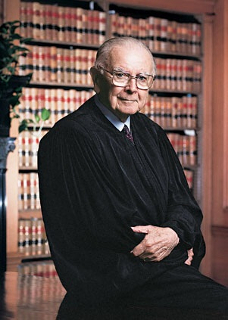
William J. Brennan Appointed to U.S. Supreme Court

william-brennan

William Joseph Brennan, Jr., American judge, is named an Associate Justice of the Supreme Court of the United States through a recess appointment by President Dwight D. Eisenhower on October 15, 1956, shortly before the 1956 presidential election. He serves from 1956 until July 20, 1990. As the seventh longest-serving justice in Supreme Court history, he is known for being a leader of the Court’s liberal wing.

Brennan is born in Newark, New Jersey to Irish immigrants, originally from County Roscommon, on April 25, 1906. He attends public schools in Newark, graduating from Barringer High School in 1924. He then attends the Wharton School of the University of Pennsylvania, where he graduates cum laude with a degree in economics in 1928. He graduates from Harvard Law School near the top of his class in 1931 and is a member of the Harvard Legal Aid Bureau.

Brennan enters private practice in New Jersey and serves in the United States Army during World War II. He is appointed to the Supreme Court of New Jersey in 1951. After his appointment to the U.S. Supreme Court by Eisenhower in 1956, he wins Senate confirmation the following year.

On the Supreme Court, Brennan is known for his outspoken progressive views, including opposition to the death penalty and support for abortion rights. He authors several landmark case opinions, including Baker v. Carr, establishing the “one person, one vote” principle, and New York Times Co. v. Sullivan, which requires “actual malice” in libel suits brought by public officials. Due to his ability to shape a wide variety of opinions and “bargain” for votes in many cases, he is considered to be among the Court’s most influential members. Justice Antonin Scalia calls Brennan “probably the most influential Justice of the [20th] century.”

Brennan holds the post on the Court until his retirement on July 20, 1990, after suffering a stroke. He is succeeded by Justice David Souter. Brennan then teaches at Georgetown University Law Center until 1994. He dies in Arlington County, Virginia on July 24, 1997, and is buried in Arlington National Cemetery.

With 1,360 opinions, he is second only to William O. Douglas in number of opinions written while a Supreme Court justice. On November 30, 1993, President Bill Clinton presents Brennan with the Presidential Medal of Freedom.


Leave a comment

The 2002 Bali Bombings

bali-bombings-2002

The 2002 Bali bombings occur on October 12, 2002 in the tourist district of Kuta on the Indonesian island of Bali. The attack kills 202 people, including 88 Australians, 38 Indonesians, and people of more than 20 other nationalities. An additional 209 people are injured.

At 11:05 PM Central Indonesian Time, a suicide bomber inside the nightclub Paddy’s Pub, sometimes referred to as Paddy’s Irish Bar and owned Natalia Daly of Cork, County Cork, detonates a bomb in his backpack, causing many patrons, with or without injuries, to immediately flee into the street. Twenty seconds later, a second and much more powerful car bomb hidden inside a white Mitsubishi van is detonated by another suicide bomber outside the Sari Club, a renowned open-air thatched roof bar located opposite Paddy’s Pub.

The bombing occurs during one of the busiest tourist periods of the year in Kuta Beach, driven in part by many Australian sporting teams making their annual end-of-season holiday.

Damage to the densely populated residential and commercial district is immense, destroying neighbouring buildings and shattering windows several blocks away. The car bomb explosion leaves a one-metre-deep crater.

The local Sanglah Hospital is ill-equipped to deal with the scale of the disaster and is overwhelmed with the number of injured, particularly burn victims. There are so many people injured by the explosion that some of the injured have to be placed in hotel pools near the explosion site to ease the pain of their burns. Many of the injured are forced to be flown extreme distances to Darwin (1,100 mi) and Perth (1,600 mi) on the Australian continent for specialist burn treatment.

A comparatively small bomb detonates outside the U.S. consulate in Denpasar, which is believed to have exploded shortly before the two Kuta bombs, causes minor injuries to one person and minimal property damage. It is reportedly packed with human feces.

The final death toll is 202, mainly comprising Western tourists and holiday-makers in their 20s and 30s who are in or near Paddy’s Pub or the Sari Club, but also including many Balinese Indonesians working or living nearby, or simply passing by. Hundreds more people suffer horrific burns and other injuries. The largest group among those killed are holidayers from Australia with 88 fatalities. On October 14, the United Nations Security Council passes Resolution 1438 condemning the attack as a threat to international peace and security.

Various members of Jemaah Islamiyah, a violent Islamist group, are convicted in relation to the bombings, including three individuals who are sentenced to death. An audio-cassette purportedly carrying a recorded voice message from Osama bin Laden states that the Bali bombings are in direct retaliation for support of the United StatesWar on Terror and Australia‘s role in the liberation of East Timor. The recording does not claim responsibility for the Bali attack. However, former FBI agent Ali Soufan confirms that Al-Qaeda did in fact finance the attack.

On November 8, 2008, Imam Samudra, Ali Amrozi bin Haji Nurhasyim and Huda bin Abdul Haq are executed by firing squad on the island prison of Nusa Kambangan. On March 9, 2010, Dulmatin, nicknamed “the Genius” and believed to be responsible for setting off one of the Bali bombs with a mobile phone, is killed in a shoot-out with Indonesian police in Jakarta.


7 Comments

The Last Execution in the Republic of Ireland

michael-manning

Michael Manning, Irish murderer, becomes the twenty-ninth and last person to be executed in the Republic of Ireland on April 20, 1954.

Manning, a 25-year-old carter from Johnsgate in Limerick, County Limerick, is found guilty of the rape and murder of Catherine Cooper, a 65-year-old nurse who works at Barrington’s Hospital in the city, in February 1954. Nurse Cooper’s body is discovered on November 18, 1953, in the quarry under the New Castle, Dublin Road, Castletroy. She is found to have choked on grass stuffed into her mouth to keep her from screaming during the committal of the crime.

Manning expresses remorse at the crime which he does not deny. By his own account, he is making his way home on foot after a day’s drinking in The Black Swan, Annacotty when he sees a woman he does not recognise walking alone. “I suddenly lost my head and jumped on the woman and remember no more until the lights of a car shone on me.” He flees at this point but is arrested within hours, after his distinctive hat is found at the scene of the crime.

Although Manning makes an impassioned plea for clemency in a letter to Minister for Justice Gerald Boland, his request is denied despite it also being supported by Nurse Cooper’s family. The execution by hanging is duly carried out on April 20, 1954, in Mountjoy Prison, Dublin by Albert Pierrepoint, who has traveled from Britain where he is one of three Senior Executioners.

Frank Prendergast, subsequently Teachta Dála (TD) for Limerick East who knew Manning well, recalls later, “Friends of mine who worked with me, I was serving my time at the time, went up to visit him on the Sunday before he was hanged. And they went to Mass and Holy Communion together and they played a game of handball that day. He couldn’t have been more normal.”

Manning leaves a wife who is pregnant at the time of the murder. His body is buried in an unmarked grave in a yard at Mountjoy Prison.

The death penalty is abolished in 1964 for all but the murder of gardaí, diplomats and prison officers. It is abolished by statute for these remaining offences in 1990 and is finally expunged from the Constitution of Ireland by approval by referendum of the Twenty-First Amendment on June 7, 2001.

The hanging of Michael Manning inspires a play by Ciaran Creagh. Creagh’s father, Timothy, is one of the two prison officers who stays with Michael Manning on his last night and Last Call is loosely based on what happened. It is shown in Mountjoy Prison’s theatre for three nights in June 2006.


Leave a comment

Death of Activist James Haughton

james-haughton

James Haughton, Irish social reformer and temperance activist, dies in Dublin on February 20, 1873.

Haughton, son of Samuel Pearson Haughton (1748–1828), by Mary, daughter of James Pim of Rushin, Queen’s County (now County Laois), is born in Carlow, County Carlow, and educated at Ballitor, County Kildare, from 1807 to 1810, under James White, a quaker. After filling several situations to learn his business, in 1817 he settles in Dublin, where he becomes a corn and flour factor, in partnership with his brother William. He retires in 1850. Although educated as a Friend, he joins the Unitarians in 1834 and remains throughout his life a strong believer in their tenets.

Haughton supports the anti-slavery movement at an early period and takes an active part in it until 1838, going in that year to London as a delegate to a convention. Shortly after the Temperance campaigner Father Theobald Mathew takes the pledge, on April 10, 1838, Haughton becomes one of his most devoted disciples. For many years he gives most of his time and energies to promoting total abstinence and to advocating legislative restrictions on the sale of intoxicating drinks.

In December 1844 Haughton is the chief promoter of a fund which is raised to pay some of the debts of Father Mathew and release him from prison. About 1835 he commences a series of letters in the public press which make his name widely known. He writes on temperance, slavery, British India, peace, capital punishment, sanitary reform, and education. His first letters are signed “The Son of a Water Drinker,” but he soon commences using his own name and continues to write until 1872.

Haughton takes a leading part in a series of weekly meetings which are held in Dublin in 1840, when so numerous are the social questions discussed that a newspaper editor calls the speakers the “Anti-everythingarians.” In association with Daniel O’Connell, of whose character he has a very high opinion, he advocates various plans for the amelioration of the condition of Ireland and the Repeal of the Union but is always opposed to physical force.

Haughton becomes a vegetarian in 1846, both on moral and sanitary grounds. For two or three years before his death he is president of the Vegetarian Society of the United Kingdom. He is one of the first members of the Statistical Society of Dublin (1847), a founder of the Dublin Mechanics’ Institute (1849), in the same year is on the committee of the Dublin Peace Society, aids in abolishing Donnybrook Fair in 1855, and takes a chief part in 1861 in opening the National Botanic Gardens at Glasnevin on Sundays.

James Haughton dies at 35 Eccles Street, Dublin, on February 20, 1873, and is buried in Mount Jerome Cemetery on February 24 in the presence of an immense crowd of people.

Haughton’s son, Samuel Haughton, publishes a memoir of his father’s life including extracts from his public correspondence in 1877.