Twomey lives at 6 Sevastopol Street in the Falls district. Known as “Thumper” owing to his short temper and habit of banging his fist on tables, he receives little education and is a bookmaker‘s “runner.” His father is a volunteer in the 1920s. In Belfast he lives comfortably with his wife, Rosie, whom he marries in 1946. Together they have sons and daughters.
Twomey begins his involvement with the Irish Republican Army in the 1930s and is interned in Northern Ireland during the 1940s on the prison ship HMS Al Rawdah and later in Crumlin Road Jail in Belfast. Rosie, his wife, is also held prisoner at the women prison, Armagh Jail, in Northern Ireland. He opposes the left-wing shift of Cathal Goulding in the 1960s, and in 1968, helps set up the breakaway Andersonstown Republican Club, later the Roddy McCorley Society.
In 1969, Twomey is prominent in the establishment of the Provisional Irish Republican Army. By 1972, he is Officer Commanding (OC) of the Provisional IRA Belfast Brigade when it launches its bomb campaign of the city, including Bloody Friday when nine people are killed. During the 1970s, the leadership of the Belfast Brigade of the IRA is largely in the hands of Twomey and Ivor Bell.
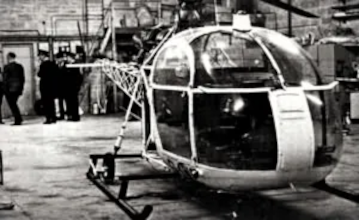
In March 1973, Twomey is first appointed IRA Chief of Staff after the arrest of Joe Cahill. He remains in this position until his arrest in October 1973 by the Garda Síochána. Three weeks later, on October 31, 1973, the IRA organises the helicopter escape of Twomey and his fellow IRA members J. B. O’Hagan and Kevin Mallon, when an active service unit hijacks and forces the pilot at gunpoint to land the helicopter in the training yard of Mountjoy Prison. After his escape, he returns to his membership of IRA Army Council.
By June/July 1974, Twomey is IRA Chief of Staff for a second time. He takes part in the Feakle talks between the IRA and Protestant clergymen in December 1974. In the IRA truce which follows in 1975, he is largely unsupportive and wants to fight on in what he sees as “one big push to finish it once and for all.”
IRA informer Sean O’Callaghan claims that on January 5, 1976, Twomey and Brian Keenan give the go-ahead for the sectarian Kingsmill massacre, when ten unarmed Ulster Protestant workmen are executed by the Provisional IRA in retaliation for a rash of loyalist killings of Catholics in the area. It is Keenan’s view, O’Callaghan claims, that “The only way to knock the nonsense out of the Prods is to be ten times more savage.”
Twomey is dedicated to paramilitarism as a means of incorporating Northern Ireland into the Republic of Ireland. In an interview with French television on July 11, 1977, he declares that although the IRA had waged a campaign for seven years at that point, it can fight on for another 70 against the British state in Northern Ireland and in England. He supports the bombing of wealthy civilian targets, which he justifies on class lines. On October 29, 1977, for example, a no-warning bomb at an Italian restaurant in Mayfair kills one diner and wounds 17 others. Three more people are killed in similar blasts in Chelsea and Mayfair the following month. He says, “By hitting Mayfair restaurants, we were hitting the type of person that could bring pressure to bear on the British government.”
In December 1977, Twomey is captured in Sandycove, Dublin, by the Garda Síochána, who had been tipped off by Belgian police about a concealed arms shipment, to be delivered to a bogus company with an address in the area. They swoop on a house in Martello Terrace to discover Twomey outside in his car, wearing his trademark dark glasses. After a high-speed pursuit, he is recaptured in the centre of Dublin. The Gardaí later find documents in his possession outlining proposals for the structural reorganisation of the IRA according to the cell system. His arrest ends his tenure as IRA chief of staff. In the 1986 split over abstentionism, Twomey sides with the Gerry Adams leadership and remains with the Provisionals.
After a long illness from a heart condition, Twomey dies in Dublin on September 12, 1989. He is buried in the family plot in Milltown Cemetery, Belfast. His funeral is attended by about 2,000 people.
Following the outbreak of the Troubles in the late 1960s, the Provisional IRA conducts an armed campaign that seeks to create a united Ireland by ending Northern Ireland‘s status as part of the United Kingdom. As a result of increasing levels of violence in Northern Ireland, internment without trial is introduced there in August 1971, and in the Republic of Ireland the coalition government led by Fine Gael’s Liam Cosgrave is attempting to curb IRA activity. Fine Gael had come to power on a law-and-order ticket, with a policy of “getting tough on crime.” Suspected IRA members are arrested and accused of IRA membership by a superintendent in the Garda Síochána, a crime under the Offences against the State Acts. They are tried at the juryless Special Criminal Court in Dublin, where the traditional IRA policy of not recognising the court results in a fait accompli as no defence is offered and IRA membership carries a minimum mandatory one-year sentence, resulting in internment in all but name. In September 1973 IRA Chief of Staff Seamus Twomey appears at the Special Criminal Court charged with IRA membership, and states, “I refuse to recognise this British-orientated quisling court.” He is found guilty and receives a five-year sentence. By October 1973 the IRA’s command structure is seriously curbed, with Twomey and other senior republicans J. B. O’Hagan and Kevin Mallon all being held in Mountjoy Prison.
The IRA immediately begins making plans to break Twomey, O’Hagan and Mallon out of the prison. The first attempt involves explosives that had been smuggled into the prison, which are to be used to blow a hole in a door which will give the prisoners access to the exercise yard. From there, they are to scale a rope ladder thrown over the exterior wall by members of the IRA’s Dublin Brigade who are to have a getaway car waiting to complete the escape. The plans when the prisoners cannot gain access to the exercise yard and the rope ladder is spotted, so the IRA begins making new escape plans. The idea of using a helicopter in an escape had been discussed before in a plot to break Gerry Adams out of Long Kesh internment camp but had been ruled out because of faster and more sophisticated British Army helicopters being stationed at a nearby base. The IRA’s GHQ staff approves the plan to break out Twomey, O’Hagan and Mallon, and arrangements are made to obtain a helicopter. A man with an American accent calling himself Mr. Leonard approaches the manager of Irish Helicopters at Dublin Airport, with a view to hiring a helicopter for an aerial photographic shoot in County Laois. After being shown the company’s fleet of helicopters, Leonard arranges to hire a five-seater Alouette II for October 31.
Leonard arrives at Irish Helicopters on October 31 and is introduced to the pilot of the helicopter, Captain Thompson Boyes. Boyes is instructed to fly to a field in Stradbally, in order to pick up Leonard’s photographic equipment. After landing Boyes sees two armed, masked men approaching the helicopter from nearby trees. He is held at gunpoint and told he will not be harmed if he follows instructions. Leonard leaves with one gunman, while the other gunman climbs aboard the helicopter armed with a pistol and an ArmaLite rifle. Boyes is instructed to fly towards Dublin following the path of railway lines and the Royal Canal and is ordered not to register his flight path with Air Traffic Control. As the helicopter approaches Dublin, Boyes is informed of the escape plan and is instructed to land in the exercise yard at Mountjoy Prison.
In the prison’s exercise yard, the prisoners are watching a football match. Shortly after 3:35 p.m. the helicopter swings in to land in the prison yard, with Kevin Mallon directing the pilot using semaphore. A prison officer on duty initially takes no action as he believes the helicopter contains the Minister for Defence, Paddy Donegan. After prisoners surround the eight prison officers in the yard, fights break out as the officers realise an escape attempt is in progress. As other prisoners restrain the officers, Twomey, Mallon and O’Hagan board the helicopter. As the helicopter takes off, in the confusion one officer shouts, “Close the gates, close the fucking gates.” The helicopter flies north and lands at a disused racecourse in the Baldoyle area of Dublin, where the escapees are met by members of the IRA’s Dublin Brigade. Boyes is released unharmed, and the escapees are transferred to a taxi that had been hijacked earlier and are transported to safe houses.
The escape makes headlines around the world and is an embarrassment for Cosgrave’s government, which is criticised for “incompetence in security matters” by opposition party Fianna Fáil. An emergency debate on security is held in Dáil Éireann on November 1.
The IRA releases a statement on the escape, which reads, “Three republican prisoners were rescued by a special unit from Mountjoy Prison on Wednesday. The operation was a complete success, and the men are now safe, despite a massive hunt by Free State forces.” Shortly after the escape Twomey gives an exclusive interview to German magazine Der Spiegel, where the reporter says people throughout Europe are joking about the incident as “the escape of the century.” Irish rebel band the Wolfe Tones writes a song celebrating the escape called “The Helicopter Song,” which is immediately banned by the government yet still tops the Irish Singles Chart after selling twelve thousand copies in a single week.
The escape results in all IRA prisoners being held at Mountjoy Prison and Curragh Camp being transferred to the maximum security Portlaoise Prison. In order to prevent any further escapes, the perimeter of the prison is guarded by members of the Irish Army, and wires are erected over the prison yard to prevent any future helicopter escape. Cosgrave states there will be “no hiding place” for the escapees, and a manhunt involving twenty thousand members of the Irish Defence Forces and Garda Síochána ensues.
Mallon is recaptured at a Gaelic Athletic Association dance in a hotel near Portlaoise on December 10, 1973, and imprisoned in Portlaoise Prison. He escapes from there in a mass break-out on August 18, 1974, when nineteen prisoners escape after overpowering guards and using gelignite to blast through the gates. He is recaptured in Foxrock in January 1975 and returned to Portlaoise Prison. O’Hagan is recaptured in Dublin in early 1975, and also imprisoned in Portlaoise Prison. After the end of his original twelve-month sentence, he is immediately arrested and sentenced to a further two years imprisonment for escaping. Twomey evades recapture until December 2, 1977, when he is spotted sitting in a car in Sandycove by members of the Garda’s Special Branch who are investigating an arms shipment after a tip-off from police in Belgium. He drives away after spotting the officers, before being recaptured in the centre of Dublin after a high-speed car chase. He is also imprisoned in Portlaoise Prison until his release in 1982.
In 2021, Brendan Hughes publishes an autobiography Up Like a Bird, an account of the planning and organisation of the escape, co-authored with Doug Dalby.
Doyle fights in the Irish War of Independence (1919-21) and takes the anti-Treaty side in the Irish Civil War (1922-23) and is subsequently interned among numerous others. Together with two fellow-detainees, Timothy Coughlin and Bill Gannon, he takes part in forming a secret “vengeance grouping.” The three vow that once free of imprisonment they will take revenge on their opponents, whom they consider traitors to the Irish cause.
Most such private revenge pacts are broken up by the IRA leadership when it reorganises following 1924, but Doyle and his two fellow conspirators persist and carry through their deadly aim. On July 10, 1927, the three surprised O’Higgins on his way to Mass at the Booterstown Avenue side of Cross Avenue in Blackrock, Dublin, and shoot him down.
O’Higgins is especially hated by IRA members for having ordered the executions of seventy-seven of their fellows during the Civil War, an act for which he outspokenly takes responsibility and refuses to express any remorse. Moreover, he is a dominant member of the Irish Free State government, and the conspirators have good reasons to believe that his death would weaken it.
The three make their escape and are not apprehended. However, Timothy Coughlin is shot to death by police informer Sean Harling on the night of January 28, 1928, on Dublin’s Dartry Road, under circumstances which remain controversial up to the present. A second IRA man is known to have been with Coughlin that night, in surveillance of Harling’s home, and escapes unharmed. It is believed that Doyle is that second man, though this point, as many other details of this still rather mysterious affair, remains not quite certain.
Doyle is among the beneficiaries of the amnesty issued by Éamon de Valera when he comes to power in 1932, under which numerous IRA men are released from prison and the charges against others dropped. In later times Doyle openly admits his part in the killing of O’Higgins, and indeed takes pride in it, without fear of prosecution.
With the end of the IRA’s alliance with de Valera and the increasing confrontation between them, Doyle, now a veteran highly respected in the IRA circles, becomes deeply involved in the organisation’s 1940s campaigns. Harry, the memoirs of IRA man Harry White, make repeated admiring references to “Archie Doyle of Dublin, the Tan War veteran who had fought through it all.”
During the IRA’s Northern campaign, Doyle is said to have participated in the abortive raid on the British barracks at Crossmaglen, County Armagh, on September 2, 1942, in retaliation for the execution of Tom Williams earlier that morning. The IRA unit, some twenty men in a commandeered lorry and accompanying car, is discovered by a passing Royal Ulster Constabulary (RUC) patrol near the village of Cullaville. Doyle is mentioned in White’s memoirs as having “jumped out of the car, Thompson in hand, and started shooting at the RUC.” Since the element of surprise is lost, the attack on the barracks has to be cancelled.
A week later, on September 9, White mentions Doyle as having commanded the assassination of Sergeant Denis O’Brien, Irish Special Branch detective and himself a former IRA man, near Dublin. It is a highly controversial affair, opposed by the IRA GHQ in Belfast as damaging to the Northern campaign, and precipitates a massive manhunt by the Irish police. It is IRA Chief of StaffCharlie Kerins who is caught two years later, charged with the O’Brien assassination and eventually executed for it. White, however, claims that it is Doyle who actually commands that action, on Kerins’s orders. Doyle, who openly spoke of his part in killing O’Higgins, seems far more reticent about this part of his career.
In 1943 Doyle is assigned as the IRA’s Quartermaster General in Belfast.
On July 1, 1943, Doyle is mentioned as having participated, together with Kerins and with Jackie Griffith, in an operation of “fund-raising” for the hard-pressed IRA (i.e., robbery). The three men arrive on bikes at the gates of Player Wills factory on the South Circular Road, Dublin, and with scarves around their faces stop at gunpoint a van loaded with some £5,000 for wages and drive away with the van and the money.
Griffith is shot down by the police in Dublin less than a week later, in what is charged to be an extrajudicial assassination, and Kerins is caught in 1944 and executed, becoming a major IRA martyr. Doyle, however, continually survives decades of a very dangerous way of life and manages to die of old age. He dies in St. James’s Hospital in Dublin in 1980.
Frank Ryan, politician, journalist, intelligence agent and paramilitary activist, is born in the townland of Bottomstown, Elton, County Limerick, on September 11, 1902. A fascinating, somewhat mythical figure, he lives during turbulent times when Ireland finally disposes of tyrannical British rule in Ireland and becomes an icon for socialist republicans in Europe during the 1930s and 40s.
Ryan fights on the Anti-Treaty side in the Irish Civil War (1922-23) and is wounded and interned. In November 1923 he is released and returns to UCD. He secures his degree in Celtic Studies and further secures the editorship of An Phoblacht (The Republic), the newspaper of the anti-Treaty Irish Republican Army (IRA).
The split in the Irish independence party, Sinn Féin, results in regular fist fights between pro and anti-Treaty forces. Cumann na nGaedhael, the pro-Treaty political party in government, recruits the Army Comrades Association (Blueshirts) under former Garda CommissionerEoin O’Duffy to protect their members from anti-Treaty IRA protesters at annual Armistice Day and Wolfe Tone commemorations. Ryan is a forceful orator at these events and is frequently arrested and beaten up by the Gardai. The fractious politics results in Dáil members Sean Hales and Kevin O’Higgins being shot dead in public.
The outbreak of the Spanish Civil War (1936-39) inspires Ryan to lead the first contingent of Irish volunteers to support the Popular Front government of Republican Spain. A brave and inspiring leader, he serves with Italian and German Republican divisions. He is seriously wounded at the Battle of Jarama in February 1937. Following recuperation in Ireland, he is appointed adjutant to republican General José Miaja. During the Aragon Offensive he is captured with 150 of his men in April 1938 and sentenced to death. Irish President, Éamon de Valera, intervenes with General Francisco Franco and Ryan’s sentence is commuted to thirty years. His health suffers severely in Burgos Prison, Spain during his two-year incarceration.
Franco refuses to release Ryan because he is considered his most dangerous prisoner. In August 1940 he is transferred to Berlin, where he is re-united with IRA Chief of StaffSeán Russell. An attempt to return both men to Ireland by U-boat ends with Russell dying from a perforated ulcer. Ryan voluntarily returns to Germany where he serves as the unofficial IRA ambassador for German intelligence. Irishman Francis Stuart, son-in-law of Maud Gonne, who writes some of William Joyce’s propaganda, takes good care of Ryan until his untimely death at a hospital in Loschwitz in Dresden on June 10, 1944.
Ryan’s funeral in Dresden is attended by Elizabeth Clissmann, wife of Helmut Clissmann, and Francis Stuart. Clissmann eventually forwards details of Ryan’s fate to Leopold Kerney in Madrid. According to Stuart and Clissmann, the cause of death is pleurisy and pneumonia.
In 1963, historian Enno Stephan locates Ryan’s grave in Dresden. Three volunteers of the International Brigades, Frank Edwards, Peter O’Connor and Michael O’Riordan travel to East Germany as a guard of honour to repatriate Ryan’s remains in 1979. On June 21, 1979, his remains arrive in Whitefriar Street Carmelite Church, his local church when he lived in Dublin. The church is packed with all shades of Republican and left-wing opinion, as well as those from his past such as the Stuarts, the Clissmanns, Peadar O’Donnell, George Gilmore, and ex-comrades and sympathizers from all over the world. The cortège on its way to Glasnevin Cemetery halts at the GPO in memory of the dead of the 1916 Easter Rising. His coffin is borne to the grave in Glasnevin Cemetery by Irish veterans of the Spanish Civil War, Frank Edwards, Peter O’Connor, Michael O’Riordan and Terry Flanagan. Con Lehane delivers the funeral oration while a piper plays “Limerick’s Lamentation.” He is buried next to Éamonn Mac Thomáis.
Ryan leads a vicarious life in pursuit of human rights, socialism and republicanism. His life story remains more colourful than fiction.
Cahill is born in Belfast on May 19, 1920. He is educated at St. Mary’s Christian Brothers’ Grammar School. At age 14 he leaves school to assist in his father’s print shop. Soon after, he joins the Catholic Young Men’s Society, which campaigns on social issues with a focus on eradicating moneylenders from working-class areas of Belfast, as they often charge usurious interest rates. At the age of seventeen, he joins Na Fianna Éireann, a republican-orientated Scouting movement. Na Fianna Eireann is regarded as the “Junior Irish Republican Army.”
Cahill joins the local Clonard-based ‘C’ Company of the Belfast Brigade of the Irish Republican Army in 1938. Four years later, during an anniversary march by the IRA for the Easter Rising, he gets into a shootout with five other IRA men against four Royal Ulster Constabulary (RUC) officers. Several men are wounded, and Constable Patrick Murphy is killed. Cahill and four of the other men spend time in prison in Belfast. The IRA declares a formal ceasefire in 1945. Afterwards, republican prisoners begin to be released. Cahill is released in October 1949.
The IRA launches a new campaign in 1956. The IRA border campaign attacks ten targets in six counties, damaging bridges, courthouses and border roads. By 1957, three RUC officers and seven republicans have been killed during the campaign. Cahill is arrested and interned in January 1957 with several other republicans. He is released from internment in April 1961. Following his release from prison, he is disappointed at the direction of the IRA and resigns from the organisation around 1962.
In 1969, Cahill is a key figure in the founding of the Provisional Irish Republican Army. During his time in the Provisional IRA, he helps import weapons and raise financial support. He serves as the Chief of Staff in 1972 but is arrested the following year when a ship importing weapons is intercepted.
After his release, Cahill continues to serve on the IRA Army Council and leads all financial dealings for Sinn Féin. In the 1990s, the IRA and Sinn Féin begin to work on seeking peace. Cahill serves on the council that calls a cessation on July 21, 1996. He attends several of the talks that finally lead to the Good Friday Agreement on April 10, 1998. Shortly after the agreement is made, he resigns as treasurer of Sinn Féin. To honour his service, he is made honorary Sinn Féin Vice-President for life. He serves the Republican movement in Ireland all his life, as one of the longest-serving political activists in Ireland of any political party.
Cahill dies at age 84 in Belfast on July 23, 2004. He had been diagnosed with asbestosis, which he probably developed while working at the Harland & Wolff shipyards in his twenties. He and several other former shipyard workers later sue the company for their exposure to the dangerous substances but only win minimal compensation.
The Irish Citizen Army also becomes involved in the battle, supporting the anti-Treaty IRA in the O’Connell Street area. The fighting begins with an assault by Provisional Government forces on the Four Courts building and ends in a decisive victory for the Provisional Government.
On April 14, 1922, about 200 Anti-Treaty IRA militants, with Rory O’Connor as their spokesman, occupy the Four Courts in Dublin, resulting in a tense stand-off. They want to spark a new armed confrontation with the British, which they hope will bring down the Anglo-Irish Treaty, unite the two factions of the IRA against their former common enemy and restart the fight to create an all-Ireland Irish Republic. At the time the British Army still has thousands of soldiers concentrated in Dublin, awaiting evacuation.
Winston Churchill and the British cabinet have been applying pressure on the Provisional Government to dislodge the rebels in the Four Courts, as they consider their presence a violation of the Treaty. Such pressure falls heaviest on Michael Collins, President of the Provisional Government Cabinet and effective head of the regular National Army. Collins, a chief IRA strategist during the War of Independence from Britain, has resisted giving open battle to the anti-Treaty militants since they occupied Four Courts in April. His colleagues in the Provisional Government Cabinet, including Arthur Griffith, agree that Collins must mount decisive military action against them.
In June 1922 the Provisional Government engages in intense negotiations with the British Cabinet over a draft Constitution that seeks to avert the impending civil war. They particularly seek to remove the requirement of an oath to the British Crown by all members of the Dublin government, a key point of contention with anti-Treaty partisans. However, the conservative British Cabinet refuses to cooperate. The pro-treaty element of Sinn Féin wins the elections on June 16.
Following the assassination of Sir Henry Wilson in London on June 22, 1922, and the arrest by Four Courts troops of National Army Deputy Chief of Staff Gen. J. J. “Ginger” O’Connell, British pressure on the Provisional Government intensifies. The British now threaten to invade and re-occupy all of Ireland. On June 27 the Provisional Government Cabinet agrees on an ultimatum to the Four Courts garrison to evacuate or face immediate military action.
Churchill offers a loan of British artillery for use by the National Army, along with 200 shells from their store of 10,000 at Kilmainham, three miles away. It is possible that some British special troops are also covertly loaned. Two 18-pounder field guns are placed on Bridge Street and Winetavern Street, across the River Liffey from the Four Courts complex. After an ultimatum is delivered to the anti-Treaty garrison in the early hours of June 28, the National Army commences the bombardment of Four Courts.
No authoritative record exists regarding the order to commence bombardment. Historians tend to attribute the order to Collins, but some biographers dispute this. Anti-Treaty survivors allege that they are preparing for an 8:00 a.m. evacuation when the bombardment begins at 4:00 a.m.
Inside the building are 12 members of the Irish Republican Army Executive, including Chief of StaffJoe McKelvey, Director of Engineering Rory O’Connor, Quartermaster General Liam Mellows and Director of Operations Ernie O’Malley. The garrison consists of roughly 180 men drawn from the 1st and 2nd Battalions of the IRA’s 1st Dublin Brigade, commanded by Commandant Paddy O’Brien, armed for the most part only with small arms apart from one captured armoured car, which they name “The Mutineer.” The members of the IRA Army Executive are the political leaders of the garrison but serve as common soldiers under the command of O’Brien. The Anti-Treaty side fortifies the Four Courts to some extent, planting mines around the complex and barricading the doors and windows, but their leadership orders them not to fire first, in order to retain the moral high ground, and so the Free State troops are allowed to surround the Four Courts.
After the first day’s bombardment proves ineffective, the British give the Free State two more 18-pounder cannon and proffer 60-pounder howitzers along with an offer to bomb the Four Courts from the air. Collins turns down the latter two offers because of the risk of causing heavy civilian casualties. On June 29, Free State troops storm the eastern wing of the Four Courts, losing three killed and 14 wounded and taking 33 prisoners. The republicans’ armoured car is disabled and abandoned by its crew. Early the next day O’Brien is injured by shrapnel and O’Malley takes over military command in the Four Courts. By this time the shelling has caused the Four Courts to catch fire. In addition, orders arrive from Oscar Traynor, the anti-treaty IRA commander in Dublin, for the Four Courts garrison to surrender, as he cannot reach their position to help them. O’Malley rules this order invalid, as the Four Courts is a GHQ operation. However, in view of the rapidly deteriorating situation, at 3:30 p.m. on June 30, O’Malley surrenders the Four Courts to Brigadier GeneralPaddy Daly of the Free State’s Dublin Guard unit. Three of the republican garrison die in the siege.
Several hours before the surrender, the Public Record Office of Ireland (PRO) block located in the western block of the Four Courts, which is used as an ammunition store by the Four Courts garrison, is the centre of a huge explosion, destroying Irish state records going back to the Anglo-Norman conquest. Forty advancing Free State troops are badly injured. Assigning blame for the explosion remains controversial. It is alleged by the National Army Headquarters that the Anti-treaty forces deliberately booby-trapped the PRO to kill advancing Free State troops. Tim Healy, a government supporter, later claims that the explosion is the result of land mines laid before the surrender, which explode after the surrender. However, a study of the battle concludes that the explosion is caused by fires ignited by the shelling of the Four Courts, which eventually reach two truckloads of gelignite in the munitions factory. A towering mushroom cloud rises 200 feet over the Four Courts.
At this stage in the battle troops on each side still have a sense of kinship with the other, as most of them had fought together in the Irish Republican Army during the Irish War of Independence. By appealing to friends on the Free State side, several anti-Treaty leaders among the Four Courts garrison, notably Ernie O’Malley and Seán Lemass, escape from captivity to continue the fight.
Despite the Free State force’s success in taking the Four Courts, fighting continues in Dublin until July 5. On June 29 anti-Treaty IRA units from the Dublin Brigade led by Oscar Traynor have occupied O’Connell Street, part of Parnell Square, York Street and some of other locations to try to distract Free State attention from their attack on the Four Courts. Not all the IRA units in the capital are prepared to fight against the new Irish government, however, and their numbers are probably about 500 throughout the city. Their numbers are supplemented by about 150 Citizen Army men and women who bring with them arms and ammunition dumped since the insurrection of Easter 1916.
The republicans occupy the northeastern part of O’Connell Street, with their strong point at “the block,” a group of buildings that the Anti-Treatyites had connected by tunneling through the walls. They had also taken over the adjoining Gresham, Crown, Granville and Hammam hotels. Their only position on the western side of the street is in the YMCA building. Additionally, they have an outpost south of the River Liffey at the Swan Pub on Aungier Street. Oscar Traynor apparently hopes to receive reinforcements from the rest of the country, but only Anti-Treaty units in Belfast and Tipperary reply and both of them arrive too late to take part in the fighting.
The Provisional Government troops, commanded by General Tom Ennis, start by clearing out the outlying anti-treaty garrisons, which is accomplished by July 1. They then draw a tighter cordon around O’Connell Street. Artillery is used to drive the Anti-Treaty fighters out of positions on Parnell Street and Gardiner Street, which gives the Free State troops a clear field of fire down O’Connell Street.
The republican outpost in the YMCA is eliminated when Free State troops tunnel underneath it and detonate a bomb. Traynor’s men in “the block” hold out until artillery is brought up, under the cover of armored cars, to bombard them at point-blank range. Incendiary bombs are also planted in the buildings. Traynor and most of his force make their escape when the buildings they are occupying catch fire. They mingle with civilian crowds and make their way to Blessington.
Left behind is Republican leader Cathal Brugha and a rear guard of 15 men, who stay behind in the Hammam Hotel after Traynor, and most other IRA men have left. At 5:00 p.m. on July 5, when the fires make the hotel untenable, Brugha orderes his men to surrender. He, however, stays behind, only to emerge from the building alone, armed with a revolver. He is shot in the thigh by Free State troops and dies later from blood loss. There are some further sporadic incidents of fighting around the city as Free State troops disperse anti-treaty IRA groups.
Cathal Brugha is the last casualty in the Battle of Dublin, which costs the lives of at least 80 people (15 anti-Treaty IRA Volunteers, 29 National Army soldiers, one British Royal Air Force serviceman and 35 civilians) and over 280 wounded. In addition, the Free State takes over 450 Republican prisoners. The high civilian casualties are doubtless the result of the use of heavy weapons, especially artillery, in a densely populated urban area.
When the fighting in Dublin dies down, the Free State government is left firmly in control of the Irish capital and the anti-treaty forces disperse around the country. Roundups after the fighting result in more Republican prisoners and the death of prominent anti-Treaty activist Harry Boland who is shot dead in Skerries, Dublin, on July 31.
Oscar Traynor, Ernie O’Malley and the other anti-Treaty fighters who escape the fighting in Dublin regroup in Blessington, around 30 km southwest of the city. An anti-Treaty IRA force from County Tipperary had arrived there but too late to participate in the Dublin fighting. Instead, this force heads south and takes a string of towns, including Enniscorthy and Carlow, but quickly abandons them when faced with superior Free State forces. Most of the Republicans then retreat further south to the so-called Munster Republic, territory southwest of a line running from Limerick to Waterford. This in turn is taken by the Free State in an offensive from July to August 1922.
Four of the Republican leaders captured in the Four Courts, Rory O’Connor, Liam Mellows, Joe McKelvey and Richard Barrett, are later executed by the government in reprisal for the Anti-Treaty side’s killing of TDSeán Hales. The street where Cathal Brugha is killed is later renamed Cathal Brugha Street in his honour.
Seven people are killed in the explosion, including two members of the Royal Ulster Constabulary (RUC), who say they had evacuated people to what was considered to have been a safe area following misleading telephone calls, which had originally placed the device in a nearby street. The Provisional IRA Belfast Brigade admits responsibility for the bomb, which also injures 148 people, but claims that the security forces had deliberately misrepresented the warnings in order to maximise the casualties. This is one of the first car bombs the IRA uses in their armed campaign.
On Monday, March 20, 1972, at 11.45 a.m., a local carpet dealer receives a telephone call warning that a bomb will explode in Belfast city centre’s Church Street which is crowded with shoppers, office workers on lunch breaks, and schoolchildren. British Army troops and the RUC are alerted and immediately begin to evacuate the people into nearby Lower Donegall Street. The second call to The Irish News newspaper seven minutes later also gives Church Street as the location for the device. A final call comes at 11:55 a.m. advising theNews Letter newspaper that the bomb is instead placed outside its offices in Lower Donegall Street where the crowds have been sent. Thus, the warning arrives too late for the security forces to clear the street. Staff working inside the News Letter building are told by the caller that they have 15 minutes in which to leave the building, but they never have a chance to evacuate.
At 11:58 a.m. a 100-pound gelignite bomb explodes inside a green Ford Cortina parked in the street outside the offices of the News Letter, shaking the city centre with the force of its blast, and instantly killing the two RUC constables, Ernest McAllister (31) and Bernard O’Neill (36), who had been examining the vehicle. The remains of the two policemen are allegedly found inside a nearby building. Minutes earlier they had been helping to escort people away from Church Street.
The explosion sends a ball of flame rolling down the street and a pall of black smoke rising upward. The blast wave rips into the crowds of people who had run into Donegall Street for safety, tossing them in all directions and killing another four men outright: Ernest Dougan (39), James Macklin (30), Samuel Trainor (39) and Sydney Bell (65). Trainor is also an off-duty Ulster Defence Regiment (UDR) soldier and a member of the Orange Order. A seriously wounded pensioner, Henry Miller (79) dies in hospital on April 5. Most of the dead are mutilated beyond recognition. With the exception of Constable O’Neill, who is a Catholic, the other six victims are Protestants.
The explosion blows out all the windows in the vicinity, sending shards of glass into people’s bodies as they are hit by falling masonry and timber. The ground floor of the News Letter offices and all buildings in the area suffer heavy damage. The News Letter library in particular sustains considerable damage with many priceless photographs and old documents destroyed. Around the blast’s epicentre, the street resembles a battlefield. About one hundred schoolgirls lay wounded on the rubble-strewn, bloody pavement covered in glass and debris, and screaming in pain and fright. A total of 148 people are injured in the explosion, 19 of them seriously. Among the injured are many of the News Letter staff.
One of the wounded is a child whose injuries are so severe a rescue worker at the scene assumes the child has been killed. A young Czech art student, Blanka Sochor (22), receives severe injuries to her legs. She is photographed by Derek Brind of the Associated Press as a British Paratrooper holds her in his arms. Passerby Frank Heagan witnesses the explosion and comes upon what is left of two binmen who had been “blown to pieces.” He adds that “there was blood everywhere and people moaning and screaming. The street was full of girls and women all wandering around.” The injured can be heard screaming as the ambulances transport them to hospital. Emergency amputations are performed at the scene.
While the security forces and firemen pull victims from the debris in Donegall Street, two more bombs go off elsewhere in the city centre, however, nobody is hurt in either attack. On the same day in Derry, a British soldier, John Taylor, is shot dead by an IRA sniper. In Dublin, Chief of Staff of the Irish Republican Army, Seán Mac Stíofáin, suffers burns to his face and hands after he opens a letter bomb sent to him through the post. Cathal Goulding, head of the Official Irish Republican Army, also receives a letter bomb but escapes injury by having dismantled the device before it exploded.
This is amongst the first car bombs used by the Provisional IRA during The Troubles in its militant campaign to force a British military withdrawal and reunite the six counties of Northern Ireland with the rest of the island of Ireland. It is part of the IRA’s escalation of violence to avenge the Bloody Sunday killings in which 13 unarmed Catholic civilian men were killed by the British Army’s Parachute Regiment when the latter opened fire during an anti-internment demonstration held in Derry on January 30, 1972.
The bombing is carried out by the North Belfast unit of the Provisional IRA’s Third Battalion Belfast Brigade. The OC of the Brigade at that time is the volatile Seamus Twomey, who orders and directs the attack.
On March 23, the IRA admits responsibility for the bomb with one Belfast Brigade officer later telling a journalist, “I feel very bad when the innocent die.” The IRA, however, tempers the admission by claiming that the caller had given Donegall Street as the correct location for the bomb in all the telephone calls and that the security forces had deliberately evacuated the crowds from Church Street to maximise the casualties. The IRA’s official statement claiming responsibility for the blast is released through the Irish Republican Publicity Bureau.
The IRA follows the Donegall Street attack two days later with a car bomb at a carpark adjacent to the Belfast Great Victoria Street railway station and close to the Europa Hotel. Seventy people are treated in hospital for injuries received mainly by flying glass, but there are no deaths. The blast causes considerable damage to two trains, parked vehicles, the hotel, and other buildings in the area.
Although many members of the Provisional IRA are rounded up by police in the wake of the Donegal Street attack, none of the bombers are ever caught nor is anyone ever charged in connection with the bombing.
Plant is the second eldest child and son in a family of six children. His parents are John William Albert Plant, a farmer, and Catherine Hayden.
One Sunday in 1916 George and his older brother Jimmy are arrested by the Royal Irish Constabulary (RIC) after being seen speaking to two well-known republicans, Seán Hayes and Dan Breen. In custody the two brothers are beaten and mistreated resulting in a hatred of the RIC. He serves with the Irish Republican Army during the Irish War of Independence and with the Anti-Treaty IRA in the Irish Civil War.
In 1923 George and Jimmy leave Ireland for Canada and the United States but continue as active IRA members. In 1929 they return to Ireland and carry out a bank raid in Tipperary on behalf of the IRA. They are arrested two days later at the family farm and subsequently sentenced to 7 years in prison. They are released in a general amnesty after the Fianna Fáil and Éamon de Valera election victory in 1932. He is a strong supporter of Seán Russell. In 1939 following the outbreak of World War II, known in Ireland as The Emergency, de Valera is determined to maintain Irish neutrality and is not going to allow the IRA to jeopardize this. The IRA links with Germany and campaign in Britain are severely straining Anglo-Irish relations so emergency legislation is introduced.
Russell, the IRA Chief of Staff, dies in August 1940 after taking ill on board a U-boat and Stephen Hayes from County Wexford becomes IRA Chief of Staff. In late August 1940 an address on Lansdowne Road Dublin is raided by the Garda Síochána. Among the men arrested is Michael Devereux, a 24-year-old married truck driver from County Wexford who is also Quartermaster of the IRAs Wexford Brigade. He is released after three days without charge. Shortly afterwards Gardaí in County Wexford find an IRA arms dump. Many in the IRA suspect that Devereux had turned informer, so Stephen Hayes orders Devereux’s execution. George Plant and another man, Michael Walsh from County Kilkenny, are ordered to carry out the order. Devereux meets Plant and Walsh who tell Devereux that Tom Cullimore, the Wexford Brigade’s OC is blamed for the arms dump and that they have shot him. They order Devereux to drive them to an IRA safe house at Grangemockler in south County Tipperary. Devereux, believing he is the prime suspect in a murder, stays willingly at the safe house. A week later, on September 27, 1940, Devereux is invited to go for a walk with Plant and Paddy Davern, the owner of the safe house. Somewhere along the walk Plant accuses Devereux of being an informer and shoots him dead. Plant is arrested nine weeks later on suspicion of IRA membership and brought before the Special Criminal Court in Dublin. On February 10, 1941, Radio Éireann broadcasts a radio appeal for Michael Devereux on behalf of his wife.
In September 1941 Stephen Hayes is accused of being an informer by a group of Northern IRA members led by Seán McCaughey. He manages to escape to a garda station. Shortly afterwards a large force of Garda Síochána and Irish Army descend on the area around the Davern farmhouse where they find Devereux’s car buried under an onion bed and eventually discover Devereux’s body, a year to the day after his death. Two weeks later, Plant, already in prison on IRA membership charges, is charged with Devereux’s murder. A trial is held with a senior IRA officer, Joseph o’Connor, also charged with Devereux’s murder. The first trial collapses after two days when Paddy Davern and Micheal Walsh, two of the prosecution witnesses, refuse to give evidence. This result leads to the court issuing a nolle prosequi order which should have meant the end of the affair, however both men are rearrested and recharged with the same offence, under Emergency Order 41f. Minister for JusticeGerald Boland transfers the case to a Special Military Court with army officers acting as judges. In addition to Plant, Paddy Davern and Michael Walsh are also now charged with Devereux’s murder. The second trial begins at Collins Barracks, Dublin in February 1942 with Seán MacBride, a former IRA Chief of Staff and future government minister as the defendant’s barrister. Davern states his original statement was given at gunpoint but under the new order even statements given under duress are admissible. The court only has two sentencing options – death or acquittal. Joseph O’Connor is acquitted and despite MacBride’s best efforts the other three are sentenced to death. Davern and Walsh have their sentences commuted to life imprisonment and are both released in 1946.
Just one week after sentence is passed, Plant is executed in Portlaoise Prison by a six-man firing squad drawn from the Irish Army. Much bitterness is caused by the treatment of Plant’s relatives. Neither his wife or mother or infant son are allowed to visit him in the week before his execution. Censorship ensures there is little mention in the newspapers, so his family only learns of his execution from a brief radio broadcast shortly before they receive a telegram. He is buried in the grounds of Portlaoise Prison, but is reinterred in 1948, when he is buried with full IRA military honours in his local church St. Johnstown in County Tipperary, and a Celtic cross is erected over his grave.
Plant’s wife moves to the United States where she remarries. His brother Jimmy dies in London in 1978. The Plant’s family farm is now part of the Coolmore Estate.
Hayes sends a plan for the invasion of Northern Ireland by German troops to Germany in April 1940. This plan later becomes known as Plan Kathleen. He is also known to have met with German agent Hermann Görtz on May 21, 1940, in Dublin shortly after the latter’s parachuting into Ireland on May 5, 1940, as part of Operation Mainau. He is known to have asked Görtz for money and arms to wage a campaign in Northern Ireland, although shortly after this meeting the original Plan Kathleen is discovered. The discovery of the plan leads to the acceleration of joint British and Irish military planning for a German invasion known as Plan W.
Another meeting on August 15, 1940, on Rathgar Road, Dublin organised by Hayes and attended by senior IRA men Paddy McGrath, Tom Harte and Tom Hunt, is also raided by the Garda Síochána.
On June 30, 1941, Northern-based IRA men kidnap Hayes, accusing him of being a spy. By his own account, he is tortured and “court-martialed” for “treason” by his comrades, and would have been executed, but he buys himself time composing an enormously long confession. He manages to escape on September 8, 1941, and hands himself in to the Garda for protection.
The Officer Commanding (O/C) of the IRA Northern Command, Seán McCaughey, is convicted on September 18, 1941, of the kidnapping. After a long hunger and thirst strike in Portlaoise Prison, he dies on May 11, 1946.
Hayes is later sentenced to five years’ imprisonment by the Special Criminal Court on account of his IRA activities.
Within IRA circles, Hayes is still considered a traitor and an informer. One of the main allegations against him is that he informed the Garda Síochána about IRA arms dumps in Wexford. However, this is later blamed on a Wexford man named Michael Deveraux, an officer of the Wexford Battalion of the IRA who is subsequently abducted and executed by an IRA squad in County Tipperary on Hayes’ orders. George Plant, a Protestant IRA veteran, is later executed in Portlaoise Prison for Devereux’s murder.
After his release, Hayes resumes his clerical position at Wexford County Council. He dies in Enniscorthy on December 28, 1974.
Barrett is the son of Richard Barrett, farmer, and Ellen Barrett (née Henigan). Educated at Knocks and Knockskagh national schools, he enters the De La Salle College, Waterford, where he trains to be a teacher. Obtaining a first-class diploma, he first teaches at Ballinamult, County Waterford but then returns to Cork in early 1914 to take up a position at the St. Patrick’s Industrial School, Upton. Within months he is appointed principal of Gurrane National School. Devoted to the Irish language and honorary secretary of KnockavillaGAA club, he does much to popularise both movements in the southern and western districts of Cork. He appears to have been a member of the Cork Young Ireland Society.
Through planning and participating in raids and gunrunning episodes, Barrett comes into close contact with many GHQ staff during the Irish War of Independence, thereby ensuring his own rapid promotion. He is an active Irish Republican Army (IRA) brigade staff officer and occasionally acts as commandant of the West Cork III Brigade. He also organises fundraising activities for the purchase of weapons and for comrades on the run. In July 1920, following the arrest of the Cork III Brigade commander Tom Hales and quartermaster Pat Harte, he is appointed its quartermaster. He is arrested on March 22, 1921, and imprisoned in Cork jail, later being sent to Spike Island, County Cork.
As one of the senior officers held in Spike Island, Barrett is involved in many of the incidents that occur during his time there. After the truce is declared on July 11, 1921, some prisoners go on hunger strike, but he calls it off after a number of days on instructions from outside as a decision had been made that able-bodied men are more important to the cause. In November, Barrett escapes by rowboat alongside Moss (Maurice) Twomey, Henry O’Mahoney, Tom Crofts, Bill Quirke, Dick Eddy and Paddy Buckley.
Following the Irish War of Independence, Barrett supports the Anti-Treaty IRA‘s refusal to submit to the authority of Dáil Éireann (civil government of the Irish Republic declared in 1919). He is opposed to the Anglo-Irish Treaty and calls for the total elimination of English influence in Ireland. In April 1922, under the command of Rory O’Connor, he, along with 200 other hardline anti-treaty men, take over the Four Courts building in the centre of Dublin in defiance of the new Irish government. They want to provoke British troops, who are still in the country, into attacking them. They hope this will restart the war with Britain and reunite the IRA against their common enemy. Michael Collins tries desperately to persuade O’Connor and his men to vacate the building. However, on June 28, 1922, after the Four Courts garrison had kidnapped J. J. O’Connell, a general in the new National Army, Collins’s soldiers shell the Four Courts with British artillery to spark off what becomes known as the Battle of Dublin. O’Connor surrenders following two days of fighting, and Barrett, with most of his comrades, is arrested and held in Mountjoy Gaol. This incident marks the official outbreak of the Irish Civil War, as fighting escalates around the country between pro- and anti-treaty factions.
After the death of Michael Collins in an ambush, a period of tit-for-tat revenge killings ensues. The government implements martial law and enacts the necessary legislation to set up military courts. In November, the government begins to execute Anti-Treaty prisoners, including Erskine Childers. In response, Liam Lynch, the Anti-Treaty Chief of Staff, gives an order that any member of the Dáil who had voted for the ‘murder legislation’ is to be shot on sight.
On December 7, 1922, Teachta Dála (TD) Sean Hales is killed by anti-Treaty IRA men as he leaves the Dáil. Another TD, Pádraic Ó Máille, is also shot and badly wounded in the incident. An emergency cabinet meeting is allegedly held the next day to discuss the assassination of Hales. It is proposed that four prominent members of the Anti-Treaty side currently held as prisoners be executed as a reprisal and deterrent. The names put forward were Barrett, O’Connor, Liam Mellows and Joe McKelvey. It is alleged that the four are chosen to represent each of the four provinces – Munster, Connacht, Leinster and Ulster respectively, but none of the four is actually from Connacht. The executions are ordered by Minister for JusticeKevin O’Higgins. At 2:00 AM on the morning of December 8, 1922, Barrett is awoken along with the other three and informed that they are all to be executed at 8:00 that morning.
Ironies stack one upon the other. Barrett is a member of the same IRA brigade as Hales during the Anglo-Irish War, and they were childhood friends. O’Connor had been best man at O’Higgins’ wedding a year earlier. The rest of Sean Hales’ family remains staunchly anti-Treaty, and publicly denounces the executions. In reprisal for O’Higgins’ role in the executions, the Anti-Treaty IRA kills his father and burns his family home in Stradbally, County Laois. O’Higgins himself dies by an assassin’s hand on July 10, 1927.
The executions stun Ireland, but in terms of halting the Anti-Treaty assassination policy, they have the desired effect. The Free State government continues to execute enemy prisoners, and 77 official executions take place by the end of the war.
Barrett is now buried in his home county, Cork, following exhumation and reinternment by a later government. A monument is erected by old comrades of the West Cork Brigade, the First Southern Division, IRA, and of the Four Courts, Dublin, garrison in 1922 which is unveiled on December 13, 1952, by the TánaisteSeán Lemass.