seamus dubhghaill

Promoting Irish Culture and History from Little Rock, Arkansas, USA


Leave a comment

Birth of Patrick Francis Moran, Third Archbishop of Sydney

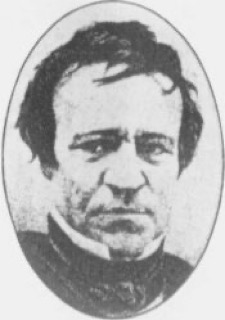
Patrick Francis Moran, a prelate of the Catholic Church, the first cardinal appointed from Australia and the third Archbishop of Sydney, is born at LeighlinbridgeCounty Carlow, on September 16, 1830. Before his promotion to Archbishop, his scholarly research into the lives and times of the Irish Catholic Martyrs leads to the publication of many primary sources for the first time. These publications have since been used in recent beatifications and at least one canonization.

Moran’s parents are Patrick and Alicia Cullen Moran. Of his three sisters, two become nuns, one of whom dies nursing cholera patients. His parents die by the time he is 11 years old. In 1842, at the age of twelve, he leaves Ireland in the company of his uncle, Paul Cullen, rector of the Pontifical Irish College in Rome. There he studies for the priesthood, first at the minor seminary and then at the major seminary.

Moran is considered so intellectually bright that he gains his doctorate by acclamation. By The age of 25 he speaks ten languages, ancient and modern. He focuses on finding and editing important documents and manuscripts related to Irish ecclesiastical history. Some editions of his works remain important source materials to this day.

Moran is appointed vice-rector at the Pontifical Irish College and also takes the chair of Hebrew at Congregation for the Evangelization of Peoples (CEP). He is also some-time vice-rector of the Scots College in Rome. In 1866, he is appointed secretary to his mother’s half-brother, Cardinal Paul Cullen of Dublin. He is also appointed professor of scripture at Holy Cross College, Dublin. He founds the Irish Ecclesiastical Record (on which he later models the Australasian Catholic Record).

In 1869, Moran accompanies Cardinal Cullen to the First Vatican Council, a council also attended by Melbourne‘s then-first archbishop, James Alipius Goold. According to Michael Daniel, it is generally agreed that the definition of the Catholic doctrine of papal infallibility is based on Cullen’s proposal, and Ayres suggests that there is strong evidence that Cullen’s proposal is largely drafted by Moran. While in Rome and Ireland he is very active politically in opposing English Benedictine plans for monastic foundations undergirding the Catholic Church in Australia.

Moran is appointed coadjutor bishop of Ossory on December 22, 1871, and is consecrated on March 5, 1872 in Dublin by his uncle, Cardinal Paul Cullen. On the death of Bishop Edward Walsh, he succeeds as Bishop of Ossory on August 11, 1872. He champions Home Rule and is consulted by William Ewart Gladstone prior to the introduction of his Home Rule Bills.

Moran is personally chosen and promoted by Pope Leo XIII to head the Archdiocese of Sydney – a clear policy departure from the previous English Benedictine incumbents, John Bede Polding and Roger Vaughan, who were experiencing tension leading the predominantly Irish Australian Catholics. In the archbishop’s farewell audience with Leo XIII, it is evident that the intrigues of parties, the interference of government agencies and the influence of high ecclesiastics had made the matter almost impossible to decide by Propaganda. In the presence of others, the Pope says clearly: “We took the selection into our own hands. You are our personal appointment.” Moran is appointed to Australia on January 25, 1884, and arrives on September 8, 1884. He is created cardinal-priest on July 27, 1885, with the title of St. Susanna. The new Irish Australian cardinal makes it his business to make his presence and leadership felt.

Moran begins transforming the Sydney Saint Patrick’s Day festivities by inaugurating the celebration of a Solemn Mass at St. Mary’s Cathedral on Saint Patrick’s Day 1885. Over time the day’s events change from an Irish nationalist and political day into an occasion “for the demonstration of Irish Catholic power and respectable assimilation” as well as “for the affirmation of Irish Catholic solidarity.”

In 1886, it is estimated that Moran travels 2,500 miles over land and sea, visiting all the dioceses of New Zealand. In 1887, he travels 6,000 miles to consecrate fellow Irishman Matthew Gibney at Perth. He also travels to BallaratBathurstBendigoHobartGoulburnLismore, Melbourne and Rockhampton for the consecration of their cathedrals. Following the 1891 encyclical Rerum Novarum, he supports the right of labourers to better their conditions.

During his episcopate, Moran consecrates 14 bishops (he is the principal consecrator of William WalshMichael VerdonPatrick Vincent DwyerArmand Olier and also assists in consecrating Patrick Clune, among others). He ordains nearly 500 priests, dedicates more than 5,000 churches and professes more than 500 nuns. He makes five journeys to Rome on church business between 1885 and 1903, but does not participate in the papal conclave of 1903 because of the relatively short notice and the distance, making it impossible for him to reach Rome within 10 days of the death of Pope Leo.

Moran is a strong supporter of Federation, and in November 1896 attends the People’s Federal Convention in Bathurst. In March 1897, he stands as a candidate election of ten delegates from New South Wales to the Australasian Federal Convention. Although he states he will not attend the Convention in any official capacity, but in a solely individual one, his candidacy sparks a sectarian reaction. Twenty-nine per cent of voters give one of their ten votes to Moran, but he comes only thirteenth in number of total votes and is not elected.

From 1900 to 1901, Moran’s leadership survives a crisis when his personal secretary, Denis O’Haran, is named as co-respondent in the divorce case of the cricketer Arthur Coningham. Moran vigorously defends O’Haran and a jury finds in his favour.

Moran dies in Manly, Sydney, on August 16, 1911, aged 80. A quarter of a million people, the largest crowd ever to gather in Australia prior to that date, witness his funeral procession through the centre of Sydney. He is buried in St. Mary’s Cathedral, Sydney.


Leave a comment

Birth of Willie Mullins, Racehorse Trainer & Former Jockey

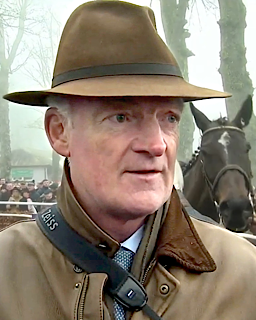
William Peter Mullins, Irish racehorse trainer and former jockey, is born on September 15, 1956, in Goresbridge, County Kilkenny. He is a nineteen-time Irish National Hunt Champion trainer and is the most successful trainer in the history of the Cheltenham Festival, having saddled 113 winners as of 2025. He is the trainer of the 2024 Grand National winner “I Am Maximus” and 2025 Grand National winner “Nick Rockett.”

Mullins is born and raised around horses. His father, Paddy Mullins, is a horse trainer, and his mother, Maureen, is a successful breeder.

Although born in Goresbridge, Mullins is based at Closutton, BagenalstownCounty Carlow. He is educated at Cistercian College, Roscrea, an all-boys Catholic boarding school in County Offaly.

Mullins commences racehorse training in 1988, having previously worked as an assistant to his father and Jim Bolger. He is a former six-time amateur champion jockey in Ireland, winning the 1983 Foxhunters’ Open Hunters’ Chase on “Atha Cliath” at the Aintree Racecourse and the 1996 Champion Bumper on “Wither Or Which” at Cheltenham Racecourse.

Mullins is the trainer of the 2005 Grand National winner “Hedgehunter” and the 2011 and 2013 Champion Hurdle winner “Hurricane Fly.” He also trains “Vautour” in the 2016 Ryanair Chase. He is also trainer of the six-time David Nicholson Mares’ Hurdle champion, “Quevega.” In the 2015 Cheltenham Festival, he trains eight winners, a joint record at the Cheltenham Festival which Gordon Elliott equals in 2018. He is the leading-most winning trainer at the Cheltenham Festival, becoming the first trainer to saddle 100 winners when “Jasmin De Vaux” wins the 2024 Champion Bumper. In 2022, he trains a new record of ten winners at the festival.

Mullins’ longlasting relationship with Gigginstown House Stud comes to an end on September 28, 2016. Despite this he is the Irish Champion trainer in the 2016/17 season.

Mullins wins both the 2005 Grand National with “Hedgehunter” and the 2019 Irish Grand National with “Burrows Saint,” each of which is ridden by Ruby Walsh. In the 2022/23 season he becomes Irish National Hunt Champion trainer for the 17th time.

Mullins wins the British jump racing Champion Trainer title in the 2023–24 season, becoming the first trainer based in Ireland to win the championship since Vincent O’Brien in 1954. He successfully defends his title in 2024-25, beating long-time leader Dan Skelton on the last afternoon of the National Hunt season.

Mullins son, Patrick, is an amateur jockey riding mainly in Ireland for his father and acting as assistant trainer to him. Patrick rides “Nick Rockett” to the 2025 Grand National title. Mullins’ wife, Jackie, is a successful amateur rider. With his wife, he is invited to ride in the King’s procession at Royal Ascot 2023.


Leave a comment

Birth of Abraham Brewster, Judge & Lord Chancellor of Ireland

Abraham Brewster PC (Ire), Irish judge and Lord Chancellor of Ireland, is born in Ballymutra House in Ballynultagh Townland, County Wicklow, on April 10, 1796.

Brewster is the son of William Bagenal Brewster, of Ballinulta, County Wicklow, by his wife Mary, daughter of Thomas Bates. He receives his earlier education at Kilkenny College, then proceeds to Trinity College Dublin (TCD) in 1812, taking his B.A. degree in 1817, and long after, in 1847, his M.A. degree.

Brewster is called to the Irish bar in 1819, and, having chosen Leinster for his circuit, soon acquires the reputation of a sound lawyer and a powerful speaker. Lord Plunket honours him with a silk gown on July 13, 1835. Notwithstanding the opposition of Daniel O’Connell, who dislikes him, he is appointed Law Adviser to the Lord Lieutenant of Ireland on October 10, 1841, and is Solicitor-General for Ireland from February 2, 1846, until July 16. By the influence of his friend Sir James Graham, First Lord of the Admiralty, he is Attorney-General for Ireland and privy councilor from January 10, 1853, until the fall of the Aberdeen ministry on February 10, 1855.[1]

In 1854, Brewster is appointed to the Royal Commission for Consolidating the Statute Law, a royal commission to consolidate existing statutes and enactments of English law.

Brewster is very active in almost all branches of his profession after his resignation, and his reputation as an advocate may be gathered from the pages of the Irish Law and Equity Reports, and in the later series of the Irish Common Law Reports, the Irish Chancery Reports, and the Irish Jurist, in all of which his name very frequently appears. Among the most important cases in which he takes part are the Mountgarrett case in 1854, involving a peerage and an estate of £10,000 a year, the Carden abduction case in July of the same year, the Yelverton case in 1861, the Egmont will case in 1863, the Marquess of Donegall‘s ejectment action and lastly, the great will cause of Fitzgerald v. Fitzgerald, in which Brewster’s statement for the plaintiff is said to be one of his most successful efforts.

On Edward Smith-Stanley becoming prime minister, Brewster succeeds Francis Blackburne as Lord Justice of Appeal in Ireland in July 1866, and Lord Chancellor of Ireland the following March. As Lord Chancellor, he sits in his court for the last time on December 17, 1868, when Benjamin Disraeli‘s government resigns. He then retires from public life.

There are only three or four judgments delivered by him in print, either in the Court of Appeal or the Court of Chancery (Ireland). His judicial manner is quiet, but with what is called “a touch of serviceable fierceness” which keeps order in Court. He is highly regarded by his colleagues. Even the bitter-tongued Jonathan Christian, who despises most of his fellow judges, defers to Brewster.

Brewster dies at his residence, 26 Merrion Square South, Dublin, on July 26, 1874, and is buried in the family vault at Tullow, County Carlow, on July 30. By his marriage in 1819 with Mary Ann, daughter of Robert Gray of Upton House, County Carlow, who dies in Dublin on November 24, 1862, he has issue one son, Colonel William Bagenal Brewster, and one daughter, Elizabeth Mary, wife of Mr. Henry French, both of whom die in the lifetime of their father. His estates are inherited by Elizabeth’s son, Robert French-Brewster, who adopts his grandfather’s surname. A nephew, Edward Brewster, studies under Abraham Brewster and becomes a lawyer and politician in New South Wales. Edward’s brother, John Grey Brewster, also emigrates to Australia, where he becomes a prosperous grazier and company director, retiring to England in later years where he dies in 1897.

(Pictured: Right Honourable Abraham Brewster photographed by Thomas Cranfield, 1861)


Leave a comment

Birth of Kevin Barry, IRA Volunteer & Medical Student

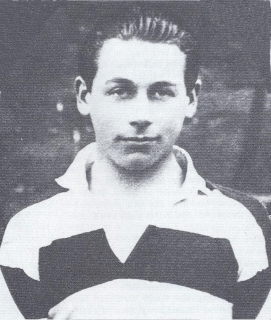
Kevin Gerard Barry, Irish Republican Army (IRA) volunteer and medical student, is born on January 20, 1902, at 8 Fleet Street, Dublin. He becomes the first Irish republican to be executed by the British Government since the leaders of the Easter Rising.

Barry is the fourth of seven children born to Thomas Barry, dairyman, and Mary Barry (née Dowling), both originally from northeast County Carlow. His father dies of heart disease on February 8, 1908, at the age of 56. His mother then moves the family to the family’s farm at Tombeagh, Hacketstown, County Carlow, while retaining the family’s townhouse on Fleet Street. As a child he goes to the National School in Rathvilly. In 1915, he is sent to live in Dublin and attends the O’Connell Schools for three months, before enrolling in the Preparatory Grade at St. Mary’s College, Rathmines, in September 1915. He remains at that school until May 31, 1916, when it is closed by its clerical sponsors. With the closure of St. Mary’s College, he transfers to Belvedere College, a Jesuit school in Dublin. He joins the Irish Volunteers, the forerunner of the IRA, while still at Belvedere College, and enters University College Dublin (UCD) in 1919 to study medicine.

As a member of 1st Battalion, Dublin Brigade of the Irish Volunteers, he takes part in a successful raid for arms on the military post in King’s Inns, Dublin, on June 1, 1920. Within only six minutes the raiders secure rifles, light machine guns, and large quantities of ammunition, and depart the site with no casualties. He also takes part in an abortive attempt to burn Aughavanagh House, Aughrim, County Wicklow in July 1920, and an attack on a British ration party in Church Street, Dublin, on September 20, with the aim of seizing arms. The final operation fails. Gunfire breaks out, three soldiers of around Barry’s own age are killed or fatally wounded, and he becomes the first Volunteer to be captured in an armed attack since 1916.

During interrogation, Barry is threatened with a bayonet and is mistreated. A general court-martial on October 20, which he refuses to recognise, condemns him to death for murdering the three soldiers, although one of the bullets taken from Private Marshall Whitehead’s body is a .45 calibre, while all witnesses state that Barry was armed with a .38 Mauser Parabellum. Despite widespread appeals on grounds of both clemency and expediency, the cabinet in London and officials in Dublin decide separately against a reprieve, probably because of its likely effect on the morale of soldiers and police.

On October 28, the Irish Bulletin, the official propaganda newspaper produced by Dáil Éireann‘s Department of Publicity, publishes Barry’s statement alleging torture. The headline reads English Military Government Torture a Prisoner of War and are about to Hang him. The Irish Bulletin declares Barry to be a prisoner of war, suggesting a conflict of principles is at the heart of the conflict. The British do not recognise a war and treat all killings by the Irish Republican Army (IRA) as murder. The public learns on this day that the date of execution has been fixed for November 1.

He was hanged in Mountjoy Prison, Dublin, on November 1, after hearing two Masses in his cell. The timing of the execution, only seven days after the death by hunger strike of Terence MacSwiney, the republican Lord Mayor of Cork, brings public opinion to a fever-pitch. He is buried in unconsecrated ground on the jail property. His comrade and fellow student Frank Flood is buried alongside him four months later. A plain cross marks their graves and those of Patrick Moran, Thomas Whelan, Thomas Traynor, Patrick Doyle, Thomas Bryan, Bernard Ryan, Edmond Foley and Patrick Maher who are hanged in the same prison before the Anglo-Irish Treaty of July 1921 which ends hostilities between Irish republicans and the British. The graves go unidentified until 1934. They become known as the Forgotten Ten by republicans campaigning for the bodies to be reburied with honour and proper rites. On October 14, 2001, the remains of the ten men are given a state funeral and moved from Mountjoy Prison to be re-interred at Glasnevin Cemetery in Dublin.

Barry is the first person to be tried and executed for a capital offence under the Restoration of Order in Ireland Act 1920, passed twelve weeks earlier. Together with his youth, this makes him a republican martyr celebrated in many ballads and verses. The best-known, set to a tune popular with British servicemen, is recorded by the American singer Paul Robeson, among others. A memorial stained-glass window by Richard King of the Harry Clarke Studio is later installed in the former UCD council chamber (afterward called the Kevin Barry Room), Earlsfort Terrace, Dublin.


Leave a comment

Birth of Harriet Kavanagh, Artist, Traveler & Antiquarian

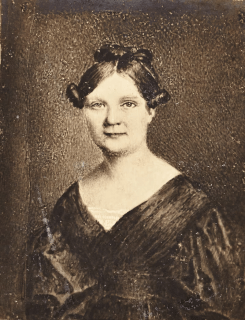
Lady Harriet Kavanagh, Irish artist, traveler, and antiquarian, described as a “woman of high culture and of unusual artistic power,” is born Lady Harriet Margaret Le Poer Trench on October 13, 1799. She is believed to be the first Irish female traveler to Egypt.

Kavanagh is the second daughter of Richard Le Poer Trench and Henrietta Margaret Le Poer Trench (née Staples), with three brothers and three sisters. She marries Thomas Kavanagh of Borris House, County Carlow, on February 28, 1825, as his second wife. The couple has four children, three sons Charles, Thomas, Arthur, and one daughter, Harriet or “Hoddy.”

Kavanagh’s third son, Arthur MacMorrough Kavanagh, is born without fully formed limbs. Some attribute the disability to a peasant’s curse, while others speculate it is due to Lady Kavanagh taking laudanum during her pregnancy. She refuses to treat her son differently to his siblings, and with the help of local doctor Francis Boxwell, raises him as a normal child. During his initial education, she teaches Arthur herself, teaching him to paint and then write by holding brushes and pens in his mouth. With the help of the surgeon Sir Philip Crampton, she has a mechanical wheelchair constructed for Arthur, and also encourages him to ride horses and engage in other outdoor activities. Her husband dies after twelve years of marriage, in 1837.

In 1846, Kavanagh takes her children to learn French in Saint-Germain-en-Laye, later traveling to Rome. As an antiquarian, she also wants to visit Egypt and the Holy Land, setting off on the long journey from Marseille in October 1846. Accompanying her are her daughter, Harriet, her two sons, Thomas and Arthur, their tutor, the Rev. David Wood, and a maid, Miss Hudson. In Cairo, she hires two feluccas with Arab crews, and visits archaeological sites along the Nile, such as Thebes, Karnak, and the Nubia region. From there, she visits sites of biblical interest, including Tyre, Sidon, and Roda Island. She negotiates with Bedouin chiefs in Aqaba, hiring camels and Bedouin guides to travel to Hebron. She visits harems and a slave market and records the journey’s incidents in her diary, including her son Arthur’s accidental near drowning when he falls off their boat while fishing.

While in Cairo, Kavanagh becomes acquainted with a number of fellow Europeans, including Sir Charles Murray, Sophia Lane Poole, and Edward William Lane. Harriet Martineau travels with the party from Cairo to the Holy Land.

While visiting Jerusalem in Easter 1847, Kavanagh bears witness to a confrontation over the control of holy places between Roman and Orthodox Catholics priests. She goes on to visit Petra, the Sinai Peninsula, Beirut, Smyrna, and Constantinople. The group spends a second winter in Egypt before traveling to the Black Sea before returning to Marseilles in April 1848. Much of these journeys are conducted on horse or camel-back, with one desert crossing taking 36 days. She later comments on her travels as a woman, stating “quite enough danger to make it a very exciting business.”

In 1850 and 1852, Kavanagh travels to Corfu, returning to Borris with samples of Greek lace. She teaches a number of her tenants to copy these designs, which lead to the establishment of a local lace-making industry. She is elected to the Kilkenny Archaeological Society in 1851.

Kavanagh moves to Ballyragget Lodge, County Kilkenny, in 1860, dying there on July 14, 1885. She is buried in St. Mullin’s Abbey, Borris in County Carlow. She documented her travels in journals, with drawings and paintings of the sites she visited. These are held by the Kavanagh family, along with an oil portrait and a self-portrait. Her collection of roughly 300 Egyptian antiquities were donated to the Royal Society of Antiquaries of Ireland after her death. These collections were later moved to the National Museum of Ireland and form a core element of the Museum’s Egyptian collection. Copies of two of her watercolours, a self-portrait, and a landscape are on display in the Museum.


Leave a comment

Henry II Returns to England After Granting Charter to Dublin

Henry II returns to England on April 17, 1172, having granted a charter to Dublin, the first granted to an Irish town.

Toward the end of 1171, Henry II, the first king of England to set foot on Irish soil, lands at Crook, County Waterford. His visit to Ireland serves two purposes. Firstly, it allows him to bring his adventurous English barons to heel and put the royal seal on their conquests in Ireland. Secondly, it means he can avoid meeting the cardinal legates who have been dispatched from Rome to investigate his complicity in the murder of the Archbishop of Canterbury, Thomas Becket, in 1170.

When the King of Leinster, Diarmait Mac Murchada, finds himself exiled in the late 1160s, he quickly finds help across the Irish Sea. He finds Henry II on the banks of the Loire in 1166 and is then pointed in the direction of south Wales by a Bristol merchant to find Richard FitzGilbert de Clare, more commonly known as Strongbow, who is then out of royal favour due to his prior support of Henry II’s competition for the kingship, Stephen of Blois.

Bolstered by English forces, Diarmait returns to Ireland and retakes his kingdom with Strongbow’s help, the latter earning the hand in marriage of Diarmait’s daughter, Aoife, in return. None of this has greatly concerned Henry II, until Diarmait dies, and Strongbow seizes the Kingdom of Leinster for himself in 1171. Leinster encompasses not only the counties of Carlow, Kilkenny, Wexford, Kildare, and parts of Wicklow, Laois, and Offaly, but the kings of Leinster are often the overlords of the flourishing Hiberno-Norse ports of Wexford and Dublin, both of which have considerable trading links with England and wider Europe.

Concerned with the growing power of Strongbow in Ireland, Henry II decides to head across the Irish Sea. He originally intends to arrive in Ireland in September 1171, but unfavourable winds on the coast of southwest Wales delay his journey for 17 days. He finally embarks from Pembroke on October 16 and arrives on the County Waterford coast the following day.

Naturally, Henry does not come alone and is at the head of an estimated 4,000 strong army comprised of 500 knights and their esquires and a large body of archers, all of which are carried, along with horses, in 400 ships. The undertaking is vast, and a large quantity of supplies are gathered to provision this considerable force. These ingredients include salted meats and fish, 1,000 lbs. of wax to ensure that Henry can seal charters and mandates, and, of course, the oil on which the medieval war machine runs, wine.

With the arrival of Henry II in Ireland, Strongbow surrenders the kingdom of Leinster and the Hiberno-Norse towns of Dublin, Wexford, and Waterford. Henry II regrants Leinster to Strongbow as a lordship, and later grants him Wexford. However, Waterford and Dublin become, and remain, royal ports.

Henry II then tours Ireland, showing the clergymen and native kings who their new lord is. He first visits Lismore and Cashel, then back to Waterford for a brief rest, before journeying by way of Kilkenny to Dublin, where he arrives around November 11. At all of his stop he collects the submissions of the Irish kings, with the probable exception of Ruaidrí Ua Conchobair (Rory O’Connor), who is the claimant to the high kingship of Ireland at the time.

Outside the city walls of Dublin, Henry II constructs a palace at the present-day southern side of Dame Street, where he celebrates the winter festivities until February 2. At this time, he also grants Dublin its first charter, on a piece of parchment measuring only 121 x 165 mm, which, extraordinarily, survives to this day. Henry’s charter to Dublin grants the right to live in the city to the men of Bristol, with whom the men of Dublin have enjoyed pre-existing economic relations.

About March 1, 1172, Henry II makes his way to Wexford, before finally departing for England on Easter Sunday, April 17, after celebrating Mass. It is probable that he had intended to stay in Ireland longer than he did, but events in England and Normandy divert his attention. In Normandy, Henry II’s son, Henry, has gone into rebellion against his father, while in England, the cardinal legates are threatening to interdict Henry’s lands unless he comes to meet with them regarding Becket’s murder.

The circumstances which lead to Henry II’s departure are more telling for Ireland’s future than any member of contemporary society could have realised. Now, Ireland has to compete with the other segments of a vast transnational realm, with lands stretching across England, Wales and France. Although Henry II is the first king of England to arrive in Ireland, his visit does not mean that royal visits would become a routine occurrence. Throughout the Middle Ages, the kings of England only directly visit Ireland in 1185, 1210, 1394–5, and 1399. As such, Henry’s visit and departure marks the beginning of absentee lordship over Ireland.

(From: “The royal visit: what did Henry II do in Ireland 850 years ago?” by John Marshall, PhD student in the Department of History at Trinity College Dublin, RTÉ, http://www.rte.ie | Pictured: Henry at Waterford, Ireland, October 18, 1172. Illustration by James E. Doyle (1864). Image: Historical Picture Archive/ Corbis via Getty Images)


Leave a comment

Birth of Arthur MacMurrough Kavanagh

Arthur MacMurrough Kavanagh, Irish politician, is born on March 25, 1831, at Borris House, a country house near Borris, County Carlow. His middle name is spelled MacMorrough in some contemporaneous sources.

Kavanagh is the son of Thomas Kavanagh MP and artist Lady Harriet Margaret Le Poer Trench, daughter of Richard Trench, 2nd Earl of Clancarty. His father traced his lineage to the medieval Kings of Leinster through Art Óg Mac Murchadha Caomhánach. He has two older brothers, Charles and Thomas, and one sister, Harriet or “Hoddy.” He is born with only the rudiments of arms and legs, though the cause of this birth defect is unknown.

Kavanagh’s mother insists that he be brought up and have opportunities like any other child and places him in the care of the doctor Francis Boxwell, who believes that an armless and legless child can live a productive life. Kavanagh learns to ride horses at the age of three by being strapped to a special saddle and managing the horse with the stumps of his arms. With the help of the surgeon Sir Philip Crampton, Lady Harriet has a mechanical wheelchair constructed for her son, and encourages him to ride horses and engage in other outdoor activities. He also goes fishing, hunting, draws pictures and writes stories, using mechanical devices supplementing his physical capacities. His mother teaches him how to write and paint holding pens and brushes in his mouth.

In 1846, Lady Harriet takes three of her children, Thomas, Harriet and Arthur, traveling to the Middle East for two years. Kavanagh nearly drowns in the Nile when he falls in while fishing and is rescued by a local antiquities salesman who dives in to pull him out.

In 1849, Kavanagh’s mother discovers that he has been having affairs with girls on the family estate, so she sends him into exile to Uppsala, and then to Moscow with his brother and a clergyman, whom he comes to hate. He travels extensively in Egypt, Anatolia, Persia, and India between 1846 and 1853. In India, his letter of credit from his mother is cancelled when she discovers that he has spent two weeks in a harem, so he persuades the East India Company to hire him as a despatch rider. Other sources say that this is due to the death of his eldest brother, Charles, of tuberculosis in December 1851, which leaves him with only 30 shillings.

In 1851, Kavanagh succeeds to the family estates and to the title of The MacMurrough following the death of his older brother Thomas. He serves as High Sheriff of County Kilkenny for 1856 and High Sheriff of Carlow for 1857. A Conservative and a Protestant, he sits in Parliament for County Wexford from 1866 to 1868, and for County Carlow from 1868 to 1880. On being elected, he has to be placed on the Tory benches by his manservant. The Speaker of the House of Commons, Evelyn Denison, gives a special dispensation to allow the manservant to stay in the chamber during sittings. He is opposed to the disestablishment of the (Anglican) Church of Ireland but supports the Landlord and Tenant (Ireland) Act 1870. On losing his seat in 1880, William Ewart Gladstone appoints him to the Bessborough Commission, but he disagrees with its conclusions and publishes his own dissenting report. In 1886, he is made a member of the Privy Council of Ireland.

Kavanagh dies of pneumonia in London at the age of 58 on December 25, 1889. He is buried in Ballicopagan cemetery. He is succeeded in the title of The MacMurrough by his son, Walter MacMurrough Kavanagh, who also serves as MP for County Carlow from 1908 to 1910. The 1901 novel The History of Sir Richard Calmady, written by Lucas Malet (pseudonym of Mary St. Leger Kingsley), is based on his life.

Kavanagh marries his cousin, Mary Frances Forde-Leathley, in 1855. Assisted by his wife, he is a philanthropic landlord, active county magistrate, and chairman of the board of guardians. Together, they have seven children.


Leave a comment

Birth of Eleanor Charlotte Butler, Recluse of Llangollen

Eleanor Charlotte Butler, recluse of Llangollen, is born in Cambrai, France, on May 11, 1739.

Butler is the youngest daughter of Walter Butler of Garryricken, County Tipperary, and his wife, Ellen (née Morres), of Latargh, County Tipperary. Her family are members of the old Catholic gentry, and her father is the sole lineal representative of James Butler, 2nd Duke of Ormonde. In 1740 her family returns to the Garryricken estate, where she spends part of her childhood. She is educated by the English Benedictine nuns of the convent of Our Lady of Consolation in Cambrai, where her Jacobite grand-aunt is a pensioner. Reared in the liberal and anti-clerical environment at Cambrai, she is open about her opposition to Irish Catholicism. She is also well read in literature.

By the time Butler returns to Ireland, her brother John had claimed the family titles and was recognised as 16th Earl of Ormond. Though he never uses the title, his sisters are recognised as the daughters of an earl. As the family is impoverished, and she is not disposed to marriage, a decade is passed in unhappiness. Then, in 1768, the thirteen-year-old Sarah Ponsonby arrives in Kilkenny to attend a local school. Following her visit to the Butler home at Kilkenny Castle, and despite the difference in age, the two form an immediate friendship and corresponded secretly, having discovered their mutual interest in the arts and Rousseau‘s ideal of pastoral retirement.

Ponsonby, upon finishing school, is sent to live with relatives at nearby Woodstock Estate, and there is subject to the uninvited attention of a middle-aged guardian. Butler is discontented with her life and the prospects of her family’s wish to send her back to Cambrai, so the two plan to leave their difficulties behind and settle in England. In their first attempt to flee in March 1778, they leave for Waterford disguised as men and wielding pistols, but their families manage to catch up with them. Butler is then sent to the home of her brother-in-law, Thomas ‘Monarch’ Kavanagh of Borris, County Carlow, but makes a second, successful attempt and runs away to find Ponsonby at Woodstock Estate. Her persistence wins out when both families finally capitulate and accepted their plans to live together.

Butler and Ponsonby set out for Wales in May 1778 and, after an extensive tour of Wales and Shropshire, eventually settle in Llangollen Vale, where they rent a cottage which is renamed Plas Newydd. They are accompanied by Mary Carryll, a former servant of the Woodstock household, who remains in their service until her death in 1809. Having made a deliberate decision to retire from the world, they spend the greater part of their days corresponding with friends, reading, building up a large library and making alterations to Plas Newydd, which takes on a fashionable Gothic look. Their garden, landscaped under their direction, becomes a popular attraction for visitors. Butler meticulously records their daily routine in a series of journals, some of which are now lost.

Their seclusion, eccentricities, semi-masculine dress and short-cropped powdered hair gain them notoriety, and it becomes fashionable to call on them. Their numerous and illustrious visitors include Hester Lynch Piozzi, Charles and Erasmus Darwin, Sir Walter Scott, Sir Arthur Wellesley, the Duke of Gloucester and Josiah Wedgwood. In 1792 they entertain Stéphanie Caroline Anne Syms, later that year to become the wife of Lord Edward FitzGerald, and her mother, Madame de Genlis. Following the arrest of Edward FitzGerald in 1798, Stéphanie and her suite flee to London and on May 27 pass through Llangollen, where the events in Dublin are already known. On hearing that she is staying in the local inn, Butler and Ponsonby invite her to call in. However, when she wishes to stay for the day, their apprehension of Jacobinism leads them to persuade her “principally for her own sake and a little for [our] own to proceed as fast and as incognito as possible for London.”

Both Anna Seward and William Wordsworth, who stay at Plas Newydd, write poems celebrating their friendship, and Lord Byron sends them a copy of The Corsair. Owing to her support of the Bourbons, Butler is sent the Croix St. Louis, which she wears about her neck. Though generally considered a hospitable couple, Seward, who is a good friend, admits that the “incessant homage” they received could make Butler “haughty and imperious,” while Lady Lonsdale thinks her “very clever, very odd.” Their celebrity does have its drawbacks: an article in the General Evening Post of July 24, 1790, entitled “Extraordinary female affection,” suggests indirectly that their relationship is unnatural. Butler is particularly angered by this publicity and appeals to Edmund Burke for legal advice. Their retirement is also continually dogged by financial difficulties. They live mainly off their respective allowances and Butler’s royal pension (granted through the influence of Lady Frances Douglas), but spend beyond their means and are often in debt. To add to their problems, Butler receives no mention in her father’s will. However, the Gothic eccentricities of their cottage, which they succeed over time in purchasing, and garden attract even the interest of Queen Charlotte.

Though it is claimed that neither woman spends a night away from Plas Newydd, in January 1786 they stay with their friends, the Barretts of Oswestry, and that September they visit Sir Henry Bridgeman of Weston Park, near Staffordshire. In June 1797 they take their only holiday, at the coastal resort of Barmouth. Despite their isolation they are well informed about international events and society gossip. The Irish serjeant-at-law Charles Kendal Bushe recalls how they gave him all the news of Dublin, London, Cheltenham, and Paris.

In later years Butler’s eyesight deteriorates, preventing her from keeping her journal. She is secretly painted as an old woman with Ponsonby by Lady Mary Leighton and sketched by Lady Henrietta Delamere. A distinctive, anonymous silhouette shows the two generously proportioned women in traditional riding habits (National Portrait Gallery, London). Butler dies on June 2, 1829, and is buried alongside Carryll at Llangollen church. Sarah Ponsonby is subsequently buried with them.

(From: “Butler, Lady (Charlotte) Eleanor” by Frances Clarke, Dictionary of Irish Biography, http://www.dib.ie)


Leave a comment

Birth of Máire Nic Shiubhlaigh, Actress & Republican Activist

Máire Nic Shiubhlaigh, Irish actress and republican activist, is born Mary Elizabeth Walker in Charlemont Street, Dublin, on May 8, 1883. She starts acting in her teens and appears in the first Irish language play performed in Ireland. She is a founder-member of the Abbey Theatre and is leading lady on its opening night in 1904, when she plays the title role in W. B. Yeats‘s Cathleen ni Houlihan. She later joins the Theatre of Ireland, which she helps to found.

Nic Shiubhlaigh is born into a nationalist and Irish-speaking family. Her father, Matthew, comes from County Carlow and is a printer and publisher who becomes proprietor of the Gaelic Press. Her mother, Mary, is a dressmaker from Dublin. She grows up in 56 High Street in the Dublin Liberties.

Nic Shiubhlaigh joins the Gaelic League about 1898 and comes into contact with Arthur Griffith and William Rooney. She joins the cultural and revolutionary women’s group Inghinidhe na hÉireann in 1900. With the help of drama enthusiasts William and Frank Fay, she starts acting with the drama group of Inghinidhe na hÉireann. In 1901, the drama group takes part in a feis with two plays, Tobar Draoidheachta by Patrick S. Dinneen and Red Hugh by Alice Milligan. George Russell and W.B. Yeats, who are in attendance at the performance, are moved by the dedication of the amateur players. Russell, who had already offered the Fays his mythic play Deirdre, persuades Yeats to offer them his patriotic play, Cathleen ni Houlihan.

In 1902, Nic Shiubhlaigh joins W. G. Fay’s Irish National Dramatic Company, along with others such as Maire Quinn, Brian Callender, Charles Caulfield, James H. Cousins, P. J. Kelly, Dudley Digges and Frederick Ryan. Their first production of the two one-act plays, Cathleen ni Houlihan, with Maud Gonne in the lead role, and Deirdre, is on April 2, 1902. The company, which has no funds to speak of, acquires a couple of bare rooms at 34 Lower Camden Street, which with the help of friends from Irish-revival societies, they turn into a tiny theatre. They rehearse at the Coffee Palace and also use the Molesworth Hall for productions. In March 1903, with other members of her family, she appears in the first production of Yeats’ morality play, The Hour-Glass, in which she plays the part of the Angel.

In 1903, the playwrights and most of the actors and staff from these productions go on to form the Irish National Theatre Society, which has its registered offices in the Camden Street theatre. Nic Shiubhlaigh is a founder member and on the management committee of the society. Yeats is president, while Russell, Maud Gonne and Douglas Hyde are vice-presidents. William Fay is stage manager. The society founds the Abbey Theatre.

Nic Shiubhlaigh acts in the Abbey Theatre from the time of its founding. On its opening night on December 27, 1904, she plays the name part in Cathleen ni Houlihan. Her portrait is painted by John Butler Yeats for the occasion and hangs in the vestibule. She is the principal actress of the company after Máire Quinn’s departure to the United States, and when she leaves, the burden of the chief women’s rôles falls upon Sara Allgood.

In September 1905, the Abbey administrator and financial backer, an English theatre impresario called Annie Horniman, in hopes of improving the artistic quality of the productions at the Abbey, offers to guarantee salaries (a sum of £500 per year) for the actors and for Willie Fay as producer. To her mind, this will allow the actors and Fay to dispense with their day jobs and concentrate wholly upon their acting. The more nationally-minded members of the staff disagree. Nic Shiubhlaigh writes, “It was pointed out that the old Irish National Theatre Society had been founded in 1902 on the understanding that its independence as a national movement was to be secured only through the efforts of its members. It would be contrary to these ideals to accept a subsidy from an independent source.” For them it would mean a choice between a national theatre and an artistic theatre. At a meeting of the society, supported by Yeats, Gregory and Synge, the motion to accept Miss Horniman’s proposition is passed by a majority of shareholdings rather than a majority of votes. Nic Shiubhlaigh along with others resign, but they agree to remain until the end of the year, as part of an upcoming tour of England.

Nic Shiubhlaigh remains with the Abbey until December 1905, when along with Honor Lavelle (also known as Helen Laird), Emma Vernon, Máire Garvey, Frank Walker, Seumas O’Sullivan, Padraic Colum and George Roberts, she leaves. She joins the Theatre of Ireland, which she helps to found. This is formed in June 1906 with aims similar to the Irish National Theatre Society. She returns to the Abbey in 1910.

At the time of the 1916 Easter Rising, Nic Shiubhlaigh is living in Glasthule, a suburb of Dublin. She cycles into the city and, along with other members of Cumann na mBan, makes her way to Jacob’s Biscuit Factory, whose garrison under the command of Thomas MacDonagh guards the city against the troops of Portobello Barracks, and acts as an information and supplies hub for other garrisons around the city. She commands the women of the garrison. They remain there until the surrender, cooking and rendering first aid to the garrison, and bringing despatches through the city.

Nic Shiubhlaigh had retired from professional acting in 1912, and seldom works in professional theatre again. In 1929, she marries former IRA Director of Organisation, Major General Eamon “Bob” Price, and they move to Laytown, County Meath.

Nic Shiubhlaigh’s last stage appearance, alongside her sister Gypsy, is in a production of Gaol Gate at the Olympia Theatre, Dublin, on November 21, 1948, staged to mark the 150th anniversary of the death of Theobald Wolfe Tone.

Nic Shiubhlaigh dies on September 9, 1958, in the Drogheda cottage hospital.

Her book, The Splendid Years, written with the help of her nephew Edward Kenny, recalls the years of the national revival and the Easter Rising.

On July 23, 1966, a plaque bearing Nic Shiubhlaigh’s name is unveiled at the Abbey Theatre by the Taoiseach, Seán Lemass. The others named on the plaque are Ellen Bushell, Sean Connolly, Helena Molony, Arthur Shields, Peadar Kearney and Barney Murphy.

(Pictured: 1904 portrait of Máire Nic Shiubhlaigh, as painted by John Butler Yeats)


Leave a comment

Death of Lady Eleanor Charlotte Butler, Recluse of Llangollen

Lady Eleanor Charlotte Butler, daughter of the 16th Earl of Ormonde and recluse of Llangollen, dies on June 2, 1829.

Butler is born in Cambrai, France, the youngest daughter of Walter Butler, 16th Earl of Ormonde, of Garryricken, County Tipperary, and his wife, Ellen (née Morres), of Latargh, County Tipperary. Her family are members of the old Catholic gentry, and her father is the sole lineal representative of James Butler, 2nd Duke of Ormonde. In 1740 her family returns to the Garryricken estate, where she spends part of her childhood. She is educated by the English Benedictine nuns of the convent of Our Lady of Consolation in Cambrai, where her Jacobite grand-aunt is a pensioner. Reared in the liberal and anti-clerical environment at Cambrai, she is open about her opposition to Irish Catholicism. She is also well read in literature.

By the time Butler returns to Ireland, her brother John has claimed the family titles and is recognised as 17th Earl of Ormonde. Though he never uses the title, his sisters are recognised as the daughters of an earl. As the family is impoverished, and she is not disposed to marriage, a decade is passed in unhappiness. Then in 1768 the thirteen-year-old Sarah Ponsonby arrives in Kilkenny to attend a local school. Following her visit to the Butler home at Kilkenny Castle, and despite the difference in age, the two form an immediate friendship and correspond secretly, having discovered their mutual interest in the arts and Jean-Jacques Rousseau‘s ideal of pastoral retirement.

Ponsonby, on finishing school, is sent to live with relatives at the nearby Woodstock Estate, and there is subject to the uninvited attention of a middle-aged guardian. Butler is discontented with her life and the prospects of her family’s wish to send her back to Cambrai, so the two plan to leave their difficulties behind and settle in England. In their first attempt to flee in March 1778, they leave for Waterford disguised as men and wielding pistols, but their families manage to catch up with them. Butler is then sent to the home of her brother-in-law Thomas ‘Monarch’ Kavanagh of Borris, County Carlow, but makes a second, successful attempt and runs away to find Ponsonby at the Woodstock Estate. Her persistence wins out when both families finally capitulate and accept their plans to live together.

The two set out for Wales in May 1778 and, after an extensive tour of Wales and Shropshire, eventually settle in Llangollen Vale, where they rent a cottage which is renamed Plas Newydd. They are accompanied by Mary Carryl, a former servant of the Woodstock household, who remains in their service until her death in 1809. Having made a deliberate decision to retire from the world, they spend the greater part of their days corresponding with friends, reading, building up a large library and making alterations to Plas Newydd, which takes on a fashionable Gothic look. Their garden, landscaped under their direction, becomes a popular attraction for visitors. Butler meticulously records their daily routine in a series of journals, some of which are now lost.

Their seclusion, eccentricities, semi-masculine dress and short-cropped powdered hair gain them notoriety, and it becomes fashionable to call on them. Their numerous and illustrious visitors include Hester Lynch Piozzi, Charles and Erasmus Darwin, Sir Walter Scott, Sir Arthur Wellesley, the Duke of Gloucester and Josiah Wedgwood. In 1792 they entertain Pamela Sims, later that year to become the wife of Lord Edward FitzGerald, and her mother Madame de Genlis. Following the arrest of Edward FitzGerald in 1798, Pamela and her suite flee to London and on May 27 pass through Llangollen, where the events in Dublin are already known. On hearing that Pamela FitzGerald is staying in the local inn, Butler and Ponsonby invite her to call in. However, when Pamela wishes to stay for the day, their apprehension of Jacobinism leads them to persuade her “principally for her own sake and a little for [our] own to proceed as fast and as incognito as possible for London.”

Both Anna Seward and William Wordsworth, who stay at Plas Newydd, write poems celebrating their friendship, and Lord Byron sends them a copy of The corsair. Owing to her support of the Bourbons, Butler is sent the Croix St. Louis, which she wears about her neck. Their celebrity does have its drawbacks: an article in the General Evening Post of July 24, 1790, entitled ‘Extraordinary female affection’, suggests indirectly that their relationship is unnatural. Butler is particularly angered by this publicity and appeals to Edmund Burke for legal advice. Their retirement is also continually dogged by financial difficulties. They live mainly off their respective allowances and Butler’s royal pension, granted through the influence of Lady Frances Douglas, but spend beyond their means and are often in debt. To add to their problems, Butler receives no mention in her father’s will. However, the Gothic eccentricities of their cottage, which they succeed over time in purchasing, and garden attract even the interest of Queen Charlotte.

Though it is claimed that neither woman spent a night away from Plas Newydd, in January 1786 they stay with their friends the Barretts of Oswestry, and that September they visit Sir Henry Bridgeman of Weston Park, near Staffordshire. In June 1797 they take their only holiday, at the coastal resort of Barmouth. Despite their isolation they are well informed about international events and society gossip. The Irish serjeant-at-law Charles Kendal Bushe recalls how they gave him all the news of Dublin, London, Cheltenham, and Paris. In later years Butler’s eyesight deteriorates, preventing her from keeping her journal. She is secretly painted as an old woman with Ponsonby by Lady Mary Leighton and sketched by Lady Henrietta Delamere. A distinctive, anonymous silhouette shows the two generously proportioned women in traditional riding habits (National Portrait Gallery, London).

Butler dies on June 2, 1829, and is buried alongside Mary Carryl at St. Collen’s Church in Llangollen. Sarah Ponsonby is subsequently buried with them.

(From: “Butler, Lady (Charlotte) Eleanor” by Frances Clarke, Dictionary of Irish Biography, http://www.dib.ie)