seamus dubhghaill

Promoting Irish Culture and History from Little Rock, Arkansas, USA


Leave a comment

Birth of Lady Gregory, Writer & Playwright

lady-gregory

Isabella Augusta, Lady Gregory (née Isabella Augusta), Irish playwright, folklorist and theatre manager, is born on March 15, 1852, at Roxborough, County Galway. Her translations of Irish legends, her peasant comedies and fantasies based on folklore, and her work for the Abbey Theatre, play a considerable part in the late 19th-century Irish Literary Revival.

Augusta is the youngest daughter of the Anglo-Irish gentry family Persse. Her mother, Frances Barry, is related to Standish O’Grady, 1st Viscount Guillamore, and her family home, Roxborough, is a 6,000-acre estate located between Gort and Loughrea, the main house of which is later burned down during the Irish Civil War. She is educated at home, and her future career is strongly influenced by the family nanny, Mary Sheridan, a Catholic and a native speaker of the Irish language, who introduces the young Augusta to the history and legends of the local area.

In 1880 Augusta marries Sir William Henry Gregory, a neighbouring landowner who had previously served as a Member of Parliament and as governor of Ceylon. He is a well-educated man with many literary and artistic interests, and his estate at Coole Park houses a large library and extensive art collection, both of which Lady Gregory is eager to explore. He also has a house in London, where the couple spends a considerable amount of time.

Lady Gregory’s literary career does not begin until after Sir Gregory’s death in 1892. In 1896 she meets William Butler Yeats and becomes his lifelong friend and patron. She takes part in the foundation of the Irish Literary Theatre in 1899 and becomes a director of the Abbey Theatre in 1904, which owes much of its success to her skill at smoothing the disputes among its highly individualistic Irish nationalist founders. As a playwright, she writes pleasant comedies based on Irish folkways and picturesque peasant speech, offsetting the more tragic tones of the dramas of Yeats and John Millington Synge.

Lady Gregory writes or translates nearly forty plays. Seven Short Plays (1909), her first dramatic works, are among her best, vivid in dialogue and characterization. The longer comedies, The Image and Damer’s Gold, are published in 1910 and 1913 and her strange realistic fantasies, The Golden Apple and The Dragon, in 1916 and 1920. She also arranges and makes continuous narratives out of the various versions of Irish sagas, translating them into an Anglo-Irish peasant dialect that she labels “Kiltartan.” These are published as Cuchulain of Muirthemne (1902) and Gods and Fighting Men (1904).

Lady Gregory returns to live in Galway after ill health forces her retirement from the Abbey Theatre board in 1928, although she continues to visit Dublin regularly. The house and demesne at Coole Park are sold to the Irish Forestry Commission in 1927, with Lady Gregory retaining life tenancy. Her Galway home had long been a focal point for the writers associated with the Irish Literary Revival, and this continues after her retirement. On a tree in what were the grounds of the house, one can still see the carved initials of Synge, Æ, Yeats and his artist brother Jack, George Moore, Seán O’Casey, George Bernard Shaw, Katharine Tynan and Violet Martin.

Lady Gregory, whom Shaw once described as “the greatest living Irishwoman,” dies at the age of 80 on May 22, 1932, at home from breast cancer. She is buried in the New Cemetery in Bohermore, County Galway. The entire contents of Coole Park are auctioned three months after her death, and the house is demolished in 1941.

Leave a comment

Death of Professional Golfer Christy O’Connor Jnr

christy-o-connor-jnr

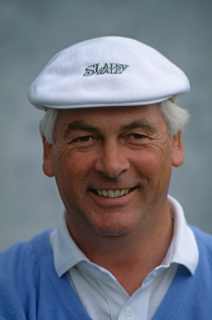
Christy O’Connor Jnr, professional golfer, dies on January 6, 2016, in Tenerife, Canary Islands. He is known as “Junior” as he is a nephew of golfer Christy O’Connor Snr.

O’Connor is born in Knocknacarra, County Galway, near Salthill, on August 19, 1948, the son of Elizabeth (née Noone) and John O’Connor. The family farms cattle and pigs near a golf club.

O’Connor turns professional in 1967. The PGA European Tour officially begins in 1972, and O’Connor makes the top hundred on the Order of Merit in each of its first twenty-one seasons, with a best ranking of seventh in 1975. He wins four European Tour events. As a senior he competes on both the European Senior Tour and the United States-based Champions Tour and wins two Senior British Open titles (before it becomes one of the senior majors) and two Champions Tour events.

In 1992 O’Connor wins the Dunhill British Masters at the Woburn Golf Club, his fourth and final European Tour victory, with scores of 71, 67, 66, 66. A weather-interrupted tournament means that 36 holes have to be played on Sunday. At 44 years, O’Connor is the oldest player in the field.

O’Connor plays in the Ryder Cup twice. In 1975 he is a member of a losing Great Britain & Ireland team and in 1989 he is part of a European team which ties the match to retain the trophy. His personal record is one win, three losses and no ties. His win over Fred Couples is best remembered for a stunning 2 iron shot on the last hole at The Belfry which he leaves just 4 feet from the hole.

O’Connor is also active in golf course design, being involved in the design of at least 18 courses in Ireland, and many more abroad.

Christy O’Connor Jnr dies while on holiday with his wife Ann on January 6, 2016, in Tenerife, Canary Islands.


2 Comments

Death of Boston Politician James Michael Curley

james-michael-curley

James Michael Curley, American Democratic Party politician and one of the best known and most colourful big-city Democratic bosses, dies in Boston, Massachusetts on November 12, 1958. He dominated Boston politics throughout the first half of the 20th century.

Curley’s father, Michael Curley, a juvenile petty criminal, leaves Oughterard, County Galway, at the age of fourteen. He settles in Roxbury, an Irish immigrant neighborhood in Boston.

Curley never forgets the needs of new immigrants, and he owes much of his political success to serving those needs in exchange for votes. He enters politics in 1899, winning a seat on the Boston common council. In 1904 he is imprisoned briefly for impersonating a friend at a civil service examination.

Curley serves in a succession of elective capacities—as a state legislator, alderman, city councilman, and U.S. representative—before winning the mayoralty in 1914, resigning his congressional seat to assume the municipal office.

Curley centralizes the powers of patronage in his own hands and distributes public-works jobs in such a way as to retain the loyalty and support of his working-class electoral base. As mayor, he nearly brings the city to bankruptcy by spending enormous sums on parks and hospitals to satisfy his various constituencies. He is a gifted orator and a resourceful political campaigner. He loses his bid for reelection in 1918, wins in 1922, loses in 1926, and wins again in 1930.

Unable to win a seat in the Massachusetts delegation to the 1932 Democratic National Convention in 1932, Curley contrives by means he never explains to be elected a delegate from Puerto Rico. He supports the presidency of Franklin D. Roosevelt, but national party leaders look upon the controversial Curley as something of an embarrassment. As governor of Massachusetts from 1935 to 1937, he spends New Deal funds lavishly on roads, bridges, and other public works programs. He is out of elective office from 1938 to 1942, during which period he loses bids for the United States Senate, mayor, and governor. He wins a seat in the United States House of Representatives in 1942, however, and is reelected two years later. He follows with another tenure as mayor of Boston (1947–50) but spends five months of his term in federal prison following a conviction for mail fraud. President Harry S. Truman secures his release and, in 1950, grants him a full pardon.

Curley, who has foiled an attempt by the Republican Party to have him replaced while he is in prison, retires from politics after losing reelection bids in 1950 and 1954. His career inspires Edwin O’Connor’s popular novel The Last Hurrah (1956), and the next year Curley’s best-selling autobiography, I’d Do It Again, is published.

James Curley dies in Boston, Massachusetts on November 12, 1958. His death is followed by one of the largest funerals in the city’s history. He is interred in Old Calvary Cemetery.


Leave a comment

The Treaty of Limerick

treaty-stone-limerick

The Treaty of Limerick, which actually consists of two treaties, is signed on October 3, 1691, ending the Williamite War in Ireland between the Jacobites and the supporters of William III of England, widely known as William of Orange. Reputedly they are signed on the Treaty Stone, an irregular block of limestone which once served as a mounting block for horses. This stone is now displayed on a pedestal in Limerick, put there to prevent souvenir hunters from taking pieces of it. Because of the treaty, Limerick is sometimes known as the Treaty City.

After his victory at the Battle of the Boyne in July 1690, William III issues the Declaration of Finglas which offers a pardon to Jacobite soldiers but excludes their senior officers from its provisions. This encourages the Jacobite leaders to continue fighting and they win a major victory during the 1691 Siege of Limerick. However, defeats the following year at the Battle of Aughrim and the second siege of Limerick leave the Williamites victorious. Nonetheless the terms they offer to Jacobite leaders at Limerick are considerably more generous than those a year earlier at Finglas.

One treaty, the Military Articles, deals with the treatment of the disbanded Jacobite army. This treaty contains twenty-nine articles. Under the treaty, Jacobite soldiers in formed regiments have the option to leave with their arms and flags for France to continue serving under James II of England in the Irish Brigade. Some 14,000 Jacobites choose this option. Individual soldiers wanting to join the French, Spanish or Austrian armies also emigrate in what becomes known as the Flight of the Wild Geese. The Jacobite soldiers also have the option of joining the Williamite army. One thousand soldiers chose this option. The Jacobite soldiers thirdly have the option of returning home which some 2,000 soldiers choose.

The second treaty, the Civil Articles, which contains thirteen articles, protects the rights of the defeated Jacobite landed gentry who choose to remain in Ireland, most of whom are Catholics. Their property is not to be confiscated so long as they swear allegiance to William III and Mary II, and Catholic noblemen are to be allowed to bear arms. William requires peace in Ireland and is allied to the Papacy in 1691 within the League of Augsburg.

It is often thought that the Treaty of Limerick is the only treaty between Jacobites and Williamites. A similar treaty had been signed on the surrender of Galway on July 22, 1691, but without the strict loyalty oath required under the Treaty of Limerick. The Galway garrison had been organised by the mostly Catholic landed gentry of counties Galway and Mayo, who benefited from their property guarantees in the following century.

(Pictured: The Treaty Stone on which the Treaty of Limerick may have been signed)


Leave a comment

Charles Stewart Parnell’s Last Public Appearance

charles-stewart-parnell

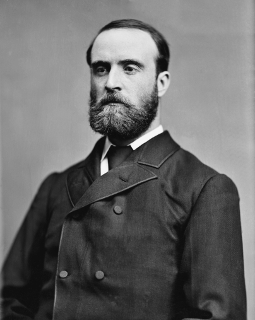
Charles Stewart Parnell makes his last public appearance at Creggs, County Galway on September 27, 1891.

After the split caused by the controversy over his relationship with Katharine O’Shea, Parnell tours the country seeking support. Already ill, his last public meeting is in Creggs, where he attacks his critics at length during heavy rain. He returns to his home in England and dies just over a week later, on October 6, at the age of 45.

Parnell, who is accompanied by J. P. Quinn, travels overnight from Dublin by the night mail train, is seen off by a considerable crowd at the Broadstone terminus and to them he makes a brief speech, expressing the hope that those who listen will give all support in their power to the new Nationalist paper it is intended to produce within a month. Parnell, who did not look at all well the previous night, wears his arm in a sling in consequence of his suffering from a severe attack of rheumatism.

When Parnell reaches Roscommon, he is met by a large crowd of people, who cheer him most enthusiastically. When he arrives at Mitchell’s Hotel, where he remains for the night, he is greeted with much enthusiasm, and, in response to repeated calls for a speech, he says a few words, explaining that on his arrival in Dublin he had been ordered by his doctor to go to bed and to remain there. But he disobeys those orders because of his desire to again meet with the men of Roscommon and Galway.

Parnell starts from Roscommon shortly after noon on September 27 and, in the company of Quinn and Luke Hayden, MP, travels to the meeting place in Creggs where he is met by a very large concourse of people. In fact, considering all the conditions of the district, its desolate character, and the smallness of the village, it is really surprising to find a gathering of between three and four thousand persons assembled.

As Parnell takes to the platform which is erected outside a pub in the village, sprinklings of rain begin to fall. Halfway through his speech the Heavens open and pour down upon the rally. Parnell, who is wearing light clothes and no hat, swats away an umbrella someone on the platform puts over him.

The crowd dwindles as the rain proves too hard to stand under, but Parnell perseveres and does not leave the platform until he has finished his entire speech. When he eventually finishes, he changes into dry clothes but finds such a mundane task difficult as his joints are so stiff and sore. He then joins twelve members of the organising committee for supper. Afterwards, on the train back to Dublin, he states how he regretted sitting at a table for thirteen as it is an extremely unlucky number.


Leave a comment

Birth of Dolores Keane, Folk Singer & Actress

dolores-keane

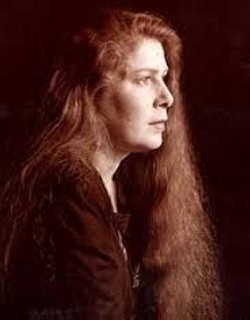
Dolores Keane, folk singer and occasional actress, is born on September 26, 1953, in the small village of Sylane, near Tuam, in rural County Galway. She is a founding member of the successful group De Dannan and has since embarked on a very successful solo career, establishing herself as one of the most loved interpreters of Irish song.

Keane is raised from the age of four by her aunts Rita and Sarah Keane, who are also well-known sean-nós singers. She starts her singing at a very young age, due to the influence of her musical aunts. She makes her first recording for Radio Éireann in 1958 at the age of five. This early start sets her on the path to a career in music. Her brother, Seán, also goes on to enjoy a successful music career.

In 1975, Keane co-founds the traditional Irish band De Dannan, and they release their debut album Dé Danann in that same year. The group gains international recognition and enjoys major success in the late 1970s in the United States. She tours with the band and their single “The Rambling Irishman” is a big hit in Ireland. In early 1976, after a short two-year spell, she leaves De Dannan and is replaced by Andy Irvine, who records live with the band on April 30, 1976, during the 3rd Irish Folk Festival in Germany. Soon thereafter, she marries multi-instrumentalist John Faulkner, with whom she subsequently records three albums of folk music.

Keane lives and works in London for several years with Faulkner before they move to Ireland in the early 1980s. They work on a series of film scores and programmes for the BBC and form two successful bands, The Reel Union and Kinvara. During this period, she records her first solo album, There Was a Maid in 1978. This is followed by two other releases, Broken Hearted I’ll Wander (1979) and Farewell to Eirinn (1980), which gives credit to Faulkner. In the mid-1980s she rejoins De Dannan and records the albums Anthem and Ballroom with them.

Keane turns her attention, once again, to her solo career in 1988. It sees the release of the eponymous Dolores Keane album. Her follow-up album, A Lion in a Cage (1989), features a song written by Faulkner called “Lion in a Cage” protesting the imprisonment of Nelson Mandela. It serves as Keane’s second Irish number one, and she performs the hit at the celebration of his release. This exposure expands her reputation and popularity worldwide. A new facet is added to her career when she plays the female lead in the Dublin production of Brendan Behan‘s The Hostage. The opening night is attended by Mary Robinson, the President of Ireland at the time.

In 1992, Keane is among the many female Irish singers to lend their music to the record-smashing anthology A Woman’s Heart. The album goes on to become the biggest-selling album in Irish history. A Woman’s Heart Vol.2 is released in late 1994 and emulates its predecessor in album charts the world over. Also in 1994, a solo album, Solid Ground, is released on the Shanachie Records label and receives critical acclaim in Europe and America.

In August 1995, Keane is awarded the prestigious Fiddler’s Green Hall of Fame award in Rostrevor, County Down, for her “significant contribution to the cause of Irish music and culture.” In that same year, she takes to the stage in the Dublin production of John Millington Synge‘s The Playboy of the Western World. She contributes to the RTÉ/BBC television production “Bringing It All Back Home,” a series of programmes illustrating the movement of Irish music to America.

In August 1997, Keane goes to number one again in the Irish album charts with a compilation album with her most loved songs. And another studio album, Night Owl, is released in 1998. It sees her returning to her traditional Irish roots and it does well in Europe and America. Despite a healthy solo career, she goes on tour with De Dannan again in the late 1990s, where she plays to packed audiences in venues such as Birmingham, Alabama and New York City.

Keane puts an end to recording and touring in the late 1990s, due to depression and alcoholism, for which she receives extensive treatment. As of June 2014, she is given the all clear after suffering from cancer.


Leave a comment

Birth of Thomas Burke, Irish Dominican Preacher

thomas-nicholas-burke-statue

Thomas Nicholas Burke, Irish Dominican preacher, is born in Galway, County Galway on September 8, 1830.

Burke’s parents, though in moderate circumstances, gave him a good education. He studies at first under the care of the Patrician Brothers and is afterwards sent to a private school. An attack of typhoid fever when he is fourteen years old, and the famine year of 1847 have a sobering effect. Toward the end of that year, he asks to be received into the Order of Preachers and is sent to Perugia in Italy to make his novitiate. On December 29, he is clothed there in the habit of St. Dominic and receives the name of Thomas.

Shortly afterward Burke is sent to Rome to begin his studies at the College of St. Thomas, the future Pontifical University of Saint Thomas Aquinas, where he is a student of philosophy and theology. He passes thence to the Roman convent of Santa Sabina. His superiors send him, while yet a student, as novice-master to Woodchester, the novitiate of the resuscitated English Province. He is ordained into the priesthood on March 26, 1853. On August 3, 1854, he defends publicly the theses in universâ theologiâ. He is made lector at the College of St. Thomas in 1854.

Early in the following year Burke is recalled to Ireland to found the novitiate of the Irish Province at Tallaght, near Dublin. In 1859 he preaches his first notable sermon on “Church Music.” It immediately lifts him into fame.

Elected Prior of Tallaght in 1863, Burke goes to Rome the following year as Rector of the Dominican Convent of San Clemente and attracts great attention by his preaching. He returns to Ireland in 1867 and delivers his oration on Daniel O’Connell at Glasnevin before fifty thousand people.

Bishop Leahy takes him as his theologian to the First Vatican Council in 1870, and the following year he is sent as Visitor to the Dominican convents in America. He is besieged with invitations to preach and lecture. The seats are filled hours before he appears, and his audiences overflow the churches and halls in which he lectures. In New York City he delivers the discourses in refutation of the English historian James Anthony Froude.

In an eighteen-month period Burke gives four hundred lectures, exclusive of sermons, with the proceeds amounting to nearly $400,000. His mission is a triumph, but the triumph is dearly won. When he arrives in Ireland on March 7, 1873, he is spent and broken.

During the next decade Burke preaches in Ireland, England, and Scotland. He begins the erection of the church in Tallaght in 1883, and the following May preaches a series of sermons in the new Dominican church, London. In June he returns to Tallaght in a dying condition and preaches his last sermon in the Jesuit church, Dublin, in aid of the starving children of Donegal. A few days afterwards, on July 2, 1882, he dies. He is buried in the church of Tallaght, now a memorial to him.

(Pictured: Statue of Thomas Nicholas Burke by John Francis Kavanagh by Nimmo’s Pier in Galway)


Leave a comment

The Burke and Wills Expedition

burke-and-wills-statue

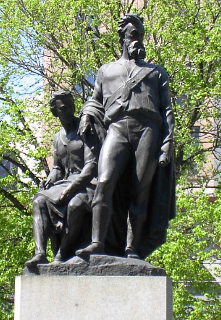
The Burke and Wills expedition, led by Robert O’Hara Burke, an Irish soldier and police officer, leaves Melbourne on August 20, 1860, ultimately becoming the first expedition to cross Australia from south to north, finding a route across the continent from the settled areas of Victoria to the Gulf of Carpentaria.

Burke is born in St. Clerens, County Galway on May 6, 1821. He migrates to Australia in 1853 arriving in Hobart, Tasmania on February 12, 1853, and promptly sailing for Melbourne.

After the South Australian explorer John McDouall Stuart reaches the centre of Australia, the Parliament of South Australia offers a reward of £2,000 for the promotion of an expedition to cross the continent from south to north, generally following Stuart’s route.

In June 1860, Burke is appointed to lead the Victorian Exploring Expedition with William John Wills, his third-in-command, as surveyor and astronomical observer.

The expedition leaves Melbourne on Monday, August 20, 1860, with a total of 19 men, 27 camels and 23 horses. They reach Menindee on September 23, 1860, where several people resign, including the second-in-command, George James Landells, and the medical officer, Dr. Hermann Beckler.

Cooper Creek, 400 miles further on, is reached on November 11, 1860, by the advance group, the remainder being intended to catch up. After a break, Burke decides to make a dash to the Gulf of Carpentaria, leaving on December 16, 1860. William Brahe is left in charge of the remaining party. The small team of Burke, William Wills, John King and Charley Gray reach the mangroves on the estuary of the Flinders River, near where the town of Normanton now stands, on February 9, 1861. Flooding rains and swamps prevent them from seeing the open ocean.

Already weakened by starvation and exposure, progress on the return journey is slow and hampered by the tropical monsoon downpours of the wet season. Gray dies four days before they reach the rendezvous at Cooper Creek. The other three rest for a day when they bury him. They eventually reach the rendezvous point on April 21, 1861, nine hours after the rest of the party had given up waiting and left, leaving a note and some food, as they had not been relieved by the party supposed to be returning from Menindee.

They attempt to reach Mount Hopeless, the furthest outpost of pastoral settlement in South Australia, which is closer than Menindee, but fail and return to Cooper Creek. While waiting for rescue Wills dies of exhaustion and starvation. Soon after, Burke also dies, at a place now called Burke’s Waterhole on Cooper Creek in South Australia. The exact date of Burke’s death is uncertain but has generally been accepted to be June 28, 1861.

King survives with the help of Aborigines until he is rescued in September by Alfred William Howitt. Howitt buries Burke and Wills before returning to Melbourne. In 1862 Howitt returns to Cooper Creek and disinters the bodies of Burke and Wills, taking them first to Adelaide and then by steamer to Melbourne where they are laid in state for two weeks. On January 23, 1863, Burke and Wills receive a state funeral and are buried in Melbourne General Cemetery.

(Pictured: Burke and Wills Statue on the corner of Collins and Swanston Street, Melbourne)


Leave a comment

Death of William James MacNeven, Physician & Writer

william-james-macneven-1

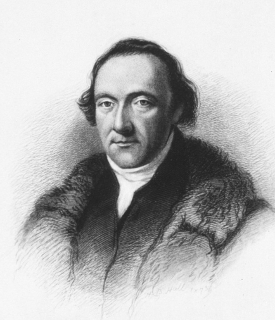
William James MacNeven, Irish American physician and writer, dies in New York City on July 12, 1841.

MacNeven is born on March 21, 1763, at Ballinahown, Aughrim, County Galway. The eldest of four sons, at the age of 12 MacNeven is sent by his uncle Baron MacNeven to receive his education abroad as the Penal Laws render education impossible for Catholics in Ireland. He makes his collegiate studies in Prague. His medical studies are made in Vienna where he is a pupil of Pestel and takes his degree in 1784. He returns to Dublin in the same year to practise.

MacNeven becomes involved in the Society of United Irishmen with such men as Lord Edward Fitzgerald, Thomas Addis Emmet, and his brother Robert Emmet. He is arrested in March 1798 and confined in Kilmainham Gaol, and afterwards in Fort George, Scotland, until 1802, when he is liberated and exiled. In 1803, he is in Paris seeking an interview with Napoleon Bonaparte in order to obtain French troops for Ireland. Disappointed in his mission, MacNeven comes to the United States, landing at New York City on July 4, 1805.

In 1807, he delivers a course of lectures on clinical medicine in the recently established College of Physicians and Surgeons. Here in 1808, he receives the appointment of professor of midwifery. In 1810, at the reorganization of the school, he becomes the professor of chemistry, and in 1816 is appointed to the chair of materia medica. In 1826 with six of his colleagues, he resigns his professorship because of a misunderstanding with the New York Board of Regents and accepts the chair of materia medica at Rutgers Medical College, a branch of the New Jersey institution of that name, established in New York as a rival to the College of Physicians and Surgeons. The school at once becomes popular because of its faculty, but after four years is closed by legislative enactment on account of interstate difficulties. The attempt to create a school independent of the regents results in a reorganization of the University of the State of New York.

MacNeven, affectionately known as “The Father of American Chemistry,” dies in New York City on July 12, 1841. He is buried on the Riker Farm in the Astoria section of Queens, New York.

One of the oldest obelisks in New York City is dedicated to him in the Trinity Church, located between Wall Street and Broadway, New York. The obelisk is opposite to another commemorated for his friend Thomas Emmet. MacNeven’s monument features a lengthy inscription in Irish, one of the oldest existent dedications of this kind in the Americas.


Leave a comment

First Non-Stop Transatlantic Flight

alcock-and-brown

British aviators John Alcock and Arthur Brown complete the first non-stop transatlantic flight, landing at Clifden, County Galway on June 15, 1919. They fly a modified World War I Vickers Vimy bomber from St. John’s, Newfoundland, to Clifden. The Secretary of State for Air, Winston Churchill, presents them with the Daily Mail prize for the first crossing of the Atlantic Ocean by aeroplane in “less than 72 consecutive hours.” A small amount of mail is carried on the flight, making it the first transatlantic airmail flight.

Alcock and Brown take off from Lester’s Field at around 1:45 PM on June 14. They fly the modified Vickers Vimy, powered by two Rolls-Royce Eagle 360 hp engines which are supported by an on-site Rolls Royce team led by engineer Eric Platford.

It is not an easy flight. The overloaded aircraft has difficulty taking off from the rough field and only barely misses the tops of the trees. A short time later the wind-driven electrical generator fails, depriving them of radio contact, their intercom and heating. An exhaust pipe bursts shortly afterwards, causing a frightening noise which makes conversation impossible without the failed intercom.

At 5:00 PM they have to fly through thick fog. This is serious because it prevents Brown from being able to navigate using his sextant. Blind flying in fog or cloud should only be undertaken with gyroscopic instruments, which they do not have, and Alcock twice loses control of the aircraft and nearly hits the sea after a spiral dive. Alcock also has to deal with a broken trim control that makes the plane become very nose heavy as fuel is consumed.

At 12:15 AM on June 15 Brown gets a glimpse of the stars and is able to use his sextant and finds that they are still on course. By this point, their electric heating suits have failed, making them very cold in the open cockpit.

Then at 3:00 AM they fly into a large snowstorm. They are drenched by rain, their instruments ice up, and the plane is in danger of icing and becoming unflyable. The carburetors also ice up.

Alcock and Brown make landfall in County Galway at 8:40 AM on June 15, not far from their intended landing place, after less than sixteen hours of flying time. The aircraft is damaged upon arrival because of an attempt to land on what appears from the air to be a suitable green field, but which turns out to be a bog, near Clifden, but neither of the airmen is hurt. Brown says that if the weather had been good, they could have pressed on to London.

Alcock and Brown are treated as heroes on the completion of their flight. In addition to the Daily Mail award of £10,000, the crew receives 2,000 guineas (£2,100) from the Ardath Tobacco Company and £1,000 from Lawrence R. Phillips for being the first British subjects to fly the Atlantic Ocean. The two aviators are awarded the honour of Knight Commander of the Most Excellent Order of the British Empire (KBE) a week later by King George V at Windsor Castle.

Alcock and Brown fly to Manchester on July 17, where they are given a civic reception by the Lord Mayor and Corporation of Manchester, and awards to mark their achievement.

John Alcock is killed on December 18, 1919, when he crashes near Rouen while flying the new Vickers Viking amphibian to the Paris Air Show. Arthur Brown dies on October 4, 1948. Two memorials commemorating the flight are sited near the landing spot in County Galway. The first is an isolated cairn four kilometres south of Clifden, around 500 metres from the spot where they land, on the site of Guglielmo Marconi‘s first transatlantic wireless station from which the aviators transmit their success to London. In addition, there is a sculpture of an aircraft’s tailfin on Errislannan Hill two kilometres north of their landing spot, dedicated on June 15, 1959, the fortieth anniversary of their landing.