seamus dubhghaill

Promoting Irish Culture and History from Little Rock, Arkansas, USA


Leave a comment

Death of Christy Brown, Writer & Painter

christy-brown

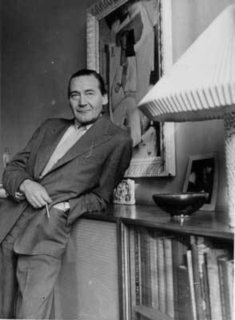
Christy Brown, Irish writer and painter who has cerebral palsy and is able to write or type only with the toes of one foot, dies on September 7, 1981, in Parbrook, Somerset, England. His most recognized work is his autobiography, My Left Foot (1954).

Brown is born into a working-class Irish family at the Rotunda Hospital in Dublin on June 5, 1932. He is one of 22 siblings of parents Bridget Fagan and Patrick Brown. After his birth, doctors discover that he has severe cerebral palsy, a neurological disorder which leaves him almost entirely spastic in his limbs. Though urged to commit him to a hospital, his parents are unswayed and subsequently determined to raise him at home with their other children. During his adolescence, social worker Katriona Delahunt becomes aware of his story and begins to visit the Brown family regularly. She brings him books and painting materials as, over the years, he has shown a keen interest in the arts and literature. He has also demonstrated extremely impressive physical dexterity since, soon after discovering several household books, he had learned to both write and draw himself with his left leg, the only limb over which he has unequivocal control.

Brown quickly matures into a serious artist. Although he famously receives almost no formal schooling during his youth, he does attend St. Brendan’s School-Clinic in Sandymount intermittently. At St. Brendan’s he comes in contact with Dr. Robert Collis, a noted author. Collis discovers that Brown is also a natural novelist and, later, helps use his own connections to publish My Left Foot, by then a long-gestating autobiographical account of Brown’s struggle with everyday life amidst the vibrant culture of Dublin.

When My Left Foot becomes a literary sensation, one of the many people who write letters to Brown is married American woman Beth Moore. Brown and Moore become regular correspondents and, in 1960, he holidays in North America and stays with Moore at her home in Connecticut. When they meet again in 1965, they began an affair. Brown journeys to Connecticut once more to finish his magnum opus, which he had been developing for years. He finally does so in 1967 with help from Moore, who introduces and administers a strict working regimen, mostly by denying him alcohol until a day’s work is completed. The book, Down All the Days, is published in 1970. It is an ambitious project drawn largely from a playful expansion of My Left Foot. It becomes an international best-seller, translated into fourteen languages. The Irish Times reviewer Bernard Share claims the work is “the most important Irish novel since Ulysses.”

Down All the Days is followed by a series of other novels, including A Shadow on Summer (1972), Wild Grow the Lilies (1976) and A Promising Career (published posthumously in 1982). He also publishes three poetry collections: Come Softly to My Wake, Background Music and Of Snails and Skylarks. All the poems are included in The Collected Poems of Christy Brown.

Brown’s fame continues to spread internationally, and he becomes a prominent celebrity. Upon his return to Ireland, he is able to use proceeds from the sales of his books to design and move into a specially constructed home outside Dublin with his sister’s family. Though he and Beth had planned to marry and live together at the new home, and though Moore had informed her husband of these plans, it is around this time that he begins an affair with Englishwoman Mary Carr, whom he meets at a party in London. He then terminates his affair with Moore and marries Carr at the Registry Office, Dublin, in 1972. They move to Stoney Lane, Rathcoole, County Dublin, to Ballyheigue, County Kerry and then to Somerset. He continues to paint, write novels, poetry and plays. His 1974 novel, A Shadow on Summer, is based on his relationship with Moore, whom he still considers a friend.

Brown’s health deteriorates after marrying Carr. He becomes mainly a recluse in his last years, which is thought to be a direct result of Carr’s influence and perhaps abusive nature. He dies at the age of 49 on September 7, 1981, after choking during a lamb chop dinner. His body is found to have significant bruising, which leads many to believe that Carr had physically abused him. Further suspicions arise after Georgina Hambleton’s biography, The Life That Inspired My Left Foot, reveals a supposedly more accurate and unhealthier version of their relationship. The book portrays Carr as an abusive alcoholic and habitually unfaithful. He is buried in the Glasnevin Cemetery in Dublin.

A film adaptation of My Left Foot directed by Jim Sheridan is produced in 1989 from a screenplay by Shane Connaughton. Daniel Day-Lewis stars as Brown and Brenda Fricker as his mother. Both win Academy Awards for their performances. The film also receives Academy Award nominations for Best Picture, Best Director, and Best Adapted Screenplay.

The Anglo-Irish rock band The Pogues pay tribute to Christy Brown with a song titled “Down All the Days.” It is the seventh track on their 1989 recording Peace and Love. Similarly, U2 releases a song titled “Down All the Days” with the 20th anniversary edition of Achtung Baby. The Men They Couldn’t Hang also writes a song “Down All the Days” which appears on their Silver Town album also released in 1989.


Leave a comment

Death of Yann Renard-Goulet, Sculptor & Breton Nationalist

yann-goulet-custom-house-memorial

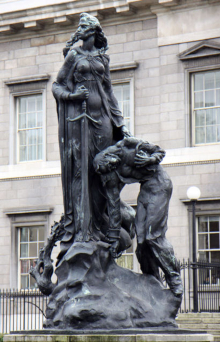
Yann Renard-Goulet, French sculptor, Breton nationalist and war-time collaborationist with Nazi Germany who headed the Breton Bagadou Stourm militia, dies in Bray, County Wicklow on August 22, 1999.

Goulet is born in Saint-Nazaire, France on August 20, 1914. Before World War II, he is a member of the Breton National Party and a former member of the French Section of the Workers’ International (SFIO). His artistic career begins at the École nationale supérieure des Beaux-Arts, where he studies art and architecture, and learns sculpture with Auguste Rodin‘s assistant, Charles Despiau. His works in France include bas-reliefs shown at the Exposition International de Paris (1938), and the monument to the youth of the French empire in Lille (1939). He is part of the Breton artistic movement Seiz Breur.

Goulet’s involvement in Breton nationalism leads to accusations that he had orchestrated the destruction of the Monument to the Breton-Angevin Federation at Pontivy on December 18, 1938, by Gwenn ha du, the nationalist terrorist group. He is detained, but then released.

In 1939, he is sent to Strasbourg to study the art of sabotage. He participates in the beginning of World War II fighting for France, and is captured by the Germans on June 11, 1940, while blowing up a bridge on the Aisne with friends from a French corps.

Later in the war, Goulet joins the assault section of Bagadou Stourm, Breton nationalist stormtroopers allied to the Germans. He also collaborates with the pro-Nazi nationalist newspaper L’Heure Bretonne. In 1941 in Paris, he becomes head of Bagadou Stourm and the “Youth Organizations” of the Breton National Party. The promotion of Bagadou Stourm officers is named “Patrick Pearse” to commemorate the 25th anniversary of the 1916 Easter Rising against British rule in Ireland.

After the liberation of France, Goulet travels with his wife and children to Ireland, and is sentenced to death as a Collaborationist by a French court in his absence. He acquires Irish citizenship in 1952 and becomes an art professor.

Goulet is commissioned to create public works commemorating the Irish Republican Army (IRA) and other republicans, including the Custom House Memorial (Dublin), the East Mayo Brigade IRA Memorial, the Republican Memorial (Crossmaglen), and the Ballyseedy Memorial (Kerry). He exhibits regularly at the Royal Hibernian Academy (RHA), eventually becoming the RHA Professor of Sculpture. He is also made a member of Aosdána in 1982.

Towards the end of the 1960s, Goulet claims to have taken the reins of the Breton Liberation Front (Front de Libération de la Bretagne, or FLB) and to have been behind all their attacks.

In 1969 Goulet becomes secretary general and chair of the Comité National de la Bretagne Libre and publishes the communiques of the FLB. In 1968, the head of police in Bray congratulate him on organising the previous day’s attack on the CRS barracks in Saint-Brieuc.

Goulet died at Bray, County Wicklow, on August 22, 1999, two days after his 85th birthday.

(Pictured: Custom House Memorial in Dublin by Yann Renard-Goulet, 1957)


Leave a comment

Birth of John B. Keane, Irish Playwright & Novelist

john-b-keane

John Brendan Keane, Irish playwright, novelist and essayist, is born in Listowel, County Kerry on July 21, 1928.

Keane is the son of a national school teacher, William B. Keane, and his wife Hannah Purtill. He is educated at Listowel National School and then at St. Michael’s College, Listowel. He works as a chemist’s assistant for A.H. Jones who dabbles in buying antiques. He has various jobs in the United Kingdom between 1951 and 1955 working as a street cleaner and a bartender and lives in a variety of places including Northampton and London. It is while he is in Northampton that he is first published in an unnamed women’s magazine for which he receives £15.

After returning from the UK, Keane is a pub owner in Listowel from 1955 where he writes plays for the local theatre company and sponsors, from 1971, the annual Listowel Writers’ Week. He marries Mary O’Connor at Knocknagoshel Church on January 5, 1955 and they have four children: Billy, Conor, John and Joanna.

His first play, Sive (1959), is initially rejected by the Abbey Theatre in Dublin but goes on to win the amateur All-Ireland Drama Festival. Later plays include The Field (1965), which is released in a bowdlerized film version in 1990, and Big Maggie (1969), which is produced on Broadway in 1982. In 1998 Keane is honoured with a medal from the Abbey for his contribution to Irish theatre.

Keane is an Honorary Life Member of the Royal Dublin Society from 1991, serves as president of Irish club of PEN International and is a founder member of the Society of Irish Playwrights as well as a member of Aosdána. He is named the patron of the Listowel Players after the Listowel Drama Group fractures. He remains a prominent member of the Fine Gael party throughout his life, never being shy of political debate.

John Keane dies of prostate cancer on May 30, 2002, in Listowel at the age of 73.

Keane’s nephew is the investigative journalist Fergal Keane. His son John is a journalist with the Kilkenny People while his son Billy regularly writes a column for the Irish Independent.


Leave a comment

Muhammad Ali Fights Al Lewis in Dublin

muhammad-ali-and-al-lewis

Muhammad Ali fights Al “Blue” Lewis in Dublin on July 19, 1972, and defeats him via a technical knockout (TKO) in the eleventh round.

After losing to Joe Frazier in March 1971, Ali goes on something of a world tour, fighting 13 times in six countries before defeating Frazier in a rematch in January 1974.

The promotion is the brainchild of a character from County Kerry named Butty Sugrue, known throughout Ireland as a circus strongman, whose alleged claim to fame is pulling double-decker buses by a rope in his teeth. Dublin journalists laugh at him when he first announces his intentions.

But despite the scepticism, the fight is arranged for July 19, 1972. As soon as he steps off the plane at Dublin Airport, Ali, ever the showman, immediately captures the heart of a nation by announcing that he has Irish roots. In the 1860s, Abe Grady left his native Ennis in County Clare and emigrated to the United States. In Kentucky, he met and married an emancipated slave. A century later Abe Grady’s great grandson Muhammad Ali touches down in Dublin.

In the week leading up to the fight Ali meets people from all walks of life in Dublin. He spends time with celebrities, including actor Peter O’Toole, and playfully spars with director John Huston, whose boxing movie, Fat City, is screened with both Ali and Lewis in attendance.

Ali also meets politicians, including Taoiseach Jack Lynch in Leinster House and political activist Bernadette Devlin. The Cork Examiner comments on how popular Ali has proven with politicians in Ireland. “Not since the late President John F. Kennedy was in Dublin in 1963 has a visitor from abroad been given as big a welcome at Leinster House as that accorded to Muhammad Ali.”

Ali is always about so much more than boxing, and that week in Dublin is another case in point, as the fight itself is not a classic. He has a cold and is wary of Lewis, who is a dangerous fighter and a man who had previously served time in prison for manslaughter. Ali who, prior to the bout predicts that his opponent’s chances of victory lay somewhere between “slim and none,” eventually wins with a TKO in the eleventh round.

In 2009, Ali returns to Ireland to visit Ennis in County Clare, the hometown of his ancestor Abe Grady, where he is granted the freedom of the town. The huge crowds who come out to meet him are testament to his enduring appeal. But the magic of Muhammad Ali leaves an indelible impact on Ireland after his 1972 visit as the late Budd Schulberg, a legendary boxing writer, said, “Ali was like the Pied Piper. It was really kind of magical. He had enormous influence over there. He was a fellow Irishman.”

(From: “When Ali thrilled Ireland: How ‘the Greatest’ shook up Dublin” by Peter Crutchley, BBC NI Digital & Learning, June 6, 2016)


Leave a comment

Death of Playwright John Brendan Keane

john-brendan-keane

John Brendan Keane, playwright, novelist and essayist, dies in Listowel, County Kerry on May 30, 2002.

Keane is born on Church Street in Listowel on July 21, 1928, the son of a national school teacher, William B. Keane, and his wife Hannah (née Purtill). He is educated at Listowel National School and then at St. Michael’s College, Listowel. He works as a chemist’s assistant for A.H. Jones who dabbles in buying antiques. He has various jobs in the UK between 1951 and 1955 working as a street cleaner and a bartender, living in a variety of places including Northampton and London. It is while he is in Northampton that Keane is first published in an unnamed women’s magazine for which he receives £15.

After returning from the United Kingdom, Keane is a pub owner in Listowel from 1955.

Keane marries Mary O’Connor at Knocknagoshel Church on January 5, 1955 and they have four children: Billy, Conor, John and Joanna. He is an Honorary Life Member of the Royal Dublin Society from 1991, serves as president of Irish PEN and is a founder member of the Society of Irish Playwrights as well as a member of Aosdána. He is named the patron of the Listowel Players after the Listowel Drama Group fractures. He remains a prominent member of the Fine Gael party throughout his life, never being shy of political debate.

Keane cites many literary influences including Bryan MacMahon and George Fitzmaurice, fellow Kerry writers and playwrights. His personal influences are numerous but, most notably he thanks his father and his wife, Mary. He is grateful for his father’s help with early editing, allowing him access to his personal library, and encouraging him to continue his work until he is successful. He is also influenced by the local population and the patrons of his pub from which he bases some of his characters.

Keane dies on May 30, 2002 of complications from prostate cancer, which he had been battling for eight years. His death comes on the eve of the annual Listowel Writers’ Festival, a week-long event at which he had long been a dominating and avuncular presence.

Keane’s nephew is the investigative journalist Fergal Keane. His son John is a journalist with the Kilkenny People while his son Billy regularly writes a column for the Irish Independent.


Leave a comment

Birth of Margaret Anna Cusack, Founder of Poor Clares Convent

margaret-anne-cusack

Margaret Anna Cusack, founder of the first Poor Clares convent in the west of Ireland and a talented writer who publishes on the issues of social injustice, is born to an aristocratic family of English origin in Coolock, County Dublin on May 6, 1829. Her writings and actions focus on advocacy of women’s rights including equal pay, equal opportunity for education, and legal reform to give women control of their own property.

Cusack is raised in the Anglican church tradition until her conversion to Catholicism in 1858. She enters the Irish Poor Clare Sisters and is among the first group of Sisters sent to found the convent at Kenmare, County Kerry.

During the next 21 years, Cusack, now known as Sister Francis Clare, dedicates herself to writing. Her writings include a wide range of concerns including lives of the saints, local histories, biographies, books and pamphlets on social issues and letters to the press. As the “Nun of Kenmare” she writes on behalf of the liberation of women and children who are victims of oppression. Income from her books and from her famine relief fund is distributed throughout Ireland. While doing all she can to feed the hungry, at the same time she campaigns vigorously against the abuse of absentee landlords, lack of education for the poor and against a whole system of laws which degrade and oppress a section of society.

To broaden the scope of her work Cusack moves to Knock, County Mayo in 1881 with the idea of expanding the ministry of the Poor Clares. She starts an industrial school for young women and evening classes for daytime land-workers. Several women are attracted by this work and in 1884 she decides to found her own community, The Sisters of St. Joseph of Peace.

Continued conflict in Knock with Church leaders leads Cusack to seek support in England. Under Cardinal Henry Edward Manning and Bishop Edward Bagshawe, she receives approbation for the new religious order from Pope Leo XIII and the Congregation of the Sisters of St. Joseph of Peace is founded in January 1884, in the Diocese of Nottingham, England.

Later, Cusack travels to the United States to continue her work with immigrant Irish women but is immediately rebuked by Archbishop Michael Corrigan of New York. Just at that time, New Jersey stretches out a hand of welcome and encouragement as Bishop Winand Wigger of the Archdiocese of Newark invites her to establish homes for young Irish working women there. Within a few years, however, she claims that because of Archbishop Corrigan’s criticism of her among bishops throughout the United States, the work of her new community cannot continue as long as she remains with them.

Physically exhausted, sick and disillusioned with a patriarchal Church, Cusack withdraws from the Sisters of St. Joseph of Peace and leaves behind the sisters she so dearly loved. She eventually returns to her friends in the Church of England. In later years, she keeps in contact with the Sisters and expresses a loving concern for them. She dies on June 5, 1899, and is buried in the cemetery reserved for the Church of England at Leamington Spa, Warwickshire, England.

Cusack passes into obscurity for a long time until, as a result of the Second Vatican Council, religious orders are encouraged to review their roots and the intent of their founders. Since then, there have been a number a studies on Cusack, such as Philomena McCarthy’s The Nun of Kenmare: The True Facts. With the rediscovery of the life and times of Cusack, she has been hailed as a feminist and a social reformer ahead of her time.


Leave a comment

Death of Dramatist John Millington Synge

John Millington Synge, a leading figure in the Irish Literary Revival, dies in Dublin, on March 24, 1909. He is a poetic dramatist of great power who portrays the harsh rural conditions of the Aran Islands and the western Irish seaboard with sophisticated craftsmanship.

Synge is born in Newtown Villas, RathfarnhamCounty Dublin, on April 16, 1871. He is the youngest son in a family of eight children. His parents are members of the Protestant upper middle class. His father, John Hatch Synge, who is a barrister, comes from a family of landed gentry in Glanmore Castle, County Wicklow.

Synge is born in Newtown Villas, RathfarnhamCounty Dublin, on April 16, 1871. He is the youngest son in a family of eight children. His parents are members of the Protestant upper middle class. His father, John Hatch Synge, who is a barrister, comes from a family of landed gentry in Glanmore Castle, County Wicklow.

After studying at Trinity College and at the Royal Irish Academy of Music in Dublin, Synge pursues further studies from 1893 to 1897 in GermanyItaly, and France. In 1894 he abandons his plan to become a musician and instead concentrates on languages and literature. He meets William Butler Yeats while studying at the Sorbonne in Paris in 1896. Yeats inspires him with enthusiasm for the Irish renaissance and advises him to stop writing critical essays and instead to go to the Aran Islands and draw material from life. Already struggling against the progression of Hodgkin’s lymphoma which is untreatable at the time and eventually leads to his death, Synge lives in the islands during part of each year between 1898 and 1902, observing the people and learning their language, recording his impressions in The Aran Islands (1907) and basing his one-act plays In the Shadow of the Glen and Riders to the Sea (1904) on islanders’ stories. In 1905 his first three-act play, The Well of the Saints, is produced.

Synge’s travels on the Irish west coast inspire his most famous play, The Playboy of the Western World (1907). This morbid comedy deals with the moment of glory of a peasant boy who becomes a hero in a strange village when he boasts of having just killed his father but who loses the villagers’ respect when his father turns up alive. In protest against the play’s unsentimental treatment of the Irishmen’s love for boasting and their tendency to glamorize ruffians, the audience riots at its opening at Dublin’s Abbey Theatre. Riots of Irish Americans accompany its opening in New York City in 1911, and there are further riots in Boston and Philadelphia. Synge remains associated with the Abbey Theatre, where his plays gradually win acceptance, until his death. His unfinished Deirdre of the Sorrows, a vigorous poetic dramatization of one of the great love stories of Celtic mythology, is performed there in 1910.

John Millington Synge dies at the Elpis Nursing Home in Dublin on March 24, 1909, at the age of 37, and is buried in Mount Jerome Cemetery and CrematoriumHarold’s Cross, Dublin.

In the seven plays he writes during his comparatively short career as a dramatist, Synge records the colourful and outrageous sayings, flights of fancy, eloquent invective, bawdy witticisms, and earthy phrases of the peasantry from County Kerry to County Donegal. In the process he creates a new, musical dramatic idiom, spoken in English but vitalized by Irish syntax, ways of thought, and imagery.


Leave a comment

Birth of Writer Pádraig Ó Siochfhradha

padraig-o-siochfhradha

Pádraig Ó Siochfhradha, writer under the pseudonym An Seabhac and promoter of the Irish language, is born in the Gaeltacht near Dingle, County Kerry on March 10, 1883. His brother, Mícheál Ó Siochfhradha is also a writer, teacher, and Irish language storyteller.

Ó Siochfhradha becomes an organiser for Conradh na Gaeilge, cycling all over the countryside to set up branches and promote the Irish language. As a writer, he takes the penname An Seabhac, the Hawk, writing books including An Baile Seo Gainne (1913) and Jimín Mháire Thaidhg (1921), both of which draw on his Dingle youth and are later published in one volume as Seoda an tSeabhaic (1974).

Ó Siochfhradha is a prominent and influential figure of early 20th century Irish culture, a key populariser of the Irish Revival. He is an author, storyteller, folklorist, activist and politician.

Ó Siochfhradha’s nickname is thought to be a consequence of his years as a travelling teacher, when he adopts it as a pseudonym for the writing of his most famous book Jimín Mháire Thaidhg. This book, known in its English translation as Jimeen, is a fictionalised account of life growing up in the country, which follows the tribulations and misadventures of a young boy who cannot stay out of trouble.

Ó Siochfhradha works as a teacher from 1910 until 1922 in Kildare and in the Fermoy region of Kerry. He also works as an editor of The Light, a bilingual magazine which lasts six years, from 1907 to 1913. He is a member of Conradh na Gaeilge from early in his life and a frequent member of the League of Employment, which is an outgrowth of Conradh na Gaeilge. In 1911, a resolution, proposed by him and a colleague, is adopted that helps set the agenda for the ongoing revival of the Irish language. The proposal is to teach Irish to children of secondary school age as a living language rather than an antique one. This strategy persists to the present day.

Ó Siochfhradha becomes an active organiser for the Irish Volunteers in 1913 and is imprisoned three times for his activities. He spends time in Durham Prison in England and on Bere Island, County Cork.

In 1922 Ó Siochfhradha moves to Dublin under the auspices of the Department of Education. It is around this time that he is thought to have taken up residence in 119 Morehampton Road, Donnybrook, where he remains for the rest of his life. He continues to stay active in a large number of writing and political projects. He is secretary to the Irish Manuscripts Commission from October 1928 to October 1932.

During the Irish Civil War, it is said Ó Siochfhradha does his best to reconcile the opposing sides of the conflict. His political sympathies are primarily republican, and he spends a great deal of energy in the 1920s establishing Irish-speaking schools in Dublin. He is a member of Seanad Éireann from 1946–1948, 1951–1954 and 1957–1964, being personally nominated by his friend Taoiseach Éamon de Valera, on each occasion.

Ó Siochfhradha dies on November 19, 1964. His personal papers are on loan to Tralee Library and his archive has been digitised and stored by the University of Limerick.

(From: Stair na hÉireann/History of Ireland (https://stairnaheireann.net), “Pádraig Ó Siochfhradha – An Seabhac”)


Leave a comment

The Clonbanin Ambush

*

The Irish Republican Army (IRA) ambush a British Army convoy near the townland of Clonbanin, County Cork on March 5, 1921, during the Irish War of Independence.

The IRA force is comprised of almost 100 volunteers from counties Cork and Kerry, armed with rifles, hand grenades and a machine gun. Their target is a British Army convoy of three lorries, an armoured car and a touring car carrying Brigadier General Hanway Robert Cumming. The convoy is travelling from Killarney to Buttevant and comprises almost 40 soldiers of the East Lancashire Regiment.

When the convoy enters the ambush position, IRA volunteers open fire from elevated positions on both sides of the road. The three lorries and touring car are disabled, and the armoured car becomes stuck in the roadside ditch, although those inside continue to fire its machine guns. As Cumming jumps from his car, he is shot in the head and dies instantly. He is one of the highest ranked British officers to die in the Irish War of Independence.

The battle lasts slightly over an hour. As the IRA forces withdraw from one side of the road, a British officer and six soldiers attempted to flank the IRA on the other side. After a brief exchange of fire, they retreat.

The IRA are not believed to have sustained any casualties.

(Pictured: Two British officers surnamed Lawson and Adams with Brigadier General H. R. Cumming in Kenmare County Kerry shortly before their deaths at the hands of the IRA in 1921)


Leave a comment

Thin Lizzy’s “Whiskey in the Jar” Charts in UK

whiskey-in-the-jar

Whiskey in the Jar” by Thin Lizzy enters the UK charts on January 20, 1973.

“Whiskey in the Jar” is the tale of a highwayman or footpad who, after robbing a military or government official, is betrayed by a woman. Whether she is his wife or sweetheart is not made clear. Various versions of the song take place in County Kerry, Kilmoganny, Cork, Sligo, and other locales throughout Ireland. It is also sometimes placed in the American South, in various places among the Ozarks or Appalachians, possibly due to Irish settlement in these places. Names in the song change, and the official can be a Captain or a Colonel, called Farrell or Pepper among other names. The protagonist’s wife or lover is sometimes called Molly, Jenny, Emzy, or Ginny among various other names. The details of the betrayal are also different, being either betraying him to the person he robbed and replacing his ammunition with sand or water, or not, resulting in his killing the person.

The song’s exact origins are unknown. The song first gains wide exposure when the Irish folk band The Dubliners perform it internationally as a signature song and record it on three albums in the 1960s. In the United States, the song is popularized by The Highwaymen, who record it on their 1962 album Encore. Building on their success, the Irish rock band Thin Lizzy hits the Irish and British pop charts with the song in 1973. In 1990 The Dubliners re-record the song with The Pogues with a faster rocky version charting at No.4 in Ireland and No.63 in the UK. The American metal band Metallica brings it to a wider rock audience in 1998 by playing a version very similar to that of Thin Lizzy’s, though with a heavier sound, winning a Grammy Award for the song in 2000 for Best Hard Rock Performance.

Thin Lizzy’s 1972 single stays at the top of the Irish charts for 17 weeks, and the British release stays in the top 30 for 12 weeks, peaking at No. 6, in 1973. This version has since been covered by U2, Pulp (first released on a 1996 various artist compilation album Childline and later on deluxe edition of Different Class in 2006), Smokie, Metallica (Garage Inc. 1998, which wins a Grammy), Belle and Sebastian (The Blues Are Still Blue EP 2006), Gary Moore (2006), Nicky Moore (Top Musicians Play Thin Lizzy 2008), Simple Minds (Searching for the Lost Boys 2009), and Israeli musician Izhar Ashdot. The song is also on the Grateful Dead live compilation So Many Roads (1965-1995) disc five.