seamus dubhghaill

Promoting Irish Culture and History from Little Rock, Arkansas, USA


Leave a comment

Death of John Daly, Leading Member of the Irish Republican Brotherhood

John Daly, Irish republican and a leading member of the Irish Republican Brotherhood (IRB), dies in Limerick, County Limerick, on June 30, 1916. He is uncle to Kathleen Clarke, wife of Tom Clarke who is executed for his part in the 1916 Easter Rising and who is a leading member of the IRB, and her brother Edward “Ned” Daly who is also executed in 1916. Daly briefly serves as a member of the British Parliament but is resented for having previously been convicted for treason against the British state. He also serves as Mayor of Limerick for three years at the turn of the century.

Daly is born in Limerick on October 18, 1845. His father works in James Harvey & Son’s Timber Yard. At the age of sixteen, he joins his father working as a lath splitter. At eighteen he is sworn in as a member of the IRB, also known as the Fenians, and becomes fully involved in Republican activities. When he is refused absolution in confession because he admits to being a Fenian, he decides that from then on, his loyalty will no longer be to “faith and Fatherland” but to “God and Fatherland.”

On November 22, 1866, Daly and his brother Edward are arrested at their family home having been betrayed by an informer, for running a munitions factory in the Pennywell district close to their home. He is released on bail in February 1867 toughened and more dedicated by the experience.

On March 5, 1867, the ill-prepared Fenian Rising takes place. Daly takes charge of the Limerick detachment of the IRB. Limerick is one of the few areas where the Fenians are able to make some show of force, however weak. Through lack of numbers, they fail to make a significant impact on the vastly superior forces arrayed against them. Moving out of the city, he moves his men into the country and joins up with other Fenians in an attack on the Royal Irish Constabulary (RIC) barracks at Kilmallock. The attack is repelled, and Daly disperse his men.

After this Daly flees the country by stowing away first on a boat, the Hollywood, to England, and from London then on board the Cornelius Grenfel to the United States.

Life in America for working class immigrants is particularly tough and Daly’s first job on leaving the ship is digging a cellar. He then obtains work in a white lead factory and works for a while as a mason’s helper before getting a reasonably good job as a brakeman on a tram system. He is to recall these experiences in his Recollections of Fenians and Fenianism.

In 1869, Daly return to Ireland and takes up his old job in the timber yard, and also his Republican activities. He begins to help reorganise the IRB and takes part in a number of agitations to keep the IRB agenda in the public view. He becomes a leading voice in the Amnesty Association to help in the release of those Fenians still in jail.

In November 1869, a major tenants’ right meeting takes place in the city. The IRB objects to the meeting because the issue of the prisoners is not on the agenda. In what comes to be known as “The Battle of the Markets,” the IRB charges the platform and succeeds in dismantling it. Though the organisers of the meeting attempt to hold some form of gathering, Daly and the IRB refuse to relent. It is Daly’s opinion that “it was one of the greatest moral victories ever achieved.” The issue of the political prisoners is to keep him occupied for much of the 1870s. In 1876, he is again arrested for disturbing another home rule gathering, though on being brought before the court he is acquitted.

During the Land War Daly is a member of the Supreme Council of the IRB and becomes organiser for Connacht and Ulster.

In the summer of 1883, Daly moved to Birmingham, England, and settles in the home of James Egan, an old friend from Limerick and a generally inactive IRB man. E.G. Jenkinson, head of Special Branch, is informed that Daly is on his way to Britain from the United States. He has been asked by the Supreme Council to deliver the graveside oration at the funeral of Charles J. Kickham while in the United States. When he arrives, a plain-clothes detective is assigned to follow him at all times. As a result of this, Special Branch are alerted to the importance of John Torley in Glasgow, Robert Johnston in Belfast and Mark Ryan in London of the IRB.

Jenkinson uses agent provocateurs in his attempts to convict Republicans. One such recruit is a publican and local IRB man named Dan O’Neill. Both Jenkinson and a Major Nicholas Gosselin persuade O’Neill to betray Daly. O’Neill then asks Daly to deliver sealed cases to some associates in London, and on April 11, he is arrested as he is about to board the train for London, and explosives are found in the case he is carrying. The police then raid the home of James Egan where explosives are “allegedly found buried” in Egan’s garden in addition to some documents.

In Chatham prison Daly becomes friends with Tom Clarke, who would later marry his niece Kathleen and who was a leader of the 1916 Easter Rising. While in prison he claims that he is being poisoned with belladonna which causes an investigation by a commission of inquiry in 1890. It is admitted by prison officials as an error by a warder. A series of articles in the Daily Chronicle in 1894 analyse prison methods. Daly gives an interview to the Chronicle which appears on September 12, 1896.

Daly is elected unopposed as a member of parliament (MP) for Limerick City at the 1895 United Kingdom general election in Ireland, as a member of the Parnellite Irish National League (INL). However, he is disqualified on August 19, 1895, as a treason-felon. In August 1896, he goes on a lecture tour of England with Maud Gonne and in 1897 on a tour of the United States which is organised by John Devoy. He later founds a prosperous bakery business in Limerick and goes on to become Mayor of his native city.

Daly is elected three times as Mayor of Limerick City, from 1899 to 1901. He jointly finances with Patrick McCartan the IRB newspaper Irish Freedom in 1910.

Daly dies on June 30, 1916, at his home, 15 Barrington Street, Limerick. He never marries. A tall, energetic, and gregarious man, he is a simple but often effective propagandist for the separatist cause.

In 1928, Madge Daly, a niece of Daly, presents the Daly cup to William P. Clifford, the then-chairman of the Limerick GAA county board. Since then, the Daly cup is presented to the winners of the Limerick Senior Hurling Championship.

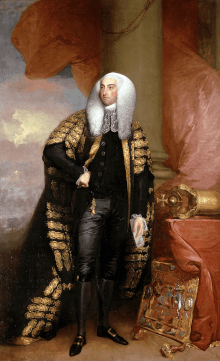
(Pictured: Irish Republican and Fenian John Daly in the ceremonial garb of the Mayor of Limerick, circa 1900)


Leave a comment

Kidnapping of Brig. Gen. Cuthbert Henry Tindall Lucas by the IRA

Major General Cuthbert Henry Tindall Lucas, CB, CMG, DSO, DL, British Army officer, is captured by the Irish Republican Army (IRA) on June 26, 1920, during the Irish War of Independence. He also commands the 4th Infantry Division during the final months of World War I and serves in the Second Boer War.

Lucas is born in Hitchin, Hertfordshire, England, on March 1, 1879. He later attends Marlborough College and the Royal Military College, Sandhurst.

Lucas is commissioned as a second lieutenant into 2nd Battalion, the Royal Berkshire Regiment, on May 7, 1898. He serves with the battalion in South Africa during the Second Boer War from 1899 to 1902, taking part in operations in the Orange Free State from February to July 1900, in Transvaal from July to November 1900, and later in Cape Colony south of the Orange River. He is promoted to lieutenant on August 1, 1900, while in South Africa. After the end of the war in June 1902, he and the rest of the 2nd battalion is sent to Egypt, where they arrive on the SS Dominion in November 1902. He later serves in the Egyptian Army and Sudan Civil Service.

Lucas serves in World War I with the British Expeditionary Force (BEF) and fights at Gallipoli in 1915 where he is promoted to command the 87th Brigade of the 29th Division. He leads the brigade during the Battle of the Somme and into 1917 before becoming Commandant of the Machine Gun Corps training centre in 1918. He is appointed General Officer Commanding (GOC) 4th Infantry Division in October 1918 during the closing stages of the war.

On June 30, 1919, Lucas is appointed a deputy lieutenant of Hertfordshire. He is made Commander of 17th Infantry Brigade in Ireland, and of Fermoy Barracks, on October 30, 1919. On June 26, 1920, during the Irish War of Independence, he is captured by the IRA while he is fishing on the Munster Blackwater near Fermoy along with Colonels Tyrell and Danford. After Danford is wounded during an unsuccessful attempt to escape from a moving car the same day, the volunteers free Tyrell to attend to Danford’s wounds. Both Colonels are subsequently taken to a military hospital at Fermoy.

Lucas is subsequently held in West Limerick and East Clare.

A letter from his wife, announcing the birth of their child, and addressed simply “to the IRA”, is delivered to him and his captors allow a subsequent exchange of letters between the couple. His letters home remain in the possession of his descendants and are shown on an episode of the BBC Television programme Antiques Roadshow.

The IRA moves Lucas to East Limerick from where he escapes four weeks later. It is believed his captors purposely relax the guard to allow him to escape rather than be faced with the possibility of executing him. While being transferred from Pallas Royal Irish Constabulary (RIC) barracks to Tipperary military barracks in a routine army patrol they are ambushed, and Lucas receives a slight injury.

Lucas becomes Assistant Adjutant General at Aldershot Command in 1924 and serves with the staff at General Headquarters, British Army of the Rhine from 1927 before he retires to Stevenage in 1932. He dies on April 7, 1956, and is buried in Graveley, Hertfordshire. His wife, Joan Holdsworth, whom he marries in October 1917, dies on September 6, 1979, and is also buried in Graveley, Hertfordshire.

In 2014, Barbara Scully, a granddaughter of George Power, one of the IRA volunteers involved, publishes his recollections to his family of the kidnap in The Irish Times. This brings a friendly reply from Lucas’ granddaughter, Ruth Wheeler, in which she states that Lucas risked a court-martial for stating that during his kidnap and time in captivity he was treated as “a gentleman by gentlemen” and was held by “delightful people.”

Ireland’s Defence Forces have published online Bureau of Military History witness statements by the IRA volunteers involved in the kidnap, as well as those who guarded General Lucas while he was held as a prisoner of war.

In 2020 Lucas’s granddaughter, Ruth Wheeler, and other members of the Lucas family publish online the letters he wrote and received while in captivity. Limerick Councillor Emmett O’Brien and other local people in March 2019 announce an intent to re-enact the capture, imprisonment, and release of Lucas on the anniversary in 2020.

(Pictured: Cuthbert Henry Tindall Lucas, bromide print by Walter Stoneman, 1919, National Portrait Gallery)


Leave a comment

Death of Theobald Walter, the First Chief Butler of Ireland

Theobald Walter, sometimes Theobald FitzWalter, Theobald Butler, or Theobald Walter le Boteler, the first Chief Butler of Ireland, dies on February 4, 1206, at Arklow Castle at Wicklow, in present day County Wicklow. He also holds the office of Chief Butler of England and is the High Sheriff of Lancashire for 1194. He is the first to use the surname Butler of the Butler family of Ireland. He is involved in the Irish campaigns of King Henry II of England and John of England. His eldest brother, Hubert Walter, becomes the Archbishop of Canterbury and justiciar and Lord Chancellor of England.

Walter is born in Norfolk, England, in 1165, the son of Hervey Walter and his wife, Matilda de Valoignes, who is one of the daughters of Theobald de Valoignes. Their children were Theobald, Hubert, Bartholomew, Roger, and Hamon. He and his brother Hubert are brought up by their uncle Ranulf de Glanvill, the great justiciar of Henry II of England who had married his mother’s sister Bertha.

On April 25, 1185, Prince John, in his new capacity as Lord of Ireland, lands at Waterford and around this time grants the hereditary office of butler of Ireland to Walter, whereby he and his successors are to attend the Kings of England at their coronation, and on that day present them with the first cup of wine. His father had been the hereditary holder of the office of butler of England. Sometime after, King Henry II of England grants him the prisage of wines, to enable him and his heirs, the better to support the dignity of that office. By this grant, he has two barrels of wine out of every ship, which breaks bulk in any trading port of Ireland, and is loaded with 20 tons of that commodity, and one ton from 9 to 20. He accompanies John on his progress through Munster and Leinster. At this time, he is also granted a large section of the north-eastern part of the Kingdom of Limerick. The grant of five and a half cantreds is bounded by:

“…the borough of Killaloe and the half cantred of Trucheked Maleth in which it lay, and the cantreds of Elykarval, Elyochgardi, Euermond, Aros and Wedene, and Woedeneoccadelon and Wodeneoidernan.”

These are the modern baronies of Tullough (in County Clare), Clonlisk and Ballybritt (in County Offaly), Eliogarty, Ormond Upper, Ormond Lower, Owney and Arra (in County Tipperary), Owneybeg, Clanwilliam and Coonagh (in County Limerick).

Walter is active in the war that takes place when Rory O’Connor attempts to regain his throne after retiring to the monastery of Cong (present day County Mayo), as his men are involved in the death of Donal Mor McCarthy during a parley in 1185 near Cork. In 1194, he supports his brother during Hubert’s actions against Prince John, with him receiving the surrender of John’s supporters in Lancaster. He is rewarded with the office of sheriff of Lancaster, which he holds until Christmas of 1198. He is again sheriff after John takes the throne in 1199.

In early 1200, however, John deprives Walter of all his offices and lands because of his irregularities as sheriff. His lands are not restored until January 1202. A manuscript in the National Library of Ireland points to William de Braose, 4th Lord of Bramber, as the agent of his restoration:

“Grant by William de Braosa, (senior) to Theobald Walter (le Botiller) the burgh of Kildelon (Killaloe) … the cantred of Elykaruel (the baronies of Clonlisk and Ballybrit, County Offaly), Eliogarty, Ormond, Ara and Oioney, etc. 1201.”

“Elykaruel” refers to the Gaelic túath of “Ely O’Carroll”, which straddles the southern part of County Offaly and the northern part of Tipperary (at Ikerrin). The other cantreds named are probably the modern baronies of Eliogarty, Ormond Upper, Ormond Lower and Owney and Arra in County Tipperary.

Walter founds the Abbey of Woney, of which nothing now remains, in the townland of Abington, near the modern village of Murroe in County Limerick around 1200. He also founds the Cockersand Abbey in Lancaster, Abbey of Nenagh in County Tipperary, and a monastic house at Arklow in County Wicklow.

Walter marries Maud le Vavasour (1176–1226), heiress of Robert le Vavasour, a baron of Yorkshire. John Lodge in the Peerage of Ireland in 1789 gives the year as 1189, but on no apparent authority, as no other author follows him on this. Their children are Theobald le Botiller, 2nd Chief Butler of Ireland, and Maud (1192–1244), who marries three times yet only has two surviving children, Ralph and Marie.

Walter dies on February 4, 1206, at Arklow Castle, County Wicklow, and is buried at Wotheney Abbey.


Leave a comment

The Dromkeen Ambush

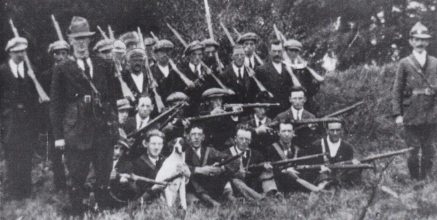
The Dromkeen ambush takes place on February 3, 1921, during the Irish War of Independence, at Dromkeen, County Limerick, when the Irish Republican Army (IRA) ambushes a Royal Irish Constabulary (RIC) patrol, killing eleven policemen.

In late January, Richard O’Connell, commander of the Mid Limerick Brigade flying column, along with Captains Sean Lynch and Morgan Portley, begin planning an ambush of an RIC convoy from the Pallas RIC headquarters. Observing their activities for several months, local Volunteer John Purcell, of Caherconlish, finds that the first Thursday of each month they send a convoy to Fedamore with the payroll for RIC constables there, about eleven miles away. They also seem to use the same route each time. Such predictability is often a fatal flaw in a guerrilla war. The ambush is set for February 3.

The ambush is carried out by the flying columns of the East Limerick and Mid Limerick Brigades of the IRA, some forty riflemen, under the command of Donnocha O’Hannigan, commander of East Limerick Brigade flying column, and Richard O’Connell, commander of the Mid Limerick Brigade flying column.

The ambush location is well selected. The lorries are to come from the west. There is a severe right-hand turn at Dromkeen House, where the road turns east for several hundred yards in a straight line, to an intersection that splits to the north and south. O’Hannigan puts D. Guerin, Sean Stapleton, and Maurice Meade, all of East Limerick Brigade, at the corner to be the lookouts for the convoy. There are low stonewalls along both sides of most of the road. About halfway down its length there is a cemetery and an old, ruined church on the south side.

O’Hannigan spreads his men along both sides of the road, behind the walls and in several homes along the road and sets up barricades on the forks on the eastern end of the ambush, set back so the driver will not see them until they get to the intersection. He takes up a command position in an old, ruined cottage at the intersection. In addition to O’Hannigan, John MacCarthy, David Clancy and a few other East Limerick Volunteers are in the ruined cottage.

At approximately 2:30 p.m. the lookouts near Dromkeen House let them know the lorries are approaching. The plan is to let the lead lorry reach the barricade before they open fire, expecting them to be widely spaced. They are closer together than expected, however, and the men lining the road and near Dromkeen House open fire first at the second lorry when it is near the ruins of the old church to prevent it being getting beyond them. Michael Hennessy, of the Kilfinane Company of the East Limerick Brigade, in a spot near one of the walls, later says he killed the driver of the second lorry, Constable Sidney Millin, on his first shot. Millin may have had his foot on the brake at that moment, as the lorry almost immediately stops in the middle of the road.

The sound of the firing causes the lead lorry to speed up. Turning to the left and seeing one barricade, the driver tries to turn to the right, but is going too fast. He runs into the wall and then slams into a donkey cart with a bog of flour in it, sending a cloud of flour into the air and coming to a halt.

The cloud of flour, along with the fact that they are the only RIC members in civilian clothes, apparently saves the lives of two RIC men, Constable Cox and District Inspector Sanson, who was in charge of the convoy, who are thrown clear of the cab. By the time the cloud of flour clears, two men in civilian clothes are seen running through the field. Given that Crown Forces have been known to have civilian hostages in their lorries, O’Hannigan had his men hold their fire for fear of killing a hostage, and the two escape. Many of the Volunteers later speak of Sanson with scorn for abandoning his men.

All the Volunteer participants say the firing only lasts about ten minutes, with the RIC and Black and Tans able to mount very little resistance before all eleven left in the two lorries are either dead or wounded. Of the three remaining in the first lorry, one is apparently killed very quickly by rifle fire and several grenades. The other two manage to get out and take cover but are quickly hit.

Two constables managed to get underneath the second lorry. They put up a short resistance before both are hit and killed by Volunteers Johnny Vaughan and Seán Carroll, who move into positions along the road. The only Volunteer casualty is Liam Hayes, who is later a general in the Free State Army. He has part of his left thumb and part of a finger shot off, probably by friendly fire. As the firing ends, the Volunteers come out from cover to collect the arms from the dead and wounded.

It has been claimed that three of the RIC dead were executed after they had surrendered. Particular suspicion for this alleged killing of prisoners has fallen on Maurice Meade, a former British soldier who was captured by the Germans in World War I and had joined Roger Casement‘s Irish Brigade. In reprisal, British forces burn ten homes and farms in the area.

In February 2009, up to 2,000 people turn out for the unveiling of a memorial to the ambush.

(From: “The Dromkeen Ambush: Down Into the Mire in County Limerick” by Joee Gannon, The Wild Geese, http://www.thewildgeese.irish, November 2017 | Pictured: The East Limerick Flying Column)


Leave a comment

Birth of Desmond “Des” O’Malley, Irish Politician

Desmond Joseph “Des” O’Malley, Fianna Fáil and Progressive Democrats politician, is born on February 2, 1939, in Limerick, County Limerick.

O’Malley is born into a storied Limerick political family. His maternal grandfather, Denis O’Donovan, is killed during the Irish War of Independence by the Black and Tans, two of his uncles and his father hold the office of Mayor of Limerick, and his uncle Donogh O’Malley is a Minister for Education. He is educated at the Jesuit Crescent College and at University College Dublin (UCD), from which he graduates with a degree in law in 1962.

In 1968, O’Malley enters politics upon the sudden death of his uncle Donogh who, at that the time, is the sitting Minister for Education. He is chosen after Donogh’s widow, Hilda, still in shock at the sudden death of her husband, turns down the opportunity to contest the by-election necessitated by his death.

O’Malley is subsequently elected as a Fianna Fáil TD for the Limerick East constituency in the by-election. Perhaps the first sign of the defiance that would define his career materialises during the 1969 Irish general election when Hilda asks her nephew to step aside and allow her to contest in the Limerick East constituency as the main Fianna Fáil candidate. He refuses and places third in the four-seat constituency, with his aunt, running as an independent, coming in fifth.

Following the general election, O’Malley is appointed Parliamentary Secretary to both Minister for Defence Jim Gibbons and Taoiseach Jack Lynch and serves as Government Chief Whip. In his role as a confidante of Lynch, the political lines within Fianna Fáil that put him on a collision course of over twenty years with Charles Haughey, are drawn. He plays a central role in the Arms Crisis prosecutions of Haughey and Neil Blaney in 1970. After their acquittals, the stage is set within Fianna Fáil for a long-term power struggle that eventually results in O’Malley’s expulsion from the party in 1984.

In the meantime, O’Malley’s next position within Lynch’s government comes when he is made Minister for Justice after Mícheál Ó Móráin is forced to resign due to ill-health. One of the most significant aspects of his legacy transpires during his tenure as Minister for Justice from 1970 to 1973. In response to the ongoing conflict in Northern Ireland, he tries and fails to introduce internment without trial for republicans within the State. He is, however, successful in reintroducing the Offences Against the State Act, which enables convictions for Irish Republican Amy (IRA) membership on the word of a Garda Superintendent, and the Special Criminal Court, a non-jury court presided over by three judges which tries cases of terrorism and serious organised crime.

When Lynch resigns the Fianna Fáil leadership following electoral defeat in 1979, O’Malley and Martin O’Donoghue manage the leadership campaign of George Colley, who subsequently loses to Haughey. Following Haughey’s ascent to leadership, O’Malley retains the industry and commerce ministerial portfolio he had been appointed to following the 1977 Irish general election.

In 1982, after Fianna Fáil loses its majority but stays in government by virtue of a confidence and supply agreement with Sinn Féin – The Workers Party and two independents, O’Malley is appointed Minister for Trade, Commerce and Tourism, but with the death of Colley and the loss of O’Donoghue’s seat, he becomes increasingly isolated within Fianna Fáil.

After the party whip is removed from him in 1984, amidst inter-party wrangling over the New Ireland Forum, O’Malley is expelled from the party the following year, the final straw being his famous “I stand by the Republic” speech in which he announces his intention to abstain on a vote regarding the liberalisation of the sales of contraceptives, which Fianna Fáil opposes.

O’Malley goes on to establish the Progressive Democrats, joined by Mary Harney (who had also been expelled by Fianna Fáil), and later by Fianna Fáil TDs Bobby Molloy and Pearse Wyse, as well as Fine Gael TD Michael Keating. In the 1987 Irish general election, the Progressive Democrats win fourteen seats, making them the third biggest party in the Dáil. Among those elected are O’Malley, his cousin Patrick O’Malley, Anne Colley, daughter of George Colley, Martin Gibbons, son of Jim Gibbons, Michael McDowell and Martin Cullen.

O’Malley’s animus for Haughey does not stop him from entering coalition with Fianna Fáil after the 1989 Irish general election, with him once again appointed Minister for Industry and Commerce. While in government, he finally witnesses the downfall of Haughey in 1992, when he is forced to resign over the emergence of new evidence concerning his tapping of journalists’ phones in the 1980s. The coalition with Fianna Fáil does not last long under new Taoiseach Albert Reynolds, with the Government collapsing after Reynolds accuses O’Malley of dishonesty during the Beef Tribunal.

O’Malley retires as leader of the Progressive Democrats in 1993, and the party moves into opposition, only to re-enter government with Fianna Fáil in 1997, where it remains upon O’Malley’s retirement from politics in 2002.

While the Progressive Democrats no longer exist, they are generally credited with the breaking up of the Fianna Fáil versus Fine Gael dichotomy of Irish politics that had dominated since the founding of the Free State. Since 1922, Irish governments have tended to be either single-party Fianna Fáil cabinets, be they minority or majority, or Fine Gael-led coalitions, typically involving the Labour Party. A Fine Gael-Labour coalition is in power at the time of the founding of the Progressive Democrats, and a single-party government or clear majority has not been won in Ireland since.

O’Malley dies in Dublin on July 21, 2021, at the age of 82, having been in poor health for some time. He is predeceased by his wife, Pat, and survived by their six children, four daughters including the former TD Fiona O’Malley, and two sons.

Perhaps O’Malley’s greatest legacy is the political reality of Ireland today: the low-tax, pro-business economic policies of the Progressive Democrats have been the dominant ideology in the State since the 1990s. Sinn Féin, the party most affected by his measures as Minister for Justice, no longer vote against the retention of the Offences Against the State Act and Special Criminal Court.

(From: “Desmond O’Malley: 1939-2021,” eolas Magazine, http://www.eolasmagazine.ie, August 2021)


Leave a comment

Death of Patrick Weston Joyce, Historian, Writer & Music Collector

Patrick Weston “P. W.” Joyce, Irish historian, writer and music collector, dies in Dublin on January 7, 1914. He is known particularly for his research in Irish etymology and local place names of Ireland.

Joyce is born in Ballyorgan, County Limerick, in the Ballyhoura Mountains, on the border of counties Limerick and Cork, and grows up in nearby Glenosheen. The family claims descent from one Seán Mór Seoighe (fl. 1680), a stonemason from Connemara, County Galway. Robert Dwyer Joyce is a younger brother.

Joyce is a native Irish speaker who starts his education at a hedge school. He then attends school in Mitchelstown, County Cork.

Joyce starts work in 1845 with the Commission of National Education. He becomes a teacher and principal of the Model School, Clonmel. In 1856 he is one of fifteen teachers selected to re-organize the national school system in Ireland. Meanwhile he earns his B.A. in 1861 and M.A. in 1863 from Trinity College Dublin.

Joyce is principal of the Training College, Marlborough Street, in Dublin from 1874 to 1893. As a member of the Society for the Preservation of the Irish Language he writes an Irish Grammar in 1878. He is President of the Royal Society of Antiquaries of Ireland from 1906 to 1908, an association of which he is a member from 1865.

Joyce is a key cultural figure of his time. His wide interests include the Irish language, Hiberno-English, music, education, Irish literature and folklore, Irish history and antiquities, place names and much else. He produces many works on the history and culture of Ireland. His most enduring work is the pioneering The Origin and History of Irish Names of Places (first edition published in 1869). He is a member of the Royal Irish Academy.

In 1856 Joyce marries Caroline Waters of Baltinglass, County Wicklow, with whom he has two daughters and three sons, one of whom is the author Weston St. John Joyce. He dies on January 7, 1914, at his home, Barnalee, Rathmines, Dublin, and is buried two days later in Glasnevin Cemetery.

The P.W. Joyce collection at the Cregan Library in St. Patrick’s College, Drumcondra, Dublin, reflects many of Joyce’s interests and includes several rarities. These include autographed presentation copies by Joyce and his brother Robert, as well as books from Joyce’s own library. The collection also contains nine manuscripts associated with Joyce and his family members, including a manuscript in P.W. Joyce’s own hand of Echtra Cormaic itir Tairngiri agus Ceart Claíd Cormaic (Adventures of Cormac in the Land of Promise), a passage from the Book of Ballymote, which Joyce translated into English.


Leave a comment

Birth of Sylvester O’Halloran, Surgeon & Historian

Sylvester O’Halloran, Irish surgeon with an abiding interest in Gaelic poetry and history, is born on December 31, 1728, at Caherdavin, County Limerick. For most of his life he lives and practises in Limerick and is later elected a member of the Royal Irish Academy (RIA).

O’Halloran is the third son of Michael O’Halloran, a prosperous farmer, and his wife Mary McDonnell. He is named after Sylvester Lloyd, the titular Catholic bishop of Killaloe (1728–39). His mother’s cousin, Sean Claragh McDonnell, teaches him much at an early age, including some Greek and Latin. He goes on to a Limerick school run by Robert Cashin, a Protestant clergyman, which is unusual at the time as the O’Hallorans are Roman Catholics during the difficult time of the Penal Laws.

O’Halloran and his brothers engage successfully in areas of life that work around the restrictions of the Penal Laws. Joseph becomes a Jesuit and holds chairs in rhetoric, philosophy and divinity at the Jesuit College at Bordeaux in France. George becomes a jeweler and in time a property-owner. O’Halloran goes to London to learn medicine at the age of 17, particularly studying the methods of Richard Mead, as well as the oculists Taylor and Hillmer. After further study at Leiden, and in Paris under the anatomist and academician Antoine Ferrein, he sets up practice as a surgeon in Limerick in early 1749.

O’Halloran writes several learned treatises on medical matters, and his fame is acknowledged by his membership of the RIA in 1787. He is a founder of the County Limerick Infirmary that starts with four beds in 1761 before moving to larger premises at St. Francis’s Abbey in 1765. The foundation stone of the original infirmary is now preserved in the Sylvester O’Halloran Post Graduate Centre at the Mid-Western Regional Hospital, Limerick.

While in France, O’Halloran is very impressed with the Académie Royale de Chirurgie, which had been founded in Paris in 1731 during the reign of Louis XV. He is subsequently instrumental in founding the Royal College of Surgeons in Ireland (RCSI), by writing its blueprint, Proposals for the Advancement of Surgery in Ireland, in 1765. In 1780, he is made an honorary member of the new Dublin Society of Surgeons and, when the RCSI receives its charter in 1784, is again elected an honorary member, equivalent to a Fellowship today.

As well as his scientific knowledge, O’Halloran’s interest in the arts begins with his collection of Gaelic poetry manuscripts and this leads on to an interest in Irish history. Given his background, he argues to validate the pre-Norman history of Ireland which had often been dismissed as a period of barbarism.

O’Halloran’s correspondents include Edmund Burke on early history. With Charles O’Conor of Bellanagare he discusses James Macpherson‘s translated version of Ossian and advises him about an eye complaint.

In 1789, Charlotte Brooke publishes the first English-language compendium of Irish poetry, the seminal “Reliques of Irish Poetry”, giving full due to O’Halloran for lending her his manuscript collection and for having written the essential history underlying her anthology.

In 1752, O’Halloran marries Mary Casey of Ballycasey, County Limerick, and they have four sons and a daughter. Their homes are in Change Lane and then on Merchants’ Quay. One of their sons is Major-General Sir Joseph O’Halloran, the father of Thomas Shuldham O’Halloran, after whom the Adelaide, South Australia suburb of O’Halloran Hill is named. Mary dies in 1782.

After a stroke, O’Halloran is infirm and confined to his chair for some time before his death on August 11, 1807, at his home on Limerick’s Merchant Quay. His is buried at St. Munchin’s graveyard at Killeely, which is now a suburb of Limerick.

Though politically restricted in his life by the Penal Laws, O’Halloran helps establish the county Infirmary, is elected President of the city’s Free Debating Society in 1772 and is elected to a committee in 1783 that examines the River Shannon navigation. Appropriately, a Limerick bridge over the River Shannon has been named after him.


Leave a comment

Storm Frank Causes Widespread Flooding

Clean-up operations are underway around Ireland on Wednesday, December 30, 2015, in the wake of Storm Frank, which causes widespread flooding following its landfall in western areas on Tuesday, December 29. Thousands of households and businesses are left without electricity in many areas of the country.

A Met Éireann status orange wind warning is lifted at 2:00 p.m. on Wednesday although the forecasts caution that severe winds of 65-80 km/h and gusts of up 130 km/h are still expected. While the heaviest rainfall from the storm falls overnight, many rivers and lakes have yet to peak meaning further flooding is possible.

According to an ESB Networks spokesman, 7,500 homes are without power in the afternoon, down from the overnight total of 13,000. He says repair crews are working to restore power to those cut off. The biggest single outage overnight is around Bandon and Fermoy in County Cork where 4,000 homes are without power, although it has been restored to almost all homes by the afternoon of December 30.

At 2:00 p.m. on Wednesday, the worst affected areas are County Wicklow with 1,200 houses without power, Macroom in County Cork where 600 are without power and Athlone where 500 homes are cut off. Around 500 homes in Naas, County Kildare, are without power as are 350 houses in Skerries in north County Dublin. It is hoped that power will be restored to all customers by the evening.

County Cork appears to be the worst affected by the storm where 60 mms (almost three inches) of rain falls since the morning of December 29. The threat of further flooding in Cork remains as the ESB increases the flow of water through the Inniscarra Dam to 250 cumecs (cubic metres per second) between 9:00 a.m. and midday which leads to increased flooding downstream. This is higher than the level of flow (180 cumecs) the previous and between December 6 and 12 along the River Lee following Storm Desmond.

Cork County manager Tim Lucey says there has been “extensive flooding” across a range of areas, but that Midleton and Bandon are worst hit with some 90 properties affected in each of the towns. He tells RTÉ Radio that one positive is the fact flood defences in Mallow and Fermoy have done their job. He notes that some five feet of water has built up behind a flood barrier in Mallow and this indicates the damage that could have been done to the town.

South Galway bears the brunt of flooding in the west, with river gauges expected to rise further over the coming days. Overnight rainfall is not as heavy as anticipated in the west, but several properties succumb to the waters. Up to 30 families in the south Galway area are forced to stay with relatives, with several being accommodated in hotels by Galway County Council, as floodwaters cut off access routes to their homes.

In Mayo, the area around the Neale remains underwater and a number of minor roads and thousands of acres of farmland are also affected. With rain continuing to fall across the west, conditions are expected to remain critical over the next few days.

The N11 between Rosslare and Dublin, the N25 from Cork to Waterford, the N71 between Cork and Killarney and the N4 between Dublin and Sligo all have diversions in place. The N25 is closed overnight between Killeagh and Castlemartyr in County Cork due to flooding. The N71 Cork/Bandon Road is also closed overnight at the viaduct due to flooding. There is severe flooding on the N40 South Ring Rd. at J6 Kinsale, particularly on the westbound off-ramp. The N11 Dublin/Wexford Road is impassable through Enniscorthy and also at Kyle’s Cross near Oylegate. The N4 is closed eastbound at Ballynafid in County Westmeath due to flooding. There are also several road closures in Kerry, Waterford and Tipperary.

Midleton is also hit by severe flooding as water levels in the Owenacurra River rise dramatically with up to 30 families having to be evacuated from their homes. Macroom in mid-Cork is also flooded for the first time during the year. Bandon is put on red alert by Cork County Council’s early warning system. Traders and residents are told to take all measures necessary to protect their property and stock. Locals stay up all night preparing the town for the latest round of flooding. Nevertheless, some 20 businesses in Bandon are flooded for the second time in a month after waters start to come up shores and gutters in the town as water levels in the River Bandon rise overnight.

The River Slaney burst its banks in Enniscorthy, County Wexford, causing widespread flooding in the town. Several cars have to be abandoned. High tide in Enniscorthy occurs around 10:30 a.m. on December 30.

Limerick City Council and Limerick County Council say there has been no significant flooding in the county as a result of overnight rainfall but that water levels along the lower River Shannon continue to increase. Water levels on the river rise by some 11cm at Castleconnell and Montpelier.

The ESB says the flow of water through Parteen Weir, which regulates water flow through Ardnacrusha power plant, will remain at 440 (cubic metres per second) on December 30 and that the situation will be reviewed again the following day. “The levels in Lough Derg may reach 2009 levels in the coming days and, as a result, the flow through Parteen Weir may increase to 2009 levels (up to 500 cumecs) in the coming days,” it says.

Clare County Council says water levels on the lower River Shannon at Springfield, Clonlara, have increased by 5-10cm in the last 24 hours and are some 20cm below a peak level recorded on December 13th. It says the Mulkear River in County Limerick, which enters the River Shannon south of Annacotty, is currently in flood and is contributing to increased water levels at Springfield. Council staff are assisted by the Fire Service and Defence Forces at Springfield in their pumping operations and transporting residents of some 12 homes isolated by floodwaters.

Fianna Fáil urges Taoiseach Enda Kenny to call an emergency Cabinet meeting to address the fallout from the storm. The party’s environment spokesman, Barry Cowen, says many communities felt neglected as further significant damage was inflicted on homes and businesses by the rainfall and winds brought by Storm Frank. “The scenes that we are witnessing in communities impacted by the latest storm are truly heart-breaking,” he says. “People feel neglected by the Government. It’s astonishing that the Taoiseach has decided not to interrupt his Christmas holidays in light of the devastation caused by Storm Frank.”

The Government’s National Coordination Group on Severe Weather meets in Dublin on December 30. Sinn Féin MEP Liadh Ní Riada says the Government has displayed “ineptitude in preparing flood defences” and that “more hollow promises” from the Coalition are no substitute for action. “The risk of flooding is increasing and will continue to increase. People across this island need to know that our political leaders have a plan to prevent this happening in the future,” she says.

(From: “Storm Frank causes floods, closes roads and cuts power to thousands” by Ronan McGreevy, Th Irish Times, http://www.irishtimes.com, December 30, 2015 | Pictured: Water flows through buildings and down the street in Graignamanagh, Co Kilkenny on Tuesday night by Paul B via Twitter)


Leave a comment

Birth of Robert Byrne, Trade Unionist & IRA Volunteer

Robert “Bobby” Byrne, Irish trade unionist, Republican and member of the Irish Republican Army (IRA), is born at 5 Upper Oriel Street, Dublin, on November 28, 1899. He is the first Irish Republican to be killed in the Irish War of Independence (1919-21).

Byrne is born to Robert Byrne and Annie Hurley as one of nine children. His cousin Alfred “Alfie” Byrne later becomes Lord Mayor of Dublin. Shortly after his birth his family moves to Town Wall Cottage, near St. John’s Hospital in Limerick, County Limerick.

After experiencing the political and social turmoil in Ireland after the 1913 Dublin lock-out and the 1916 Easter Rising, Byrne becomes an active member of the Postal Trade Union. In 1918 he loses his position as a telegraph operator in Limerick’s general post office because of his political activities, his attendance at the funeral of John Daly and an anti-conscription meeting at Limerick Town Hall in 1918. In 1919, he holds the rank of battalion adjutant of 2 Battalion, Mid Limerick Brigade of the IRA.

After a raid on Byrne’s home by the Royal Irish Constabulary (RIC), Byrne is arrested and charged for the possession of a revolver with corresponding ammunition and binoculars in front of a court-martial. Because he does not recognize the legitimacy of British Officers holding court over an Irish citizen, he denies entering a plea or even participating in the trial itself. Ignoring his protests, the court finds him guilty and sentences him to twelve months in prison and hard labour. Directly after the verdict is spoken, he is transferred to Limerick Prison to start his sentence.

As a prisoner, Byrne and sixteen other republican prisoners started a campaign, demanding status as political prisoners. As this is denied, they began barricading themselves in their cells, singing republican songs and damaging the interior and furniture of the cells. These protests are so loud that after a short while, onlookers and supporters start gathering outside the prison in support of the prisoners. The RIC reacts to these developments with physical violence and solitary confinement. As a last resort, in February 1919, the prisoners go on hunger strike to continue their protest. After his health deteriorates because of the hunger strike, in mid-March 1919, he is transferred to the Limerick Union Hospital, where he is placed in an ordinary ward under armed guard.

On April 6, 1919, two IRA companies under the lead of John Gallagher (D Company) and Michael Stack (E Company), the only two who bring arms to the rescue attempt, go into the hospital disguised as ordinary visitors and attempt a rescue operation. Around twenty volunteers go to the station on which Byrne is lying and after a signal whistle is blown, attack and attempt to overwhelm the two RIC officers that are posted as guards. The RIC officers quickly realize the attempt and RIC constable James Spillane shoots at Byrne, who wants to stand up from his bed, from close range, hitting him in the lung. Michael Stack, in response, shoots at constable James Spillane, injuring him, and his colleague constable Martin O`Brien, killing him.

The volunteers leave the hospital with the gravely injured Byrne, but the escape car and driver have in the meantime been ordered to another IRA operation. Instead, they stop a horse carriage at Hasset’s Cross. The occupants of the carriage, John Ryan and his wife of Knockalisheen, Meelick, County Clare, bring the bleeding and injured Byrne to their house, put him to bed and call for medical and clerical assistance. Dr. John Holmes arrives and examines Byrne, finding a large bullet wound on the left side of his body, which has perforated his lung and his abdomen. Byrne dies from his wounds in the evening of April 7, 1919.

After Byrne’s body is discovered by the authorities, the RIC place Limerick under martial law and declare it a “Special Military Area.” In response, the trade unions in Limerick start a “general strike against British militarism.” This strike is called the “Limerick Soviet” by foreign journalists who report from Limerick.

On the evening of April 8, 1919, Byrne’s funeral is held. He is not able to be buried in his IRA uniform, because the RIC had removed it from him. Nevertheless, the funeral procession is accompanied by huge crowds and his remains, which lay in state in front of the high altar in St. John’s Cathedral, are visited by thousands from Limerick and surrounding areas.


Leave a comment

Birth of Con Collins, Sinn Féin Politician

Cornelius Collins (Irish: Conchobhar Ó Coileáin), Irish Sinn Féin politician known as Con Collins, is born in Arranagh, Monagea, Newcastle West, County Limerick, on November 13, 1881.

Collins has joined the Gaelic League by 1910 when working in London for the civil service, as had Michael Collins the previous year. He is a member of the Irish Volunteers and the Irish Republican Brotherhood (IRB). He and Austin Stack are on their way to meet Sir Roger Casement at Banna Strand in County Kerry in 1916 during a failed attempt to land arms for Irish Republicans from the German vessel Aud, when they are arrested by the British authorities on Easter Saturday. They spend Easter Week in Tralee Barracks and in solitary confinement on Spike Island, County Cork. They are then held with Terence MacSwiney, Arthur Griffith and others in Richmond Barracks before being sentenced to penal servitude for life. He is deported to Frongoch internment camp in Wales where he spends the rest of the year and much of 1917.

Collins is elected as a Sinn Féin MP for West Limerick at the 1918 Irish general election. In January 1919, Sinn Féin MPs who had been elected in the Westminster elections of 1918 refuse to recognise the Parliament of the United Kingdom and instead assemble at the Mansion House in Dublin as a revolutionary parliament called Dáil Éireann. At the 1921 Irish elections he is elected for the constituency of Kerry–Limerick West. He opposes the Anglo-Irish Treaty and votes against it.

Collins refuses an offer of the Ministry for Posts and Telegraphs provided he switch to the pro-Treaty side. Having been sworn to non-violence – together with Richard Mulcahy – by the Augustinians, he does not join the anti-Treaty forces. He is again re-elected for Kerry–Limerick West at the 1922 Irish general election, this time as anti-Treaty Sinn Féin Teachta Dála (TD). He does not contest the 1923 Irish general election and retires from politics.

Collins dies in Dublin on November 23, 1937, at the age of 56, and is buried in Mount St. Lawrence cemetery, Limerick.

He and Piaras Béaslaí share a distinction in that they contest and are elected in three Irish general elections unopposed by any other candidates.

(Pictured: Wedding photo of Sinn Féin politician Con Collins, September 12, 1923)