In 1836, Minty’s father, also named Robert, is promoted to lieutenant in the 1st West India Regiment of Foot, which is a regiment of black enlisted men with white officers. The whole family leaves Ireland and travels with him through Minty’s later childhood and teenage years. They move all around the Caribbean and West Africa ultimately being sent to Sierra Leone.
Minty’s father becomes judge advocate general in Jamaica in 1846 but dies after falling victim to yellow fever in 1848. Though he is only 17 at the time, he is allowed to take over his father’s commission in the regiment. After serving five years in the regiment he resigns his commission, possibly because he nearly becomes a victim of a tropical disease himself.
Minty immigrates to Ontario, Canada, where his mother and the family had moved after his father’s death. He is hired by the Great Western Railroad Company at a time when the railroad business is exploding in both the United States and Canada. He is involved with railroads for the rest of his life, with time out for the American Civil War.
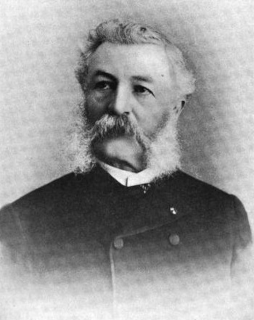
Minty is honorably mustered out of the Union Army on April 15, 1865, at Nashville, Tennessee, and becomes a successful railroad executive in his post-war career. He dies at the age of 74 on August 24, 1906, in Jerome, Arizona. He is buried at Aultorest Memorial Park in Ogden, Utah.
French belongs to the long-established French family of Frenchpark, County Roscommon, who are substantial landowners who also make money in the wine trade. He is the eldest son of Arthur French MP and Alicia Magenis, daughter of Richard Magenis of Dublin and sister of Richard Magenis. He marries Margaret Costello, daughter of Edmond Costello of Edmondstown, County Mayo, and has nine children, including Arthur French, 1st Baron de Freyne, John, 2nd Baron and Charles, 3rd Baron.
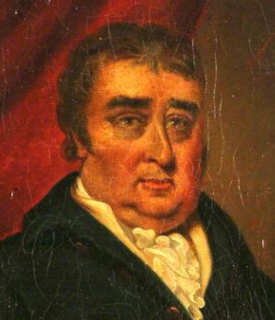
In 1783, French is elected a Member of Parliament (MP) for Roscommon County in the Irish House of Commons. After the Act of Union 1800 he represents Roscommon in the Parliament of the United Kingdom. He is alleged to have been offered an Earldom if he would support the union of Ireland with Great Britain but refuses the honour. Later he also refuses a Barony with no strings attached, although in time three of his sons would hold the title of Baron de Freyne. The Crown is frequently irritated by his demands for offices and favours for his brothers and sons, although such behaviour is entirely typical of an Irish politician at the time.
A critic of the policy of collective fines as a deterrent to the illicit distillation of poteen, French incurs the wrath of Chief Secretary for IrelandRobert Peel who calls him “an Abominable fellow,” but his enormous popularity in Roscommon means that he cannot be ignored. He also criticizes the continuation of martial law in Ireland.
By 1817 French is complaining of ill-health. He dies on November 24, 1820. One report at the time states that he had died “from excessive fox hunting.”
Derrig is born on November 26, 1897, in Westport, County Mayo. He is educated locally and later at University College Galway. During his time in college, he organises a corps of the Irish Volunteers. After the 1916 Easter Rising, he is arrested and imprisoned, and sent to the prisons of Woking, Wormwood Scrubs and Frongoch internment camp. He is arrested in 1918 and is accused of attempting to disarm a soldier. He is sentenced to five months imprisonment by a court in Belfast. When he is released, he supports Joseph MacBride at the 1918 Irish general election. He also graduates from college and becomes headmaster in a technical college in Mayo.
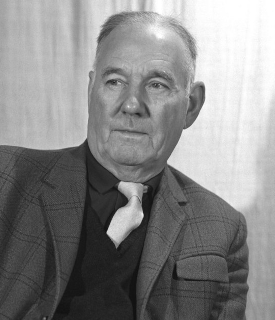
At the June 1927 Irish general election Derrig is elected to Dáil Éireann as a Fianna Fáil TD for Carlow–Kilkenny. In Éamon de Valera‘s first government in 1932 Derrig is appointed Minister for Education. He initiates a review of industrial and reformatory schools and the rules under the Children Act 1908, resulting in the critical 1936 Cussen Report that follows which he shelves, and a report in 1946-48 by the Irish American priest Father Edward J. Flanagan, which is also shelved. His lack of action wis noted in 2009 when the Ryan Report examines the subsequent management of these “residential institutions.” He is the first Minister to seek a report that could result in much-needed reforms. It is suggested that he does not want to follow British law reforms in the 1920s and 1930s, because of his strong anti-British views, and that Irish children have suffered needlessly as a result. From 1939 to 1943, he serves as Minister for Lands. He is re-appointed to Education in 1943 until 1948. During this period a bitter teachers’ strike, involving the Irish National Teachers Organisation (INTO), takes place, lasting from March 20 to October 30. Between 1951 and 1954, he becomes Minister for Lands again.
León Ó Broin, senior civil servant, historian, and author, is born Leo Byrne on November 10, 1902, at 21 Aungier Street, Dublin, the second of four sons of James P. Byrne, a potato factor’s bookkeeper, and Mary Byrne (née Killeen), daughter of a seaman who abandoned his family.
After early education in convent school, Ó Broin attends Synge Street CBS, where he is especially adept at languages. After working in several minor clerical employments, he becomes a clerk in the Kingsbridge headquarters of the Great Southern Railway. Joining a local Sinn Féin club, he canvasses for the party in the College Green ward during the 1918 Irish general election. Sent from an early age to Irish language classes by his father, he attends the Irish summer college in Spiddal, County Galway, and joins the Gaelic League, becoming by early 1921 secretary of central branch. He writes articles for the league’s successive weekly organs, each in its turn suppressed by the authorities. Despite regarding such writing as practice work within a language he is yet learning, he is selected best writer of Irish at the 1920 Dublin feis.
Arrested with his father and two brothers just before Christmas 1920 when Black and Tans discover a letter in Irish on his person during a house raid, Ó Broin is imprisoned for several weeks in Wellington Barracks. Leaving his railway job, he works as a clerk in the clandestine office of the Dáil ÉireannDepartment of Agriculture (1921–22). During the Irish Civil War, with departmental work at a standstill, he joins the National Army as a commissioned officer assigned to general headquarters staff at Portobello Barracks. Having recently commenced legal studies at the King’s Inns and University College Dublin (UCD), he handles army legal matters, such as compensation claims for damage to property.
Called to the bar in 1924, Ó Broin enters the civil service. Assigned to the Department of Education (1925–27), he was involved in launching the Irish language publishing imprint An Gúm, intended to redress the paucity of reading material, apart from school texts, in the language. Transferred to the Department of Finance (1927), he serves as estimates officer and parliamentary clerk and is assistant secretary of the economy committee established by the Cumann na nGaedheal government to make recommendations on reductions in current expenditure. Appointed private secretary to the Minister for Finance (1931–32), he serves both Ernest Blythe and the first Fianna Fáil minister, Seán MacEntee. Promoted to assistant principal (1932), and to principal officer (1939), he represents the department on the Irish Folklore Commission, and serves on the interdepartmental committee that, after the disastrous Kirkintilloch bothy fire in 1937, investigates seasonal migration to Scotland. During the emergency he is regional commissioner for Galway and Mayo (1940–45), one of eight such officers charged with organising contingency preparations for dealing with the likely collapse of central administration in the event of invasion by any of the wartime belligerents.
Transferred out of Finance, Ó Broin becomes assistant secretary (1945–48) and secretary (1948–67) of the Department of Posts and Telegraphs, administering both the postal service and telecommunications. He works closely with Fianna Fáil minister Patrick Little to improve the range and quality of music offered by the broadcasting service, playing a large part in the decision to form and adequately staff a full Radio Éireann symphony orchestra. He represents Ireland in several post-war conferences in Europe and America that reorganise the international regulation of broadcasting activities. He is elected to the European Broadcasting Union‘s administrative council (1953). He establishes and serves on a departmental committee in 1953 that studies all facets of launching a television service.
A devout but liberal Catholic, Ó Broin is prominent for many years in the Legion of Mary, founded by his close friend and civil-service colleague Frank Duff. President of a legion presidium of writers, actors, and artists, he is first editor (1937–47) of the quarterly organ Maria Legionis. Sharing Duff’s ecumenism, he belongs to the Mercier Society, the Pillar of Fire Society, and Common Ground, groups organised by Duff in the early 1940s to facilitate discussion between Catholics and, respectively, protestants, Jews, and secular intellectuals. The first two are suspended amid disapproval by the Catholic Archbishop of Dublin, John Charles McQuaid.
On retirement from the civil service in 1967, Ó Broin concentrates on the parallel career of research and writing that he had cultivated over many years. Having begun writing articles and short stories in Irish from his earliest years in the Gaelic League, he publishes his first collection of short stories, Árus na ngábhad, in 1923. With the establishment of An Gúm, he publishes three more collections of original short stories and translations of such masters of the genre as Alexander Pushkin, Prosper Mérimée, Guy de Maupassant, and Jerome K. Jerome. He translates several popular modern novels, including Robert Louis Stevenson‘s Kidnapped and H. G. Wells‘s The War of the Worlds. Active as secretary, actor, and writer with the state-subsidised Gaelic Drama League (An Comhar Drámaíochta), which produces Irish language plays, he publishes many plays in Irish, both original and translated. His best-selling book in Irish is Miss Crookshank agus coirp eile (1951), about the mummified corpses in the vaults of St. Michan’s Church, Dublin.
Ó Broin writes prolifically on modern Irish history and biography. His Irish language biography of Charles Stewart Parnell (1937), the first full-scale study of its kind in Irish since the commencement of the language revival, is a landmark publication, praised for the quality of its prose by such critics as Frank O’Connor and Seán Ó Faoláin. His biography of Robert Emmet, published in Irish in 1954, and awarded the Douglas Hyde prize, pioneers the scholarly subversion of the romantic myth surrounding its subject, and includes consideration of the political and social context. The subjects of subsequent biographies include Richard Robert Madden, Charles Gavan Duffy, Joseph Brenan, Michael Collins, and Frank Duff.
Ó Broin takes a largely biographical approach to historical writing, researching neglected aspects of pivotal historical events, and basing his studies on previously unexploited primary sources, often the papers of a single individual, whose career serves as the linchpin of his narrative, filtering events through the perspective of that person. Another vein of his scholarship is his primary research into the history of Irish separatism, especially with sources in the Irish State Paper Office.
Ó Broin receives an honorary LL. D from the National University of Ireland (NUI) in 1967. Elected a member of the Royal Irish Academy (RIA) in 1971, he is a council member (1974–76) and senior vice-president (1976–77) and chairs the group whose recommendations results in the academy’s establishment of the National Committee on International Affairs. He is president of the Irish Historical Society (1973–74), and a member of the Irish Manuscripts Commission.
In 1925 Ó Broin marries Cait Ní Raghallaigh, an office assistant reared in Baltinglass, County Wicklow, whom he met in the Gaelic League. They have two sons and three daughters. After residing in the south city suburbs, they move to Booterstown, County Dublin in the 1930s, and from there to the Stillorgan Road in the 1950s.
Ó Broin dies February 26, 1990, in Dublin, and is buried in Deans Grange Cemetery. His papers are in the National Library of Ireland (NLI). His eldest son, Eimear Ó Broin, is an accomplished musicologist and assistant conductor of the several Radio Éireann orchestras (1953–89).
(From: “Ó Broin, León” by Lawrence William White, Dictionary of Irish Biography, http://www.dib.ie)
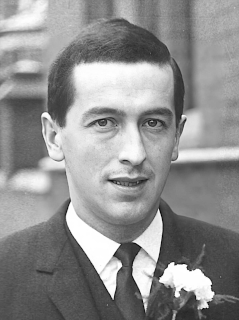
In the 1960s Gallagher changes allegiance and becomes a member of Fianna Fáil. He is elected to Mayo County Council in 1967 and is elected to Dáil Éireann on his third attempt at the 1973 Irish general election for the Mayo West constituency. He does not remain on the backbenches for very long. He joins the Fianna Fáil front bench in 1974 as spokesperson on Fisheries. He remains in that position until 1977 when the party returns to power, and he is appointed Minister for the Gaeltacht. He is an active Minister with an interest in Irish language affairs.
Following the 1987 Irish general election, Gallagher is not appointed to cabinet. He is, however, appointed as Minister of State at the Department of the Gaeltacht, while Haughey has appointed himself as Minister for the Gaeltacht. As a result, he retires from politics at the following general election in 1989. After his retirement, he works to advance the Irish language cause and also serves as chairman of the Gaelic Athletic Association in Mayo.
Gallagher dies on November 4, 2001, at the age of 78 in Castlebar, County Mayo. He is buried at Polranny Cemetery, Achill Sound, County Mayo. He is survived by his wife Hannah, twelve children and thirty grandchildren.
Stagg is the seventh child in a family of thirteen children. His father, Henry, and his uncle had both fought in the Irish War of Independence and Irish Civil War. His brother, Emmet Stagg, becomes a Labour Party politician and a Teachta Dála (TD) for Kildare North. He is educated to primary level at Newbrook Primary School and at CBS Ballinrobe to secondary level. After finishing his schooling, he works as an assistant gamekeeper with his uncle prior to emigrating to England in search of work. Once in England, he gains employment as a bus conductor in North London and later becomes a bus driver. While in England he meets and marries fellow Mayo native, Bridie Armstrong from Carnacon in 1970.
In 1972, Stagg joins the Lutoncumann of Sinn Féin and soon after becomes a volunteer in the Provisional Irish Republican Army (IRA).
In April 1973, Stagg is arrested with six others alleged to comprise an IRA unit planning bombing attacks in Coventry. He is tried at BirminghamCrown Court. The jury finds three of the seven not guilty. The remaining four are all found guilty of criminal damage and conspiracy to commit arson. Stagg and English-born priest, Father Patrick Fell, are found to be the unit’s commanding officers. Stagg is given a ten-year sentence and Fell is given twelve years. Thomas Gerald Rush is given seven years and Anthony Roland Lynch, who is also found guilty of possessing articles with intent to destroy property, namely nitric acid, balloons, wax and sodium chlorate, is given ten years.
Following the hunger strike that results in the death of Michael Gaughan, the Price sisters, Feeney and Kelly are granted repatriation to Ireland. Stagg is denied repatriation and is transferred to Long Lartin Prison. During his time there he is subject to solitary confinement for refusing to do prison work and is also subjected, along with his wife and sisters during visits, to humiliating body searches. In protest against this, he begins a second hunger strike that lasts for thirty-four days. This ends when the prison governor agrees to an end of the strip-searches on Stagg and his visitors. He is bed-ridden for the rest of his incarceration in Long Lartin, due to a kidney complaint.
In 1975 Stagg is transferred to Wakefield Prison, where it is demanded that he again do prison work. He refuses and is placed in solitary confinement. On December 14, 1975, he embarks on a hunger strike in Wakefield, along with a number of other republican prisoners, after being refused repatriation to Ireland during the IRA/British truce. His demands are an end to solitary confinement, no prison work and repatriation to prison in Ireland. The British government refuses to meet any of these demands and Stagg dies on February 12, 1976, after 62 days on hunger strike.
Stagg’s burial causes considerable controversy. Republicans and two of his brothers seek to have him buried in the republican plot in Ballina beside the grave of Michael Gaughan, in accordance with his wishes. His widow, his brother Emmet Stagg and the Irish government wish to have him buried in the family plot in the same cemetery and to avoid republican involvement in the funeral.
In order to prevent the body from being disinterred and reburied by republicans, the grave is covered with concrete. Local Gardaí keep an armed guard by the grave for six months. However, unknown to them, the plot beside the grave is available for purchase. Stagg’s brother George purchases the plot and places a headstone over it, with it declaring that the “pro-British Irish government” had stolen Frank’s body. In November 1977, a group of republicans dig down into the plot that George had purchased, then dig sideways and recover Stagg’s coffin from the adjacent plot under cover of darkness, before reburying it in the republican plot beside the body of Michael Gaughan. The Republicans hold their own version of a funeral ceremony before disappearing back into the night.
The IRA swears revenge over Stagg’s death, warning the British public it is going to attack indiscriminately. They explode about 13 bombs throughout England within a month after his death.
The Free State’s Provisional Government puts the “Public Safety Bill” before Dáil Éireann on September 27, 1922, which passes by 41 votes to 18. This is emergency legislation which allows for the execution of those captured bearing arms against the State. The legislation passes to the National Army powers of punishment for anyone “taking part in or aiding and abetting attacks on the National Forces,” having possession of arms or explosives “without the proper authority” or disobeying an Army General Order.
The legislation gives the Military Courts the right to impose the sentence of death, imprisonment or penal servitude on those found to be guilty of such offences, the sentence only requiring the signatures of two officers. By time the bill is a year old, 81 men are executed under its terms and over 12,000 men and women imprisoned.
The reason for such punitive legislation is the dragging on of the Irish Civil War caused by the Anglo-Irish Treaty. A pro-Treaty offensive against the anti-Treaty Irish Republican Army (IRA) in the summer of 1922 appears to have won the war for the government but the anti-Treatyites or republicans subsequently fall back on guerrilla tactics which the newly formed Free State or National Army have great difficulty in suppressing. Ernest Blythe, the Minister for Finance in the Provisional Government, later recalls, “there was for some time a feeling that the Civil War would speedily end as major resistance was broken, but actually it began to assume a chronic character.”
In the week preceding the Dáil’s motion, on September 21, six National Army soldiers are killed in a prolonged engagement with Republican fighters near Ballina, County Mayo. On the same day, the Free State barracks in Drumshambo, County Leitrim, is attacked and taken and one soldier is killed. On September 22, a National Army soldier is killed and several soldiers and three civilians injured in a gun and grenade attack by Republicans on Free State troops on Eden Quay in central Dublin. And on the day of the Bill itself coming before the Dáil, in County Kerry several hundred anti-Treaty IRA guerrillas attack the town of Killorglin and are only repulsed after 24 hours of fighting, when Free State troops arrive from Tralee.
At the time and since, the legislation passed in 1922 is known as the Public Safety Bill. However, no such Bill or Act can be found in the records of the Irish state. The Provisional Government have no legal right under the Treaty to enact new legislation without royal assent, the King being represented in the person of the Governor-General. And in theory the Provisional Government’s powers do not apply after the Treaty formally passes into law on December 6, 1922.
So technically speaking the Public Safety Bill is not a law but simply a resolution passed in the Dáil. However, since there was, as yet no Governor-General who could give his assent and as the government felt the situation was too grave for legal niceties, the legislation setting up military courts was passed anyway. It is not until August 1923, when the Free State passes an Act of Indemnity for all actions committed during the Irish Civil War and also pass new, formal special powers legislation – The Emergency Powers Act – that retrospectively legalises what it had enacted in the autumn of 1922.
After an amnesty of two weeks, in which anti-Treaty fighters could surrender without consequences, the legislation comes into force in mid-October. Republicans at first do not believe that the government is serious about enforcing what its foes term “the Murder Bill.” It is in practice nearly two months before it is used in earnest.
On November 17, 1922, four IRA men who had been captured in Dublin are shot by firing squad. By the end of the week, Erskine Childers, who had served as secretary to the delegation which signed the Treaty but later organized Republican propaganda against it, is also dead. He had been captured at his home in County Wicklow on November 11 in possession of a small pistol Michael Collins had given him before he departed for Treaty negotiations in London. He is sentenced and shot on November 24. On November 30 another three Republican prisoners are executed in Dublin.
Liam Lynch, IRA Chief of Staff, issues a general order that Teachtaí Dála (TDs) who had voted for the Bill be shot on sight. On December 6, in retaliation for the executions, IRA members assassinate the TD Sean Hales in Dublin. In reprisal for that four senior republicans, Rory O’Connor, Liam Mellows, Richard Barrett and Joe McKelvey, who had been captured long before the Public Safety legislation is passed are summarily shot.
The legislation passed on September 27, 1922, may well have helped, as its supporters claimed, to break anti-Treaty resistance and to bring the Irish Civil War to an end. However, it also helped to convert the conflict into a feud as bitter and as personal as a vendetta.
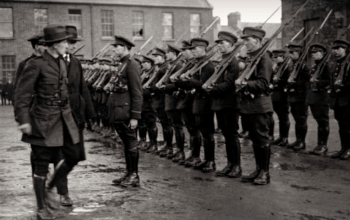
(From: “The passing of legislation allowing for executions during the Irish Civil War” by John Dorney, The Irish Story (www.theirishstory.com), September 27, 2013 | Photo: Richard Mulcahy, shown inspecting soldiers in Dublin, argued that permitting official executions would prevent National Army troops from carrying out unofficial killings)
Dillon is born on May 5, 1814, in the town of Ballaghaderreen, on the border of counties Mayo and Roscommon. He is a son of Anne Blake and her husband Luke Dillon (d. 1826), who had been a land agent for his cousin Patrick Dillon, 11th Earl of Roscommon. His niece is Anne Deane, who helps to raise his family after his death.
Dillon is educated at St. Patrick’s College, Maynooth, leaving after only two years there, having decided that he is not meant for the priesthood. He later studies law at Trinity College, Dublin, and in London, before being called to the Irish Bar. It is during his time at Trinity College that he first meets and befriends Thomas Davis.
The young wing of the party, of which they are key members with William Smith O’Brien and Thomas Francis Meagher, come to be known as Young Ireland and advocate the threat of force to achieve repeal of the Act of Union. This is in contrast to the committed pacifism of O’Connell’s “Old Ireland” wing. This posturing eventually leads to the Young Ireland rebellion of 1848 where a countryside devastated by the Great Famine fails to rise up and support the rebels.
According to fellow Irish nationalist, Justin McCarthy, “…it has been said of him that while he strongly discouraged the idea of armed rebellion and had no faith in the possibility of Ireland’s succeeding by any movement of insurrection, yet when Smith O’Brien risked Ireland’s chances in the open field, he cast his lot with his leader and stood by his side in Tipperary.”
After the failure of Young Ireland’s uprising, Dillon flees Ireland, escaping first to France and, eventually, to the United States, where he serves the New York Bar.
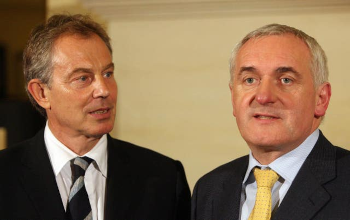
Leading the way in a return to the past is Ahern’s Dublin government, which has introduced the toughest anti-terrorist legislation in the history of the Irish Republic. He concedes that the measures are draconian but says that his government is determined to do everything in its power, “working closely with the British government to defeat and suppress this murderous conspiracy against the people of Ireland.”
Prime Minister Blair promises that he too plans to introduce extreme measures. “We will bring in similar measures to those proposed by the Irish government, so we will then have the toughest anti-terrorist measures for the whole of Ireland, the Republic and Northern Ireland, that we have ever seen.”
With no plans to recall the British parliament, it is thought that existing legislation will be applied, since it already includes measures similar to those announced by the Irish government.
Oppressive British legislation has sustained British rule in Ireland for decades. This includes internment without trial, non-jury courts, entry and search of homes without a warrant, seven-day detention with unrecorded and unsupervised interrogation, denial of access to lawyers, exclusion orders and more. Most of these are still in use in 1998.
The Ahern package includes withdrawal of a suspect’s right to silence — refusal to answer questions can be used as evidence that a suspect is a member of an illegal organisation, the seizure of property that has been used for storing weapons or making bombs, and the creation of a new offence of directing an unlawful organisation. This is expected to carry the penalty of life imprisonment.
Omagh is 75% nationalist, with good cross-community relations, and has largely escaped the worst of the conflict. Although Republican dissidents have carried out a spate of similar bombings in the previous year, the towns targeted are mainly Unionist and further east.
The group that claims responsibility for the Omagh bombing is the Real IRA, which was formed in protest at the IRA’s 1997 cease-fire. Irish police have insisted that the Real IRA is the military wing of the recently formed 32 County Sovereignty Movement (32CSM), although this is denied by that organisation.
Although both the INLA and the Real IRA have declared a unilateral cease-fire since the Omagh bombing, media focus has settled on Bernadette Sands McKevitt, sister of the 1980s IRA hunger strikerBobby Sands, who is a leading figure in the 32 County Sovereignty Movement. Sands-McKevitt has condemned the Omagh bombing, but her home in Blackrock, County Louth, has since been targeted by local townspeople who have staged protests against her and her family. She has also been denied a visa to enter the United States on a speaking tour.
The Omagh bombing could not have come at a better time for Britain. With the war formally over and Sinn Féin penned, the bombing delivers an opportunity to smash the Republican left once and for all and wrench it from any semblance of ongoing support in Ireland.
All nationalist opponents of the Good Friday Agreement must now cope with being stained by the blood of Omagh. With the massive referendum vote in favour of peace to back them up, the British and Irish governments can be satisfied that the Good Friday Agreement now looks more in place than at any other time. As one nationalist describes the situation, “If the Good Friday Agreement was a defeat for the cause of Irish nationalism, the Omagh bombing has turned it into a rout.”
(From: “Blair, Ahern make the most of Omagh bomb” by Dave Riley, Green Left (www.greenleft.org), August 26, 1998)
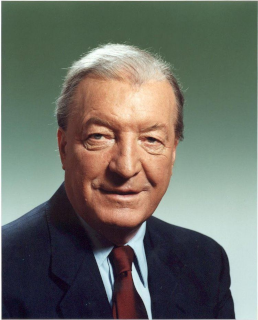
In 1970 Haughey is twice tried for conspiracy to use government funds to procure arms for the outlawed IRA. The first trial is aborted, and he wins acquittal in the second. Dismissed from the government, he remains in the Dáil and gains strong support among his party’s grass roots. When Fianna Fáil is returned to office in 1977, he is made Minister for Health and Minister for Social Welfare. On the resignation of party leader Jack Lynch in 1979, he is elected party leader and becomes Taoiseach. In June 1981 his government falls, but he returns to power briefly in 1982. He becomes Taoiseach again after the 1987 Irish general election in February 1987, though his government lacks a majority in the Dáil. When Fianna Fáil forms a government with the Progressive Democrats in July 1989, thereby eschewing the party’s traditional rejection of coalition rule, he is made Taoiseach for a fourth time.
Haughey’s first two terms in office are marked by deteriorating relations with Great Britain, a declining economy, and deep divisions within Fianna Fáil. Despite the controversies that plague his government, the charismatic Haughey remains party leader after losing office for a second time in late 1982. During his later terms, he successfully mounts a fiscal austerity program to address Ireland’s financial crisis. In 1992 he resigns and retires after being implicated in a phone tapping scandal of two journalists. He denies the allegations. He remains out of public life until 1997, when an official tribunal of inquiry determines that he had received large sums of money from a prominent businessman while Taoiseach. The Dáil then establishes another tribunal to investigate his financial affairs, and many other irregularities are uncovered. He eventually agrees to pay €6.5 million in back taxes and penalties.
Haughey dies at the age of 80 from prostate cancer, from which he had suffered for a decade, on June 13, 2006, at his home in Kinsealy, County Dublin. He receives a state funeral on June 16. He is buried in St. Fintan’s Cemetery, Sutton, Dublin, following mass at Donnycarney. The then Taoiseach Bertie Ahern delivers the graveside oration. The funeral rites are screened live on RTÉ One and watched by a quarter of a million people. The funeral is attended by PresidentMary McAleese, the Taoiseach, Bertie Ahern, members of the Oireachtas, many from the world of politics, industry and business. The chief celebrant is Haughey’s brother, Father Eoghan Haughey.




 seamus dubhghaill