seamus dubhghaill

Promoting Irish Culture and History from Little Rock, Arkansas, USA


Leave a comment

Birth of Neil Blaney, Fianna Fáil Politician

Neil Terence Columba Blaney, Irish politician first elected to Dáil Éireann in 1948 as a Fianna Fáil Teachta Dála (TD) representing Donegal East, is born on October 1, 1922 in Fanad, County Donegal. He serves as Minister for Posts and Telegraphs (1957), Minister for Local Government (1957–1966) and Minister for Agriculture and Fisheries (1966–1970). He is Father of the Dáil from 1987 until his death.

Blaney is the second eldest of a family of eleven. His father, from whom he got his strong republican views and his first introduction to politics, had been a commander in the Irish Republican Army (IRA) in Donegal during the Irish War of Independence and the Irish Civil War. He is educated locally at Tamney on the rugged Fanad Peninsula and later attends St. Eunan’s College in Letterkenny. He later works as an organiser with the Irish National Vintners and Grocers Association.

Blaney is first elected to Dáil Éireann for the Donegal East constituency in a by-election in December 1948, following the death of his father from cancer. He also becomes a member of the Donegal County Council. He remains on the backbenches for a number of years before he is one of a group of young party members handpicked by Seán Lemass to begin a re-organisation drive for the party following the defeat at the 1954 general election. Within the party he gains fame by running the party’s by-election campaigns throughout the 1950s and 1960s. His dedicated bands of supporters earn the sobriquet “the Donegal Mafia,” and succeed in getting Desmond O’Malley and Gerry Collins elected to the Dáil.

Following Fianna Fáil’s victory at the 1957 general election, Éamon de Valera, as Taoiseach, brings new blood into the Cabinet in the shape of Blaney, Jack Lynch, Kevin Boland and Mícheál Ó Móráin. Blaney is appointed Minister for Posts and Telegraphs however he moves to the position of Minister for Local Government at the end of 1957 following the death of Seán Moylan. He retains the post when Lemass succeeds de Valera as Taoiseach in 1959. During his tenure it becomes possible to pay rates by installment and he also introduces legislation which entitles non-nationals to vote in local elections.

In 1966 Lemass resigns as Taoiseach and Fianna Fáil leader. The subsequent leadership election sees Cork politician Jack Lynch become party leader and Taoiseach. In the subsequent cabinet reshuffle Blaney is appointed Minister for Agriculture and Fisheries.

In 1969, when conflict breaks out in Northern Ireland, Blaney is one of the first to express strong Irish republican views, views which contradict the policy of the Irish Government, in support of Northern nationalists. From around late 1968 onwards, he forms and presides over an unofficial Nationalist group in Leinster House popularly known as “the Letterkenny Table.” The group is dominated by Blaney up until his death.

There is general surprise when, in an incident known as the Arms Crisis, Blaney, along with Charles Haughey, is sacked from Lynch’s cabinet amid allegations of the use of the funds to import arms for use by the IRA. Lynch asked for their resignations but both men refuse, saying they did nothing illegal. Lynch then advises President de Valera to sack Haughey and Blaney from the government. Haughey and Blaney are subsequently tried in court but are acquitted. However, many of their critics refuse to recognise the verdict of the courts. Although Blaney is cleared of wrongdoing, his ministerial career is brought to an end.

Lynch subsequently moves against Blaney so as to isolate him in the party. When Blaney and his supporters try to organise the party’s national collection independently, Lynch acts and in 1972 Blaney is expelled from Fianna Fáil for “conduct unbecoming.”

Following his expulsion from Fianna Fáil, Kevin Boland tries to persuade Blaney to join the Aontacht Éireann party he is creating but Blaney declines. Instead, he contests all subsequent elections for Independent Fianna Fáil – The Republican Party, an organisation that he built up. Throughout the 1970s there are frequent calls for his re-admittance to Fianna Fáil but the most vocal opponents of this move are Fianna Fáil delegates from County Donegal.

At the 1979 European Parliament elections Blaney tops the poll in the Connacht–Ulster constituency to the annoyance of Fianna Fáil. He narrowly loses the seat at the 1984 election but is returned to serve as a Member of the European Parliament (MEP) in the 1989 election where he sits with the regionalist Rainbow Group. He also canvasses for IRA hunger striker Bobby Sands in the Fermanagh and South Tyrone by-election, in which Sands is elected to Westminster.

Blaney holds his Dáil seat until his death from cancer at the age of 73 on November 8, 1995 in Dublin.


Leave a comment

Death of Michael Flannery, Irish Republican Founder of NORAID

Michael Flannery, Irish republican who fought in the Irish War of Independence and the Irish Civil War, dies in New York City on September 30, 1994. He supports the Provisional Irish Republican Army during The Troubles and is a founder of the Irish Northern Aid Committee (NORAID).

Flannery is born in Cangort, near Brosna, on the border of County Offaly and County Tipperary, on January 7, 1903.

In 1916 Flannery joins the Irish Volunteers alongside his brother Peter, although he does not take part in the Easter Rising. However, he does participate in the Irish War of Independence. Following the outbreak of the Irish Civil War, he fights as part of the Anti-Treaty IRA until his capture by the National Army on November 11, 1922, in Roscrea, County Tipperary. He is imprisoned for nearly a year and a half in Dublin’s Mountjoy Prison (C Wing). While there he witnesses the execution of Anti-Treaty IRA leaders Richard Barrett, Joe McKelvey, Liam Mellows and Rory O’Connor from his cell window. Following a 28-day hunger strike, he is placed in the Curragh Camp until May 1, 1924, when he is finally released, a full year after the end of the civil war.

In February 1927 Flannery immigrates to the United States, settling in Jackson Heights, Queens, New York City. In 1928 he marries Margaret Mary Egan, a Tipperary-born research chemist, who had been educated at University College Dublin and University of Geneva.

Following the creation of Fianna Fáil and their entry into the Irish Parliament Dáil Éireann, Flannery becomes affiliated with Sinn Féin, who had voted to retain their abstentionist policy towards the Dáil and their refusal to acknowledge it as the legitimate government of Ireland. Sinn Féin tasks him with drumming up support for the party in New York. However, following the start of the Great Depression he finds it difficult to focus on politics in the face of mounting poverty. By 1933 finding support for Sinn Féin and the IRA becomes particularly tough when Fianna Fáil expands greatly the range of people eligible for military pensions, which under the previous government had been biased against members of the Anti-Treaty IRA. For the next 40 years Flannery works for the Metropolitan Life Insurance Company.

Upon the onset of The Troubles in Northern Ireland, Flannery is once again drawn into the world of Irish Republicanism. In a response to the mounting violence, he sets up the Irish Northern Aid Committee, or as it became better known as, NORAID. The official purpose of NORAID is to provide funds to the families of imprisoned Irish Republicans and victims of violence. However, opponents level the accusation against the organisation that it is also providing funding directly to the Provisional Irish Republican Army, and perhaps even also supplying firearms.

In 1970 Flannery travels around America and sets up 62 chapters of NORAID. In 1971 he says, “The more coffins sent back to Britain, the sooner this will be all over,” referring to British soldiers.

In 1982 Flannery is indicted, with four other members of NORAID, for arms smuggling, but all defendants are acquitted after their legal defence is able to successfully argue their actions had been sanctioned the CIA.

Four months after the verdict of the arms trial, Flannery is named as Grand Marshal of the Saint Patrick’s Day Parade in New York City. His appointment causes considerable controversy within the Irish American community and several high-profile figures boycott the parade that year, including the Archbishop of New York Terence Cooke.

In 1986 Flannery quietly resigns from NORAID following the decision by Sinn Féin to drop its abstentionist policy in the Republic of Ireland and to recognise Dáil Éireann as the legitimate governing body of Ireland.

Flannery opposes the Northern Ireland peace process, believing that Sinn Féin and the Provisionals have “sold out,” and believes the removal of British troops from Northern Ireland is the only starting point upon which negotiations can begin.

Flannery dies at the age of 92 in New York City on September 30, 1994. He is buried in Mount Saint Mary’s Cemetery in Flushing, Queens, New York.


Leave a comment

The Founding of Fine Gael

fine-gael-logo

Fine Gael, a liberal-conservative political party in Ireland, is founded on September 8, 1933, following the merger of its parent party Cumann na nGaedheal, the National Centre Party and the National Guard, popularly known as the “Blueshirts.” The party’s origins lie in the struggle for Irish independence and the pro-Treaty side in the Irish Civil War. Michael Collins, in particular, is often identified as the founder of the movement.

Fine Gael is currently the third-largest party in Ireland in terms of members of Dáil Éireann and largest in terms of Irish members of the European Parliament. The party has a membership of 21,000 in 2017. Leo Varadkar succeeds Enda Kenny as party leader on June 2, 2017, and as Taoiseach on June 14. Kenny had been leader since 2002, and Taoiseach since 2011.

Fine Gael is generally considered to be more of a proponent of market liberalism than its traditional rival, Fianna Fáil. Apart from brief minority governments, Fine Gael has rarely governed Ireland without a coalition that also includes the Labour Party, a social-democratic, centre-left party. Fine Gael describes itself as a “party of the progressive centre” which it defines as acting “in a way that is right for Ireland, regardless of dogma or ideology.” The party lists its core values as “equality of opportunity, free enterprise and reward, security, integrity and hope.”

In international politics, Fine Gael is highly supportive of the European Union, along with generally supporting strengthened relations with the United Kingdom and opposition to physical force Irish republicanism. The party’s youth wing, Young Fine Gael, is formed in 1977, and has approximately four thousand members. Fine Gael is a founding member of the European People’s Party.

Having governed in coalition with the Labour Party between 2011 and 2016, and in a minority government along with Independent TDs from 2016 to 2020, Fine Gael currently forms part of an historic coalition government with its traditional rival, Fianna Fáil, and the Green Party. On June 27, 2020, Micheál Martin of Fianna Fáil is appointed as Taoiseach and forms a new government. Leo Varadkar serves as Tánaiste with both parties agreeing that in December 2022, Varadkar will serve again as Taoiseach.


Leave a comment

Birth of Hugh Kennedy, Politician, Barrister & Judge

File source: http://commons.wikimedia.org/wiki/File:Hugh_Kennedy.jpg

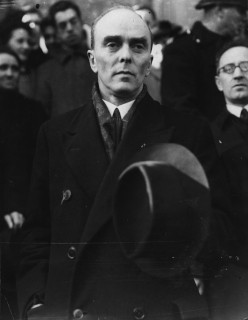
Hugh Edward Kennedy, Fine Gael politician, barrister and judge, is born in Abbotstown, Dublin on July 11, 1879. He serves as Attorney General of Ireland from 1922 to 1924, a Judge of the Supreme Court of Ireland from 1924 to 1936 and Chief Justice of Ireland from 1924 to 1936. He serves as a Teachta Dála (TD) for the Dublin South constituency from 1923 to 1927. As a member of the Irish Free State Constitution Commission, he is also one of the constitutional architects of the Irish Free State.

Kennedy is the son of the prominent surgeon Hugh Boyle Kennedy. His younger sister is the journalist Mary Olivia Kennedy. He studies for the examinations of the Royal University of Ireland while a student at University College Dublin and King’s Inns, Dublin. He is called to the Bar in 1902. He is appointed King’s Counsel in 1920 and becomes a Bencher of King’s Inn in 1922.

During 1920 and 1921, Kennedy is a senior legal adviser to the representatives of Dáil Éireann during the negotiations for the Anglo-Irish Treaty. He is highly regarded as a lawyer by Michael Collins, who later regrets that Kennedy had not been part of the delegation sent to London in 1921 to negotiate the terms of the treaty.

On January 31, 1922, Kennedy becomes the first Attorney General in the Provisional Government of the Irish Free State. Later that year he is appointed by the Provisional Government to the Irish Free State Constitution Commission to draft the Constitution of the Irish Free State, which is established on December 6, 1922. The functions of the Provisional Government are transferred to the Executive Council of the Irish Free State. He is appointed Attorney General of the Irish Free State on December 7, 1922.

In 1923, Kennedy is appointed to the Judiciary Commission by the Government of the Irish Free State, on a reference from the Government to establish a new system for the administration of justice in accordance with the Constitution of the Irish Free State. The Judiciary Commission is chaired by James Campbell, 1st Baron Glenavy, who had also been the last Lord Chancellor of Ireland. It drafts the Courts of Justice Act 1924 for a new court system, including a High Court and a Supreme Court, and provides for the abolition, inter alia, of the Court of Appeal in Ireland and the Irish High Court of Justice. Most of the judges are not reappointed to the new courts. Kennedy personally oversees the selection of the new judges and makes impressive efforts to select them on merit alone. The results are not always happy. His diary reveals the increasingly unhappy atmosphere, in the Supreme Court itself, due to frequent clashes between Kennedy and his colleague Gerald Fitzgibbon, since the two men prove to be so different in temperament and political outlook that they find it almost impossible to work together harmoniously. In a similar vein, Kennedy’s legal opinion and choice of words could raise eyebrows amongst legal colleagues and fury in the Executive Council e.g. regarding the Kenmare incident.

Kennedy is also a delegate of the Irish Free State to the Fourth Assembly of the League of Nations between September 3-29, 1923.

Kennedy is elected to Dáil Éireann on October 27, 1923, as a Cumann na nGaedheal TD at a by-election in the Dublin South constituency. He is the first person to be elected in a by-election to Dáil Éireann. He resigns his seat when he is appointed Chief Justice of Ireland in 1924.

On June 5, 1924, Kennedy is appointed Chief Justice of Ireland, thereby becoming the first Chief Justice of the Irish Free State. He is also the youngest person appointed Chief Justice of Ireland. When he is appointed, he is 44 years old. Although the High Court of Justice and the Court of Appeal had been abolished and replaced by the High Court and the Supreme Court respectively, one of his first acts is to issue a practice note that the wearing of wigs and robes will continue in the new courts. This practice is still continued in trials and appeals in the High Court and the Supreme Court (except in certain matters). He holds the position of Chief Justice until his death on December 1, 1936, in Goatstown, Dublin.

In September 2015, a biography by Senator Patrick Kennedy (no relation) is written about Kennedy called Hugh Kennedy: The Great but Neglected Chief Justice.


Leave a comment

Death of Cathal Brugha, Revolutionary & Politician

cathal-brugha-1

Cathal Brugha, Irish revolutionary and republican politician, dies in Dublin on July 7, 1922, from injuries received two day earlier when shot by Irish Free State forces on O’Connell Street.

Brugha is born Charles William St. John Burgess of mixed Roman Catholic and Protestant parentage in Dublin on July 18, 1874. He attends Colmkille Schools until 1888 when he is admitted to Belvedere College. He intends to study medicine, but this does not come to fruition after his father’s business fails in 1890. He is seen as an austere figure, not very different from Éamon de Valera, and is known not to smoke cigarettes, swear or drink alcohol.

In 1899, Brugha joins the Gaelic League, and he subsequently changes his name from Charles Burgess to Cathal Brugha. He meets his future wife, Caitlín Kingston, at an Irish class in Birr, County Offaly, and they marry in 1912. The marriage produces six children. He becomes actively involved in the Irish Republican Brotherhood (IRB) and in 1913 he becomes a lieutenant in the Irish Volunteers. He leads a group of twenty Volunteers to receive the arms smuggled into Ireland in the Howth gun-running of 1914.

Brugha is second-in-command at the South Dublin Union under Commandant Éamonn Ceannt in the Easter Rising of 1916. On the Thursday of Easter Week, being badly wounded, he is unable to leave when the retreat is ordered. Brugha, weak from loss of blood, continues to fire upon the enemy and is found by Eamonn Ceannt singing “God Save Ireland” with his pistol still in his hands. He recovers over the next year but is left with a permanent limp.

Brugha proposes a Republican constitution at the 1917 Sinn Féin convention, which is unanimously accepted. In October 1917, he becomes Chief of Staff of the Irish Republican Army and holds that post until March 1919.

Brugha is elected as a Sinn Féin MP for the County Waterford constituency at the 1918 Irish general election. In January 1919, Sinn Féin MPs refuse to recognise the Parliament of the United Kingdom and instead assemble at the Mansion House in Dublin as a revolutionary parliament called Dáil Éireann. Owing to the absence of Éamon de Valera and Arthur Griffith, he presides over the first meeting of Dáil Éireann on January 21, 1919.

Brugha is elected Ceann Comhairle of Dáil Éireann at its first meeting on January 21, 1919, and he reads out the Declaration of Independence in Irish, which ratifies “the establishment of the Irish Republic.” On the following day he is appointed president of the ministry pro tempore. He retains this position until April 1, 1919, when Éamon de Valera takes his place.

Brugha has differences with Michael Collins, who, although nominally only the Irish Republican Army‘s (IRA) Director of Intelligence, has far more influence in the organisation as a result of his position as a high-ranking member of the IRB, an organisation that Brugha sees as undermining the power of the Dáil and especially the Ministry for Defence. He opposes the oath of allegiance required for membership of the IRB. In 1919, his proposition that all Volunteers should swear allegiance to the Irish Republic and the Dáil is adopted.

At a top-level IRA meeting in August 1920, Brugha argues against ambushes of Crown forces unless there is first a call to surrender, but it is dismissed as unrealistic by the brigade commanders present. He also has the idea of moving the front line of the war to England but is opposed by Collins.

On January 7, 1922, Brugha votes against the Anglo-Irish Treaty. During the Treaty debates, he points out that Collins has only a middling rank in the Department for Defence, which supervises the IRA, even though Griffith hails him as “the man who had won the war.” It is argued that, by turning the issue into a vote on Collins’ popularity, Brugha swings the majority against his own side. Frank O’Connor, in his biography of Collins, states that two delegates who had intended to vote against the Treaty changed sides in sympathy with Collins. Brugha leaves the Dáil and is replaced as Minister for Defence by Richard Mulcahy.

In the months between the Treaty debates and the outbreak of Irish Civil War, Brugha attempts to dissuade his fellow anti-treaty army leaders, including Rory O’Connor, Liam Mellows and Joe McKelvey, from taking up arms against the Free State. When the IRA occupies the Four Courts, he and Oscar Traynor call on them to abandon their position. When they refuse, Traynor orders the occupation of the area around O’Connell Street in the hope of easing the pressure on the Four Courts and of forcing the Free State to negotiate.

On June 28, 1922, Brugha is appointed commandant of the forces in O’Connell Street. The outbreak of the Irish Civil War ensues in the first week of July when Free State forces commence shelling of the anti-treaty positions.

Most of the anti-Treaty fighters under Traynor escape from O’Connell Street when the buildings they are holding catch fire, leaving Brugha in command of a small rearguard. On July 5, he orders his men to surrender, but refuses to do so himself. He then approaches the Free State troops, brandishing a revolver. He sustains a bullet wound to the leg which “severed a major artery causing him to bleed to death.” He dies on July 7, 1922, eleven days before his 48th birthday. He had been re-elected as an anti-Treaty TD at the 1922 Irish general election but dies before the Dáil assembles. He is buried in Glasnevin Cemetery in Dublin.


Leave a comment

The Founding of Clann na Poblachta

sean-macbride

Clann na Poblachta, a radical new republican party, is founded in Barry’s Hotel, Dublin, on July 6, 1946, by former members of the Irish Republican Army (IRA) who are very unhappy at the treatment of IRA prisoners during “The Emergency” and who are prepared to try and engage in parliamentary politics. The party lasts 19 years but fails in its objectives due to internal feuds and lack of unity.

The group includes people such as Con Lehane and former IRA Chief of Staff Seán MacBride. Some members of Fianna Fáil also join the party, many of whom have become disillusioned with the leadership of Éamon de Valera, the party’s approach to partition and its economic policies.

Clann na Poblachta realises that it has to place an emphasis on practical improvements to living standards and welfare issues such as public health. These policies attract a number of younger members such as Noël Browne and Jack McQuillan. One potential problem for the future is that almost the entire Provisional Executive is resident in Dublin and the party has no organisation in the six counties of Northern Ireland.

In 1948, Éamon de Valera dissolves the Dáil and calls an election for February. Clann na Poblachta wins only ten seats in the 1948 Irish general election, fewer than the breakthrough expected, caused in part by the error of running multiple candidates in many constituencies. The party believes there will be a landslide in their favour like the 1918 Westminster election but 48 of their 93 candidates lose their deposits. The party wins 13.3% of the vote but only 6.8% of the seats. Of their ten Teachtaí Dála (TD), six are elected in Dublin constituencies, two in Tipperary and one each in Cavan and Roscommon.

The party surprises everyone by joining the first Inter-Party Government with Fine Gael on condition that Richard Mulcahy, against whom many members had fought during the Irish Civil War, does not become Taoiseach. As a result, John A. Costello becomes Taoiseach without being leader of his party, the only time to date that this has happened. Seán MacBride becomes Minister for External Affairs and Noël Browne is named Minister for Health.

The party is the driving force behind the 26 counties exiting the Commonwealth of Nations and the all-party Anti-Partition Campaign.

The controversy of the “Mother and Child Scheme,” a progressive healthcare programme opposed by the Catholic Church, helps bring down the government and leads to the disintegration of the party. Many of the party’s TDs resign in solidarity with Noël Browne and his scheme, so the official party wins only two seats in the 1951 Irish general election.

In 1954, Clann na Poblachta agrees to give outside support to the Fine Gael-led government. In this election, three TDs are returned – MacBride, John Tully and John Connor. Controversy dogs the party as Liam Kelly, a Northern-based Clann na Poblachta senator, is also active in Saor Uladh and leads a number of military raids in County Fermanagh and County Tyrone against the Royal Ulster Constabulary (RUC).

Clann na Poblachta withdraws its support from the Government in late 1956 due to its anti-IRA stance. The party wins only one seat at the 1957 Irish general election with MacBride being defeated by Fianna Fáil. John Tully remains the only Clann TD until his retirement in 1961, after he loses his seat. However, Joseph Barron is elected in Dublin South-Central on his fourth attempt.

In 1965, Tully wins back his seat, but he is in effect an Independent as the party only stands four candidates. There had been negotiations between MacBride and Brendan Corish, the new Labour Party leader about forming a political alliance but this does not come to fruition.

A special Ardfheis, held on July 10, 1965, agrees to dissolve Clan na Poblachta.

(Pictured: Sean MacBride, former Chief of staff of the Irish Republican Army and founder of Clann na Poblachta)


Leave a comment

Garrett FitzGerald Becomes 8th Taoiseach of Ireland

garret-fitzgerald

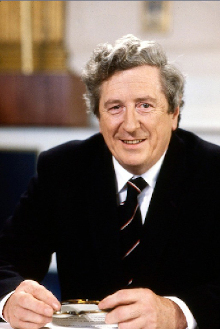
Garret FitzGerald succeeds Charles Haughey to become the eighth Taoiseach of Ireland on June 30, 1981. He serves in the position from June 1981 to March 1982 and December 1982 to March 1987.

FitzGerald is born into a very politically active family in Ballsbridge, Dublin on February 9, 1926, during the infancy of the Irish Free State. His father, Desmond FitzGerald, is the free state’s first Minister for External Affairs. He is educated at the Jesuit Belvedere College, University College Dublin and King’s Inns, Dublin, and qualifies as a barrister. Instead of practicing law, however, in 1959 he becomes an economics lecturer in the department of political economy at University College, Dublin, and a journalist.

FitzGerald joins Fine Gael, attaching himself to the liberal wing of the party. and in 1969 is elected to Dáil Éireann, the lower house of the Oireachtas, the Irish parliament. He later gives up his university lectureship to become Minister for Foreign Affairs in the coalition government of Liam Cosgrave (1973–1977). When the coalition government is resoundingly defeated in the 1977 Irish general election, Cosgrave yields leadership of Fine Gael to FitzGerald. In his new role as Leader of the Opposition and party leader, he proceeds to modernize and strengthen the party at the grass roots. He briefly loses power in 1982 when political instability triggers two snap elections.

By the time of the 1981 Irish general election, Fine Gael has a party machine that can easily match Fianna Fáil. The party wins 65 seats and forms a minority coalition government with the Labour Party and the support of a number of Independent TDs. FitzGerald is elected Taoiseach on June 30, 1981. To the surprise of many FitzGerald excluded Richie Ryan, Richard Burke and Tom O’Donnell, former Fine Gael stalwarts, from the cabinet.

In his prime ministry, FitzGerald pushes for liberalization of Irish laws on divorce, abortion, and contraception and also strives to build bridges to the Protestants in Northern Ireland. In 1985, during his second term, he and British Prime Minister Margaret Thatcher sign the Anglo-Irish (Hillsborough) Agreement, giving Ireland a consultative role in the governing of Northern Ireland. After his party loses in the 1987 Irish general election, he resigns as its leader and subsequently retires in 1992.

On May 5, 2011, it is reported that FitzGerald is seriously ill in a Dublin hospital. Newly elected Fine Gael Taoiseach Enda Kenny sends his regards and calls him an “institution.” On May 6 he is put on a ventilator. On May 19, after suffering from pneumonia, he dies at the Mater Private Hospital in Dublin at the age of 85.

In a statement, Irish President Mary McAleese hails FitzGerald as “a man steeped in the history of the State who constantly strove to make Ireland a better place for all its people.” Taoiseach Enda Kenny pays homage to “a truly remarkable man who made a truly remarkable contribution to Ireland.” Henry Kissinger, the former United States Secretary of State, who serves as an opposite number to FitzGerald in the 1970s, recalls “an intelligent and amusing man who was dedicated to his country.”

FitzGerald’s death occurs on the third day of Queen Elizabeth II‘s state visit to the Republic of Ireland, an event designed to mark the completion of the Northern Ireland peace process that had been “built on the foundations” of FitzGerald’s Anglo-Irish Agreement with Margaret Thatcher in 1985. In a personal message, the Queen offers her sympathies and says she is “saddened” to learn of FitzGerald’s death.

On his visit to Dublin, United States President Barack Obama offers condolences on FitzGerald’s death. He speaks of him as “someone who believed in the power of education; someone who believed in the potential of youth; most of all, someone who believed in the potential of peace and who lived to see that peace realised.”

FitzGerald is buried at Shanganagh Cemetery in Shankill, Dublin.

FitzGerald is the author of a number of books, including Planning in Ireland (1968), Towards a New Ireland (1972), Unequal Partners (1979), All in a Life: An Autobiography (1991), and Reflections on the Irish State (2003).


Leave a comment

Birth of Kevin Christopher O’Higgins, Politician

iohiggs001p1

Kevin Christopher O’Higgins, Irish politician who serves as Minister for Economic Affairs from January 1922 to September 1922, Minister for External Affairs from June 1927 to July 1927, Minister for Justice from August 1922 to July 1927 and Vice-President of the Executive Council of the Irish Free State from 1922 to 1927, is born in Stradbally, Queen’s County (County Laois since 1922) on June 7, 1892. He serves as a Teachta Dála (TD) from 1921 to 1927 and is a Member of Parliament (MP) for Queen’s County from 1918 to 1921.

A man of intellectual power, O’Higgins is described by William Butler Yeats as “a great man in his pride confronting murderous men.” He is in fact murdered by maverick republicans while on his way to church.

Educated at University College Dublin, O’Higgins is apprenticed to his uncle, a lawyer. Following the Easter Rising in 1916, he joins the Sinn Féin nationalist movement and is imprisoned. In 1918, while still in jail, he is elected to Parliament from Queen’s County, and in the next year he becomes assistant to the minister of local government, William Thomas Cosgrave. He goes on to become a prominent member of Cumann na nGaedheal.

O’Higgins supports the Anglo-Irish Treaty with Great Britain that creates the Irish Free State. In 1922 he is appointed Minister for Economic Affairs and Vice-President of the Executive Council. He helps to draft the Irish Free State constitution and secures its passage through Dáil Éireann, lower house of the Oireachtas, the Irish parliament. Working for a united Ireland within the British Commonwealth, he plays an important part in the 1926 Imperial Conference. He also prominently represents the Free State in the League of Nations.

As Minister for Justice, O’Higgins establishes the Garda Síochána police force and takes summary measures to restore order following the civil war between the Free State forces and the Irish Republican Army (IRA). His role in the execution of 77 republicans in 1922–23 makes him many enemies, as does his sardonic wit, his inflammatory speeches during the civil war, and his curtailment of the liquor trade.

On Sunday, July 10, 1927, O’Higgins is assassinated at the age of 35 on the Booterstown Avenue side of Cross Avenue in Dublin, while on his way to Mass at the Church of the Assumption. The assassination is carried out by three anti-Treaty members of the IRA, Timothy Coughlan, Bill Gannon and Archie Doyle, in revenge for O’Higgins’ part in the executions of the 77 IRA prisoners during the Irish Civil War.

None of the three assassins is ever apprehended or charged, but Coughlan, a member of Fianna Fáil as well as the IRA, is killed in 1928 in Dublin by a police undercover agent whom he is attempting to murder. The other two benefit from the amnesty to IRA members issued by Éamon de Valera, upon his assumption of power in 1932. Gannon, who dies in 1965, joins the Communist Party of Ireland and plays a central role in organising Irish volunteers for the Spanish Civil War. Doyle remains a prominent IRA militant and takes part in various acts in the early 1940s. He lives to an old age, dying in 1980, and continues to take pride in having killed O’Higgins.


Leave a comment

Birth of Pádraig Flynn, Fianna Fáil Politician

CREATOR: gd-jpeg v1.0 (using IJG JPEG v62), quality = 90

Pádraig Flynn, former Fianna Fáil politician, is born in Castlebar, County Mayo on May 9, 1939. He serves as European Commissioner for Social Affairs from 1993 to 1999, Minister for Industry and Commerce and Minister for Justice from 1992 to 1993, Minister for the Environment from 1987 to 1991, Minister for Trade, Commerce and Tourism from October 1982 to December 1982, Minister for the Gaeltacht from March 1982 to October 1982 and Minister of State at the Department of Transport from 1980 to 1981. He serves as a Teachta Dála (TD) for the Mayo West constituency from 1977 to 1994.

Flynn is the son of Patrick and Anne Flynn. He is educated in St. Gerald’s College, Castlebar and qualifies as a teacher from St. Patrick’s College, Dublin. He first holds political office in 1967, when he becomes a member of Mayo County Council. Ten years later, at the 1977 general election, he is elected to Dáil Éireann as a Fianna Fáil TD for the Mayo West constituency.

Flynn is a supporter of Charles Haughey in the 1979 Fianna Fáil leadership election. His loyalty is rewarded when he becomes a Minister of State at the Department of Transport and Power. He joins the Cabinet for the first time following the February 1982 general election when he is appointed Minister for the Gaeltacht. In October 1982, in a minor reshuffle, he becomes Minister for Trade, Commerce and Tourism. However, his time in this office is brief, since Fianna Fáil loses the November 1982 general election.

Fianna Fáil is returned to power in the 1987 general election and Flynn becomes Minister for the Environment. Two years later he opposes the formation of the coalition government with the Progressive Democrats, describing it “as hitting at Fianna Fáil core values.” In 1990, he attacks the opposition presidential candidate Mary Robinson on a radio show, accusing her of “having a new-found interest in her family” for the purposes of her election campaign. This attack backfires drastically, causing many women who initially support Brian Lenihan to back Robinson. Lenihan’s campaign never recovers, and Robinson becomes Ireland’s first female President.

In 1991, Flynn is sacked from the Cabinet because of his support for a motion of no confidence in the Taoiseach, Charles Haughey. Then in 1992, Albert Reynolds becomes Taoiseach and Flynn is rewarded for supporting Reynolds by becoming Minister for Justice. In 1993, he retires from domestic politics when he is appointed Ireland’s European Commissioner. He is reappointed by the Fine GaelLabour Party government in 1995 and, on both of these occasions, serves in the social affairs portfolio.

On January 15, 1999, Flynn makes comments on The Late Late Show regarding Tom Gilmartin and a donation of IR£50,000 to the Fianna Fáil party. He also makes comments about his own lifestyle, boasting of having a salary of IR£140,000 together with three houses, cars and housekeepers and travels regularly, yet complains about the hassle involved. The performance was seen as eccentric and out of touch. In effect, he is interpreted as behaving in a manner more befitting the Irish stereotype known as the Dublin 4 mentality, complaining of the costs incurred in the pursuit of extravagance.

The show’s presenter, Gay Byrne, then asks Flynn if he knows of Gilmartin. He responds that he knows him well. He seems to be making an attack of Gilmartin’s emotional stability, based on the effect of sickness of Gilmartin’s wife. If it is to be interpreted as an attack of Gilmartin’s credibility, it backfires in a spectacular manner against Flynn. Also, unknown to Flynn, Gilmartin is actually watching the program at his home in Luton. This hurts Gilmartin a great deal, while also bringing the illness of his wife into the picture as the real driving force behind Gilmartin’s testimony against Flynn. Gilmartin responds by releasing details of meetings he held with Flynn to the McCracken Tribunal. The interview is widely described as the end of Flynn’s political career.

Flynn’s second term as European Commissioner ends early in September 1999, when the entire commission resigns due to allegations of malpractice by the European Parliament. He is not reappointed to the Commission and retires from politics completely. He is a member of the Comite d’Honneur of the Institute of International and European Affairs.

Flynn is cited in the Mahon Tribunal for having received money from Frank Dunlop intended for Fianna Fáil, but diverted to his personal use. On March 22, 2012, the final report of the Mahon Tribunal is published. It finds that Flynn “wrongly and corruptly” sought a substantial donation from Tom Gilmartin for the Fianna Fáil party. It also finds that having been paid IR£50,000 by Gilmartin, for that purpose, Flynn proceeded to use that money for his personal benefit, and that the donation funded at least a significant portion of the purchase of a farm in County Mayo.

On March 26, 2012, facing expulsion following the Mahon Tribunal, Flynn resigns in disgrace from Fianna Fáil before he can be ousted.