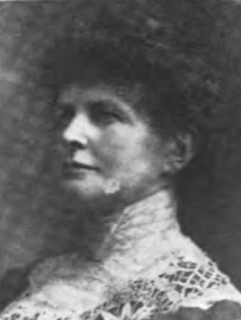
Shannon is the eldest child of solicitor George William Shannon and Emily Shannon (née Goodman). She has two sisters and two brothers. She attends Alexandra College, and later lectures for women at Trinity College Dublin (TCD). On July 27, 1875, she marries Maurice Dockrell, eldest son of Thomas Dockrell, a well known Dublin merchant, and Anne Morgan Dockrell (née Brooks). The couple has seven children, one daughter and six sons. She goes on to become a director and member of the board of her husband’s family company: Messrs Thomas Dockrell & Sons & Co. Ltd.[1]
Dockrell is an active member of the committee of the Dublin Women’s Suffrage and Local Government Association, later known as the Irish Women’s Suffrage and Local Government Association (IWSLGA), founded in 1876 to promote women’s suffrage by democratic methods. She attends international women’s suffrage conferences in Stockholm in 1911 and Budapest in 1913. She is also a committee member of the London Women’s Suffrage Society, speaking on the role of women in local government at the International Congress of Women in London in 1899. The Irish Citizen lists her as a suitable woman candidate to run for the senate seat proposed by the Home rule bill in 1912.
Dockell is a member of the National Union of Women Workers, sitting as a member of its public services committee. Like many of her contemporaries, she believes that women are best placed to address issues around health, societal moral well-being, and housing. From 1898, the Local Government (Ireland) Act, allows women to be candidates for local government elections. Dockrell first runs as a candidate in the Urban District Council (UDC) of the Monkstown ward of Blackrock, Dublin in the 1898 local elections, where she is returned as the third of nine elected, becoming one of only four women councillors elected in Ireland.
Dockrell describes herself as a unionist and a Protestant, sitting as a council on the Blackrock UDC until her death. She is the only woman councillor on that UDC until 1925 and the election of Ellen O’Neill. She is also the first woman chair of a UDC when she is elected to the position in 1906.
Despite the political and societal turmoil of the early 20th century in Ireland and the establishment of the Irish Free State, Dockrell continues in her commitment to local politics. This includes being the first woman to be elected to a Dublin county council in 1920. Despite remaining a committed unionist, she works with the Free State government. Following her husband’s knighthood, she is also known as Lady Dockrell.
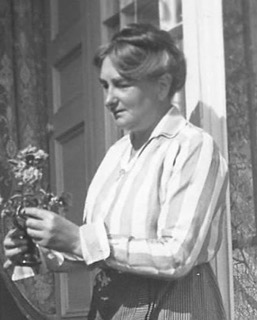
Louisa (Louie) Bennett, suffragette, trade unionist, and peace activist, is born on January 7, 1870, in Garville Avenue, Rathgar, Dublin, the eldest daughter of James Cavendish Bennett, a prosperous auctioneer, and his wife Susan (née Bolger). She is brought up at Temple Hill, Blackrock, and educated at Alexandra College, and at an academy for young ladies in London, where she and her sisters form an Irish League. She goes on to study singing in Bonn, Germany. Already as a teenager she shows an interest in writing, her first literary effort being Memoirs of the Temple Road in the 80s. Afterward she publishes two unsuccessful romantic novels, The Proving of Priscilla (1902) and A Prisoner of His Word (1908), the latter set in County Down in the aftermath of the Irish Rebellion of 1798.
Bennett turns her attention to women’s issues and by 1910 has become involved in the suffrage movement, initially through her reading of the suffrage monthly TheIrish Citizen. In 1911, she co-founds, with her life-long friend and colleague Helen Chenevix, the Irish Women’s Suffrage Federation, an umbrella organisation, which by 1913 has connected fifteen Irish suffrage societies and has established links with Europe and the United States. She and Chenevix are the organisation’s first honorary secretaries. She is also associated with the Irish Women’s Franchise League, for which she runs public speaking classes. However, as the divide between militants and opponents of the use of violence become more pronounced, Bennett, as a confirmed pacifist, who endorses what she calls “constructive, rather than destructive action,” distances herself from the league, and through her involvement in the production of TheIrish Citizen seeks to sideline the militants.
Bennett’s concerns are not limited to the question of women’s franchise. As founder of the Irish Women’s Reform League, she not only addressea the suffrage question, but examines many social issues concerning women. The league focuses on working conditions, monitors court cases involving women, and demands school meals and better education. She is among those who assist in the relief effort at Liberty Hall during the 1913 strike and lockout in Dublin, and she appeals for funds for strikers’ families through TheIrish Citizen. In the period that follows she maintains her links with the labour movement. She often opposes the direct, uncompromising approach of both James Connolly and Helena Molony, and argues that labour and women’s issues can only be hampered by any affiliation with nationalist politics. The aftermath of the Easter Rising, and in particular, the murder of Francis Sheehy-Skeffington, causes her to revise some of her views on nationalism. In late 1916 she accepts an invitation to reorganise the Irish Women Workers’ Union (IWWU), on the understanding that she would have complete independence from Liberty Hall. Assisted by Chenevix and Father John Flanagan, she re-creates the union along professional lines, and by 1918 its membership has risen dramatically from a few hundred to 5,300. She consistently defends its separatist stance, arguing that women’s concerns in a male-dominated union will always be of secondary importance.
Throughout World War I Bennett campaigns for peace, and she is selected as the Irish representative to the Women’s International League for Peace and Freedom. She leads the IWWU in its opposition to the attempted introduction of conscription in 1918, and in 1920 she travels to the United States to highlight Black and Tan atrocities (she later meets David Lloyd George and demands the removal of the Black and Tans from Ireland). As a member of the Women’s Peace Committee, she acts as a mediator during the Irish Civil War.
In 1925, Bennett is appointed to an Irish Trades Union Congress (ITUC) committee to promote a scheme of working class education with the assistance of the labour movement. Her interest in adult education later leads to her involvement with The People’s College. A member of the national executive of the ITUC (1927–32, 1944–50), she becomes the first female president of the congress in 1932. She serves a second presidential term in 1947. Her knowledge of labour issues is officially acknowledged by the Irish government in 1932, when she is sent as a representative to Geneva to put forward the case of Irish women workers. In 1938 she delivers a paper entitled Industrialism in an Agrarian Country to the International Relations Institute in the Netherlands.
Despite the depth of Bennett’s involvement with the union movement, she has ambitions outside trade unionism, and in 1938 she lets her name be put forward by the IWWU as a congress candidate for election to the senate, but this comes to nothing. In that year she is appointed to the government commission on vocational organisation (1938–43). In 1943, she is elected as a Labour Party member of the Dún Laoghaire borough council. As a councillor she consistently lobbies for improved housing and is instrumental in the establishment of Dún Laoghaire’s housing council in 1949. She had refused a labour nomination in the 1918 general election, but she stands for Dublin County Council and Dáil Éireann in 1944, in both cases unsuccessfully. She is the only Labour Party member to criticise the party’s support for the Fianna Fáil minority government of 1932, arguing that it is “never right or wise to co-operate with another party with fundamentally different principles.” As an elected member of the Labour Party executive, she represents Ireland at the International Labour Organization in Europe. She is also a representative at the League of Nations.
Throughout her public career Bennett consistently condemns colonialism, fascism, and armaments expenditure. She is possibly best remembered for her leadership in the laundry workers’ strike of 1945, during which IWWU members successfully fight for a fortnight‘s paid holiday. Her management of the IWWU, which lasts until 1955, is marked by determination and diplomacy, though she often uses threatened resignations as a means of controlling her colleagues. She died, unmarried, on November 25, 1956, in Killiney, County Dublin.
(From: “Bennett, Louisa (‘Louie’)” by Frances Clarke, Dictionary of Irish Biography, October 2009)
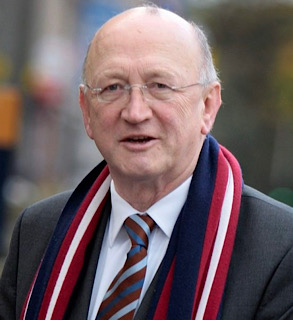
A chartered accountant by profession, Ardagh obtains his qualification in Canada in the 1970s and returns to Ireland to practice. He is first elected to Dáil Éireann at the 1997 Irish general election and retains his seat at the 2002 and 2007 general elections. He replaces Ben Briscoe as the TD and main candidate for Fianna Fáil in Dublin South-Central in 2002. He serves as chairman of a number of Dáil committees during his time as a TD.
Ardagh is first elected to Dublin County Council in 1985 and remains a member until 1999. He is elected to Dublin City Council in 1999 and remains a councillor until 2003.
On December 9, 2010, Ardagh announces he will not be standing at the 2011 Irish general election. He resigns as a TD on January 28, 2011, in advance of the 2011 general election.
Ardagh’s daughter is Fianna Fáil TD Catherine Ardagh. He dies on May 17, 2016, after a long illness.
The eldest of the three sons and one daughter of Daniel Sheehan, tenant farmer, and his wife, Ellen (née Fitzgerald). He is educated at the local primary school. In his book Ireland since Parnell (1921) he states that witnessing the ragged poverty of labourers’ and smallholders’ children who attended the school made him determined to do something for the poor. The family’s Fenian tradition and his parents’ eviction from their holding in 1880 form his early years. At the age of sixteen he becomes a schoolteacher.
In 1890, Sheehan takes up journalism, serving as correspondent of the Kerry Sentinel and special correspondent of the Cork Daily Herald in Killarney. He also becomes correspondence secretary to the Kanturk trade and labour council, which campaigns on behalf of agricultural labourers. He manages to get reports of meetings into the Cork papers, and this helps the rapid spread of the association, which in 1890 becomes the Irish Democratic Trade and Labour Federation, under the leadership of Michael Davitt. It is, however, fatally disrupted by the Parnell split. While Sheehan continues to admire Davitt, and despite the pre-split Irish party leadership having opposed the federation as a threat to Charles Stewart Parnell‘s leadership, he becomes a Parnellite, and always remembers his only meeting with Parnell at Tralee, when the chief is presented with a loyal address (drafted by Sheehan) from his Killarney supporters. After Parnell’s death and the defeat of the Second Home Rule Bill, he temporarily drops out of Irish politics.
Following his marriage on February 6, 1894, to Mary Pauline O’Connor of Tralee, Sheehan joins the staff of the Glasgow Observer in pursuit of journalistic experience, then becomes editor of the Catholic News in Preston, Lancashire. In 1898, he returns to Ireland and works on various papers, including the Cork Constitution, before serving as editor of the Skibbereen-based Cork County Southern Star (1899–1901), where his Parnellism brings him into conflict with the Bishop of Ross, Denis Kelly. He expresses sympathy for the newly founded United Irish League (UIL), established by William O’Brien in Connacht with the dual aim of representing western smallholders and using a new land agitation as a vehicle for Irish Party reunion. He does not, however, join the UIL himself.
In August 1894, the Clonmel solicitor J. J. O’Shee, anti-Parnellite MP for West Waterford from 1895, forms the Irish Land and Labour Association (ILLA) to agitate on behalf of agricultural labourers and small tenant farmers. Its appearance reflects the breakdown of the centralised party discipline which had existed before the Parnell split, and recognition that the land war’s prime beneficiaries had been large and middle-sized tenant farmers rather than the nation as a whole. On returning from Britain in 1898, Sheehan throws himself into organising the ILLA and becomes its president. In 1900 there are 100 branches, mostly in Cork, Tipperary, and Limerick. The Irish Party leadership look on this organisation with some suspicion.
At the 1900 United Kingdom general election in Ireland Sheehan seeks the Irish Parliamentary Party (IPP) nomination for South Cork but was defeated by Edward Barry. After the death of Dr Charles Tanner, however, he succeeds in obtaining the IPP nomination for the constituency of Mid Cork, despite the party leadership’s attempts to deny recognition to ILLA branches in order to hand the nomination to its favoured candidate. Sheehan is elected unopposed on May 17, 1901. At the age of 28, he is the youngest Irish member of parliament. Although he has been admitted to the party, his position as a labour representative and his perceived independent base make him something of an outsider.
From October 1904 Sheehan allies himself with O’Brien, writing regularly for the latter’s weekly a TheIrish People. Redmondites accuse him of opportunism, but he always maintains that his personal inclination as an old Parnellite has been towards John Redmond and that his support for O’Brien derives from the older man’s willingness from 1904 to identify himself with the labourers’ campaign. Although their alliance originally likely contains elements of expediency, Sheehan and O’Brien develop a deep personal friendship.
Sheehan’s support for O’Brien leads to a split in the ILLA in 1906, with Tipperary and Waterford branches following O’Shee and Redmond, and Sheehan retaining the support of his Cork base and of some branches in Limerick and Kerry. He serves on the Cork advisory committee which represents tenant interests in land purchase negotiations under the Wyndham Land Act. It’s policy of “conference plus business” combines an offer to negotiate with willing landlords and a threat of agitation against those unwilling to give satisfactory terms. His faction of the ILLA becomes the basis for the grassroots organisation of O’Brien’s followers, and sporadic attempts, financed by O’Brien, are made to spread it outside its Munster base. Both factions of the ILLA claim credit for the passage of the 1906 and 1911 Labourers’ (Ireland) Acts which provide for the allocation of cottages and smallholdings to labourers. In Cork and some other parts of Munster these buildings become popularly known as “Sheehan’s cottages,” a term which long outlives Sheehan’s political career. He also helps to bring about the creation of a “model village” at Tower, near Blarney, the result of cooperation between the local ILLA branch and the rural district council.
At the 1906 general election the Redmond leadership attempts to avoid an open split by allowing O’Brien’s supporters to return unopposed. However, the continuing conflict between the two factions rapidly leads to a formal break. Shortly after the election Sheehan is excluded from the IPP, and thereby deprived of the parliamentary stipend paid to MPs with insufficient resources to maintain themselves. With the support of O’Brien and the small group of O’Brienite MPs, he maintains that the party has no right to exclude an elected MP willing to take the party pledge. After resigning his seat to which he was re-elected without opposition on December 31, 1906, he demands readmission to the party and mounts an unsuccessful lawsuit demanding payment of the stipend. He is subsequently supported from the proceeds of collections outside church gates on Sundays.
Sheehan and the other O’Brienite MPs are readmitted to the party in 1908 as part of an attempt at general reconciliation after the disruptions following the rejection of the Irish Council Bill. Dissensions rapidly reappear over Augustine Birrell‘s 1909 land act, which the O’Brienites see as wriggling out of the financial responsibilities accepted by the British government in the Wyndham land act and as sabotaging land purchase, since landlords will not accept the terms offered. Sheehan’s section of the ILLA is denied official recognition and thereby prevented from sending delegates to a party convention called to consider the bill. At the convention, groups of “heavies”recruited from Joseph Devlin‘s Ancient Order of Hibernians (AOH) exclude delegates with Cork accents, while O’Brienite speakers are howled down. This leads to the formation in March 1909 of the All-for-Ireland League (AFIL), a body based on the existing O’Brienite organisation and advocating O’Brien’s policy of gradually implementing home rule through step-by-step cooperation with moderate unionist supporters of devolution. Although O’Brien’s temporary retirement for health reasons in April 1909 leads to the suspension of the AFIL, it is revived in response to an attempted purge of the O’Brienite MPs by the leadership and by O’Brien’s reappearance in response to the January 1910 general election. Sheehan writes regularly for its paper, the Cork Free Press.
In the general election the O’Brienites hold their seats while two Cork Redmondites are displaced. Sheehan is re-elected for Mid Cork, defeating the Redmondite W. G. Fallon in a campaign marked by widespread rioting and impassioned clerical denunciations of Sheehan. Fallon subsequently attempts to get up a “red scare” against the ILLA. The Cork ILLA later splits over Sheehan’s slightly erratic leadership. While the split is initially personality-driven, the breakaway faction, led by Patrick Bradley and centred in east Cork, moves back toward alignment with Redmond. At the December 1910 election the AFIL consolidates its position in Cork, but is defeated everywhere else. Sheehan retains his Mid Cork seat against a local candidate but is defeated in a simultaneous contest in East Limerick. He is also defeated when he stands for Cork County Council in June 1911, though the AFIL wins control of that body.
Sheehan studies law at University College Cork (UCC) (1908–09), where he is an exhibitioner and prizeman, and at King’s Inns, where he graduated with honours. He is called to the bar in 1911 and practised on the Munster circuit. In 1913–14 he is active in the AFIL’s attempts to avert partition by trying to recruit sections of British political opinion in favour of a conference between the parties. He becomes vice-chairman of the Imperial Federation League. This receives considerable attention among the British political classes but contributes to the decline of the AFIL’s electoral base. The policy of conciliation has been driven to a considerable extent by the belief that it is the only way of achieving home rule. The abolition of the House of Lords’ veto and the introduction of the third home rule bill by the Asquith government undercuts this argument and increases Redmond’s prestige, while AFIL denunciations of Redmondism are seen as driven by personal resentment and playing into the hands of unionists. The decision of the AFIL MPs to abstain from supporting the bill on its final passage through the House of Commons in 1914 as a protest against the prospect of a partition-based compromise is represented by Redmondites as a vote against home rule itself and contributed to AFIL loss of Cork County Council in June 1914.
On the outbreak of World War I, Sheehan supports O’Brien in calling for Irish enlistment for foreign service. In November 1914, at the age of forty-two, he enlists himself and is gazetted as a lieutenant in the Royal Munster Fusiliers. It is claimed that he is almost single-handedly responsible for raising the 9th (service) battalion of this regiment. Three of his sons also enlist. Two of his sons are killed in action with the Royal Flying Corps, and a daughter is disabled by injuries received in an air raid while serving as a nurse. In the spring and summer of 1915 he organises and leads recruiting campaigns in Cork, Limerick, and Clare. This is part of a nationwide drive for recruits, aimed in particular at the farming community, which reflects the realisation that the war is going to last much longer than expected.
In 1915, Sheehan is promoted to the rank of captain and serves with his battalion on the Loos-en-Gohellesalient and at the Battle of the Somme, contributing a series of articles from the trenches to the London Daily Express. Various ailments, including deafness caused by shellfire, and hospitalisation necessitate his transfer to the 3rd Royal Munster Fusiliers (Reserve) Battalion, and he resigns his commission on January 13, 1918, due to ill health. In April 1918 he speaks at Westminster against the bill extending conscription to Ireland, threatening to resist it by force. One of his last parliamentary speeches (in October 1918) is in support of a bill providing land grants for Irish ex-servicemen. With the growth of Sinn Féin and the virtual demise of the AFIL, his position in Cork grows increasingly untenable. The Sheehan family faces intimidation and are obliged to leave their home on the Victoria Road for London, where he has secured the Labour Party nomination for the Limehouse–Stepney division of the East End, later represented by Clement Attlee.
Sheehan is unsuccessful in the 1918 United Kingdom general election, and is obliged to leave politics after a financially disastrous involvement in an Achill Island mining company leads to his bankruptcy. Unable to practise at the bar because of the hearing loss caused by his war service, he returns to journalism and becomes editor and publisher of TheStadium, a daily newspaper for sportsmen. In 1921, shortly before the Anglo-Irish truce, he publishes Ireland since Parnell, a history of recent events heavily dependent on the writings of O’Brien but incorporating some personal reminiscences. It concludes by blaming the outbreak of the IRA guerrilla campaign on provocation by Crown forces, denouncing reprisals, and pleading for British recognition of Dáil Éireann and dominion home rule for an undivided Ireland.
Sheehan moves to Dublin in 1926 after hearing that the threats against him have been lifted. His wife, who has never fully recovered from the stresses and bereavements she has experienced since 1914, dies soon afterward. Sheehan himself becomes managing editor of Irish Press and Publicity Services and, in 1928, publisher and editor of the South Dublin Chronicle. The paper gives critical support to the Irish Labour Party, publishes campaigning articles on slum conditions, and advocates housing reform. In September 1930, he is an unsuccessful Labour candidate for Dublin County Council. In the 1930s, as his health deteriorates further, he works as coordinator for the ex-servicemen’s group the Old Comrades’ Association, editing both northern and southern editions of its annual journal. In 1942, he offers himself to Richard Mulcahy as a Fine Gael candidate for Cork South-East, but is turned down. He dies on November 28, 1948, while visiting his daughter at Queen Anne Street, London. Both he and his wife are buried in Glasnevin Cemetery.
(From: “Sheehan, Daniel Desmond (‘D. D.’)” by Patrick Maume, Dictionary of Irish Biography, http://www.dib.ie, October 2009)
Shatter is the son of Reuben and Elaine Shatter, an English couple who meet by chance when they are both on holiday in Ireland in 1947. He is educated at The High School, Dublin, Trinity College Dublin (TCD) and the Europa Institute of the University of Amsterdam. In his late teens, he works for two months in Israel on a kibbutz. He is a partner in the Dublin law firm Gallagher Shatter (1977-2011). As a solicitor he acts as advocate in many seminal and leading cases determined both by the Irish High and Supreme Courts. He is the author of one the major academic works on Irish family law which advocates substantial constitutional and family law reform.
Under Shatter’s steerage, a substantial reform agenda is implemented with nearly 30 separate pieces of legislation published, many of which are now enacted including the Personal Insolvency Act 2012, Criminal Justice Act 2011, DNA Database Act, and the Human Rights and Equality Commission Act.
Under Shatter’s guidance, major reforms are introduced in 2011 into Ireland’s citizenship laws and a new Citizenship Ceremony is created. He both devises and pilots Ireland’s first ever citizenship ceremony which takes place in June 2011 and a new inclusive citizenship oath which he includes in his reforming legislation. During his time as Minister, he clears an enormous backlog of citizenship applications, and 69,000 foreign nationals become Irish citizens. Some applications had lain dormant for 3 to 4 years. He introduces a general rule that save where there is some real complication, all properly made citizenship applications should be processed within a six-month period. He also takes steps to facilitate an increased number of political refugees being accepted into Ireland and creates a special scheme to facilitate relations of Syrian families already resident in Ireland who are either caught up in the Syrian civil war, or in refugee camps elsewhere as a result of the Syrian civil war, to join their families in Ireland.
Shatter enacts legislation before the end of July 2011 to facilitate access to financial documentation and records held by third parties in investigations into banking scandals and white-collar crime. The legislation is first used by the Gardaí in September 2011.
During Ireland’s Presidency of the Council of the European Union in 2013, Shatter chairs the Justice and Home Affairs Council (JHA) meetings and, in January 2013, in Dublin Castle, the meeting of EU Defence Ministers. Under his guidance, Ireland plays a more active role than in the past in EU defence matters and in deepening Ireland’s participation in NATO’s partnership for peace. During the Irish Presidency, substantial progress is made at the European Union level in the adoption and development of new legislation and measures across a broad range of Justice and Home Affairs issues.
Shatter implements substantial reform in the Department of Defence and restructures the Irish Defence Forces. He is a strong supporter of the Irish Defence Forces participation in international peacekeeping and humanitarian engagements and is an expert on the Middle East. As a member of the Irish Parliament and as Minister on many occasions, he visits Irish troops participating in United Nations (UN) missions in the Middle East. Under his watch contracts are signed for the acquisition of two new naval vessels with an option to purchase a third. All three naval vessels are now part of the Irish Naval Service and have been actively engaged in recent years in rescuing drowning refugees in the Mediterranean Sea attempting to enter Europe.
As Minister for Defence he enacts legislation to grant a pardon and an amnesty to members of the Irish Defence Forces who deserted during World War II to fight on the allied side against Nazi Germany and gives a state apology for their post-war treatment by the Irish State.
Shatter is the minister responsible for two amendments to the Constitution of Ireland which are passed in referendums: the Twenty-ninth Amendment in 2011 to allow for the reduction of judges’ pay, and the Thirty-third Amendment in 2013 to establish a Court of Appeal. Just prior to his resignation from government, the draft legislation to create the court is published and the court is established and sitting by October 2014.
The jurisdictions of the courts are extended for the first time in 20 years and the maximum civil damages payable for the emotional distress of bereaved relations following a negligent death is increased.
As a politician, Shatter plays a lead role in effecting much of the constitutional and legislative change he advocates. He is a former chairperson of FLAC (the Free Legal Advice Centres), a former chairperson of CARE, an organisation that campaigns for childcare and children’s legislation reform in the 1970s and a former President of the Irish Council Against Blood Sports.
Shatter is a founder member of the Irish Soviet Jewry Committee in 1970 and pioneers a successful all party Dáil motion on the plight of Soviet Jewry (1984) and visits various refuseniks in Moscow in 1985. He is a former chairperson of the Oireachtas Foreign Affairs Committee (1996-97) and initiates the creation of an Ireland/Israel Parliamentary Friendship group in 1997, leading a number of visits to Israel by members of the Dáil Éireann and Seanad Éireann.
Shatter is the author of the satirical book Family Planning Irish Style (1979), and the novel Laura (1989). In 2017 his biography, Life is a Funny Business, is published by Poolbeg Press and in 2019 Frenzy and Betrayal: The Anatomy of a Political Assassination is published by Merrion Press. In 2023, his book Cyril’s Lottery of Life, a comedic book with an English solicitor from a small town as its protagonist, is published.
Higgins returns to Ireland and attends University College Dublin (UCD), studying English and French. For several years he is a teacher in several Dublin inner city schools. While at university he joins the Labour Party and becomes active in the Militant Tendency, an entryistTrotskyist group that operates within the Labour Party. Throughout his time in the Labour Party, he is a strong opponent of coalition politics, along with TDs Emmet Stagg and Michael D. Higgins. He is elected to the Administrative Council of the Labour Party by the membership in the 1980s. In 1989, he is expelled alongside 13 other members of Militant Tendency by party leader Dick Spring. The group eventually leaves the party and forms Militant Labour, which becomes the Socialist Party in 1996.
Higgins speaks out against the Iraq War while a TD, and addresses the Dublin leg of the March 20, 2003 International Day of Action. He is also prominent in the successful 2005 campaign to bring Nigerian school student Olukunle Eluhanla back to Ireland after he had been deported. He remains an opponent of the deportation policy.
Higgins uses his platform in the Dáil to raise the issue of exploitation of migrant and guest workers in Ireland. He and others claim that many companies are paying migrants below the minimum wage and, in some cases, not paying overtime rates. He expresses opposition in the Dáil to the jailing of the Rossport Five in July 2005. He raises the outsourcing of jobs by Irish Ferries in the Dáil in November 2005, requesting new legislation to regulate what he describes as “these modern slavers.”
Higgins is elected again as TD for Dublin West at the 2011 Irish general election. He wins the third seat (of four) with 8,084 first preference votes. In his first speech in the 31st Dáil, he opposed the nomination of Fine Gael‘s Enda Kenny as Taoiseach. On May 4, 2011, Kenny is forced to apologise to Higgins in the Dáil after falsely accusing him of being a supporter of Osama bin Laden after Higgins offers criticism of his assassination by the CIA. He had asked the Taoiseach, “Is assassination only justified if the target is a reactionary, anti-democratic, anti-human rights obscurantist like bin Laden?”
In the Dáil, Higgins accuses TánaisteEamon Gilmore of doing nothing for the 14 Irish citizens being held “incommunicado” by Israel in November 2011. In December 2011, he describes as a disgraceful campaign of intimidation the fines imposed by the government on people who are unable to pay a new household charge brought in as part of the latest austerity budget and says to Enda Kenny that he will be “the new Captain Boycott of austerity in this country.” He asks that Minister for FinanceMichael Noonan provide EBS staff with the 13th month end-of-year payment they are being denied.
In September 2012, Higgins publicly disagrees with former Socialist Party colleague Clare Daly, saying it is “unfortunate” that she has resigned from the party, but that it is impossible for Daly under the banner of the Socialist Party to continue to offer political support to Mick Wallace, who is at that time embroiled in scandal.
Higgins announces in April 2014 that he will not contest the next Dáil election. At the time he states his belief that the “baton of elected representation” should be carried by another generation of Socialist Party politicians — like Ruth Coppinger and Paul Murphy.
At the 1992 Irish general election, Upton stands again in Dublin South-Central, and in Labour’s “Spring Tide” surge at that election, he tops the poll with nearly 12,000 first-preference votes, a remarkable 1.48 quotas. He is re-elected at the 1997 Irish general election with a considerably reduced vote.
In the 28th Dáil Upton is appointed as Labour’s spokesperson on Justice, Equality and Law Reform. A leading critic of Labour’s 1999 merger with the Democratic Left, he nonetheless becomes the party’s spokesman on communications and sport after the merger.
Upton dies suddenly of a heart attack on February 22, 1999, at the UCD Veterinary College, where he is an occasional lecturer. He is taken to St. Vincent’s Hospital, and his death is officially confirmed. He is survived by his wife and their four children. Politicians of all parties pay glowing tributes to him for his outspoken but “erudite and incisive” contributions to politics and to Irish culture.
The by-election for Upton’s Dáil seat in Dublin South-Central is held on October 27, 1999, and won for the Labour Party by his sister Mary Upton.
Following Upton’s death, the University College Dublin branch of the Labour party is named in his honour due to his involvement with the college. It has since been renamed to honour the Spanish Civil War veteran Charlie Donnelly.
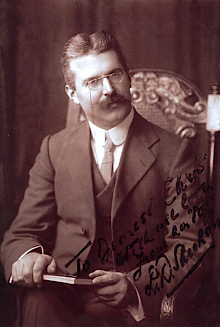
One of five children born to Archibald McNeill, a Roman Catholic working class “baker, sailor and merchant,” and his wife, Rosetta (née McAuley) McNeill, McNeill is the brother of nationalist leader Eoin MacNeill. He serves as a high-ranking member of the Indian Civil Service in Calcutta.
When the first Governor-General of the Irish Free State, Tim Healy, retires in December 1927, McNeill is proposed as his replacement by the Irish government of W. T. Cosgrave and duly appointed by King George V as Governor-General of the Irish Free State.
In office, McNeill clashes with the King’s Private Secretary when he insists on following the constitutional advice of his Irish ministers, rather than that of the Palace, in procedures relating to the receipt of Letters of Credence accrediting ambassadors to the King in Ireland. He also refuses to attend ceremonies in Trinity College, Dublin, when some elements in the college try to ensure that the old British national anthemGod Save the King is played, rather than the new Irish anthem, Amhrán na bhFiann.
However, McNeill’s tact is not reciprocated by de Valera’s government, and some of its ministers seek to humiliate him as the King’s representative by withdrawing the Irish Army‘s band from playing at functions he attends and demanding he withdraw invitations to visitors to meet him. In one notorious incident in April, two ministers, Seán T. O’Kelly (a future President of Ireland) and Frank Aiken, publicly walk out of a diplomatic function when McNeill, there as the guest of the French ambassador, arrives. In a fury, McNeill writes to de Valera demanding an apology for this treatment. When none is forthcoming, apart from an ambiguous message from de Valera that could be interpreted as partially blaming McNeill for attending functions at which ministers would be present, he publishes his correspondence with de Valera, even though de Valera had formally advised him not to do so. De Valera then demands that George V dismiss him.
The King engineers a compromise, whereby de Valera withdraws his dismissal request and McNeill, who is due to retire at the end of 1932, will push forward his retirement date by a month or so. McNeill, at the King’s request, resigns on November 1, 1932.
Rabbitte becomes involved in electoral politics for the first time in late 1982, when he unsuccessfully contests Dublin South-West for the Workers’ Party (WP) at the November general election. He is elected to Dublin County Council in 1985. He enters Dáil Éireann as a Workers’ Party Teachta Dála (TD) for Dublin South-West at the 1989 election. He retains his seat at every election until 2016.
After Tomás Mac Giolla‘s retirement as President of the Workers’ Party in 1988, Rabbitte is seen as one of those who wants to move the party away from its hard left position. In 1992, he plays a prominent role with Proinsias De Rossa in an attempt to jettison some of the party’s harder left positions. This eventually splits the Workers’ Party.
In 1994, a new ‘Rainbow Coalition’ government of Fine Gael, the Labour Party and Democratic Left comes to power. Rabbitte is a member of the junior ministerial team, serving as Minister of State to the Government, as well as Minister for State at the Department of Enterprise and Employment with responsibility for Commerce, Science and Technology.
Following the 1997 general election the Rainbow Coalition loses power. The following year sees a merger between the Labour Party and Democratic Left, with Rabbitte participating in the negotiations. In October 2002 he succeeds Ruairi Quinn as the new leader of the Labour Party. Under his leadership the party makes some gains in the local elections of 2004.
The Labour Party agrees to enter a pre-election pact, commonly known as ‘The Mullingar Accord,’ with Fine Gael in an attempt to offer the electorate an alternative coalition government at the 2007 general election. This move causes some tension in the parliamentary party, as some members prefer not to be aligned with any party in advance of an election.
Following the disappointing result in the election for Labour, Rabbitte announces he is stepping down as leader on August 23, 2007. He is succeeded as party leader by Eamon Gilmore. Rabbitte is re-elected on the first count in the 2011 general election. His running mate Eamonn Maloney is also elected. On March 9, 2011, he is appointed as Minister for Communications, Energy and Natural Resources.
In July 2014, Rabbitte is replaced by Alex White as part of a reshuffle of the cabinet. He does not contest the 2016 general election.
Burke’s political career commences when he is elected to Dublin County Council for Fianna Fáil in 1967. He serves as chairman of the council from 1985 to 1987.
After Fianna Fáil’s landslide victory at the 1977 general election, Burke is appointed Minister of State at the Department of Industry and Commerce. In October 1980 Burke is promoted to Minister for the Environment, a position he holds until June 1981 and again in the short-lived Fianna Fáil government of 1982. After Fianna Fáil returns to power at the 1987 general election, Burke serves as Minister for Energy, where he makes controversial changes to the legislation governing oil and gas exploration. In 1988, he is appointed Minister for Industry, Commerce and Communications.
Within months of his appointment as Minister for Foreign Affairs, allegations resurface that Burke has received IR£80,000 from a property developer regarding the former Dublin County Council. Burke denies the allegations but resigns from the Cabinet and from the Dáil on October 7, 1997, after just four months in office.
Having claimed since 1989 that Raidió Teilifís Éireann (RTÉ) is biased against him, Burke is responsible for controversial legislation that severely limits RTÉ’s ability to collect advertising revenue and allows for the establishment of a series of local radio stations and one independent national radio station, Century Radio. RTÉ is ordered to provide a national transmission service for Century Radio at a price that RTÉ complains is far below the economic cost of providing such a service. Nevertheless, Century Radio fails to gain significant audience share and closes in 1991.
In July 2004 Burke pleads guilty to making false tax returns. The charges arise from his failure to declare for tax purposes the payments that he has received from the backers of Century Radio. On January 24, 2005, he is sentenced to six months in prison for these offences, making him one of the most senior Irish politicians to serve time in prison. He is released in June 2005 after four and a half months, earning a 25% remission of sentence because of good behaviour. He serves his time in Arbour Hill Prison in Dublin.



 seamus dubhghaill