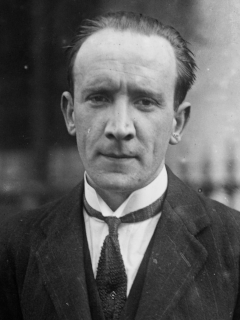
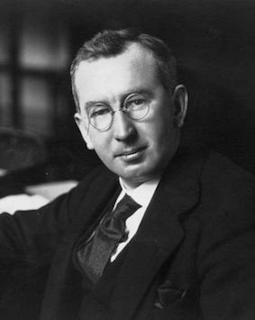
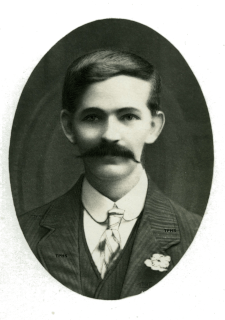
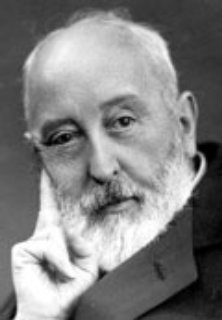
Cahill is born in Belfast on May 19, 1920. He is educated at St. Mary’s Christian Brothers’ Grammar School. At age 14 he leaves school to assist in his father’s print shop. Soon after, he joins the Catholic Young Men’s Society, which campaigns on social issues with a focus on eradicating moneylenders from working-class areas of Belfast, as they often charge usurious interest rates. At the age of seventeen, he joins Na Fianna Éireann, a republican-orientated Scouting movement. Na Fianna Eireann is regarded as the “Junior Irish Republican Army.”
Cahill joins the local Clonard-based ‘C’ Company of the Belfast Brigade of the Irish Republican Army in 1938. Four years later, during an anniversary march by the IRA for the Easter Rising, he gets into a shootout with five other IRA men against four Royal Ulster Constabulary (RUC) officers. Several men are wounded, and Constable Patrick Murphy is killed. Cahill and four of the other men spend time in prison in Belfast. The IRA declares a formal ceasefire in 1945. Afterwards, republican prisoners begin to be released. Cahill is released in October 1949.
The IRA launches a new campaign in 1956. The IRA border campaign attacks ten targets in six counties, damaging bridges, courthouses and border roads. By 1957, three RUC officers and seven republicans have been killed during the campaign. Cahill is arrested and interned in January 1957 with several other republicans. He is released from internment in April 1961. Following his release from prison, he is disappointed at the direction of the IRA and resigns from the organisation around 1962.
In 1969, Cahill is a key figure in the founding of the Provisional Irish Republican Army. During his time in the Provisional IRA, he helps import weapons and raise financial support. He serves as the Chief of Staff in 1972 but is arrested the following year when a ship importing weapons is intercepted.
After his release, Cahill continues to serve on the IRA Army Council and leads all financial dealings for Sinn Féin. In the 1990s, the IRA and Sinn Féin begin to work on seeking peace. Cahill serves on the council that calls a cessation on July 21, 1996. He attends several of the talks that finally lead to the Good Friday Agreement on April 10, 1998. Shortly after the agreement is made, he resigns as treasurer of Sinn Féin. To honour his service, he is made honorary Sinn Féin Vice-President for life. He serves the Republican movement in Ireland all his life, as one of the longest-serving political activists in Ireland of any political party.
Cahill dies at age 84 in Belfast on July 23, 2004. He had been diagnosed with asbestosis, which he probably developed while working at the Harland & Wolff shipyards in his twenties. He and several other former shipyard workers later sue the company for their exposure to the dangerous substances but only win minimal compensation.
Lemass is the second of nine children born to John T. Lemass and his wife Frances (née Phelan) Lemass. He is educated at O’Connell School, where he is described as studious (his two best subjects being history and mathematics).
Lemass is persuaded to join the Irish Volunteers. He becomes a member of the A Company of the 3rd Battalion of the Dublin Brigade. The battalion adjutant is Éamon de Valera, future Taoiseach and President of Ireland. While out on a journey in the Dublin mountains during Easter 1916, he is informed of the Easter Rising that is taking place in Dublin. On April 25, Seán and his brother Noel are allowed to join the Volunteer garrison at the General Post Office (GPO). He is equipped with a shotgun and was positioned on the roof. He also is involved in fighting on Moore Street. However, the Rising ends in failure and all involved are imprisoned. He is held for a month in Richmond Barracks but, due to his age, he is released. Following this, his father wants his son to continue with his studies and be called to the Irish Bar.
Lemass opposes the establishment of the Irish Free State as a dominion under the Anglo-Irish Treaty of 1921 and becomes a member of the headquarters staff of the Irish Republican Army in the Irish Civil War (1922–23). He plays a key role in persuading de Valera to found a new republican party, Fianna Fáil, in 1926. After de Valera rises to the premiership in 1932, Lemass holds portfolios in all his cabinets for 21 of the next 27 years, notably as Minister of Industry and Commerce and then as Tánaiste.
When de Valera becomes President of Ireland in 1959, Lemass is appointed Taoiseach on June 23, 1959, on the nomination for Dáil Éireann. Under him the country takes a more outward-looking approach, and he especially presses for Ireland’s entry into the European Economic Community (EEC), now the European Communities, embedded in the European Union, and for reconciliation with Northern Ireland. His greatest legacy, Ireland’s membership in the EEC, is not secured until 1973, after his death.
In 1966, Ireland celebrates the 50th anniversary of the 1916 Easter Rising. Éamon de Valera comes within 1% of defeat in that year’s Irish presidential election, less than two months after the celebrations in which he played such a central part. On November 10, 1966, Lemass announces to the Dáil his decision to retire as Fianna Fáil leader and Taoiseach with his usual penchant for efficiency, “I have resigned.” He retires to the backbenches and remains a TD until 1969. On the day of his retirement, Jack Lynch becomes the new leader of Fianna Fáil and Taoiseach.
During the last few years of his leadership, Lemass’s health begins to deteriorate. He had been a heavy pipe smoker all his life, smoking almost a pound of tobacco a week in later life. At the time of his retirement, it is suspected that he has cancer, but this assumption is later disproved. In February 1971, while attending a rugby game at Lansdowne Road, he becomes unwell. He is rushed to hospital and is told by his doctor that one of his lungs is about to collapse.
A man of intellectual power, O’Higgins is described by William Butler Yeats as “a great man in his pride confronting murderous men.” He is in fact murdered by maverick republicans while on his way to church.
O’Higgins is born in Stradbally, Queen’s County (County Laois since 1922) on June 7, 1892. Educated at University College Dublin, he is apprenticed to his uncle, a lawyer. Following the Easter Rising in 1916, he joins the Sinn Féinnationalist movement and is imprisoned. In 1918, while still in jail, he is elected to Parliament from Queen’s County, and in the next year he becomes assistant to the minister of local government, William Thomas Cosgrave. He goes on to become a prominent member of Cumann na nGaedheal.
As Minister for Justice, O’Higgins establishes the Garda Síochána police force and takes summary measures to restore order following the civil war between the Free State forces and the Irish Republican Army. His role in the execution of 77 republicans in 1922–23 makes him many enemies, as does his sardonic wit, his inflammatory speeches during the civil war, and his curtailment of the liquor trade.
On Sunday, July 10, 1927, O’Higgins is assassinated at the age of 35 on the Booterstown Avenue side of Cross Avenue in Booterstown, a coastal suburb of Dublin, while on his way to Mass at the Church of the Assumption. The assassination is carried out by three anti-Treaty members of the IRA, Timothy Coughlan, Bill Gannon and Archie Doyle, in revenge for O’Higgins’ part in the executions of the 77 IRA prisoners during the Irish Civil War.
None of the three assassins is ever apprehended or charged, but Coughlan, a member of Fianna Fáil as well as the IRA, is killed in 1928 in Dublin by a police undercover agent whom he is attempting to murder. The other two benefit from the amnesty to IRA members issued by Éamon de Valera, upon his assumption of power in 1932. Gannon, who dies in 1965, joins the Communist Party of Ireland and plays a central role in organising Irish volunteers for the Spanish Civil War. Doyle remains a prominent IRA militant and takes part in various acts in the early 1940s. He lives to an old age, dying in 1980, and continues to take pride in having killed O’Higgins.
The Irish Citizen Army also becomes involved in the battle, supporting the anti-Treaty IRA in the O’Connell Street area. The fighting begins with an assault by Provisional Government forces on the Four Courts building and ends in a decisive victory for the Provisional Government.
On April 14, 1922, about 200 Anti-Treaty IRA militants, with Rory O’Connor as their spokesman, occupy the Four Courts in Dublin, resulting in a tense stand-off. They want to spark a new armed confrontation with the British, which they hope will bring down the Anglo-Irish Treaty, unite the two factions of the IRA against their former common enemy and restart the fight to create an all-Ireland Irish Republic. At the time the British Army still has thousands of soldiers concentrated in Dublin, awaiting evacuation.
Winston Churchill and the British cabinet have been applying pressure on the Provisional Government to dislodge the rebels in the Four Courts, as they consider their presence a violation of the Treaty. Such pressure falls heaviest on Michael Collins, President of the Provisional Government Cabinet and effective head of the regular National Army. Collins, a chief IRA strategist during the War of Independence from Britain, has resisted giving open battle to the anti-Treaty militants since they occupied Four Courts in April. His colleagues in the Provisional Government Cabinet, including Arthur Griffith, agree that Collins must mount decisive military action against them.
In June 1922 the Provisional Government engages in intense negotiations with the British Cabinet over a draft Constitution that seeks to avert the impending civil war. They particularly seek to remove the requirement of an oath to the British Crown by all members of the Dublin government, a key point of contention with anti-Treaty partisans. However, the conservative British Cabinet refuses to cooperate. The pro-treaty element of Sinn Féin wins the elections on June 16.
Following the assassination of Sir Henry Wilson in London on June 22, 1922, and the arrest by Four Courts troops of National Army Deputy Chief of Staff Gen. J. J. “Ginger” O’Connell, British pressure on the Provisional Government intensifies. The British now threaten to invade and re-occupy all of Ireland. On June 27 the Provisional Government Cabinet agrees on an ultimatum to the Four Courts garrison to evacuate or face immediate military action.
Churchill offers a loan of British artillery for use by the National Army, along with 200 shells from their store of 10,000 at Kilmainham, three miles away. It is possible that some British special troops are also covertly loaned. Two 18-pounder field guns are placed on Bridge Street and Winetavern Street, across the River Liffey from the Four Courts complex. After an ultimatum is delivered to the anti-Treaty garrison in the early hours of June 28, the National Army commences the bombardment of Four Courts.
No authoritative record exists regarding the order to commence bombardment. Historians tend to attribute the order to Collins, but some biographers dispute this. Anti-Treaty survivors allege that they are preparing for an 8:00 a.m. evacuation when the bombardment begins at 4:00 a.m.
Inside the building are 12 members of the Irish Republican Army Executive, including Chief of StaffJoe McKelvey, Director of Engineering Rory O’Connor, Quartermaster General Liam Mellows and Director of Operations Ernie O’Malley. The garrison consists of roughly 180 men drawn from the 1st and 2nd Battalions of the IRA’s 1st Dublin Brigade, commanded by Commandant Paddy O’Brien, armed for the most part only with small arms apart from one captured armoured car, which they name “The Mutineer.” The members of the IRA Army Executive are the political leaders of the garrison but serve as common soldiers under the command of O’Brien. The Anti-Treaty side fortifies the Four Courts to some extent, planting mines around the complex and barricading the doors and windows, but their leadership orders them not to fire first, in order to retain the moral high ground, and so the Free State troops are allowed to surround the Four Courts.
After the first day’s bombardment proves ineffective, the British give the Free State two more 18-pounder cannon and proffer 60-pounder howitzers along with an offer to bomb the Four Courts from the air. Collins turns down the latter two offers because of the risk of causing heavy civilian casualties. On June 29, Free State troops storm the eastern wing of the Four Courts, losing three killed and 14 wounded and taking 33 prisoners. The republicans’ armoured car is disabled and abandoned by its crew. Early the next day O’Brien is injured by shrapnel and O’Malley takes over military command in the Four Courts. By this time the shelling has caused the Four Courts to catch fire. In addition, orders arrive from Oscar Traynor, the anti-treaty IRA commander in Dublin, for the Four Courts garrison to surrender, as he cannot reach their position to help them. O’Malley rules this order invalid, as the Four Courts is a GHQ operation. However, in view of the rapidly deteriorating situation, at 3:30 p.m. on June 30, O’Malley surrenders the Four Courts to Brigadier GeneralPaddy Daly of the Free State’s Dublin Guard unit. Three of the republican garrison die in the siege.
Several hours before the surrender, the Public Record Office of Ireland (PRO) block located in the western block of the Four Courts, which is used as an ammunition store by the Four Courts garrison, is the centre of a huge explosion, destroying Irish state records going back to the Anglo-Norman conquest. Forty advancing Free State troops are badly injured. Assigning blame for the explosion remains controversial. It is alleged by the National Army Headquarters that the Anti-treaty forces deliberately booby-trapped the PRO to kill advancing Free State troops. Tim Healy, a government supporter, later claims that the explosion is the result of land mines laid before the surrender, which explode after the surrender. However, a study of the battle concludes that the explosion is caused by fires ignited by the shelling of the Four Courts, which eventually reach two truckloads of gelignite in the munitions factory. A towering mushroom cloud rises 200 feet over the Four Courts.
At this stage in the battle troops on each side still have a sense of kinship with the other, as most of them had fought together in the Irish Republican Army during the Irish War of Independence. By appealing to friends on the Free State side, several anti-Treaty leaders among the Four Courts garrison, notably Ernie O’Malley and Seán Lemass, escape from captivity to continue the fight.
Despite the Free State force’s success in taking the Four Courts, fighting continues in Dublin until July 5. On June 29 anti-Treaty IRA units from the Dublin Brigade led by Oscar Traynor have occupied O’Connell Street, part of Parnell Square, York Street and some of other locations to try to distract Free State attention from their attack on the Four Courts. Not all the IRA units in the capital are prepared to fight against the new Irish government, however, and their numbers are probably about 500 throughout the city. Their numbers are supplemented by about 150 Citizen Army men and women who bring with them arms and ammunition dumped since the insurrection of Easter 1916.
The republicans occupy the northeastern part of O’Connell Street, with their strong point at “the block,” a group of buildings that the Anti-Treatyites had connected by tunneling through the walls. They had also taken over the adjoining Gresham, Crown, Granville and Hammam hotels. Their only position on the western side of the street is in the YMCA building. Additionally, they have an outpost south of the River Liffey at the Swan Pub on Aungier Street. Oscar Traynor apparently hopes to receive reinforcements from the rest of the country, but only Anti-Treaty units in Belfast and Tipperary reply and both of them arrive too late to take part in the fighting.
The Provisional Government troops, commanded by General Tom Ennis, start by clearing out the outlying anti-treaty garrisons, which is accomplished by July 1. They then draw a tighter cordon around O’Connell Street. Artillery is used to drive the Anti-Treaty fighters out of positions on Parnell Street and Gardiner Street, which gives the Free State troops a clear field of fire down O’Connell Street.
The republican outpost in the YMCA is eliminated when Free State troops tunnel underneath it and detonate a bomb. Traynor’s men in “the block” hold out until artillery is brought up, under the cover of armored cars, to bombard them at point-blank range. Incendiary bombs are also planted in the buildings. Traynor and most of his force make their escape when the buildings they are occupying catch fire. They mingle with civilian crowds and make their way to Blessington.
Left behind is Republican leader Cathal Brugha and a rear guard of 15 men, who stay behind in the Hammam Hotel after Traynor, and most other IRA men have left. At 5:00 p.m. on July 5, when the fires make the hotel untenable, Brugha orderes his men to surrender. He, however, stays behind, only to emerge from the building alone, armed with a revolver. He is shot in the thigh by Free State troops and dies later from blood loss. There are some further sporadic incidents of fighting around the city as Free State troops disperse anti-treaty IRA groups.
Cathal Brugha is the last casualty in the Battle of Dublin, which costs the lives of at least 80 people (15 anti-Treaty IRA Volunteers, 29 National Army soldiers, one British Royal Air Force serviceman and 35 civilians) and over 280 wounded. In addition, the Free State takes over 450 Republican prisoners. The high civilian casualties are doubtless the result of the use of heavy weapons, especially artillery, in a densely populated urban area.
When the fighting in Dublin dies down, the Free State government is left firmly in control of the Irish capital and the anti-treaty forces disperse around the country. Roundups after the fighting result in more Republican prisoners and the death of prominent anti-Treaty activist Harry Boland who is shot dead in Skerries, Dublin, on July 31.
Oscar Traynor, Ernie O’Malley and the other anti-Treaty fighters who escape the fighting in Dublin regroup in Blessington, around 30 km southwest of the city. An anti-Treaty IRA force from County Tipperary had arrived there but too late to participate in the Dublin fighting. Instead, this force heads south and takes a string of towns, including Enniscorthy and Carlow, but quickly abandons them when faced with superior Free State forces. Most of the Republicans then retreat further south to the so-called Munster Republic, territory southwest of a line running from Limerick to Waterford. This in turn is taken by the Free State in an offensive from July to August 1922.
Four of the Republican leaders captured in the Four Courts, Rory O’Connor, Liam Mellows, Joe McKelvey and Richard Barrett, are later executed by the government in reprisal for the Anti-Treaty side’s killing of TDSeán Hales. The street where Cathal Brugha is killed is later renamed Cathal Brugha Street in his honour.
Béaslaí is born Percy Frederick Beazley in Liverpool, England on February 15, 1881, to Irish Catholic parents, Patrick Langford Beazley, originally from Killarney, County Kerry, and Nannie Hickey, from Newcastle West, County Limerick. During his summer holidays in his younger years, he spends time in Ireland (near Kenmare, County Kerry) with his paternal uncle, Father James Beazley, where he begins to learn the Irish language. He is educated at St. Francis Xavier’s College in Liverpool, where he develops his keen interest in Irish. By the time he is aged 17 his Irish proficiency is exceptional.
After finishing his education at St. Francis Xavier’s, Béaslaí is encouraged to begin Irish poetry by Tadhg Ó Donnchadha. He follows his father’s footsteps into journalism, initially working for the local Wallasey News. In 1906 he moves to Dublin, and within a year becomes a freelance writer for the Irish Peasant, Irish Independent, Freeman’s Journal and Express. He is offered a permanent position with Independent Newspapers, as assistant leader writer and special reporter for the Dublin Evening Telegraph. He writes regularly for the Freeman’s Journal, including a daily half-column in Irish.
After his early introduction to Irish poetry Béaslaí becomes involved in staging Irish-language amateur drama at the Oireachtas annual music festival. He begins to write both original works and adaptations from foreign languages. One of these works, Eachtra Pheadair Schlemiel (1909), is translated from German into Irish.
Later Béaslaí continues to write poetry, such as the collection “Bealtaine 1916” agus Dánta Eile (1920), and short stories such as “Earc agus Aine agus Scéalta Eile.” Between 1913 and 1939 he writes many plays, including Cliuche Cartaí (1920), An Sgaothaire agus Cúig Drámaí Eile (1929), An Danar (1929) and An Bhean Chródha (1931). He writes two books about his comrade Michael Collins: Michael Collins and the Making of a New Ireland (2 volumes, 1926) and Michael Collins: Soldier and Statesman (1937).
Béaslaí’s works revolve around the Irish language movement and the Irish Republican Army (IRA), focusing on the independence struggle of Ireland. He writes about these topics in newspapers such as the Standard and The Kerryman. His most notable work in newspapers during his later life includes his contribution to the Irish Independent, which publishes a section called ‘A Veteran Remembers’ five days a week from May 16 to June 1957, as well as a weekly section called ‘Moods and Memories’ on Wednesdays from May 24, 1961, to June 16, 1965.
One of the awards Béaslaí gains during his career is on August 14, 1928, a gold medal at the Tailteann Literary Awards. While in Dublin, he joins the Keating Branch of the Gaelic League, and after he moves to Ireland, he begins using the Irish form of his name, Piaras Béaslaí, rather than Percy Beazley.
Béaslaí is a founding member of the Irish Volunteers in 1913. In January 1916 he serves as a courier for political activist and revolutionary leader Seán Mac Diarmada. By the time of the Easter Rising that year, he is deputy commanding officer of the 1st Dublin Battalion. In an audio recording to which he contributes in 1958, he details his experience in the Rising, describing the rebels assembling before noon in Blackhall Street at battalion headquarters. After midday they march out to the Four Courts, erecting barricades as they do so. The Four Courts is his main station.
In the audio, Béaslaí recalls a green flag with a gold harp in the centre. This is the non-Sinn Féin flag at the time. He is in direct charge of the Four Courts area, and at one point during the fight he orders a complete blackout. He recalls, “things were going badly for the English soldiers” and describes the whole event as “a weird experience.” He remembers the streets being lit up with fires in the darkness as if it were bright as day. He speaks of the intensity of the firing line and then how it suddenly ceases on the Friday. He remembers falling asleep and when he awakens being presented with Patrick Pearse‘s order to surrender. The rebels are brought to Richmond Barracks. He then spends fifteen months in English prisons.
Béaslaí serves three years of penal servitude divided between a stringent HM Prison Portland and a more lenient HM Prison Lewes. He is then imprisoned two times within four months during 1919, both terms ending in celebrated escapes. After his final prison release, Michael Collins approaches him about editing An tOglach, the Irish Volunteer newspaper. This sees communication between GHQ and local volunteers drastically improve.
Later, Béaslaí becomes director of publicity for the Irish Republican Army, and at the 1918 Irish general election he is elected to the First Dáil as Sinn Féin MP for East Kerry. Sinn Féin MPs elected in the Westminster elections of 1918 refuse to recognise the Parliament of the United Kingdom, and instead assemble the following January at the Mansion House in Dublin as a revolutionary parliament, Dáil Éireann. Béaslaí is noted for his translation of the democratic programme of the First Dáil, which he reads aloud at the inaugural sitting.
Béaslaí and Con Collins share the distinction of having been elected in three Irish general elections unopposed by any other candidates.
During Béaslaí’s time in London, he gives a lot of his time to the Gaelic League. In the Keating branch of the league, in Ireland, he develops an interest in the IRB. Cathal Brugha, a branch member, asks him to join the IRB. The Keating branch is where Béaslaí meets Michael Collins, eventually introducing Collins to his cousin and fellow branch member, Elizabeth Mernin. He is also instrumental in establishing An Fáinne, an Irish-speaking league whose members vow to speak solely Irish among themselves and wear a membership badge of a circle. This coincides with his involvement in the IRB. His love of the Irish language gives him an opportunity to delve into his other hobbies. He writes for Banba, an Irish journal published by the Gaelic League. He is able to express his love for theatre, in the Gaelic League, forming a group of men called “Na hAisteoirí.”
Murphy’s father is Nicholas Murphy and her mother Mary Gertrude Purcell of Carrigmore, in Montenotte, Cork. She is sent away to school, to a convent in Sussex, England.
At Christmas 1915 Murphy attends an evening at the Fleischmann home where she meets Terence MacSwiney. Her family does not want the couple involved and does not approve of her growing interest in nationalism and socialism. In 1917 she marries MacSwiney in St. Joseph’s Church, Bromyard, Herefordshire, while he is interned due to his involvement in the Easter Rising of 1916. Her bridesmaid is Geraldine O’Sullivan, and his best man is Richard Mulcahy. The couple had waited until she had come of age at 25 so that she is financially independent of her parents. They have a daughter, Máire MacSwiney Brugha.
MacSwiney sees very little of her husband during their married life as he is often arrested. He dies due to his hunger strike on October 25, 1920, as Lord Mayor of Cork. Her husband’s death has a huge impact on her life, being a public event as well as a personal loss. She completes a lecture and interview tour of the United States, over nine months, with his sister Mary. She is the first woman to be given the Freedom of New York City, in 1922.
MacSwiney begins to suffer from depression and takes her daughter to Germany, leaving her there while she travels Europe. She eventually loses custody of her child and by 1934 she no longer has any involvement in her daughter’s life.
MacSwiney spends a lot of time in Paris, where she continues to be engaged with politics, typically those of left-wing, including communist, groups. She becomes involved with Pierre Kaan and they have a daughter, Alix, who is born on May 5, 1926, in Germany. Kaan is sent to a concentration camp by the Gestapo and dies on May 18, 1945, as a result of his treatment there.
MacSwiney is critical of American foreign policy on Vietnam, calling the United States a “world imperialist power.”
MacSwiney never resolves her relationships with either her own daughter or her family. She is paid a pension as the widow of Terence MacSwiney from 1950. She is living in Tonbridge in Kent with her daughter near the end of her life. She dies on October 26, 1982, at Oakwood Hospital in Barming Heath near Maidstone.
Lynch returns to Ireland in 1909, where he starts training as a teacher in St Patrick’s College, Dublin. He graduates in 1911 as a primary school teacher. In April 1912 he begins working as a national schoolteacher at St. Michan’s School, Dublin, becomes an active member of the Keating branch of the Gaelic League, and is recruited into the Irish Republican Brotherhood (IRB) by Seán Mac Diarmada. He also joins the Irish Volunteers in 1913, and becomes captain of F Company, 1st Battalion, Dublin Brigade. With Piaras Béaslaí he founds Na hAisteoirí, a drama company dedicated to the production of plays in Irish, with many of its members fighting during the 1916 Easter Rising. In the months before the rising Lynch temporarily stands down from the Volunteers after his school manager tells him he will be sacked if he does not. Learning that a rising was imminent, he rejoins the Volunteers, and over the Easter weekend commands the detachment that guards Bulmer Hobson to prevent him from interfering with Volunteer mobilisation. During the rising he is involved in heavy fighting in the North King Street area and is subsequently imprisoned.
Held at Lewes Prison, Lynch is released under the general amnesty. In August 1916 he is reimprisoned for making an inflammatory speech, and in September leads the Mountjoy Prisonhunger strike with Austin Stack and Thomas Ashe. He is released in November following a further hunger strike at Dundalk prison. He is imprisoned again in May 1918 on the same charge during the ‘German Plot’ allegations and is released in August 1919, after which he helps to plan the escape of other prisoners.
Elected a Sinn FéinTD for South Kerry in December 1918 and for Kerry–Limerick West in May 1921, Lynch serves as assistant secretary to the Anglo-Irish Treaty delegation in London (October–December 1921), where he is largely responsible for organising the living arrangements at the two Irish headquarters. A supporter of the treaty, he addresses Pro-Treaty rallies with Michael Collins, and from January to August 1922 is Minister for Education with the Provisional Government, at the same time as Michael Hayes is Minister for Education for Dáil Éireann. Possible conflict is avoided by the pragmatic division of duties, under which Hayes takes responsibility for intermediate and higher education, and Lynch for primary education. It is also left for Lynch to clarify the relationship between the new Provisional Government and the board of commissioners of intermediate education, which is not abolished until 1923. These developments, however, are overshadowed by the beginning of the Irish Civil War, where military considerations take precedence over civic responsibilities.
Required to serve in the army, in July 1922 Lynch is appointed a vice-commandant of the south-western division with the rank of commandant-general, commanding a unit of Dublin soldiers in County Kerry, where on occasion he has to endure being ambushed, leading a fellow commandant to note ironically that his constituents do not seem to think much of him. However, the reluctance of former colleagues to attack him possibly ensure his survival during the war. Frank Henderson of Dublin’s No. 1 brigade of the Irish Republican Army (IRA) tells Ernie O’Malley of his reluctance to become involved in reprisal shootings after Free State executions, commenting, “I didn’t like that order. I could have shot Eamonn Duggan and Fionán Lynch, for they went home every night drunk, but I left them alone.”
After the Irish Civil War Lynch is elected a Cumann na nGaedheal TD for Kerry, a seat he holds until 1937, after which he represents the constituency of Kerry South (1937–44). He serves as Minister for Fisheries (1922–28) and Minister for Lands and Fisheries (1928–32) and retains his interest in education. He supports the Irish National Teachers‘ Organisation policy on the Irish language during the 1920s, commenting that he is entirely opposed to attempting to teach subjects through Irish where Irish is not the known language.
In 1931 Lynch qualifies as a barrister. After Fianna Fáil comes to power and during the rise of the Blueshirts he speaks at public meetings with Eoin O’Duffy, and they are attacked by a crowd in Tralee in October 1933. After the fall of O’Duffy and the reorganisation of Fine Gael, W. T. Cosgrave appoints a front bench designed to represent the various groups in the party, which witness former ministers, including Desmond FitzGerald, Patrick Hogan, and Lynch, relegated to the back benches. Lynch serves as Leas-Cheann Comhairle of the Dáil (1938–39). Having built up a legal practice, he retires from politics in October 1944 and is subsequently appointed a circuit court judge in the north-west district, retiring from the bench in 1959.
Lynch dies suddenly at his home in Dartry, County Dublin, on June 3, 1966, shortly after celebrating the 50th anniversary of the Easter Rising. He is survived by his wife Brighid (née Slattery), a native of Tralee, and by their five sons and one daughter. His papers are on permanent loan to Kerry County Library archives.
(From: “Lynch, Fionán (Finian)” by Diarmaid Ferriter, Dictionary of Irish Biography, http://www.dib.ie)
Traynor works as a boot maker and is married with ten children. At the time of his death the eldest is 18 years and the youngest 5 months. The eldest son, Frank, represents Ireland at the 1928 Summer Olympics in Amsterdam, competing as a bantamweight boxer.
Traynor is captured during an ambush on Auxiliaries in Brunswick Street, Dublin, on March 14, 1921, and is tried on April 5 at City Hall. He is part of a party of IRA volunteers keeping watch outside a meeting at 144 Brunswick Street that includes Seán MacBride. During the fight an IRA volunteer, Leo Fitzgerald, is killed, as are Constable James O’Farrell and Cadet Bernard Beard of the Dublin Metropolitan Police. Traynor is reportedly badly beaten by members of the Igoe Gang.
Traynor is hanged in Mountjoy Prison in Dublin on April 25, 1921, one of a group of men, commonly referred to as the Forgotten Ten, hanged in Mountjoy Prison from 1920–21, during the Irish War of Independence. He is 38 years old at the time of his death.
Mark Sturgis, assistant to the Under-Secretary for Ireland, writes, “Traynor, captured red handed with an attacking party when Auxiliaries were killed in Brunswick Street, was executed this morning. I don’t think they will make much fuss as there is no sort of ‘alibi’ business this time – nor is he the usual ‘youth’, dear to ‘The Freeman‘, as he is over 40 and has a pack of children, the poor deluded idiot.”
On the day following Traynor’s death, Gilbert Potter, a Royal Irish Constabulary (RIC) District Inspector based in Cahir, County Tipperary, and being held for Traynor’s safe treatment is executed in reprisal by members of the 3rd Tipperary Brigade of the IRA. Another IRA volunteer, Jack Donnelly, captured with Traynor, is sentenced to death but is reprieved by the declaration of an impending truce in June 1921.
In 1965 a statue is erected to honor Traynor in his native town of Tullow. The Ballad of Thomas Traynor is written in his memory.
Healy is the second son of Maurice Healy, clerk of the Bantry Poor Law Union, and Eliza Healy (née Sullivan). His elder brother, Thomas Healy (1854–1924), is a solicitor and Member of Parliament (MP) for North Wexford and his younger brother, Maurice Healy (1859–1923), with whom he holds a lifelong close relationship, is a solicitor and MP for Cork City.
Healy then moves to England in 1871, working first as a railway clerk and then from 1878 in London as parliamentary correspondent of The Nation, writing numerous articles in support of Charles Stewart Parnell, the newly emergent and more militant home rule leader, and his policy of parliamentary obstructionism. Healy takes part in Irish politics and becomes associated with Parnell and the Irish Parliamentary Party. After being arrested for intimidation in connection with the Irish National Land League, he is promptly elected as member of Parliament for Wexford Borough in 1880.
In Parliament, Healy becomes an authority on the Irish land question. The “Healy Clause” of the Land Law (Ireland) Act 1881, which protects tenant farmers’ agrarian improvements from rent increases imposed by landlords, not only makes him popular throughout nationalist Ireland but also wins his cause seats in ProtestantUlster. He breaks with Parnell in 1886 and generally remains at odds with subsequent leaders of the Irish Parliamentary Party, though he is a strong supporter of proposals for Irish Home Rule. Meanwhile, he is called to the Irish bar in 1884 and becomes a queen’s counsel in 1899.
Healy believes that he has been awarded the Governor-Generalship for life. However, the Executive Council of the Irish Free State decides in 1927 that the term of office of Governors-General will be five years. As a result, he retires from the office and public life in January 1928 and publishes his extensive two volume memoirs later in that year. Throughout his life he is formidable because he is ferociously quick-witted, because he is unworried by social or political convention, and because he knows no party discipline. Towards the end of his life, he becomes more mellowed and otherwise more diplomatic.
William Ireland de Courcy Wheeler, surgeon, is born on May 9, 1879, in Dublin, fourth son among six sons and four daughters of William Ireland de Courcy Wheeler, a distinguished doctor, and Frances Victoria Wheeler (née Shaw), cousin of George Bernard Shaw.
Wheeler is educated at Trinity College Dublin (TCD) and loses an eye as a result of an accident but overcomes the disability. He wins a moderatorship, a medal, and prizes and graduates BA (1899) in anatomy, natural science, and experimental science and, following postgraduate study in Berne, an MB, B.Ch., and MD (1902). The following year he receives the Dublin University Biological Association’s medal for his paper Deaths under chloroform. He is appointed demonstrator and assistant to the professor of the TCD anatomy department before becoming honorary surgeon (1904–32) to Mercer’s Hospital, Dublin. He is also attached to several other institutions including the Rotunda Hospital and the National Children’s Hospital. An outstanding teacher, he attracts large numbers to his clinical classes and lectures in surgery to postgraduates at TCD.
Ambitious and abounding in self-confidence, Wheeler dedicates all his indomitable energy and time to his work, is a frequent visitor to foreign clinics, becomes a skilled general surgeon and a specialist in orthopaedics, and earns an international reputation. During World War I he serves in the Royal Army Medical Corps (RAMC) and from 1915 converts his private hospital, 33 Upper Fitzwilliam Street, into the Dublin Hospital for Wounded Officers and makes it available to the St. John’s Ambulance brigade and the British Red Cross. He acts as honorary officer in charge and is also surgeon to the Duke of Connaught‘s Hospital for Limbless Soldiers, and honorary surgeon to the forces in Ireland.
In 1916, Wheeler visits the western front, tours the hospitals in Boulogne, and is attached to a casualty clearing station at Remy Siding near Ypres. Returning to Dublin on the request of Robert Jones, he organises the Dublin Military Orthopaedic Centre, Blackrock, where he serves as surgeon (1916–21). His advice is widely sought, and he serves on several committees, including the War Office Council of Consulting Surgeons (1917) and the Ministry of Pensions Medical Advisory Council on Artificial Limbs. Promoted to lieutenant colonel in 1918, he receives the General Service Medal and is twice mentioned in dispatches, having courageously treated wounded soldiers under fire during the 1916 Easter Rising. Appointed surgeon-in-ordinary to the lord-lieutenant, he is knighted in 1919.
Principal founder of the Dublin Hospitals’ Club (1922), Wheeler publishes two textbooks, A Handbook of Operative Surgery (1906) and Selected Papers on Injuries and Diseases of Bone (1928). He contributes numerous authoritative papers on a variety of surgical subjects to professional journals and edits the chapter on general surgery in the Medical Annual from 1916 to 1936. Inspector of examinations for the Medical Research Council of Ireland, he is external examiner to universities in Ireland and Scotland. Interested in hospital policy and nursing, he advocates the federation of the smaller hospitals and is chairman of the City of Dublin Nursing Institute. Fellow (1905) and council member (1906), he follows in his father’s footsteps and is elected president (1922–24) of the Royal College of Surgeons in Ireland. He is also president of the Dublin University Biological Association and of the surgical section of the Royal Academy of Medicine in Ireland and is awarded an honorary ChM from Cairo University in 1928.
Troubled and bewildered by the political situation in Ireland, Wheeler is persuaded by Rupert Guinness, 2nd Earl of Iveagh, to accept the position of visiting surgeon (1932) to the new hospital at Southend-on-Sea, Essex, to which Iveagh had donated £200,000. The departure of such a leading figure in Irish medical circles is widely regretted. His posts in London include surgeoncies to All Saints Hospital for Genito-Urinary Diseases and to the Metropolitan Ear, Nose, and Throat Hospital. The diversity of his interests and his general competence make him a valued member of the editorial staff of several journals including the British Journal of Surgery, the British Journal of Urology, and the American Journal of Surgery, Gynaecology, and Obstetrics. He is also a member of the American Editors Association. He enjoys many affiliations with America, where he is well known and honoured by being elected honorable fellow of the American College of Surgeons and selected as their John B. Murphy orator (1932), and by election as honorary member and president of the Post Graduate Assembly of North America. An active member of the British Medical Association, he is president of the Leinster branch (1925–26) and of the Orthopaedic section (1933), vice-president of the Surgical section (1930, 1932), and chairman of the council and president of the Metropolitan Counties Branch (1938). President of the Irish Medical Schools and Graduates Association, he is awarded their Arnott gold medal in 1935.
During World War II Wheeler serves as consultant surgeon to the Royal Navy in Scotland, with the rank of rear admiral (1939–43) and is posted to Aberdeen. Strong-minded, unconventional, and often controversial, he has a gift for friendship, is charming and good-humoured, and excels in the art of the after-dinner speech. Immensely proud of Dublin’s medical and surgical traditions, he always eagerly returned to Ireland, where he planned to retire and write his memoirs.
Wheeler dies suddenly on September 11, 1943, at his home in Aberdeen and is cremated at the Aberdeen crematorium. As a memorial to his father, he bequeaths his library and that of his father to the Royal College of Surgeons in Ireland, and also leaves a fund for the Sir William Wheeler memorial medal in surgery.