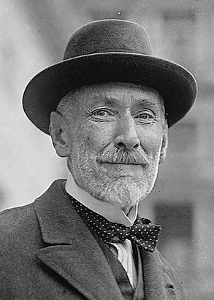
Threatened by lung trouble in 1879, Plunkett goes to the United States and spends ten years as a cattle rancher in the Bighorn Mountains of Wyoming. He returns to Ireland in 1889 and devotes himself to the agricultural cooperative movement, first organizing creameries and then, in 1894, the Irish Agricultural Organisation Society, a forerunner of similar societies in England, Wales, and Scotland. A moderate Unionist member of Parliament for South County Dublin from 1892 to 1900, he becomes vice president (1899–1907) of the new Department of Agriculture and Technical Instruction for Ireland, which he has been instrumental in creating.
Plunkett’s later experience convinces him of the need for the independence of an Ireland without partition inside the Commonwealth, and he fights strongly for this goal, as chairman of the Irish Convention (1917–18) and, in 1919, as founder of the Irish Dominion League and of the Plunkett Foundation for Cooperative Studies, an agricultural research and information centre. He is appointed to the first Senate of the Irish Free State (1922–23). His house in Dublin is bombed and burned during in the Irish Civil War and he lives in England thereafter. In 1924 the Plunkett Foundation also moves to England. In 1924 he presides over a conference in London on agricultural co-operation in the British Commonwealth and in 1925 he visits South Africa to help the movement there.
Lawless is born at Lyons Demesne below Lyons Hill, Ardclough, County Kildare. Her grandfather is Valentine Lawless, 2nd Baron Cloncurry, a member of the Society of United Irishmen and son of a convert from Catholicism to the Church of Ireland. Her father is Edward Lawless, 3rd Baron Cloncurry, thus giving her the title of “The Honourable.” In contrast, her brother Edward Lawless is a landowner with strong Unionist opinions, a policy of not employing Roman Catholics in any position in his household, and chairman of the Property Defence Association set up in 1880 to oppose the Irish National Land League and “uphold the rights of property against organised combination to defraud.” The prominent Anglo-Irish unionist and later nationalist, Home Rule politician Horace Plunkett is a cousin. Lord Castletown, Bernard FitzPatrick, 2nd Baron Castletown is also a cousin. It is widely believed that she is a lesbian and that Lady Sarah Spencer, dedicatee of A Garden Diary (1901) is her lover.
Lawless spends part of her childhood with the Kirwans of Castle Hackett, County Galway, her mother’s family, and draws on West of Ireland themes for many of her works. She occasionally writes under the pen name “Edith Lytton.”
Lawless writes nineteen works of fiction, biography, history, nature studies and poetry, many of which are widely read at the time. She is most famous today for her Wild Geese poems (1902).
Some critics identify a theme of noble landlord and noble peasant in her fourth book, Hurrish, a Land War story set in The Burren of County Clare which is read by William Ewart Gladstone and said to have influenced his policy. It deals with the theme of Irish hostility to English law. In the course of the book a landlord is assassinated, and Hurrish’s mother, Bridget, refuses to identify the murderer, a dull-witted brutal neighbour. The book is criticised by Irish-Ireland journals for its “grossly exaggerated violence,” it’s embarrassing dialect, staid characters.
Her reputation is damaged by William Butler Yeats who accuses her in a critique of having “an imperfect sympathy with the Celtic nature” and for adopting “theory invented by political journalists and forensic historians.” Despite this, Yeats includes her novels With Essex in Ireland (1890) and Maelcho (1894) in his list of the best Irish novels.
Emily Lawless dies at Gomshall, Surrey, on October 19, 1913. Her papers are preserved in Marsh’s Library in Dublin.
Patrick Magee stays in the hotel under the pseudonym Roy Walsh during the weekend of September 14-17, 1984. During his stay, he plants the bomb under the bath in his room, number 629. The device, described as a “small bomb by IRA standards,” is fitted with a long-delay timer made from videocassette recorder components and a Memo Park Timer safety device. The device may have avoided detection by sniffer dogs due to it being wrapped in cling film to mask the smell of the explosive.
The bomb detonates at approximately 2:54 AM (BST) on October 12. The midsection of the building collapses into the basement, leaving a gaping hole in the hotel’s facade. Firemen say that many lives are likely saved because the well-built Victorian hotel remained standing. Margaret Thatcher is still awake at the time, working on her conference speech for the next day in her suite. The blast badly damages her bathroom but leaves her sitting room and bedroom unscathed. Both she and her husband escape injury. She changes her clothes and is led out through the wreckage along with her husband and her friend and aide Cynthia Crawford and driven to Brighton police station.
At about 4:00 AM, as Thatcher leaves the police station, she gives an impromptu interview to the BBC‘s John Cole, saying that the conference would go on as scheduled. Alistair McAlpine persuades Marks & Spencer to open early at 8:00 AM so those who have lost their clothes in the bombing can purchase replacements. Thatcher goes from the conference to visit the injured at the Royal Sussex County Hospital.
Five people are killed, none of whom are government ministers. But a Conservative MP, Sir Anthony Berry, is killed, along with Eric Taylor, North-West Area Chairman of the Conservative Party, Lady Jeanne Shattock, wife of Sir Gordon Shattock, Western Area Chairman of the Conservative Party, Lady Muriel Maclean, wife of Sir Donald Maclean, President of the Scottish Conservatives, and Roberta Wakeham, wife of Parliamentary Treasury Secretary John Wakeham. Donald and Muriel Maclean are in the room in which the bomb explodes, but Mr. Maclean survives.
Several more, including Walter Clegg, whose bedroom is directly above the blast, and Margaret Tebbit, the wife of Norman Tebbit, who is then President of the Board of Trade, are left permanently disabled. Thirty-four people are taken to the hospital and recover from their injuries. When hospital staff asks Norman Tebbit, who is less seriously injured than his wife, whether he is allergic to anything, he is said to answer “bombs.”
The bomb in the Horse and Groom pub detonates at 8:30 PM. It kills Paul Craig, a 22-year-old plasterer, two members of the Scots Guards and two members of the Women’s Royal Army Corps. The Seven Stars pub is evacuated after the first blast, and thus there are no serious injuries when the second bomb explodes at 9:00 PM.
These attacks are the first in a year-long campaign by an IRA Active Service Unit who are eventually captured after the Balcombe Street siege. A similar bomb to those used in Guildford, with the addition of shrapnel, is thrown into the Kings Arms pub in Woolwich on November 7, 1974. Gunner Richard Dunne and Alan Horsley, a salesclerk, die in that explosion. On August 27, 1975, the same IRA unit detonates a bomb in Surrey at the Caterham Arms pub which injures over 30 people. Surrey police say it is “a carbon copy of the Guildford bombs.”
In December 1974 the police arrest Gerry Conlon, Paul Hill, Patrick Armstrong and Carole Richardson, later known as the Guildford Four. The Guildford Four are falsely convicted of the bombings in October 1975 after the Metropolitan Police use the Prevention of Terrorism Acts to force false confessions. All four are sentenced to life in prison.
The Guildford Four are held in prison for fifteen years, although Gerry Conlon dies near the end of his third year of imprisonment. All the convictions are overturned years later in the appeal courts after it is proved the Guildford Four’s convictions had been based on confessions obtained by torture, while evidence specifically clearing the Four is not reported by the police.
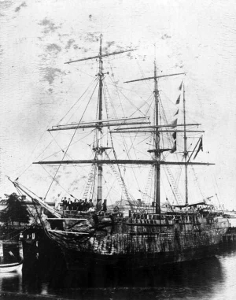
The Queen, the first ship delivering Irish convicts, arrives at the penal settlement of Botany Bay in New South Wales, Australia on September 26, 1791. About 30% of all Australians are of Irish birth or descent. Many emigrated freely but many are descended from convicts transported there in the early years of the colony.
Britain has a policy of transportation. Up until the American Revolution most are sent to the American colonies or the West Indies. By the 1780s, Britain badly needs prison space. Petty criminals are housed on overcrowded prison ships anchored on the River Thames. In 1786, the government decides to start a prison settlement in the new colony at Botany Bay.
The transportation is arranged by a private company and those convicts who arrive there are actually the lucky ones, as conditions on the journey are horrendous and many die en route. The organisers of the transportation ships operate on a contract basis. They are paid a certain amount per head and the less provisions they give the prisoners the more profit they make.
The first two fleets of convict ships sail from England. The first ship to sail directly from Ireland is the Queen, which leaves Cork in April 1791 and joins the third fleet sailing from England. On board are 133 male convicts, 22 females and three children. The youngest on the ship is two-week-old Margaret, daughter of convict Sarah Brennan. The youngest convicts are 11-year-old David Fay and 12-year-old James Blake, convicted for stealing a pair of buckles. The oldest convict is 64-year-old Patrick Fitzgerald from Dublin, who is sentenced to seven years for stealing clothes. Seven men and one woman die on the voyage and within a year, half the men who had sailed on the Queen are dead. Young James Blake dies within a few months of landing.
The last convict ship sails from Ireland to Australia in 1853 and over the course of 60 years, 30,000 men and 9,000 women are transported for a minimum of seven years. While a good number of them are patriots and rebels – United Irishmen and Young Irelanders – the majority are transported for petty crimes.
Transportation continues for more than 60 years and is followed by assisted emigration. More than 100,000 travel on assisted passage during the 1850s alone. Some are assisted on their journey by charitable organisations in an effort to relieve distress. The last transportation ship, the Phoebe Dunbar, sails from Dún Laoghaire in 1853, bound for Perth.
Ashe is born in Lispole, County Kerry, on January 12, 1885. He enters De La Salle Training College, Waterford in 1905 and begins a teaching career as principal of Corduff National School, Lusk, County Dublin, in 1908.
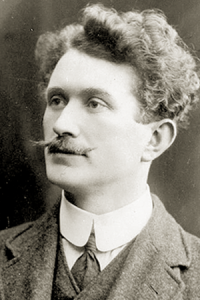
Ashe plays a major part in the 1916 Easter Rising outside the capital city commanding the Fingal battalion of the Irish Volunteers. He is commandant of the 5th battalion of the Dublin brigade, a force of 60–70 men engaging British forces around north County Dublin during the rising. They are armed only with a few rounds, about a dozen service rifles, a dozen Mausers, and a dozen Martini carbines. Some of Ashe’s men are armed only with a shotgun against the well-equipped army regulars.
Ashe’s battalion wins a major victory in Ashbourne, County Meath, where they engage a much larger force. They capture a significant quantity of arms and up to twenty Royal Irish Constabulary (RIC) vehicles. Eleven RIC members, including County Inspector Alexander Gray, and two volunteers are killed during the 5-1/2-hour battle. Twenty-four hours after the rising collapses, Ashe’s battalion surrenders on the orders of Patrick Pearse. On May 8, 1916, Ashe and Éamon de Valera are court-martialled and sentenced to death. The sentences are commuted to penal servitude for life. Ashe is imprisoned in Frongoch internment camp and Lewes Prison in Lewes, East Sussex, England.
De Valera, Ashe, and Thomas Hunter lead a prisoner hunger strike on May 28, 1917. With accounts of prison mistreatment appearing in the Irish press and mounting protests in Ireland, Ashe and the remaining prisoners are freed on June 18, 1917, by David Lloyd George as part of a general amnesty.
Upon his release, Ashe returns to Ireland and begins a series of speaking engagements. In August 1917, he is arrested and charged with sedition for a speech that he makes in Ballinalee, County Longford, where Michael Collins is also speaking. He is detained at the Curragh but is then transferred to Mountjoy Prison in Dublin. He is convicted and sentenced to two years hard labour. Ashe and other prisoners, including Fionán Lynch and Austin Stack, demand prisoner of war status.
On September 20, 1917, Ashe again goes on hunger strike. He dies at Mater Misericordiae Hospital on September 25, 1917, after being force fed by prison authorities. At the inquest into his death, the jury condemns the staff at the prison for the “inhuman and dangerous operation performed on the prisoner, and other acts of unfeeling and barbaric conduct.” His body lies in state at Dublin City Hall and is buried in Glasnevin Cemetery in Dublin.
The Ashe Memorial Hall built in 1928, housing the Kerry County Museum, in Tralee is named after him while Nelson Street, also in Tralee, is renamed Ashe Street. Ashe is a relative of Catherine Ashe, the paternal grandmother of American actor Gregory Peck, who emigrates to the United States in the 19th century.
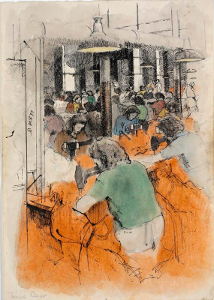
Thomas James Carr, British artist who is associated with the Euston Road School in the 1930s and has a long career as a painter of domestic scenes and landscapes, is born in Belfast to a well-to-do family on September 21, 1909.
Although essentially a realist painter, Carr is included in the 1934 Objective Abstractionists exhibition at Zwemmer’s Gallery. In 1937, he shares an exhibition with Victor Pasmore and Claude Rogers at the Storran Gallery and subsequently becomes associated with the representational style of the Euston Road School. Starting in 1940, at Georges Wildenstein‘s gallery, he holds a series of one-man exhibitions at various galleries including at the Leicester Galleries, The Redfern Gallery and also at Thomas Agnew & Sons.
After the war, Carr teaches at the Belfast College of Art and moves to Belfast in 1955. After the death of his wife in 1995, he moves to Norfolk, England to be nearer one of his three daughters and her family. He continues to paint into old age and tends to concentrate on landscape painting.
Emmet is born at 109 St. Stephen’s Green, in Dublin on March 4, 1778, the youngest son of Dr. Robert Emmet, a court physician, and his wife, Elizabeth Mason. He attends Oswald’s school, in Dopping’s-court, off Golden-lane and enters Trinity College, Dublin in October 1793, at the age of fifteen. He becomes secretary of a secret United Irish Committee in college and is expelled in April 1798 as a result. That same year he flees to France to avoid the many British arrests of nationalists that are taking place in Ireland.
After the 1798 rising, Emmet is involved in reorganising the defeated Society of United Irishmen. In April 1799 a warrant is issued for his arrest. He escapes and soon after travels to the continent in the hope of securing French military aid. His efforts are unsuccessful, as Napoleon is concentrating his efforts on invading England.
Emmet returns to Ireland in October 1802 and, along with fellow revolutionaries Thomas Russell and James Hope, begins preparations for another uprising in March of the following year. A premature explosion at one of Emmet’s arms depots forces him to advance the date of the rising before the authorities’ suspicions are aroused.
Emmet is unable to secure the help of Michael Dwyer‘s Wicklow rebels. Many rebels from Kildare turn back due to the scarcity of firearms they had been promised, but the rising proceeds in Dublin on the evening of July 23, 1803. Failing to seize Dublin Castle, which is lightly defended, the rising amounts to a large-scale disturbance in the Thomas Street area. He sees a dragoon pulled from his horse and piked to death, the sight of which prompts him to call off the rising to avoid further bloodshed, but he has no control over of his followers. Sporadic clashes continue into the night until finally quelled by British military forces.
Emmet flees into hiding but is captured on August 25 and taken to Dublin Castle, then removed to Kilmainham Gaol. He is tried for treason on September 19. The Crown repairs the weaknesses in its case by secretly buying the assistance of Emmet’s defence attorney, Leonard McNally, for £200 and a pension. McNally’s assistant Peter Burrowes cannot be bought, and he pleads the case as best he can. Emmet is found guilty of high treason.
Chief Justice John Toler, 1st Earl of Norbury sentences Emmet to be hanged, drawn and quartered, as is customary for conviction of treason. The following day, September 20, Emmet is executed in Thomas Street near St. Catherine’s Church. He is hanged and beheaded once dead. As family members and friends of Emmet had also been arrested, including some who had nothing to do with the rebellion, no one comes forward to claim his remains out of fear of arrest.
Emmet’s remains are first delivered to Newgate Prison and then back to Kilmainham Gaol, where the jailer is under instructions that if no one claims them, they are to be buried in a nearby hospital’s burial grounds. A later search there finds no remains. It is speculated that Emmet’s remains were secretly removed from the site and reinterred in St. Michan’s Church, a Dublin church with strong United Irish associations, though it is never confirmed. It is later suspected that they are buried secretly in the vault of a Dublin Anglican church. When the vault is inspected in the 1950s a headless corpse was found, suspected of being Emmet’s, but cannot be identified. Widely accepted is the theory that Emmet’s remains were transferred to St. Peter’s Church in Aungier St. under cover of the burial of his sister, Mary Anne Holmes, in 1804. In the 1980s the church is deconsecrated, and all the coffins are removed from the vaults. The church has since been demolished.
Darley is educated at Dungannon College in County Tyrone. His uncle, the Reverend John Darley, is headmaster of the college. In July 1847 he commences studying at Trinity College, Dublin, and he graduates in July 1851 with a Bachelor of Arts (BA). He is called to the English bar at the King’s Inn in January 1853 but returns to Ireland and practises there for about nine years on the Munster circuit. He meets Sir Alfred Stephen when Stephen is on a visit to Europe and is told that there are good prospects for him in Australia.
Darley marries Lucy Forest Browne at Hunsdon, Hertfordshire, on December 13, 1860. Lucy is the sister of novelist Rolf Boldrewood (Thomas Alexander Browne) who is best known for the book Robbery Under Arms. They have two sons and four daughters.
Darley decides to emigrate to Australia and arrives in Sydney in 1862. He is admitted to the NSW Bar on June 2, 1862, and is later appointed a Queens Counsel (QC) in 1878. In September 1868 he is nominated to the New South Wales Legislative Council. In November 1881 he becomes vice-president of the executive council in the third Henry Parkes ministry. In November 1886 Darley is offered the position of Chief Justice of New South Wales in succession to Sir James Martin. He does not desire the office and to accept it would mean a considerable monetary sacrifice. As a barrister, he is likely earning more than twice the amount of the salary offered. He declines the position, and it is accepted by Julian Salomons who subsequently resigns a few days later.
Darley is again approached and this time he accepts the position. He is sworn in on December 7, 1886. He carries out his duties with great distinction, although he is not an exceptional jurist. On the retirement of Sir Alfred Stephen in November 1891, Darley is appointed Lieutenant-Governor of New South Wales, and he administers the government seven times in that capacity. When the position of Governor of New South Wales becomes vacant in 1901, there are many suggestions that Darley should be given the post, but it is given to Sir Harry Rawson.
Darley’s longest period administering the government is from November 1, 1900, to May 27, 1902, a significant period in Australia’s political history with the lead up to and the aftermath of federation of the then Australian colonies. But his anxiety for New South Wales’s supremacy possibly contributes to the “Hopetoun Blunder.” Darley’s private assessment in 1902 is that “Australian Federation is so far a pronounced failure.”
Darley is knighted in 1887, created a Knight Commander of the Order of St. Michael and St. George (KCMG) in 1897, and receives the Knight Grand Cross of the Order of St. Michael and St. George (GCMG) on May 15, 1901, in preparation of the forthcoming royal visit of the Duke and Duchess of Cornwall and York (later King George V and Queen Mary).
Darley visits England in 1902 and is appointed a member of the royal commission on the South African war. He is also appointed a member of the privy council in 1905. He dies in London on January 4, 1910.
The earliest verifiable date of a Viking invasion of Ireland is September 9, 872, in Dunrally in what is now County Laois.
The Vikings conduct extensive raids in Ireland and found many towns, including Dublin, Limerick, Wexford, Waterford, Wicklow, Arklow and Leixlip. Literature, crafts, and decorative styles in Ireland and Britain reflect Scandinavian culture. Vikings trade at Irish markets in Dublin. Excavations find imported fabrics from England, Byzantium, Persia, and Central Asia. Dublin becomes so crowded by the 11th century that houses are built outside the town walls.
The Vikings pillage monasteries on Ireland’s west coast in 795 and then spread out to cover the rest of the coastline. The north and east of the island are most affected. During the first 40 years, the raids are conducted by small, mobile Viking groups. From 830 on, the groups consist of large fleets of Viking ships. From 840, the Vikings begin establishing permanent bases at the coasts. Dublin is the most significant settlement in the long term. The Irish become accustomed to the Viking presence and culture. In some cases, they become allies and also intermarry.
In 832, a Viking fleet of about 120 ships under Turgesius invades kingdoms on Ireland’s northern and eastern coasts. Some believe that the increased number of invaders coincides with Scandinavian leaders’ desires to control the profitable raids on the western shores of Ireland. During the mid-830s, raids begin to push deeper into Ireland. Navigable waterways make this deeper penetration possible. After 840, the Vikings have several bases in strategic locations throughout Ireland.
In 838, a small Viking fleet enters the River Liffey in eastern Ireland, probably led by the chieftain Saxolb, who is killed later that year. The Vikings set up a base, which the Irish call longphorts. This longphort would eventually become Dublin. After this interaction, the Irish experience Viking forces for about 40 years. The Vikings also establish longphorts in Cork, Limerick, Waterford, and Wexford. The Vikings are driven out of Ireland for a short period around 900 but return to Waterford in 914 to found what would become Ireland’s first city. The other longphorts are soon re-occupied and developed into cities and towns.
The last major Irish battle involving Vikings is the Battle of Clontarf in 1014, in which a large force from the pan-Viking world and their Irish allies oppose Brian Boru, then the High King of Ireland and his forces, a small contingent of which are Viking defectors. The battle is fought in what is the now Dublin suburb of Clontarf on Good Friday of that year. Boru, the Irish High King has allowed the Viking King of Dublin, Sigtrygg Silkbeard, one year to prepare for his coming assault. Silkbeard responds by offering the bed of his mother to several Viking lords from Scandinavia, Ireland and Britain. The savage mêlée between the heavily mailed Norse and the unarmoured, yet undaunted Gaels ends in a rout of the Vikings and their Irish allies. Careful accounts are taken by both sides during the battle, and thus many famous warriors seek each other out for personal combat and glory. High King Brian, who is nearly eighty, does not personally engage in the battle but retires to his tent where he spends the day in quiet prayer.
The Viking Brodir of Man chances upon Brian’s tent as he flees the field. He and a few followers seize the opportunity, and surprise the High King, killing the aged Brian before being captured. Brian’s foster son Ulf the Quarrelsome later tracks down and dispatches Brodir by disembowelment. The battle is fairly matched for most of the day and each side has great respect for the prowess of the other, however, in the end, the Irish forces the Norse to return to the sea. Many of the fleeing Vikings are drowned in the surf due to their heavy mail coats as they struggled for the safety of their longships. Others are pursued and slain further inland.
After the battle, Viking power is broken in Ireland forever, though many settled Norse remain in the cities and prosper greatly with the Irish through trade. With Brian dead, Ireland returns to the fractured kingdom it had once been but is now cleared of further Viking predation.
(Pictured: Guest from Overseas, Nicholas Roerich, 1901)