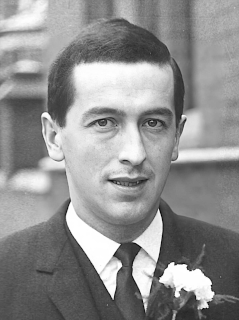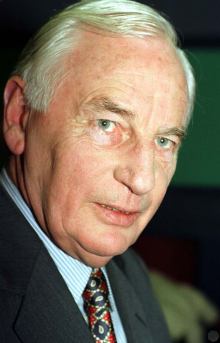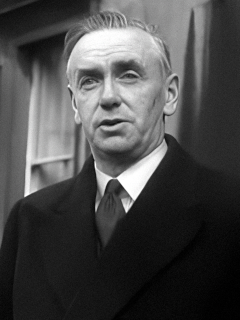
The general election of 1981 is the first one of five during the 1980s. The election also sees three new leaders of the three main parties fight their first general election. Charles Haughey had become Taoiseach and leader of Fianna Fáil at the end of 1979, Garret FitzGerald is the new leader of Fine Gael and Frank Cluskey is leading the Labour Party.
Haughey and Fianna Fáil seem extremely popular with the electorate in early 1981. He is expected to call the election at the time of the Fianna Fáil ardfheis on February 14, but the Stardust fire causes the ardfheis to be postponed, and the Republican hunger strike in the Maze Prison begins in March. By the dissolution in May, much of the earlier optimism in the party has filtered out. The Anti H-Block movement fields abstentionist candidates in solidarity with the hunger strikers, undermining the Republican credentials of Fianna Fáil.
Fianna Fáil’s manifesto promises more spending programmes and Fine Gael puts forward a series of tax-cutting plans.
Fianna Fáil loses seats as a result of sympathy to the Anti H-Block candidates and the attractive tax proposals of Fine Gael. It is the worst performance for Fianna Fáil in twenty years. Meanwhile, Labour Party leader Frank Cluskey loses his seat, necessitating a leadership change with Michael O’Leary succeeding Cluskey. A Fine Gael–Labour Party coalition government comes to power. Fine Gael and the Labour Party form the 17th Government of Ireland, a minority coalition government, with Garret FitzGerald becoming Taoiseach.
(Pictured: Fine Gael’s Garret FitzGerald, who is appointed Taoiseach following the 1981 Irish General Election)
FitzGerald joins Fine Gael, attaching himself to the liberal wing of the party. and in 1969 is elected to Dáil Éireann, the lower house of the Oireachtas, the Irish parliament. He later gives up his university lectureship to become Minister for Foreign Affairs in the coalition government of Liam Cosgrave (1973–1977). When the coalition government is resoundingly defeated in the 1977 Irish general election, Cosgrave yields leadership of Fine Gael to FitzGerald. In his new role as Leader of the Opposition and party leader, he proceeds to modernize and strengthen the party at the grass roots. He briefly loses power in 1982 when political instability triggers two snap elections.
By the time of the 1981 Irish general election, Fine Gael has a party machine that can easily match Fianna Fáil. The party wins 65 seats and forms a minority coalition government with the Labour Party and the support of a number of Independent TDs. FitzGerald is elected Taoiseach on June 30, 1981. To the surprise of many FitzGerald excludes Richie Ryan, Richard Burke and Tom O’Donnell, former Fine Gael stalwarts, from the cabinet.
On May 5, 2011, it is reported that FitzGerald is seriously ill in a Dublin hospital. Newly elected Fine Gael Taoiseach Enda Kenny sends his regards and calls him an “institution.” On May 6 he is put on a ventilator. On May 19, after suffering from pneumonia, he dies at the Mater Private Hospital in Dublin at the age of 85.
In a statement, Irish PresidentMary McAleese hails FitzGerald as “a man steeped in the history of the State who constantly strove to make Ireland a better place for all its people.” Taoiseach Enda Kenny pays homage to “a truly remarkable man who made a truly remarkable contribution to Ireland.” Henry Kissinger, the former United States Secretary of State, who serves as an opposite number to FitzGerald in the 1970s, recalls “an intelligent and amusing man who was dedicated to his country.”
FitzGerald’s death occurs on the third day of Queen Elizabeth II‘s state visit to the Republic of Ireland, an event designed to mark the completion of the Northern Ireland peace process that had been “built on the foundations” of FitzGerald’s Anglo-Irish Agreement with Margaret Thatcher in 1985. In a personal message, the Queen offers her sympathies and says she is “saddened” to learn of FitzGerald’s death.
On his visit to Dublin, United States PresidentBarack Obama offers condolences on FitzGerald’s death. He speaks of him as “someone who believed in the power of education; someone who believed in the potential of youth; most of all, someone who believed in the potential of peace and who lived to see that peace realised.”
FitzGerald is the author of a number of books, including Planning in Ireland (1968), Towards a New Ireland (1972), Unequal Partners (1979), All in a Life: An Autobiography (1991), and Reflections on the Irish State (2003).
In the early 1970s, after the onset of the Troubles, the Provisional IRA launches a campaign aimed at forcing the British to withdraw from Northern Ireland.
The IRA, particularly its South Armagh Brigade, has repeatedly attacked the British Army and RUC with home-made mortars, but with limited success. Between 1973 and early 1978 a total of 71 mortar attacks are recorded, but none cause direct British Army or RUC deaths. There are only two deadly mortar attacks before 1985. The first is on March 19, 1979, when Private Peter Woolmore of the Queen’s Regiment is killed in a mortar attack on Newtownhamilton British Army base. The second is on November 12, 1983, when a RUC officer is killed and several hurt in a mortar attack on Carrickmore RUC base.
The attack is jointly planned by members of the South Armagh Brigade and an IRA unit in Newry. The homemade mortar launcher, dubbed the ‘Mark 10,’ is bolted onto the back of a Fordlorry that had been hijacked in Crossmaglen.
Shortly after 6:30 PM on February 28, nine shells are launched from the lorry, which had been parked on Monaghan Street, about 250 yards from the base. At least one 50-lb. shell lands on a portacabin containing a canteen, where many officers are having their evening tea break. Nine police officers are killed and 37 people are hurt, including 25 civilian police employees, the highest death toll inflicted on the RUC in its history. The nine dead officers range in age from 19 to 41, seven male and two female, seven Protestants and two Catholics. Another shell hits the observation tower, while the rest land inside and outside the perimeter of the base.
The day is dubbed “Bloody Thursday” by the British press. British prime ministerMargaret Thatcher calls the attack “barbaric,” while Ireland’s Taoiseach, Garret FitzGerald, says it is “cruel and cynical,” and pledges the help of the Irish security forces to catch those responsible. Although not involved in the attack, Newry IRA member Eamon Collins is arrested shortly afterwards and interrogated. After five days of questioning, Collins breaks under interrogation and turns supergrass, leading to more than a dozen arrests of other IRA members. The attack prompts calls from unionist politicians to “increase security,” and the British government launches a multi-million pound programme of construction to protect bases from similar attacks. This involves installing reinforced roofs and building blast-deflecting walls around the base of buildings.
After the successful attack in Newry, the IRA carries out a further nine mortar attacks in 1985. On September 4, an RUC training centre in Enniskillen is attacked. Thirty cadets narrowly escape death due to poor intelligence-gathering by the IRA unit responsible. The cadets are expected to be in bed sleeping, but are instead eating breakfast when the bombs land. In November 1986, the IRA launches another attack on the RUC base in Newry, but the bombs fall short of their target and land on houses. A four-year-old Catholic girl is badly wounded and another 38 people are hurt, prompting the IRA to admit that “this incident left us open to justified criticism.”
Beginning in the 1990s, operations at the Corry Square base are progressively shifted to a new facility on the outskirts of Newry. The base is closed in 2002, and a park occupies the site today.
(Pictured: Destroyed cars and remains of the Newry RUC Corry Square police Station in Catherine Street taken the day after the attack by the Provisional IRA using homemade mortar bombs)
Stagg is the seventh child in a family of thirteen children. His father, Henry, and his uncle had both fought in the Irish War of Independence and Irish Civil War. His brother, Emmet Stagg, becomes a Labour Party politician and a Teachta Dála (TD) for Kildare North. He is educated to primary level at Newbrook Primary School and at CBS Ballinrobe to secondary level. After finishing his schooling, he works as an assistant gamekeeper with his uncle prior to emigrating to England in search of work. Once in England, he gains employment as a bus conductor in North London and later becomes a bus driver. While in England he meets and marries fellow Mayo native, Bridie Armstrong from Carnacon in 1970.
In 1972, Stagg joins the Lutoncumann of Sinn Féin and soon after becomes a volunteer in the Provisional Irish Republican Army (IRA).
In April 1973, Stagg is arrested with six others alleged to comprise an IRA unit planning bombing attacks in Coventry. He is tried at BirminghamCrown Court. The jury finds three of the seven not guilty. The remaining four are all found guilty of criminal damage and conspiracy to commit arson. Stagg and English-born priest, Father Patrick Fell, are found to be the unit’s commanding officers. Stagg is given a ten-year sentence and Fell is given twelve years. Thomas Gerald Rush is given seven years and Anthony Roland Lynch, who is also found guilty of possessing articles with intent to destroy property, namely nitric acid, balloons, wax and sodium chlorate, is given ten years.
Following the hunger strike that results in the death of Michael Gaughan, the Price sisters, Feeney and Kelly are granted repatriation to Ireland. Stagg is denied repatriation and is transferred to Long Lartin Prison. During his time there he is subject to solitary confinement for refusing to do prison work and is also subjected, along with his wife and sisters during visits, to humiliating body searches. In protest against this, he begins a second hunger strike that lasts for thirty-four days. This ends when the prison governor agrees to an end of the strip-searches on Stagg and his visitors. He is bed-ridden for the rest of his incarceration in Long Lartin, due to a kidney complaint.
In 1975 Stagg is transferred to Wakefield Prison, where it is demanded that he again do prison work. He refuses and is placed in solitary confinement. On December 14, 1975, he embarks on a hunger strike in Wakefield, along with a number of other republican prisoners, after being refused repatriation to Ireland during the IRA/British truce. His demands are an end to solitary confinement, no prison work and repatriation to prison in Ireland. The British government refuses to meet any of these demands and Stagg dies on February 12, 1976, after 62 days on hunger strike.
Stagg’s burial causes considerable controversy. Republicans and two of his brothers seek to have him buried in the republican plot in Ballina beside the grave of Michael Gaughan, in accordance with his wishes. His widow, his brother Emmet Stagg and the Irish government wish to have him buried in the family plot in the same cemetery and to avoid republican involvement in the funeral.
In order to prevent the body from being disinterred and reburied by republicans, the grave is covered with concrete. Local Gardaí keep an armed guard by the grave for six months. However, unknown to them, the plot beside the grave is available for purchase. Stagg’s brother George purchases the plot and places a headstone over it, with it declaring that the “pro-British Irish government” had stolen Frank’s body. In November 1977, a group of republicans dig down into the plot that George had purchased, then dig sideways and recover Stagg’s coffin from the adjacent plot under cover of darkness, before reburying it in the republican plot beside the body of Michael Gaughan. The Republicans hold their own version of a funeral ceremony before disappearing back into the night.
The IRA swears revenge over Stagg’s death, warning the British public it is going to attack indiscriminately. They explode about 13 bombs throughout England within a month after his death.
Barry is first elected to Dáil Éireann as a Fine Gael Teachta Dála (TD) for the Cork City South-East constituency at the 1969 Irish general election. He goes go on to win a Dáil seat at eight successive general elections, changing constituency to Cork City in 1977 and Cork South-Central in 1981. When Fine Gael comes to power following the 1973 Irish general election, he is appointed Minister for Transport and Power. In 1976, he becomes Minister for Education. In 1979, after Garret FitzGerald becomes leader of Fine Gael, he is elected deputy leader. From June 1981 to March 1982, he serves as Minister for the Environment.
From December 1982 to 1987, Barry is Minister for Foreign Affairs. In this capacity he is heavily involved in the negotiations which result in the 1985 Anglo-Irish Agreement. He also becomes the first joint chairman of the Anglo-Irish Intergovernmental Conference, established under the Agreement by the Irish and British governments. Following the Labour Party‘s withdrawal from the coalition government in 1987, he becomes Tánaiste, for a brief period. He is the first member of Fine Gael to hold the office of Tánaiste.
When FitzGerald resigns as Fine Gael leader after the 1987 Irish general election, Barry is one of three candidates, along with Alan Dukes and John Bruton, who contest the party leadership. Dukes is the eventual victor.
Barry dies in Cork at the age of 88 on August 26, 2016, following a short illness. Irish PresidentMichael D. Higgins says Barry will be deeply missed. “His view of Irish history was a long one and he brought all that wisdom to bear in his contributions to achieving the Anglo-Irish Agreement. As a person he was immensely popular across all parties and, of course, he had a deep commitment to Cork city and its heritage.”
Doherty is the third son in a family of six. He is born on October 16, 1955, in the Andersonstown area of Belfast and is educated at St. Theresa’s Primary School and Glen Road Christian Brothers School (CBS). The Doherty brothers are known cyclists and sportsmen in the Andersontown area. He wins an AntrimGaelic football medal at minor level in 1971.
Doherty joins Fianna Éireann in 1971 and is interned by the British Government between February 1973 and November 1975. His brothers Michael and Terence are interned between 1972 and 1974.
Doherty works as an apprentice heating engineer. His girlfriend is Geraldine Scheiss and, although they never become formally engaged, they become very close toward the end of his life. Before his arrest, she had not known that he is in the IRA.
In August 1976, while he is out to set a bomb, the van in which he is riding is chased by the Royal Ulster Constabulary (RUC). During the chase Doherty manages to leave the van and hijack a car. He later ditches the car and is found one mile away from the car. He is convicted and sentenced to 18 years for possession of firearms and explosives, with another four years for the hijack.
Doherty starts his hunger strike on May 22, 1981. While on hunger strike, he is elected as an Anti H-Block TD for the Cavan–Monaghan constituency at the 1981 Irish general election, which is held on June 11. He receives 9,121 (15.1%) first preference votes and is elected on the fourth count. The two seats gained by Anti H-Block candidates denies TaoiseachCharles Haughey the chance to form a government, and the 22nd Dáil Éireann sees a Fine Gael–Labour Party coalition government come to office, with Garret FitzGerald as Taoiseach.
Doherty dies at the age of 25 on August 2, 1981. He lasts 73 days on hunger strike, the longest of the 1981 hunger strikers, and only one day short of Terence MacSwiney. He is the shortest-serving Dáil deputy ever, serving as a TD for only two months.
The inaugural meeting of Aosdána, an Irish association of artists, takes place in the Old Parliament House in Dublin on April 14, 1983. It is created in 1981 on the initiative of a group of writers with support from the Arts Council of Ireland. Membership, which is by invitation from current members, is limited to 250 individuals, up from 200 prior to 2005. Its governing body is called the Toscaireacht.
At the suggestion of writer Anthony Cronin, who becomes a founding member, Aosdána is originally established in 1981 by TaoiseachCharles Haughey, well known for his support for the Arts, although columnist Fintan O’Toole has argued that this also serves to deflect criticism of Haughey’s political actions. Haughey’s successor, Garret FitzGerald, formally addresses the inaugural assembly of Aosdána in Dublin.
The process of induction into Aosdána relies entirely on members proposing new members. Applications by artists themselves are not allowed. Some members receive a stipend, called the Cnuas, from the Arts Council of Ireland. This stipend is intended to allow recipients to work full-time at their art. The value of the Cnuas in 2015 is €17,180.
The poet Pearse Hutchinson, a member of Aosdána, describes the organisation as “a miracle and a godsend” that allows him to continue writing at a time when he might have had to give up. Composer Roger Doyle has also spoken about the difference it makes, “I was elected to Aosdána in 1986. This gave me a small stipend from the Government each year, which enabled me to devote all my time to composing. This changed my life for the better and I have composed non-stop since then.”
The Toscaireacht is a committee of ten members, called Toscairí, of the Aosdána. It meets several times a year to deal with the administration and external relations of Aosdána, reports to every General Assembly, which meets once a year, and sets its Agenda. When new members of Aosdána are proposed, the Toscairí have the task of verifying that the nomination process has been complied with, and also that the candidate is willing to accept membership, before the next stage of election is begun.
Toscairí are elected to the Toscaireacht by the members of Aosdána for two year terms. All members of Aosdána are eligible for election, and nominations must be made in writing by three members. The electoral process is in two stages. First, within each of Aosdána’s three disciplines (Music, Literature, and Visual Arts), the two nominees with the highest number of votes are elected. This guarantees a minimum of two Toscairí from each of the disciplines. Next, the remaining four places are filled by the remaining nominees from any discipline who have the highest number of votes.
The procedure at meetings is laid down in the Toscaireacht’s Standing Orders. Minutes of its meetings appear on Aosdána’s web site (aosdana.artscouncil.ie).
The general election of 1987 is precipitated by the withdrawal of the Labour Party from the Fine Gael-led government on January 20, 1987. The reason is a disagreement over budget proposals. Rather than attempt to press on with the government’s agenda, the Taoiseach and leader of Fine Gael, Garret FitzGerald, decides to dissolve the Dáil. An unusually long period of four weeks is set for the campaign. It is hoped that the electorate will warm to Fine Gael’s budget proposals during the campaign.
Fianna Fáil‘s campaign involves a refusal to make any definite commitments. However, it attempts to convince the electorate that the country will be better under Fianna Fáil. Charles Haughey‘s attitudes toward Northern Ireland and the Anglo-Irish Agreement are both attacked. However, the campaign is mostly fought on economic issues.
The Labour Party decides against any pre-election pact, particularly with Fine Gael. The Progressive Democrats (PD), founded only two years earlier, surpass Labour as the third-biggest political party in the Dáil. Although the majority of the PD party consists of Fianna Fáil defectors, it mainly takes seats from Fine Gael. The Labour Party fails to make any impact with its leader, Dick Spring, almost losing his seat.
In spite of the opinion polls suggesting otherwise, Fianna Fáil once again fails to win an overall majority. However, it is able to form a minority government and Charles Haughey is back for his third and final term as Taoiseach. The Fianna Fáil government of 1987 to 1989 is the last time to date that a government composed only of members of one party has been formed in Ireland.
The newly elected 166 members of the 25th Dáil assemble at Leinster House on March 10, 1987, when a new Taoiseach and a Fianna Fáil minority government are appointed.
In 1956, Whitaker is appointed Secretary of the Department of Finance. His appointment takes place at a time when Ireland’s economy is in deep depression. Economic growth is non-existent, inflation apparently insoluble, unemployment rife, living standards low and emigration at a figure not far below the birth rate. He believes that free trade, with increased competition and the end of protectionism, will become inevitable and that jobs will have to be created by a shift from agriculture to industry and services. He forms a team of officials within the department which produces a detailed study of the economy, culminating in a plan recommending policies for improvement. The plan is accepted by the government and is transformed into a white paper which becomes known as the First Programme for Economic Expansion. Quite unusually this is published with his name attached in November 1958. The programme which becomes known as the “Grey Book” brings the stimulus of foreign investment into the Irish economy. Before devoting himself to poetry, Thomas Kinsella is Whitaker’s private secretary.
In 1977, TaoiseachJack Lynch nominates Whitaker as a member of the 14th Seanad Éireann. He serves as a Senator from 1977–81, where he sits as an independent Senator.
In 1981, Whitaker is nominated to the 15th Seanad Éireann by Taoiseach Garret FitzGerald, where he serves until 1982. FitzGerald also appoints him to chair a Committee of Inquiry into the Irish penal system, and he chairs a Parole Board or Sentence Review Group for several years.
Whitaker also serves as Chancellor of the National University of Ireland from 1976 to 1996. He is also President of the Royal Irish Academy and as such, a member of the Board of Governors and Guardians of the National Gallery of Ireland, from 1985 to 1987. He has a very strong love for the Irish language throughout his career and the collection of Irish poetry, An Duanaire: Poems of the Dispossessed 1600–1900, edited by Seán Ó Tuama and Thomas Kinsella, is dedicated to Whitaker. From 1995–96 he chairs the Constitution Review Group, an independent expert group established by the government, which publishes its report in July 1996.
Whitaker receives many national and international honours and tributes for his achievements during his lifetime, most notably the conferral of “Irishman of the 20th Century” in 2001 and Greatest Living Irish Person in 2002. In November 2014, the Institute of Banking confers an Honorary Fellowship on Whitaker and creates an annual T.K. Whitaker Scholarship in his name. In April 2015, he is presented with a lifetime achievement award by University College Dublin’s Economics Society for his outstanding contribution to Ireland’s economic policy.
In November 2016, to mark his centenary year, Dún Laoghaire-Rathdown County Council acknowledges Whitaker’s “outstanding and progressive contribution to Irish public service and to society.” The Cathaoirleach of Dún Laoghaire Rathdown, Cormac Devlin, presents a special award to Whitaker which is accepted by Ken Whitaker on behalf of his father.
Garret FitzGerald succeeds Charles Haughey to become the eighth Taoiseach of Ireland on June 30, 1981. He serves in the position from June 1981 to March 1982 and December 1982 to March 1987.
FitzGerald joins Fine Gael, attaching himself to the liberal wing of the party. and in 1969 is elected to Dáil Éireann, the lower house of the Oireachtas, the Irish parliament. He later gives up his university lectureship to become Minister for Foreign Affairs in the coalition government of Liam Cosgrave (1973–1977). When the coalition government is resoundingly defeated in the 1977 Irish general election, Cosgrave yields leadership of Fine Gael to FitzGerald. In his new role as Leader of the Opposition and party leader, he proceeds to modernize and strengthen the party at the grass roots. He briefly loses power in 1982 when political instability triggers two snap elections.
By the time of the 1981 Irish general election, Fine Gael has a party machine that can easily match Fianna Fáil. The party wins 65 seats and forms a minority coalition government with the Labour Party and the support of a number of Independent TDs. FitzGerald is elected Taoiseach on June 30, 1981. To the surprise of many FitzGerald excluded Richie Ryan, Richard Burke and Tom O’Donnell, former Fine Gael stalwarts, from the cabinet.
On May 5, 2011, it is reported that FitzGerald is seriously ill in a Dublin hospital. Newly elected Fine Gael Taoiseach Enda Kenny sends his regards and calls him an “institution.” On May 6 he is put on a ventilator. On May 19, after suffering from pneumonia, he dies at the Mater Private Hospital in Dublin at the age of 85.
In a statement, Irish PresidentMary McAleese hails FitzGerald as “a man steeped in the history of the State who constantly strove to make Ireland a better place for all its people.” Taoiseach Enda Kenny pays homage to “a truly remarkable man who made a truly remarkable contribution to Ireland.” Henry Kissinger, the former United States Secretary of State, who serves as an opposite number to FitzGerald in the 1970s, recalls “an intelligent and amusing man who was dedicated to his country.”
FitzGerald’s death occurs on the third day of Queen Elizabeth II‘s state visit to the Republic of Ireland, an event designed to mark the completion of the Northern Ireland peace process that had been “built on the foundations” of FitzGerald’s Anglo-Irish Agreement with Margaret Thatcher in 1985. In a personal message, the Queen offers her sympathies and says she is “saddened” to learn of FitzGerald’s death.
On his visit to Dublin, United States PresidentBarack Obama offers condolences on FitzGerald’s death. He speaks of him as “someone who believed in the power of education; someone who believed in the potential of youth; most of all, someone who believed in the potential of peace and who lived to see that peace realised.”
FitzGerald is the author of a number of books, including Planning in Ireland (1968), Towards a New Ireland (1972), Unequal Partners (1979), All in a Life: An Autobiography (1991), and Reflections on the Irish State (2003).