seamus dubhghaill

Promoting Irish Culture and History from Little Rock, Arkansas, USA


Leave a comment

The Establishment of the Irish Legion

The Irish Legion, a light infantry regiment in service of the French Imperial Army for an anticipated invasion of Ireland, is established on August 31, 1803, in Morlaix, France. Bernard MacSheehy, an Adjutant-General in Napoleon‘s army, is assigned to form the regiment. Later expanded to four battalions and a depot, the legion wins distinction in the Walcheren Expedition, the Peninsular War, and the German Campaign of 1813. Following the disbandment of the foreign regiments in 1815, the regiment’s personnel are distributed.

The first officers include members of the Society of United Irishmen who had fled to France in 1797. It also includes Irishmen who had been taken during the Irish Rebellion of 1798 who were freed during the short peace effected by the Treaty of Amiens on condition of exile, and who had sailed for France in June 1802. The treaty breaks down in May 1803 with the start of the War of the Third Coalition. As a part of Napoleon’s planned invasion of the United Kingdom in 1803–05, the Irish Legion is to provide the indigenous core for a much larger invasion force of 20,000 earmarked to take Ireland, known as the Corps d’Irlande.

The purpose of the Legion is to align the Irish hearts to the French cause in the imminent invasion of Ireland. General Charles-Pierre Augereau is ordained to lead the invasion and wants Irishmen to serve in his army. However, the Battle of Cape Finisterre and the Battle of Trafalgar in 1805 make a safe sea crossing uncertain at best, and Napoleon is forced to abandon his plans for Ireland. He shifts his focus towards Austria and Eastern Europe and launches the Austerlitz campaign in late 1805. The legion remains on the French coast on garrison duty and coastal defence.

The Legion is eventually expanded from a battalion to a regiment and there is greater demand for more soldiers. These make a varied group; some are former United Irishmen who were taken prisoner in 1798-99 and then freed during the peace that followed the Treaty of Amiens (1802–03), some had been impressed into the Royal Navy and deserted, and some were German or Polish. While the Legion is stationed at the Fortress of Mainz in 1806, they are joined by 1,500 Poles and many Irishmen who were sent in 1799 to serve the King of Prussia. Its headquarters is at ‘s-Hertogenbosch, known to the French as Bois-le-Duc, in what is then the Kingdom of Holland.

The Irish Legion has its own flag, and in December 1805 receives an eagle. The Legion is the only group of foreign soldiers in the French military to whom Napoleon ever gives an eagle. Wearing a green uniform, its maximum size is about 2,000 men.

The regiment is greatly assisted from 1807 by Napoleon’s war minister Marshal of France Henri Clarke, who was born in France to Irish parents and whose family had close links to the ancien regime Irish brigade that had served the kings of France. He and his father had served in Dillon’s Regiment, and his mother’s father and several uncles served in Clare’s Regiment. In August 1811, the Legion is renamed the 3e Regiment Etranger (Irlandais) (3rd Foreign Regiment (Irish)), but throughout the unit’s history it is always referred to as the Irish Regiment.

The regiment divides in loyalty during the “Hundred Days,” and is officially disbanded by King Louis XVIII on September 28, 1815. Its flags are burned and its eagle, like many, disappears.

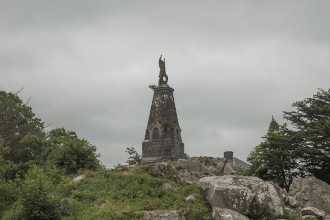
(Pictured: Regimental Colours of the Irish Legion (Obverse))


Leave a comment

Birth of John FitzGibbon, 1st Earl of Clare, Lord Chancellor of Ireland

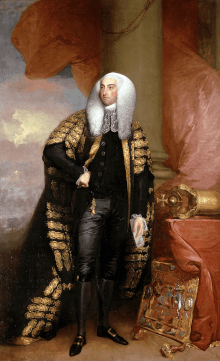
John FitzGibbon, 1st Earl of Clare PC (Ire), Attorney-General for Ireland from 1783 to 1789 and Lord Chancellor of Ireland from 1789 to 1802, is born near Donnybrook, Dublin, on August 23, 1749. He remains a deeply controversial figure in Irish history, being described variously as an old-fashioned anti-Catholic Whig political party hardliner and an early advocate of the Act of Union between Ireland and Great Britain (which finally happens in 1801, shortly before his death).

FitzGibbon is the son of John FitzGibbon of Ballysheedy, County Limerick, and his wife Isabella Grove, daughter of John Grove, of Ballyhimmock, County Cork. His father is born a Catholic but converts to the state religion in order to become a lawyer and amasses a large fortune. He has three sisters, Arabella, Elizabeth, and Eleanor. He is educated at Trinity College Dublin (TCD) and Christ Church, Oxford. He enters the Irish House of Commons in 1778 as Member for Dublin University, and holds this seat until 1783, when he is appointed Attorney General. From the same year, he represents Kilmallock until 1790. He is appointed High Sheriff of County Limerick for 1782.

When appointed Lord Chancellor of Ireland in 1789, FitzGibbon is granted his first peerage as Baron FitzGibbon, of Lower Connello in the County of Limerick, in the Peerage of Ireland that year. This does not entitle him to a seat in the British House of Lords, only in the Irish House of Lords. His later promotions come mostly in the Peerage of Ireland, being advanced to a Viscountcy in 1793 and the Earldom of Clare in 1795. He finally achieves a seat in the British House of Lords in 1799 when created Baron FitzGibbon, of Sidbury in the County of Devon, in the Peerage of Great Britain.

As Lord Chancellor for Ireland, FitzGibbon is a renowned champion of the Protestant Ascendancy and an opponent of Catholic emancipation. He despises the Parliament of Ireland‘s popular independent Constitution of 1782. He is also personally and politically opposed to the Irish politician Henry Grattan who urges a moderate course in the Irish Parliament and is responsible for defeating Grattan’s efforts to reform the Irish land tithe system under which Irish Catholic farmers (and all non-Anglican farmers) are forced to financially support the minority Anglican Church of Ireland. These are not fully repealed until 1869 when the Church of Ireland is finally disestablished, although Irish tithes are commuted after the Tithe War (1831–1836).

FitzGibbon opposes the Irish Roman Catholic Relief Act 1793 personally but apparently recommends its acceptance in the House of Lords, being forced out of necessity when that Act had been recommended to the Irish Executive by the British Cabinet led by William Pitt the Younger. Pitt expects Ireland to follow the British Roman Catholic Relief Act 1791 and allow Catholics to vote again and hold public offices. At the same time, FitzGibbon apparently denounces the policy this Act embodies, so it is probably safe to say that FitzGibbon’s own beliefs and principles conflict with his obligations as a member of the Irish executive of the time.

FitzGibbon’s role in the recall, soon after his arrival, of the popular pro-Emancipation Lord Lieutenant of Ireland, William Fitzwilliam, 4th Earl of Fitzwilliam, is debatable. Although he is probably politically opposed to the Lord Lieutenant of Ireland, Fitzwilliam is apparently recalled, because of his own independent actions. Fitzwilliam is known to be friendly to the Ponsonby family and is generally a Foxite liberal Whig. His close association with and patronage of Irish Whigs led by Grattan and Ponsonby during his short tenure, along with his alleged support of an immediate effort to secure Catholic emancipation in a manner not authorized by the British cabinet is likely what leads to his recall. Thus, if anyone is to blame in the short-lived “Fitzwilliam episode” it is Henry Grattan and the Ponsonby brothers – presumably William Ponsonby, later Lord Imokilly, and his brother George Ponsonby — not to mention Lord Fitzwilliam himself. Irish Catholics at the time and later naturally see things very differently and blame hardline Protestants such as FitzGibbon.

Irish Catholics and FitzGibbon apparently agree on one point – Irish political and economic union with Great Britain, which eventually takes place in 1801. Pitt wants Union with Ireland concomitantly with Catholic emancipation, commutation of tithes, and the endowment of the Irish Catholic priesthood. Union is opposed by most hardline Irish Protestants, as well as liberals such as Grattan. FitzGibbon is a strong supporter of the Union since 1793 but refuses to have Catholic emancipation with the Union.

In the end, FitzGibbon’s views wins out, leading to the Union of Ireland with Great Britain to form the United Kingdom of Great Britain and Ireland without any concessions for Ireland’s Catholic majority, or for that matter, Catholics in the rest of the new United Kingdom. He later claims that he has been duped by the way in which the Act is passed and is bitterly opposed to any concessions during the short remainder of his life.

FitzGibbon’s role as Lord Chancellor of Ireland during the period of the 1798 rebellion is questionable. According to some, he supports a hardline policy which uses torture, murder and massacre to crush the rebellion, or that as Lord Chancellor, he has considerable influence on military affairs, and that martial law cannot be imposed without his consent. Others allege that as Lord Chancellor, he has no say in military affairs. His former side is displayed by sparing the lives of the captured United Irish leaders in return for their confession of complicity and provision of information relating to the planning of the rebellion. However, this willingness of the prisoners to partake of the agreement is spurred by the execution of the Sheares brothers on July 14, 1798.

In contrast to the leniency shown to the largely upper-class leadership, the full weight of military repression is inflicted upon the common people throughout the years 1797–98 with untold thousands suffering imprisonment, torture, transportation and death. Fitzgibbon ss inclined to show no mercy to unrepentant rebels and in October 1798 he expressed his disgust upon the capture of Wolfe Tone that he had been granted a trial and his belief that Tone should have been hanged as soon as he set foot on land.

FitzGibbon is quick to recognise that sectarianism is a useful ally to divide the rebels and prevent the United Irishmen from achieving their goal of uniting Protestant, Catholic and Dissenter, writing in June 1798, “In the North nothing will keep the rebels quiet but the conviction that where treason has broken out the rebellion is merely popish.”

FitzGibbon is noted by some as a good, improving landlord to both his Protestant and Catholic tenants. Some claim that the tenants of his Mountshannon estate call him “Black Jack” FitzGibbon. However, there is no evidence to support this claim, although there is little to no evidence on his dealings as a landlord. Irish nationalists and others point out that while he might have been interested in the welfare of his own tenants on his own estate, he treats other Irish Catholics very differently. Without further evidence, his role as a Protestant landowner in mainly Catholic Ireland is of little importance against his known dealings as Lord Chancellor.

FitzGibbon dies at his home, 6 Ely Place near St. Stephen’s Green, Dublin, on January 28, 1802, and is buried in the churchyard at St. Peter’s Church, Aungier Street, Dublin. A hero to Protestant hardliners, but despised by the majority Catholic population, his funeral cortege is the cause of a riot and there is a widespread story that a number of dead cats are thrown at his coffin as it departs Ely Place.

(Pictured: “Portrait of John FitzGibbon, 1st Earl of Clare,” painting by Gilbert Stuart, 1789)


Leave a comment

Birth of William Corbet, Anglo-Irish Soldier

William Corbet, an Anglo-Irish soldier in the service of France, is born in Ballythomas, County Cork, on August 17, 1779. In September 1798, he accompanies James Napper Tandy in an aborted French mission to Ireland in support of the United Irish insurrection. After two years of incarceration, he escapes from Ireland and serves in the campaigns of Napoleon reaching the rank of colonel. In 1831, under the July Monarchy, he is employed in the Morea expedition to Greece. He returns to France in 1837, retiring with the rank of Major-General.

Corbet is born into a branch of the Corbet family, an Anglo-Irish Protestant family. In 1798, as a member of the Society of United Irishmen, he is expelled from Trinity College Dublin with Robert Emmet and others for treasonable activities and goes instead to Paris. In September of the same year, he joins a French military force under James Napper Tandy with the rank of Captain and sails from Dunkirk with arms and ammunition for Ireland. The expedition has to turn back following the defeat of General Jean Joseph Amable Humbert and arriving in Hamburg they are handed over to the British authorities and taken to Ireland, where they are imprisoned in Kilmainham Gaol.

Corbet escapes in 1803 and returns to France. He is appointed professor of English at the military college of Saint-Cyr. Later that year he becomes a captain in the Irish Legion. Following the death of his brother Thomas (who was also in the Legion) in a duel with another officer, he is transferred to the 70th Regiment of the line, where he serves in André Masséna‘s expedition to Portugal, and distinguishes himself in the retreat from Torres Vedras and the Battle of Sabugal. After the Battle of Salamanca, he is appointed chef de bataillon of the 47th regiment and serves until 1813 when he is summoned to Germany to join the staff of Marshal Auguste de Marmont. He serves at the battles of Lützen, Bautzen, Dresden and others and is made a commander of the Legion of Honour. In December 1814, he is naturalised as a French citizen. In 1815, after the abdication of Napoleon, he is promoted to colonel and chief of staff to General Louis-Marie-Celeste d’Aumont at Caen.

In the period of the Bourbon Restoration in France, Corbet’s friendship with the opposition leader, General Maximilien Sébastien Foy, places him under some suspicion, but in 1828 he is selected by Marshal Nicolas Joseph Maison to accompany him on an expedition against Ibrahim Pasha in Morea, Greece. After serving as governor of Navarino, Messenia, and Nafplio, he relieves Argos from the attack of Theodoros Kolocotronis, who is then acting in the interest of Russia and Count Ioannis Kapodistrias, and defeats him.

In 1837, Corbet returns to France where, with the rank of Major-General, he is commander in the region of Calvados. He dies at Saint-Denis on August 12, 1842.

The Irish novelist Maria Edgeworth bases the main theme of her novel Ormond on Corbet’s 1803 escape from Kilmainham Gaol.


Leave a comment

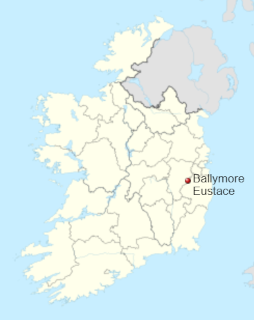
The Battle of Ballymore-Eustace

The Battle of Ballymore-Eustace is one of the events in the United Irish rebellion of 1798. It takes place on May 24, 1798, after the stationing of the 9th Dragoons, and members of the Tyrone, Antrim and Armagh Militias at Ballymore-Eustace in County Kildare near the border with County Wicklow on May 10. The town has been recently garrisoned by almost 200 soldiers and militia who have been sent to repress sedition in the area. The troops have been dispersed in billets among the populace as per counter-insurgency practice of “free-quarters” where responsibility for the provisioning and sheltering of militia is foisted onto the populace. During this time a quantity of arms are surrendered and letters of protection issued.

On May 23, one hundred twenty soldiers are recalled, leaving a garrison of around 80 men. At around 1:00 a.m. on May 24, the rebel force of approximately 200 attack the town. As in the attacks on Naas and Prosperous, the rebels seek to surprise and overwhelm the garrison by coordinated attacks before it can react and rally against them. The houses containing troops of the 9th Dragoons and the Tyrone Militia are to be attacked simultaneously.

However, the attack on garrison headquarters is miscarried due to lack of coordination and numbers so that the building becomes a rallying point for the Government troops. Captain Beevor is attacked in his own bedchamber by two rebels. Lieutenant Parkinson and some dragoons come to his aid and both rebels are slain. Other isolated billets are attacked but some units manage to cut themselves free and fight their way through the streets to the headquarters. A number of properties, including the Protestant church, are set on fire.

For two hours, the rebels attack the strongpoint but, without artillery, are unable to take the building and lose many men in the process. The momentum has by now slipped away from the rebels and they draw off their attack leaving behind around 50 dead but at a cost to the garrison of at least 12 dead and 5 wounded.

The battle leads directly to the Dunlavin Green executions, in which fears of a possible rebel attack on the garrison at nearby Dunlavin lead to the summary execution of rebel prisoners.


Leave a comment

Death of James Orr, Weaver, Radical & Poet

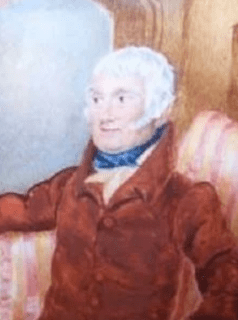
James Orr, weaver, radical, and poet, dies on April 24, 1816.

Orr is the son of James Orr, who farms a few acres and is a linen weaver. His mother’s name is unknown. They live in the small village of Ballycarry, in the parish of Broadisland, County Antrim. He is an only child, born when his parents are middle-aged. They are unwilling to risk sending him to school, so they carefully educate him at home, his father having been very well educated. A near-contemporary source George Pepper (1829), claims that the youngster is something of a prodigy, able to read Spectator essays at the age of six. Later in life, partly thanks to membership of a local reading society, he is remarkably well read. Handloom weavers are reputedly one of the most literate and politically radical groups in the period, and he certainly fits the stereotype. Pepper also claims that William Orr is James Orr’s uncle, and that the younger man lives for three years with William Orr and his family, where his literary talents are nurtured and where he develops an interest in radical politics. Other sources do not support this account, but if there is a relationship it might explain an almost morbid interest in assizes, executions, and gallows, evident in several poems. This also might have been prompted by witnessing William Orr’s trial and execution.

Pepper “heard from good authority” that Orr in 1797 is secretary to the Antrim Association, of which William Orr is president; presumably this means the Society of United Irishmen. He sings a patriotic song called “The Irishman,” one of his most celebrated compositions, at a meeting of that body. The earliest publications traced are poems published pseudonymously (1796–97) in the Northern Star newspaper. This paper, edited by Samuel Neilson, is sympathetic to United Irish views, and it is clear that Orr, like many of his neighbours, is actively involved in the 1798 rebellion. Several poems dealing with the events of June 1798, provide a rare participant’s perspective. He takes part in the skirmish at Donegore, and flees after the defeat at the Battle of Antrim. Local sources record his successful efforts to prevent cruelty and looting by his colleagues. He goes into hiding in an Irish-speaking area, perhaps in the Glens of Antrim or in the Sperrin Mountains. After a short time, he escapes to the United States, but unlike many of his former comrades he finds himself unable to settle there, and very soon returns home to Ballycarry, and thenceforth makes his living as a weaver. In 1800, he seeks to join the militia set up to counter a feared Napoleonic invasion, but the local gentry in command rejects his application because of his United Irish associations.

Orr’s first verses are composed at meetings of a local singing school, where rival versifiers produce impromptu verses for the company to sing to the psalm tunes being practised, and he later writes songs for masonic meetings. He publishes poems in the Belfast newspapers. A few carefully written essays on morality and education, signed “Censor, Ballycarry,” are apparently also his work. A collection of poems is published in 1804, with almost 400 subscribers, and another selection is published in 1817 after his death by his friend Archibald McDowell. Orr had requested that the proceeds should go to help the poor of Ballycarry. His poems are an excellent source of information about the life and concerns of a fairly humble stratum of late eighteenth-century Ulster society.

Many of Orr’s best poems deal with subjects of interest to his community – weaving, social life, and farming – and are written in the Scots language still widely spoken in the area. He expertly uses Scots stanza forms, and joyously participates in the almost competitive composition of verse typical of the Scots tradition. Several of his poems rework themes found in Robert Burns or other earlier writers. His An Irish Cottier’s Death and Burial is derived from a Burns poem, The Cottier’s Saturday Night, but later critics acknowledge that the Orr poem is much more successful. He and his friend Samuel Thomson are pioneers in the use of written Scots in Ulster and are regarded as the two most skillful Scots poets in Ulster. Both are celebrated in their day, and their work in Scots has been rediscovered in the twentieth-century revival of interest in the traditional literature and history of the north of Ireland.

Orr’s verse in standard English is equally competent, even more ambitious and almost as interesting. The best of his work, particularly in Scots, is characterised by pleasing cadences and assured control of tone and technique. His novel and generally impressive experiments with soliloquies, verse epistles, and versified direct speech, in English and Scots, parallel his interest in extending the registers in which he could use the vernacular Scots language. He seems not to have known of William Wordsworth‘s poetry, but, apparently independently and arguably more successfully, produces verse written in “the language really used by men” (Wordsworth, preface to Lyrical Ballads (1798)). As well as fascinating foreshadowings of romanticism, his work more often reveals the influence of the enlightenment and of New Light presbyterianism. He is a member of the congregation of the Rev. John Bankhead, whose theological views are decidedly liberal, tending even towards unitarianism. His poems provide a great deal of evidence on his reading, interests, radical aspirations and convictions; and in them and in the prose essays, the reader encounters a humane and generous personality. Like many other United Irishmen, he is an enthusiastic freemason, and believes that freemasonry and education will help to usher in a peaceful millennium. His poetry reveals humanitarian concerns, not yet common in the period. He opposess slavery and cruelty to animals and children and expresses support for a contemporary popular rising in Haiti. In 1812, he signs a petition in favour of Catholic emancipation.

Orr never marries. His friend McDowell believes that the resulting lack of domestic comforts drives the poet to socialise in taverns, and it is said that local fame and popularity encourages his excessive drinking. He suffers from ill health in later life. A neglected cold in 1815 leads to tuberculosis. He dies on April 24, 1816, and is buried in the old Templecorran graveyard at Ballycarry. Some years later, freemasons erect an impressive monument over the grave.

Orr’s poems are republished by a group of local enthusiasts in 1935. Another selection appears in 1992. A plaque put up by the local district council commemorates “the bard of Ballycarry,” probably the most significant eighteenth-century English-language poet in Ulster.

(From: “Orr, James” by Linde Lunney, Dictionary of Irish Biography, http://www.dib.ie, October 2009)

Leave a comment

Birth of Thomas Reynolds, United Irishman and Informant

Thomas Reynolds, United Irishman, informant, consul and heir to a fortune, is born at his father’s house, 9 West Park Street, Dublin, on March 12, 1771.

Reynolds’s family history is well documented. His great-great-grandfather was Connor Reynolds of Rhynn Castle, County Leitrim, who married the daughter of Sir Robert Nugent, by whom he leaves three sons, Conor, George Nugent and Thomas. The second of these renounces his family’s Catholicism and becomes a Protestant in order to obtain possession of the greater part of the family estates and was grandfather of the George Nugent Reynolds who was killed in a duel in 1786. The third son, Thomas, a successful wool-stapler in Dublin, married Margaret Lacy, the sister of the famous Austrian general, Franz Moritz von Lacy, and by her had three sons and one daughter. Thomas’s eldest son, James, inherited his business and was one of the seven Catholics who in 1757 met at the Globe coffee-house, Essex Street, to form a committee to request the removal of legal disabilities imposed on Catholics. Thomas’s second son, also Thomas, a manufacturer of woolen poplins, had three daughters, whose marriages connected him with several distinguished Catholic families, and an only son, Andrew, father of the main subject of this article. Andrew Reynolds, admitted into partnership with his father, later developed a new poplin “by having the warp of silk and the weft, or shoot, of worsted.” These poplins came to be “prized in foreign countries as Irish tabinets.” He had an annual turnover of £100,000 to £150,000 and eventually made profits of £15,000 to £20,000 a year. On April 20, 1767, Andrew Reynolds married as his second wife, a second-cousin, Rose Fitzgerald, eldest daughter of Thomas Fitzgerald of Kilmead, County Kildare, a distant kinsman and substantial creditor of the Duke of Leinster, and his wife Rose, daughter of Francis Lacy of Inns Quay, Dublin. By Rose he had two sons and twelve daughters.

Until the age of eight, Reynolds, the future United Irishman and the only son to survive to adulthood, lives at the seat of his maternal grandfather in the care of a Catholic priest, William Plunkett. He is then moved to the school of a Protestant clergyman named Crawford at Chiswick near London and by the age of twelve he spends all vacations in the house of Sir Joshua Reynolds, who appears to take pleasure in teaching him the first principles of drawing. From Chiswick, he moves to Liège in 1783 to be educated by Catholics priests, former Jesuits, returning to Ireland shortly before his father’s death, at the age of 44, on May 8, 1788.

After 1784, the introduction of cottons to Ireland spoiled Andrew Reynolds’s trade. Loans to his nephews, the O’Reilly brothers (Thomas, Patrick and Andrew), iron-smelters at Arigna, County Roscommon, worsen his losses, which reach £200,000 at the time of his death. Lodging with his mother in Dublin, 17-year-old Reynolds mixes with “dissipated idlers” such as Simon Butler and Valentine Lawless. He revisits the Continent and is in Paris in July 1789 when the Bastille is stormed. At the behest of his mother, he becomes a member of the Catholic Committee in succession to his father on February 9, 1791, and attends the Catholic Convention as a delegate of the Dublin parish of St. Nicholas Without in December 1792. He chooses not to enter his late father’s business, preferring, despite his small income, the carefree life of a gentleman, doing the rounds of his well-to-do country relations. On March 25, 1794, he marries Harriet Witherington, fourth daughter of William Witherington, a Dublin woolen merchant, and a younger sister of Matilda Tone. His mother thereupon assigns to him half of the capital in the family business – now carried on by a relation, Thomas Warren, formerly clerk to Andrew Reynolds – and one third of the profits. He has other property as well and expectations of more, including a life-interest in an estate in Jamaica and the promise from the Duke of Leinster of the reversion of Kilkea Castle in County Kildare. A poor manager, Warren is forced out and later testifies against him in a judicial process. He still has £18,500 in assets and in 1797 obtains possession of Kilkea Castle and winds up his business affairs.

On the eve of the rebellion of 1798, Reynolds is a gentleman “of ample fortune and of the first connexions in the country.” In January or February 1797, he is drawn into the United Irish organisation by Peter Sullivan, a confidential clerk in the Reynolds family business, who refers him to Richard Dillon, a Catholic linen-draper, and to Oliver Bond, in whose house in Bridge Street he is sworn in, believing, according to his son, that the sole objects of the organisation are Catholic emancipation and the reform of parliament. Soon he is attending meetings of a baronial committee, but only after meeting Lord Edward FitzGerald in November 1797 achieves a position of importance, that of County Kildare treasurer and membership of the Leinster provincial committee. After being informed of a plan for an insurrection and for the assassination of approximately eighty individuals, some of them his own relations, and knowing the provincial committee is to meet on March 12 at the house of Oliver Bond to decide finally on a general rising, he communicates the United Irishmen’s plan to Dublin Castle through William Cope, a merchant. Those present at Bond’s house are arrested and so the plan is spoiled. He resigns as county treasurer on March 18, to be replaced by John Esmonde. Known to the United Irish leadership as an informant and in danger of his life – at least two unsuccessful attempts on his life are made – but known to Dublin Castle only as an influential United Irishman, he suffers the ransacking of his house at Kilkea on April 20 by dragoons and militia, who believe FitzGerald is concealed there. Finally, he is arrested and is to face a court-martial at Athy but, his true identity being disclosed to Dublin Castle by Cope, he is delivered to a grateful Irish privy council on May 5.

During the rebellion, Kilkea Castle, which had been renovated by Reynolds in 1797 at an expense of over £2,500 and contains priceless paintings, is garrisoned by troops and attacked by insurgents, rendering it uninhabitable for many years. It is refitted in the late 1830s. He is the principal prosecution witness in the trials of John McCann, William Michael Byrne and Bond. There being few other grounds of defence, the defence counsel, John Philpot Curran, seeks to impeach his character and motives, which, with adverse remarks by Thomas Moore in his Life and Death of Lord Edward Fitzgerald (1831) and a hostile obituary in The Morning Chronicle, gives rise after his death to a two-volume apologia by his son, Thomas, based on family papers and a remarkably detailed source for the history of the Reynolds family. For his action in coming forward at a critical period to save Ireland from the wicked plans of the conspirators, he is honoured by Dublin Corporation with the Freedom of the City on October 19, 1798.

His life threatened, Reynolds resides for some months in Leinster Street, Dublin, then moves with his family to Britain, spending some time in Monmouthshire before settling in London in 1803. In 1810, he is appointed British postmaster-general in Lisbon, an onerous but lucrative appointment owing to the Peninsular War. In September 1814 he returns to England. In July 1817, favoured by Lord Castlereagh, he goes to Copenhagen as consul to Iceland. He has to visit that remote island part of the kingdom of Denmark only once (June–August 1818) and in January 1820 finally leaves Copenhagen leaving his younger son, Thomas, in charge of consular affairs. With his wife and daughters, he settles in Paris. There in 1825, his elder son, Andrew Fitzgerald, fights a duel with Thomas Warren, a French army officer and son of Thomas Warren who had been Reynolds’s clerk, and is later a United Irishman. In 1831, he undergoes a religious experience and embraces evangelical Protestantism.

Reynolds dies in Paris on August 18, 1836, and is buried in a vault in the churchyard at Welton, near Brough, East Riding of Yorkshire.

(From: “Reynolds, Thomas” by C. J. Woods, Dictionary of Irish Biography, http://www.dib.ie, October 2009)


Leave a comment

Birth of John Claudius Beresford, Tory MP and Lord Mayor of Dublin

John Claudius Beresford, Irish Tory Member of the UK Parliament representing Dublin City (1801–04) and County Waterford (1806–11), is born on October 23, 1766. He also serves as Lord Mayor of Dublin (1814-15).

Beresford is educated at Trinity College, Dublin. From 1783, he serves as a storekeeper for the port of Dublin. He is subsequently appointed to a wealthy sinecure post of Inspector-General of Exports and Imports. He is returned by his father, Hon. John Beresford, for the family borough of Swords to the Irish House of Commons in 1790. In 1798 he is returned for Dublin City, helped by his position in the port, and as a partner in a leading Dublin bank and a member of Dublin Corporation.

During the Irish Rebellion of 1798, Beresford leads a yeoman battalion which fights against the rebels with a particular ferocity. He keeps a riding school in Dublin, which acquires an evil reputation as the chief scene of the floggings by which evidence is extorted from the United Irishmen. As such, he becomes identified as one of the leading opponents of the rebellion, and the rebels deliberately burn the banknotes issued by his bank. His reputation for persecuting political opponents survives throughout his political career.

Beresford takes a prominent part in the Irish House of Commons, where he unsuccessfully moves the reduction of the proposed Irish contribution to the imperial exchequer in the debates on the Act of Union. He is to the last an ardent opponent of the union, taking the opposite position to his father. He resigns his post at the port on January 25, 1799, so as not to be tainted by it or by the suggestion that his actions are motivated by a desire to retain it.

Under a provision of the Act of Union 1800 Beresford retains his seat in the 1st Parliament of the United Kingdom (1801–02) without a fresh election, and in the Union Parliament he is a supporter of William Pitt the Younger and later Henry Addington. He has to give up his Irish business interests to play a full part in Parliamentary business. He is re-elected at the 1802 United Kingdom general election, being top of the poll.

On June 3, 1803, Beresford is the only previous supporter of the government to desert them and support a censure motion moved by Peter Patten, making a speech in support which is regarded as “absurd” by the Chief Secretary to the Lord Lieutenant for Ireland. In March 1804, he is appointed to the Irish currency committee, and therefore resigns his seat by accepting the Escheatorship of Ulster, a sinecure office of profit under the Crown.

After the death of his father on November 5, 1805, Beresford returns to Parliament by winning the by-election to replace him as MP for County Waterford. Politically, he allies to a family faction of the Marquess of Waterford, under the leadership of Henry de La Poer Beresford. The faction aims at trying to stop the government from giving power in Ireland to the Ponsonby family. Beresford is the chief spokesman for his group in their meetings with Ministers.

Although expected to go into opposition in 1806, Beresford in fact supports the government, because a run on funds at his bank leaves him in need of government support for credit. His support leads to his re-election at the 1806 United Kingdom general election in a contested election. This is a controversial decision within the government, with the Duke of Bedford admitting that Beresford had been guilty of persecution but believing he is now loyal, while Lord Howick believes it unlikely that he can be relied upon.

Howick turns out to be correct. In 1807 Beresford does not support the government and becomes a supporter of the Duke of Portland before his accession to the premiership later that year. He is unopposed in the 1807 United Kingdom general election. However, he is erratic, and some of his speeches are reckoned as doing more harm than good to the government’s cause. He strongly supports government against the proposal that peace negotiations with France begin in 1809.

In January 1811, Beresford suffers a further severe financial crisis which prevents his attendance at Parliament for some months. In June he resigns his seat through appointment as Escheator of Munster, being succeeded by his kinsman, Major General Sir William Carr Beresford. The next year, he attempts to get a government appointment but is refused as he already has a good pension. He serves as Lord Mayor of Dublin in 1814–15, where he is known for his “princely hospitality,” but thereafter withdraws from public life.

Beresford dies on July 20, 1846, at his house at Glenmoyle, County Londonderry.

(Pictured: Portrait of John Claudius Beresford, seated and wearing the chain of office of the Lord Mayor of Dublin, by William Cuming, August 1814)


Leave a comment

The Battle of Tory Island

The Battle of Tory Island, sometimes called the Battle of Donegal, Battle of Lough Swilly or Warren’s Action, is a naval action of the French Revolutionary Wars, fought on October 12, 1798, between French and British squadrons off the northwest coast of County Donegal, then in the Kingdom of Ireland. The last action of the Irish Rebellion of 1798, the Battle of Tory Island ends the final attempt by the French Navy to land substantial numbers of soldiers in Ireland during the war.

Britain’s enemies in Continental Europe have long recognised Ireland as a weak point in Britain’s defences. Landing troops there is a popular strategic goal, not only because an invader can expect the support of a large proportion of the native population, but also because at least initially they will face fewer and less reliable troops than elsewhere in the British Isles. Additionally, embroiling the British Army in a protracted Irish campaign will reduce its availability for other theatres of war. Finally, French planners consider that a successful invasion of Ireland might act as the ideal platform for a subsequent invasion of Great Britain.

The Society of United Irishmen, led by Theobald Wolfe Tone, launches an uprising against British rule in Ireland in May 1798. At the request of the rebels, a small French force under General Jean Joseph Amable Humbert is landed at Killala, County Mayo, but by early September both this expedition and the rebellion has been defeated.

Unaware of Humbert’s surrender, the French despatch reinforcements under the command of Commodore Jean-Baptiste-François Bompart on September 16. Having missed one invasion force, the Royal Navy is more watchful. Roving frigate patrols cruise off the principal French ports and in the approaches to Ireland, while squadrons of battleships from the Channel Fleet sail nearby, ready to move against any new invasion force. In command of the squadron on the Irish station is Commodore Sir John Borlase Warren, a highly experienced officer (and politician) who has made a name for himself raiding the French coast early in the war.

The squadron carrying the reinforcements is soon spotted after leaving Brest. After a long chase, the French are brought to battle in a bay off the rugged County Donegal coast in the west of Ulster, very close to Tory Island. During the action the outnumbered French attempt to escape, but are run down and defeated piecemeal, with the British capturing four ships and scattering the survivors. Over the next fortnight, British frigate patrols scour the passage back to Brest, capturing three more ships. Of the ten ships in the original French squadron, only two frigates and a schooner reach safety. British losses in the campaign are minimal.

The battle marks the last attempt by the French Navy to launch an invasion of any part of the British Isles. It also ends the last hopes the United Irishmen have of obtaining outside support in their struggle against the British. After the action, Wolfe Tone is recognised aboard the captured French flagship and arrested. He is brought ashore by the British at Buncrana, on the Inishowen peninsula. He is later tried for treason, convicted, and commits suicide while in prison in Dublin, hours before he is to be hanged.

(Pictured: Attack of the French Squadron under Monsr. Bompart Chef d’Escadre, upon the Coast of Ireland, by a Detachment of His Majesty’s Ships under the Command of Sir J. B. Warren, October 12, 1798, by Nicholas Pocock, 1799)


Leave a comment

Death of Robert Holmes, Lawyer & Nationalist

Robert Holmes, Irish lawyer and nationalist, dies in London on October 7, 1859.

Holmes, the son of parents who are natives of Antrim, County Antrim, and settled in Belfast, is born during a visit by his parents to Dublin in 1765. He enters Trinity College, Dublin in 1782, and graduates B.A. in 1787. He at first devotes himself to medicine, but he soon turns his attention to the law. In 1795, he is called to the bar. He spends a substantial period of his professional life travelling the northeast circuit in Ireland, where he gains a reputation for great ability and legal skill.

Holmes studies law and becomes one of the best-known defenders of the Nationalist leaders in Ireland. He speaks in 1846 in defence of Charles Gavan Duffy, editor of The Nation. Duffy had been indicted over an article written by John Mitchel, which comes to be known as the “Railway Article.” His defence proves successful and his speech on behalf of his client is described by Lord Chief Justice Edward Pennefather as “the most eloquent ever heard in a court of Justice.”

In 1798, during a parade of the lawyer’s corps of yeomanry, of which he is a member, Holmes throws down his arms on learning that the corps is to be placed under the military authorities, dreading that he might have to act against the populace. To one Joy, a barrister, who had used insulting language to him respecting this circumstance, he sends a challenge, for which he suffers three months’ imprisonment. In 1799, he publishes a satirical pamphlet on the projected Acts of Union, entitled A Demonstration of the Necessity of the Legislative Union of Great Britain and Ireland. With the rising of his brother-in-law, Robert Emmet, on July 23, 1803, he has no connection, although he is arrested on suspicion and imprisoned for some months. This retards his advancement. He declines to receive any favours from the government, refusing in succession the offices of Crown prosecutor, King’s Counsel, and Solicitor-General, and to the last he remains a member of the outer bar.

Holmes has for many years the largest practice of any member of the Irish courts, and is listened to with attention by judges, although he is not always very civil to them. His law arguments form an important set of articles in the Irish Law Reports, and he is an impressive advocate, notably in his speeches in Watson v. Dill, in defence of The Nation newspaper, and his oration on behalf of John Mitchel, tried for treason-felony on May 24, 1848. During the course of his practice he makes over £100,000.

Holmes marries, firstly, Mary Anne Emmet, daughter of Dr. Robert Emmet. She is the sister of Robert Emmet, who leads an unsuccessful rebellion in 1803, and whose brother, Thomas Addis Emmet, is a leading member, with Theobald Wolfe Tone, of the Society of United Irishmen. Both take part in the Irish Rebellion of 1798. The marriage produces one surviving child, a daughter, who later marries George William Lenox-Conyngham, chief clerk of the Foreign Office, and in turn has an only daughter who in 1861 marries Viscount Doneraile.

Holmes marries in 1810 at Childwall, Liverpool, as his second wife, the English educator and writer Eliza Lawrence. She dies in 1811.

After his retirement in 1852, Holmes resides in London with his only child Elizabeth. He dies at the age of 94 at her home, 37 Eaton Place, Belgrave Square, London, on October 7, 1859.

During the course of his life, Holmes is the author of three published works. The first, published in 1799, is entitled A Demonstration of the Necessity of the Legislative Union of Great Britain and Ireland, a satirical pamphlet ridiculing the arguments of its supporters. The next is An Address to the Yeomanry of Ireland, demonstrating the necessity of their declaring their opinions upon Political Subjects. His most important work however, according to Peter Aloysius Sillard, is The Case of Ireland Stated, which apparently goes through six editions, the last in 1847.

(Pictured: Image of Robert Holmes from Michael Doheny’s “The Felon’s Track”)


Leave a comment

Birth of Roger McCorley, Irish Republican Activist

Roger McCorley, Irish republican activist, is born into a Roman Catholic family at 67 Hillman Street in Belfast on September 6, 1901.

McCorley is one of three children born to Roger Edmund McCorley, a meat carver in a hotel, and Agnes Liggett. He has two elder brothers, Vincent and Felix. He joins the Fianna in his teens. His family has a very strong republican tradition, and he claims to be the great-grandson of the United Irishmen folk hero Roddy McCorley, who was executed for his part in the Irish Rebellion of 1798.

McCorley is a member of the Belfast Brigade of the Irish Republican Army (IRA) during the Irish War of Independence (1919–1922). He is commandant of the Brigade’s first battalion, eventually becoming Commandant of the Belfast Brigade. In June 1920, he is involved in an attack on a Royal Irish Constabulary (RIC) police barracks at Crossgar, County Down. On Sunday, August 22, 1920, in Lisburn, he is involved in the assassination of RIC District Inspector Oswald Swanzy, who was held responsible by Michael Collins for the assassination of Tomás McCurtain, Lord Mayor of Cork.

McCorley is noted for his militancy, as he is in favour of armed attacks on British forces in Belfast. The Brigade’s leaders, by contrast, in particular, Joe McKelvey, are wary of sanctioning attacks for fear of loyalist reprisals on republicans and the Catholic population in general. In addition, McCorley is in favour of conducting an armed defense of Catholic areas, whereas McKelvey does not want the IRA to get involved in what he considers to be sectarian violence. McCorley writes later that in the end, “the issue settled itself within a very short space of time, when the Orange mob was given uniforms, paid for by the British, and called the Ulster Special Constabulary (USC).” The role of the USC, a temporary police force raised for counter-insurgency purposes, in the conflict is still debated, but republicans maintain that the organization was responsible for the indiscriminate killings of Catholics and nationalists.

On January 26, 1921, McCorley, is involved in the fatal shooting of three Auxiliary Division officers in their beds in the Railway View hotel in central Belfast. Shortly afterwards, he and another IRA man, Seamus Woods, organize an active service unit (ASU) within the first battalion of the Belfast Brigade, with the intention of carrying out attacks, with or without the approval of the Brigade leadership. The unit consists of 32 men. McCorley later writes, “I issued a general order that, where reprisal gangs [State forces] were cornered, no prisoners were to be taken.” In March 1921, he personally leads the ASU in the killing of three Black and Tans in Victoria Street in central Belfast. He is responsible for the deaths of two more Auxiliaries in Donegall Place in April. In reprisal for these shootings, members of the RIC assassinate two republican activists, the Duffin brothers in Clonard Gardens in west Belfast. On June 10, 1921, both and Woods and McCorley units are involved in the killing a RIC man who is suspected in the revenge killings of the Duffin brothers. Two RIC men and a civilian are also wounded in that attack.

Thereafter, there is what historian Robert Lynch has described as a “savage underground war” between McCorley’s ASU and RIC personnel based in Springfield Road barracks and led by an Inspector Ferris. Ferris is accused of murdering the Lord Mayor of Cork Thomas MacCurtain and had been posted to Lisburn for his safety. Ferris himself is among the casualties, being shot in the chest and neck, but surviving. McCorley claims to have been one of the four IRA men who shot Ferris. In addition, his men bomb and burn a number of businesses including several cinemas and a Reform Club. In May 1921, however, thirteen of his best men are arrested when surrounded by British troops during an operation in County Cavan. They are held in Crumlin Road Gaol and sentenced to death.

On June 3, McCorley organizes an attack on Crumlin Road Gaol in an attempt to rescue the IRA men held there before they are executed. The operation is not a success; however, the condemned men are reprieved after a truce is agreed between the IRA and British forces in July 1921. On Bloody Sunday (July 10, 1921), he is a major leader in the defense of nationalist areas from attacks by both the police and loyalists. On that day twenty people are killed before he negotiates a truce beginning at noon on July 11. At least 100 people are wounded, about 200 houses are destroyed or badly damaged – most of them Catholic homes, leaving 1,000 people homeless.

In April 1922, McCorley becomes leader of the IRA Belfast Brigade after Joe McKelvey goes south to Dublin to join other IRA members who are against the Anglo-Irish Treaty. With McKelvey’s departure, Seamus Woods becomes Officer Commanding of the IRA’s 3rd Northern Division, which has up to 1,000 members, with McCorley designated as Vice Officer Commanding. McCorley for his part, supports the Treaty, despite the fact that it provides for the partition of Ireland and the continued British rule in Northern Ireland. The reason for this is that Michael Collins and Eoin O’Duffy have assured him that this is only a tactical move and indeed, Collins sends men, money and weapons to the IRA in the North throughout 1922.

However, McCorley’s command sees the collapse of the Belfast IRA. In May 1922, the IRA launches an offensive with attacks all across Northern Ireland. In Belfast, he carries out an assault on Musgrave Street RIC barracks. He also conducts an arson campaign on businesses in Belfast. His men also carry out a number of assassinations, including that of Ulster Unionist Party MP William J. Twaddell, which causes the internment of over 200 Belfast IRA men.

To escape from the subsequent repression, McCorley and over 900 Northern IRA men flee south, to the Irish Free State, where they are housed in the Curragh. McCorley is put in command of these men. In June 1922, the Irish Civil War breaks out between Pro and Anti-Treaty elements of the IRA. He takes the side of the Free State and Michael Collins. After Collins is killed in August 1922, his men are stood down. About 300 of them join the National Army and are sent to County Kerry to put down anti-Treaty guerrillas there. In the Spring of 1923, bitterly disillusioned by the brutal counterinsurgency against fellow republicans, he resigns his command.

McCorley later asserts that he “hated the Treaty” and only supported it because it allowed Ireland to have its own armed forces. Both he and Seamus Woods are severe critics of the Irish Free State inertia towards Northern Ireland after the death of Michael Collins. He comments that when Collins was killed “the Northern element gave up all hope.”

In 1936 McCorley is instrumental in the establishment of the All-Ireland Old IRA Men’s Organization, serving as Vice-President with President Liam Deasy (Cork No. 3 Brigade) and Secretary George Lennon (Waterford No. 2 Brigade).

In the 1940s, McCorley is a founding member of Córas na Poblachta, a political party which aspires to a United Ireland and economic independence from Britain. He dies on November 13, 1993, and is buried in the Republican Plot of Glasnevin Cemetery.