seamus dubhghaill

Promoting Irish Culture and History from Little Rock, Arkansas, USA


Leave a comment

The Gibbet Rath Executions

The Gibbet Rath executions, sometimes called the Gibbet Rath massacre, refers to the execution of several hundred surrendering rebels by government forces during the Irish Rebellion of 1798 at the Curragh of Kildare on May 29, 1798.

News of the outbreak of the rebellion prompts Major-General Sir James Duff, Military Commander in Limerick, to gather a force of about 600 men, mainly Dublin militia members, backed up by seven artillery pieces, and sets out on a forced march to Dublin on May 27. His twin objectives are to restore communications between the two cities and to crush any resistance encountered on the way. As the soldiers enter County Kildare, they discover the bodies of several rebel victims, among them Lieutenant William Giffard, the son of the commander of the Dublin militia, Captain John Giffard, which reportedly inflames the soldiers.

However, by the time Duff’s column arrives in Monasterevin in County Kildare, at 7:00 a.m. on May 29, the bulk of the rebel forces have already accepted a government amnesty from Generals Gerard Lake and Ralph Dundas, following their defeat at the Battle of Kilcullen and had surrendered at Knockaulin Hill, several kilometres to the east of the Curragh on May 27. Not aware that the rebels are gathering to surrender on the Curragh plain, Duff reinforces his column and marches to the nearby town of Kildare, and on to the adjacent southwest corner of the Curragh.

Duff’s force had by now grown to 700 militia, dragoons and yeomanry with four pieces of artillery, three having been presumably left at Monasterevin. The designated place of surrender, the ancient fort of Gibbet Rath, is a wide expanse of plain with little or no cover for several kilometres around but neither the rebels nor Duff’s force have seemingly any reason to fear treachery as a separate peaceful surrender to General Dundas at Knockaulin Hill, who is accompanied only by two dragoons, has been successfully accomplished without bloodshed.

By the time of Duff’s arrival at Gibbet Rath on the morning of May 29, an army of between 1,000 and 2,000 rebels is waiting to surrender in return for the promised amnesty. They are subjected to an angry tirade for their treason by Duff who orders them to kneel for pardon and then to stack their arms. Shortly after the weapons are stacked, an infantry and cavalry assault results in the death of about 350 men. Accounts of why the massacre began differ. Rebel claims that Duff orders his troops to attack the disarmed and surrounded men are denied by Duff himself who claims that the rebels fired on his men, while another source records “one man in the crowd, saying he would not hand over his fire-lock loaded, blazed it off in the air”.

However, Duff redrafts his own official report of the engagement before submission to Dublin Castle, his final draft is transmitted without references to his knowledge of the surrender preparations. The original report reads as follows with the items in brackets excised from his final report:

“My Dear Genl. (I have witnessed a melancholy scene) We found the Rebels retiring from this Town on our arrival armed. We followed them with Dragoons; I sent on some of the Yeomen to tell them, on laying down their arms, they should not be hurt. Unfortunately some of them Fired on the Troops; from that moment they were attacked on all sides, nothing could stop the Rage of the Troops. I believe from Two to Three hundred of the Rebels were killed. (They intended, we are told, to lay down their arms to General Dundas). We have 3 men killed & several wounded. I am too fatigued to enlarge. I have forwarded the mails to Dublin.”

The grieving Captain John Giffard expresses his own satisfaction as follows:

“My troops did not leave my hero unavenged – 500 rebels bleaching on the Curragh of Kildare—that Curragh over which my sweet innocent girls walked with me last Summer, that Curragh was strewed with the vile carcasses of popish rebels and the accursed town of Kildare has been reduced to a heap of ashes by our hands.”

General Duff receives no censure for the massacre and, upon his arrival in Dublin the following day, is feted as a hero by the population who honour him with a victory parade. General Dundas, by contrast, is denounced for having shown clemency toward the rebels. However, because of the massacre, wavering rebels are discouraged from surrendering and there are no further capitulations in County Kildare until the final surrender of William Aylmer in July. Dr. Chambers considers that Lake and Duff are not in communication about the surrenders, being on opposite sides of the Curragh. Duff and his 500 men arrive in Kildare after a forced march from Limerick and find it sacked by the rebels, along with the piked body of Duff’s nephew.

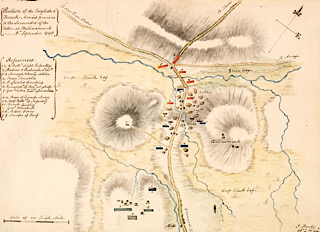
Duff is later involved in an unsuccessful campaign after the Battle of Vinegar Hill to trap and destroy a surviving rebel column in Wexford led by Anthony Perry who fights and eludes Duff’s forces at the battle of Ballygullen/Whiteheaps on 5 July.

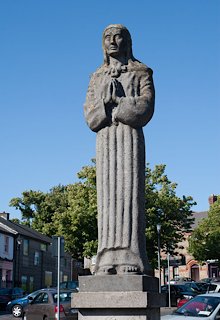
(Pictured: The statue of Saint Brigid at the Market Square of Kildare which is dedicated to the memory of the victims at Gibbet Rath)


Leave a comment

Death of Richard Robert Madden, Abolitionist & United Irishmen Historian

Richard Robert Madden, Irish doctor, writer, abolitionist and historian of the United Irishmen, dies at his home in Booterstown, a coastal suburb of Dublin, on February 5, 1886. He takes an active role in trying to impose anti-slavery rules in Jamaica on behalf of the British government.

Madden is born at Wormwood Gate, Dublin, on August 22, 1798, to Edward Madden, a silk manufacturer, and his wife Elizabeth (née Corey). His father marries twice and fathers twenty-one children.

Madden attends private schools and is found a medical apprenticeship in Athboy, County Meath. He studies medicine in Paris, Italy, and St. George’s Hospital, London. While in Naples he becomes acquainted with Marguerite Gardiner, Countess of Blessington, and her circle. From 1824 to 1827 he is in the Levant as a journalist and later publishes accounts of his travels.

In 1828, Madden marries Harriet Elmslie, daughter of John Elmslie of Jamaica, a slave-owner. He then practises medicine in Mayfair, London, for the next five years.

Madden becomes a recruit to the abolitionist cause. The transatlantic slave trade has been illegal in the British Empire since 1807, but slavery itself remains legal.

From 1833, Madden is employed in the British civil service, first as a justice of the peace in Jamaica, where he is one of six Special Magistrates sent to oversee the eventual liberation of Jamaica’s slave population, according to the terms of the Slavery Abolition Act 1833. From 1835 he is Superintendent of the freed Africans in Havana, Cuba. In 1839 he leaves Cuba for New York, where he provides important evidence for the defense of the former slaves who had taken over the slave ship La Amistad.

In 1840 Madden becomes Her Majesty’s Special Commissioner of Inquiry into the British Settlements on the West Coast of Africa. His task is to investigate how the slave trade is continuing to operate on the west coast of Africa, despite the shipping of African slaves across the Atlantic Ocean now being illegal. He finds that London-based merchants (including Whig MP Matthew Forster) are actively helping the slave traders, and that crudely disguised forms of slavery exist in all the coast settlements. He particularly condemns the actions of George Maclean, the Governor of Gold Coast.

In 1847 Madden becomes the Colonial Secretary of Western Australia and arrives in the colony in 1848. After receiving news of their oldest son’s death back in Ireland, he and Harriet return to Dublin in 1849. In 1850 he is named secretary of the Office for Loan Funds in Dublin.

Madden also campaigns against slavery in Cuba, speaking to the General Anti-Slavery Convention in London on the topic of slavery in Cuba.

Madden dies at his home in Booterstown, just south of Dublin, on February 5, 1886, and is interred in Donnybrook Cemetery.

Besides several travel diaries (Travels in Turkey, Egypt etc. in 1824–27, 1829, and others (1833)), his works include the historically significant book The United Irishmen, their lives and times (1842-1860, 11 Vols.), which contains numerous details on the Irish Rebellion of 1798, including testimonies collected from veteran rebels and from family members of deceased United Irishmen.


Leave a comment

Death of Myles Byrne, United Irishman & French Army Officer

Myles Byrne, United Irishman, French army officer, and author, dies at his house in the rue Montaigne (now rue Jean Mermoz, 8th arrondissement, near Champs-Élysées), Paris on January 24, 1862.

Byrne is born on March 20, 1780, at Ballylusk, Monaseed, County Wexford, the eldest son of Patrick Byrne, a middling Catholic farmer, and Mary (née Graham). He joins the United Irishmen in the spring of 1797 and, although only seventeen, becomes one of the organisation’s most active agents in north Wexford.

When rebellion engulfs his home district on May 27, 1798, Byrne assumes command of the local Monaseed corps and rallies them at Fr. John Murphy‘s camp on Carrigrew Hill on June 3. They fight at the rebel victory at Tubberneering on June 4 and the unsuccessful attempt to capture Arklow five days later. After the dispersal of the main rebel camp at Vinegar Hill on June 21, he accompanies Murphy to Kilkenny but begins the retreat to Wexford four days later. Heavily attacked at Scollagh Gap, he is one of a minority of survivors who spurn the proffered amnesty and join the rebel forces in the Wicklow Mountains. He is absent when the main force defeats a cavalry column at Ballyellis on June 30 but protects the wounded who are left in Glenmalure when the rebels launch a foray into the midlands the following week. He takes charge of the Wexfordmen who regain the mountains and fight a series of minor actions in the autumn and winter of 1798 under the militant Wicklow leader Joseph Holt. On November 10, he seizes an opportunity to escape into Dublin, where he works as a timber-yard clerk with his half-brother Edward Kennedy.

Byrne is introduced to Robert Emmet in late 1802 and immediately becomes a prominent figure in his insurrection plot. He is intended to command the many Wexford residents of the city during the planned rising of 1803. On July 23, 1803, he assembles a body of rebels at the city quays, which disperse once news is received that the rising has miscarried. At Emmet’s request, he escapes to Bordeaux in August 1803 and makes his way to Paris to inform Thomas Addis Emmet and William James MacNeven of the failed insurrection. In his Paris diary, the older Emmet recalls passing on “the news brought by the messenger” to Napoleon Bonaparte‘s military advisors.

Byrne enlists in the newly formed Irish Legion in December 1803 as a sub-lieutenant and is promoted to lieutenant in 1804 but only sees garrison duty. The regiment eventually moves to the Low Countries, and is renamed the 3rd Foreign Regiment in 1808, the year he is promoted to captain. He campaigns in Spain until 1812, participating in counterinsurgency against Spanish guerillas. He fights in Napoleon’s last battles and is appointed Chevalier de la Légion d’Honneur on June 18, 1813. With Napoleon’s defeat in 1815, the former Irish Legion, with its undistinguished and somewhat unfortunate history, is disbanded.

Though a supporter of Napoleon during the Hundred Days, Byrne is not involved in his return, yet he is included in an exclusion order from France which he successfully appeals. In November 1816, he swears the oath of loyalty to the now Royal Order of the Legion of Honour and becomes a naturalised French subject by royal decree on August 20, 1817. He becomes a half-pay captain but is recalled for active service in 1828 and serves as a staff officer in the French expeditionary force in Morea in support of Greek independence (1828–1830). His conduct on this campaign leads to his promotion as chef de bataillon (lieutenant-colonel) of the 56th Infantry Regiment in 1830.

After five years of service in garrisons around France, including counterinsurgency duty in Brittany, Byrne retires from the army in 1835. On December 24, 1835, he marries a Scottish woman, Frances “Fanny” Horner, at the British Embassy Chapel in Paris. They live in modest circumstances in various parts of Paris and remain childless. Though it is unclear when he is awarded the Chevalier de St Louis, having initially applied for it unsuccessfully in 1821, this distinction is mentioned in his tomb inscription, under his Legion of Honour. John Mitchel, who visits him regularly in Paris in the late 1850s, recalls Byrne sporting the rosette of the Médaille de Sainte Hélène, awarded in 1857 to surviving veterans of Napoleon’s campaigns.

An early list of Irish Legion officers describes Byrne as an upright and disciplined man, with little formal instruction but aspiring to improve himself. He becomes fully fluent in French but also learns Spanish and his language skills are a useful asset in various campaigns. Because of his suspected Bonapartist leanings, he is under police surveillance for some time after the Bourbon Restoration. He does, however, cultivate a wide social circle in Paris over the years. Various references throughout his writings testify to an inquisitive and cultured mind. He intended publishing a lengthy criticism of Gustave de Beaumont‘s Irlande, sociale, politique et religieuse (1840), claiming that it misrepresented the 1798 rebellion, but he withdraws it after meeting the author, not wishing to prejudice the reception of such an important French work on “the sufferings of Ireland.”

A lifelong nationalist, Byrne acts as Paris correspondent of The Nation in the 1840s and is a well-known figure in the Irish community there. He works in the 1850s on his notably unapologetic and candid Memoirs, an early and significant contribution to the Irish literature of exile. This autobiography is acclaimed by nationalists when published posthumously by his wife in 1863, with a French translation swiftly following in 1864. His detailed testimony of key battles of the 1798 rebellion in the southeast and Emmet’s conspiracy are written with the immediacy of an eyewitness and make them an invaluable contribution to that period of Irish history.

Byrne dies on January 24, 1862, in Paris, and is buried in Montmartre Cemetery. On November 25, 1865, John Martin writes of him: “In truth he was a beautiful example of those natures that never grow old. A finer, nobler, gentler, kindlier, gayer, sunnier nature never was than his, and to the last he had the brightness and quickness and cheeriness of youth”.

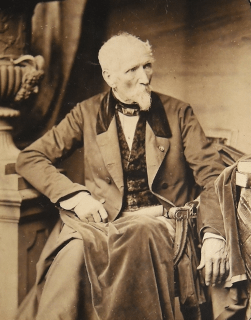
Byrne’s engaging and dispassionate Memoirs have ensured his special status among Irish nationalists. Because of his longevity he is the only United Irishman to have been photographed. His wife had sketched him in profile in middle age, and the photograph taken almost three decades later shows the same, strong features though those of a frail, but dignified man of 79 years.

(From: “Byrne, Miles” by Ruan O’Donnell and Sylvie Kleinman, Dictionary of Irish Biography, http://www.dib.ie, October 2009, last revised August 2024 | Pictured: Photograph of Miles Byrne taken in Paris in 1859)


Leave a comment

Death of William Steel Dickson, Minister & United Irishman

William Steel Dickson, Irish Presbyterian minister and member of the Society of the United Irishmen, dies on December 27, 1824, in Belfast, in what is now Northern Ireland.

Dickson is born on December 25, 1744, the eldest son of John Dickson, a tenant farmer of Ballycraigy, in the parish of Carnmoney, County Antrim. His mother is Jane Steel and, on the death of his uncle, William Steel, on May 13, 1747, the family adds his mother’s maiden name to their own.

In his boyhood, Dickson is educated by Robert White, a Presbyterian minister from Templepatrick and enters University of Glasgow in November 1761. Following graduation, he is apparently employed for a time in teaching, and in 1771 he is ordained as a Presbyterian minister. Until the outbreak of the American Revolutionary War, he occupies himself mainly with parochial and domestic duties. His political career begins in 1776, when he speaks and preaches against the “unnatural, impolitic and unprincipled” war with the American colonies, denouncing it as a “mad crusade.” On two government fast-days his sermons on “the advantages of national repentance” (December 13, 1776), and on “the ruinous effects of civil war” (February 27, 1778) create considerable excitement when published. Government loyalists denounce Dickson as a traitor.

Political differences are probably at the root of a secession from his congregation in 1777. The seceders form a new congregation at Kircubbin, County Down, in defiance of the authority of the general synod.

In 1771 Dickson marries Isabella Gamble, a woman of some means, who dies on July 15, 1819. They have at least eight children, but he outlives them all. One of his sons is in the Royal Navy and dies in 1798.

Dickson enters with zest into the volunteer movement of 1778, being warmly in favour of the admission of Roman Catholics to the ranks. This is resisted “through the greater part of Ulster, if not the whole.” In a sermon to the Echlinville volunteers on March 28, 1779, he advocates the enrolment of Catholics and though induced to modify his language in printing the discourse, he offends “all the Protestant and Presbyterian bigots in the country.” He is accused of being a papist at heart, “for the very substantial reason, among others, that the maiden name of the parish priest’s mother was Dickson.”

Though the contrary has been stated, Dickson is not a member of the Volunteer conventions at Dungannon in 1782 and 1783. He throws himself heart and soul into the famous election for County Down in August 1783, when the families of Hill and Stewart, compete for the county seat in Parliament. He, with his forty-shilling freeholders, fails to secure the election of Robert Stewart. But in 1790 he successfully campaigns for the election of Stewart’s son, better known as Lord Castlereagh. Castlereagh proves his gratitude by referring at a later date to Dickson’s popularity in 1790, as proof that he was “a very dangerous person to leave at liberty.”

In December 1791, Dickson joins Robert White’s son, John Campbell White, taking the “test” of the first Society of United Irishmen, organised in October in Belfast following a meeting held with Theobald Wolfe Tone, Protestant secretary of the Catholic Committee in Dublin. According to Dickson himself, he attends no further meetings of the Society but devotes himself to spreading its principles among the volunteer associations, in opposition to the “demi-patriotic” views of the Whig Club.

At a great volunteer meeting in Belfast on July 14, 1792, Dickson opposes a resolution for the gradual removal of Catholic disabilities and assists in obtaining a unanimous pledge in favour of total and immediate emancipation. Parish and county meetings are held throughout Ulster, culminating in a provincial convention at Dungannon on February 15, 1793. He is a leading spirit at many of the preliminary meetings, and, as a delegate from the Barony of Ards, he has a chief hand in the preparation of the Dungannon resolutions. Their avowed object is to strengthen the throne and give vitality to the constitution by “a complete and radical reform.” He is nominated on a committee of thirty to summon a national convention. The Irish parliament goes no further in the direction of emancipation than the Roman Catholic Relief Act 1793, which receives the royal assent on April 9, and remains unextended until 1829. While the passing of Lord Clare‘s Convention Act, still in force, makes illegal all future assemblies of delegates “purporting to represent the people, or any description of the people.”

In March and April 1798, Dickson is in Scotland arranging some family affairs. During his absence plans are made for an insurrection in Ulster, and soon after his return he agrees to take the place of Thomas Russell, who had been arrested, as adjutant-general of the United Irish forces for County Down. A few days before the county is to rise, he is himself arrested at Ballynahinch.

Dickson is conveyed to Belfast and lodged in the “black hole” and other prisons until August 12 when he is removed to a prison ship with William Tennant, Robert Hunter, Robert Simms, David Bailie Warden and Thomas Ledlie Birch, and detained there amid considerable discomfort. On March 25, 1799, Dickson, Tennant, Hunter, and Simms join the United Irish “State Prisoners” on a ship bound for Fort George, Highland prison in Scotland. This group, which includes Samuel Neilson, Arthur O’Connor, Thomas Russell, William James MacNeven, and Thomas Addis Emmet, arrives in Scotland on April 9, 1799. He spends two years there.

Unlike the more high-profile prisoners like O’Connor and MacNeven who are not released until June 1802, Tennant, Dickson, and Simms are permitted to return to Belfast in January 1802.

Dickson returns to liberty and misfortune. His wife has long been a helpless invalid, his eldest son is dead, his prospects are ruined. His congregation at Portaferry had been declared vacant on November 28, 1799. William Moreland, who had been ordained as his successor on June 16, 1800, at once offers to resign, but Dickson will not hear of this. He has thoughts of emigration but decides to stand his ground. At length, he is chosen by a seceding minority from the congregation of Keady, County Armagh, and installed minister on March 4, 1803.

Dickson’s political engagement ends with his attendance on September 9, 1811, of a Catholic meeting in Armagh, on returning from which he is cruelly beaten by Orangemen. In 1815 he resigns his charge in broken health and henceforth subsists on charity. Joseph Wright, an Episcopalian lawyer, gives him a cottage rent-free in the suburbs of Belfast, and some of his old friends make him a weekly allowance. His last appearance in the pulpit is early in 1824. He dies on December 27, 1824, having just passed his eightieth year, and is buried “in a pauper’s grave” at Clifton Street Cemetery, Belfast.


Leave a comment

Death of Waddell Cunningham, Belfast Merchant

Waddell Cunningham, merchant and public figure in Georgian-era Belfast, dies at his restored house in Hercules Street (now Royal Avenue) in Belfast on December 15, 1797, seven months before the Irish Rebellion of 1798.

Cunningham is born in 1728 or 1729 at Ballymacilhoyle in the parish of Killead, County Antrim, the youngest son in the large family of John Cunningham and his wife, Jane, daughter of James Waddell of Islandderry, a townland in the parish of Dromore, County Down. The extended families of Cunningham and Waddell have interests in farming, linen, provisioning, and overseas trade. By 1752, no doubt with support from his family, Cunningham is in New York City trading near the meal market. Just as the Seven Years’ War is beginning in May 1757, he becomes the local partner of a Belfast merchant, Thomas Greg. While carrying on a wide range of commercial activities, the firm of Greg & Cunningham specialises in the flaxseed trade with Ireland and becomes “the most successful Irish American transatlantic trading partnership of the colonial period.” He amasses a large fortune from trade, some of it illicit, during the war, and becomes one of the largest shipowners in the American port. This enables the partners to purchase a 150-acre estate, which they rename “Belfast,” on the West Indies island of Dominica, just as it is passing, by the Treaty of Paris (1763), from French to British rule. It is possible that the estate is managed by Greg’s brother, John.

Sometime after suffering imprisonment for assaulting a fellow merchant (July–August 1763), Cunningham returns to Ireland, leaving the firm in the charge of junior partners until its dissolution in 1775. In Belfast he enters into a second partnership with Greg in May 1765 comprising all their business activities other than those in New York. In November 1765, he also marries Greg’s sister-in-law Margaret, second daughter of a Belfast merchant, Samuel Hyde. He lives in a large house in Hercules Street, later renamed Royal Avenue, which serves also as the premises for his many business interests, commercial, financial, industrial, and agricultural. In 1767, he and Greg start the manufacture of vitriol at a factory by the River Lagan at Lisburn, 12 km from Belfast. They open up fisheries in Donegal and Sligo, exporting herring to the West Indies as food for slaves. They also trade Irish horses and mules for West Indian sugar and American tobacco, the sugar being processed by them at the New Sugar House in Waring Street, Belfast. During the American Revolutionary War (1775–83), he illegally ships linen uniforms to the insurgent colonists. He becomes a middleman on the estate of Arthur Chichester, 5th Earl of Donegall, by obtaining leases of land in the Templepatrick district of County Antrim, a venture that involves him in disputes with tenant farmers resulting in an attack by the Hearts of Steel on Belfast and the destruction by fire of his home on December 23, 1771.

Despite this setback, Cunningham becomes the foremost Belfast merchant. As well as those mentioned, he has interests in shipping, brewing, glass manufacture and flour milling. When a chamber of commerce is set up in 1783, he is elected president, a position he holds until 1790. In the 1780s, in partnership with William Brown, John Campbell and Charles Ranken, he opens a bank. Known as Cunningham’s Bank, it closes on December 31, 1793, likely as a result of the recession brought on by the outbreak of war between England and France.

A prominent Volunteer, Cunningham joins the movement as a lieutenant in 1778 and is captain of the 1st Belfast company from 1780 until the dissolution of the Volunteers in 1793. Entering politics, he fails to be nominated as a parliamentary candidate for Belfast by its patron, Lord Donegall, at the general election of 1783, but stands for Carrickfergus at a February 1784 by-election on a platform of parliamentary reform and is returned – a rare distinction for a Presbyterian – by 474 votes to 289. A petition against his return is lodged successfully, but he remains an MP until March 1785, when he is defeated in a new election. It is during this period that he, probably the wealthiest, most enterprising merchant in Belfast and having, as he does, Caribbean interests, proposes in December 1784 fitting out a ship to engage in the Atlantic slave trade. The proposal comes to nothing but is the subject of intense debate in the 1920s between two rival Belfast local historians, Francis Joseph Bigger and Samuel Shannon Millin.

Cunningham plays a prominent role on several Belfast boards – those of White Linen Hall, the harbour, poorhouse, and dispensary. He gives money to the first Catholic chapel, St. Mary’s, opened in the town in 1784, and to the First Belfast Presbyterian congregation, as well as providing a site for a meeting house for his own congregation, Second Belfast, in 1767. Staunch in his advocacy of the reform of parliament, he becomes a member of the Northern Whig Club in 1790. He is cautious, however, about Catholic relief, for he fears its possible consequences. On July 14, 1792, an organiser of a Volunteer display to mark the third anniversary of the fall of the Bastille, he balks even at a very moderately worded resolution in favour of the Catholics. Thereafter he becomes increasingly ill-disposed toward reform and when the Belfast yeoman infantry is formed in 1797, he becomes captain of the 4th company.

Cunningham dies on December 15, 1797, at his restored house in Hercules Street. He and his wife have no children. His property in Ireland (worth £60,000) passes to James Douglas, youngest son of his sister Jane, who had married their first cousin, Cunningham’s personal clerk Robert Douglas. His name had already passed to Thomas Greg’s son, Cunningham Greg, who takes over Greg’s business after his death. Cunningham’s portrait is painted by Robert Home. A mausoleum is built over the Cunningham vault at Knockbreda Church cemetery overlooking Belfast.

(From: “Cunningham, Waddell” by C. J. Woods, Dictionary of Irish Biography, http://www.dib.ie, October 2009)


Leave a comment

Death of Francis Jack Needham, 1st Earl of Kilmorey

Francis Jack Needham, 1st Earl of Kilmorey, Anglo-Irish soldier and Member of Parliament, dies on November 21, 1832, at Shavington Hall, Shropshire, England.

Needham is born April 15, 1748, in County Down, third and youngest son of John Needham, 10th Viscount Kilmorey, and his wife Anne, daughter of John Hurleston of Newton, Cheshire, and widow of Geoffrey Shakerley of Cheshire. He enters the British Army as a cornet in the 18th Dragoons in 1762, exchanging into the 1st Dragoons in 1763. In 1773, he is promoted to lieutenant and, exchanging into the 17th Dragoons, is made captain in 1774. He serves throughout the American Revolutionary War and is engaged in the blockade of Boston and the New Jersey and Yorktown campaigns. Exchanging into the 76th Foot as a major, he is taken prisoner at the Siege of Yorktown, and at the peace of 1783 is placed on half-pay.

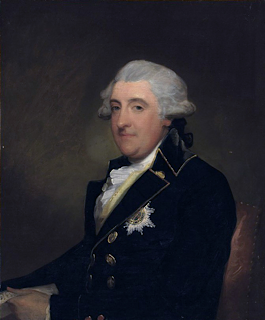
Returning to England, Needham purchases a majority in the 80th Foot and then in February 1783 a lieutenant-colonelcy in the 104th Foot. In April 1783, he exchanges into the 1st Foot Guards. Promoted to full colonel in 1793, he is appointed aide-de-camp to King George III and in 1794 serves with Francis Rawdon-Hastings, 2nd Earl of Moira, on the expedition to the Netherlands. He also serves with General Sir John Doyle in the expedition to Quiberon Bay and the Isle Dieu (1795). In February 1795, he is appointed third major of the 1st Foot Guards and promoted to major general, taking an appointment on the home staff in April 1795.

Needham then holds a staff appointment in Ireland, and during the Irish Rebellion of 1798 commands the crown forces at the Battle of Arklow on June 9, 1798. He places his approximately 1,600 troops in strong positions at the eastern and western ends of the town, where they can sweep the Arklow Rock Road and the Coolgreany Road with fire if the rebels approach along them. Ultimately, this is what the United Irish force, estimated at 5,000–9,000 strong, does, repeatedly attacking Needham’s right flank, which is in fact his strongest position. Estimates of the United Irish dead range from 200 to 1,000, and the failure of the attack ensures that the rebels lose the military initiative. He is also present at the Battle of Vinegar Hill on June 21, 1798, but his force arrives late, leaving a gap in the British line through which many rebels escape. This is later christened “Needham’s gap,” earning him the nickname of “the late General Needham” among his fellow officers.

Promoted to lieutenant-general in 1802, Needham is made colonel of the 5th Royal Veteran Battalion in 1804, entering House of Commons as MP for Newry in 1806. He is made full general in 1812, and, following the death of his two older brothers, succeeds as 12th Viscount Kilmorey in November 1818, resigning his parliamentary seat. On January 12, 1822, he is created 1st Earl of Kilmorey (Queen’s County) and Viscount Newry and Mourne. He dies on November 21, 1832, at the family seat, Shavington Hall, Shropshire, and is buried in St. Peter’s Church, Adderley.

Needham marries Anne Fisher, daughter of Thomas Fisher of Acton, Middlesex, on February 20, 1787. They have two sons, Francis Jack Needham, who succeeds as 2nd Earl, and the Hon. Francis Henry William Needham, lieutenant-colonel in the Grenadier Guards, and seven daughters. There are Needham letters in the Public Record Office (PRO), Kew, and in the Rebellion Papers in the National Archives of Ireland in Dublin.


Leave a comment

Death of Thomas Addis Emmet, Lawyer & Politician

Thomas Addis Emmet, Irish and American lawyer and politician, dies at his home in New York on November 14, 1827, following a seizure while in court. He is a senior member of the revolutionary republican group Society of United Irishmen in the 1790s and Attorney General of New York 1812–1813.

Emmett is born in the Hammond’s Marsh area of Cork, County Cork, on April 24, 1764, the son of Dr. Robert Emmet from County Tipperary (later to become State Physician of Ireland) and Elizabeth Mason of County Kerry, both of whose portraits are today displayed at Cork’s Crawford Art Gallery. He is the elder brother of Robert Emmet, who is executed for leading the Irish Rebellion of 1803, becoming one of Ireland’s most famous republican martyrs. His sister, Mary Anne Holmes, holds similar political beliefs.

Emmet is educated at Trinity College, Dublin and is a member of the committee of the College Historical Society. He later studies medicine at the University of Edinburgh and is a pupil of Dugald Stewart in philosophy. After visiting the chief medical schools on the continent, he returns to Ireland in 1788. However, the sudden death of his elder brother, Christopher Temple Emmet (1761–1788), a student of great distinction, induces him to follow the advice of Sir James Mackintosh to forsake medicine for the law as a profession.

Emmet is a man of liberal political sympathies and becomes involved with a campaign to extend the democratic franchise for the Irish Parliament and to end discrimination against Catholics. He is called to the Irish bar in 1790 and quickly obtains a practice, principally as counsel for prisoners charged with political offenses. He also becomes the legal adviser of the Society of the United Irishmen.

When the Dublin Corporation issues a declaration of support of the Protestant Ascendancy in 1792, the response of the United Irishmen is their nonsectarian manifesto which is largely drawn up by Emmet. In 1795 he formally takes the oath of the United Irishmen, becoming secretary in the same year and a member of the executive in 1797. As by this time the United Irishmen had been declared illegal and driven underground, any efforts at peaceful reform of government and Catholic emancipation in Ireland are abandoned as futile, and their goal is now the creation of a non-sectarian Irish republic, independent from Britain and to be achieved by armed rebellion. Although Emmet supports this policy, he believes that the rebellion should not commence until French aid has arrived, differing from more radical members such as Lord Edward FitzGerald.

British intelligence infiltrates the United Irishmen and manages to arrest most of their leaders on the eve of the rebellion. Though not among those taken at the house of Oliver Bond on March 12, 1798, Emmet is arrested about the same time and is one of the leaders imprisoned initially at Kilmainham Gaol and later in Scotland at Fort George until 1802. Upon his release he goes to Brussels where he is visited by his brother Robert in October 1802 and is informed of the preparations for a fresh rising in Ireland in conjunction with French aid. However, at that stage France and Britain are briefly at peace, and the Emmets’ pleas for help are turned down by Napoleon.

Emmet receives news of the failure of his brother’s rising in July 1803 in Paris, where he is in communication with Napoleon. He then emigrates to the United States and joins the New York bar where he obtains a lucrative practice.

After the death of Matthias B. Hildreth, Emmet is appointed New York State Attorney General in August 1812 but is removed from office in February 1813 when the opposing Federalist Party obtains a majority in the Council of Appointment.

Emmet’s abilities and successes become so acclaimed, and his services so requested that he becomes one of the most respected attorneys in the nation, with United States Supreme Court Justice Joseph Story declaring him to be “the favourite counsellor of New York.” He argues the case for Aaron Ogden in the landmark United States Supreme Court case of Gibbons v. Ogden, 22 U.S. 1 (1824) relating to the Commerce and Supremacy clauses of the United States Constitution.

Emmet dies on November 14, 1827, while conducting a case in court regarding the estate of Robert Richard Randall, the founder of Sailors’ Snug Harbor, a home for needy seamen in Staten Island, New York. He is buried in St. Mark’s Church in-the-Bowery churchyard in the East Village, New York City, where a large white marble monument marks his grave.


Leave a comment

Death of Roger McCorley, Irish Republican Activist

Roger McCorleyIrish republican activist, dies on November 13, 1993.

McCorley is born into a Roman Catholic family at 67 Hillman Street in Belfast on September 6, 1901. He is one of three children born to Roger Edmund McCorley, a meat carver in a hotel, and Agnes Liggett. He has two elder brothers, Vincent and Felix. He joins the Fianna in his teens. His family has a very strong republican tradition, and he claims to be the great-grandson of the United Irishmen folk hero Roddy McCorley, who was executed for his part in the Irish Rebellion of 1798.

McCorley is a member of the Belfast Brigade of the Irish Republican Army (IRA) during the Irish War of Independence (1919–22). He is commandant of the Brigade’s first battalion, eventually becoming Commandant of the Belfast Brigade. In June 1920, he is involved in an attack on a Royal Irish Constabulary (RIC) police barracks at CrossgarCounty Down. On Sunday, August 22, 1920, in Lisburn, he is involved in the assassination of RIC District Inspector Oswald Swanzy, who was held responsible by Michael Collins for the assassination of Tomás Mac CurtainLord Mayor of Cork.

McCorley is noted for his militancy, as he is in favour of armed attacks on British forces in Belfast. The Brigade’s leaders, by contrast, in particular, Joe McKelvey, are wary of sanctioning attacks for fear of loyalist reprisals on republicans and the Catholic population in general. In addition, McCorley is in favour of conducting an armed defense of Catholic areas, whereas McKelvey does not want the IRA to get involved in what he considers to be sectarian violence. McCorley writes later that in the end, “the issue settled itself within a very short space of time, when the Orange mob was given uniforms, paid for by the British, and called the Ulster Special Constabulary (USC).” The role of the USC, a temporary police force raised for counter-insurgency purposes, in the conflict is still debated, but republicans maintain that the organization was responsible for the indiscriminate killings of Catholics and nationalists.

On January 26, 1921, McCorley, is involved in the fatal shooting of three Auxiliary Division officers in their beds in the Railway View hotel in central Belfast. Shortly afterwards, he and another IRA man, Seamus Woods, organize an active service unit (ASU) within the first battalion of the Belfast Brigade, with the intention of carrying out attacks, with or without the approval of the Brigade leadership. The unit consists of 32 men. McCorley later writes, “I issued a general order that, where reprisal gangs [State forces] were cornered, no prisoners were to be taken.” In March 1921, he personally leads the ASU in the killing of three Black and Tans in Victoria Street in central Belfast. He is responsible for the deaths of two more Auxiliaries in Donegall Place in April. In reprisal for these shootings, members of the RIC assassinate two republican activists, the Duffin brothers in Clonard Gardens in west Belfast. On June 10, 1921, both and Woods and McCorley units are involved in the killing a RIC man who is suspected in the revenge killings of the Duffin brothers. Two RIC men and a civilian are also wounded in that attack.

Thereafter, there is what historian Robert Lynch has described as a “savage underground war” between McCorley’s ASU and RIC personnel based in Springfield Road barracks and led by an Inspector Ferris. Ferris is accused of murdering the Lord Mayor of Cork Thomas Mac Curtain and had been posted to Lisburn for his safety. Ferris himself is among the casualties, being shot in the chest and neck, but surviving. McCorley claims to have been one of the four IRA men who shot Ferris. In addition, his men bomb and burn a number of businesses including several cinemas and a Reform Club. In May 1921, however, thirteen of his best men are arrested when surrounded by British troops during an operation in County Cavan. They are held in Crumlin Road Gaol and sentenced to death.

On June 3, McCorley organizes an attack on Crumlin Road Gaol in an attempt to rescue the IRA men held there before they are executed. The operation is not a success; however, the condemned men are reprieved after a truce is agreed between the IRA and British forces in July 1921. On Bloody Sunday (July 10, 1921), he is a major leader in the defense of nationalist areas from attacks by both the police and loyalists. On that day twenty people are killed before he negotiates a truce beginning at noon on July 11. At least 100 people are wounded, about 200 houses are destroyed or badly damaged – most of them Catholic homes, leaving 1,000 people homeless.

In April 1922, McCorley becomes leader of the IRA Belfast Brigade after Joe McKelvey goes south to Dublin to join other IRA members who are against the Anglo-Irish Treaty. With McKelvey’s departure, Seamus Woods becomes Officer Commanding of the IRA’s 3rd Northern Division, which has up to 1,000 members, with McCorley designated as Vice Officer Commanding. McCorley for his part, supports the Treaty, despite the fact that it provides for the partition of Ireland and the continued British rule in Northern Ireland. The reason for this is that Michael Collins and Eoin O’Duffy have assured him that this is only a tactical move and indeed, Collins sends men, money and weapons to the IRA in the North throughout 1922.

However, McCorley’s command sees the collapse of the Belfast IRA. In May 1922, the IRA launches an offensive with attacks all across Northern Ireland. In Belfast, he carries out an assault on Musgrave Street RIC barracks. He also conducts an arson campaign on businesses in Belfast. His men also carry out a number of assassinations, including that of Ulster Unionist Party MP William J. Twaddell, which causes the internment of over 200 Belfast IRA men.

To escape from the subsequent repression, McCorley and over 900 Northern IRA men flee south, to the Irish Free State, where they are housed in the Curragh. McCorley is put in command of these men. In June 1922, the Irish Civil War breaks out between Pro and Anti-Treaty elements of the IRA. He takes the side of the Free State and Michael Collins. After Collins is killed in August 1922, his men are stood down. About 300 of them join the National Army and are sent to County Kerry to put down anti-Treaty guerrillas there. In the Spring of 1923, bitterly disillusioned by the brutal counterinsurgency against fellow republicans, he resigns his command.

McCorley later asserts that he “hated the Treaty” and only supported it because it allowed Ireland to have its own armed forces. Both he and Seamus Woods are severe critics of the Irish Free State inertia towards Northern Ireland after the death of Michael Collins. He comments that when Collins was killed “the Northern element gave up all hope.”

In 1936 McCorley is instrumental in the establishment of the All-Ireland Old IRA Men’s Organization, serving as Vice-President with President Liam Deasy (Cork No. 3 Brigade) and Secretary George Lennon (Waterford No. 2 Brigade).

In the 1940s, McCorley is a founding member of Córas na Poblachta, a political party which aspires to a United Ireland and economic independence from Britain. He dies on November 13, 1993, and is buried in the Republican Plot of Glasnevin Cemetery.


Leave a comment

Death of John MacHale, Catholic Archbishop of Tuam

John MacHale, Irish Roman Catholic Archbishop of Tuam and Irish nationalist, dies in Tuam, County Galway on November 7, 1881.

MacHale is born in Tubbernavine, near Lahardane, County Mayo on March 6, 1791, to Patrick and Mary Mulkieran MacHale. He is so feeble at birth that he is baptised at home by Father Andrew Conroy. By the time he is five years of age, he begins attending a hedge school. Three important events happen during his childhood: the Irish Rebellion of 1798, the landing at Killala of French troops, whom the boy, hidden in a stacked sheaf of flax, watches marching through a mountain pass to Castlebar, and a few months later the brutal hanging of Father Conroy on a false charge of high treason.

Being destined for the priesthood, at the age of thirteen, he is sent to a school at Castlebar to learn Latin, Greek, and English grammar. In his sixteenth year the Bishop of Killala gives him a bursarship at St. Patrick’s College, Maynooth. At the age of 24, he is ordained a priest by Daniel Murray, Archbishop of Dublin. In 1825, Pope Leo XII appoints him titular bishop of Maronia, and coadjutor bishop to Dr. Thomas Waldron, Bishop of Killala.

With his friend and ally, Daniel O’Connell, MacHale takes a prominent part in the important question of Catholic emancipation, impeaching in unmeasured terms the severities of the former penal code, which had branded Catholics with the stamp of inferiority. During 1826 his zeal is omnipresent. He calls on the Government to remember how the Act of Union in 1800 was carried by William Pitt the Younger on the distinct assurance and implied promise that Catholic emancipation, which had been denied by the Irish Parliament, should be granted by the Parliament of the Empire.

Oliver Kelly, Archbishop of Tuam, dies in 1834, and the clergy selects MacHale as one of three candidates, to the annoyance of the Government who despatches agents to induce Pope Gregory XVI not to nominate him to the vacant see. Disregarding their request, the pope appoints MacHale Archbishop of Tuam. He is the first prelate since the Reformation who has received his entire education in Ireland. The corrupt practices of general parliamentary elections and the Tithe War cause frequent rioting and bloodshed and are the subjects of denunciation by the new archbishop, until the passing of a Tithes bill in 1838. He also leads the opposition to the Protestant Second Reformation, which is being pursued by evangelical clergy in the Church of Ireland, including the Bishop of Tuam, Killala and Achonry, Thomas Plunket.

The repeal of the Acts of Union 1800, advocated by O’Connell, enlists MacHale’s ardent sympathy and he assists the Liberator in many ways, and remits subscriptions from his priests for this purpose. In his zeal for the cause of the Catholic religion and of Ireland, so long downtrodden, but not in the 1830s, he frequently incurs from his opponents the charge of intemperate language, something not altogether undeserved. In his anxiety to reform abuses and to secure the welfare of Ireland, by an uncompromising and impetuous zeal, he makes many bitter and unrelenting enemies, particularly British ministers and their supporters.

The Great Famine of 1846–47 affects his diocese more than any. In the first year he announces in a sermon that the famine is a divine punishment on his flock for their sins. Then by 1846 he warns the Government as to the state of Ireland, reproaches them for their dilatoriness, and holds up the uselessness of relief works. From England as well as other parts of the world, cargoes of food are sent to the starving Irish. Bread and soup are distributed from the archbishop’s kitchen. Donations sent to him are acknowledged, accounted for, and disbursed by his clergy among the victims.

The death of O’Connell in 1847 is a setback to MacHale as are the subsequent disagreements within the Repeal Association. He strongly advises against the violence of Young Ireland. Over the next 30 years he becomes involved in political matters, particularly those involving the church. Toward the end of his life, he becomes less active in politics.

MacHale attends the First Vatican Council in 1869. He believes that the favourable moment has not arrived for an immediate definition of the dogma of papal infallibility. Better to leave it a matter of faith, not written down, and consequently he speaks and votes in the council against its promulgation. Once the dogma had been defined, he declares the dogma of infallibility “to be true Catholic doctrine, which he believed as he believed the Apostles’ Creed“. In 1877, to the disappointment of the archbishop who desires that his nephew should be his co-adjutor, Dr. John McEvilly, Bishop of Galway, is elected by the clergy of the archdiocese, and is commanded by Pope Leo XIII after some delay, to assume his post. He had opposed this election as far as possible but submits to the papal order.

Every Sunday MacHale preaches a sermon in Irish at the cathedral, and during his diocesan visitations he always addresses the people in their native tongue, which is still largely used in his diocese. On journeys he usually converses in Irish with his attendant chaplain and has to use it to address people of Tuam or the beggars who greet him whenever he goes out. He preaches his last Irish sermon after his Sunday Mass, April 1881. He dies in Tuam seven months later, on November 7, 1881, and is buried in the cathedral at Tuam on November 15.

A marble statue perpetuates his memory on the grounds of the Cathedral of the Assumption of the Blessed Virgin Mary, Tuam. MacHale Park in Castlebar, County Mayo and Archbishop McHale College in Tuam are named after him. In his birthplace the Parish of Addergoole, the local GAA Club, Lahardane MacHales, is named in his honour. The Dunmore GAA team, Dunmore MacHales, is also named after him.


Leave a comment

The Battle of Collooney

The Battle of Collooney, also called the Battle of Carricknagat, occurs on September 5, 1798, during the Irish Rebellion of 1798 when a combined force of French troops and Irish rebels defeat a force of British troops outside of Collooney near Sligo.

A long-anticipated French landing to assist the Irish rebellion takes place on August 22, when almost 1,100 troops under the command of General Jean Joseph Amable Humbert land at Kilcummin Strand (Cill Chuimín), Killala Bay, County Mayo. Although the force is small, the remote location ensures an unopposed landing away from the tens of thousands of British soldiers concentrated in the east in Leinster, engaged in mopping up operations against remaining pockets of rebels. The nearby town of Killala is quickly captured after a brief resistance by local yeomen and Ballina is also taken two days later, following the rout of a force of cavalry sent from the town to oppose their march. Irish volunteers begin to trickle into the French camp from all over Mayo following the news of the French landing.

The victory of General Humbert at Castlebar, despite gaining him about 5,000 Irish recruits, does not lead to a renewed outbreak of the rebellion as hoped. A British army of some 26,000 men is assembled under Field Marshal Charles Cornwallis, 1st Marquess Cornwallis, the newly appointed Lord Lieutenant of Ireland, and is steadily moving towards his forces. Abandoning Castlebar, Humbert moves towards Ulster via Sligo with the intention of igniting a rising there.

The combined Franco-Irish forces march northeast towards Sligo on their way to County Donegal in Ulster. When they get to the village of Collooney they are confronted by a unit of British troops from the garrison in Sligo, which is approximately five miles to the north of Collooney. A minor battle ensues at Carricknagat, a small townland to the immediate north of Collooney, hence the alternate name for the battle: the Battle of Carricknagat.

On September 5, 1798, the Franco-Irish troops push north through County Sligo but are halted by a cannon which the British forces have installed above Union Rock near Collooney.

A young Irish aide to General Humbert, Lieutenant Bartholomew Teeling, distinguishes himself during the encounter. Teeling clears the way for the advancing Irish-French army by single-handedly disabling a British gunnery post located high on Union Rock when he breaks from the French ranks and gallops toward the gunner’s position. Teeling is armed with a pistol and he shoots the cannon’s marksman and captures the cannon. After the loss of the cannon position, the French and Irish advance and the British retreat toward their barracks at Sligo, leaving 120 dead and 100 prisoners.

Colonel Charles Vereker, who commands the Limerick militia in the standoff, is awarded a peerage for his role in the battle.

In 1898, the centenary year of the battle, a statue of Teeling is erected in Carricknagat. Johnnie Woods of Aughamore, Sligo, County Sligo, a far-famed reliable scaffolder, erects the spire for this monument.

(Pictured: The monument commemorating the battle)