Newly widowed, Ceannt continues her republican activism, serving as Vice-President of Cumann na mBan and as a member of the Sinn Féin Standing Committee. She also plays a role in the development of the Sinn Féin Courts, a parallel legal system designed to offer an alternative to the British courts.
Ceannt is ardently opposed to the signature of the Anglo-Irish Treaty in December 1921. She is imprisoned by the Irish Free State government during the Irish Civil War in Mountjoy Prison for her anti-Treaty activity. Throughout the war, she serves at the highest levels within anti-Treaty Sinn Féin. In the years that follow, she spearheads efforts to secure state compensation for the widows and the children of those who had died in 1916 and in the Irish War of Independence. She serves as the head of the Children’s Fund of the Irish White Cross, an American-funded humanitarian organisation founded to assist victims of unrest in Ireland. She is a member of the Executive Committee of the Irish Red Cross.
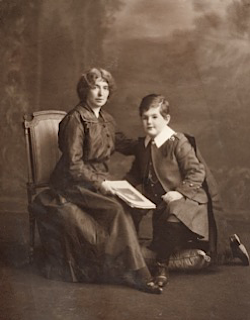
(Pictured: Photograph, circa 1917, of Áine and Ronan Ceannt, the family of Éamonn Ceannt, who is executed for his participation in the 1916 Easter Rising)
Gifford is the youngest of twelve children of Frederick and Isabella Gifford. Isabella Gifford (née Burton), is a niece of the artist Frederic William Burton, and is raised with her siblings in his household after the death of her father, Robert Nathaniel Burton, a rector, during the Great Famine.
Gifford’s parents—her father is Catholic and her mother Anglican—are married in St. George’s Church, a Church of Ireland church on the north side of Dublin, on April 27, 1872. She grows up in Rathmines and is raised as a Protestant, as are her siblings.
Gifford is educated in Alexandra College in Earlsfort Terrace. After leaving school she studies music at the Leinster House School of Music. It is her music teacher, in her teens, who first gives her her first Irish national newspaper, The Leader. She begins reading this secretly and then starts reading Arthur Griffith’s newspaper, Sinn Féin.
Gifford is a member of Inghinidhe na hÉireann, a women’s political organisation active from the 1900s. It is founded by Maud Gonne and a group of working-class and middle-class women to promote Irish culture and help to alleviate the shocking poverty of Dublin and other cities at a time when Dublin’s slums are unfavourably compared with Calcutta‘s. Gifford, who is already writing under the name “John Brennan” for Sinn Féin, is asked to write for its newspaper Bean na h-Éireann. Her articles vary from those highlighting poor treatment of women in the workplace to fashion and gardening columns, some written under the pseudonym Sorcha Ní hAnlúan.
She also works, along with her sisters, in Maud Gonne’s and Constance Markievicz‘s dinner system in St. Audoen’s Church, providing good solid dinners for children in three Dublin schools – poor Dublin schoolchildren often arrive at school without breakfast, go without a meal for the day, and if their father has been given his dinner when they arrive home, might not eat or might only have a crust of bread that night.
In 1911, Gifford is elected (as John Brennan) to the executive of the political group Sinn Féin.
Gifford is a member of Cumann na mBan (The Irish Women’s Council) from its foundation in Dublin on April 2, 1914. Its members learn first aid, drilling and signalling and rifle shooting, and serve as an unofficial messenger and backup service for the Irish Volunteers. During the fight for Irish Independence the women carry messages, store and deliver guns and run safe houses where men on the run can eat, sleep and pick up supplies.
In 1914, Gifford moves to the United States to work as a journalist. Through her connection with Padraic Colum and Mary Colum, whom she had met through her brother-in-law Thomas MacDonagh, she meets influential Irish Americans such as Thomas Addis Emmet and Irish exiles like John Devoy, and marries a Hungarian lawyer, Arpad Czira, a former prisoner of war who is said to have escaped and fled to America. Their son, Finian, is born in 1922.
Czira writes both for traditional American newspapers and for Devoy’s newspaper, TheGaelic American. She and her sister Nellie found the American branch of Cumann na mBan, and she acts as its secretary. Both sisters tour and speak about the Easter Rising and those involved. She is an active campaigner for Irish independence and against the United States joining the war against Germany, seen as a war for profit and expansion of the British Empire, and so to the disadvantage of the work for Irish independence. She helps Nora Connolly O’Brien to contact German diplomats in the United States.
In 1922, Czira returns to Ireland with her son. As a member of the Women’s Prisoners’ Defence League, she is an activist against the ill-treatment of Republican prisoners during the Irish Civil War. She continues to work as a journalist, though she is stymied in her work, as are the women of her family and many of those who had taken the anti-Free State side. In the 1950s her memoirs are published in The Irish Times, and she moves into work as a broadcaster and produces a series of historical programmes.
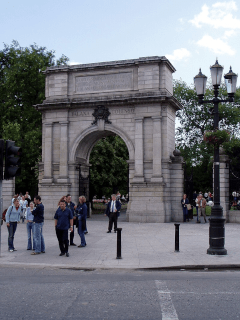
Funded by public subscription, the arch is designed by John Howard Pentland and built by Henry Laverty and Sons. Thomas Drew consults on the design and construction.
The proportions of the structure are said to be modelled on the Arch of Titus in Rome. It is approximately 8.5 m (28 ft.) wide and 10 m (33 ft.) high. The internal dimensions of the arch are 5.6 m high and approximately 3.7 m wide (18 by 12 ft.). The main structure of the arch is granite, with the inscriptions carried out in limestone and a bronze adornment on the front of the arch.
The arch is commissioned to commemorate the four battalions (two regular and two militia) of the Royal Dublin Fusiliers that served in the Second Boer War. The names of 222 dead are inscribed on the underside of the arch.
The construction of the arch coincides with a time of political and social change in Ireland, and the colonial and imperial background to the dedication are anathema to a burgeoning nationalist movement – who label the structure “Traitor’s Gate.” Though damaged in a crossfire between the Irish Citizen Army and British forces during the 1916 Easter Rising, the arch remains “one of the few colonialist monuments in Dublin not blown up” in Ireland’s post-independence history.
Engraved on the western face of the monument is the Latin text, Fortissimis suis militibus hoc monumentum Eblana dedicavit MCMVII, “To its strongest soldiers, Dublin dedicates this monument, 1907.” (Eblana is a name that appears on Ptolemy‘s 2nd century AD map of Ireland, traditionally taken as a Latin name for Dublin, although it more likely refers to a site further north, around Loughshinny.) Six battlefields are inscribed on the arch:
Rice joins the Irish Volunteers in 1913 but does not take part in the 1916 Easter Rising. For a time, he shares lodgings in Rock Street, Tralee, with Austin Stack, and like Stack he is a Gaelic Athletic Association (GAA) member, playing hurling with Kenmare. At the outbreak of the Irish War of Independence (1919-1921), he becomes Officer Commanding of the 5th Battalion of the Kerry No. 2 Brigade. He also holds the post of second in command of that brigade, under Humphrey Murphy. On April 26, 1921, he attends the meeting in Kippagh, County Tipperary, that sees the establishment of the First Southern Division. After the truce, Murphy is transferred to command Kerry No. 1 Brigade, and Rice becomes commanding officer of Kerry No. 2.
Rice opposes the Anglo-Irish Treaty and leads the brigade throughout the Irish Civil War (1922-1923). When Michael Collins comes to Killarney on April 22, 1922, to speak in favour of the agreement, he is met at the train station by a group of fifty men, led by Rice, who attempt to prevent him from speaking. The meeting goes ahead despite several attempts by the group to stop it. During the civil war he leads his men into Limerick, briefly seizing Rathkeale, but for the most part they are on the defensive. In September he commands a force of seventy republicans to take Kenmare. This is a rare and morale-boosting success. When the First Southern Division council meets on February 26-28, 1923, he is one of only two senior officers, among a group of eighteen, who feel that it is worth fighting on.
Shortly after the civil war, Rice marries Nora Aherne, a Cumann na mBan member; they have one son, George. After the war he continues to be active in the Irish Republican Army (IRA) and Sinn Féin. He attends IRA executive meetings in 1923 and is involved in attempts to reorganise the IRA in 1924. He is a delegate to the Sinn Féin ardfheis in 1926, opposing the proposal of Éamon de Valera that abstention be a matter of policy rather than principle. He is elected as a Sinn Féin TD for the Kerry South constituency at the 1957 Irish general election. He does not take his seat in the Dáil due to the Sinn Féin policy of abstentionism. He is one of four Sinn Féin TDs elected at the 1957 Irish general election, the others being Ruairí Ó Brádaigh, John Joe McGirl and Eighneachán Ó hAnnluain. During his time as a TD, he campaigns against the Special Powers Act, which grants the Irish state extra abilities to deal with and punish suspected members of the IRA. He is defeated at the 1961 Irish general election.
In 1966, Rice and fellow Kerry Republican John Joe Sheehy are expelled from Sinn Féin, as are many others, by the new Marxist-Leninist party leadership that had recently come into power. This move both foreshadows and fuels the split in 1969/1970 of both the IRA and Sinn Féin, which leads to the creation of the Marxist-Leninist Official IRA and the more traditional but still left-wing Provisional IRA, and in parallel Sinn Féin – The Workers’ Party and “Provisional” Sinn Féin. Rice gives his support to the Provisionals.
Rice drives an oil lorry for a time and then becomes manager of the Tralee branch of Messrs Nash, mineral-water manufacturers and bottlers. He remains in this position until his retirement in 1965. He dies on July 24, 1970, at his son’s residence in Oakview, Tralee.
Rice’s sister, Rosalie, is a member of Cumann na mBan during the 1916 Easter Rising and is arrested for sending a telegram alerting the Irish Republican Brotherhood (IRB) in the United States to the rising. His cousins Eugene and Timothy Ring are members of the IRB and are also involved with the telegram. His grandfather, Timothy Ring, was a Fenian who fought in the uprising. Two of his cousins are members of the Royal Irish Constabulary (RIC) who both help the republican side during the Irish revolutionary period.
Hayes is born into a family languishing in poverty. One of ten siblings, seven of Hayes’ brothers and sisters die of malnutrition and disease over a twelve-year period. The family had been evicted from Lord Cloncurry‘s estate in 1872 for non-payment of rent, forcing them into destitution. The family returns to the estate in 1894.
During the 1920s Hayes becomes an admirer of Benito Mussolini, with whom he is granted an audience during a visit to Rome in 1930. He is intrigued by corporatism and comes to believe it can uplift rural communities. Similarly, he is influenced by continental movements such as the BelgianBoerenbond league, which encourages rural inhabitants to form cooperatives.
Hayes comes to national prominence with the foundation of Muintir na Tíre in 1931, a rural development organisation which has core principles of neighbourliness, self-help and self-sufficiency. It is to act as a rural self-help group based on collective parish organisation with a strong emphasis on the teaching of the papal encyclicals Rerum novarum (1891) and Quadragesimo anno (1931). He is successfully able to draw on the power of the media, Irish newspapers and radio, to promote Muintir na Tíre and quickly becomes a figure of national prominence in doing so. In promoting and developing Muintir na Tíre Hayes resists calls in some quarters to limit the membership to Catholics, remarking “this country is becoming so Catholic it forgets to be Christian.” Nonetheless, under his leadership, there is eventually an overlap in membership between Muintir na Tíre and the Catholic fraternal organisation the Knights of Saint Columbanus.
Hayes is appointed parish priest of Bansha and Kilmoyler in County Tipperary in 1946. Due largely to his endeavours, a factory, Bansha Rural Industries, is started and enjoys some success producing preserves for the Irish home market. Bansha is to the forefront in developing many Muintir na Tíre initiatives and for a time in the 1950s enjoys the soubriquet of The Model Parish.
Hayes spearheads many initiatives including rural electrification, the “Parish Plan for Agriculture,” and the setting up of small industry in rural areas in an attempt to stop emigration. He is later made a canon of his cathedral chapter.
Hayes dies on January 30, 1957 in a Tipperary nursing home following a minor operation. His funeral in Bansha is a national occasion, attended by leaders of Church and State. His grave is at the rear of the Church of the Annunciation, Bansha. He is later commemorated on an Irish postage stamp.
On February 21, 2003, a letter signed by Irish revolutionary leader Michael Collins, written in 1922 upon his return from London, fetches a record price of €28,000 at an auction at James Adam & Sons Ltd. on Dublin’s St. Stephen’s Green. Estimated to fetch up to €8,000.00, despite fierce bidding by the National Library of Ireland, the letter is purchased by singer Enya’s manager, Mickey Ryan, who says he wants the letter to remain in Ireland.
The letter is written after Collins returns to Dublin from a meeting in London with Churchill and Craig. He states in the letter that Craig’s stance on partition is seen as “an unreasonable one and not ours.”
“All the British statesmen are agreed that it was most disastrous on Craig’s part to talk about agreeing to nothing less than the six county area,” Collins writes.
Collins expresses his belief that ties would increase between leaders in the north and south, leading to a united Ireland in the long term. He tells Walsh that he is “no lover of partition, no matter what form it appears,” and that any form of partition is “distasteful” to him. “It would be far better to fix our minds for a time on a united Ireland, for this course will not leave minorities which would be impossible to govern,” he writes. He also says he hopes that one day a multi-denominational party might be formed in the north east, developing links with the Free State and destabilising the northern administration.
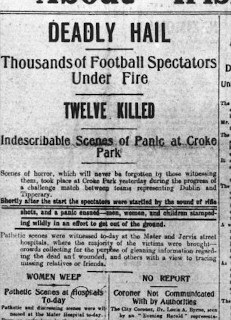
More than 30 people are killed or fatally wounded in a day of violence in Dublin on November 21, 1920, during the Irish War of Independence. It goes down in Irish history as the first “Bloody Sunday,” though unfortunately not the last.
Through the centuries the British have crushed Irish revolutionary movements through the use of spies and informers. Michael Collins, Minister for Finance of the Irish Republic, head of the secretive Irish Republican Brotherhood and Irish Republican Army (IRA) Chief of Intelligence, is in the process of beating the British at their own game. The day begins in the early morning hours with an IRA operation, organised by Collins, to assassinate members of the “Cairo Gang” – a team of undercover British intelligence agents working and living in Dublin. IRA members go to a number of addresses and kill or fatally wounded 16 men, mostly British Army intelligence officers. Five other men are wounded.
When word of the success of the operation gets back to Collins, knowing the caliber of the men in England‘s infamous “Black and Tan” force, he sends a message to the Gaelic Athletic Association, telling them to cancel that day’s Gaelic football match between Dublin and Tipperary. However, it is too late, and the match goes on.
Later that afternoon, lashing out blindly, the Black and Tans surround Croke Park during the match and move in. Their supposed purpose is to attempt to capture members of Sinn Féin who might be in the crowd, but they soon open fire indiscriminately on the players and spectators. They kill or fatally wound fourteen civilians and wound at least sixty others before members of the Auxiliary Division, another brutal force created to crush the Irish insurrection, finally manages to get them to cease-fire.
That evening, two Irish republicans and members of Collins’ squad, Dick McKee and Peadar Clancy, who had helped plan the earlier assassinations, along with a third man, a civilian named Conor Clune, who happened to be caught with the others, are beaten and shot dead in Dublin Castle by their captors, who claim they were killed during an escape attempt.
Overall, Bloody Sunday is considered a victory for the IRA, as Collins’s operation severely damages British intelligence, while the later reprisals do no real harm to the guerrillas but increase support for the IRA at home and abroad.
(Pictured: The headline of the Dublin Evening Herald reads ‘Latest Stories about Irish Tragedies’, 22nd November 1920. The newspaper reports on the massacre at a Croke Park football match, shootings in Dublin, and the discovery of a priest’s corpse in a Galway bog. Photo by Hulton Archive/Getty Images)
Under Article 12 of the Constitution of Ireland, a candidate for president may be nominated by:
at least twenty of the then 207 serving members of the Houses of the Oireachtas, or
at least four of 31 councils of the administrative counties, including county boroughs, or
themselves, in the case of a former or retiring president.
Outgoing president Seán T. O’Kelly had served two terms, and is ineligible to serve again. On April 27, the Minister for Local Government, Neal Blaney, signs the ministerial order opening nominations, with noon on May 19 as the deadline for nominations, and June 17 set as the date for a contest. All Irish citizens on the Dáil electoral register are eligible to vote.
Patrick McCartan, who had also been a candidate in the 1945 election and had served as a senator for Clann na Poblachta from 1948 to 1951, is nominated by two county councils only, short of the four required for nomination. Eoin O’Mahony also seeks and fails to secure a nomination by county councils.
De Valera wins the popular vote with 538,003 votes (56.3%) to Mac Eoin’s 417,536 votes (43.7%).
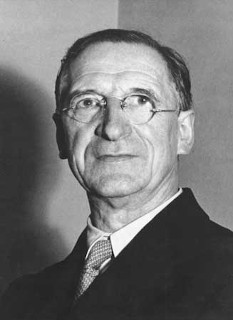
Éamon de Valera is inaugurated as the third President of Ireland on June 25, 1959.
The destruction of country houses in Ireland is a phenomenon of the Irish revolutionary period (1919–1923), which sees at least 275 country houses deliberately burned down, blown up, or otherwise destroyed by the Irish Republican Army.
The vast majority of the houses, known in Ireland as Big Houses, belong to the Anglo-Irish aristocracy of the Protestant Ascendancy. The houses of some Roman Catholic unionists, suspected informers, and members or supporters of the new Irish Free State government are also targeted. Although the practice by the IRA of destroying country houses begins in the Irish War of Independence, most of the buildings are destroyed during the Irish Civil War (1922–23).
Attacks are planned and organised, and generally focused on Irish peers who have sat in the House of Lords, members of the Senate of the Irish Free State and former Irish Unionist Party politicians. The assault on the “Big Houses” is part of a wider campaign against Free State supporters as a reprisal for the executions policy of the Government.
At least 76 country houses are destroyed in the War of Independence as thirty “Big Houses” are burned in 1920 and another 46 in the first half of 1921, mostly in the conflict’s Munster heartland which includes counties Cork, Kerry, Tipperary, Clare and Limerick. It is believed that 199 country houses are destroyed during the Irish Civil War. Some houses are destroyed in the fighting of the early months of the war, but the campaign against them begins in earnest in late 1922.
In most cases, no one is injured during the destruction of the house. It is recorded that in several cases, members of the IRA help the targeted family to remove their possessions from the house before it is destroyed. When Dermot Bourke’s house is attacked on January 29, 1923, he describes the IRA guerrillas as being “excessively polite” and apologetic. Nonetheless, there are incidents of violence and deaths in such attacks. The Church of Ireland Gazette records numerous instances of Unionists and Loyalists being shot, burned out or otherwise forced from their homes during the early 1920s.
Today, most of the targeted buildings are in ruins or have been demolished. Some have been restored by their owners, albeit often smaller in size, or have been rebuilt and are now used for other purposes.



 The
The 
 seamus dubhghaill