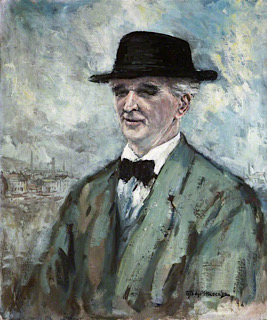
Conor is born on May 9, 1881, in Fortingale Street, Belfast, the third son and fourth child of William Connor, a tinsmith and sheet metal worker, who later becomes a gas fitter, and Mary Connor (née Wallace). He is educated at the Clifton Park central national school, where his artistic abilities are noticed by his music teacher. In 1894, he enrolls at the Belfast government school of design. He is a very successful student, and by 1903 has become an assistant teacher. He completes his studies in 1904, and begins an apprenticeship with the Belfast firm of lithographers, David Allen and Son. Through his work in the poster design department he develops an enthusiasm for using crayons on a textured surface. This becomes a characteristic feature of his later drawings. In these early years he first starts recording images of Belfast life, often sketched from behind a folded newspaper in the street. Influenced by the Gaelic revival, in the years 1907–9 he signs his name in several different ways such as “Liam” and “Liam Conor.” In later years he signs himself simply “Conor.”
Having abandoned his career as a lithographer around 1910, Conor concentrates his efforts on painting professionally. He begins exhibiting with the Belfast Art Society in 1910, and in the period that follows he spends time in Craigavad, County Down, the Blasket Islands in County Kerry, Dublin, and Donegal. During a visit to Paris, which he later recalls as being in 1912 and 1913, he meets the painter André Lhote. After his return to Belfast he is elected to the committee of the Belfast Art Society in 1913. On the outbreak of World War I, he is commissioned by the British government to record the everyday activities of munitions workers and soldiers in Ulster. His pictures mostly show soldiers in training and various scenes from the home front, including the work of women in munitions factories and hospitals. Described as “vigorous and personable, if rather folksy . . . effectively uniformed versions of the tinkers and shipyard workers for which he subsequently became known,” these paintings are exhibited and subsequently, in 1916, auctioned for the Ulster Volunteer Patriotic Fund. His long association with the Royal Hibernian Academy (RHA) begins in 1918 and he shows up to 200 works at the academy over the next forty-nine years.
In 1921, Conor moves to London, where he becomes acquainted with, among others, Sir William Orpen, Sir John Lavery, and Augustus John. He becomes a member of the Chelsea Arts Club, and contributes four paintings to the National Portrait Society as part of its spring exhibition in 1921. His friendship with Lavery is significant. Through him Conor receives a commission to paint the opening of the first Northern Ireland parliament in June 1921. He goes on to exhibit with a variety of influential bodies, including the Royal Academy of Arts, the Société Nationale des Beaux-Arts in Paris, and the Royal Society of Portrait Painters. In 1922, The Twelfth, executed c.1918, is shown in the Galerie Barbazanges in Paris, under the title Le cortège Orangiste à Belfast, as part of the World Congress of the Irish Race. He is represented at the Paris salon in 1923 and the following year he has a successful exhibition at the St. Stephen’s Green Gallery, Dublin.
In 1926, Conor travels to Philadelphia and New York, where, during his nine-month stay, he receives numerous commissions for portraits and has work shown in the Babcock Galleries, the Brooklyn Art Gallery, and the American Irish Historical Society. In 1932, he designs the costumes for the principals in the Pageant of St. Patrick, which marks the 1,500th anniversary of the saint’s coming to Ireland. That year also sees the unveiling of his muralUlster Past and Present at the Belfast Municipal Museum and Art Gallery. Measuring 2.8 by 7.4 metres, it is at the time the largest mural in the country. During World War II he is again appointed an official war artist and his work is represented at the exhibition of war artists at the National Gallery, London, in 1941. His book The Irish Scene is published in 1944, and though it sells well, the subsequent bankruptcy of his publishers mean that Conor receives no royalties. He also provides the illustrations for books by Lynn C. Doyle, the pseudonym of his friend Leslie Montgomery.
Although Conor is best known for his depictions of the everyday life of people in his native Belfast, in which he attempts to capture the “flash of humour which lightens their daily toil,” he also produces landscapes and portraits. His sitters included Douglas Hyde, St. John Greer Ervine, Charles D’Arcy, and Charles Vane-Tempest-Stewart, 7th Marquess of Londonderry. The Council for the Encouragement of Music and the Arts organises several successful Conor exhibitions. Their one-man show of 1945 becomes the first to tour the province, while their exhibition of his work in 1954 has an attendance in excess of 2,800. Conor closes his long-established studio on Stranmillis Road in 1960 but continuea to exhibit, notably with the Bell Gallery in 1964, 1966, and 1967.
(From: “Conor, William” by Frances Clarke, Dictionary of Irish Biography, http://www.dib.ie, October 2009 | Pictured: “William Conor,” oil on canvas by Gladys Maccabe, Ulster Folk Museum)
Morrow is born on April 26, 1863, in Comber, County Down, the second son of George Morrow, a painter and decorator from Clifton Street in west Belfast. Of his seven brothers, four, George, Jack, Edwin, and Norman, are also illustrators and all but one are artists. He is a keen ornithologist in his youth. In later life he is a keen walker and paints landscapes for leisure.
While studying under T. M. Lindsay at the Government School of Art in 1880, Morrow is awarded a £10 prize for drawing from the eminent publishers Cassell, Petter and Galpin. In 1881, while still learning his trade, he paints a mural of Belfast for the Working Men’s Institute in Rosemary Street, where his father is chairman. Later in that same year he exhibits a watercolour sketch of a standing figure entitled Meditative at the gallery of Rodman & Company, Belfast.
Morrow then wins a three-year scholarship worth £52 per year which he takes to the National Art Training School at South Kensington in 1882, where he begins a lifelong friendship with the British sculptor Albert Toft. In 1883, while still attending South Kensington, he joins the staff of The English Illustrated Magazine in preparation for the launch of the first edition. Two of his works are published in the Sunday at Home magazine in September of the same year.
J. Comyns Carr, first editor of TheEnglish Illustrated Magazine, commissions Morrow to complete a series on English industry when he has yet to complete his studies at South Kensington.
In 1890, Morrow begins illustrating for Bits and Good Words. He exhibits nine works at the Royal Academy of Arts between 1890 and 1904, all of which are watercolours, and another in 1917, and an offering in chalk at the 159th Exhibition, in the year of his death.
Morrow becomes a member of the Belfast Art Society in 1895, exhibiting with them in the same year. In 1896, a Morrow print is published in Volume 2 of the limited-edition print-collection Les Maîtres de l’Affiche selected by “Father of the Poster” Jules Chéret. In the same year he shows a watercolour of a Gurkha at the Earls Court in the Empire of India and Ceylon exhibition. In 1900, he exhibits with two Ulster artists, Hugh Thomson and Arthur David McCormick, at the Linen Hall Library in Belfast, who along with Morrow had contributed to the early success of TheEnglish Illustrated Magazine.
Morrow is one of the founders of the Ulster Arts Club in November 1902 along with five of his brothers, an organisation that has a nonsectarian interest in Celtic ideas, language and aesthetics. In November 1903, he exhibits at the first annual exhibition of the Club when he shows alongside John Lavery, Hans Iten, James Stoupe and F. W. Hull. He exhibits The Itinerant Musician, a watercolour that he had previously shown at the Royal Academy in 1902. Honorary membership is conferred upon him the following year. Three years later he is honoured with a solo exhibition of sketches and posters in conjunction with the Ulster Arts Club, at the Belfast Municipal Gallery.
In 1908, Morrow joins his brothers in an exhibition at 15 D’Olier Street, Dublin, an address which is later registered to the family business in 1913. Among his contributions to the family exhibition is his painting of Brandon Thomas, The Clarionette Player, which had previously been exhibited at the Royal Academy, and a poster entitled Irving in Dante.
In 1917, Morrow joins his brother George and 150 artists and writers, in petitioning the British Prime MinisterDavid Lloyd George to find a way of enacting the unsigned codicil to Hugh Lane’s will and establish a gallery to house Lane’s art collection in Dublin. Among the 32 notable artists who sign this petition are Jack B. Yeats, Sir William Orpen, Sir John Lavery, and Augustus John.
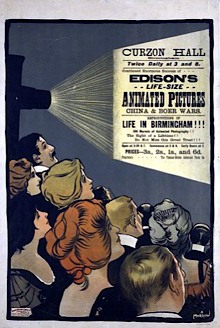
Morrow illustrates books for children and adults, but he is best known for the hundreds of posters he designs for the theatre, with the bulk of his commissions coming from just one lithographical printer, David Allen and Sons. As a cartoonist he draws for children’s annuals, and contributes three cartoons to Punch in 1923, 1925 and posthumously in 1931.
Morrow dies at his home in West Hoathly, West Sussex, on October 26, 1927, at the age of 64. He is survived by his wife and two children. His headstone in the local churchyard at All Saints Church, Highbrook is designed by his friend, the sculptor and architect, Albert Toft.
In his early years, Devlin is active in various local debating societies, where his associates include Cathal O’Byrne, who he retains a personal friendship despite later political differences. A committee member of the Belfast branch of the Irish National League (INL) in 1890, he joins the anti-Parnellite faction during the O’Shea divorce scandal (1891), becoming local secretary of the Irish National Federation (INF). His political model at this time is Thomas Sexton, MP for Belfast West, whose campaign he organises at the 1892 United Kingdom general election.
Although Healyism is strong in CatholicUlster, Devlin aligns himself with the faction led by John Dillon and, from 1899, with the United Irish League (UIL), founded by William O’Brien. From the late 1890s this brings Devlin into conflict with the Belfast Catholic Association of Dr. Henry Henry, bishop of Down and Connor (1895–1908). This organisation, though sometimes regarded as Healyite, is essentially based on the view that mass nationalist political mobilisation in Belfast can only bring trouble and ostracism, and that Catholic interests are best represented by allowing a small group of lay and clerical notables to broker concessions from the unionist majority. After a series of local election contests in Catholic wards and controversies between the pro-Devlin weekly Northern Star and the clerically controlled The Irish News, Devlin succeeds in marginalising the politically maladroit Henry by 1905. In the process, however, he takes on some of the qualities of his “Catholic establishment” opponents. At the same time, he moves onto the national political stage.
Returned unopposed for North Kilkenny (1902–06), Devlin is appointed secretary of the United Irish League of Great Britain in 1903, and of the parent body in Dublin in 1904. A speaking tour of the United States in 1902–03 convinces him of the organisational potential of Catholic fraternal organisations, and in 1905 he takes over the presidency of the Board of Erin faction of the Ancient Order of Hibernians (AOH), a specifically Catholic body which he proceeds to develop as an organisational arm of the Nationalist Party. Under his tutelage the AOH expands from 10,000 members in 1905 to 60,000 in 1909, despite opposition from some Catholic bishops who distrust it because of its close affiliation to Dillonism, its secrecy, and its habit of staging dances and other entertainments without paying what they regard as due deference to local priests. His AOH also faces opposition from a rival separatist body, the Irish-American Alliance AOH. Though far less numerous, this group is able to draw on the support of separatists within the American AOH and hinder Devlin’s attempts to mobilise the American organisation in his support. The AOH expands further after 1910 and is strengthened by becoming an approved society under the National Insurance Act 1911.
Belfast is where Devlin’s political career begins and where it ends. Organisational skill contributes substantially to his hold on the largely working-class seat of Belfast West, which he wins in 1906 on a platform that seeks to transcend religious boundaries by combining labour issues with the home rule demand. A lifelong bachelor, though short in stature, he is apparently highly attractive to women, and takes a special interest in their problems, no doubt mindful of the influence they might have on the political behaviour of their spouses. He founds a holiday home for working-class women. When the scholar Betty Messenger interviews former Belfast linen workers in the late 1960s and early 1970s, she is startled to discover the extent to which Devlin is remembered as a champion of the workers decades after his death. This image persists among Protestant workers as well as Catholics, and he is generally credited with various ameliorations of workplace conditions even when he had not been responsible for them.
Possessed of great oratorical skills and even greater organisational ability, Devlin effectively becomes the key organiser of the Nationalist Party from the early years of the twentieth century, relieving the party leader, John Redmond, of a great deal of the administrative burden of party affairs, and becoming well known abroad through fund-raising trips, especially in North America. His personal geniality makes him a great favourite at Westminster, and Irish socialists are dismayed at the willingness of British Labour Party MPs to accept him as an authentic Labour representative. Several MPs elected after 1906 can be identified as his protégés, and groups of Hibernian strong-arm men uphold the party leadership in such contests as the 1907 North Leitrimby-election and the 1909 “baton convention” which witnesses the final departure of William O’Brien and his supporters from the UIL. He is the only post-Parnellite MP to be admitted to the tight leadership group around Redmond. In 1913 he is a leading organiser of the National Volunteers.
When William O’Brien embarks on his personal initiative to deal with the Ulster problem through conciliation in the early Edwardian period, he finds a stern critic in Devlin and in turn demonises the “Molly Maguires” as sectarian corruptionists. Personally non-sectarian, Devlin, like other party leaders, endorses the shibboleth that home rule will prove a panacea for Ireland’s problems, including Ulster, and uses his credentials as a labour representative to dismiss popular unionism as a mere product of elite manipulation. In a period when the Vatican‘s Ne Temere decree on religiously mixed marriages is heightening Protestant fears about the “tyranny” of Rome, he seems to be oblivious to how his integration of Hibernianism and nationalism is exacerbating that problem. As the third home rule bill passes through Parliament and the Ulster Volunteer Force (UVF) mobilises, he encourages the Irish party leaders in the view that the Ulster unionist campaign is a gigantic bluff, dismissing contrary opinions even when held by other nationalist MPs. During these years the AOH clashes with the Irish Transport and General Workers’ Union (ITGWU) during the Dublin lock-out, and from late 1913 the AOH spearheads the Redmondite attempt to take over and dominate the Irish Volunteers.
Devlin endorses Redmond’s support for the British war effort and engages in extensive recruiting activity. He seems to be motivated, at least in part, by the belief that after the war nationalist ex-soldiers can be used to overawe the Ulster unionists by the threat of force. According to Stephen Gwynn, Devlin wishes to apply for an officer’s commission but is asked not to do so by Redmond on the grounds that the party needs his organisational skills.
Devlin’s career is decisively shaped by his decision to use his influence to persuade northern nationalists to accept temporary partition, in fulfilment of the flawed agreement arrived at between David Lloyd George, Sir Edward Carson, and Redmond in the aftermath of the 1916 Easter Rising. He later claims he has been decisively influenced by the prospect that under this agreement the excluded area would be governed directly from Westminster, rather than by a local, Orange-dominated parliament. He forces the agreement through a Belfast-based convention despite protests from west Ulster nationalists, but the proposal collapses after it transpires that Lloyd George has made incompatible commitments to nationalists and unionists. Northern nationalism immediately splits between west and south Ulster dissidents and Devlin’s loyalists predominant in Belfast and east Ulster, and the next year sees massive secessions of AOH members outside Ulster to Sinn Féin. Although he retains a core of loyal supporters, he is reduced from a national to a sectional leader. As a member of the Irish convention (1917–18) he sides with Bishop Patrick O’Donnell against Redmond on the issue of seeking a compromise settlement with southern unionists on the basis of home rule without fiscal autonomy. He is offered the leadership of the Nationalist Party on Redmond’s death in 1918, but concedes the honour to his long-standing mentor, John Dillon.
Devlin holds Belfast West until 1918 and easily sweeps aside an attempt by Éamon de Valera to displace him from the Falls division of Belfast at the general election of that year, though the electoral decimation of the Nationalist Party elsewhere leaves him leading a rump of only seven MPs. In the ensuing parliament he is an outspoken critic of government policy towards Ireland and highlights sectarian violence against northern nationalists. Clearly discouraged and with boundary changes militating against retention of the Falls seat, he unsuccessfully contests the Liverpool Exchange constituency as an Independent Labour candidate in 1922. Elected for Antrim and Belfast West to the Parliament of Northern Ireland in 1921, he eventually takes his seat in 1925, holding it until 1929, when he combines representation for Belfast Central with that for Fermanagh and South Tyrone at Westminster.
Only after the boundary commission ends the border nationalists’ hopes of speedy incorporation in the Irish Free State is Devlin able to assert leadership of northern nationalism as a whole on the basis of attendance at the northern parliament. Even then he is considerably handicapped by recriminations over the events of 1916–25. He embarks on his last significant political campaign in 1928, when he seeks to unite minority politics through the agency of the National League of the North (NLN). The initiative, emphasising social reform, is unsuccessful. His own political baggage is a hindrance to the unity of the factions that minority politics had thrown up over the previous ten years, while the minority community itself is politically demoralised by the fate that has overtaken it, and the unionist government shows itself unwilling to make concession to him. The project, moreover, coincides with the onset of the gastric illness, exacerbated by heavy smoking, that takes his life on January 18, 1934. For some time before his death he ceases to attend the Northern Ireland parliament.
Devlin’s political career is one of great promise only partially fulfilled, its ultimate realisation undermined firstly by the fallout from the Easter Rising that destroyed the vehicle of his political ambitions, and secondly by the sequence of events that led to the creation of a constitutional entity so constructed that all nationalist politicians, regardless of talent, were effectively denied a route to power. Only at his death does the unionist regime adequately acknowledge his political stature. His funeral is attended by at least three Northern Ireland cabinet ministers, together with representatives of the government of the Irish Free State. Northern nationalism never again produces a leader of his ability in the Stormont era. His ability to use Westminster to promote the interests of Ulster nationalists is comparable to John Hume‘s use of Europe for the same purpose from the mid 1970s. After his death the nationalist party in Belfast grows increasingly reliant on middle-class leadership and is eventually displaced by nationalist labour splinter groups, some of whose prominent activists, such as Harry Diamond, had begun their careers as election workers for Devlin.
Like William Orpen, Lavery is appointed an official artist in World War I. Ill-health, however, prevents him from travelling to the Western Front. A serious car crash during a Zeppelin bombing raid also keeps him from fulfilling this role as war artist. He remains in Britain and mostly paints boats, aeroplanes, and airships. During the war years he is a close friend of H.H. Asquith‘s family and spends time with them at their Sutton Courtenay Thames-side residence, painting their portraits and idyllic pictures like Summer on the River (Hugh Lane Gallery).
After the war Lavery is knighted and in 1921 he is elected to the Royal Academy of Arts.
During this time, he and his wife, Hazel, are tangentially involved in the Irish War of Independence and the Irish Civil War. They give the use of their London home to the Irish negotiators during the negotiations leading to the Anglo-Irish Treaty. After Michael Collins is assassinated, Lavery paints Michael Collins, Love of Ireland, now in the Hugh Lane Gallery. In 1929, Lavery makes substantial donations of his work to both the Ulster Museum and the Hugh Lane Gallery and in the 1930s he returns to Ireland. He receives honorary degrees from the University of Dublin and Queen’s University Belfast. He is also made a free man of both Dublin and Belfast. A long-standing member of Glasgow Art Club, Lavery exhibits at the club’s annual exhibitions, including its exhibition in 1939 in which his The Lake at Ranelagh is included.
Artist William Conor is born on May 6, 1881, in the Old Lodge Road area of north Belfast, the son of a wrought-iron worker.
Celebrated for his warm and sympathetic portrayals of working-class life in Ulster, Conor studies at the Government School of Design in Belfast in the 1890s. His artistic talents are recognized at the early age of ten when a teacher of music, Louis Mantell, notices the merit of his chalk drawings and arranges for him to attend the College of Art.
Conor is one of the first Academicians when the Belfast Art Society becomes the Ulster Academy of Arts in 1930. He becomes an Associate RHA in 1938 and a full member in 1946. Exhibitions at the Victor Waddington Galleries are held in 1944 and 1948. In 1952 he is awarded the Order of the British Empire (OBE) and in 1957 he is elected President of the Royal Ulster Academy, an office he holds until 1964.
More than 50 works of his in crayon and watercolour are in the permanent collections of the Ulster Museum.
(Pictured: Bronze statue of William Conor at Conor’s Corner, Shankill Road, Belfast)
Sir John Lavery, Irish painter best known for his portraits and wartime depictions, dies of natural causes at the age of 84 in Kilmoganny, County Kilkenny, on January 10, 1941.
Like William Orpen, Lavery is appointed an official artist in World War I. Ill-health, however, prevents him from travelling to the Western Front. A serious car crash during a Zeppelin bombing raid also keeps him from fulfilling this role as war artist. He remains in Britain and mostly paints boats, aeroplanes, and airships. During the war years he is a close friend of H.H. Asquith‘s family and spends time with them at their Sutton Courtenay Thames-side residence, painting their portraits and idyllic pictures like Summer on the River (Hugh Lane Gallery).
After the war Lavery is knighted and in 1921 he is elected to the Royal Academy of Arts.
During this time, he and his wife, Hazel, are tangentially involved in the Irish War of Independence and the Irish Civil War. They give the use of their London home to the Irish negotiators during the negotiations leading to the Anglo-Irish Treaty. After Michael Collins is assassinated, Lavery paints Michael Collins, Love of Ireland, now in the Hugh Lane Gallery. In 1929, Lavery makes substantial donations of his work to both the Ulster Museum and the Hugh Lane Gallery and in the 1930s he returns to Ireland. He receives honorary degrees from the University of Dublin and Queen’s University Belfast. He is also made a free man of both Dublin and Belfast. A long-standing member of Glasgow Art Club, Lavery exhibits at the club’s annual exhibitions, including its exhibition in 1939 in which his The Lake at Ranelagh is included.



 seamus dubhghaill