seamus dubhghaill

Promoting Irish Culture and History from Little Rock, Arkansas, USA


Leave a comment

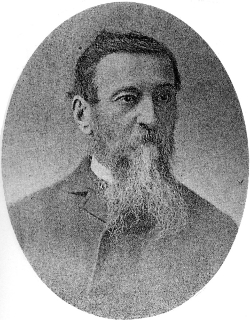
Birth of Thomas Clarke Luby, Irish Revolutionary

thomas-clarke-luby

Thomas Clarke Luby, Irish revolutionary, author, journalist and one of the founding members of the Irish Republican Brotherhood, is born in Dublin on January 16, 1822.

Luby is the son of a Church of Ireland clergyman from Templemore, County Tipperary, his mother being a Catholic. He is educated at Trinity College Dublin where he studies law and puts in the necessary number of terms in London and Dublin where he acquires a reputation as a scholar and takes his degree. He goes on to teach at the college for a time.

Luby supports the Repeal Association and contributes to The Nation newspaper. After the breach with Daniel O’Connell, he joins the Young Irelanders in the Irish Confederation. He is deeply influenced by James Fintan Lalor at this time. Following the suppression of the Young Ireland Rebellion of 1848, he with Lalor and Philip Gray attempt to revive the fighting in 1849 as members of the secret Irish Democratic Association. This, however, ends in failure.

In 1851 Luby travels to France, where he hopes to join the French Foreign Legion to learn infantry tactics but finds the recruiting temporarily suspended. From France he goes to Australia for a year before returning to Ireland. From the end of 1855 he edits the Tribune newspaper founded by John E. Pigot who had been a member of The Nation group. During this time, he remains in touch with the small group of ’49 men including Philip Gray and attempts to start a new revolutionary movement. Luby’s views on social issues grow more conservative after 1848 which he makes clear to James Stephens whom he meets in 1856.

In the autumn of 1857 Owen Considine arrives with a message signed by four Irish exiles in the United States, two of whom are John O’Mahony and Michael Doheny. The message conveys the confidence they have in Stephens and asks him to establish an organisation in Ireland to win national independence. Considine also carries a private letter from O’Mahony to Stephens which is a warning, and which is overlooked by Luby and Stephens at the time. Both believe that there is a strong organisation behind the letter, only later to find it is rather a number of loosely linked groups. On December 23 Stephens dispatches Joseph Denieffe to America with his reply which is disguised as a business letter dated and addressed from Paris. In his reply, Stephen’s outlines his conditions and his requirements from the organisation in America.

On March 17, 1858, Denieffe arrives in Dublin with the acceptance of Stephens’s terms by the New York Committee and the eighty pounds. On that very evening the Irish Republican Brotherhood is established in Peter Langan’s timberyard in Lombard Street.

In mid-1863 Stephens informs his colleagues he wishes to start a newspaper, with financial aid from O’Mahony and the Fenian Brotherhood in America. The offices are established at 12 Parliament Street, almost at the gates of Dublin Castle. The first issue of the Irish People appears on November 28, 1863. The staff of the paper along with Luby are Charles J. Kickham and Denis Dowling Mulcahy as the editorial staff. Jeremiah O’Donovan Rossa and James O’Connor have charge of the business office, with John Haltigan being the printer. John O’Leary is brought from London to take charge in the role of Editor.

On July 15, 1865, American-made plans for a rising in Ireland are discovered. Superintendent Daniel Ryan, head of the G Division of the Dublin Metropolitan Police at Dublin Castle, has an informer within the offices of the Irish People who supplies him with an “action this year” message on its way to the IRB unit in Tipperary. With this information, Ryan raids the offices of the Irish People on Thursday, September 15, followed by the arrests of Luby, O’Leary and O’Donovan Rossa. Kickham is caught after a month on the run. Stephens is also caught with the support of Fenian prison warders. The last number of the paper is dated September 16, 1865.

After his arrest and the suppression of the Irish People, Luby is sentenced to twenty years of penal servitude. He is released in January 1871 but is compelled to remain away from Ireland until the expiration of his sentence.

Upon his release Luby goes first to the Continent and later settles in New York City. He lectures all over the country for years and writes for a number of Irish newspapers on political topics. At the memorial meeting on the death of John Mitchel, he delivers the principal address in Madison Square Garden.

Thomas Clarke Luby dies at 109½ Oak Street, Jersey City, New Jersey of paralysis, on November 29, 1901, and is buried in a grave shared with his wife in Bayview Cemetery in Jersey City. His epitaph reads: “Thomas Clarke Luby 1822–1901 He devoted his life to love of Ireland and quest of truth.”

Leave a comment

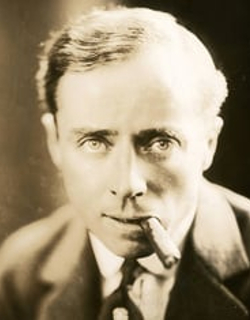
Birth of Herbert Brenon, Director, Actor & Screenwriter

herbert-brenon

Herbert Brenon, Irish film director, actor and screenwriter during the era of silent movies through the 1930s, is born Alexander Herbert Reginald St. John Brenon on January 13, 1880.

Brenon is born at 25 Crosthwaite Park, in Kingstown (now Dún Laoghaire, County Dublin) to journalist, poet, and politician Edward St. John Brenon and Francis Harries.

In 1882, the family moves to London, where Brenon is educated at St. Paul’s School and at King’s College London. He starts out as a stagehand in New York City and by 1909 he operates a small picture theatre in Pennsylvania. Before becoming a director, he performs in vaudeville acts with his wife, Helen Oberg.

In 1911 Brenon is hired as a writer by Carl Laemmle, directing his first short the following year. Signed by William Fox in 1915, he graduates to feature films. With Paramount Pictures from 1923, he directs several spectacular productions with British themes, including the silent version of Beau Geste (1926). He regards sound pictures with a measure of apprehension.

Some of his more noteworthy films are the first movie adaptations of Peter Pan (1924) and the aforementioned Beau Geste (1926), Sorrell and Son (1927) for which he is nominated for the Academy Award for Best Director in the 1st Academy Awards, Laugh, Clown, Laugh (1928) with Lon Chaney, and The Flying Squad (1940), his last.

Brenon returns to Great Britain in 1934, but his career is well on the decline, and he retires in 1940.

Herbert Brenon dies in Los Angeles, California on June 21, 1958, and is interred in a private mausoleum at Woodlawn Cemetery, Bronx, New York.


Leave a comment

Mikhail Gorbachev Receives Freedom of the City of Dublin

mulcahy-and-gorbachev

Mikhail Gorbachev, the former president of the Soviet Union, becomes the 71st person to receive the Freedom of the City of Dublin at a special meeting in the City Hall on January 9, 2002, following in the footsteps of Pope John Paul II, Nelson Mandela, and members of U2.

“You helped change and enhance the lives of hundreds of millions of people,” the Lord Mayor of Dublin, Cllr. Michael Mulcahy says as he presents the award. “There are few people in the history of the world of whom that can be stated.”

City councillors in their robes assemble for the occasion and the guests include Cardinal Desmond Connell, the Papal Nuncio, Archbishop Giuseppe Lazzarotto, and other members of the diplomatic corps. Gorbachev is also presented with a dove of peace in Waterford Crystal.

In his acceptance speech, the former Communist leader says there have been many events in his life, big and small, joyful and sad. “The event that is happening today in this wonderful hall is very special.”

He says Ireland has taken the right road in emphasising knowledge, education and high technology. He quips that President Mary McAleese had said to him over lunch, “We don’t have any natural resources other than the rain.”

Gorbachev notes that as a Freeman of the City of Dublin he is entitled to graze sheep anywhere in Dublin. He assures his audience he will “buy a flock” to exercise that right. “I have seen some very, very nice places in the Park, near the President’s palace.”

At a news conference in the Mansion House earlier in the day, Gorbachev comes in for sharp questioning from Eoin Ó Murchú, a journalist, who asks “ex-Comrade Gorbachev” if he felt any sense of remorse or guilt when he “stood passively aside” while the Soviet Union was destroyed and ordinary people were reduced to poverty and prostitution. He also queries Gorbachev about his decision to take part in a television commercial for a chain of pizza restaurants.

Ignoring the suggestion that he has demeaned himself by appearing in the television advertisement, Gorbachev replies equally sharply, “My advice to you as a comrade – you used the word ‘comrade’ – is that you too should probably get rid of this kind of ideological straitjacket.”

Gorbachev denies having stood idly by while the USSR was dismantled. Commenting on the Northern Ireland situation he says, “This is one of those processes where people have to make difficult choices. You will see politicians who have a ready-made recipe for everything, in many cases to use force and bombs.”

It was good that, instead of bombing, there was a peace process. Bombing was not a solution and he welcomes the peace efforts being made and the fact that parties are acting “both prudently and responsibly.”

(From The Irish Times, January 10, 2002 | Pictured: Lord Mayor Michael Mulcahy and Mikhail Gorbachev, Doheny & Nesbitt’s Public House, January 8, 2002)


Leave a comment

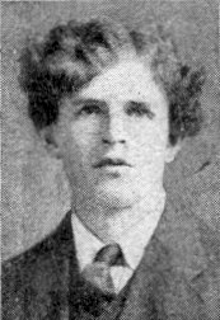
Birth of Patrick MacGill, Poet & Novelist

patrick-macgill

Patrick MacGill, journalist, poet and novelist, is born on December 24, 1889, in Glenties, County Donegal. He is known as “The Navvy Poet” because he works as a navvy before he begins writing.

During World War I, MacGill serves with the London Irish Rifles (1/18th Battalion, London Regiment) and is wounded at the Battle of Loos on October 28, 1915. He is recruited into Military Intelligence and writes for MI 7b between 1916 and the Armistice in 1918. He writes a memoir-type novel called Children of the Dead End.

Patrick MacGill dies on November 22, 1963, the same day that U.S. President John F. Kennedy is assassinated in Dallas, Texas.

In early 2008, a docu-drama starring Stephen Rea is made about the life of Patrick MacGill, which is released in Ireland in 2009 as Child of the Dead End. One of the film’s locations is the boathouse of Edinburgh Canal Society at Edinburgh on the Union Canal, and one of its rowing boats.

An annual literary MacGill Summer School is held in Glenties in mid-July each year in his honour. A statue in his honour is on the bridge where the main street crosses the river in Glenties. He has three children, Christine, Patricia and Sheila MacGill.


Leave a comment

Harrods Bombing

harrods-bombing

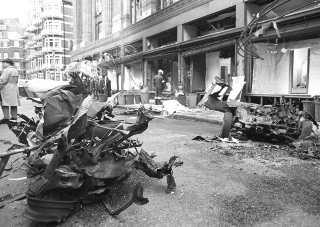
A Provisional Irish Republican Army (PIRA) car bomb kills six and injures ninety outside London‘s Harrods department store, a large, upmarket department store in the affluent Knightsbridge district near Buckingham Palace on December 17, 1983. The IRA Army Council claims that it has not authorised the attack and expresses regret for the civilian casualties. After the bombing, the IRA changes its tactic to focus on military targets on the mainland.

Harrods had been the target of an earlier IRA bomb on December 21, 1974, which was placed in the northeast corner of the first floor. There was a very short warning, and the store was in the process of being cleared when it exploded. It was also the target of a much smaller IRA bomb almost ten years later, in January 1993, which injured four people.

From 1973 the Provisional IRA has carried out waves of bombing attacks on commercial targets in London and elsewhere in England as part of its “economic war.” The goal is to damage the economy and cause disruption, which would put pressure on the British government to withdraw from Northern Ireland. On December 10, 1983, the IRA carries out its first attack in London in some time when a bomb explodes at the Royal Artillery Barracks, injuring three British soldiers.

One week later, on the afternoon of December 17, IRA members park a car bomb near the side entrance of Harrods, on Hans Crescent. The bomb contains 25 to 30 lbs. of explosives and is set to be detonated by a timer. It is left in a 1972 blue Austin 1300 GT four-door sedan. At 12:44 PM a man using an IRA codeword phones the central London branch of the Samaritans charity. The caller says there is a car bomb outside Harrods and another bomb inside Harrods and gives the car’s registration plate. According to police, he does not give any other description of the car.

The bomb explodes at about 1:21 PM, as four police officers in a car, an officer on foot and a police dog-handler near the suspect vehicle. Three officers and three bystanders are killed, and 90 others are injured, including 14 police officers. The blast damages 24 cars and all five floors on the side of Harrods, sending a shower of glass down onto the street. The police car absorbs much of the blast and this likely prevents further casualties.

Five people die at the scene of the bombing and a sixth later dies in the hospital. The bystanders who die are Philip Geddes (24), a journalist who had heard about the alert and went to the scene, Jasmine Cochrane-Patrick (25) and Kenneth Salvesen (28), a United States citizen. The Metropolitan Police Service officers killed are Sergeant Noel Lane (28) and Constable Jane Arbuthnot (22). A third officer, Inspector Stephen Dodd (34), dies in the hospital from his injuries on December 24. Constable Jon Gordon survives but loses both legs and part of a hand in the blast.

At the time of the explosion, a second warning call is made by the IRA. The caller says that a bomb has been left in the C&A department store at the east end of Oxford Street. Police clear the area and cordon it off, but this claim is found to be false. In the aftermath of the attack, hundreds of extra police and mobile bomb squads are drafted into London. Aleck Craddock, chairman of Harrods, reports that £1 million in turnover has been lost as a result of the bombing. Despite the damage, Harrods re-opens three days later, proclaiming it will not be “defeated by acts of terrorism.” Denis Thatcher, the husband of British Prime Minister Margaret Thatcher, visits the store and tells reporters “no damned Irishman is going to stop me going there.”


Leave a comment

Birth of Frank Delaney, Novelist, Journalist & Broadcaster

frank-delaney

Frank Delaney, Irish novelist, journalist and broadcaster, is born in County Tipperary on October 24, 1942. He is the author of The New York Times best-seller Ireland, the non-fiction book Simple Courage: A True Story of Peril on the Sea, and many other works of fiction, non-fiction and collections.

Delaney begins working as a newsreader for the Irish state radio and television network RTÉ in 1970. In the early 1970s he becomes a news reporter for the BBC in Dublin, and covers an intense period of violence known as the Troubles. After five years of reporting on the violence, he moves to London to work in arts broadcasting. In 1978 he creates the weekly Bookshelf programme for BBC Radio 4, which covers books, writers and the business of publishing. Over the next five-and-a-half years he interviews over 1,400 authors, including Anthony Burgess, John Updike, Margaret Atwood, Christopher Isherwood and Stephen King.

On television, Delaney writes and presents for Omnibus, the BBC’s weekly arts series. He serves as the Literature Director of the Edinburgh Festival in 1980, and hosts his own talk show Frank Delaney in the early 1980s, which features many cultural and literary personalities. Afterward, he creates and presents Word of Mouth, the BBC’s radio programme about language, as well as a variety of radio and television documentaries including specials on James Joyce, Robert Graves, Ernest Hemingway in Paris, and the Shakespeare industry. He presents The Book Show on the Sky News satellite channel for many years.

Delaney’s first book, James Joyce’s Odyssey (1981), is well received and becomes a best-seller in the UK and Ireland. He writes and presents the six-part documentary series The Celts: Rich Traditions and Ancient Myths (1987) for the BBC, and writes the accompanying book. He subsequently writes five books of non-fiction (including Simple Courage), ten novels (including Ireland, Venetia Kelly’s Traveling Show and Tipperary), one novella, and a number of short stories. He also edits many compilations of essays and poetry.

After moving to the United States and settling in Kent, Connecticut in 2002, Delaney writes the screenplay for an adaptation of Goodbye, Mr. Chips (2002), which stars Martin Clunes and is shown on ITV in Britain, and in the Masterpiece Theatre series in the United States. His articles are published by newspapers in United States, the UK and Ireland, including on the Op-ed pages of The New York Times. He is a frequent public speaker, and is a contributor and guest on National Public Radio (NPR) programmes.

On Bloomsday 2010, Delaney launches Re:Joyce, a series of short weekly podcasts that go page-by-page through James Joyce’s Ulysses, discussing its allusions, historical context and references.

Frank Delaney dies in Danbury Hospital in Danbury, Connecticut on February 21, 2017 after suffering a stroke the previous day.


1 Comment

Birth of Marguerite Gardiner, Novelist & Journalist

marguerite-power-farmer-gardiner

Marguerite Gardiner, Countess of Blessington, Irish novelist, journalist, and literary hostess, is born near Clonmel, County Tipperary on September 1, 1789. She becomes acquainted with Lord Byron in Genoa and writes a book about him.

Born Margaret Power, she is a daughter of Edmund Power and Ellen Sheehy, small landowners. She is “haphazardly educated by her own reading and by her mother’s friend Ann Dwyer.” Her childhood is blighted by her father’s character and poverty, and her early womanhood made wretched by a compulsory marriage at the age of fifteen to Captain Maurice St. Leger Farmer, an English officer whose drunken habits finally bring him as a debtor to the King’s Bench Prison, where he dies by falling out of a window in October 1817. She had left him after three months of marriage.

Marguerite later moves to Hampshire, England to live for five years with the family of Thomas Jenkins, a sympathetic and literary sea captain. Jenkins introduces her to the Irishman Charles John Gardiner, 1st Earl of Blessington, a widower with four children and seven years her senior. They marry at St. Mary’s, Bryanston Square, Marylebone, on February 16, 1818, only four months after the death of her first husband.

Of rare beauty, charm and wit, Lady Blessington is no less distinguished for her generosity and for the extravagant tastes she shares with her second husband, which results in encumbering his estates with debt. On August 25, 1822, they set out for a continental tour with Marguerite’s youngest sister, the 21-year-old Mary Anne, and servants. On the way they meet Count Alfred D’Orsay, who had first become an intimate of Lady Blessington in London in 1821, in Avignon on November 20, 1822, before settling at Genoa for four months from March 31, 1823. There they meet Lord Byron on several occasions, giving Lady Blessington material for her Conversations with Lord Byron.

After that they settle for the most part in Naples, where she meets the Irish writer Richard Robert Madden, who is to become her biographer. They also spend time in Florence with their friend Walter Savage Landor, author of Imaginary Conversations which she greatly admires.

It is in Italy, on December 1, 1827, that Count D’Orsay marries Harriet Gardiner, Lord Blessington’s only daughter by his former wife. The Blessingtons and the newlywed couple move to Paris towards the end of 1828, taking up residence in the Hôtel Maréchal Ney, where the Earl suddenly dies at the age of 46 of an apoplectic stroke in 1829. D’Orsay and Harriet then accompanied Lady Blessington to England, but the couple separates soon afterwards amidst much acrimony. D’Orsay continues to live with Lady Blessington until her death. Their home, first at Seymour Place, and afterwards Gore House, Kensington, now the site of the Royal Albert Hall, become a centre of attraction for all that is distinguished in literature, learning, art, science and fashion. Benjamin Disraeli writes Venetia whilst staying there, and it is at her home that Hans Christian Andersen first meets Charles Dickens.

After her husband’s death Lady Blessington supplements her diminished income by contributing to various periodicals as well as by writing novels. She is for some years editor of The Book of Beauty and The Keepsake, popular annuals of the day. In 1834 she publishes her Conversations with Lord Byron. Her Idler in Italy (1839–1840), and Idler in France (1841) are popular for their personal gossip and anecdotes, descriptions of nature and sentiment.

Early in 1849, Count D’Orsay leaves Gore House to escape his creditors. Subsequently the furniture and decorations are sold in a public sale successfully discharging Lady Blessington’s debts. She joins the Count in Paris, where she dies on June 4, 1849, of a burst heart. On examination it is discovered that her heart is three times normal size.

(Pictured: Marguerite, Countess of Blessington, painted by Sir Thomas Lawrence in 1822)


Leave a comment

Birth of Januarius MacGahan, Journalist & Correspondent

januarius-macgahan

Januarius Aloysius MacGahan, American journalist and war correspondent for the New York Herald and The Daily News, is born near New Lexington, Ohio on June 12, 1844. His articles describing the massacre of Bulgarian civilians by Turkish soldiers and irregular volunteers in 1876 creates public outrage in Europe and are a major factor in preventing Britain from supporting Turkey in the Russo–Turkish War of 1877–78, which leads to Bulgaria gaining independence from the Ottoman Empire.

MacGahan’s father is an immigrant from Ireland who had served on the Northumberland, the ship which took Napoleon into exile on Saint Helena. He moves to St. Louis, where he briefly works as a teacher and as a journalist. There he meets his cousin, General Philip Sheridan, an American Civil War hero also of Irish parentage, who convinces him to study law in Europe. He sails to Brussels in December 1868.

MacGahan does not get a law degree, but he discovers that he has a gift for languages, learning French and German. He runs short of money and is about to return to America in 1870 when the Franco-Prussian War breaks out. Sheridan happens to be an observer with the German Army, and he uses his influence to persuade the European editor of the New York Herald to hire MacGahan as a war correspondent with the French Army.

MacGahan’s vivid articles from the front lines describing the stunning defeat of the French Army win him a large following, and many of his dispatches to the Herald are reprinted by European newspapers. When the war ends, he interviews French leader Léon Gambetta and Victor Hugo and, in March 1871, he hurries to Paris and is one of the first foreign correspondents to report on the uprising of the Paris Commune. He is arrested by the French military and nearly executed and is only rescued through the intervention of the U.S. Minister to France Elihu B. Washburne.

In 1871 MacGahan is assigned as the Herald‘s correspondent to Saint Petersburg. He learns Russian, mingles with the Russian military and nobility, covers the Russian tour of General William Tecumseh Sherman and meets his future wife, Varvara Elagina, whom he marries in 1873. In 1874 he spends ten months in Spain, covering the Third Carlist War.

In 1876 MacGahan quarrels with James Gordon Bennett Jr., the publisher of the New York Herald, and leaves the newspaper. He is invited by his friend, Eugene Schuyler, the American Consul-General in Constantinople, to investigate reports of large-scale atrocities committed by the Turkish Army following the failure of an attempted uprising by Bulgarian nationalists in April 1876. He obtains a commission from The Daily News, then the leading liberal newspaper in England, and leaves for Bulgaria on July 23, 1876.

MacGahan reports that the Turkish soldiers have forced some of the villagers into the church, then the church is burned, and survivors tortured to learn where they have hidden their treasures. He says that of a population of seven thousand, only two thousand survive. According to his account, fifty-eight villages in Bulgaria are destroyed, five monasteries demolished, and fifteen thousand people in all massacred. These reports, published first in The Daily News, and then in other papers, cause widespread popular outrage against Turkey in Britain. The government of British Prime Minister Benjamin Disraeli, a supporter of Turkey, tries to minimize the massacres and says that the Bulgarians are equally to blame, but his arguments are refuted by the newspaper accounts of MacGahan.

In the wake of the massacres and atrocities committed by the Ottoman forces during the suppression of the April Uprising, as well as centuries-long conflicts between Russia and Turkey in Crimea, the Russian Government, stirred by anti-Turkish and Pan-Slavism sentiment, prepare to invade the Ottoman Empire, and declare war on it on April 24, 1877. The Turkish Government of Sultan Abdul Hamid II appeals for help to Britain, its traditional ally against Russia, but the British government responds that it cannot intervene “because of the state of public feeling.”

MacGahan is assigned as a war correspondent for The Daily News and, thanks to his friendship with General Skobelev, the Russian commander, rides with the first units of the Russian Army as it crosses the Danube into Bulgaria. He covers all the major battles of the Russo–Turkish War, including the Siege of Plevna and the Battle of Shipka Pass. He reports on the final defeat of the Turkish armies and is present at the signing of the Treaty of San Stefano, which ends the war.

MacGahan is in Constantinople, preparing to travel to Berlin for the conference that determines the final borders of Bulgaria, when he catches typhoid fever. He dies on June 9, 1878, and is buried in the Greek cemetery, in the presence of diplomats, war correspondents, and General Skobelev. Five years later his body is returned to the United States and reburied in New Lexington and a statue is erected in his honor by a society of Bulgarian Americans.


Leave a comment

Birth of Author & Journalist Mary Kenny

mary-kenny

Mary Kenny, Irish author, broadcaster, playwright and journalist, is born in Dublin on April 4, 1944. She is a frequent columnist for the Irish Independent and is a founding member of the Irish Women’s Liberation Movement (IWLM). She has modified the radical ideas of her past but not rejected feminist principles.

Kenny grows up in Sandymount and is expelled from convent school at age 16. She begins working at the London Evening Standard in 1966 on the Londoner’s Diary, later as a general feature writer, and is woman’s editor of The Irish Press in the early 1970s.

Kenny is one of the founding members of the Irish Women’s Liberation Movement. Although the group has no formal structure of officials, she is often seen as the “ringleader” of the group. In March 1971, as part of an action by the IWLM, she walks out of Haddington Road church after the Archbishop of Dublin‘s pastoral is read out from the pulpit, confirming that “any contraceptive act is always wrong,” saying “this is Church dictatorship.” In a follow-up letter to The Irish Times she explains her actions by saying Ian Paisley was right, “Home Rule is Rome Rule.”

In 1971, Kenny travels with Nell McCafferty, June Levine and other Irish feminists on the so-called “Contraceptive Train” from Dublin to Belfast to buy condoms, then illegal within the Republic of Ireland. Later that year she returns to London as Features Editor of the Evening Standard.

In 1973, Kenny is allegedly “disturbed in the arms of a former cabinet minister of President Obote of Uganda during a party,” which leads poet James Fenton to coin the euphemism “Ugandan discussions” to mean sexual intercourse. The phrase is first used by the magazine Private Eye on March 9, 1973, but has been widely used since then and is included by the BBC in a list of “The 10 most scandalous euphemisms” in 2013.

Kenny has written for many British and Irish broadsheet newspapers, including the Irish Independent, The Times, The Guardian, The Daily Telegraph and The Spectator and has authored books on William Joyce and Catholicism in Ireland. She also writes for the weekly The Irish Catholic. She is known in the UK as a Roman Catholic journalist. Crown and Shamrock: Love and Hate between Ireland and the British Monarchy (2009), is described by R.F. Foster as “characteristically breezy, racy and insightful.” She is author of the play Allegiance, in which Mel Smith plays Winston Churchill and Michael Fassbender plays Michael Collins, at the Edinburgh Festival in 2006.

Kenny marries journalist and writer Richard West in 1974, and the couple raises two children, Patrick West and Ed West, both journalists.


Leave a comment

Birth of Nell McCafferty, Journalist & Feminist

nell-mccafferty

Nell McCafferty, Irish journalist, playwright, civil rights campaigner and feminist, is born in Derry, County Londonderry, Northern Ireland on March 28, 1944. In her journalistic work she has written for The Irish Press, The Irish Times, Sunday Tribune, Hot Press and The Village Voice.

McCafferty is born to Hugh and Lily McCafferty and spends her early years in the Bogside area of Derry. She is admitted to Queen’s University Belfast, where she takes a degree in Arts. After a brief spell as a substitute English teacher in Northern Ireland and a stint on an Israeli kibbutz, she takes up a post with The Irish Times.

McCafferty is a founding member of the Irish Women’s Liberation Movement. Her journalistic writing on women and women’s rights reflects her beliefs on the status of women in Irish society. In 1971, she travels to Belfast with other members of the Irish Women’s Liberation Movement in order to protest the prohibition of the importation and sale of contraceptives in the Republic of Ireland.

After the disintegration of the Irish Women’s Liberation Movement, McCafferty remains active in other women’s rights groups, as well as focusing her journalism on women’s rights. Her most notable work is her coverage of the Kerry Babies case, which is recorded in her book, A Woman to Blame. She contributes the piece “Coping with the womb and the border” to the 1984 anthology Sisterhood Is Global: The International Women’s Movement Anthology, edited by Robin Morgan.

In 1990, McCafferty wins a Jacob’s Award for her reports on the 1990 FIFA World Cup for RTÉ Radio 1‘s The Pat Kenny Show. She publishes her autobiography, Nell, in 2004. In it, she explores her upbringing in Derry, her relationship with her parents, her fears about being gay, the joy of finding a domestic haven with the love of her life, the Irish writer Nuala O’Faolain, and the pain of losing it.

In 2009, after the publication of the Murphy Report into the abuse of children in the Dublin archdiocese, McCafferty confronts Archbishop Diarmuid Martin asking him why the Catholic Church has not, as a “gesture of redemption,” relinquished titles such as “Your Eminence” and “Your Grace.”

McCafferty causes a controversy in 2010 with a declaration in a live Newstalk radio interview that the then Minister for Health, Mary Harney, is an alcoholic. This allegation leads to a court case in which Harney is awarded €450,000 the following year. McCafferty has very rarely been featured on live radio or television in Ireland as a commentator since the incident, despite being ever present in those media from 1990 forward. However, she has been featured on a number of recorded programs.

The Irish Times writes that “Nell’s distinctive voice, both written and spoken, has a powerful and provocative place in Irish society.”

McCafferty receives an honorary Doctor of Literature from University College Cork on November 2, 2016, for “her unparalleled contribution to Irish public life over many decades and her powerful voice in movements that have had a transformative impact in Irish society, including the feminist movement, campaigns for civil rights and for the marginalised and victims of injustice.”

McCafferty lives in Ranelagh, an area of Dublin.