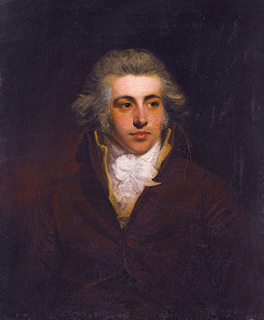
FitzGerald marries Charlotte Boyle Walsingham in London on August 3, 1791. Together they live at Boyle Farm, Thames Ditton. In 1806, his wife succeeds to the Baron de Ros, the premier baron in the Peerage of England, as 20th Baroness de Ros. The family then takes the surname FitzGerald-de Ros. The couple has 13 children in 21 years, of which nine survive to adulthood.
A knee injury during a night training exercise in Omagh makes McDowell ineligible for active military service and he becomes a weapons instructor. The accident also leads to him meeting his future wife, Margaret Telfer, the physiotherapist who treats him in hospital in Bangor, County Down.
McDowell rises to the rank of major and is part of the Allied forces in occupied Austria following the end of the war, taking part in joint patrols in Vienna with Russian, American and French officers. In the post-war period, he is given two years to finish his college course and spends a summer studying law with a tutor before passing the English bar and returning to the British Army.
After a further military posting to Edinburgh, McDowell’s legal qualification brings him to the army legal service in the War Office in London. With little prospect of further promotion and every chance of being posted abroad without his young family, he decides to leave the army. He is offered a job as legal adviser in London to James North Ltd, a company which makes protective clothing. With no experience of industry, he asks to be given a managerial role at first. The company suggests a managing position in its operations in Dublin. He slots easily into the city’s old business establishment, joining the Kildare Street Club, becoming a director of Pim’s department store, and setting his career firmly on a commercial rather than a legal path.
McDowell’s involvement with newspapers comes about through the recognition of his business acumen. He is asked by some acquaintances to take a look at the financial troubles of the Evening Mail, which is bought subsequently by The Irish Times, adding to the latter’s own financial difficulties.
McDowell is asked later by The Irish Times to see if Roy Thomson, the Canadian-born British press baron whom he had met while they both looked separately at the Evening Mail, might be interested in taking it over. Thomson passes and the company then asks McDowell himself to take charge as chief executive in 1962. Among his first actions are to close the Evening Mail and the Sunday Review, a short-lived tabloid that is ahead of its time. A year later, another problem is resolved when Douglas Gageby, who had been hired as managing director of The Irish Times shortly before McDowell’s arrival, takes over as editor.
Thus, what had begun as a slightly awkward relationship, turns into a highly successful partnership as Gageby sets about broadening the newspaper’s editorial appeal and McDowell sets it on a successful commercial course. McDowell always credits Gageby and his successors as editor with the success of the newspaper. Although he has a close relationship with editors, especially Gageby, he does not interfere in the editorial running of the newspaper.
By the early 1970s, the circulation of The Irish Times has almost doubled in a decade to 60,000 and it is making money. Some of the directors indicate an interest in selling the company. McDowell proposes instead that it be turned into a trust. It is a period when several newspapers in Ireland and Britain have changed hands or are seen as being vulnerable to takeovers. His aims are to protect the newspaper’s independence, make it as difficult as possible for anyone to take over, and formalise its aims in a guiding trust.
McDowell works on the trust document for many months, going through 28 drafts before he is satisfied with the result. The five directors of the company, including McDowell and Gageby, transfer their shares in the company to a solicitor in the autumn of 1973 in anticipation of announcing the trust at the end of that year. Further delays in finalising the trust terms result in its announcement in April 1974, on the eve of the introduction of capital gains tax. The timing gives rise to suggestions that the directors are taking their cash (£325,000 each) out of the company before the new tax takes effect. McDowell always denies that this is the case, maintaining that the timing is coincidental. He is also adamant that the motivation behind the formation of the trust itself is altruistic.
The formation of the trust leaves the newspaper with a large bank debt, used to buy out the directors/shareholders, at what turns out to be a difficult economic period after the first oil crisis hits the western world in the autumn of 1974. McDowell successfully guides The Irish Times‘ financial fortunes through the subsequent recession and into further periods of growth throughout the 1980s and 1990s.
McDowell stands down as chief executive of the company in 1997 and retires from the chairmanship of The Irish Times Trust in 2001. He is given the title President for Life in recognition of his huge contribution to the newspaper.
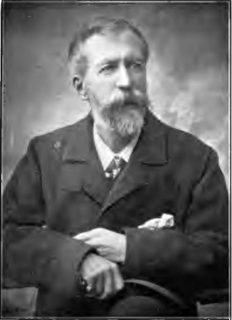
McDowell is a private person and never seeks or exploits the public status or limelight that goes with being a newspaper publisher. During his visit to the new The Irish Times offices on Tara Street in June 2008 for the unveiling of a portrait of him by Andrew Festing, he describes the newspaper and his family as the two loves of his life.
McDowell dies unexpectedly at the age of 87 on September 9, 2009. His funeral takes place in Whitechurch Parish Church, Rathfarnham, followed by burial in the adjoining churchyard.
As a young man, O’Connor embraces the Republican movement early on as he is encouraged by the American Revolution overseas. After his oldest brother Daniel gets into debt, his brother Roger buys out his inheritance. The family’s political and financial conflicts are only deepened when their sister Anne commits suicide, after having been forbidden by the family from marrying a Catholic man she was in love with.
In 1796, O’Connor joins the Society of United Irishmen and determines, on its platform, to contest what had been his uncle Lord Longueville’s Irish parliamentary seat in Antrim. In January 1797, to the “free electors” of the county he commends the “entire abolition of religious distinctions” and the “establishment of a National Government,” while protesting the “invasion” of the country by English and Scottish troops and the continuation of the continental war. Arrests, including his own in February for seditious libel, frustrate his attempts to canvass. With Lord Edward FitzGerald and others in the leadership in Dublin his thoughts turn to securing “fraternal” French support for a revolutionary insurrection.
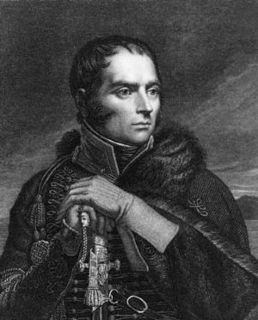
O’Connor is released in 1802 under the condition of “banishment,” He travels to Paris, where he is regarded as the accredited representative of the United Irishmen by Napoleon who, in February 1804, appoints him General of Division in the French army. General Louis-Alexandre Berthier, Minister of War, directs that O’Connor is to join the expeditionary army intended for the invasion of Ireland at Brest. When the plan falls through, O’Connor retires from the army.
In 1807, although more than twice her age, O’Connor marries Alexandrine Louise Sophie de Caritat de Condorcet, known as Eliza, the daughter of the scholar the Marquis de Condorcet and Sophie de Condorcet. Following his marriage he borrows money from fellow exile William Putnam McCabe to acquire a country residence. His tardiness in repaying the debt to McCabe, whose own investments into cotton spinning in Rouen had failed, results in a lawsuit. Cathal O’Bryne suggests that the debt is behind O’Connor’s later suggestion to Richard Robert Madden that McCabe had been a double agent, a charge to which, Madden notes, the French government lends no credence.
O’Connor offers his services to Napoleon during the Hundred Days. After Napoleon’s defeat he is allowed to retire, becoming a naturalised French citizen in 1818. He supports the 1830 revolution which creates the July Monarchy, publishing a defence of events in the form of an open letter to General Gilbert du Motier, Marquis de Lafayette. After the revolution he becomes mayor of Le Bignon-Mirabeau. The rest of his life is spent composing literary works on political and social topics. He and his wife continue the efforts of her mother, who is herself an accomplished translator of Thomas Paine and Adam Smith, to publish her father’s works in twelve volumes between 1847 and 1849.
O’Connor’s wife give birth to five children, three sons and two daughters, almost all of whom predecease him. Only one son, Daniel, marries and has issue. Daniel marries Ernestine Duval du Fraville, a daughter of Laurent-Martin Duval, Baron Duval du Fraville, in 1843. She dies at Cannes in 1877.
O’Connor dies on April 25, 1852. His widow dies in 1859.
O’Connor’s descendants continue to serve as officers in the French army and still reside at Château Dubignon. Through his only surviving son, Daniel, he is a grandfather of two boys, Arthur O’Connor (1844–1909), who serves in the French army, and Fernand O’Connor (1847–1905), a Brigade General who serves in Africa and is made a Knight of the Legion of Honour. His grandson, Arthur, marries Marguerite de Ganay (1859–1940), a daughter of Emily and Etienne, Marquis de Ganay, in 1878. They have two daughters, Elisabeth O’Connor, the wife of Alexandre de La Taulotte, and Brigitte Emilie Fernande O’Connor (1880–1948), who in 1904 marries the Comte François de La Tour du Pin (1878–1914), who is killed ten years later at the First Battle of the Marne.
Deane is educated at Trinity College, Dublin, from 1845 to 1849. On January 29, 1850, he marries Henrietta Manly, daughter of Joseph H. Manly of Ferney, County Cork. He and his wife have several children.
Deane’s work on the conservation of St. Canice’s Cathedral, Kilkenny, is less successful and brings him into conflict with the dean and chapter, and in particular with the treasurer James Graves. It is possibly his interest in the restoration of medieval buildings which leads to his appointment as the first Inspector of National Monuments under the Irish Board of Works after the disestablishment of the Church of Ireland brought ruined buildings under their care. His work includes St. Cronan’s Church, Roscrea, County Tipperary.
In contemporary circles, Deane’s partner Woodward is seen as the creative influence behind the business, and their practice suffers after his early death on May 15, 1861. Nevertheless, Deane continues to work with his son, Thomas Manly Deane, designing the National Museum of Ireland and National Library of Ireland in Kildare Street, Dublin. He is knighted in 1890.
On November 8, 1899, Deane dies suddenly in his office on St. Stephen’s Green, into which he had only just moved. He is buried in Deans Grange Cemetery, where his son Thomas designs and erects a cross in his memory.
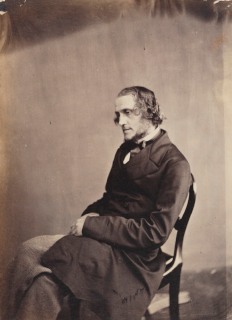
The same year Woodward joins the office of Sir Thomas Deane and becomes a partner in 1851 along with Deane’s son, Thomas Newenham Deane. It seems that Deane looks after business matters and leaves the design work to Woodward.
The work of Deane and Woodward is characterised by naturalistic decoration with foliage and animals carved into capitals and plinths around windows and doors. It is extolled by John Ruskin in particular when he visits the Museum at Trinity College, Dublin. Woodward collaborates in particular with the O’Shea brothers, James and John, who are stone carvers from County Cork. They, along with London sculptors, carve the abundant decorative stonework at Trinity, showing owls, lizards, cats and monkeys, as well as other flora and fauna. Later the O’Sheas carve stonework at the Kildare Street Club, including the famous window piece showing the club members as monkeys playing billiards. Some stories tell of the O’Sheas getting into trouble and possibly even being sacked for carving cats or monkeys at the Oxford University Museum.


 seamus dubhghaill