seamus dubhghaill

Promoting Irish Culture and History from Little Rock, Arkansas, USA


Leave a comment

Birth of Benjamin Lee Guinness

benjamin-lee-guinness

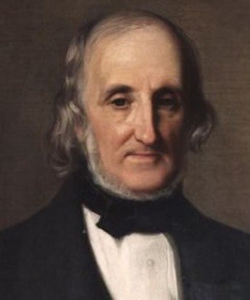
Sir Benjamin Lee Guinness, 1st Baronet, Irish brewer and philanthropist, is born in Dublin on November 1, 1798.

Guinness is the third son of Arthur Guinness II (1768–1855), and his wife Anne Lee, and a grandson of the first Arthur (1725–1803), who had bought the St. James’s Gate Brewery in 1759. He joins his father in the business in his late teens, without attending university, and from 1839 he takes sole control within the family. From 1855, when his father dies, he has become the richest man in Ireland, having built up a huge export trade and by continually enlarging his brewery.

In 1851 Guinness is elected the first Lord Mayor of Dublin under the reformed corporation. In 1863 he is made an honorary LL.D. (Doctor of Laws) by Trinity College Dublin, and on April 15, 1867, is created a baronet by patent, in addition to which, on May 18, 1867, by royal licence, he has a grant of supporters to his family arms.

Guinness is elected to the House of Commons of the United Kingdom in 1865 as a Conservative Party representative for Dublin City, serving until his death. His party’s leader is Edward Smith-Stanley, 14th Earl of Derby. Previously he had supported the Liberal Party‘s Henry John Temple, 3rd Viscount Palmerston, but in the 1860s the Liberals propose higher taxation on drinks such as beer. Before 1865 the Irish Conservative Party does not entirely support British conservative policy but does so after the Irish Church Act 1869. The government’s most notable reform is the Reform Act 1867 that expands the franchise.

From 1860 to 1865, Guinness undertakes at his own expense, and without hiring an architect, the restoration of the city’s St. Patrick’s Cathedral, an enterprise that costs him over £150,000. In 1865 the building is restored to the dean and chapter and reopens for services on February 24. The citizens of Dublin and the dean and chapter of St. Patrick’s present him with addresses on December 31, 1865, expressive of their gratitude for what he has done for the city. The addresses are in two volumes, which are afterwards exhibited at the Paris Exhibition.

In recognition of his generosity, Guinness is made a baronet in 1867. He is one of the ecclesiastical commissioners for Ireland, a governor of Simpson’s Hospital, and vice-chairman of the Dublin Exhibition Palace. He dies the following year, on May 19, 1868, at his Park Lane home in London. At the time of his death, he is engaged in the restoration of Marsh’s Library, a building which adjoins St. Patrick’s Cathedral. The restoration is completed by his son Arthur.

Guinness is buried in Mount Jerome Cemetery, Dublin, in the family vault, on May 27, 1868. His personalty is sworn under £1,100,000 on August 8, 1868. A bronze statue of him by John Henry Foley is erected by the Cathedral Chapter in St. Patrick’s churchyard, on the south side of the cathedral, in September 1875, which is restored in 2006.


Leave a comment

Birth of Mathematician William Rowan Hamilton

william-rowan-hamilton

Sir William Rowan Hamilton, Irish mathematician who makes important contributions to classical mechanics, optics, and algebra, is born in Dublin on August 4, 1805.

Hamilton is the fourth of nine children born to Sarah Hutton (1780–1817) and Archibald Hamilton (1778–1819). He is part of a small but well-regarded school of mathematicians associated with Trinity College, Dublin, which he enters at age eighteen. He is said to have shown immense talent at a very early age. Astronomer Bishop Dr. John Brinkley remarks of the 18-year-old Hamilton, “This young man, I do not say will be, but is, the first mathematician of his age.”

Trinity College awards him two Optimes, or off-the-chart grades. He studies both classics and mathematics, and is appointed Professor of Astronomy just prior to his graduation. He then takes up residence at Dunsink Observatory where he spends the rest of his life.

Although Hamilton regards himself as a pure mathematician rather than a physicist, his work is of major importance to physics, particularly his reformulation of Newtonian mechanics, now called Hamiltonian mechanics. This work has proven central to the modern study of classical field theories such as electromagnetism, and to the development of quantum mechanics. In pure mathematics, he is best known as the inventor of quaternions.

Hamilton’s scientific career includes the study of geometrical optics, classical mechanics, adaptation of dynamic methods in optical systems, applying quaternion and vector methods to problems in mechanics and in geometry, development of theories of conjugate algebraic couple functions, solvability of polynomial equations and general quintic polynomial solvable by radicals, the analysis on Fluctuating Functions, linear operators on quaternions and proving a result for linear operators on the space of quaternions, which is a special case of the general theorem which today is known as the Cayley–Hamilton theorem. He also invents Icosian calculus, which he uses to investigate closed edge paths on a dodecahedron that visit each vertex exactly once.

Hamilton retains his faculties unimpaired to the very last, and steadily continues the task of finishing the Elements of Quaternions which occupies the last six years of his life. He dies on September 2, 1865, following a severe attack of gout precipitated by excessive drinking and overeating. He is buried in Mount Jerome Cemetery in Dublin.


Leave a comment

Death of James Plunkett, Novelist & Playwright

james-plunkett

James Plunkett Kelly, known by the pen name James Plunkett, Irish novelist, playwright, and short-story writer, dies in Dublin on May 28, 2003. His works, which deal with Ireland’s political and labour problems, contain vivid portraits of working-class and middle-class Dubliners.

Plunkett is born in Sandymount, Dublin on May 21, 1920, and grows up among the Dublin working class and they, along with the petite bourgeoisie and lower intelligentsia, make up the bulk of the dramatis personæ of his oeuvre. He is educated at Synge Street CBS, a Christian Brothers school located on Synge Street in Dublin. He leaves school at the age of seventeen. He later studies violin and viola at the Dublin College of Music and plays professionally in Dublin. He serves for a time as an official in the Workers’ Union of Ireland.

Plunkett’s best-known works are the novel Strumpet City, set in Dublin in the years leading up to the Dublin lock-out of 1913 and during the course of the strike, and the short stories in the collection The Trusting and the Maimed. His other works include a radio play on James Larkin, who figures prominently in his work.

During the 1960s, Plunkett works as a producer at Telefís Éireann. He wins two Jacob’s Awards, in 1965 and 1969, for his TV productions. In 1971 he writes and presents “Inis Fail – Isle of Destiny,” his very personal appreciation of Ireland. It is the final episode of the BBC series Bird’s Eye View, shot entirely from a helicopter, and the first co-production between the BBC and RTÉ. Plunkett is a member of Aosdána.

James Plunkett dies in a Dublin nursing home on May 28, 2003, just a week after his 83rd birthday. He is cremated at Mount Jerome Cemetery and Crematorium in Dublin.

A second-year class, “2 Plunkett” at Synge Street CBS, is named in honour of James Plunkett.


Leave a comment

Death of Activist James Haughton

james-haughton

James Haughton, Irish social reformer and temperance activist, dies in Dublin on February 20, 1873.

Haughton, son of Samuel Pearson Haughton (1748–1828), by Mary, daughter of James Pim of Rushin, Queen’s County (now County Laois), is born in Carlow, County Carlow, and educated at Ballitor, County Kildare, from 1807 to 1810, under James White, a quaker. After filling several situations to learn his business, in 1817 he settles in Dublin, where he becomes a corn and flour factor, in partnership with his brother William. He retires in 1850. Although educated as a Friend, he joins the Unitarians in 1834 and remains throughout his life a strong believer in their tenets.

Haughton supports the anti-slavery movement at an early period and takes an active part in it until 1838, going in that year to London as a delegate to a convention. Shortly after the Temperance campaigner Father Theobald Mathew takes the pledge, on April 10, 1838, Haughton becomes one of his most devoted disciples. For many years he gives most of his time and energies to promoting total abstinence and to advocating legislative restrictions on the sale of intoxicating drinks.

In December 1844 Haughton is the chief promoter of a fund which is raised to pay some of the debts of Father Mathew and release him from prison. About 1835 he commences a series of letters in the public press which make his name widely known. He writes on temperance, slavery, British India, peace, capital punishment, sanitary reform, and education. His first letters are signed “The Son of a Water Drinker,” but he soon commences using his own name and continues to write until 1872.

Haughton takes a leading part in a series of weekly meetings which are held in Dublin in 1840, when so numerous are the social questions discussed that a newspaper editor calls the speakers the “Anti-everythingarians.” In association with Daniel O’Connell, of whose character he has a very high opinion, he advocates various plans for the amelioration of the condition of Ireland and the Repeal of the Union but is always opposed to physical force.

Haughton becomes a vegetarian in 1846, both on moral and sanitary grounds. For two or three years before his death he is president of the Vegetarian Society of the United Kingdom. He is one of the first members of the Statistical Society of Dublin (1847), a founder of the Dublin Mechanics’ Institute (1849), in the same year is on the committee of the Dublin Peace Society, aids in abolishing Donnybrook Fair in 1855, and takes a chief part in 1861 in opening the National Botanic Gardens at Glasnevin on Sundays.

James Haughton dies at 35 Eccles Street, Dublin, on February 20, 1873, and is buried in Mount Jerome Cemetery on February 24 in the presence of an immense crowd of people.

Haughton’s son, Samuel Haughton, publishes a memoir of his father’s life including extracts from his public correspondence in 1877.


Leave a comment

Death of George Petrie, Painter & Musician

george-petrie

George Petrie, Irish painter, musician, antiquary and archaeologist of the Victorian era dies on January 17, 1866.

Petrie is born and grows up in Dublin, living at 21 Great Charles Street, just off Mountjoy Square. He is the son of the portrait and miniature painter James Petrie, a native of Aberdeen, Scotland, who had settled in Dublin. He is interested in art from an early age. He is sent to the Royal Dublin Society‘s schools, being educated as an artist, where he wins the silver medal in 1805 at the age of fourteen.

After an abortive trip to England in the company of Francis Danby and James Arthur O’Connor, both of whom are close friends of his, he returns to Ireland where he works mostly producing sketches for engravings for travel books including among others, George Newenham Wright‘s guides to Killarney, Wicklow and Dublin, Thomas Cromwell‘s Excursions through Ireland, and James Norris Brewer‘s Beauties of Ireland.

In the late 1820s and 1830s, Petrie significantly revitalises the Royal Irish Academy‘s antiquities committee. He is responsible for their acquisition of many important Irish manuscripts, including an autograph copy of the Annals of the Four Masters, as well as examples of insular metalwork, including the Cross of Cong. His writings on early Irish archaeology and architecture are of great significance, especially his essay on the Round Towers of Ireland, which appear in his 1845 book titled The Ecclesiastical Architecture of Ireland. He is often called “the father of Irish archaeology.” His survey of the tombs at Carrowmore still informs study of the site today.

From 1833 to 1843 Petrie is employed by Thomas Frederick Colby and Thomas Larcom as head of the Topographical Department of the Irish Ordnance Survey. Amongst his staff are John O’Donovan, one of Ireland’s greatest ever scholars, and Eugene O’Curry. A prizewinning essay submitted to the Royal Irish Academy in 1834 on Irish military architecture is never published, but his seminal essay On the History and Antiquities of Tara Hill is published by the Academy in 1839. During this period Petrie is himself the editor of two popular antiquarian magazines, the Dublin Penny Journal and, later, the Irish Penny Journal.

Another major contribution of Petrie’s to Irish culture is the collection of Irish traditional airs and melodies which he records. William Stokes’s contemporary biography includes detailed accounts of Petrie’s working methods in his collecting of traditional music: “The song having been given, O’Curry wrote the Irish words, when Petrie’s work began. The singer recommenced, stopping at a signal from him at every two or three bars of the melody to permit the writing of the notes, and often repeating the passage until it was correctly taken down …”

As an artist, Petrie’s favourite medium is watercolour which, due to the prejudices of the age, is considered inferior to oil painting. Nonetheless, he can be considered as one of the finest Irish Romantic painters of his era. Some of his best work is in the collections of the National Gallery of Ireland, such as his watercolour painting Gougane Barra Lake with the Hermitage of St. Finbarr, County Cork (1831).

Petrie is awarded the Royal Irish Academy’s prestigious Cunningham Medal three times: firstly in 1831 for his essay on the round towers, secondly in 1834 for the now lost essay on Irish military architecture, and thirdly in 1839 for his essay on the antiquities of Tara Hill.

The closing years of Petrie’s life are devoted to the publication of a portion of his collection of Irish music. He dies at the age of 77 at Rathmines, Dublin, on January 17, 1866. He is buried in Mount Jerome Cemetery.


Leave a comment

Death of Actor Peter Caffrey

peter-caffrey

Peter Caffrey, Irish actor best known for playing Padraig O’Kelly on Series 1-4 of Ballykissangel, dies in Shrewsbury, England, on January 1, 2008.

Caffrey is also well regarded for his role as a transvestite in the film Night Train, and for his role as an unlikely protagonist in I Went Down. He is also known for playing the role of the judge in the Irish comedy Father Ted on the episode A Song For Europe and for voicing a popular Christmas radio advertisement for Barry’s Tea in 1994.

Caffrey is born in Dublin on April 18, 1949. He studies at a seminary for two years before switching to an English degree. He works for a year as a primary school teacher, before becoming involved with Dublin’s Project Theatre. He appears in nearly thirty television and film roles, and also has a solid theatre career in both Dublin and London. After moving to London in 1983 he becomes a familiar face on UK television, with minor roles in Casualty, The Bill and Peak Practice. His success in Ballykissangel comes after overcoming oral cancer for which he is diagnosed in 1990, and, despite suffering a stroke in 2000 which leaves him paralysed on the right side, he manages to play a similarly afflicted character in the unreleased film Sweet Dancer in 2005.

Caffrey never fully recovers from the stroke and dies at the age of 58 on January 1, 2008, in Shrewsbury. His body is returned to Ireland for cremation in Mount Jerome Cemetery and Crematorium, Dublin, on January 8, 2008. Caffrey is survived by three sisters, Linda, Carol, and Sheila. His brother David pre-deceases him in July 2007.

Caffrey marries Brenda Banks in 1980 but the marriage ends in divorce in 1990.


Leave a comment

Birth of Edward Pakenham, 6th Earl of Longford

Francis Pakenham, 7th Earl of Longford

Edward Arthur Henry Pakenham, 6th Earl of Longford and an Irish peer, politician, and littérateur, is born on December 29, 1902. Also known as Eamon de Longphort, he is a member of the fifth Seanad Éireann, the upper house of the Oireachtas, in the 1940s.

Pakenham is the elder son of Thomas Pakenham, 5th Earl of Longford and Mary, Countess of Longford, née Child-Villiers. He is the only one of the Pakenham children on whom his mother dotes, apparently because he is to succeed to the earldom on his father’s death and because he is always in delicate health.

As a pupil at Eton College, where he twice received the Wilder Divinity Prize, Pakenham succeeds to the earldom when his father is killed in action at the Battle of Gallipoli on August 21, 1915. He is an Irish Nationalist since his days at Eton, taking inspiration from the Easter Rising in 1916 and the Russian Revolution of 1917. He learned Irish and adopted the name Eamon de Longphort.

Pakenham becomes an undergraduate at Christ Church, Oxford and meets his future wife, Christine Patti Trew, an Oxford “undergraduette.” They are married on July 18, 1925. His political views make him unpopular at both Eton and Christ Church, where he is famously put in “Mercury,” the pond containing a statue of Mercury in Tom Quad.

Pakenham becomes Chairman of the Gate Theatre in Dublin in 1930 and continues to work for the theatre until 1936, when he founds the Longford Players. His plays include Ascendancy, The Melians, The Vineyard, and Yahoo. An excellent linguist and Classical scholar, he translates Le Bourgeois gentilhomme, Le Malade Imaginaire, L’école des femmes, Tartuffe, Le Barbier de Séville, Agamemnon and Oedipus Rex and adapts the novella Carmilla for the stage.

Pakenham also has several volumes of poetry published, some at the expense of his mother when he is still at Eton, but he is not considered to have been a very good poet.

Pakenham is an Anglo-Catholic who never leaves the Church of Ireland. On November 13, 1946, he is nominated by the Taoiseach, Éamon de Valera, as a member of 5th Seanad Éireann, filling a vacancy caused by the death of Professor William Magennis. He is not re-appointed to the 6th Seanad.

Pakenham often collaborates with his wife with whom he is also responsible for redecorating Pakenham Hall, now Tullynally Castle, in Chinese style. Pakenham Hall is often the scene of gatherings of Oxford-educated intellectuals such as John Betjeman, Evelyn Waugh, and Maurice Bowra.

Edward Pakenham dies without issue on February 4, 1961, and is succeeded by his younger brother Frank. He is buried at Mount Jerome Cemetery in Dublin.


Leave a comment

Death of Irish Language Writer Máirtín Ó Cadhain

Máirtín Ó Cadhain, one of the most prominent Irish language writers of the twentieth century, dies on October 18, 1970. Perhaps best known for his 1949 work Cré na Cille, Ó Cadhain plays a key role in bringing literary modernism to contemporary Irish language literature.

Born in Connemara, County Galway, Ó Cadhain becomes a schoolteacher but is dismissed due to his membership in the Irish Republican Army (IRA). In the 1930s he serves as an IRA recruiting officer, enlisting fellow writer Brendan Behan, and participates in the land campaign of the native speakers, which leads to the establishment of the Ráth Cairn neo-Gaeltacht in County Meath. Subsequently, he is arrested and interned in the Curragh Camp in County Kildare during the Emergency years due to his continued involvement in the violent activities of the IRA.

Ó Cadhain’s politics are a nationalist mix of Marxism and social radicalism tempered with a rhetorical anti-clericalism. In his writings concerning the future of the Irish language he is, however, practical about the position of the Catholic Church as a social and societal institution, craving rather for a wholehearted commitment to the language cause even among Catholic churchmen. It is his view that, as the Church is there anyway, it would be better if it were more willing to address the Faithful in the national idiom.

As a writer, Ó Cadhain is acknowledged to be a pioneer of Irish language modernism. His Irish is the dialect of Connemara, but he is happy to cannibalise other dialects, classical literature and even Scottish Gaelic for the sake of linguistic and stylistic enrichment of his own writings. Consequently, much of what he writes is reputedly hard to read for a non-native speaker.

Ó Cadhain is a prolific writer of short stories. His collections of short stories include Cois Caoláire, An Braon Broghach, Idir Shúgradh agus Dháiríre, An tSraith Dhá Tógáil, An tSraith Tógtha and An tSraith ar Lár. He also writes three novels, of which only Cré na Cille is published during his lifetime. The other two, Athnuachan and Barbed Wire, appear in print only recently. He translates Charles Kickham‘s novel Sally Kavanagh into Irish as Saile Chaomhánach, nó na hUaigheanna Folmha. He also writes several political or linguo-political pamphlets. His political views can most easily be discerned in a small book about the development of Irish nationalism and extremism since Theobald Wolfe Tone, Tone Inné agus Inniu. In the early 1960s he writes, partly in Irish, partly in English, a comprehensive survey of the social status and actual use of the language in the west of Ireland, published as An Ghaeilge Bheo – Destined to Pass. In August 1969 he delivers a speech, published as Gluaiseacht na Gaeilge: Gluaiseacht ar Strae, in which he speaks of the role Irish speakers should take in ‘Athghabháil na hÉireann’, or the Re-Conquest of Ireland as James Connolly first coins the term.

He and Diarmaid Ó Súilleabháin are considered the two most innovative Gaelic authors to emerge in the 1960s. He has frequent difficulties to get his work edited, but unpublished writings have appeared at least every two years since the publication of Athnuachan in the mid-nineties.

Máirtín Ó Cadhain dies on October 18, 1970, in Dublin and is buried in Mount Jerome Cemetery.

A lecture hall at Trinity College, Dublin is named after Ó Cadhain who was professor of Irish. A bronze bust is also located in the Irish department.


Leave a comment

Birth of Thomas Davis, Founder of Young Ireland Movement

Thomas Osborne Davis, Irish writer and the chief organiser and poet laureate of the Young Ireland movement, is born in Mallow, County Cork, on October 14, 1814.

Davis is the son of a Welsh father, a surgeon in the Royal Artillery, and an Irish mother. Through his mother he is descended from the Gaelic noble family of O’Sullivan Beare. His father dies one month after his birth and his mother moves to Warrington Place near Mount Street bridge in Dublin. In 1830, they move to 67 Lower Baggot Street. He attends school in Lower Mount Street before studying at Trinity College, Dublin. He graduates in Law and receives an arts degree in 1836, before being called to the Irish Bar in 1838.

Davis gives a voice to the 19th-century foundational culture of modern Irish nationalism. Formerly it is based on the republicans of the 1790s and on the Catholic emancipation movement of Daniel O’Connell in the 1820s-30s, which has little in common with each other except for independence from Britain. Davis aims to create a common and more inclusive base for the future. He establishes The Nation newspaper with Charles Gavan Duffy and John Blake Dillon.

He writes some stirring nationalistic ballads, originally contributed to The Nation and afterwards republished as Spirit of the Nation, as well as a memoir of Curran, the Irish lawyer and orator, prefixed to an edition of his speeches, and a history of King James II‘s parliament of 1689. He has formed many literary plans which are unfinished at the time of his early death.

Davis supports O’Connell’s Repeal Association from 1840, hoping to recreate the old Parliament of Ireland. They split during a debate on the proposed new Queen’s University of Ireland, when Davis is reduced to tears by O’Connell’s superior debating skill. Davis is in favour of a university that would inclusively educate all Irish students. O’Connell and the Catholic hierarchy prefer a separate system for Catholic students within Ireland that would remain under church control.

O’Connell generally refers to his inexperienced allies as “Young Ireland,” initially as a dismissive term, that from the 1870s becomes the accepted term for nationalists inspired by Davis. He also prefers a federal arrangement with Britain in the 1840s while Davis seeks a greater degree of autonomy. Both agree that a gradual and non-violent process is the best way forward. Despite their differences, O’Connell is distraught at Davis’s early death.

Davis is a Protestant but preaches unity between Catholics and Protestants. To him, it is not blood that makes a person Irish, but the willingness to be part of the Irish nation. He is to the fore of Irish nationalist thinking and it has been noted by later nationalist notables, such as Patrick Pearse, that while Theobald Wolfe Tone laid out the basic premise that Ireland as a nation must be free, Davis is the one who built this idea up promoting the Irish identity.

He is the author of influential songs such as The West’s Awake, A Nation Once Again and In Bodenstown Churchyard. He also writes The Lament for Owen Roe O’Neill.

Thomas Davis dies from scarlet fever on September 16, 1845, at the age of thirty. He is buried in Mount Jerome Cemetery, Dublin.


Leave a comment

Birth of Actor David Kelly

David Kelly, Irish actor who has regular roles in several film and television works from the 1950s onwards, is born in Dublin on July 11, 1929. One of the most recognisable voices and faces of Irish stage and screen, Kelly is known to Irish audiences for his role as Rashers Tierney in Strumpet City, to British audiences for his roles as Cousin Enda in Me Mammy and as the builder Mr. O’Reilly in Fawlty Towers, and to American audiences for his role as Grandpa Joe in the film Charlie and the Chocolate Factory. Another notable role is as Michael O’Sullivan in Waking Ned.

Kelly is educated at Dublin’s Synge Street CBS Christian Brothers school. He begins acting at the age of eight at the city’s Gaiety Theatre, and trains at The Abbey School of Acting. As a backup career, he additionally trains as a draughtsman and calligrapher, and also learns watercolor painting. He appears onstage in the original production of Brendan Behan‘s The Quare Fellow, and gains his first major career attention in Samuel Beckett‘s Krapp’s Last Tape at the Dublin’s Abbey Theatre in 1959. By then he has made his screen debut in a small part in director John Pomeroy’s 1958 film noir Dublin Nightmare.

He becomes a familiar face on British television beginning in the 1960s with the BBC comedy Me Mammy, opposite Milo O’Shea and Anna Manahan. He goes on to often-memorable guest roles on such series as Oh Father!, Never Mind the Quality, Feel the Width, and On the Buses, and particularly during the 1970s with a long-running role as the one-armed dishwasher Albert Riddle in the Man About the House spin-off Robin’s Nest. He also has a regular long running role alongside Bruce Forsyth in both series of the comedy Slingers Day from 1986 to 1987.

He gains some of his greatest recognition in 1975, playing inept builder Mr. O’Reilly on the second episode of Fawlty Towers. He is in the voice cast of The Light Princess, a partly animated, hour-long family fantasy that airs on the BBC in 1978.

In Ireland, he may be most famous for his portrayal of the character “Rashers” Tierney in the 1980 RTÉ miniseries Strumpet City, which stars Peter O’Toole, Cyril Cusack and Peter Ustinov. He goes on to have starring roles in television shows such as Emmerdale Farm in the 1980s and Glenroe in the 1990s, as well as playing the grandfather in Mike Newell‘s film Into the West (1992).

Following his appearance as Michael O’Sullivan in the 1998 film Waking Ned, Kelly plays roles in such films as Tim Burton‘s Charlie and the Chocolate Factory, in which he plays Grandpa Joe and Agent Cody Banks 2: Destination London. He plays title character Frank Kovak in the mystery film The Kovak Box, in a rare villainous role. Stardust, released in 2007, is his final film. He also does extensive radio work, including a guest appearance on the BBC Radio 4 series Baldi.

Kelly wins a 1991 Helen Hayes Award for Outstanding Supporting Performer, Non-Resident Production, for a Kennedy Center revival of The Playboy of the Western World. As well, he earns a Screen Actors Guild Award nomination for the 1998 film Waking Ned. In 2005, he wins the Irish Film & Television Academy‘s Lifetime Achievement Award, in addition to earning a nomination for Best Supporting Actor for the film Charlie and the Chocolate Factory.

David Kelly dies after a short illness on February 12, 2012 at age of 82. The Irish Times refers to him as the “grand old man of Irish acting.” A Catholic funeral mass takes place on February 16, 2012 at the Church of the Miraculous Medal, in his hometown of Dublin. He is cremated at Mount Jerome Cemetery and Crematorium.