seamus dubhghaill

Promoting Irish Culture and History from Little Rock, Arkansas, USA


Leave a comment

Birth of John Cole, Northern Irish Journalist & BBC Broadcaster

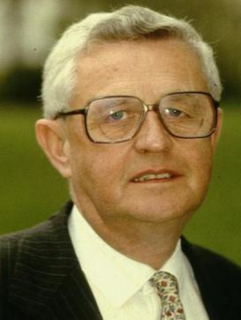
John Morrison Cole, Northern Irish journalist and broadcaster best known for his work with the BBC, is born in Belfast, Northern Ireland, on November 23, 1927. He serves as deputy editor of The Guardian and The Observer and, from 1981 to 1992, is the BBC’s political editor. Donald Macintyre, in an obituary in The Independent, describes him as “the most recognisable and respected broadcast political journalist since World War II.”

Cole is the son of George Cole, an electrical engineer, and his wife Alice. The family is Ulster Protestant, and he identifies himself as British. He receives his formal education at the Belfast Royal Academy.

Cole starts his career in print journalism in 1945, joining the Belfast Telegraph as a reporter and industrial correspondent. He subsequently works as a political reporter for the paper. He gains a scoop when he interviews the then Prime Minister, Clement Attlee, who is holidaying in Ireland.

Cole joins The Guardian, then The Manchester Guardian, in 1956, reporting on industrial issues. He transfers to the London office in 1957 as the paper’s labour correspondent. Appointed news editor in 1963, succeeding Nesta Roberts, he takes on the task of reorganising the paper’s “amateurish” system for gathering news. He heads opposition to a proposed merger with The Times in the mid-1960s, and later serves as deputy editor under Alastair Hetherington. When Hetherington leaves in 1975, Cole is in the running for the editorship, but fails to secure the post, for reasons which may include his commitment to the cause of unionism in Northern Ireland, as well as what is seen by some as inflexibility and a lack of flair. Unwilling to continue at The Guardian, he then joins The Observer as deputy editor under Donald Trelford, remaining there for six years.

After Tiny Rowland takes over as proprietor of The Observer in 1981, Cole gives evidence against him at the Monopolies Commission. The following day he receives a call from the BBC offering him the job of political editor, succeeding John Simpson. He has little previous television experience but proves a “natural broadcaster.” Reporting through most of the premiership of Margaret Thatcher, he becomes a familiar figure on television and radio.

Cole’s health is put under strain by the workload, and he suffers a heart attack in February 1984. Returning to report on that year’s conference season, he covers the Brighton hotel bombing, getting a “memorable” interview with Thatcher on the pavement in its immediate aftermath, in which she declares that the Tory conference will take place as normal. An astute observer of the political scene, he is one of the earliest to forecast Thatcher’s resignation as Prime Minister in 1990, in what colleague David McKie refers to as “perhaps his greatest exclusive.”

Cole establishes a strong reputation for his “gentle but probing” interviewing style, for his political assessments, and for presenting analysis rather than “bland reporting.” Held in enormous affection by viewers, he is trusted by both politicians and the public. He is known for speaking in the language used by ordinary people rather than so-called Westminster experts. His distinctive Northern Irish accent leads the way for BBC broadcasters with regional accents.

Cole retires as political editor in 1992 at the age of 65, compulsory at the time, but continues to appear on television, including making programmes on golf and travel. He also continues to appear on the BBC programme Westminster Live for several years after he retired as political editor.

In addition to his journalistic writing, Cole authors several books. The earliest are The Poor of the Earth, on developing countries, and The Thatcher Years (1987). After his retirement as BBC political editor, he spends more time writing. His political memoir, As It Seemed to Me, appears in 1995 and becomes a best-seller. He also publishes a novel, A Clouded Peace (2001), set in his birthplace of Belfast in 1977.

In 2007, Cole writes an article for the British Journalism Review, blaming both politicians and the media for the fact that parliamentarians are held in such low esteem, being particularly scathing of Alastair Campbell‘s influence during Tony Blair‘s premiership.

In 1966, the Eisenhower Fellowships selects Cole to represent Great Britain. He receives the Royal Television Society‘s Journalist of the Year award in 1991. After his retirement in 1992, he is awarded an honorary degree from the Open University as Doctor of the University and receives the Richard Dimbleby Award from BAFTA in 1993. He turns down a CBE in 1993, citing the former The Guardian newspaper rule that journalists can only accept gifts which can be consumed within 24 hours.

In his private life Cole is a supporter of the Labour Party and is a believer in the trades union movement. He considers that the combating of unemployment is one of the most important political issues. He is a British Republican and a committed Christian, associating in the latter part of his life with the United Reformed Church at Kingston upon Thames.

Cole suffers health problems in retirement including heart problems and two minor strokes. In 2009, he is diagnosed with cancer. He subsequently develops aphasia. He dies at his home at Claygate in the county of Surrey on November 7, 2013.

Tributes are paid by journalists, broadcasters and politicians across the political spectrum. Prime Minister David Cameron calls Cole a “titan at the BBC” and an “extraordinary broadcaster.” Labour Party leader Ed Miliband says that “my generation grew up watching John Cole. He conveyed the drama and importance of politics.” The Scottish First Minister Alex Salmond says that Cole is “an extremely able journalist but also extraordinarily helpful and generous to a young politician.” The BBC’s political editor at the time, Nick Robinson, writes that Cole “shaped the way all in my trade do our jobs.”

Leave a comment

The Murder of IRA Volunteer Eamon Collins

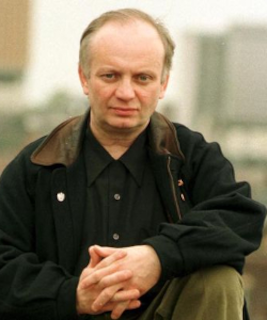
Eamon Collins, member of the Provisional Irish Republican Army (IRA) in the late 1970s and early 1980s, is beaten and stabbed to death by an unidentified assailant(s) in the early morning hours of January 27, 1999, in Newry, County Down, Northern Ireland.

Collins is born in 1954 in Camlough, County Armagh, Northern Ireland, the son of Brian Collins, a farmer, livestock trader, and cattle smuggler, and Kathleen Collins (née Cumiskey). His extended family has no history of political involvement, though his upbringing is fervently Catholic and nationalist. He leaves secondary school at age 16 and briefly works as a clerk in the Ministry of Defence in London. He returns home for family reasons and resumes his education in 1971 through a scholarship to St. Colman’s College, Newry, County Down. In 1973 he goes to Queen’s University Belfast (QUB) to study law.

Collins develops ultra-leftist political beliefs in his late teens and supports the Northern Ireland civil rights movement but retains reservations about the use of violence. He is further radicalised by being beaten up by soldiers searching his family’s farm at Easter 1974 and by the downfall of the power sharing executive. He loses interest in his studies, leaves QUB in 1976 without completing his degree, and drifts for two years, joining an anarchist collective in Belfast. He comes back into contact with the republican movement through the blanket protest by Long Kesh inmates; he had known hunger striker Raymond McCreesh as a teenager. In 1978 he joins the customs service in Newry and begins to pass information to the IRA, which he joins in 1979. He is central to IRA recruitment and intelligence in Newry and south Down. Without firing a shot himself he facilitates at least five murders, including that of a customs colleague.

In 1982 Collins marries and the couple has four children. By 1984 he has developed doubts about his activities. He antagonises the Belfast leadership, which is moving towards political engagement and away from the all-out revolutionary violence that he favours, and while he admires the hardline South Armagh IRA for its military professionalism, he regards its members as political primitives. On February 28, 1985, he is arrested after an IRA mortar attack in which nine Royal Ulster Constabulary (RUC) members are killed. He breaks down after six days of interrogation and is recruited as a “supergrass,” but retracts his evidence a fortnight later and is held on remand on the basis of his confessions.

In January–February 1987 Collins is tried for murder but acquitted after the judge rules his statements inadmissible. He completes an Open University degree while awaiting trial. After his release he is ostracised and is interrogated by the IRA, which in July 1987 orders him to leave Northern Ireland. He engages in youth work in Dublin from 1987 to 1990, taking a diploma in community work at Maynooth. His wife and children remain in Newry and he visits them regularly in defiance of the expulsion order. In 1990 he returns to live in Newry and teaches at the Ulster People’s College in Belfast. From 1992–94 he is a community worker in Edinburgh. His wife and children continue to live on the Barcroft Park estate in Newry.

In 1994 Collins returns permanently to Northern Ireland after securing a job at a youth club in Armagh. In April 1995 he describes his career in a television documentary, admitting the murders for which he had been tried. In 1997 he publishes a memoir, Killing Rage, a powerful account of life as a paramilitary, although it is not entirely reliable. After the 1995 documentary he experiences verbal and physical harassment. This intensifies after May 1998 when he testifies for The Sunday Times in a libel action by Thomas Murphy, whom the paper accuses of being a leading IRA member. Four months after Murphy loses the case, the family farmhouse in Camlough, which Collins is renovating, is burned down. After the Omagh bombing he publishes several articles denouncing the Real IRA, several of whose activists he had recruited into the IRA from the Irish National Liberation Army (INLA) in the early 1980s. Graffiti regularly appears outside his home in Newry denouncing him as a British agent.

Early in the morning of January 27, 1999, Collins paints out the latest graffiti, and is walking his dogs near the Barcroft Park Estate in Newry along a quiet stretch of country lane at Doran’s Hill, just within sight of Sliabh gCuircin (Camlough Mountain). His body also bears marks of having been struck by a car moving at speed. The subsequent police investigation and Coroner’s Inquest comments upon the extremity of weaponed violence to Collins’ head and face used during the attack.

Rumoured reasons behind the murder are that Collins had returned to Northern Ireland in breach of the IRA’s banning order, and further he had detailed IRA activities and publicly criticized in the media a multiplicity of Irish Republican paramilitary splinter groups that had appeared after the Provisional IRA’s 1994 ceasefire, and that he had testified in court against Murphy. Gerry Adams states the murder was “regrettable,” but adds that Collins had “many enemies in many places.”

After a traditional Irish wake, with a closed coffin necessitated due to the damage to his face, and a funeral service at St. Catherine’s Dominican Church in Newry, Collins’ body is buried at the city’s Monkshill Cemetery, not far from the grave of Albert White, a Catholic former Royal Ulster Constabulary Inspector, whose assassination he helped to organise in 1982.

In January 2014 the Police Service of Northern Ireland (PSNI) releases a statement that a re-examination of the evidence from the scene of the 1999 murder had revealed new DNA material of a potential perpetrator’s presence, and makes a public appeal for information, detailing the involvement of a specific car model, a white coloured Hyundai Pony, and a compass pommel that had broken off a hunting knife during the attack and had been left behind at the scene. In February 2014 detectives from the Serious Crime Branch arrest a 59-year-old man at an address in Newry in relation to the murder, but he is subsequently released without charge. In September 2014 the police arrest three men, aged 56, 55 and 42, in County Armagh in relation to inquiries into the murder, all of whom are subsequently released without charges after questioning. In January 2019 the police release a statement regarding the murder that one of the assailants had been seriously injured by an accidentally sustained knife wound during the attack, and had left traces of his own blood at the scene, and that recent scientific advances in DNA evidence had increased the possibility of his identification. In May 2019, three men aged 60 to 62 are arrested and questioned, but then released unconditionally.


Leave a comment

Birth of Sebastian Barry, Novelist, Playwright & Poet

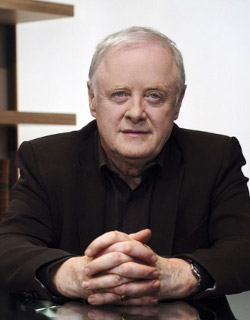
Sebastian Barry, novelist, playwright and poet, is born in Dublin on July 5, 1955. He is noted for his lyrical literary writing style and is considered one of Ireland’s finest writers. He is named Laureate for Irish Fiction, 2019–2021.

Barry’s mother is acclaimed actress Joan O’Hara. He is educated at Catholic University School and Trinity College, Dublin, where he reads English and Latin. His literary career begins in poetry before he begins writing plays and novels.

Barry starts his literary career with the novel Macker’s Garden in 1982. This is followed by several books of poetry and a further novel, The Engine of Owl-Light (1987), before his career as a playwright begins with his first play produced in the Abbey Theatre, Boss Grady’s Boys (1988).

Barry’s maternal great-grandfather, James Dunne, provides the inspiration for the main character in his most internationally known play, The Steward of Christendom, which wins the Christopher Ewart-Biggs Memorial Prize, the Lloyd’s Private Banking Playwright of the Year Award and other awards. The main character in the play, Thomas Dunne, is the chief superintendent of the Dublin Metropolitan Police from 1913 to 1922. He oversees the area surrounding Dublin Castle until the Irish Free State takeover on January 16, 1922. One of his grandfathers belonged to the British Army Corps of Royal Engineers while the other is a painter, a Nationalist, and a devotee of Éamon de Valera.

Both The Steward of Christendom and the novel The Whereabouts of Eneas McNulty, are about the dislocations, physical and otherwise, of loyalist Irish people during the political upheavals of the early 20th century. The title character of the latter work is a young man forced to leave Ireland by his former friends in the aftermath of the Irish War of Independence.

Barry has been twice shortlisted for the Man Booker Prize for his novels A Long Long Way (2005) and The Secret Scripture (2008), the latter of which wins the 2008 Costa Book of the Year and the James Tait Black Memorial Prize. His fifth novel, On Canaan’s Side (2011), is longlisted for the 2011 Man Booker Prize and wins the 2012 Walter Scott Prize. In January 2017, he is awarded the Costa Book of the Year prize for Days Without End (2016), becoming the first novelist to win the prestigious prize twice. The novel also wins The Walter Scott Prize and The Independent Booksellers’ Prize, and is longlisted for the Man Booker Prize 2017.

Barry’s play Andersen’s English is inspired by children’s writer Hans Christian Andersen coming to stay with Charles Dickens and his family in the Kent marshes. Directed by Max Stafford-Clark and produced by the Out of Joint Theatre Company and Hampstead Theatre, the play tours in the United Kingdom from February 11 to May 8, 2010. Our Lady of Sligo is directed in 1998 by Stafford-Clark at the Royal National Theatre co−produced by Out of Joint.

In 2001, Barry establishes his personal and professional archive at the Harry Ransom Center. More than sixty boxes of papers document his diverse writing career and range of creative output which includes drawings, poetry, short stories, novels, essays, and scripts.

Barry has been awarded honorary degrees from NUI Galway, the Open University and the University of East Anglia. His academic posts include Honorary Fellow in Writing at the University of Iowa (1984), Heimbold Visiting Professor at Villanova University (2006) and Writer Fellow at Trinity College, Dublin (1995–1996).

Barry lives in County Wicklow with his wife, actor and screenwriter Alison Deegan.


Leave a comment

Birth of Gerry Robinson, Businessman & Television Presenter

Sir Gerrard Jude “Gerry” Robinson, Irish-born British business executive and television presenter, is born in Dunfanaghy, County Donegal on October 23, 1948. He is the former non-executive Chairman of Allied Domecq and the ex-Chairman/chief executive of Granada.

The ninth of ten children born to Anthony and Elizabeth Robinson, Robinson moves with his family to England in his early teens. He briefly trains to become a Catholic priest at St. Mary’s Missionary College of the Holy Ghost Fathers at Castlehead, Grange-over-Sands, Lancashire. He begins a career in accounting in 1965 as a clerk with the Matchbox toy company. While with the firm, he progresses through various accounting roles to become Chief Management Accountant in 1974. During that time he also qualifies as an Associate Chartered Management Accountant.

In 1974, Robinson leaves Matchbox to work for Lex Vehicle Leasing as a management accountant. He rises through the company and is ultimately appointed finance director. In 1980, he joins the UK franchise of Coca-Cola, owned at the time by Grand Metropolitan. In 1983 he is appointed managing director of Grand Metropolitan’s international services division. In 1987 he leads the successful £163m management buyout of the loss-making contract services and catering division of Compass Group, known as Compass Caterers. He joins Granada as CEO in 1991 and ousts Granada’s chairman, David Plowright, in 1992, which leads John Cleese to call Robinson “an upstart caterer.”

Robinson steers the company through various mergers, and hostile takeovers including London Weekend Television (1993) and Forte Group (1996). In 1999 he is the subject of a biography, Lord of the Dance, written by business journalist William Kay, and published by Orion Business Books. In 2005 he makes an unsuccessful attempt to oust Doug Flynn as CEO of Rentokil Initial and install himself as Executive chairman for a 5% stake in the company, then valued at £56M.

Robinson’s first foray into broadcasting is a revival of the BBC‘s Troubleshooter series, originally fronted by Sir John Harvey-Jones in the early 1990s. Titled I’ll Show Them Who’s Boss and co-produced by the Open University, in 2004 he goes into struggling businesses to try to turn them round by advice and mentoring.

In January 2007 following a similar format, he presents a three-part series, Can Gerry Robinson Fix the NHS? as he attempts to reduce waiting lists at Rotherham General Hospital. He returns a year later for a sequel, Can Gerry Robinson Fix the NHS? One Year On. In December 2009, he presents a programme in a similar format entitled Can Gerry Robinson Fix Dementia Care Homes?.

In June 2009 Robinson presents a special edition of The Money Programme entitled Gerry Robinson’s Car Crash investigating the history and future of the British motor industry. He regularly appears on British TV as a celebrity businessman. In July 2009 he starts a TV series called Gerry’s Big Decision, in which he reviews struggling companies and decides whether it is worth investing his own money to save them. From January 14 through February 18, 2011 he presents BBC Two show Can’t Take It with You, which helps people to write their wills.

Robinson also serves as chairman of the Arts Council England for six years from 1998, in which capacity he is one of the many victims of a spoof by British comedian Ali G. He has divorced and remarried and has four children. He lives in Raphoe, County Donegal and has established a botanical garden with a narrow-gauge railway – the Difflin Lake Railway – which is open to the public. He was knighted in the 2004 New Year Honours list.