seamus dubhghaill

Promoting Irish Culture and History from Little Rock, Arkansas, USA


Leave a comment

Birth of Sidney Czira, Journalist, Broadcaster, Writer & Revolutionary

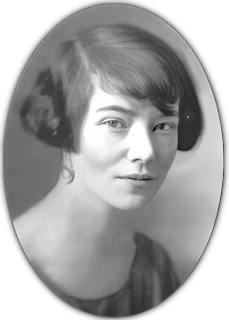
Sidney Sarah Madge Czira (née Gifford), journalistbroadcaster, writer and revolutionary, known by her pen name John Brennan, is born in Rathmines, Dublin, on August 3, 1889. She is an active member of the revolutionary group Inghinidhe na hÉireann (Daughters of Ireland) and writes articles for its newspaper, Bean na h-Éireann, and for Arthur Griffith‘s newspaper Sinn Féin.

Gifford is the youngest of twelve children of Frederick and Isabella Gifford. Isabella Gifford (née Burton), is a niece of the artist Frederic William Burton, and is raised with her siblings in his household after the death of her father, Robert Nathaniel Burton, a rector, during the Great Famine.

Gifford’s parents—her father is Catholic and her mother Anglican—are married in St. George’s Church, a Church of Ireland church on the north side of Dublin, on April 27, 1872. She grows up in Rathmines and is raised as a Protestant, as are her siblings.

Like her sisters, the socialist Nellie GiffordGrace Gifford, who marries Joseph Plunkett, and Muriel Gifford, who marries Thomas MacDonagh, she becomes interested and involved in the suffrage movement and the burgeoning Irish revolution.

Gifford is educated in Alexandra College in Earlsfort Terrace. After leaving school she studies music at the Leinster House School of Music. It is her music teacher, in her teens, who first gives her her first Irish national newspaper, The Leader. She begins reading this secretly and then starts reading Arthur Griffith’s newspaper, Sinn Féin.

Gifford is a member of Inghinidhe na hÉireann, a women’s political organisation active from the 1900s. It is founded by Maud Gonne and a group of working-class and middle-class women to promote Irish culture and help to alleviate the shocking poverty of Dublin and other cities at a time when Dublin’s slums are unfavourably compared with Calcutta‘s. Gifford, who is already writing under the name “John Brennan” for Sinn Féin, is asked to write for its newspaper Bean na h-Éireann. Her articles vary from those highlighting poor treatment of women in the workplace to fashion and gardening columns, some written under the pseudonym Sorcha Ní hAnlúan.

She also works, along with her sisters, in Maud Gonne’s and Constance Markievicz‘s dinner system in St. Audoen’s Church, providing good solid dinners for children in three Dublin schools – poor Dublin schoolchildren often arrive at school without breakfast, go without a meal for the day, and if their father has been given his dinner when they arrive home, might not eat or might only have a crust of bread that night.

In 1911, Gifford is elected (as John Brennan) to the executive of the political group Sinn Féin.

Gifford is a member of Cumann na mBan (The Irish Women’s Council) from its foundation in Dublin on April 2, 1914. Its members learn first aid, drilling and signalling and rifle shooting, and serve as an unofficial messenger and backup service for the Irish Volunteers. During the fight for Irish Independence the women carry messages, store and deliver guns and run safe houses where men on the run can eat, sleep and pick up supplies.

In 1914, Gifford moves to the United States to work as a journalist. Through her connection with Padraic Colum and Mary Colum, whom she had met through her brother-in-law Thomas MacDonagh, she meets influential Irish Americans such as Thomas Addis Emmet and Irish exiles like John Devoy, and marries a Hungarian lawyer, Arpad Czira, a former prisoner of war who is said to have escaped and fled to America. Their son, Finian, is born in 1922.

Czira writes both for traditional American newspapers and for Devoy’s newspaper, The Gaelic American. She and her sister Nellie found the American branch of Cumann na mBan, and she acts as its secretary. Both sisters tour and speak about the Easter Rising and those involved. She is an active campaigner for Irish independence and against the United States joining the war against Germany, seen as a war for profit and expansion of the British Empire, and so to the disadvantage of the work for Irish independence. She helps Nora Connolly O’Brien to contact German diplomats in the United States.

In 1922, Czira returns to Ireland with her son. As a member of the Women’s Prisoners’ Defence League, she is an activist against the ill-treatment of Republican prisoners during the Irish Civil War. She continues to work as a journalist, though she is stymied in her work, as are the women of her family and many of those who had taken the anti-Free State side. In the 1950s her memoirs are published in The Irish Times, and she moves into work as a broadcaster and produces a series of historical programmes.

Czira dies in Dublin on September 15, 1974, and is buried in Dean’s Grange Cemetery.

Leave a comment

Birth of Brendan O’Reilly, Athlete, Journalist, Actor & Singer

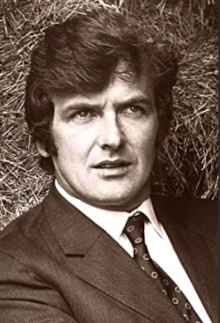
Brendan O’Reilly, Olympic high jumper, journalist, actor, singer-songwriter, is born on May 14, 1929, in Granard, County Longford.

O’Reilly is one of six children of James P. O’Reilly, shopkeeper and musician, and Catherine O’Reilly (née Donegan). The family moves to Dublin when he is nine years old. He is educated at the Christian Brothers school in James’s Street, where he excels at Gaelic football and develops an interest in drama and music. Toward the end of his schooldays, he begins to participate in athletics, particularly the high jump, and is coached by Jack Sweeney, a leading athletics coach.

Always a man of many talents and interests, after leaving school O’Reilly combines working in the insurance business with an athletics career with Donore Harriers and evening drama classes. He wins several Irish titles, including the high jump, javelin, and decathlon, and sets a national record in the high jump. In 1954 he wins the British AAA Championships high jump title, beating the Commonwealth champion into second place, and setting a championship record of 6 ft. 5 in. (1.96 m). As a result, he secures a United States athletics scholarship to the University of Michigan, Ann Arbor, where he takes a degree in liberal arts, majoring in speech and drama. While at Michigan he improves his Irish record to 6 ft. 7 in. (2.007 m). His athletic career, however, is dogged with bad luck. He is selected to compete in the high jump at the European Athletics Championships in Bern, Switzerland, in 1954 but fractures an ankle in practice and fails to advance beyond the qualifying round. Although he competes at international level for ten years (1952–62), he is unlucky to never take part in the Olympic Games. A victim of sporting politics in 1952, as an NCAA athlete he is not entitled to compete. He is selected for the 1956 Summer Olympics in Melbourne but is unable to attend when, at the last minute, his club cannot provide the finance for him to attend. Earlier that year he wins the Big Ten Conference high jump title.

On leaving Michigan O’Reilly moves to New York City, where he embarks on an acting career with the Irish Players, but he returns to Dublin in 1959, where, after brief spells working as a teacher and for an advertising agency, he applies to Ireland’s new television station for a position. He is looking for an acting job but ends up being offered a position as a presenter, joining Teilifís Éireann in 1961 as an announcer/interviewer. His relaxed and unobtrusive style appeals to viewers and his light entertainment show, The Life of O’Reilly, is the most popular programme on Irish television in the day, eclipsing even a fledgling The Late Late Show. It is as a sports presenter and commentator, however, that O’Reilly is primarily remembered, as he becomes the face of sport on RTÉ Television for many years. He attends five Olympic Games as a broadcaster, from Mexico in 1968 to Los Angeles in 1984, commentating on athletics and gymnastics. The first presenter of RTÉ’s flagship Saturday afternoon sports programme Sports Stadium in 1984, he continues to present it over its fourteen-year life, co-presenting the final programme in December 1997. He also is the regular presenter of RTÉ’s Wimbledon Championships tennis coverage for many years, the sports results on news broadcasts on TV and radio, and Sunday Sport on RTÉ Radio, as well as commentating on individual sports such as ice-skating.

Although sports presenting is a natural progression for an athlete with his talents, O’Reilly’s real love is the arts. He continues to act, playing the part of Detective Inspector Michael Roarke in the classic children’s film Flight of the Doves (1971) with Ron Moody and Willie Rushton. He is also an accomplished singer and songwriter, and writes and performs his own one-man show, Across the Spectrum, comprising his own poems and songs in 1992. As well as a book of poems, The Great Explosion (1977), he releases a number of albums and tops the charts with his own song, “The Ballad of Michael Collins,” in 1981. He has a great admiration for Michael Collins, and this leads to his becoming the first non-political figure to give the oration at the annual Collins commemoration at Béal na Bláth, County Cork, in 1981. He also writes the song “Let the Nations Play” (1985), inspired by the boycotts of the Olympic games of 1980 and 1984, and the song is adopted as an anthem of the international Olympic movement.

Tall and slim in build, O’Relly is affable, modest, and self-deprecating in character. His relaxed style is no mere public affectation. He often exasperates colleagues by turning up just in time for broadcasts, and his ability to ad-lib is important in a live television environment. He once describes himself as “a champion high-jumper who could enunciate properly and keep my hair neatly combed” (The Irish Times, April 7, 2001). Despite the disappointments in his sporting career, he maintains that his other interests more than compensated. In relation to the Olympics he is quoted as saying, “If you asked me whether I’d have preferred to win a medal or have written the song, I’d honestly say I would have preferred to have written the song” (Longford Leader, April 6, 2001).

O’Reilly lives in Ranelagh, Dublin, and is married twice. He meets his first wife Linda Herbst (née Kuhl) in New York in the late 1950s. His second marriage is to Johanna Lowry. He has four children. After a lengthy illness, he dies on April 1, 2001, in St. Vincent’s Hospital, Fairview, Dublin. He is buried at Mount Venus cemetery, Rathfarnham.

(From: “O’Reilly, Brendan” by Jim Shanahan, Dictionary of Irish Biography, http://www.dib.ie, October 2009)


Leave a comment

Birth of Tim Pat Coogan, Journalist, Writer & Broadcaster

Timothy Patrick “Tim Pat” Coogan, Irish journalist, writer and broadcaster, is born in Monkstown, County Dublin, on April 22, 1935. He serves as editor of The Irish Press newspaper from 1968 to 1987. He is best known for such books as The IRA (1970) and On the Blanket: The H Block Story (1980), and biographies of Michael Collins and Éamon de Valera.

Coogan’s particular focus is on Ireland’s nationalist/independence movement in the 20th century, a period of unprecedented political upheaval. He blames the Troubles in Northern Ireland on “Paisleyism.”

Coogan is the first of three children born to Beatrice (née Toal) and Eamonn Coogan, a native of Kilkenny who is an Irish Republican Army (IRA) volunteer during the Irish War of Independence and later serves as the first Deputy Commissioner of the newly established Garda Síochána, then a Fine Gael TD for the Kilkenny constituency. His mother, the daughter of a policeman, is a Dublin socialite who is crowned Dublin’s Civic Queen of Beauty in 1927. She writes for the Evening Herald and takes part in various productions in the Abbey Theatre and Radio Éireann. He spends many summer holidays in the town of Castlecomer, County Kilkenny, his father’s hometown.

A former student of the Irish Christian Brothers in Dún Laoghaire and Belvedere College in Dublin, Coogan spends most of his secondary studies at Blackrock College in Dublin.

In 2000, Irish writer and editor Ruth Dudley Edwards is awarded £25,000 damages and a public apology by the High Court in London against Coogan for factual errors in references to her in his book Wherever Green is Worn: The Story of the Irish Diaspora (2000). In the book, he writes that Dudley Edwards had “groveled to and hypocritically ingratiated herself with the English establishment to further her writing career.” He also alleges that Dudley Edwards “had abused the position of chairwoman of the British Association for Irish Studies (BAIS) by trying to impose her political views on it” and that her commission to write True Brits had been awarded because of political favouritism.

When Taoiseach Enda Kenny causes confusion following a speech at Béal na Bláth by incorrectly claiming Michael Collins had brought Lenin to Ireland, Coogan comments, “Those were the days when bishops were bishops and Lenin was a communist. How would that have gone down with the churchyard collections?”

In November 2012, for reasons that are uncertain, the United States embassy in Dublin refuses to grant Coogan a visa to visit the United States. As a result, a planned book tour for his book The Famine Plot, England’s role in Ireland’s Greatest Tragedy (2012) is cancelled. After representations to then Secretary of State Hillary Clinton by United States Senator Chuck Schumer (D-NY) and Congressman Peter T. King (R-NY), he receives his visa.

Coogan has been criticised by the Irish historians Liam Kennedy and Diarmaid Ferriter, as well as Cormac Ó Gráda, for a supposed lack of thoroughness in his research and bias:

“Well, I waited in this book to hear some great revelation, and it just isn’t there. It’s anticlimactic. I could not see the great plot, and indeed there is no serious historian who … I can’t think of a single historian who has researched the Famine in depth – and Tim Pat has not researched it in depth” (The Famine Plot).

“Coogan is not remotely interested in looking at what others have written on 20th-century Irish history…. he does not appear interested in context and shows scant regard for evidence. He does not attempt to offer any sustained analysis in relation to the challenges of state building, the meaning of sovereignty, economic and cultural transformations, or comparative perspectives on the evolution of Irish society. There is no indication whatsoever that Coogan has engaged with the abundant archival material relating to the subject matter he pronounces on. There is no rhyme or reason when it comes to the citation of the many quotations he uses; the vast majority are not referenced. For the 300-page text, 21 endnotes are cited and six of them relate to Coogan’s previous books, a reminder that much of this tome consists of recycled material…. Tim Pat Coogan… he is a decent, compassionate man who has made a significant contribution to Irish life. But he has not read up on Irish history; indeed, such is the paucity of his research efforts that this book amounts to a travesty of 20th-century Irish history” (1916: The Mornings After).


Leave a comment

Birth of Éamonn Mac Thomáis, Irish Republican Author & Historian

Éamonn Mac Thomáis, author, broadcaster, historian, Irish Republican, advocate of the Irish language and lecturer, is born Edward Patrick Thomas in the Dublin suburb of Rathmines on January 13, 1927. He presents his own series on Dublin on RTÉ during the 1970s and is well known for guided tours and lectures of his beloved Dublin.

Mac Thomáis comes from a staunch Republican family. His father, a fire-brigade officer, dies when he is five years old and his family moves to Goldenbridge, Inchicore, Dublin. He leaves school at thirteen to work as delivery boy for White Heather Laundry, learning Dublin neighbourhoods with great thoroughness. He says he found work to help his mother pay the rent. He later works as a clerk and is appointed credit controller for an engineering firm.

Mac Thomáis joins the Dublin Brigade of the Irish Republican Army as a young man and is active in the preparations for and prosecution of the 1956-62 border campaign. He is interned in Curragh Camp during the campaign and in December 1961 is sentenced to four months imprisonment under the Offences Against the State Act.

At the November 1959 Ardfheis Mac Thomáis is elected to the Ardchomhairle of Sinn Féin and edits and contributes to the Sinn Féin newspaper United Irishman. He is a close friend of Tomás Mac Giolla and is deeply affected by the 1970 split in Sinn Féin. He takes the Provisional side, opposing Mac Giolla.

Mac Thomáis takes over as editor of An Phoblacht in 1972. In July 1973, he is arrested and charged with IRA membership at the Special Criminal Court in Dublin. He refuses to recognise the court, but he gives a lengthy address from the dock. The following month he is sentenced to 15-months imprisonment. Within two months of completing his sentence he is again before the court on the same charge and again receives a 15-month sentence. Editors of six left-wing and Irish-language journals call for his release, as do a number of writers, and hundreds attend protest meetings – to no avail. He serves his full sentence.

Tim Pat Coogan, editor of The Irish Press, claims the charges against Mac Thomáis are politically motivated to a large degree as his activities are confined strictly to the newspaper An Phoblacht. Under Section 31 of the Broadcasting Act, due to his membership in Sinn Féin in the 1970s he is removed from his position in making some of the RTÉ historical programmes. As a historian he makes numerous contributions to various historical publications such as the Dublin Historical Review.

From 1974 Mac Thomáis writes a number of books on old Dublin. They sell well and remain in print for over 20 years. He also starts a number of walking tours of Dublin, which prove very popular.

Mac Thomáis dies in Dublin on August 16, 2002. He is buried in the republican plot in Dublin’s Glasnevin Cemetery, next to Frank Ryan.

Mac Thomáis’s son Shane, also a historian, runs similar walking tours and is resident historian at Glasnevin Cemetery before his death in 2014.


Leave a comment

Death of Justin Keating, Politician, Broadcaster & Journalist

Justin Pascal Keating, Irish Labour Party politician, broadcaster, journalist, lecturer and veterinary surgeon, dies at Ballymore Eustace, County Kildare, on December 31, 2009. In later life he is president of the Humanist Association of Ireland.

Keating is twice elected to Dáil Éireann and serves in Liam Cosgrave‘s cabinet as Minister for Industry and Commerce from 1973 to 1977. He also gains election to Seanad Éireann and is a Member of the European Parliament (MEP). He is considered part of a “new wave” of politicians at the time of his entry to the Dáil.

Keating is born in Dublin on January 7, 1930, a son of the noted painter Seán Keating and campaigner May Keating. He is educated at Sandford Park School, and then at University College Dublin (UCD) and the University of London. He becomes a lecturer in anatomy at the UCD veterinary college from 1955 until 1960 and is senior lecturer at Trinity College Dublin from 1960 until 1965. He is RTÉ‘s head of agricultural programmes for two years before returning to Trinity College in 1967. While at RTÉ, he scripts and presents Telefís Feirme, a series for the agricultural community, for which he wins a Jacob’s Award in 1966.

In the 1950s and 1960s Keating is a member of the communist Irish Workers’ Party. He is first elected to the Dáil as a Labour Party Teachta Dála (TD) for the Dublin County North constituency at the 1969 Irish general election. From 1973 to 1977 he serves in the National Coalition government under Liam Cosgrave as Minister for Industry and Commerce. In 1973 he is appointed a Member of the European Parliament from the Oireachtas, serving on the short-lived first delegation.

During 1975 Keating introduces the first substantial legislation for the development of Ireland’s oil and gas. The legislation is modelled on international best practice and intended to ensure the Irish people would gain substantial benefit from their own oil and gas. Under his legislation the state could by right acquire a 50% stake in any viable oil and gas reserves discovered. Production royalties of between 8% and 16% with corporation tax of 50% would accrue to the state. The legislation specifies that energy companies would begin drilling within three years of the date of the issue of an exploration license.

Keating loses his Dáil seat at the 1977 Irish general election but is subsequently elected to Seanad Éireann on the Agricultural Panel, serving there until 1981. He briefly serves again in the European Parliament from February to June 1984 when he replaces Séamus Pattison.

In the aftermath of President of Iran Mahmoud Ahmadinejad‘s “World Without Zionism” speech in 2005, Keating publishes an op-ed in The Dubliner magazine, expressing his views on Israel. The article starts by claiming that “the Zionists have absolutely no right in what they call Israel.” He then proceeds to explain why he thinks Israel has no right to exist, claiming that the Ashkenazi Jews are descended from Khazars.

Keating dies at Ballymore Eustace, County Kildare, on December 31, 2009, at the age of 79, one week before his 80th birthday. Tributes come from the leaders of the Labour Party and Fine Gael at the time of his death, Eamon Gilmore and Enda Kenny, as well as former Fine Gael leader and Taoiseach John Bruton.


Leave a comment

Birth of George Lee, Journalist, Presenter & Former Fine Gael Politician

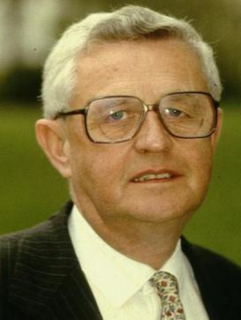
George Lee, Irish economist, journalist, television and radio presenter, and former Fine Gael politician, is born in Templeogue, Dublin, on September 27, 1962. He has worked for RTÉ since 1992. Since 2019, he has been Environment Correspondent for RTÉ News. He previously was Economics Editor in 1996.

Lee’s father is a motor mechanic, and his mother is a hairdresser. He is the seventh in a family of eight children and grows up in Templeogue, Dublin. He attends Coláiste Éanna, a Christian Brothers’ School in the Dublin suburb of Ballyroan. He is a graduate of University College Dublin (UCD) and holds an MSc in Economics from the London School of Economics (LSE) where his specialist area is labour economics and unemployment.

Lee is married to Mary Lee (née Kitson) and they have two children, Alison and Harry, and live in Cabinteely. He famously travels to work at RTÉ using a Segway, once giving it a test ride live on Tubridy Tonight.

Lee joins the civil service as an executive officer in the Central Statistics Office (CSO). Two years later he enters University College Dublin where he studies economics under academics such as Brendan Walsh and Peter Neary.

Prior to his move into broadcasting, Lee lectures at NUI Galway and then works as a journalist with The Sunday Business Post. He is also a Senior Economist at Riada Stockbrokers. He also works as Treasury Economist with FTI and as a research economist with the Central Bank of Ireland.

From 1992 to 2009 Lee worked at RTÉ, the public broadcasting service of Ireland. He is appointed Economics Editor with RTÉ in 1996. He is named Irish Journalist of the Year, along with Charlie Bird, in 1998 after they uncover a major tax evasion and overcharging scandal at National Irish Bank. He has devised, researched and presented several television series, including Moneybox, More to Do, Winds of Change, and Beyond the Berlin Wall. He is thought of as an “economics guru.” He leaves RTÉ in the late 1990s to work for BCP Stockbrokers. He leaves the job and returns to his RTÉ post the next day.

Before embarking on his political career, Lee films a four-part series based on the fall of the Berlin Wall in 2008. It is aired on RTÉ One in November 2009.

Lee is parodied in the 1990s comedy Bull Island, where he is seen “menacingly staring down the lens of a camera,” and is also featured on RTÉ 2fm‘s Nob Nation.

On May 5, 2009, on RTÉ News at One on RTÉ Radio 1, Lee announces that he is resigning as Economic Editor with RTÉ and announces his intention to seek the Fine Gael nomination for the Dublin South by-election in 2009. He takes a year’s unpaid leave from RTÉ in May 2009. On May 6, 2009, he is chosen as the Fine Gael candidate for the by-election. He is the only candidate for the nomination.

Lee is elected on the first count to represent Dublin South on June 6, 2009. He receives over 53% of the 1st preference vote. In total he receives 27,768 1st preference votes. When elected, he is referred to as a “Celebrity TD.” His RTÉ position is filled by Europe editor Sean Whelan, but only as correspondent. Instead, David Murphy is promoted to Business Editor.

In an opinion poll concerning support for possible candidates in the 2011 Irish presidential election conducted by the Sunday Independent in October 2009, Lee places third, receiving 12% support, ahead of former Taoiseach Bertie Ahern and other high-profile politicians.

Lee highlights the failure of EMPG, the holding company for U.S. publisher Houghton Mifflin Harcourt, and the potential impact on the Irish taxpayers of the loans given by Anglo Irish Bank to the investors in EMPG on January 13, 2010. He sees this as another example for the urgent need of an investigation into the Irish banking crisis.

On February 8, 2010, Lee announces his resignation from Fine Gael and from Dáil Éireann, due to having “virtually no influence or input” into shaping Fine Gael’s economic policies at a time of economic upheaval. It emerges that on February 2, he met with the Fine Gael leader Enda Kenny and told him of his intention to resign. Kenny then offered Lee the frontbench position as spokesman on economic planning. Speaking to reporters outside Leinster House soon after his announcement, Lee says it would have been dishonest of him to accept the position. “I had absolutely no input for nine months. I think I had to be honest with myself and honest with the electorate about that and not pretend.” Asked if his resignation is a vote of no confidence in Kenny, he says there are “certainly lots of large mutterings at the moment in relation to the leader’s position.” He says he had “minimal involvement” with Fine Gael finance spokesman Richard Bruton.

Kenny notes Lee had been appointed chair of the party’s committee on economic policy and also its forum. “I had anticipated a very important role for [George Lee] in the coming period with Fine Gael.” Kenny’s spokesman later dismisses the proposition that the resignation had implications for his leadership. He cited the public endorsement of Kenny by 20 Dáil deputies over the course of the weekend. Former Fine Gael leader Michael Noonan says he is surprised at the decision. “I thought that George Lee was fitting in well,” adding that he believes he would have been a cabinet member in a Fine Gael-led government.

Lee is criticised after his resignation by Senator Eoghan Harris, who is speaking on the Lunchtime programme of Newstalk Radio. Harris suggests financial considerations and long working hours of politicians are the reasons for Lee’s resignation. Fine Gael TD Brian Hayes, who is Lee’s campaign manager in the Dublin South by-election, says that in discussions with Lee, the latter had complained about “a major reduction in his income” since leaving RTÉ to become a Dáil backbencher. Lee denies that financial considerations had anything to do with his decision to quit politics.

RTÉ receives a letter from Lee confirming his intentions to return after his leave of absence. The Sunday Tribune says on February 14, 2010, that he will have to wait for three months before returning to RTÉ. Exactly a year after leaving RTÉ, he returns to the broadcaster on May 5, 2010. He works as an advisor on the RTÉ business desk. He presents Mind Your Business on RTÉ Radio 1 on Saturday Mornings as a summer replacement for The Business.

When John Murray moves to present his own programme, Lee takes over The Business slot on September 4, 2010, on Saturday mornings on RTÉ Radio 1. In addition to the radio edition, he has presented a televised version on RTÉ One, also titled The Business.

Lee has been Environment Correspondent for RTÉ since June 27, 2019.


Leave a comment

Death of Francis MacManus, Novelist & Broadcaster

Francis MacManus, Irish novelist and broadcaster, dies in Dublin on November 27, 1965.

MacManus is born in Kilkenny, County Kilkenny on March 8, 1909. He is educated in the local Christian Brothers school and later at St. Patrick’s College, Dublin and University College Dublin (UCD). After teaching for eighteen years at the Synge Street CBS in Dublin, he joins the staff of Radio Éireann, precursor to the Irish national broadcasting entity RTÉ, in 1948 as Director of Features.

MacManus begins writing while still teaching, first publishing a trilogy set in Penal times and concerning the life of the Gaelic poet Donncha Rua Mac Conmara comprising the novels Stand and Give Challenge (1934), Candle for the Proud (1936) and Men Withering (1939). A second trilogy follows which turns its attention to contemporary Ireland: This House Was Mine (1937), Flow On, Lovely River (1941), and Watergate (1942). The location is the fictional “Dombridge,” based on Kilkenny, and deals with established themes of Irish rural life including obsessions with land, sexual frustration, and the trials of emigration and return. Other major works include the novel The Greatest of These (1943), concerning religious conflict in nineteenth-century Kilkenny, and the biographies Boccaccio (1947) and Saint Columban (1963). In his last two novels, he descends into the depths of theological debate: The Fire in the Dust (1950) is followed by American Son (1959), a remarkable dialogue between conflicting modes of belief which reveals the strong influence of Roman Catholicism on the author.

Francis MacManus dies of a heart attack at the age of 56 in Dublin on November 27, 1965.

The RTÉ Francis MacManus Short Story Award is established in his memory in 1985. The competition is run by RTÉ, Ireland’s national broadcaster, and is open to entries written in Irish or English from authors born or resident in Ireland. The total prize fund is €6000, out of which the winning author receives €3,000. Sums of €2,000 and €1,000 are awarded to the second and third prize winners.


Leave a comment

Birth of John Cole, Northern Irish Journalist & BBC Broadcaster

John Morrison Cole, Northern Irish journalist and broadcaster best known for his work with the BBC, is born in Belfast, Northern Ireland, on November 23, 1927. He serves as deputy editor of The Guardian and The Observer and, from 1981 to 1992, is the BBC’s political editor. Donald Macintyre, in an obituary in The Independent, describes him as “the most recognisable and respected broadcast political journalist since World War II.”

Cole is the son of George Cole, an electrical engineer, and his wife Alice. The family is Ulster Protestant, and he identifies himself as British. He receives his formal education at the Belfast Royal Academy.

Cole starts his career in print journalism in 1945, joining the Belfast Telegraph as a reporter and industrial correspondent. He subsequently works as a political reporter for the paper. He gains a scoop when he interviews the then Prime Minister, Clement Attlee, who is holidaying in Ireland.

Cole joins The Guardian, then The Manchester Guardian, in 1956, reporting on industrial issues. He transfers to the London office in 1957 as the paper’s labour correspondent. Appointed news editor in 1963, succeeding Nesta Roberts, he takes on the task of reorganising the paper’s “amateurish” system for gathering news. He heads opposition to a proposed merger with The Times in the mid-1960s, and later serves as deputy editor under Alastair Hetherington. When Hetherington leaves in 1975, Cole is in the running for the editorship, but fails to secure the post, for reasons which may include his commitment to the cause of unionism in Northern Ireland, as well as what is seen by some as inflexibility and a lack of flair. Unwilling to continue at The Guardian, he then joins The Observer as deputy editor under Donald Trelford, remaining there for six years.

After Tiny Rowland takes over as proprietor of The Observer in 1981, Cole gives evidence against him at the Monopolies Commission. The following day he receives a call from the BBC offering him the job of political editor, succeeding John Simpson. He has little previous television experience but proves a “natural broadcaster.” Reporting through most of the premiership of Margaret Thatcher, he becomes a familiar figure on television and radio.

Cole’s health is put under strain by the workload, and he suffers a heart attack in February 1984. Returning to report on that year’s conference season, he covers the Brighton hotel bombing, getting a “memorable” interview with Thatcher on the pavement in its immediate aftermath, in which she declares that the Tory conference will take place as normal. An astute observer of the political scene, he is one of the earliest to forecast Thatcher’s resignation as Prime Minister in 1990, in what colleague David McKie refers to as “perhaps his greatest exclusive.”

Cole establishes a strong reputation for his “gentle but probing” interviewing style, for his political assessments, and for presenting analysis rather than “bland reporting.” Held in enormous affection by viewers, he is trusted by both politicians and the public. He is known for speaking in the language used by ordinary people rather than so-called Westminster experts. His distinctive Northern Irish accent leads the way for BBC broadcasters with regional accents.

Cole retires as political editor in 1992 at the age of 65, compulsory at the time, but continues to appear on television, including making programmes on golf and travel. He also continues to appear on the BBC programme Westminster Live for several years after he retired as political editor.

In addition to his journalistic writing, Cole authors several books. The earliest are The Poor of the Earth, on developing countries, and The Thatcher Years (1987). After his retirement as BBC political editor, he spends more time writing. His political memoir, As It Seemed to Me, appears in 1995 and becomes a best-seller. He also publishes a novel, A Clouded Peace (2001), set in his birthplace of Belfast in 1977.

In 2007, Cole writes an article for the British Journalism Review, blaming both politicians and the media for the fact that parliamentarians are held in such low esteem, being particularly scathing of Alastair Campbell‘s influence during Tony Blair‘s premiership.

In 1966, the Eisenhower Fellowships selects Cole to represent Great Britain. He receives the Royal Television Society‘s Journalist of the Year award in 1991. After his retirement in 1992, he is awarded an honorary degree from the Open University as Doctor of the University and receives the Richard Dimbleby Award from BAFTA in 1993. He turns down a CBE in 1993, citing the former The Guardian newspaper rule that journalists can only accept gifts which can be consumed within 24 hours.

In his private life Cole is a supporter of the Labour Party and is a believer in the trades union movement. He considers that the combating of unemployment is one of the most important political issues. He is a British Republican and a committed Christian, associating in the latter part of his life with the United Reformed Church at Kingston upon Thames.

Cole suffers health problems in retirement including heart problems and two minor strokes. In 2009, he is diagnosed with cancer. He subsequently develops aphasia. He dies at his home at Claygate in the county of Surrey on November 7, 2013.

Tributes are paid by journalists, broadcasters and politicians across the political spectrum. Prime Minister David Cameron calls Cole a “titan at the BBC” and an “extraordinary broadcaster.” Labour Party leader Ed Miliband says that “my generation grew up watching John Cole. He conveyed the drama and importance of politics.” The Scottish First Minister Alex Salmond says that Cole is “an extremely able journalist but also extraordinarily helpful and generous to a young politician.” The BBC’s political editor at the time, Nick Robinson, writes that Cole “shaped the way all in my trade do our jobs.”


Leave a comment

Death of Frank Hall, Broadcaster, Journalist, Satirist & Film Censor

Frank Hall, Irish broadcaster, journalist, satirist and film censor, dies in Dublin on September 21, 1995. He is best remembered for his satirical revue programme Hall’s Pictorial Weekly.

Born in Newry, County Down, on February 24, 1921, Hall receives little more than a primary education as he leaves school at the age of twelve to work in a local shop. He later works as a waiter in London before moving to Dublin. On his return he joins the art department of the Irish Independent. He subsequently works with the Evening Herald where he writes a column on dance bands.

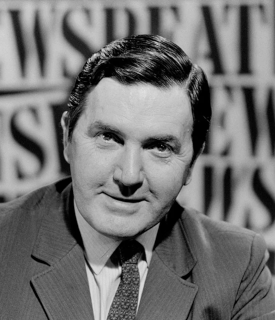
After that, Hall moves to RTÉ where he works in the newsroom. From 1964 to 1971 he presents Newsbeat, a regional news programme. He also presents The Late Late Show for the opening of the 1964 season, but his lack of success in that seat leads to the return of the previous presenter, Gay Byrne. When Newsbeat ends, he starts writing and presenting Hall’s Pictorial Weekly, a political satire show that runs for over 250 episodes until 1980. A successor show, Hall and Company, runs from 1980 until his retirement from television in 1986. He serves as spokesperson for the Irish jury in the Eurovision Song Contest 1965 and 1966.

Hall wins two Jacob’s Awards, in 1966 and 1975, for his work on Newsbeat and Hall’s Pictorial Weekly respectively.

In 1978, Hall is appointed Ireland’s national film censor. During his period as censor, he is known for his strict application of Irish censorship and his defence of family values. Among the films banned by him is Monty Python’s Life of Brian, which he describes as “offensive to Christians and to Jews as well, because it made them appear a terrible load of gobshites.”

Hall has a long running affair with a young colleague from RTÉ, though married to Aideen Kearney at the time. It is also widely accepted that he has a daughter in 1956 with RTÉ presenter Frankie Byrne, although this is disputed at the time by his family members. His relationship with Frankie Byrne is placed in the public domain in a Mint Productions programme, Dear Frankie, screened on RTÉ in January 2006. In 2010, a play written by Niamh Gleeson, also entitled Dear Frankie, opens in the Liberty Hall theatre. Later in 2012, it opens again in the Gaiety Theatre, going on to play in theatres across the country.

Hall dies of a heart attack in Dublin on September 21, 1995. He is buried in Dardistown Cemetery in Northside, Dublin.


Leave a comment

Death of Éamonn Mac Thomáis, Irish Republican Author & Historian

Éamonn Mac Thomáis, author, broadcaster, historian, Irish Republican, advocate of the Irish language and lecturer, dies on August 16, 2002. He presents his own series on Dublin on RTÉ during the 1970s and is well known for guided tours and lectures of his beloved Dublin.

Mac Thomáis comes from a staunch Republican family. He is born Edward Patrick Thomas in the Dublin suburb of Rathmines on January 13, 1927. His father, a fire-brigade officer, dies when he is five years old and his family moves to Goldenbridge, Inchicore. He leaves school at thirteen to work as delivery boy for White Heather Laundry, learning Dublin neighbourhoods with great thoroughness. He says he found work to help his mother pay the rent. He later works as a clerk and is appointed credit controller for an engineering firm.

Mac Thomáis joins the Dublin Brigade of the Irish Republican Army as a young man and is active in the preparations for and prosecution of the 1956-62 border campaign. He is interned in Curragh Camp during the campaign and in December 1961 is sentenced to four months imprisonment under the Offences Against the State Act.

At the November 1959 Ardfheis Mac Thomáis is elected to the Ardchomhairle of Sinn Féin and edits and contributes to the Sinn Féin newspaper United Irishman. He is a close friend of Tomás Mac Giolla and is deeply affected by the 1970 split in Sinn Féin. He takes the Provisional side, opposing Mac Giolla.

Mac Thomáis takes over as editor of An Phoblacht in 1972. In July 1973, he is arrested and charged with IRA membership at the Special Criminal Court in Dublin. He refuses to recognise the court, but he gives a lengthy address from the dock. The following month he is sentenced to 15-months imprisonment. Within two months of completing his sentence he is again before the court on the same charge and again receives a 15-month sentence. Editors of six left-wing and Irish-language journals call for his release, as do a number of writers, and hundreds attend protest meetings – to no avail. He serves his full sentence.

Tim Pat Coogan, editor of The Irish Press, claims the charges against Mac Thomáis are politically motivated to a large degree as his activities are confined strictly to the newspaper An Phoblacht. Under Section 31 of the Broadcasting Act, due to his membership in Sinn Féin in the 1970s he is removed from his position in making some of the RTÉ historical programmes. As a historian he makes numerous contributions to various historical publications such as the Dublin Historical Review.

From 1974 Mac Thomáis writes a number of books on old Dublin. They sell well and remain in print for over 20 years. He also starts a number of walking tours of Dublin, which prove very popular.

Mac Thomáis dies in Dublin on August 16, 2002. He is buried in the republican plot in Dublin’s Glasnevin Cemetery, next to Frank Ryan.

Mac Thomáis’s son Shane, also a historian, runs similar walking tours and is resident historian at Glasnevin Cemetery before his death in 2014.