seamus dubhghaill

Promoting Irish Culture and History from Little Rock, Arkansas, USA


Leave a comment

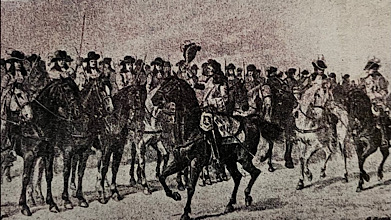
The Battle of Newtownbutler

The Battle of Newtownbutler takes place on July 31, 1689, near EnniskillenCounty Fermanagh. It is part of the Williamite War in Ireland between the forces of William III and Mary II and those of King James II.

In Enniskillen, armed Williamite civilians drawn from the local Protestant population organise a formidable irregular military force. The armed civilians of Enniskillen ignore an order from Robert Lundy that they should fall back to Derry and instead launch guerrilla attacks against the Jacobites. Operating with Enniskillen as a base, they carry out raids against the Jacobite forces in Connacht and Ulster, plundering Trillick, burning Augher Castle, and raiding Clones.

A Jacobite army of about 3,000 men, led by Justin McCarthy, Viscount Mountcashel (in the Jacobite peerage), advance on them from Dublin. Lord Mountcashel’s men consist of three regiments of infantry and two of dragoons. The regiments include his own regiment, Mountcashel (approx. 650 men in 13 companies), The O’Brien regiment (also 13 companies of 650 men), and the Lord Bophin (Burke) regiment. He also has the dragoon regiments of Cotter and Clare, each with seven companies of about 350 dragoons. On July 28, 1689, Mountcashel’s force encamps near Enniskillen and bombards the Williamite outpost of Crom Castle to the southeast of Enniskillen. Crom Castle is almost 20 miles (32 km) from Enniskillen by road and about 5 miles (8.0 km) from Newtownbutler.

Two days later, they are confronted by about 2,000 Williamite ‘Inniskilliniers’ under Colonel Berry, Colonel William Wolseley and Gustave Hamilton. The Jacobite dragoons under Antoine Hamilton stumble into an ambush laid by Berry’s men near Lisnaskea and are routed, taking 230 casualties. Mountcashel manages to drive off Berry’s cavalry with his main force but is then faced with the bulk of the Williamite strength under Wolseley. There is some debate in the sources over troop numbers, though it is believed that Mountcashel has a large number of poorly armed conscripts. Unwisely, Mountcashel halts and draws up his men for battle about a mile south of Newtownbutler.

Williamite histories claim that many of the Jacobite troops flee as the first shots are fired. Up to 1,500 of them are hacked down or drowned in Upper Lough Erne when pursued by the Williamite cavalry. Of the 500 men who try to swim across the Lough, only one survives. Approximately 400 Jacobite officers, along with Lord Mountcashel, the Jacobite commander, are captured and later exchanged for Williamite prisoners, with the other Jacobites being killed. These claims seem unlikely, for several reasons. Each Irish regiment includes approximately 40 officers. The entire force, therefore, would include only about 200 officers. Many of these officers are accounted for in an October 1689 roll call, which shows approximately a 15–20% change in the officer roll call since July for the infantry regiments and 5% for the dragoons. This totals some 20–30 officers in all. Also, the Mountcashel regiment’s roll call for October shows that companies which would normally have 50–60 men, have around 25, which results in a loss of approximately 300–400 men for this regiment. The Cotter and Clare dragoons who ride away from the battle do not have significant losses, based on the October 1689 roll call. Assuming the other two infantry regiments suffer similar losses, gives a total loss of 1,200–1,300. Given their officers are recorded in the October roll and show fewer losses than the Mountcashel regiment among officers, there may be fewer losses in the ranks as well. The Williamite histories acknowledge that they captured approximately 400, including men who are later sent to Derry, which would indicate a total loss of killed, wounded, and missing of 800–900, and likely less. This number is necessarily an estimate based on the available data but should be contrasted with Williamite claims that they killed and drowned 2,000. It appears likely that a couple of hundred men from Mountcashel’s regiment may have fled into the bogs toward Lough Erne, and some of them who made it to the river tried to swim and were drowned, leading to the story of the hundreds drowned.

Lord Mountcashel is wounded by a bullet and narrowly avoids being killed. He later escapes from Enniskillen and returns to lead the Irish Brigade in the French Royal Army. The Jacobite colonel, Sir Thomas Newcomen, 5th Baronet, is killed.

The Williamite victory at Newtownbutler ensures that a landing by Frederick Schomberg, 1st Duke of Schomberg, in County Down in August 1689 is unopposed.

The battle is still commemorated by the Orange Order in Ulster and is mentioned in the traditional unionist song, “The Sash.”

The battle is significant in another way: the regiments on both sides go on to have long and famous histories. On the Williamite side, the Innsikilling Regiment (27th Foot), and on the Jacobite side, the Clare and Mountcashel/Lee/Bulkeley regiments of the Irish Brigade. The two Irish regiments face off again at the Battle of Fontenoy in 1745, where the Irish Brigade famously drives the British army from the battlefield with a charge in the final stage of the battle.

Leave a comment

The Establishment of the Irish Legion

The Irish Legion, a light infantry regiment in service of the French Imperial Army for an anticipated invasion of Ireland, is established on August 31, 1803, in Morlaix, France. Bernard MacSheehy, an Adjutant-General in Napoleon‘s army, is assigned to form the regiment. Later expanded to four battalions and a depot, the legion wins distinction in the Walcheren Expedition, the Peninsular War, and the German Campaign of 1813. Following the disbandment of the foreign regiments in 1815, the regiment’s personnel are distributed.

The first officers include members of the Society of United Irishmen who had fled to France in 1797. It also includes Irishmen who had been taken during the Irish Rebellion of 1798 who were freed during the short peace effected by the Treaty of Amiens on condition of exile, and who had sailed for France in June 1802. The treaty breaks down in May 1803 with the start of the War of the Third Coalition. As a part of Napoleon’s planned invasion of the United Kingdom in 1803–05, the Irish Legion is to provide the indigenous core for a much larger invasion force of 20,000 earmarked to take Ireland, known as the Corps d’Irlande.

The purpose of the Legion is to align the Irish hearts to the French cause in the imminent invasion of Ireland. General Charles-Pierre Augereau is ordained to lead the invasion and wants Irishmen to serve in his army. However, the Battle of Cape Finisterre and the Battle of Trafalgar in 1805 make a safe sea crossing uncertain at best, and Napoleon is forced to abandon his plans for Ireland. He shifts his focus towards Austria and Eastern Europe and launches the Austerlitz campaign in late 1805. The legion remains on the French coast on garrison duty and coastal defence.

The Legion is eventually expanded from a battalion to a regiment and there is greater demand for more soldiers. These make a varied group; some are former United Irishmen who were taken prisoner in 1798-99 and then freed during the peace that followed the Treaty of Amiens (1802–03), some had been impressed into the Royal Navy and deserted, and some were German or Polish. While the Legion is stationed at the Fortress of Mainz in 1806, they are joined by 1,500 Poles and many Irishmen who were sent in 1799 to serve the King of Prussia. Its headquarters is at ‘s-Hertogenbosch, known to the French as Bois-le-Duc, in what is then the Kingdom of Holland.

The Irish Legion has its own flag, and in December 1805 receives an eagle. The Legion is the only group of foreign soldiers in the French military to whom Napoleon ever gives an eagle. Wearing a green uniform, its maximum size is about 2,000 men.

The regiment is greatly assisted from 1807 by Napoleon’s war minister Marshal of France Henri Clarke, who was born in France to Irish parents and whose family had close links to the ancien regime Irish brigade that had served the kings of France. He and his father had served in Dillon’s Regiment, and his mother’s father and several uncles served in Clare’s Regiment. In August 1811, the Legion is renamed the 3e Regiment Etranger (Irlandais) (3rd Foreign Regiment (Irish)), but throughout the unit’s history it is always referred to as the Irish Regiment.

The regiment divides in loyalty during the “Hundred Days,” and is officially disbanded by King Louis XVIII on September 28, 1815. Its flags are burned and its eagle, like many, disappears.

(Pictured: Regimental Colours of the Irish Legion (Obverse))


1 Comment

The Philadelphia Nativist Riots

The Philadelphia nativist riots (also known as the Philadelphia Prayer Riots, the Bible Riots and the Native American Riots) are a series of riots that take place on May 6—8 and July 6—7, 1844, in Philadelphia, Pennsylvania, and the adjacent districts of Kensington and Southwark. The riots are a result of rising anti-Catholic sentiment at the growing population of Irish Catholic immigrants.

On July 3, Father John Patrick Dunn of the Church of St. Philip Neri in the Southwark District is warned that the church might be attacked during an upcoming parade held by the Native American Party. The Native American Party, a nativist political party, plans to hold a large parade the next day on Independence Day.

To prepare for violence, the church applies for an arsenal that a volunteer company could use in case the church is attacked. Pennsylvania Governor David R. Porter authorizes the formation of a company and the procurement of twenty-five muskets from the Frankford Arsenal. Major General Robert Patterson, commander of the Pennsylvania militia, puts the troops on alert in case of violence.

Five of the muskets placed in St. Philip Neri’s Church are discovered to be defective and are sent back to the Frankford Arsenal to be repaired. No violence occurs before or during the parade, but on July 5, a nativist mob numbering in the thousands gathers at the church after some observe five defective muskets being returned to the church. They then demand that the sheriff remove the weapons, while Father Dunn and volunteers rally to protect the church. Sheriff Morton McMichael and two aldermen search the church and remove twelve muskets. After leaving the church, the sheriff urges the crowd to disperse and leaves a volunteer posse to guard the church. The mob remains, and a man injured in the May riots makes a speech to the crowd, calling for a second search of the church. The sheriff, an alderman, and seventeen nativists enter the church and find three armed men, fifty-three muskets, ten pistols, a keg of gunpowder and ammunition. To avoid inciting the mob, the sheriff decides not to remove the armaments, and the search party stays in the church. Just after midnight, July 6, Major General Patterson orders a company of city guards to clear the streets. After the crowd disperses, the arms found within the church are removed.

By midday, the crowds return around St. Philip Neri’s Church. General George Cadwalader orders the crowds to disperse, but they do not. By the evening, the sheriff arrives with a 150-strong posse. Throughout the evening, the military presence grows, and three cannons are stationed on the streets. The soldiers clear the streets near the church, despite being pelted with rocks by the mob. Responding to the rock throwers, General Cadwalader orders a cannon to be fired at the crowd on Third Street. Former U.S. Congressman Charles Naylor begs the general not to fire. He and several others are arrested and held within the church. By the morning of July 7, most of the soldiers have left, but the crowds, led by an alderman and the sheriff, return and demand that the remaining guard release Naylor. Everyone except Naylor is released. The crowds grow, and a cannon is brought from a nearby wharf and used to threaten the church. After further negotiations, Naylor is released and carried home to cheers on people’s shoulders.

After Naylor is brought home, the mob attacks the church, damaging a wall with the cannon. A second cannon is brought from the wharfs and fired at the church, after which the mob pelts the building with rocks and break in through a side door. The soldiers fire on the men breaking into the church, who promptly retreat. After retreating, the nativists negotiate with the guard, who agrees to withdraw, allowing the nativists to guard the church. The crowd pelts the soldiers with rocks and some soldiers fire back, which only incites the mob further. The mob forces its way into the church, causing extensive damage to the interior. After about an hour, a group of twenty men organizes themselves to guard St. Philip Neri’s, and the mob leaves the church.

By the evening, a large number of soldiers arrive with orders to clear the streets, only to be stoned in the process. After a captain is attacked, the order is given to fire on the mob, which results in seven fatalities and nine injuries. Not long after, people with muskets and cannons arrive and fierce fighting breaks out between the soldiers and the mob. The fighting lasts for several hours, with the soldiers being fired upon from alleyways and the windows of nearby buildings. The soldiers bring in two cannons of their own and fire on the mob. The mob returns fire using their own cannons, armed with items such as nails, chains, knives and broken bottles. In an attempt to capture the mob’s cannons, soldiers charge one cannon’s position, only to be knocked off their horses by a rope tied across the street. The cannons are all eventually captured, and by early morning on July 8, the fighting has ended.

At least fifteen people, including rioters and soldiers, are killed in the riot, and at least fifty people are injured. Under Governor Porter’s orders, state troops continue to arrive in the city in the days afterward, but no further violence takes place. An estimated 5,000 militia are used to stop violence. Troops begin to withdraw from the city on July 10, and the church takes over responsibility from the district of Southwark of protecting the church on July 11. As with the May riots, a grand jury blames the Irish Catholics for the riots but supports the military’s response to the violence.

The riots gain national attention and condemnation. The riots are used as an issue in the 1844 U.S. Presidential election, the Democratic Party condemning the growing Native American Party and the Whig Party, which the Democrats accuse of involvement in the nativist movement. In Philadelphia, the Native American Party ends up making a strong showing in the city’s October election.

On July 11, 1844, Philadelphia passes an ordinance that gives the city a battalion of artillery, a regiment of infantry, and at least one full troop of cavalry to preserve peace within the city when necessary. The difficulty of quelling the riots and other crime leads the Pennsylvania General Assembly to pass an 1845 act that requires Philadelphia, the township of Moyamensing and the unincorporated districts of Spring Garden, Northern Liberties, and Penn to maintain a police force of one man per 150 taxable inhabitants. In 1850, another act is passed that establishes that the Philadelphia police force will police the city and seven surrounding districts. The inability to maintain order effectively in Philadelphia’s suburbs is an important argument for the consolidation of the city in 1854.

After the riots, Bishop Kenrick ends his efforts to influence the public education system and begins encouraging the creation of Catholic schools, with 17 being founded by 1860. The friars of the Church of St. Augustine sue the city of Philadelphia for not providing the church with adequate protection, claiming $80,000 in damages. The city argues that the friars cannot claim their civil rights were violated, as the Order of Saint Augustine is a foreign organization under the Pope. Furthermore, the city argues that the friars took a vow of poverty and cannot be property owners. The Augustinians end up proving the Order is incorporated in 1804 and is awarded $45,000. The church is rebuilt in 1848.

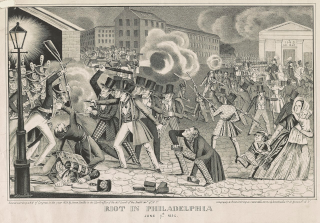
(Pictured: “Riot in Philadelphia,” lithograph by H. Bucholzer, 1844, Library of Congress)


Leave a comment

Treaty of Limerick Ratified by William III of England

The Treaty of Limerick, which actually consists of two treaties, is ratified by William III of England, widely known as William of Orange, on February 24, 1692.

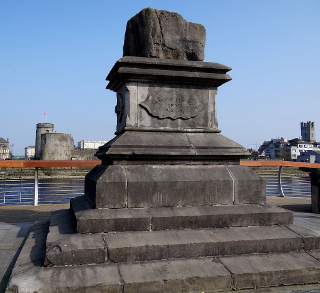
The Treaty is signed on October 3, 1691 ending the Williamite War in Ireland between the Jacobites and the supporters of William of Orange. Reputedly they are signed on the Treaty Stone, an irregular block of limestone which once served as a mounting block for horses. This stone is now displayed on a pedestal in Limerick, County Limerick, put there to prevent souvenir hunters from taking pieces of it. Because of the treaty, Limerick is sometimes known as the Treaty City.

After his victory at the Battle of the Boyne in July 1690, William III issues the Declaration of Finglas which offers a pardon to Jacobite soldiers but excludes their senior officers from its provisions. This encourages the Jacobite leaders to continue fighting and they win a major victory during the 1691 Siege of Limerick. However, defeats the following year at the Battle of Aughrim and the second siege of Limerick leave the Williamites victorious. Nonetheless the terms they offer to Jacobite leaders at Limerick are considerably more generous than those a year earlier at Finglas.

One treaty, the Military Articles, deals with the treatment of the disbanded Jacobite army. This treaty contains twenty-nine articles. Under the treaty, Jacobite soldiers in formed regiments have the option to leave with their arms and flags for France to continue serving under James II of England in the Irish Brigade. Some 14,000 Jacobites choose this option. Individual soldiers wanting to join the French, Spanish or Austrian armies also emigrate in what becomes known as the Flight of the Wild Geese. The Jacobite soldiers also have the option of joining the Williamite army. One thousand soldiers chose this option. The Jacobite soldiers thirdly have the option of returning home which some 2,000 soldiers choose.

The second treaty, the Civil Articles, which contains thirteen articles, protects the rights of the defeated Jacobite landed gentry who choose to remain in Ireland, most of whom are Catholics. Their property is not to be confiscated so long as they swear allegiance to William III and Mary II, and Catholic noblemen are to be allowed to bear arms. William requires peace in Ireland and is allied to the Papacy in 1691 within the League of Augsburg.

It is often thought that the Treaty of Limerick is the only treaty between Jacobites and Williamites. A similar treaty had been signed on the surrender of Galway on July 22, 1691, but without the strict loyalty oath required under the Treaty of Limerick. The Galway garrison had been organised by the mostly-Catholic landed gentry of counties Galway and Mayo, who benefited from their property guarantees in the following century.

(Pictured: The Treaty Stone on which the Treaty of Limerick may have been signed)


Leave a comment

Death of John Bourke, U.S. Army Captain

File source: http://en.wikipedia.org/wiki/File:John_Bourke.jpg

John Gregory Bourke, a captain in the United States Army and a prolific diarist and postbellum author, dies in Philadelphia, Pennsylvania on June 8, 1896. He writes several books about the American Old West, including ethnologies of its indigenous peoples.

Bourke is born in Philadelphia on June 23, 1846, to Irish immigrant parents, Edward Joseph and Anna (Morton) Bourke. His early education is extensive and includes Latin, Greek, and Gaelic. When the American Civil War begins, Bourke is fourteen. At sixteen he runs away from home. Claiming to be nineteen, he enlists in the 15th Regiment Pennsylvania Volunteer Cavalry, in which he serves until July 1865. He receives a Medal of Honor for “gallantry in action” at the Battle of Stones River, Tennessee, in December 1862. He later sees action at the Battle of Chickamauga.

Based on his service during the war, Bourke’s commander, Major General George Henry Thomas, nominates him for the United States Military Academy at West Point, New York. He is appointed cadet in the Academy on October 17, 1865. He graduates on June 15, 1869, and is assigned as a second lieutenant in the 3rd Cavalry Regiment. He serves with his regiment at Fort Craig, New Mexico Territory, from September 29, 1869, to February 19, 1870.

Bourke serves as an aide to General George Crook in the Apache Wars from 1872 to 1883. As Crook’s aide, he has the opportunity to witness every facet of life in the Old West — the battles, wildlife, the internal squabbling among the military, the Indian Agency, settlers, and Native Americans.

During his time as aide to General Crook during the Apache Wars, Bourke keeps journals of his observations that are later published as On the Border with Crook. This book is considered one of the best firsthand accounts of frontier army life, as Bourke gives equal time to both the soldier and the Native American. Within it, he describes the landscape, Army life on long campaigns, and his observations of the Native Americans. His passages recount General Crook’s meetings with Sitting Bull, Crazy Horse, and Geronimo as the General attempts to sign peace treaties and relocate tribes to reservations. He provides considerable detail of towns and their citizens in the Southwest, specifically the Arizona Territory.

In 1881 Bourke is a guest of the Zuni tribe, where he is allowed to attend the ceremony of a Newekwe priest. His report of this experience is published in 1888 as The use of human odure and human urine in rites of a religious or semi religious character among various nations.

Bourke marries Mary F. Horbach of Omaha, Nebraska, on July 25, 1883. They have three daughters together.

John Bourke dies in the Polyclinic Hospital in Philadelphia on June 8, 1896, and is buried at Arlington National Cemetery. His wife is buried beside him after her death.


Leave a comment

Founding of the Irish National Army

irish-national-army-cap-badge

The first regiment of the Irish National Army, sometimes unofficially referred to as the Free State army or the Regulars, is set up in Dublin on January 31, 1922.

The National Army is the army of the Irish Free State from January 1922 until October 1924. Its role in this period is defined by its service in the Irish Civil War, in defence of the institutions established by the Anglo-Irish Treaty. Michael Collins is the army’s first chief of staff from its establishment until his death in an ambush at Béal na mBláth on August 22, 1922.

The National Army is constituted from the revolutionary Irish Republican Army (IRA), which emerges from the successful Irish War of Independence fought as a guerrilla campaign against the British Army and Royal Irish Constabulary. Its first troops are those IRA volunteers who support the Anglo-Irish Treaty and the Provisional Government of Ireland formed there under. The army makes its first public appearance on January 31, 1922, when command of Beggars Bush Barracks is handed over from the British Army.

Conflict arises between the National Army and the anti-Treaty components of the IRA, which does not support the government of the Irish Free State. On June 28, 1922, the National Army commences an artillery bombardment of anti-Treaty IRA forces who are occupying the Four Courts in Dublin, thus beginning the Irish Civil War.

The National Army is greatly expanded in size to fight the civil war against the anti-Treaty IRA, in a mostly counter-insurgency campaign that is brought to a successful conclusion in May 1923. From October 1, 1924, the Army is reorganised into a smaller, better regulated force. The term “National Army” is superseded by the legal establishment of the Defence Forces as the Irish Free State’s military force.


Leave a comment

Five Irish Regiments Set Sail for France

irish-brigade-of-france

Five Jacobite regiments of Irishmen set sail from Ireland for France on April 18, 1690. These soldiers, about 5,400 in all, will form the nucleus of France’s famed Irish Brigade.

The Irish Brigade is a brigade in the French Royal Army composed of Irish exiles, led by Lord Mountcashel. It is formed in May 1690 when the five regiments sent from Ireland arrive in France in exchange for a larger force of King Louis XIV‘s well-trained French infantry who are sent to fight in the Williamite War in Ireland. The regiments comprising the Irish Brigade retain their special status as foreign units in the French Army until nationalised in 1791.

King Louis XIV wants to support James II in his quest to regain the British crown from William of Orange, but he can ill-afford the loss of 6,000 soldiers during his own struggle with William on the continent. Louis demands Irish replacements, ill-trained though they might be, in exchange. The Irish regiments sail out on the same ships that landed the French troops under Count de Lauzun.

Soon after arriving in France, the five regiments are reorganized into three, commanded by Lord Mountcashel, Daniel O’Brien, and Theobald Dillon, whose family continues in command of this regiment for a one hundred years. Mountcashel commands this first Irish Brigade which is known as Lord Mountcashel’s Irish Brigade. He has grown up in France and become fluent in the French tongue after his father had lost everything due to his participation in the fight against Oliver Cromwell and subsequent exile to France. Mountcashel’s brigade is joined by Patrick Sarsfield‘s men in late 1691. The Irish Brigade carries on in French service for 100 years and amass a record equaled by few military organizations in history.

Like Sarsfield, Mountcashel does not survive for very long in French service. Very shortly after his arrival in France, on September 11, 1690, he is seriously wounded in the chest fighting in Savoy near Mountiers de Tarentaise. Although he recovers from this wound and continues to command the brigade, the wound continues to hamper him. In 1694, he leaves the brigade and seeks relief from his wounds in the baths at Baréges in the Pyrenees. Unfortunately, Justin McCarthy, Lord Mountcashel, dies there on July 1, just short of a year after Patrick Sarsfield is killed at the Battle of Landen.

The Brigade ceases to exist as a separate and distinct entity on July 21, 1791. Along with the other non-Swiss foreign units, the Irish regiments undergo “nationalization” at the orders of the National Assembly. This involves their being assimilated into the regular French Army as line infantry, losing their traditional titles, practices, regulations and uniforms.


Leave a comment

Birth of St. Clair Mulholland, Union Army Colonel

File source: http://commons.wikimedia.org/wiki/File:St_Clair_Mulholland.jpg

St. Clair Augustine Mulholland, colonel in the Union Army in the American Civil War and Medal of Honor winner, is born in Lisburn, County Antrim on April 1, 1839.

Mulholland emigrates to Philadelphia with his parents while a boy. His youthful tastes incline him to military affairs, and he becomes active in the ranks of the militia. At the outbreak of the Civil War, he is commissioned lieutenant colonel of the 116th Pennsylvania Infantry Regiment, which is attached to Thomas Francis Meagher‘s Irish Brigade. When the regiment‘s size is reduced to a battalion, he accepts a reduction in rank to major.

Mulholland is wounded during the famous charge of the Irish Brigade up Marye’s Heights at the Battle of Fredericksburg on December 13, 1862. At the Battle of Chancellorsville on May 3 and 4, 1863, he leads his regiment and distinguishes himself by saving the guns of the 5th Maine Battery that had been abandoned to the enemy. For this he is complimented in general orders and later receives the Medal of Honor from the United States Congress. In this campaign he is given the command of the picket line by Major General Winfield Scott Hancock and covers the retreat of the Army of the Potomac across the Rappahannock River.

Although Mulholland later claims that at the Battle of Gettysburg on July 2, 1863, he personally took command of the 140th Pennsylvania Infantry and led it into action, this fact is mentioned in neither his own official report of the battle, nor that of the lieutenant colonel commanding the 140th. When the 116th is returned to full strength in early 1864, he is promoted to colonel. He is wounded a second time at the Battle of the Wilderness on May 5, 1864. At the Battle of Spotsylvania Court House, he is wounded a third time but remains in the hospital only ten days. Resuming his command, he is dangerously wounded again at the Battle of Totopotomoy Creek. He recovers rapidly and commands his brigade in all the actions around the Siege of Petersburg, particularly distinguishing himself by storming a fort on the Boydton Plank Road. He is mustered out of the volunteer service on June 3, 1865.

On May 4, 1866, President Andrew Johnson nominates Mulholland for the brevet grade of brigadier general of volunteers to rank from March 13, 1865, for his conduct at the Battle of the Wilderness and the U.S. Senate confirms the appointment on May 18, 1866. On January 13, 1869, President Johnson nominates Mulholland for appointment to the brevet grade of major general of volunteers, to rank from March 13, 1865, for his actions on the Boydton Plank Road and the Senate confirms the appointment on February 16, 1869. The brevet is issued February 20, 1869. It is the last brevet of major general issued for service during the Civil War.

Returning to civilian life after the war, Mulholland is appointed Chief of Police in Philadelphia in 1868 and signalizes his administration by the good order in which he keeps both the force and the city. President Grover Cleveland appoints him United States Pension Agent, in which office he is continued by Presidents William McKinley and Theodore Roosevelt. He is considered an authority on the science of penology and also devotes much of his leisure time to art studies, and as a lecturer and writer on the Civil War and its records. He compiles a history of the 116th Regiment, and another of those to whom Congress voted the Medal of Honor. In the Catholic affairs of Philadelphia, he is always active and a leader among the best-known laymen.

St. Clair Augustin Mulholland dies on February 17, 1910, in Philadelphia, Pennsylvania. He is buried at Old Cathedral Cemetery, Philadelphia.


Leave a comment

Beginning of the New York City Draft Riots

The New York City draft riots, one of the more regrettable incidents related to Irish American history, begin on July 13, 1863, and continue through July 16. Known at the time as Draft Week, they are violent disturbances in Lower Manhattan, widely regarded as the culmination of working-class discontent with new laws passed by Congress that year to draft men to fight in the ongoing American Civil War. The riots remain the largest civil and racial insurrection in American history, aside from the Civil War itself.

The cry of “rich man’s war, poor man’s fight” is the cry of many in the Northern states. The rioters, predominantly Irish immigrants, are overwhelmingly working-class men, who resent those wealthier men, who can afford to pay a $300 commutation fee to hire a substitute, are spared from the draft, worried that the eventual emancipation of blacks will rob them of their jobs and are egged on by some politicians and Southern agents.

Initially intended to express anger at the draft, the protests turn into a race riot, with white predominantly Irish rioters, attacking blacks throughout the city. The official death toll is listed at either 119 or 120 individuals. Conditions in the city are such that Major General John E. Wool, commander of the Department of the East, says on July 16 that “Martial law ought to be proclaimed, but I have not a sufficient force to enforce it.”

U.S. President Abraham Lincoln diverts several regiments of militia and volunteer troops from following up after the Battle of Gettysburg to control the city.

The military does not reach the city until after the first day of rioting, by which time the mobs, have already ransacked or destroyed numerous public buildings, two Protestant churches, the homes of various abolitionists or sympathizers, many black homes, and the Colored Orphan Asylum at 44th Street and Fifth Avenue, which is burned to the ground.

The area’s demographics change as a result of the riot. Many blacks leave Manhattan permanently, many moving to Brooklyn. By 1865 their population falls below 10,000, the number in 1820.

Through the years the story is told as if only Irish riot, but in fact many besides the Irish take part, and many Irish policemen, fireman, priests, and trade unionists are among the most influential in quelling them. Still, it cannot be denied, a large number of Irish do participate in the burning of the black orphanage and murder of blacks in the city. This unfortunate episode leaves a lasting stain on the reputation of New York’s Irish community.