Cash-strapped Aer Lingus auctions its collection of paintings on November 20, 2001. Most money goes on By Merrion Strand by Jack Butler Yeats, an oil-on-canvas, which sells for £290,000.
Aer Lingus, already in difficulties, is left in an even more perilous position by the effects of the September 11 terrorist attacks in the United States. The airline decides to realise some of its assets by selling 25 paintings from the company art collection. Members of the public are given an opportunity to buy part of Aer Lingus well ahead of any possible share flotation. The paintings are handed over to Dublinauctioneer John de Vere White and are offered at the Royal Hibernian Academy Gallagher Gallery on November 20 with the expectation of bringing around £500,000 (€635,000).
Visitors to Dublin Airport or Aer Lingus’s various offices notice very little change as in recent years only two of the paintings are on display, both of them in the chairman’s office. The remainder have been in storage which is one reason why the group are now being sold as part of Aer Lingus’s efforts to raise additional revenue.
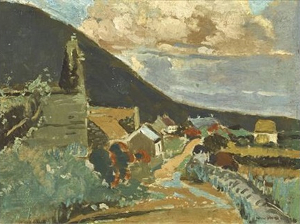
One of the pictures removed from the chairman’s office is also both the longest-owned by the organisation and is ultimately the highest earner at auction. Jack Butler Yeats’s By Merrion Strand, which dates from 1929 and shows a woman standing before an expanse of the south Dublin coastline, is acquired by Aer Lingus in 1940, just four years after the company’s founding. According to company lore, it was spotted in London by a member of staff who left a £5 deposit on the painting.
Two paintings by Nathaniel Hone also have reasonably strong pre-sale estimates, Children on the Rocks valued at £25,000-£35,000 and Cattle in a Field at Malahide believed to be worth £10,000-£15,000. Other artists represented in the Aer Lingus collection being sold include Louis Le Brocquy, Patrick Collins, Norah McGuinness, Gerard Dillon and George Campbell.
Five other works in the collection, all acquired by the airline between the 1940s and the 1960s, are bought by the Irish state ahead of the auction.
(Pictured: By Merrion Strand, an oil-on-canvas painting by Jack B. Yeats, dating from the late 1920s)
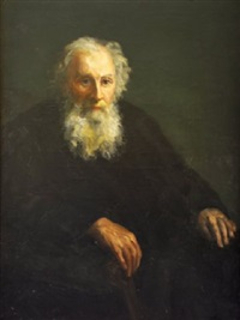
Though a member of a very artistic family, Hone’s initial training is as an engineer at Trinity College Dublin followed by a brief period of work for the Irish Railway before going to Paris in 1853 to study painting. He first studies under Adolphe Yvon, the French military painter, and later Thomas Couture, who is one of the earliest exponents of realism and from whom he learns principles which influence his work throughout his career.
Most of Hone’s later paintings are landscapes, very often enlivened with animals and occasionally with figures. In France he is influenced by the painter Gustav Courbet who is taking a new and quite revolutionary realistic approach. His closest painting tips are, however, from another French impressionist, Jean-Baptiste-Camille Corot. He becomes a close friend of one of Corot’s followers at the Barbizon school of landscape painting. At Barbizon he learns to appreciate colour, texture and tone in the landscape and applies it in strong and confident brushworks to the painting of Irish subjects on his return. In Paris he also works closely with artist Édouard Brandon, also a follower of Corot.
Hone’s paintings which are completed in France have many similarities to those that he completes at his country farm in County Dublin, but the finish is perhaps more polished and professional in the later Irish works.
From 1876, except for four years, Hone exhibits at the Royal Hibernian Academy (RHA). He is elected a full member in 1880 and in 1894 becomes Professor of Painting. His exhibition with John Butler Yeats in 1901 is one of the turning points for the history of Irish art as it is their paintings which convince Sir Hugh Lane that Dublin should have a gallery of modern art.
Nathaniel Hone dies in Dublin on October 14, 1917. After his death his widow bequeaths the contents of his studio to the National Gallery of Ireland. He rarely dates his work, so it is difficult to establish chronology. The similarity of many of his motifs and subjects often make it difficult to tell whether a view is Irish or French. Equally it is difficult to chart his developments on stylistic grounds alone.
(Pictured: Nathaniel Hone, the younger, self-portrait as an old man)
Keating studies drawing at the Limerick Technical School before a scholarship arranged by William Orpen allows him to go study at the Metropolitan School of Art in Dublin at the age of twenty. Over the next few years, he spends two weeks or so during the late summer on the Aran Islands and his many portraits of island people depict them as rugged heroic figures.
In 1914 he wins the RDS Taylor award with a painting titled The Reconciliation. The prize includes £50.00 which allows him to go to London to work as Orpen’s studio assistant in 1915. In late 1915 or early 1916, he returns to Ireland where he documents the Irish War of Independence and the subsequent Irish Civil War. Examples include Men of the South (1921–22) which shows a group of Irish Republican Army (IRA) men ready to ambush a military vehicle and An Allegory (first exhibited in 1924), in which the two opposing sides in the Irish Civil War are seen to bury the tri-colour covered coffin amid the roots of an ancient tree. The painting includes a self-portrait of the artist.
Keating is elected an Associate of the Royal Hibernian Academy (RHA) in 1918, and a full member in 1923. One of the cardinal achievements of the Irish Free State in the 1920s is the building, in partnership with Siemens, of a hydro-electric power generator at Ardnacrusha, near Limerick. Between 1926 and 1927, at his own volition, he produces a considerable number of paintings related to this scheme. He exhibits several examples of the paintings in the RHA exhibitions in 1927 and 1928. Most of the paintings are now in the collection of ESB Group.
In 1936 group of prominent Limerick politicians, artists and patrons establish the first Limerick City Collection of Art from various donations and bequests. Keating is part of this artist-led initiative to form a municipal art gallery in Limerick similar to those already in Dublin and Cork. The collection is formed primarily out of donations and bequests. As a pivotal member of the committee, Keating himself donates many works to the collection which is first exhibited as a municipal collection in the Savoy Cinema, Limerick City on November 23, 1937. It is not until 1948 that an extension to the rear of Limerick Free Library and Museum becomes the home to the City Collection as the Limerick Free Art Gallery. In 1985 the Library and Museum are transferred to larger buildings.
In 1939 Keating is commissioned to paint a mural for the Irish pavilion at the New York World’s Fair. He is President of the RHA from 1950 to 1962, and shows at the annual exhibition for 61 years from 1914. Although he is an intellectual painter in the sense that he consciously sets out to explore the visual identity of the Irish nation, and his paintings show a very idealised realism, he fears that the modern movement will bring back a decline in artistic standards. Throughout his career, he exhibits nearly 300 works at the RHA and also shows at the Oireachtas.
Seán Keating dies on December 21, 1977 at the Adelaide Hospital in Dublin and is buried at Cruagh Cemetery, Rathfarnham. The 1978 RHA Exhibition features a small memorial collection of his work.
Posthumous exhibitions of his work are mounted by The Grafton Gallery, Dublin (1986) and the Electricity Supply Board (1987). Sean Keating – The Pilgrim Soul, a documentary presented and written by his son Justin Keating, airs on RTÉ in 1996.
(Pictured: Photograph of Keating’s “An Allegory” painted between 1922 and 1924. The painting represents Keating’s own disillusionment and loss of idealism resulting from the outbreak of the Irish Civil War. The only figure of the group addressing the observer is a self-portrait of the artist.)
Nano Reid, Irish landscape artist, figure painter and portraitist, is born in Drogheda, County Louth on March 1, 1900. An individual, expressionistic artist, Reid is acknowledged to be one of the finest Irish woman painters of twentieth-century visual art in Ireland. Her works are represented in many public collections throughout Ireland.
In 1920, Reid wins a scholarship to study fine art painting and drawing at the Dublin Metropolitan School of Art, now the National College of Art and Design, under Harry Clarke. At the time, she is, in the words of fellow student Hilda van Stockum, “a fierce redhead…uncompromising and looking for truth.” In 1925 she starts showing at the Royal Hibernian Academy (RHA), submitting a total of 42 canvases until the late 1960s.
In 1950, with Norah McGuinness, Reid represents Ireland at the Venice Biennale. This is followed by the Exhibition of Contemporary Irish Art in Aberystwyth, Wales (1953), and the Mostra Internazionale di Bianco e Nero in Lugano, Switzerland (1956), the Guggenheim International Award Exhibition in New York City (1960) and the Twelve Irish Painters show in New York City (1963). In 1974, the Arts Council and the Arts Council of Northern Ireland stage a major retrospective of Reid’s artworks.
Nano Reid dies in Drogheda in 1981. Retrospectives are held at Taylor Galleries in Dublin (1984), Droichead Arts Centre in Drogheda (1991), and at Linenhall Arts Centre in Castlebar, County Mayo (1999).
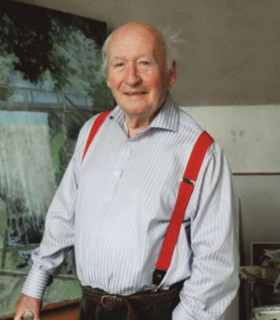
Hill is born at Southampton, Hampshire, on December 6, 1916, the son of a wealthy sugar trader. He first works as a theatre designer in Leningrad in the 1930s and later as an historian. In World War II he registers as a conscientious objector and works on a farm.
Hill’s long association with Ireland begins when he visits Glenveagh Castle in County Donegal to paint the portrait of the Irish American art collector Henry McIlhenny, whose grandfather had emigrated to the United States from the nearby village of Milford, and who subsequently made a fortune from his patent gas meter.
Hill begins to enjoy increased success as a portrait painter from the 1960s. His subjects include many notable composers, musicians, politicians and statesmen, such as broadcaster Gay Byrne, Jerusalem mayor Teddy Kollek and The Prince of Wales. He is also an enthusiastic art collector and traveller, with a wide range of friends such as Bryan Guinness and Isaiah Berlin. Greta Garbo visits Hill in the 1970s, a visit which forms inspiration for Frank McGuinness‘ 2010 play Greta Garbo Came to Donegal.
An exhibition of his work and personal art collection can be seen at the House and associated Glebe Gallery at Churchill, near Letterkenny. Another collection of his work is held at Mottisfont Abbey. Many of his landscapes portray scenes from Tory Island, where he has a painting hut for years, and starts and then mentors the artists’ community there, teaching the local fishermen how to paint. This leads to the informal but busy “Tory School” of artists such as James Dixon and Anton Meenan, who find that they have the time to paint and use their wild surroundings as a dramatic subject.
Hill is made a CBE in 1997. A Retrospective exhibition is arranged for and by him at the Royal Hibernian Academy (RHA) in 1998. On January 13, 1999, he is made an honorary Irish citizen by the President of Ireland Mary McAleese.
Arthur Derek Hill dies at the age of 83 at a London hospital on July 30, 2000. He is buried in Hampshire in the South of England with his parents. Memorial services are held for him in Dublin at St. Patrick’s Cathedral, as well as St. James’s Church, Piccadilly, London, and his local Church in Trentagh, County Donegal.
Rothwell is born to James and Elizabeth and is the oldest of their seven children. He trains to become a painter at the Dublin Society‘s school from 1814 until 1820 and wins a silver medal for his work. At the age of 24, he is made a member of the newly established Royal Hibernian Academy (RHA) and exhibits portraits there from 1826 to 1829. He subsequently moves to London and works as a studio assistant to Thomas Lawrence. When Lawrence dies in 1830, Rothwell completes many of his unfinished works and is poised to become the next foremost portrait painter in Britain and Ireland.
According to Leoneé Ormond’s biographical article in the Grove Dictionary of Art, Rothwell “was at the height of his powers from 1829 to 1831” and he “was much influenced by Lawrence, but he lacked the incisiveness and flair of his master.” According to Fintan Cullen‘s biographical entry in the Oxford Dictionary of National Biography, Rothwell’s “portraits are highly accomplished” and “fine examples” including those of novelist Gerald Griffin and Mary Shelley.
From 1831 to 1834, Rothwell tours Italy to study Italian art so that he can paint history paintings. In the 1830s, he starts painting genre pictures, such as The Poor Mendicants (1837). He usually paints Italian-inspired pieces, such as his semi-nude study Calisto, a work he considers to be his masterpiece. He is furious when the painting is poorly hung at the 1862 International Exhibition in London and publishes a pamphlet on the topic.
When Rothwell returns to London, his popularity has evaporated. He lives and exhibits works in Ireland, the United States, London, and Italy, but he never again achieves the same level of popularity he had reached in the late 1820s.
In 1842 Rothwell marries Rosa Marshall. The couple has several children. Rothwell contracts a fever while working in Rome and dies on September 13, 1868. Joseph Severn, who painted a portrait of the Romantic poetJohn Keats, arranges for Rothwell’s funeral and tomb in the Protestant Cemetery, Rome.
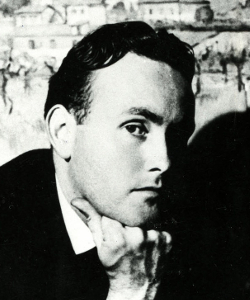
Thomas James Carr, British artist who is associated with the Euston Road School in the 1930s and has a long career as a painter of domestic scenes and landscapes, is born in Belfast to a well-to-do family on September 21, 1909.
Although essentially a realist painter, Carr is included in the 1934 Objective Abstractionists exhibition at Zwemmer’s Gallery. In 1937, he shares an exhibition with Victor Pasmore and Claude Rogers at the Storran Gallery and subsequently becomes associated with the representational style of the Euston Road School. Starting in 1940, at Georges Wildenstein‘s gallery, he holds a series of one-man exhibitions at various galleries including at the Leicester Galleries, The Redfern Gallery and also at Thomas Agnew & Sons.
After the war, Carr teaches at the Belfast College of Art and moves to Belfast in 1955. After the death of his wife in 1995, he moves to Norfolk, England to be nearer one of his three daughters and her family. He continues to paint into old age and tends to concentrate on landscape painting.
Painter Michael Angelo Hayes is born in Waterford on July 25, 1820. Probably the best 19th century painter of animals in Ireland, Hayes is most accomplished as a watercolourist, although he occasionally uses oils.
Hayes is the son and pupil of Tipperary watercolour miniaturist Edward Hayes RHA. It is clear from his christening that he is expected to become an artist. Fortunately, the younger Hayes is a talented draughtsman, and by his late teens has acquired something of a reputation as a painter of horses and military subjects.
Hayes begins showing at the Royal Hibernian Academy (RHA) in 1837, then for three years 1840-1842. In 1842, he is appointed Military Painter-in-ordinary to the Lord Lieutenant. He passes the next few years in London, where he exhibits watercolours at the New Society of Painters in Water Colours, of which he is elected an Associate Member in 1848, the same year he makes his one and only contribution to the Royal Academy of Arts.
Returning to Dublin, Hayes resumes exhibiting at the RHA, at the same time becoming involved in its administration. He is elected an Associate member in 1853, a full Academician the following year, and Secretary in 1856. The affairs of the Academy are totally disorganized at the time, inducing Hayes and others to resolve the situation. His efforts to reform the institution and secure its finances meets with entrenched opposition from older members, which results in Hayes being removed from his post, although he is successfully reinstated in 1861.
Not long afterwards he is appointed secretary to the Lord Mayor of Dublin, Peter McSwiney, who happens to be his brother-in-law, and later becomes City Marshal in 1867. He continues as Secretary of the RHA until he resigns in 1870, and continues showing until 1874.
Hayes makes a special study of horses in motion, and in 1876 publishes his conclusions in an illustrated pamphlet, The Delineation of Animals in Rapid Motion. One of his Dublin paintings, Sackville Street, Dublin, depicts a view of Dublin’s premier street in the 1850s. The painting is a documentary of social life in Dublin. It achieves widespread popularity when reprinted as a lithograph.
Michael Angelo Hayes dies prematurely in 1877 in a tragic drowning accident at his home.
Murphy is the son of James Murphy, a railway employee, and Margaret Sheehan of Little Island, County Cork. He attends Saint Patrick’s School on Gardiner’s Hill. In 1921 he enrolls as a part-time student at the Crawford School of Art, Emmet Place, Cork. In 1922 he finds work as an apprentice stone-carver at John Aloysius O’Connell’s Art Marble Works, Watercourse Road, Blackpool. There he specialises in architectural and foliage carving while continuing his studies at Crawford by night.
He is elected associate of the Royal Hibernian Academy (RHA) in 1944, elected a full member in 1954, and appointed Royal Hibernian Academy Professor of Sculpture in 1964.
Also in 1944, he married Maighread Higgins, daughter of the Cork sculptor Joseph Higgins, and they go on to have three children – the knitwear designer Bebhinn Marten, the novelist Orla Murphy and the painter and De Dannan member Colm Murphy.
Murphy designs the Church of the Annunciation on Great William O’Brien Street in Blackpool, Cork, for William Dwyer in 1945. The stonework in the church is mostly by Murphy himself. It is officially dedicated on October 7, 1945.
Seamus Murphy dies in Cork on October 2, 1975. He is buried in Rathcooney, County Cork.
Examples of Murphy’s unique carvings of statues, gravestones, monuments and plaques can be seen around Cork and Ireland, including a signed panel of the four evangelists outside the entrance of the church of Our Lady and Saint John in Carrigaline, County Cork.
Samuel Lover, Irish songwriter, composer, novelist, and a painter of portraits, chiefly miniatures, dies on July 6, 1868. He was the grandfather of composer, cellist, and conductor Victor Herbert.
Lover is born at number 60 Grafton Street, Dublin and goes to school at Samuel Whyte’s at 79 Grafton Street, now home to Bewley’s, an Irish hot beverage company. By 1830 he is secretary of the Royal Hibernian Academy (RHA) and lives at number 9 D’Olier Street. In 1835 he moves to London and begins composing music for a series of comic stage works. To some of them, like the operetta Il Paddy Whack in Italia (1841), he contributes both words and music, for others he merely contributes a few songs.
Lover produces a number of Irish songs, of which several – including The Angel’s Whisper, Molly Bawn, and The Four-leaved Shamrock – attain great popularity. He also writes novels, of which Rory O’Moore and Handy Andy are the best known, and short Irish sketches which, with his songs, he combines into a popular entertainment called Irish Nights or Irish Evenings. With the latter, he tours North America between 1846 and 1848. He joins with Charles Dickens in founding Bentley’s Magazine.
Lover’s grandson is composer Victor Herbert whose mother is Lover’s daughter Fanny. Irish-born and German-raised, Herbert is best known for his many successful musicals and operettas that premiere on Broadway. As a child he stays with the Lovers in a musical environment following the death of his father.
Poet, painter, novelist and composer, who, in the exercise of a genius as distinguished in its versatility as in its power, by his pen and pencil illustrated so happily the characteristics of the peasantry of his country that his name will ever be honourably identified with Ireland.