seamus dubhghaill

Promoting Irish Culture and History from Little Rock, Arkansas, USA


Leave a comment

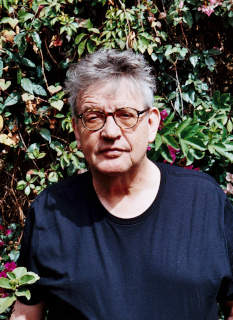
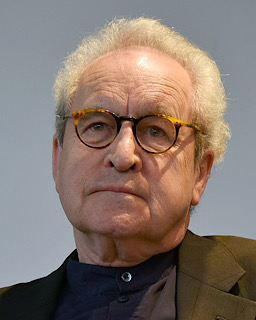
Birth of Novelist John Banville

William John Banvillenovelistshort story writer, adapter of dramas, and screenwriter, is born in Wexford, County Wexford, on December 8, 1945. He also has a 30-year career working in the Irish newspaper industry and serves as literary editor of The Irish Times from 1988 until 1999.

Banville is born to Agnes (née Doran) and Martin Banville, a garage clerk, in Wexford. He is the youngest of three siblings. He is educated at CBS Primary, Wexford, a Christian Brothers school, and at St. Peter’s College, Wexford. Despite having intentions of being a painter and an architect, he does not attend university. After school, he works as a clerk at Aer Lingus, which allows him to travel at deeply discounted rates. He takes advantage of these rates to travel to Greece and Italy. He begins working as a sub-editor at The Irish Press in 1969.

Banville publishes his first book, a collection of short stories titled Long Lankin, in 1970. His first novelNightspawn, appears in 1971, followed by his second, Birchwood, two years later. His The Revolutions Trilogy, published between 1976 and 1982, comprises works named after renowned scientists: Doctor CopernicusKepler and The Newton Letter. His next work, Mefisto, has a mathematical theme, and, in combination with the three books from The Revolutions Trilogy, is the fourth book from the “Scientific Tetralogy.” His 1989 novel, The Book of Evidence, begins The Frames Trilogy, dealing with the work of art. It is completed by Ghosts and Athena. His thirteenth novel, The Sea, wins the Booker Prize in 2005. In addition, he publishes crime novels as Benjamin Black, most of which feature the character of Quirke, an Irish pathologist based in 1950s Dublin. His alternative history novel, The Secret Guests (2020), is published under the name B. W. Black.

Banville wins the 1976 James Tait Black Memorial Prize, the 2003 International Nonino Prize, the 2005 Booker Prize, the 2011 Franz Kafka Prize, the 2013 Austrian State Prize for European Literature and the 2014 Prince of Asturias Award for Literature. He is elected a Fellow of the Royal Society of Literature in 2007. Italy makes him a Cavaliere of the Ordine della Stella d’Italia (a knighthood) in 2017. He is a former member of Aosdána, having voluntarily relinquished the financial stipend in 2001 to another, more impoverished, writer. He is considered a contender for the Nobel Prize in Literature.

In 1969, Banville marries the American textile artist Janet Dunham, whom he met in San Francisco the previous year while she is a student at the University of California, Berkeley. The couple has two sons together. The marriage breaks down after Banville has an affair with a neighbour, Patricia Quinn, who subsequently becomes director of the Arts Council of Ireland. Banville has two daughters with Quinn, born around 1990 and 1997. Despite separating, Banville and Dunham never divorce and he describes them as remaining “on good terms.” Dunham dies at Blackrock Clinic on November 22, 2021, after which Banville states that he experienced “brain fog” due to grief and is unable to write for six months. In a 2024 interview, he expresses regret over his relationship history, saying, “I caused Janet such anguish. I have caused Patricia Quinn such anguish. I wasn’t good with my children. I was not a good parent. I am not a good person. I am selfish. But I have to have responsibility.”

Banville currently lives in Howth, Dublin.

Leave a comment

Birth of F. S L. Lyons, Historian & Academic

Francis Stewart Leland Lyons FBA, Irish historian and academic who serves as the 40th Provost of Trinity College Dublin from 1974 to 1981, is born in Derry, County LondonderryNorthern Ireland, in November 11, 1923.

Lyons is the son of Northern Bank official Stewart Lyons and Florence May (née Leland). He is known as “Le” among his friends and family. The Lyons family are Irish Protestant, of Presbyterian and Church of Ireland background, descended from a cadet branch of the landed gentry Lyons family, formerly of Oldpark, Belfast, After his birth, his family soon moves to Boyle, County Roscommon. He is educated at Dover College in Kent and later attends The High School, Dublin. At Trinity College Dublin, he is elected a Scholar in Modern History and Political Science in 1943.

Lyons is a lecturer in history at the University of Hull and then at Trinity College Dublin. He becomes the founding Professor of Modern History at the University of Kent in 1964, serving also as Master of Eliot College from 1969 to 1972.

Lyons becomes Provost of Trinity College Dublin in 1974, but relinquishes the post in 1981 to concentrate on writing. He wins the Heinemann Prize in 1978 for his work in Charles Stewart Parnell. He writes Culture and Anarchy in Ireland, 1890–1939, which wins the Christopher Ewart-Biggs Memorial Prize and the Wolfson History Prize in 1979. He is also awarded honorary doctorates by five universities and has fellowships at the Royal Society of Literature and the British Academy. He is Visiting Professor at Princeton University.

Lyons principal works include Ireland Since the Famine, the standard university textbook for Irish history from the mid-19th to late-20th century, which The Times calls “the definitive work of modern Irish history” and a biography of Charles Stewart Parnell.

Lyons is critical of Cecil Woodham-Smith‘s much-acclaimed history of the Great Irish Famine and has generally been considered among the “revisionist” historians who reconsiders the role of the British state in events like the Famine.

Lyons marries Jennifer Ann Stuart McAlister in 1954, and has two sons, one of whom, Nicholas, is a former Lord Mayor of London.

On September 15, 1983, Lyons is nominated, unopposed, as chancellor of Queen’s University Belfast (QUB). But less than a week later he is dead, succumbing in Dublin on September 21 to acute pancreatitis, which had struck him in mid-August. He had begun to write the first draft of his W. B. Yeats biography (having accumulated a great archive of material) only a few weeks before. His ashes are buried beside Trinity College chapel.


Leave a comment

Paul Muldoon Wins the Pulitzer Prize for Poetry

Irish poet Paul Muldoon wins the Pulitzer Prize for Poetry on April 8, 2003, for his work Moy Sand and Gravel (2002). Additionally, he has published more than thirty collections and won the T. S. Eliot Prize. At Princeton University he has been both the Howard G. B. Clark ’21 University Professor in the Humanities and Founding Chair of the Lewis Center for the Arts. He holds the post of Professor of Poetry at the University of Oxford from 1999 to 2004 and has also served as president of The Poetry Society (UK) and poetry editor at The New Yorker.

Muldoon, the eldest of three children, is born on June 20, 1951, on a farm in County Armagh, Northern Ireland, outside The Moy, near the boundary with County Tyrone. His father works as a farmer (among other jobs) and his mother is a school mistress. In 2001, Muldoon says of the Moy:

“It’s a beautiful part of the world. It’s still the place that’s ‘burned into the retina,’ and although I haven’t been back there since I left for university 30 years ago, it’s the place I consider to be my home. We were a fairly non-political household; my parents were nationalists, of course, but it was not something, as I recall, that was a major area of discussion. But there were patrols; an army presence; movements of troops; and a sectarian divide. And that particular area was a nationalist enclave, while next door was the parish where the Orange Order was founded; we’d hear the drums on summer evenings. But I think my mother, in particular, may have tried to shelter us from it all. Besides, we didn’t really socialise a great deal. We were ‘blow-ins’ – arrivistes – new to the area, and didn’t have a lot of connections.”

Talking of his home life, Muldoon continues, “I’m astonished to think that, apart from some Catholic Truth Society pamphlets, some books on saints, there were, essentially, no books in the house, except one set, the Junior World Encyclopedia, which I certainly read again and again. People would say, I suppose that it might account for my interest in a wide range of arcane bits of information. At some level, I was self-educated.” He is a “Troubles poet” from the beginning.

In 1969, Muldoon reads English at Queen’s University Belfast (QUB), where he meets Seamus Heaney and becomes close to the Belfast Group of poets which include Michael Longley, Ciaran Carson, Medbh McGuckian and Frank Ormsby. He says of the experience, “I think it was fairly significant, certainly to me. It was exciting. But then I was 19, 20 years old, and at university, so everything was exciting, really.” He is not a strong student at QUB. He recalls, “I had stopped. Really, I should have dropped out. I’d basically lost interest halfway through. Not because there weren’t great people teaching me, but I’d stopped going to lectures, and rather than doing the decent thing, I just hung around.” During his time at QUB, his first collection New Weather (1973) is published by Faber & Faber. He meets his first wife, fellow student Anne-Marie Conway, and they are married after their graduation in 1973. The marriage breaks up in 1977.

For thirteen years (1973–86), Muldoon works as an arts producer for the BBC in Belfast. In this time, which sees the most bitter period of the Troubles, he published the collections Why Brownlee Left (1980) and Quoof (1983). After leaving the BBC, he teaches English and Creative Writing at the University of East Anglia and at Gonville and Caius College and Fitzwilliam College, Cambridge, where his students include Lee Hall (Billy Elliot) and Giles Foden (The Last King of Scotland). In 1987, he emigrates to the United States, where he teaches in the creative writing program at Princeton University. He is Professor of Poetry at Oxford University for the five-year term 1999–2004, and is an Honorary Fellow of Hertford College, Oxford.

Muldoon has been awarded fellowships in the Royal Society of Literature and the American Academy of Arts and Sciences, the 1994 T. S. Eliot Prize, the 1997 The Irish Times Literature Prize for Poetry, and the 2003 Griffin International Prize for Excellence in Poetry. He is also shortlisted for the 2007 Poetry Now Award. His poems have been collected into four books: Selected Poems 1968–1986 (1986), New Selected Poems: 1968–1994 (1996), Poems 1968–1998 (2001) and Selected Poems 1968–2014 (2016). In September 2007, he is hired as poetry editor of The New Yorker.

Muldoon is married to novelist Jean Hanff Korelitz, whom he meets at an Arvon Foundation writing course. He has two children, Dorothy and Asher, and lives primarily in New York City.

(Pictured: Paul Muldoon in Tepoztlán, Morelos, Mexico, 2018. Photograph by Alejandro Arras.)


Leave a comment

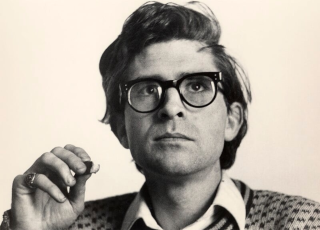
Death of John Arden, English Playwright

John Arden, English playwright, dies on March 28, 2012, in Galway, County Galway. At the time of his death, he is lauded as “one of the most significant British playwrights of the late 1950s and early 60s.”

Arden is born in Barnsley, South Yorkshire, England, on October 26, 1930. He is the son of the manager of a glass factory. He is educated at Sedbergh School in Cumbria, King’s College, Cambridge and the Edinburgh College of Art, where he studies architecture. He first gains critical attention for the radio play The Life of Man in 1956 shortly after finishing his studies.

Arden is initially associated with the English Stage Company at the Royal Court Theatre in London. His 1959 play, Serjeant Musgrave’s Dance, in which four army deserters arrive in a northern mining town to exact retribution for an act of colonial violence, is considered to be his best. His work is influenced by Bertolt Brecht and epic theatre as in Left-Handed Liberty (1965, on the anniversary of Magna Carta). Other plays include Live Like Pigs, The Workhouse Donkey, and Armstrong’s Last Goodnight, the last of which is performed at the 1963 Chichester Festival by the Royal National Theatre after it was rejected by the Royal Court.

Arden’s 1978 radio play Pearl is considered in a Guardian survey to be one of the best plays in that medium. He also writes several novels, including Silence Among the Weapons, which is shortlisted for the Booker Prize in 1982, and Books of Bale, about the Protestant apologist John Bale. He is a member of the Royal Society of Literature.

With his wife and co-writer Margaretta D’Arcy, Arden pickets the Royal Shakespeare Company (RSC) premiere of his Arthurian play The Island of the Mighty, because they believe the production to be pro-imperialist. They write several plays together which are highly critical of British presence in Ireland, where he and D’Arcy live from 1971 onward.

In 1961, Arden is a founder member of the anti-nuclear Committee of 100, and he also chairs the pacifist weekly Peace News. In Ireland, he is for a while a member of Official Sinn Féin. He is an advocate of civil liberties, and opposes anti-terror legislation, as demonstrated in his 2007 radio play The Scam.

Arden is elected to Aosdána in 2011 before dying in Galway on March 28, 2012. He is waked in a wicker casket.

(Pictured: Photograph of John Arden, 1960 bromide print on card mount, credit to Roger Mayne, National Portrait Gallery, London)


Leave a comment

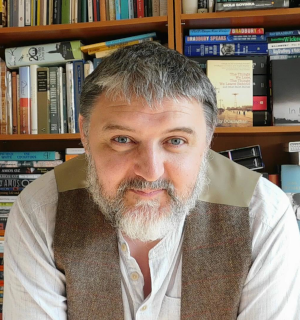
Birth of Billy O’Callaghan, Short Fiction Writer & Novelist

Billy O’Callaghan, Irish short fiction writer and novelist, is born in Cork, County Cork, on December 9, 1974. He is best known for his short-story collection The Things We Lose, The Things We Leave Behind, which is awarded the Bord Gáis Energy Irish Book Award for the short story in 2013 and his widely translated novel My Coney Island Baby, which is shortlisted for the Royal Society of Literature‘s Encore Award.

O’Callaghan grows up in the village of Douglas, where he still lives today.

His first collection of short stories, In Exile, is published by Mercier Press in 2008. This is followed a year later by a second collection, In Too Deep, also published by Mercier Press. In 2013, his third collection, The Things We Lose, The Things We Leave Behind, is published by New Island Books. His short stories have been published in literary journals around the world and translated into several other languages. His work has been broadcast on RTÉ Radio 1‘s The Book On One, Sunday Miscellany and the Francis McManus Short Story Award series.

In 2017, the American literary journal Ploughshares publishes O’Callaghan’s story A Death in the Family as a Ploughshares Solo.

O’Callaghan’s first novel, The Dead House, is published in Ireland by Brandon, an imprint of The O’Brien Press, in 2017, and in North America by Arcade Publishing in 2018.

His novel, My Coney Island Baby, is published in 2019, by Jonathan Cape (UK) and Harper (USA), as well as in French by Éditions Grasset as Les amants de Coney Island, translated by Carine Chichereau, Dutch by Ambo Anthos as Mijn lief op Coney Island, translated by Lette Vos, German by btb Verlag as Die Liebenden von Coney Island, translated by Sibylle Schmidt, Czech by Nakladatelství Paseka as Náš Coney Island, translated by Petr Eliáš, Catalan by L’Altra Editorial as Els amants de Coney Island, translated by Ferran Ràfols Gesa, Italian by Guanda Editore as My Coney Island Baby, translated by Ada Arduini, Hungarian by Jelenkor as Szerelmem, Coney Island, translated by Zoltán Pék, and in Turkish by Othello Kitap as Coney Island Bebeğim, translated by Serkan Toy.

A new short story collection, The Boatman and Other Stories, is published in January 2020 by Jonathan Cape (UK) and Harper Perennial (USA).

A new novel, Life Sentences, is published in 2021 by Jonathan Cape (UK) and in Czech by Nakladatelství Paseka as Doživotí, translated by Petr Eliáš, and in 2022 in the United States by David R. Godine.

In November 2013, The Things We Lose, The Things We Leave Behind wins the inaugural Short Story of the Year Award at the 2013 Bord Gáis Energy Irish Book Award. Down by the River is selected in 2014 as Ireland’s representative in the ongoing UNESCO City of Literature project. The Boatman is a finalist for the 2016 Costa Short Story Award. In June 2020, My Coney Island Baby is shortlisted for the Royal Society of Literature’s Encore Award.


Leave a comment

Birth of Thomas Kilroy, Playwright & Novelist

Thomas F. Kilroy, Irish playwright and novelist, is born on September 23, 1934, in Green Street, Callan, County Kilkenny. He is a difficult writer to categorize, having written plays ranging from the conventional The Death and Resurrection of Mr. Roche to more technically innovative and avant-garde works such as Talbot’s Box and The Secret Fall of Constance Wilde. Nevertheless, common thematic concerns run throughout many of his plays, including the issue of personal and cultural—specifically, Irish versus English—identity and the mythologizing of the past. Best known as a playwright, he is also the author of the Booker Prize-shortlisted novel The Big Chapel (1971).

Kilroy is the son of Thomas and Mary (née Devine) Kilroy. He attends St. Kieran’s College and plays hurling for the school team, captaining the senior team in 1952. He studies at University College Dublin, where his first play, The Death and Resurrection of Mr. Roche, is produced to great success at the Olympia Theatre. In his early career he is play editor at the Abbey Theatre in Dublin. In the 1980s, he sits on the board of Field Day Theatre Company, founded by Brian Friel and Stephen Rea in 1980, and is Director of its touring company.

In 1978, Kilroy is appointed Professor of English at University College Galway, a post from which he resigns in 1989 to concentrate on writing.

In 2008, Kilroy receives the Irish PEN Award, given to honour an Irish-born writer who has made an outstanding contribution to Irish literature.

While some of Kilroy’s plays hit a lighter note than others, the common thread in most of them is his attempt to address some of the social upheavals that have occurred in Ireland in the past and present. This has been a concern of his since he was in his twenties and wrote in the 1959 essay “Groundwork for an Irish Theatre” that his contemporaries were “inclined to shirk the painful, sometimes tragic problems of a modern Ireland which is undergoing considerable social and ideological stress.” Although he has not been one of Ireland’s most prolific playwrights, his plays may certainly be considered important contributions to the modern stage.

Kilroy now lives in County Mayo and is a member of the Irish Academy of Letters, the Royal Society of Literature, and Aosdána.

The Thomas Kilroy Collection, his personal archive, is deposited at the James Hardiman Library at the National University of Ireland Galway (NUI Galway). Kilroy addresses the launch event in March 2011, which is attended by, amongst others, Brian Friel and the future President of Ireland Michael D. Higgins.


Leave a comment

Birth of English Playwright John Arden

John Arden, English playwright, is born in Barnsley, South Yorkshire, England, on October 26, 1930. At the time of his death he is lauded as “one of the most significant British playwrights of the late 1950s and early 60s.”

Arden is the son of the manager of a glass factory. He is educated at Sedbergh School in Cumbria, King’s College, Cambridge and the Edinburgh College of Art, where he studies architecture. He first gains critical attention for the radio play The Life of Man in 1956 shortly after finishing his studies.

Arden is initially associated with the English Stage Company at the Royal Court Theatre in London. His 1959 play, Serjeant Musgrave’s Dance, in which four army deserters arrive in a northern mining town to exact retribution for an act of colonial violence, is considered to be his best. His work is influenced by Bertolt Brecht and epic theatre as in Left-Handed Liberty (1965, on the anniversary of Magna Carta). Other plays include Live Like Pigs, The Workhouse Donkey, and Armstrong’s Last Goodnight, the last of which is performed at the 1963 Chichester Festival by the Royal National Theatre after it was rejected by the Royal Court.

Arden’s 1978 radio play Pearl is considered in a Guardian survey to be one of the best plays in that medium. He also writes several novels, including Silence Among the Weapons, which is shortlisted for the Booker Prize in 1982, and Books of Bale, about the Protestant apologist John Bale. He is a member of the Royal Society of Literature.

With his wife and co-writer Margaretta D’Arcy, Arden pickets the Royal Shakespeare Company (RSC) premiere of his Arthurian play The Island of the Mighty, because they believe the production to be pro-imperialist. They write several plays together which are highly critical of British presence in Ireland, where he and D’Arcy live from 1971 onward.

In 1961, Arden is a founder member of the anti-nuclear Committee of 100, and he also chairs the pacifist weekly Peace News. In Ireland, he is for a while a member of Official Sinn Féin. He is an advocate of civil liberties, and opposes anti-terror legislation, as demonstrated in his 2007 radio play The Scam.

Arden is elected to Aosdána in 2011 before dying in Galway, County Galway on March 28, 2012. He is waked in a wicker casket.

(Pictured: Photograph of John Arden in 1966, credit to Sam Falk/The New York Times)


Leave a comment

Birth of Helen Waddell, Poet & Playwright

helen-waddell

Helen Jane Waddell, Irish poet, translator and playwright, is born in Tokyo, Japan on May 31, 1889.

Waddell is the tenth and youngest child of Hugh Waddell, a Presbyterian minister and missionary who is lecturing in the Imperial University. She spends the first eleven years of her life in Japan before her family returns to Belfast. Her mother dies shortly afterwards, and her father remarries. Hugh Waddell himself dies and leaves his younger children in the care of their stepmother. Following the marriage of her elder sister Meg, she is left at home to care for her stepmother, whose health is deteriorating by this time.

Waddell is educated at Victoria College for Girls and Queen’s University Belfast, where she studies under Professor Gregory Smith, graduating in 1911. She follows her BA with first class honours in English with a master’s degree, and in 1919 enrolls in Somerville College, Oxford, to study for her doctorate. A traveling scholarship from Lady Margaret Hall in 1923 allows her to conduct research in Paris. It is at this time that she meets her life-long friend, Maude Clarke.

Waddell is best known for bringing to light the history of the medieval goliards in her 1927 book The Wandering Scholars and translating their Latin poetry in the companion volume Medieval Latin Lyrics. A second anthology, More Latin Lyrics, is compiled in the 1940s but not published until after her death. Her other works range widely in subject matter. For example, she also writes plays. Her first play is The Spoiled Buddha, which is performed at the Opera House, Belfast, by the Ulster Literary Society. Her The Abbe Prevost is staged in 1935. Her historical novel Peter Abelard is published in 1933. It is critically well received and becomes a bestseller.

Waddell also writes many articles for the Evening Standard, The Manchester Guardian and The Nation, and does lecturing and broadcasting.

Waddell is the assistant editor of The Nineteenth Century magazine. Among her circle of friends in London, where she is vice-president of the Irish Literary Society, are William Butler Yeats, Virginia Woolf, Rose Macaulay, Max Beerbohm and George William Russell. Her personal and professional friendship with Siegfried Sassoon apparently makes the latter’s wife suspicious. Although she never marries, she has a close relationship with her publisher, Otto Kyllmann of Constable & Company.

Waddell receives honorary degrees from Columbia, Belfast, Durham and St. Andrews and wins the Benson Medal of the Royal Society of Literature.

A serious debilitating neurological disease puts an end to her writing career in 1950. She dies in London on March 5, 1965, and is buried in Magherally churchyard, County Down, Northern Ireland. A prize-winning biography of her by the Benedictine nun Dame Felicitas Corrigan is published in 1986.


Leave a comment

John Banville Wins Booker Prize for Fiction

Irish author John Banville beats higher profile favorites to become the surprise winner of Britain‘s prestigious Booker Prize for fiction on October 11, 2005. His 14th novel, The Sea, is described by the judges as “a masterly study of grief, memory, and love recollected.”

Banville wins the Booker Prize in 2005 after having been on the short list in 1989. His later work is contending with novels by Kazuo Ishiguro, Julian Barnes, Ali Smith, Sebastian Barry and Zadie Smith. The judge’s vote is split between Banville and Ishiguro, and Chairman of Judges John Sutherland casts the winning vote in favour of Banville.

Earlier in the year Sutherland had written approvingly of Ian McEwan‘s novel Saturday. Banville strongly criticizes the work in The New York Review of Books. Banville later admits that, upon reading Sutherland’s letter in response to his review, he had thought, “Well, I can kiss the Booker goodbye. I have not been the most popular person in London literary circles over the past half-year. And I think it was very large of Sutherland to cast the winning vote in my favour.”

Banville is noted for having written a letter in 1981 to The Guardian requesting that the Booker Prize, for which he is “runner-up to the shortlist of contenders”, be given to him so that he can use the money to buy every copy of the longlisted books in Ireland and donate them to libraries, “thus ensuring that the books not only are bought but also read — surely a unique occurrence.”

When his The Book of Evidence is shortlisted for the 1989 Booker Prize, Banville says a friend, whom he describes as “a gentleman of the turf,” instructed him “to bet on the other five short listees, saying it was a sure thing, since if I won the prize I would have the prize-money, and if I lost one of the others would win…But the thing baffled me and I never placed the bets. I doubt I’ll be visiting Ladbrokes any time soon.”

Banville has received numerous other awards in his career. His novel The Book of Evidence is shortlisted for the Booker Prize and wins the Guinness Peat Aviation award in 1989. In 2011, Banville is awarded the Franz Kafka Prize, while 2013 brings both the Irish PEN Award and the Austrian State Prize for European Literature. In 2014 he wins the Prince of Asturias Award in Letters. He is considered a contender for the Nobel Prize in Literature. He is elected a Fellow of the Royal Society of Literature in 2007.


Leave a comment

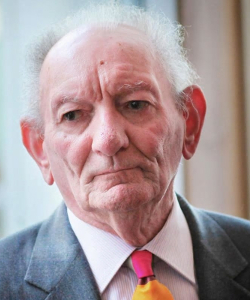
Death of Playwright Brian Friel

Brian Patrick Friel, Irish playwright, short story writer and founder of the Field Day Theatre Company, dies on October 2, 2015, in Greencastle, County Donegal. He has been considered one of the greatest living English-language dramatists. He has been likened to an “Irish Chekhov” and described as “the universally accented voice of Ireland.” His plays have been compared favourably to those of contemporaries such as Samuel Beckett, Arthur Miller, Harold Pinter and Tennessee Williams.

Friel is born in Knockmoyle, close to Omagh, County Tyrone, Northern Ireland. The family moves to Derry when Friel is ten years old. There, he attends St. Columb’s College, the same school attended by Seamus Heaney, John Hume, Seamus Deane, Phil Coulter, Eamonn McCann and Paul Brady. He receives his B.A. from St. Patrick’s College, Maynooth (1945–48).

Recognised for early works such as Philadelphia, Here I Come! and Faith Healer, Friel has 24 plays published in a career of more than a half-century. He is elected to the honorary position of Saoi of Aosdána. His plays are commonly produced on Broadway in New York City throughout this time, as well as in Ireland and the United Kingdom. In 1980 Friel co-founds Field Day Theatre Company, and his play Translations is the company’s first production. With Field Day, Friel collaborates with Seamus Heaney, 1995 recipient of the Nobel Prize in Literature. Heaney and Friel first become friends after Friel sends the young poet a letter following publication of his book Death of a Naturalist. Friel’s play Dancing at Lughnasa wins three Tony Awards in 1992.

Friel is a member of the American Academy of Arts and Letters, the British Royal Society of Literature and the Irish Academy of Letters. He is appointed to Seanad Éireann in 1987 and serves until 1989. In later years, Dancing at Lughnasa reinvigorates Friel’s oeuvre, bringing him Tony Awards, including Best Play, the Laurence Olivier Award for Best New Play and the New York Drama Critics Circle Award for Best Play. It is also adapted into a film, starring Meryl Streep, directed by Pat O’Connor, script by Frank McGuinness.

After a long illness Friel dies at the age of 86 in the early morning of Friday, October 2, 2015, in Greencastle, County Donegal. He is survived by his wife Anne and children Mary, Judy, Sally and David. A daughter, Patricia, predeceases him in 2012.