seamus dubhghaill

Promoting Irish Culture and History from Little Rock, Arkansas, USA


Leave a comment

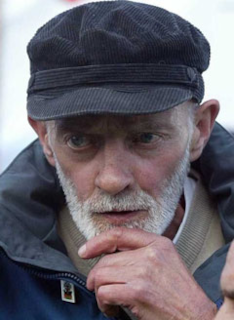
Death of Brian Keenan, Member of the Army Council of the Provisional IRA

Brian Keenan, a member of the Army Council of the Provisional Irish Republican Army (IRA), dies on May 21, 2008, at Cullyhanna, County Armagh, Northern Ireland, following a battle with colorectal cancer. He receives an 18-year prison sentence in 1980 for conspiring to cause explosions and plays a key role in the Northern Ireland peace process.

The son of a member of the Royal Air Force (RAF), Keenan is born on July 17, 1941, in Swatragh, County Londonderry, Northern Ireland, before his family moves to Belfast. As a teenager, he moves to England to find work, for a time working as a television repairman in partnership with his brother in Corby, Northamptonshire. During this time, he comes to the attention of the police when he damages a cigarette machine, which leads to police having his fingerprints on file. He returns to Northern Ireland when the Troubles begin and starts working at the Grundig factory in the Finaghy area of Belfast where he acquires a reputation as a radical due to his involvement in factory trade union activities.

Despite his family having no history of republicanism, Keenan joins the Provisional Irish Republican Army in 1970 or 1971, and by August 1971 is the quartermaster of the Belfast Brigade. He is an active IRA member, planning bombings in Belfast and travelling abroad to make political contacts and arrange arms smuggling, acquiring contacts in East Germany, Libya, Lebanon and Syria. In 1972, he travels to Tripoli to meet with Libyan leader Muammar Gaddafi in order to acquire arms and finance from his government. In early 1973 he takes over responsibility for control of the IRA’s bombing campaign in England and also becomes IRA Quartermaster General. In late 1973, he is the linchpin of the kidnap of his former employer at Grundig, director Thomas Niedermayer.

In early 1974, Keenan plans to break Gerry Adams and Ivor Bell out of Long Kesh using a helicopter, in a method similar to Seamus Twomey‘s escape from Mountjoy Prison in October 1973, but the plan is vetoed by Billy McKee. He is arrested in the Republic of Ireland in mid-1974 and sentenced to twelve months imprisonment for IRA membership. On March 17, 1975, he is shot and wounded while attempting to lead a mass escape from Portlaoise Prison. While being held in Long Kesh, Gerry Adams helps to devise a blueprint for the reorganisation of the IRA, which includes the use of covert cells and the establishment of a Southern Command and Northern Command. As the architects of the blueprint, Adams, Bell and Brendan Hughes, are still imprisoned, Martin McGuinness and Keenan tour the country trying to convince the IRA Army Council and middle leadership of the benefits of the restructuring plan, with one IRA member remarking “Keenan was a roving ambassador for Adams.” The proposal is accepted after Keenan wins support from the South Derry Brigade, East Tyrone Brigade and South Armagh Brigade, with one IRA member saying, “Keenan was really the John the Baptist to Adams’ Christ.”

In December 1975, members of an IRA unit based in London are arrested following the six-day Balcombe Street siege. The IRA unit had been active in England since late 1974 carrying out a series of bombings, and a few months after his release from prison Keenan visits the unit in Crouch Hill, London, to give it further instructions. In follow-up raids after the siege, police discover crossword puzzles in his handwriting and his fingerprints on a list of bomb parts. A warrant is issued for his arrest.

Garda Síochána informer Sean O’Callaghan claims that Keenan recommended IRA Chief of Staff Seamus Twomey to authorise an attack on Ulster Protestants in retaliation to an increase in sectarian attacks on Catholic civilians by Protestant loyalist paramilitaries, such as the killing of three Catholics in a gun and bomb attack by the Ulster Volunteer Force (UVF) on Donnelly’s Bar in Silverbridge, County Armagh on December 19, 1975. According to O’Callaghan “Keenan believed that the only way, in his words, to put the nonsense out of the Prods [Protestants] was to just hit back much harder and more savagely than them.” Soon after the sectarian Kingsmill massacre occurs, when ten Protestant men returning home from their work are ordered out of a minibus they are travelling in and executed en masse with a machine gun on January 5, 1976.

Keenan is arrested on the basis of the 1975 warrant near Banbridge on March 20, 1979, when the Royal Ulster Constabulary (RUC) stopped two cars travelling north on the main road from Dublin to Belfast and is extradited to England to face charges relating to the Balcombe Street Gang‘s campaign in England. His capture is a blow to the IRA, in particular as he was carrying an address book listing his contacts including Palestinian activists in the United Kingdom. The IRA responds by dispatching Bobby Storey and three other members to break Keenan out of prison using a helicopter, but all four are arrested and remanded to Brixton Prison. Keenan stands trial at the Old Bailey in London in June 1980 defended by Michael Mansfield and is accused of organising the IRA’s bombings in England and being implicated in the deaths of eight people including Ross McWhirter and Gordon Hamilton Fairley. He is sentenced to eighteen years imprisonment after being found guilty on June 25, 1980.

Keenan continues to support Gerry Adams while in prison. In August 1982 Adams is granted permission by the IRA’s Army Council to stand in a forthcoming election to the Northern Ireland Assembly, having been refused permission at a meeting the previous month. In a letter sent from Leicester Prison, Keenan writes that he “emphatically” supports the move and endorses the Army Council’s decision.

Keenan is released from prison in June 1993 and by 1996 is one of seven members of the IRA’s Army Council. Following the events after the IRA’s ceasefire of August 1994, he is openly critical of Gerry Adams and the “tactical use of armed struggle,” or TUAS, strategy employed by the republican movement. After the Northern Ireland peace process becomes deadlocked over the issue of the IRA decommissiong its arms, he and the other members of the Army Council authorise the Docklands bombing which kills two people and marks the end of the IRA’s eighteen-month ceasefire in February 1996.

Keenan outlines the IRA’s public position in May 1996 at a ceremony in memory of hunger striker Seán McCaughey at Milltown Cemetery, where he states, “The IRA will not be defeated…Republicans will have our victory…Do not be confused about decommissioning. The only thing the Republican movement will accept is the decommissioning of the British state in this country.” In the same speech he accuses the British of “double-dealing” and denounces the Irish government as “spineless.”

On February 25, 2001, Keenan addresses a republican rally in Creggan, County Armagh, saying that republicans should not fear “this phase” of “the revolution” collapsing should the Good Friday Agreement fail. He confirms his continued commitment to the Armalite and ballot box strategy, saying that both political negotiations and violence are “legitimate forms of revolution” and that both “have to be prosecuted to the utmost.” He goes on to say, “The revolution can never be over until we have British imperialism where it belongs—in the dustbin of history,” a message aimed at preventing rank-and-file IRA activists defecting to the dissident Real IRA.

Keenan plays a key role in the peace process, acting as the IRA’s go-between with the Independent International Commission on Decommissioning (IICD). Gerry Adams remarks, “There wouldn’t be a peace process if it wasn’t for Brian Keenan.” Keenan resigns from his position on the Army Council in 2005 due to ill-health, and is replaced by Bernard Fox, who had taken part in the 1981 Irish hunger strike. On May 6, 2007, he is guest speaker at a rally in Cappagh, County Tyrone, to commemorate the 20th anniversary of the deaths of the so-called “Loughgall Martyrs,” eight members of the IRA East Tyrone Brigade killed by the Special Air Service (SAS) in 1987.

In July 2002, Keenan is diagnosed as suffering from terminal colorectal cancer. It is alleged by the Irish Independent and The Daily Telegraph that Keenan succeeded Thomas “Slab” Murphy as Chief of Staff of the Provisional IRA at some point between the late 1990s and the mid-2000s before he relinquished the role to deal with his poor health caused by cancer.

Keenan’s last years are spent living with his wife in Cullyhanna, County Armagh, where he dies of cancer on May 21, 2008. He is an atheist and receives a secular funeral, representing a major republican show of strength.


Leave a comment

Birth of Ruairí Ó Brádaigh, Republican Political & Military Leader

Ruairí Ó Brádaigh, Irish republican political and military leader, is born Peter Roger Casement Brady on October 2, 1932, in Longford, County Longford. He is Chief of Staff of the Irish Republican Army (IRA) from 1958 to 1959 and again from 1960 to 1962, president of Sinn Féin from 1970 to 1983, and president of Republican Sinn Féin from 1987 to 2009.

Ó Brádaigh is born into a middle-class republican family. His father, Matt Brady, is an IRA volunteer who is severely wounded in an encounter with the Royal Irish Constabulary (RIC) in 1919. His mother, May Caffrey, is a Cumann na mBan volunteer and a 1922 graduate of University College Dublin (UCD). His father dies when he is ten and is given a paramilitary funeral led by his former IRA colleagues. His mother, prominent as the Secretary for the County Longford Board of Health, lives until 1974. He is educated at Melview National School at primary level and attends secondary school at St. Mel’s College, leaving in 1950, and graduates from University College Dublin in 1954. That year he takes a job teaching Irish language at Roscommon Vocational School in Roscommon. He is a deeply religious Catholic who refrains from smoking or drinking.

Ó Brádaigh joins Sinn Féin in 1950. While at university, in 1951, he joins the Irish Republican Army. In September 1951, he marches with the IRA at the unveiling of the Seán Russell monument in Fairview Park, Dublin. A teacher by profession, he is also a Training Officer for the IRA. In 1954, he is appointed to the Military Council of the IRA, a subcommittee set up by the IRA Army Council in 1950 to plan a military campaign against Royal Ulster Constabulary (RUC) barracks in Northern Ireland.

On August 13, 1955, Ó Brádaigh leads a ten-member IRA group in an arms raid on Hazebrouck Barracks, near Arborfield, Berkshire, England, a depot for the No. 5 Radar Training Battalion of the Royal Electrical and Mechanical Engineers. It is the biggest IRA arms raid in Britain. Most, if not all, of the weapons are recovered in a relatively short period of time. A van, traveling too fast, is stopped by the police and IRA personnel are arrested. Careful police work leads to weapons that had been transported in a second van and stored in London.

The IRA Border Campaign commences on December 12, 1956. As an IRA General Headquarters Staff (GHQ) officer, Ó Brádaigh is responsible for training the Teeling Column in the west of Ireland. During the Campaign, he serves as second-in-command of the Teeling Column. On December 30, 1956, he partakes in the Teeling Column attack on RUC barracks in Derrylin, County Fermanagh. RUC Constable John Scally is killed in the attack and is the first fatality of the new IRA campaign. Ó Brádaigh and others are arrested by the Garda Síochána across the border in County Cavan the day after the attack. They are tried and jailed for six months in Mountjoy Prison. A leading abstentionist, upon his arrest he refuses to recognize the authority of the Irish government and refuses to renounce violence in exchange for his release.

Although a prisoner, Ó Brádaigh is elected a Sinn Féin Teachta Dála (TD) for the Longford–Westmeath constituency at the 1957 Irish general election. Running on an abstentionist ticket, Sinn Féin wins four seats which go to Ó Brádaigh, Eighneachán Ó hAnnluain, John Joe McGirl and John Joe Rice. They refuse to recognise the authority of Dáil Éireann and state they will only take a seat in an all-Ireland parliament. He does not retain his seat at the 1961 Irish general election.

Upon completing his prison sentence, Ó Brádaigh is immediately interned at the Curragh Camp along with other republicans. On September 27, 1958, he escapes from the camp along with Dáithí Ó Conaill. While a football match is in progress, the pair cuts through a wire fence and escapes from the camp under a camouflage grass blanket. This is an official escape, authorised by the officer commanding (OC) of the IRA internees, Tomás Óg Mac Curtain. He is the first Sinn Féin TD on the run since the 1920s.

In October 1958, Ó Brádaigh becomes the IRA Chief of Staff, a position he holds until May 1959, when Seán Cronin is elected as his replacement. He is arrested in November 1959, refuses to answer questions, and is jailed in Mountjoy Prison under the Offences against the State Act. He is released in May 1960 and, after Cronin is arrested, again becomes Chief of Staff. Although he always emphasises that it is a collective declaration, he is the primary author of the statement ending the IRA Border Campaign in 1962. At the IRA 1962 Convention he indicates that he is not interested in continuing as Chief of Staff.

After Ó Brádaigh’s arrest in December 1956, he takes a leave from teaching at Roscommon Vocational School. He is re-instated and begins teaching again in late 1962, just after he is succeeded by Cathal Goulding in the position of Chief of Staff of the IRA. He remains an active member of Sinn Féin and is also a member of the IRA Army Council throughout the decade.

In the 1966 United Kingdom general election, Ó Brádaigh runs unsuccessfully as an Independent Republican candidate in the Fermanagh and South Tyrone constituency.

Ó Brádaigh opposes the decision of the IRA and Sinn Féin to drop abstentionism and to recognise the Westminster parliament in London, the Stormont parliament in Belfast and the Leinster House parliament in 1969/1970. On January 11, 1970, along with Seán Mac Stíofáin, he leads the walkout from the 1970 Sinn Féin Ard Fheis after the majority votes to end the policy of abstentionism, although the vote to change the Sinn Féin constitution fails to receive the required two-thirds majority. The delegates who walk out reconvene at the Kevin Barry Hall in Parnell Square, Dublin, and establish Provisional Sinn Féin.

Ó Brádaigh is voted chairman of the Caretaker Executive of Provisional Sinn Féin. That October, he formally becomes president of the party. He holds this position until 1983. In his presidential address to the 1971 Provisional Sinn Féin Ard Fheis, he says that the first step to achieving a United Ireland is to make Northern Ireland ungovernable. He apparently also serves on the Army Council or the executive of the Provisional Irish Republican Army until he is seriously injured in a car accident on January 1, 1984.

On May 31, 1972, Ó Brádaigh is arrested under the Offences Against the State Act and immediately commences a hunger strike. A fortnight later the charges against him are dropped and he is released. With Dáithí Ó Conaill he develops the Éire Nua policy, which is launched on June 28, 1972. The policy calls for a federal Ireland.

On December 3, 1972, Ó Brádaigh appears on the London Weekend Television Weekend World programme. He is arrested by the Gardaí again on December 29, 1972, and charged in the newly established Special Criminal Court with Provisional IRA membership. In January 1973 he is the first person convicted under the Offences Against the State (Amendment) Act 1972 and is sentenced to six months in the Curragh Camp.

In 1974, Ó Brádaigh testifies in person before the United States Senate Committee on Foreign Relations regarding the treatment of IRA prisoners in Ireland. He also has a meeting with prominent Irish American congressman Tip O’Neill. The same year, the State Department revokes his multiple entry visa. Federal Bureau of Investigation documents in 1975 describe him as a “national security threat” and a “dedicated revolutionary undeterred by threat or personal risk” and show that the visa ban was requested by the British Foreign Office and supported by the Dublin government.

On December 10, 1974, Ó Brádaigh participates in the Feakle talks between the IRA Army Council and Sinn Féin leadership and the leaders of the Protestant churches in Ireland. Although the meeting is raided and broken up by the Gardaí, the Protestant churchmen pass on proposals from the IRA leadership to the British government. These proposals call on the British government to declare a commitment to withdraw, the election of an all-Ireland assembly to draft a new constitution and an amnesty for political prisoners.

The IRA subsequently calls a “total and complete” ceasefire intended to last from December 22, 1974, to January 2, 1975, to allow the British government to respond to proposals. British government officials also hold talks with Ó Brádaigh in his position as president of Sinn Féin from late December to January 17, 1975.

On February 10, 1975, the IRA Army Council, unanimously endorses an open-ended cessation of IRA “hostilities against Crown forces,” which becomes known as the 1975 truce. The IRA Chief of Staff at the time is Seamus Twomey of Belfast. It is reported in some quarters that the IRA leaders mistakenly believe they had persuaded the British Government to withdraw from Ireland and the protracted negotiations between themselves and British officials are the preamble to a public declaration of intent to withdraw. In fact, as British government papers now show, the British entertain talks with the IRA in the hope that this would fragment the movement further and score several intelligence coups during the talks. This bad faith embitters many in the republican movement, and another ceasefire does not happen until 1994.

In late December 1976, along with Joe Cahill, Ó Brádaigh meets two representatives of the Ulster Loyalist Central Co-ordinating Committee (ULCCC), John McKeague and John McClure, at the request of the latter body. Their purpose is to try to find a way to accommodate the ULCCC proposals for an independent Northern Ireland with the Sinn Féin’s Éire Nua programme. It is agreed that if this can be done, a joint Loyalist-Republican approach can then be made to request the British government to leave Ireland. Desmond Boal QC and Seán MacBride SC are requested and accepted to represent the loyalist and republican positions. For months they have meetings in various places including Paris. The dialogue eventually collapses when Conor Cruise O’Brien, then Minister for Posts and Telegraphs and vociferous opponent of the Provisional IRA, becomes aware of it and condemns it on RTÉ Radio. As the loyalists had insisted on absolute secrecy, they feel unable to continue with the talks as a result.

In the aftermath of the 1975 truce, the Ó Brádaigh/Ó Conaill leadership comes under severe criticism from a younger generation of activists from Northern Ireland, headed by Gerry Adams, who becomes a vice-president of Sinn Féin in 1978. By the early 1980s, Ó Brádaigh’s position as president of Sinn Féin is openly under challenge and the Éire Nua policy is targeted in an effort to oust him. The policy is rejected at the 1981 Sinn Féin Ard Fheis and finally removed from the Sinn Féin constitution at the 1982 Ard Fheis. At the following year’s Ard Fheis, Ó Brádaigh and Ó Conaill resign from their leadership positions, voicing opposition to the dropping of the Éire Nua policy by the party.

On November 2, 1986, the majority of delegates to the Sinn Féin Ard Fheis vote to drop the policy of abstentionism if elected to Dáil Éireann, but not the British House of Commons or the Northern Ireland parliament at Stormont, thus ending the self-imposed ban on Sinn Féin elected representatives from taking seats at Leinster House. Ó Brádaigh and several supporters walk out and immediately assemble at Dublin’s West County Hotel and set up Republican Sinn Féin (RSF). As an ordinary member, he had earlier spoken out against the motion (resolution 162) in an impassioned speech. The Continuity IRA becomes publicly known in 1996. Republican Sinn Féin’s relationship with the Continuity IRA is similar to the relationship between Sinn Féin and the Provisional IRA when Ó Brádaigh was Sinn Féin’s president.

Ó Brádaigh believes RSF to be the sole legitimate continuation of the pre-1986 Sinn Féin, arguing that RSF has kept the original Sinn Féin constitution. RSF readopts and enhances his Éire Nua policy. His party has electoral success in only a few local elections.

Ó Brádaigh remains a vociferous opponent of the Good Friday Agreement, viewing it as a programme to copperfasten Irish partition and entrench sectarian divisions in the north. He condemns his erstwhile comrades in Provisional Sinn Féin and the Provisional IRA for decommissioning weapons while British troops remain in the country. In his opinion, “the Provo sell-out is the worst yet – unprecedented in Irish history.” He condemns the Provisional IRA’s decision to seal off a number of its arms dumps as “an overt act of treachery,” “treachery punishable by death” under IRA General Army Order Number 11.

In July 2005, Ó Brádaigh hands over a portion of his personal political papers detailing discussions between Irish Republican leaders and representatives of the British Government during 1974–1975 to the James Hardiman Library, National University of Ireland, Galway.

In September 2009, Ó Brádaigh announces his retirement as leader of Republican Sinn Féin. His successor is Des Dalton. He is also a long-standing member of the Celtic League, an organization which fosters cooperation between the Celtic people and promotes the culture, identity and eventual self-determination for the people, in the form of six sovereign states, for the Celtic nationsWales, Cornwall, Brittany, Scotland, Isle of Man and Ireland.

After suffering a period of ill-health, Ó Brádaigh dies on June 5, 2013, at Roscommon County Hospital. His funeral is attended by 1,800 mourners including Fine Gael TD Frank Feighan and is policed by the Garda Emergency Response Unit and Gardaí in riot gear, for “operational reasons,” a show of force believed to have been to deter the republican tradition of firing a three-volley salute of shots over the final place of rest during the graveyard oration. As a result, there are some minor scuffles between gardai and mourners.


Leave a comment

Death of Seamus Twomey, Two Time Chief of Staff of the Provisional IRA

Seamus Twomey (Irish: Séamus Ó Tuama), Irish republican activist, militant, and twice chief of staff of the Provisional Irish Republican Army, dies in Dublin on September 12, 1989.

Twomey is born on November 5, 1919, on Marchioness Street in Belfast, and lives at 6 Sevastopol Street in the Falls district. Known as “Thumper” owing to his short temper and habit of banging his fist on tables, he receives little education and is a bookmaker‘s “runner.” His father is a volunteer in the 1920s. In Belfast he lives comfortably with his wife, Rosie, whom he marries in 1946. Together they have sons and daughters.

Twomey begins his involvement with the Irish Republican Army in the 1930s and is interned in Northern Ireland during the 1940s on the prison ship HMS Al Rawdah and later in Crumlin Road Gaol in Belfast. Rosie, his wife, is also held prisoner at the women prison, Armagh Jail, in Northern Ireland. He opposes the left-wing shift of Cathal Goulding in the 1960s, and in 1968, helps set up the breakaway Andersonstown Republican Club, later the Roddy McCorley Society.

In 1969, Twomey is prominent in the establishment of the Provisional Irish Republican Army. By 1972, he is Officer Commanding (OC) of the Provisional IRA Belfast Brigade when it launches its bomb campaign of the city, including Bloody Friday when nine people are killed. During the 1970s, the leadership of the Belfast Brigade of the IRA is largely in the hands of Twomey and Ivor Bell.

In March 1973, Twomey is first appointed IRA Chief of Staff after the arrest of Joe Cahill. He remains in this position until his arrest in October 1973 by the Garda Síochána. Three weeks later, on October 31, 1973, the IRA organises the helicopter escape of Twomey and his fellow IRA members J. B. O’Hagan and Kevin Mallon, when an active service unit hijacks and forces the pilot at gunpoint to land the helicopter in the training yard of Mountjoy Prison. After his escape, he returns to his membership of IRA Army Council.

By June/July 1974, Twomey is IRA Chief of Staff for a second time. He takes part in the Feakle talks between the IRA and Protestant clergymen in December 1974. In the IRA truce which follows in 1975, he is largely unsupportive and wants to fight on in what he sees as “one big push to finish it once and for all.”

IRA informer Sean O’Callaghan claims that on January 5, 1976, Twomey and Brian Keenan give the go-ahead for the sectarian Kingsmill massacre, when ten unarmed Ulster Protestant workmen are executed by the Provisional IRA in retaliation for a rash of loyalist killings of Catholics in the area. It is Keenan’s view, O’Callaghan claims, that “The only way to knock the nonsense out of the Prods is to be ten times more savage.”

Twomey is dedicated to paramilitarism as a means of incorporating Northern Ireland into the Republic of Ireland. In an interview with French television on July 11, 1977, he declares that although the IRA had waged a campaign for seven years at that point, it can fight on for another 70 against the British state in Northern Ireland and in England. He supports the bombing of wealthy civilian targets, which he justifies on class lines. On October 29, 1977, for example, a no-warning bomb at an Italian restaurant in Mayfair kills one diner and wounds 17 others. Three more people are killed in similar blasts in Chelsea and Mayfair the following month. He says, “By hitting Mayfair restaurants, we were hitting the type of person that could bring pressure to bear on the British government.”

In December 1977, Twomey is captured in Sandycove, Dublin, by the Garda Síochána, who had been tipped off by Belgian police about a concealed arms shipment, to be delivered to a bogus company with an address in the area. They swoop on a house in Martello Terrace to discover Twomey outside in his car, wearing his trademark dark glasses. After a high-speed pursuit, he is recaptured in the centre of Dublin. The Gardaí later find documents in his possession outlining proposals for the structural reorganisation of the IRA according to the cell system. His arrest ends his tenure as IRA chief of staff. In the 1986 split over abstentionism, Twomey sides with the Gerry Adams leadership and remains with the Provisionals.

After a long illness from a heart condition, Twomey dies in Dublin on September 12, 1989. He is buried in the family plot in Milltown Cemetery, Belfast. His funeral is attended by about 2,000 people.


Leave a comment

The Funeral of Joe B. O’Hagan, Founding Member of the Provisional IRA

Leading Sinn Féin members are among the 5,000 people who attend the funeral of Joe B. O’Hagan, a founding member of the Provisional Irish Republican Army (PIRA), on April 26, 2001. Party president Gerry Adams gives the oration at the graveside when the leading republican figure is buried in Lurgan, County Armagh, Northern Ireland.

O’Hagan, known to all and sundry simply as JB, dies on Monday, April 23, 2001, in the town in which he was born almost 79 years previously and from which he and his wife Bernadette had been exiled for 25 years during the current phase of the conflict. As befitted a soldier of Óglaigh na hÉireann, a uniformed IRA Guard of Honour attends O’Hagan’s body in the wake house and it is six of his comrades who carry the coffin, bedecked in the Irish Tricolour and beret and gloves, from the family home on the first section of its journey to St. Paul’s Chapel for the Funeral Mass.

Up to 2,000 people attend the funeral and businesses in the bustling North Armagh town close along the route as a mark of respect. At St. Colman’s Cemetery just outside the town, Sinn Féin President Gerry Adams pays fulsome tribute to a republican who had been active from the 1940s into the 1990s and right up to his sudden death. Adams notes O’Hagan’s strong faith and welcomes the tribute paid during the Funeral Mass to JB’s republican beliefs and exploits. He adds, however, that it is high time the Catholic hierarchy reverses its directive banning the Tricolour from republican funerals in church premises. “Our National Flag should be allowed to stay on the coffin for the entire ceremony,” he says.

“I have always associated JB with Bernadette,” he tells those gathered at the graveside, “even though they were apart for so many years. They were married for 52 years, and Bernadette told me yesterday that she wouldn’t change a day of it, that she was proud of him and of his life.”

“In many ways he died the way he had lived, very quietly, modestly, not complaining, unassuming to the end. He was one of the most respected republicans of our time. There is no greater tribute that can be paid to any man or woman than to be known as a decent human being and Joe B. was that and more.”

Adams goes on to briefly record the extraordinary history of O’Hagan’s involvement in the republican struggle, as soldier and political activist, since he first joined the IRA in 1940, including that famous 1973 escape from Mountjoy Jail by helicopter, accompanied by Kevin Mallon and the late Seamus Twomey.

“JB grew up in the 1920s in a state abandoned by the Irish Government, where nationalists were subjected to the B-Specials and the Special Powers Act. He stood up at a time when standing up was a very very dangerous thing to do,” says Adams. “It is a wonder to me that he was active in every decade from the 1940s on. There is a mighty man!”

“He also personifies why Irish republicanism has never been defeated. He was an example of a physical force republican who was prepared to support and exhaust other means of struggle. He saw armed struggle as a means rather than as an end, but he never ceased to be an unrepentant republican and to work always for the establishment of an Irish Republic based on national rights for the people of this island. He supported the Good Friday Agreement not as an end but as an effort to build a new accord with our opponents and enemies. Political unionism has found it very difficult to deal with this strategy.”

“Joe B was very philosophical and very wise. He is representative of that republican element who never broke a promise in their lives.”

“Those who seek to defeat the republican struggle by blaming the IRA for everything need to know that none of this will work. That is because of the work that JB and people like him put into this struggle. We won’t be worn down or accept anything less than our full rights. The message for David Trimble and Tony Blair is that it is impossible for us to accept inequality, injustice and second-class citizenship. That is the past. We are looking to the future.”

“Joe B’s passing has left a huge gap, but we should celebrate his life. He touched so many of us. Joe B kept us right. The flame he kept flickering in the lean times is burning brightly now because of his contribution.”

Adams extends his solidarity and sympathy and that of all those present to Bernadette, to O’Hagan’s children, Barry, Kevin, Fintan, Siobhán, Felim and Dara, to his eleven grandchildren and four great-grandchildren, his sisters and entire family circle.

At the end of the Funeral Mass for O’Hagan, the O’Hagan family lead by Joe’s son Fintan place the Irish Tricolour on the coffin before the remains are taken from the chapel. This act is borne out of anger and frustration.

O’Hagan was a republican, an honourable man and a religious man who went to Mass every day. So, his family feels that the Catholic Church, that was as much an influence on O’Hagan’s life as was his republicanism, should respect his wish and allow his coffin to be draped in the Tricolour. The family appeals to the Catholic Church authorities and Adams intercedes on their behalf, but they are refused the right to grant O’Hagan his wish that the Flag not be removed from his coffin.

Dara O’Hagan, the Sinn Féin Northern Ireland Assembly member for Upper Bann, tells the bishop that by sticking to their old policy the Catholic Church is criminalising republicanism and indeed criminalising her father.

Also, the Catholic hierarchy misses a great opportunity to heal a hurt that has existed for over 20 years, when the remains of IRA Volunteer Kevin `Dee’ Delaney were refused entry into Corpus Christi Church in Springhill while bearing the Irish Tricolour. The rancour and hurt felt by republicans over this slight, coming as it does, in conjunction with the British Government’s attempts to criminalise republicanism, has long been an insult that republicans have resented. After all, churches are the people’s property as it is their money and effort that build them. The people of Springhill and the Greater Ballymurphy area paid £5 a brick for the Corpus Christi building and the Delaney family no doubt contributed to that fund.

By taking matters into their own hands, the O’Hagan family claims back some ground for republicans and sends a message to the bishops that they have a part to play in this new political era and that they need to look at their attitude to republicanism.

O’Hagan’s wife Bernadette says that as Fintan draped the Irish Trocolour on Joe’s coffin and the church burst into spontaneous applause, her heart was lifted. “I was so glad, and I walked down the aisle with a smile on my face,” said Bernadette.

(From: “Unassuming and mighty man laid to rest” by Martin Spain, An Phoblacht Republican News, May 3, 2001)


Leave a comment

Birth of Seamus Twomey, Two Time Chief of Staff of the Provisional IRA

Seamus Twomey (Irish: Séamus Ó Tuama), Irish republican activist, militant, and twice chief of staff of the Provisional Irish Republican Army, is born on November 5, 1919, on Marchioness Street in Belfast.

Twomey lives at 6 Sevastopol Street in the Falls district. Known as “Thumper” owing to his short temper and habit of banging his fist on tables, he receives little education and is a bookmaker‘s “runner.” His father is a volunteer in the 1920s. In Belfast he lives comfortably with his wife, Rosie, whom he marries in 1946. Together they have sons and daughters.

Twomey begins his involvement with the Irish Republican Army in the 1930s and is interned in Northern Ireland during the 1940s on the prison ship HMS Al Rawdah and later in Crumlin Road Jail in Belfast. Rosie, his wife, is also held prisoner at the women prison, Armagh Jail, in Northern Ireland. He opposes the left-wing shift of Cathal Goulding in the 1960s, and in 1968, helps set up the breakaway Andersonstown Republican Club, later the Roddy McCorley Society.

In 1969, Twomey is prominent in the establishment of the Provisional Irish Republican Army. By 1972, he is Officer Commanding (OC) of the Provisional IRA Belfast Brigade when it launches its bomb campaign of the city, including Bloody Friday when nine people are killed. During the 1970s, the leadership of the Belfast Brigade of the IRA is largely in the hands of Twomey and Ivor Bell.

In March 1973, Twomey is first appointed IRA Chief of Staff after the arrest of Joe Cahill. He remains in this position until his arrest in October 1973 by the Garda Síochána. Three weeks later, on October 31, 1973, the IRA organises the helicopter escape of Twomey and his fellow IRA members J. B. O’Hagan and Kevin Mallon, when an active service unit hijacks and forces the pilot at gunpoint to land the helicopter in the training yard of Mountjoy Prison. After his escape, he returns to his membership of IRA Army Council.

By June/July 1974, Twomey is IRA Chief of Staff for a second time. He takes part in the Feakle talks between the IRA and Protestant clergymen in December 1974. In the IRA truce which follows in 1975, he is largely unsupportive and wants to fight on in what he sees as “one big push to finish it once and for all.”

IRA informer Sean O’Callaghan claims that on January 5, 1976, Twomey and Brian Keenan give the go-ahead for the sectarian Kingsmill massacre, when ten unarmed Ulster Protestant workmen are executed by the Provisional IRA in retaliation for a rash of loyalist killings of Catholics in the area. It is Keenan’s view, O’Callaghan claims, that “The only way to knock the nonsense out of the Prods is to be ten times more savage.”

Twomey is dedicated to paramilitarism as a means of incorporating Northern Ireland into the Republic of Ireland. In an interview with French television on July 11, 1977, he declares that although the IRA had waged a campaign for seven years at that point, it can fight on for another 70 against the British state in Northern Ireland and in England. He supports the bombing of wealthy civilian targets, which he justifies on class lines. On October 29, 1977, for example, a no-warning bomb at an Italian restaurant in Mayfair kills one diner and wounds 17 others. Three more people are killed in similar blasts in Chelsea and Mayfair the following month. He says, “By hitting Mayfair restaurants, we were hitting the type of person that could bring pressure to bear on the British government.”

In December 1977, Twomey is captured in Sandycove, Dublin, by the Garda Síochána, who had been tipped off by Belgian police about a concealed arms shipment, to be delivered to a bogus company with an address in the area. They swoop on a house in Martello Terrace to discover Twomey outside in his car, wearing his trademark dark glasses. After a high-speed pursuit, he is recaptured in the centre of Dublin. The Gardaí later find documents in his possession outlining proposals for the structural reorganisation of the IRA according to the cell system. His arrest ends his tenure as IRA chief of staff. In the 1986 split over abstentionism, Twomey sides with the Gerry Adams leadership and remains with the Provisionals.

After a long illness from a heart condition, Twomey dies in Dublin on September 12, 1989. He is buried in the family plot in Milltown Cemetery, Belfast. His funeral is attended by about 2,000 people.


Leave a comment

The Mountjoy Prison Helicopter Escape

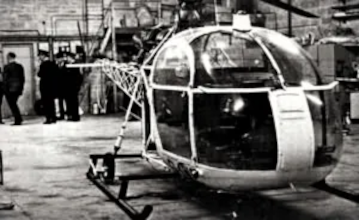
The Mountjoy Prison helicopter escape occurs on October 31, 1973, when three Provisional Irish Republican Army (IRA) volunteers escape from Mountjoy Prison in Dublin aboard a hijacked Alouette II helicopter, which briefly lands in the prison’s exercise yard. The escape makes headlines around the world and is an embarrassment to the Irish coalition government of the time, led by Fine Gael‘s Liam Cosgrave, which is criticised by opposition party Fianna Fáil. A manhunt involving twenty thousand members of the Irish Defence Forces and Garda Síochána is launched for the escapees, one of whom, Seamus Twomey, is not recaptured until December 1977. The Wolfe Tones write a song celebrating the escape called “The Helicopter Song,” which tops the Irish Singles Chart.

Following the outbreak of the Troubles in the late 1960s, the Provisional IRA conducts an armed campaign that seeks to create a united Ireland by ending Northern Ireland‘s status as part of the United Kingdom. As a result of increasing levels of violence in Northern Ireland, internment without trial is introduced there in August 1971, and in the Republic of Ireland the coalition government led by Fine Gael’s Liam Cosgrave is attempting to curb IRA activity. Fine Gael had come to power on a law-and-order ticket, with a policy of “getting tough on crime.” Suspected IRA members are arrested and accused of IRA membership by a superintendent in the Garda Síochána, a crime under the Offences against the State Acts. They are tried at the juryless Special Criminal Court in Dublin, where the traditional IRA policy of not recognising the court results in a fait accompli as no defence is offered and IRA membership carries a minimum mandatory one-year sentence, resulting in internment in all but name. In September 1973 IRA Chief of Staff Seamus Twomey appears at the Special Criminal Court charged with IRA membership, and states, “I refuse to recognise this British-orientated quisling court.” He is found guilty and receives a five-year sentence. By October 1973 the IRA’s command structure is seriously curbed, with Twomey and other senior republicans J. B. O’Hagan and Kevin Mallon all being held in Mountjoy Prison.

The IRA immediately begins making plans to break Twomey, O’Hagan and Mallon out of the prison. The first attempt involves explosives that had been smuggled into the prison, which are to be used to blow a hole in a door which will give the prisoners access to the exercise yard. From there, they are to scale a rope ladder thrown over the exterior wall by members of the IRA’s Dublin Brigade who are to have a getaway car waiting to complete the escape. The plans when the prisoners cannot gain access to the exercise yard and the rope ladder is spotted, so the IRA begins making new escape plans. The idea of using a helicopter in an escape had been discussed before in a plot to break Gerry Adams out of Long Kesh internment camp but had been ruled out because of faster and more sophisticated British Army helicopters being stationed at a nearby base. The IRA’s GHQ staff approves the plan to break out Twomey, O’Hagan and Mallon, and arrangements are made to obtain a helicopter. A man with an American accent calling himself Mr. Leonard approaches the manager of Irish Helicopters at Dublin Airport, with a view to hiring a helicopter for an aerial photographic shoot in County Laois. After being shown the company’s fleet of helicopters, Leonard arranges to hire a five-seater Alouette II for October 31.

Leonard arrives at Irish Helicopters on October 31 and is introduced to the pilot of the helicopter, Captain Thompson Boyes. Boyes is instructed to fly to a field in Stradbally, in order to pick up Leonard’s photographic equipment. After landing Boyes sees two armed, masked men approaching the helicopter from nearby trees. He is held at gunpoint and told he will not be harmed if he follows instructions. Leonard leaves with one gunman, while the other gunman climbs aboard the helicopter armed with a pistol and an ArmaLite rifle. Boyes is instructed to fly towards Dublin following the path of railway lines and the Royal Canal and is ordered not to register his flight path with Air Traffic Control. As the helicopter approaches Dublin, Boyes is informed of the escape plan and is instructed to land in the exercise yard at Mountjoy Prison.

In the prison’s exercise yard, the prisoners are watching a football match. Shortly after 3:35 p.m. the helicopter swings in to land in the prison yard, with Kevin Mallon directing the pilot using semaphore. A prison officer on duty initially takes no action as he believes the helicopter contains the Minister for Defence, Paddy Donegan. After prisoners surround the eight prison officers in the yard, fights break out as the officers realise an escape attempt is in progress. As other prisoners restrain the officers, Twomey, Mallon and O’Hagan board the helicopter. As the helicopter takes off, in the confusion one officer shouts, “Close the gates, close the fucking gates.” The helicopter flies north and lands at a disused racecourse in the Baldoyle area of Dublin, where the escapees are met by members of the IRA’s Dublin Brigade. Boyes is released unharmed, and the escapees are transferred to a taxi that had been hijacked earlier and are transported to safe houses.

The escape makes headlines around the world and is an embarrassment for Cosgrave’s government, which is criticised for “incompetence in security matters” by opposition party Fianna Fáil. An emergency debate on security is held in Dáil Éireann on November 1.

The IRA releases a statement on the escape, which reads, “Three republican prisoners were rescued by a special unit from Mountjoy Prison on Wednesday. The operation was a complete success, and the men are now safe, despite a massive hunt by Free State forces.” Shortly after the escape Twomey gives an exclusive interview to German magazine Der Spiegel, where the reporter says people throughout Europe are joking about the incident as “the escape of the century.” Irish rebel band the Wolfe Tones writes a song celebrating the escape called “The Helicopter Song,” which is immediately banned by the government yet still tops the Irish Singles Chart after selling twelve thousand copies in a single week.

The escape results in all IRA prisoners being held at Mountjoy Prison and Curragh Camp being transferred to the maximum security Portlaoise Prison. In order to prevent any further escapes, the perimeter of the prison is guarded by members of the Irish Army, and wires are erected over the prison yard to prevent any future helicopter escape. Cosgrave states there will be “no hiding place” for the escapees, and a manhunt involving twenty thousand members of the Irish Defence Forces and Garda Síochána ensues.

Mallon is recaptured at a Gaelic Athletic Association dance in a hotel near Portlaoise on December 10, 1973, and imprisoned in Portlaoise Prison. He escapes from there in a mass break-out on August 18, 1974, when nineteen prisoners escape after overpowering guards and using gelignite to blast through the gates. He is recaptured in Foxrock in January 1975 and returned to Portlaoise Prison. O’Hagan is recaptured in Dublin in early 1975, and also imprisoned in Portlaoise Prison. After the end of his original twelve-month sentence, he is immediately arrested and sentenced to a further two years imprisonment for escaping. Twomey evades recapture until December 2, 1977, when he is spotted sitting in a car in Sandycove by members of the Garda’s Special Branch who are investigating an arms shipment after a tip-off from police in Belgium. He drives away after spotting the officers, before being recaptured in the centre of Dublin after a high-speed car chase. He is also imprisoned in Portlaoise Prison until his release in 1982.

In 2021, Brendan Hughes publishes an autobiography Up Like a Bird, an account of the planning and organisation of the escape, co-authored with Doug Dalby.


Leave a comment

The Donegall Street Bombing

The Donegall Street bombing takes place in Belfast, Northern Ireland on March 20, 1972, when, just before noon, the Provisional Irish Republican Army (IRA) detonates a car bomb in Lower Donegall Street in Belfast City Centre when the street is crowded with shoppers, office workers, and many schoolchildren.

Seven people are killed in the explosion, including two members of the Royal Ulster Constabulary (RUC), who say they had evacuated people to what was considered to have been a safe area following misleading telephone calls, which had originally placed the device in a nearby street. The Provisional IRA Belfast Brigade admits responsibility for the bomb, which also injures 148 people, but claims that the security forces had deliberately misrepresented the warnings in order to maximise the casualties. This is one of the first car bombs the IRA uses in their armed campaign.

On Monday, March 20, 1972, at 11.45 a.m., a local carpet dealer receives a telephone call warning that a bomb will explode in Belfast city centre’s Church Street which is crowded with shoppers, office workers on lunch breaks, and schoolchildren. British Army troops and the RUC are alerted and immediately begin to evacuate the people into nearby Lower Donegall Street. The second call to The Irish News newspaper seven minutes later also gives Church Street as the location for the device. A final call comes at 11:55 a.m. advising the News Letter newspaper that the bomb is instead placed outside its offices in Lower Donegall Street where the crowds have been sent. Thus, the warning arrives too late for the security forces to clear the street. Staff working inside the News Letter building are told by the caller that they have 15 minutes in which to leave the building, but they never have a chance to evacuate.

At 11:58 a.m. a 100-pound gelignite bomb explodes inside a green Ford Cortina parked in the street outside the offices of the News Letter, shaking the city centre with the force of its blast, and instantly killing the two RUC constables, Ernest McAllister (31) and Bernard O’Neill (36), who had been examining the vehicle. The remains of the two policemen are allegedly found inside a nearby building. Minutes earlier they had been helping to escort people away from Church Street.

The explosion sends a ball of flame rolling down the street and a pall of black smoke rising upward. The blast wave rips into the crowds of people who had run into Donegall Street for safety, tossing them in all directions and killing another four men outright: Ernest Dougan (39), James Macklin (30), Samuel Trainor (39) and Sydney Bell (65). Trainor is also an off-duty Ulster Defence Regiment (UDR) soldier and a member of the Orange Order. A seriously wounded pensioner, Henry Miller (79) dies in hospital on April 5. Most of the dead are mutilated beyond recognition. With the exception of Constable O’Neill, who is a Catholic, the other six victims are Protestants.

The explosion blows out all the windows in the vicinity, sending shards of glass into people’s bodies as they are hit by falling masonry and timber. The ground floor of the News Letter offices and all buildings in the area suffer heavy damage. The News Letter library in particular sustains considerable damage with many priceless photographs and old documents destroyed. Around the blast’s epicentre, the street resembles a battlefield. About one hundred schoolgirls lay wounded on the rubble-strewn, bloody pavement covered in glass and debris, and screaming in pain and fright. A total of 148 people are injured in the explosion, 19 of them seriously. Among the injured are many of the News Letter staff.

One of the wounded is a child whose injuries are so severe a rescue worker at the scene assumes the child has been killed. A young Czech art student, Blanka Sochor (22), receives severe injuries to her legs. She is photographed by Derek Brind of the Associated Press as a British Paratrooper holds her in his arms. Passerby Frank Heagan witnesses the explosion and comes upon what is left of two binmen who had been “blown to pieces.” He adds that “there was blood everywhere and people moaning and screaming. The street was full of girls and women all wandering around.” The injured can be heard screaming as the ambulances transport them to hospital. Emergency amputations are performed at the scene.

While the security forces and firemen pull victims from the debris in Donegall Street, two more bombs go off elsewhere in the city centre, however, nobody is hurt in either attack. On the same day in Derry, a British soldier, John Taylor, is shot dead by an IRA sniper. In Dublin, Chief of Staff of the Irish Republican Army, Seán Mac Stíofáin, suffers burns to his face and hands after he opens a letter bomb sent to him through the post. Cathal Goulding, head of the Official Irish Republican Army, also receives a letter bomb but escapes injury by having dismantled the device before it exploded.

This is amongst the first car bombs used by the Provisional IRA during The Troubles in its militant campaign to force a British military withdrawal and reunite the six counties of Northern Ireland with the rest of the island of Ireland. It is part of the IRA’s escalation of violence to avenge the Bloody Sunday killings in which 13 unarmed Catholic civilian men were killed by the British Army’s Parachute Regiment when the latter opened fire during an anti-internment demonstration held in Derry on January 30, 1972.

The bombing is carried out by the North Belfast unit of the Provisional IRA’s Third Battalion Belfast Brigade. The OC of the Brigade at that time is the volatile Seamus Twomey, who orders and directs the attack.

On March 23, the IRA admits responsibility for the bomb with one Belfast Brigade officer later telling a journalist, “I feel very bad when the innocent die.” The IRA, however, tempers the admission by claiming that the caller had given Donegall Street as the correct location for the bomb in all the telephone calls and that the security forces had deliberately evacuated the crowds from Church Street to maximise the casualties. The IRA’s official statement claiming responsibility for the blast is released through the Irish Republican Publicity Bureau.

The IRA follows the Donegall Street attack two days later with a car bomb at a carpark adjacent to the Belfast Great Victoria Street railway station and close to the Europa Hotel. Seventy people are treated in hospital for injuries received mainly by flying glass, but there are no deaths. The blast causes considerable damage to two trains, parked vehicles, the hotel, and other buildings in the area.

Although many members of the Provisional IRA are rounded up by police in the wake of the Donegal Street attack, none of the bombers are ever caught nor is anyone ever charged in connection with the bombing.