Mac Thomáis comes from a staunch Republican family. His father, a fire-brigade officer, dies when he is five years old and his family moves to Goldenbridge, Inchicore, Dublin. He leaves school at thirteen to work as delivery boy for White Heather Laundry, learning Dublin neighbourhoods with great thoroughness. He says he found work to help his mother pay the rent. He later works as a clerk and is appointed credit controller for an engineering firm.
At the November 1959 Ardfheis Mac Thomáis is elected to the Ardchomhairle of Sinn Féin and edits and contributes to the Sinn Féin newspaper United Irishman. He is a close friend of Tomás Mac Giolla and is deeply affected by the 1970 split in Sinn Féin. He takes the Provisional side, opposing Mac Giolla.
Mac Thomáis takes over as editor of An Phoblacht in 1972. In July 1973, he is arrested and charged with IRA membership at the Special Criminal Court in Dublin. He refuses to recognise the court, but he gives a lengthy address from the dock. The following month he is sentenced to 15-months imprisonment. Within two months of completing his sentence he is again before the court on the same charge and again receives a 15-month sentence. Editors of six left-wing and Irish-language journals call for his release, as do a number of writers, and hundreds attend protest meetings – to no avail. He serves his full sentence.
Tim Pat Coogan, editor of The Irish Press, claims the charges against Mac Thomáis are politically motivated to a large degree as his activities are confined strictly to the newspaper An Phoblacht. Under Section 31 of the Broadcasting Act, due to his membership in Sinn Féin in the 1970s he is removed from his position in making some of the RTÉ historical programmes. As a historian he makes numerous contributions to various historical publications such as the Dublin Historical Review.
From 1974 Mac Thomáis writes a number of books on old Dublin. They sell well and remain in print for over 20 years. He also starts a number of walking tours of Dublin, which prove very popular.
Sheehy is born in Tralee, County Kerry, on October 16, 1897. In 1914 he joins Fianna Éireann, the republican boy scouts, and later the Irish Volunteers. He commands the Boherbue company of the IRA, and later the Tralee company. His brother Jimmy is killed in the British Army in the Battle of the Somme in 1916.
Sheehy sides against the Anglo-Irish Treaty in 1922, like most of the IRA in Kerry. In the Irish Civil War, when Free State troops land in Kerry as part of a seaborne offensive, he is in command of the Anti-Treaty garrison in Tralee. After the Army takes the town, he retreats, burning the barracks there. As the conflict becomes a guerrilla affair, he finds himself in charge of three flying columns, or around 75 men in total, in the Ballymacthomas area. He and Tom McEllistrim are in charge of an attack on Castlemaine in January 1923.
Just after the Irish Civil War, when Sheehy is still on the run, he manages to play football for Kerry. Kerry captain Con Brosnan, though a member of the Free State army, guarantees his safe passage. He pays into Munster and All-Ireland finals, slips off his street clothes, plays, and then at the final whistle, disappears back into the crowd. In 1936 he is in New York and is able to smuggle a large number of Thompson submachine guns back to Ireland.
In February 1941 Sheehy is arrested and interned in the Curragh Camp for two years. He is arrested again and charged with making “seditious speeches” on May 11, 1946, the day that IRA hunger striker Seán McCaughey dies. He is found guilty and sentenced to four months imprisonment.
Sheehy plays Gaelic football with his local club, John Mitchels, and is a member of the senior Kerry county football team from 1919 until 1930. He also plays hurling with Tralee Parnells. He captains Kerry to the All-Ireland title in 1930. He plays in the Railway Cup hurling final in 1927 and is captain of the football team the same year and wins other medals in 1931. Three of his sons – Seán Óg, Niall and Paudie – all win All-Ireland titles with Kerry in the 1960s.
Sheehy remains a staunch supporter of Sinn Féin and is critical of the moves to end abstention by the party in the late 1960s. He sides with the Provisionals in the split at the 1970 Ardfheis and remains active in Provisional Sinn Féin until his death, supporting the IRA’s guerrilla campaign. He dies in Tralee on January 12, 1980, and is given a republican funeral at his own request. His funeral oration is given by Dáithí Ó Conaill, vice-president of Sinn Féin.
Moving to Dublin by September 1916, MacDonagh is headmaster for a time of Patrick Pearse‘s St. Enda’s School, the bilingual school where his brother Thomas had formerly served on the staff under Pearse, which had reopened after the rising in Cullenswood House, Oakley Road, Rathmines. By 1918 he is in private practice as an income tax recovery expert. He later quips that by recovering thousands of pounds annually for clients, he has done greater harm to the British government than any other Irishman. He is also partner by 1919 in an insurance brokerage with fellow Sinn FéinTDWilliam Cosgrave. Following Cosgrave’s departure, the firm trades from 1920 as MacDonagh & Boland, with offices first on Dame Street, and latterly on College Green.
MacDonagh’s prominence in the post-1916 reorganisation of Sinn Féin commences at the April 19, 1917, convention of advanced nationalists summoned by George Noble Plunkett after his parliamentary by-election victory. MacDonagh makes a resounding speech ratifying Plunkett’s determination not only to abstain from attendance at Westminster, but also to affirm the principles of the republican Easter Week proclamation rather than the dual-monarchy programme of Sinn Féin under Arthur Griffith. After campaigning vigorously on behalf of the successful by-election candidacy of Éamon de Valera in East Clare, he is arrested on August 30 and sentenced to six-months’ imprisonment for making a seditious speech. He joins in the hunger strike of republican prisoners seeking prisoner-of-war status in Mountjoy Gaol, on which Thomas Ashe dies on September 25 after enduring forcible feeding. Released with the other surviving strikers, he is a principal witness at the emotional inquest into the circumstances of Ashe’s death.
Elected to the Sinn Féin executive at the October 1917 ardfheis, at which the party adopts a republican constitution, MacDonagh is alternately rearrested and released on several occasions under the “cat-and-mouse act,” enduring further hunger strikes in both Belfast and Dundalk jails, before serving out in its entirety the original six-month sentence (1917–18). After deportation to England and while incarcerated in Reading Gaol, he is returned unopposed in the 1918 United Kingdom general election in Ireland as Sinn Féin candidate in North Tipperary and is released in time to attend the second session of the first Dáil Éireann on April 10, 1919. With the Dáil driven underground in September 1919 after its proscription, he protests against the infrequency of sessions, querying whether “private members [were] to abstain from Dublin as well as Westminster.”
Elected in January 1920 to both Dublin Corporation and Rathmines town council, MacDonagh concentrates his political energies on local government until appointment in January 1921 as acting Dáil Minister for Labour, and director of the Belfast boycott. Exercising effective authority over the labour department because of the imprisonment of the minister, Constance Markievicz, he seeks to define a comprehensive industrial and economic strategy and establishes a labour commission to formulate proposals. The resultant radical plan for supplanting capitalist ownership by developing cooperative and distributive industrial structures is ignored by his cabinet colleagues. His organisation and enforcement of the Belfast boycott – a response to the anti-Catholic rioting of July 1920, and expulsion of workers from jobs and families from homes – is relentless and efficient. He appoints a team of boycott organisers and local boycott committees empowered to impose fines and to seize goods, and blacklists firms that are facilitating circumvention of the boycott by trans-shipment of Belfast goods through non-boycotted northern towns or through British ports.
Throughout the Irish War of Independence MacDonagh is constantly on the run, usually under disguise as a priest, and is imprisoned for a time in Mountjoy Gaol in 1920. One of four Sinn Féin candidates returned unopposed to the Second Dáil for Tipperary Mid, North, and South, after a cabinet reorganisation in August 1921 following the truce, he remains as boycott director but is removed from the Labour Department. Bitterly opposed to the Anglo–Irish Treaty, in the Dáil debates he responds to Griffith’s assertion that the agreement is indeed a treaty concluded between two sovereign nations by asking why the pro-Treatyites are conducting the sovereign Irish nation into the British empire, and whether they are doing so “with their heads up or their hands up.”
Manager of the anti-Treaty bulletin Poblacht na hÉireann, in the 1922 Irish general election MacDonagh is returned on the first count to the third seat in his constituency. Arrested soon after the outbreak of the Irish Civil War, he escapes from Portobello military barracks. Rearrested on September 30 and imprisoned in Mountjoy Gaol, he falls seriously ill with acute appendicitis but refuses to sign the required form to secure release for medical treatment because it implicitly recognises the legitimacy of the Free State government. Transferred at length to the Mater Misericordiae private nursing home, he undergoes an operation, but two days later, having developed peritonitis, he dies on December 25, 1922. He is buried in Glasnevin Cemetery.
A small, supple man with alert blue eyes, MacDonagh wielded a swift and stinging tongue in debate. It is said that he indulged his caustic wit more for the delight in the bon mot than for the bitterness of the invective. Genial in company, with a store of amusing anecdote, he was celebrated for hearty humour even in the face of hardship and danger. On a prison sickbed days before his death, he referred to another inmate, bald-headed like himself, “who wears his hair like mine.” In 1913, he married Margaret O’Toole of Dublin. They had one daughter and two sons. They resided in Rathmines, first at 86 Moyne Road, before moving during 1922 to 9 Palmerston Road.
(From: “MacDonagh, Joseph” by Lawrence William White, Dictionary of Irish Biography, http://www.dib.ie, October 2009)
Clarke is the son of William Clarke, merchant seaman, and Margaret Clarke (née Austin). Educated locally, he leaves school at the age of eleven and begins work as a kitchen porter, later becoming a boot-shop assistant, a harness maker and a van driver. Influenced by a series of lectures at the Oliver Bond Club, Parnell Square, and by the writings of Arthur Griffith, he commits himself to the republican cause, joining the Irish Republican Brotherhood (IRB) in 1913 and subsequently the Irish Volunteers.
On his return to Ireland, Clarke acts as the courier for the First Dáil and serves as an usher at the first meeting of the First Dáil. He is interned from January 1921. Released in 1923, he acts as caretaker of the Sinn Féin headquarters on Harcourt Street and founds the Irish Book Bureau. Although the Anti-Treaty Sinn Féin rejects participation in the Dáil, they continue to contest local elections, and Clarke sits on Dublin City Council.
Although jailed many times between 1922 and 1940, Clarke remains an active republican campaigner, supporting the Irish Republican Army (IRA) initiatives of the 1940s and 1950s, taking a prominent role at republican meetings, and publicising the conditions of republican prisoners.
Although Clarke had served under Éamon de Valera during the Easter Rising, the two become implacable opponents. He is ejected from an official commemoration of the fiftieth anniversary of the First Dáil for interrupting de Valera’s speech in order to raise the complaints of the Dublin Housing Action Committee (DHAC). He vows to outlive de Valera and succeeds in this endeavour by outliving him a year.
Clarke is elected as a Vice-President of Sinn Féin in 1966. In the split of 1970, he supports the provisional wing, remaining Vice-President. In 1973 he is deported from Britain upon his arrival at Heathrow Airport.
Despite crippling arthritis, Clarke continues his work, refusing an IRA pension as he considers himself still on active service. He dies on April 22, 1976, at St. James’s Hospital, Dublin, and is buried in Glasnevin Cemetery close to the republican plot.
Clarke marries Anne, daughter of Thomas Hughes, sawyer, on July 25, 1909. They have two sons and one daughter. After her death, he marries Elizabeth Delaney on May 30, 1949.
The Dublin South West Inner City cumann of Sinn Féin is named for Clarke.
(Pictured: Joe Clarke selling Easter Lilies on Dublin’s O’Connell Street in 1966)
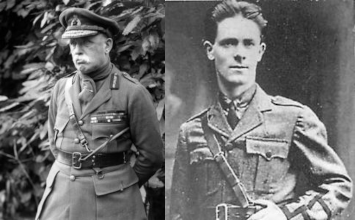
On a cold December day in 1919, a group of young IRA volunteers wait at a public house near the Ashtown gate of Dublin’s Phoenix Park. Some are from Dublin, members of Michael Collins’ recently created assassination unit, the Squad. Others are from farther afield, like Dan Breen and Seán Treacy from County Tipperary and Martin Savage from County Sligo.
They are waiting for Sir John French, Lord Lieutenant of Ireland, the most senior British official in the land. He is returning from a visit to the west of Ireland and has alighted at Ashtown train station before returning by car to his official residence, the Viceregal Lodge, in the Phoenix Park.
The IRA men have a signaler in a tree and when French’s car approaches, they attempt to block the road with a farm cart. However, they are too late to block the Lord Lieutenant’s car which sweeps through the impromptu barricade. Shots are fired and one policeman is wounded but French himself emerges unscathed.
A second car, which the IRA believes to contain French, bears the brunt of the volunteers’ revolver fire and grenades. Though the car is badly damaged, there are no casualties.
The third car in the convoy contains French’s military escort and the soldiers inside the vehicle return fire, killing one of the attackers, Martin Savage. Some of the volunteers attempt to recover his body but the Crown forces’ fire is too heavy. Savage’s body is left on the scene as the IRA party flees on bicycles back to the city.
The Irish Times, for one, expresses outrage at the attack, “the attempted assassination of the greatest of Irishmen” which it says will “shock Ireland” and force Sinn Féin, victorious in the election of the previous year, to reflect on whether it wants to be associated with “outrage and assassination.” “There will now be many throughout the world ready to attribute the character of a murder society to the whole new Irish movement.”
Many in Ireland are even less sympathetic to hear of the escape of the Lord Lieutenant. The Irish Catholicbishops issue a statement the next day condemning not the attack but British rule in Ireland, which they characterise as “rule of the sword, utterly unsuited to a civilised nation.”
The attack is, in hindsight, a turning point, moving the standoff over Irish independence toward all out guerrilla warfare, but also, in a way, symbolising the eclipse of French and of his vision for what the country should be.
Sir John French’s health declines in 1920 and though he holds the position of Lord Lieutenant until April 1921, his central role in Irish affairs is eclipsed by new Chief Secretary for Ireland Sir Hamar Greenwood. He wants to retire to his estates in Ireland in 1922 but is told it is simply too dangerous for him. During the Irish Civil War (1922-23), his country house at Drumdoe, County Roscommon, is raided by armed men who carry off much of the furniture.
(From: “Today in Irish History: 19 December 1919, The Attempted Assassination of Sir John French” by John Dorney, The Irish Story, http://www.theirishstory.com, December 18,2019 | Pictured: L to R, Sir John French and Martin Savage)
O’Hegarty is born on December 29, 1879, at Carrignavar, County Cork, to John and Katherine (née Hallahan) Hegarty. His parents’ families emigrate to the United States after the Great Famine, and his parents are married in Boston, Massachusetts. His father is a member of the Irish Republican Brotherhood (IRB).
He is educated at North Monastery CBS, where he forms an enduring friendship with Terence MacSwiney. In 1888, his father dies of tuberculosis at the age of 42. Left destitute, his mother pawns her wedding ring to pay for an advertisement looking for work, and eventually becomes a cook.
He serves at the main Postal Sorting Office in Mount Pleasant, London, from 1902 to 1913. Along with J. J. Walsh, he spends three years at King’s College London, studying for the Secretary’s Office. While he succeeds in his studies, Walsh does not and returns to Ireland. O’Hegarty becomes the IRB representative for South East England and joins the Gaelic League and Sinn Féin and becomes a strong advocate of the Irish language. In 1905, he is elected secretary of the local Dungannon Club, which draws in as members Robert Lynd, Herbert Hughes and George Cavan. In 1907, as Sinn Féin’s London Secretary, he approves and signs the membership card of Michael Collins, later becoming friend and mentor to Collins.
He has to return to Ireland for a break due to overwork in 1909 and gives up some of his work for the Gaelic League. However, he takes over as editor of the IRB publication, Irish Freedom. It is in this publication that he famously writes, concerning the visit of King George V to Ireland in 1911: “Damn your concessions, England: we want our country!” In 1912, at the height of the Playboy riots, he writes four articles entitled “Art and the Nation” in Irish Freedom, which take a very liberal and inclusionist approach to Anglo-Irish literature and art in general but invokes the wrath of many of the paper’s readers.
In 1913, he is re-posted to Queenstown (present-day Cobh) as postmaster. He continues editing nationalist newspapers such as Irish Freedom (founded in 1910 and suppressed in December 1914 on account of its seditious content) and An tÉireannach and joins the Irish Volunteers. At the outbreak of war he is moved to Shrewsbury, probably on account of his political activities. In 1915, he marries Wilhelmina “Mina” Smyth, a schoolteacher and suffragist, and is then moved to Welshpool, Montgomeryshire. In the aftermath of the 1916 Easter Rising, he is opposed to physical force. In 1918, he refuses to take the British Oath of Allegiance and resigns his position in the Post Office.
O’Hegarty feels that the Abbey Theatre is “doing good for Ireland” and supports W. B. Yeats against attacks from Arthur Griffith and like-minded Nationalists. He opposes the extremist views of D. P. Moran, who seeks a Roman Catholic Irish-speaking Ireland.
He is Secretary of the Irish Department of Post and Telegraphs from 1922 to 1945. He is elected a member of the Irish Academy of Letters in 1954.
His son, Seán Ó hÉigeartaigh, is a founder of the Irish-language publishing house Sáirséal agus Dill. His daughter Gráinne, a harpist, marries Senator Michael Yeats, son of W. B. Yeats.
Seán Hales, Irish political activist and member of Dáil Éireann from May 1921 to December 1922, is shot and killed in Dublin on December 7, 1922, by republican gunmen on orders from Liam Lynch directing the Irish Republican Army (IRA) to kill, amongst others, all deputies and senators who had voted for the Public Safety Act (September 28, 1922) which established military courts with the power to impose the death penalty.
Hales is born John Hales in Ballinadee, Bandon, County Cork, on March 30, 1880, the eldest child of five sons and four daughters of Robert Hales, a farmer, and Margaret (née Fitzgerald) Hales. He is educated at Ballinadee national school and Warner’s Lane school, Bandon. After leaving school he goes to work on his father’s farm. He plays hurling with Valley Rovers GAA club and is the Munster champion in the 56-lb. weight-throwing competition. From an early age he follows in his father’s footsteps and becomes involved in the republican movement.
Hales joins the Irish Volunteers in 1915 and becomes captain of the Ballinadee company in 1916. Arrested under the Defence of the Realm Act after the 1916 Easter Rising, he is imprisoned in Frongoch internment camp in Wales. After his release, in April 1917 he becomes executive of the short-lived Liberty League promoted by Count George Plunkett. When the League merges with Sinn Féin, he helps reorganise the Volunteers. With his brothers, Tom, William, and Donal, he continues his father’s fight on behalf of evicted tenants and becomes involved with the anti-British Bandon People’s Food Committee and the anti-landlord Unpurchased Tenants’ Association. He helps in the Sinn Féin takeover of The Southern Star newspaper and is a member of the new board of directors. In 1919 he becomes battalion commander of the first (Bandon) battalion 3rd Cork Brigade of the Irish Republican Army, the name by which the Irish Volunteers increasingly became known. He leads the attack on TimoleagueRoyal Irish Constabulary (RIC) barracks in February 1920, and the ambush of an Essex Regiment patrol at Brinny in August 1920. The military patrol at Brinny manages to surprise the ambushers and Lieutenant Tim Fitzgerald of Bandon is the first Volunteer to be killed in action in west Cork. Hales then commands the assault on two truckloads of British troops at Newcestown Cross in which a British officer is killed and several soldiers are wounded.
Hales is appointed section commander of the west Cork flying column in 1920 and takes part in the major action at Crossbarry on March 19, 1921. In retaliation for the burning of the Hales home in March 1921, he leads a contingent of Volunteers and burns Castle Bernard, the residence of the Earl of Bandon. The occupant, Lord Bandon, is held hostage until General Strickland, the British OC in Cork, guarantees he will not execute Volunteers in Cork prison. The British authorities yield and there is an end to the policy of executing prisoners of war in the Cork area.
At the 1922 Irish general election, Hales is elected to the Third Dáil as a pro-Treaty Sinn Féin Teachta Dála (TD) for the same constituency. He receives 4,374 first preference votes (7.9%). Shortly afterward, the Irish Civil War breaks out between the pro-Treaty faction, who are in favour of setting up the Irish Free State and the anti-Treaty faction, who would not accept the abolition of the Irish Republic.
On December 7, 1922, Hales is killed by anti-Treaty IRA men as he leaves the Dáil. Another TD, Pádraic Ó Máille, is also shot and badly wounded in the incident. His killing is in reprisal for the Free State’s execution of anti-treaty prisoners. In revenge for Hales’ killing, four republican leaders, Joe McKelvey, Rory O’Connor, Liam Mellows and Richard Barrett, are executed the following day, December 8, 1922.
Hales is given a military funeral to the family burial place at St. Patrick’s Cemetery, Bandon.
According to information passed on to playwrightUlick O’Connor, an anti-Treaty IRA volunteer named Owen Donnelly of Glasnevin is responsible for the killing of Hales. Seán Caffrey, an anti-treaty intelligence officer told O’Connor that Donnelly had not been ordered to kill Hales specifically but was following the general order issued by Liam Lynch to shoot all deputies and senators they could who had voted for the Public Safety Act (September 28, 1922) which established military courts with the power to impose the death penalty.
A commemorative statue of Hayes is unveiled at Bank Place in Bandon in 1930.
Gregory becomes involved in republican politics, joining Sinn Féin and the Irish Republican Army (IRA) in 1964. In UCD he helps found the UCD Republican Club, despite pressure from college authorities, and becomes involved with the Dublin Housing Action Committee. Within the party he is a supporter of Wicklow Republican Seamus Costello. Costello, who is a member of Wicklow County Council, emphasises involvement in local politics and is an opponent of abstentionism. Gregory sides with the Officials in the 1970 split within Sinn Féin. Despite having a promising future within the party, he resigns in 1972 citing frustration with ideological infighting in the party. Later, Costello, who had been expelled by Official Sinn Féin, approaches him and asks him to join his new party, the Irish Republican Socialist Party. He leaves the party after Costello’s assassination in 1977. He is briefly associated with the Socialist Labour Party.
Gregory contests the 1979 local elections for Dublin City Council as a “Dublin Community Independent” candidate. At the February 1982 general election, he is elected to Dáil Éireann as an Independent TD. On his election he immediately achieves national prominence through the famous “Gregory Deal,” which he negotiates with Fianna Fáil leader Charles Haughey. In return for supporting Haughey as Taoiseach, he is guaranteed a massive cash injection for his inner-city Dublin constituency, an area beset by poverty and neglect.
Although Gregory is reviled in certain quarters for effectively holding a government to ransom, his uncompromising commitment to the poor is widely admired. Fianna Fáil loses power at the November 1982 general election, and many of the promises made in the Gregory Deal are not implemented by the incoming Fine Gael–Labour Party coalition.
Gregory is involved in the 1980s in tackling Dublin’s growing drug problem. Heroin had largely been introduced to Dublin by the Dunne criminal group, based in Crumlin, in the late 1970s. In 1982 a report reveals that 10% of 15- to 24-year-olds have used heroin at least once in the north inner city. The spread of heroin use also leads to a sharp increase in petty crime. He confronts the government’s handling of the problem as well as senior Gardaí, for what he sees as their inadequate response to the problem. He co-ordinates with the Concerned Parents Against Drugs group in 1986, who protest and highlight the activities of local drug dealers and defend the group against accusations by government Ministers Michael Noonan and Barry Desmond that it is a front for the Provisional IRA. He believes that the solution to the problem is multi-faceted and works on a number of policy level efforts across policing, service co-ordination and rehabilitation of addicts. In 1995 in an article in The Irish Times, he proposes what would later become the Criminal Assets Bureau, which is set up in 1996, catalysed by the death of journalistVeronica Guerin. His role in its development is later acknowledged by then Minister for JusticeNora Owen.
Gregory also advocates for Dublin’s street traders. After attending a sit-down protest with Sinn Féin Councillor Christy Burke, and future Labour Party TD Joe Costello on Dublin’s O’Connell Street in defence of a street trader, he, Burke and four others are arrested and charged with obstruction and threatening behaviour. He spends two weeks in Mountjoy Prison after refusing to sign a bond to keep the peace.
Gregory remains a TD from 1982 and, although he never holds a government position, remains one of the country’s most recognised Dáil deputies. He always refuses to wear a tie in the Dáil chamber stating that many of his constituents could not afford them.
Gregory dies on January 2, 2009, following a long battle with cancer. Following his death, tributes pour in from politicians from every party, recognising his contribution to Dublin’s north inner city. During his funeral, politicians from the Labour Party, Fianna Fáil and Fine Gael are told that although they speak highly of Gregory following his death, during his time in the Dáil he had been excluded by many of them and that they were not to use his funeral as a “photo opportunity.” He is buried on January 7, with the Socialist Party‘s Joe Higgins delivering the graveside oration.
McCartney takes part in the civil rights march in Derry on January 30, 1972, an event widely known as Bloody Sunday. One of his cousins, James Wray, is one of fourteen men shot and killed by the 1st Battalion, Parachute Regiment of the British Army on that march. As a result of this incident, he joins the Provisional IRA several months later. In 1974, Martin McGuinness, who commands the IRA in Derry, instructs him to beat up an Irish National Liberation Army (INLA) man, Patsy O’Hara, who McGuinness calls a “scumbag” and a “hood.” On January 12, 1979, at Belfast‘s Crown Court, he and another man, Eamonn MacDermott, are convicted of the murder of Detective Constable Patrick McNulty of the Royal Ulster Constabulary (RUC), who was shot several times outside a garage in Derry on January 27, 1977. He is also convicted of IRA membership and the murder of businessman Jeffery Agate in February 1977 and is sentenced to life imprisonment. The murder convictions are overturned in 2007.
McCartney spends 53 days on hunger strike, from October 27 to December 18. From 1989–91 he is Officer Commanding of the IRA prisoners in the H-Blocks and is released in 1994.
Following his release, McCartney is active with ex-prisoners’ groups Tar Abhaile and Coiste na n-Íarchimí, and is the first member of Sinn Féin to hear his own voice heard on television after the lifting of the British broadcasting ban in 1994. He is arrested on April 4, 2002, following a breach of security at Belfast’s police headquarters, but is released without charge the following day. Later that year, on September 5, he is the first former IRA member to appear before the Bloody Sunday Inquiry, and encourages anyone with information, including paramilitaries, to come forward. He is a member of the Legislative Assembly (MLA) for Foyle from July 15, 2004, until February 3, 2020.
On February 15, 2007, McCartney and MacDermott have their murder convictions quashed by the Court of Appeal, following an investigation by the Criminal Cases Review Commission (CCRC) in 2002. The Secretary of State for Northern Ireland declines to compensate McCartney and MacDermott on the grounds that they have not proven themselves innocent. The decision is appealed to the Supreme Court of the United Kingdom which, in May 2011, finds in favour of the applicants, opening the way for a substantial compensation claim from both for their prison terms of 15 and 17 years.
O’Kelly is born on August 25, 1882, on Capel Street in the north inner-city of Dublin. He joins the National Library of Ireland in 1898 as a junior assistant. That same year, he joins the Gaelic League, becoming a member of the governing body in 1910 and General Secretary in 1915.
In 1905 O’Kelly joins Sinn Féin who, at the time, supports a dual monarchy. He is an honorary secretary of the party from 1908 until 1925. In 1906 he is elected to Dublin Corporation, which is Dublin’s city council. He retains the seat for the Inns Quay Ward until 1924.
O’Kelly is elected Sinn Féin MP for Dublin College Green in the 1918 Irish general election. Along with other Sinn Féin MPs he refuses to take his seat in the British House of Commons. Instead, they set up an Irish parliament, called Dáil Éireann, in Dublin. O’Kelly is Ceann Comhairle (Chairman) of the First Dáil. He is the Irish Republic’s envoy to the post-World War I peace treaty negotiations at the Palace of Versailles, but the other countries refuse to allow him to speak as they do not recognise the Irish Republic.
O’Kelly is a close friend of Éamon de Valera, and both he and de Valera oppose the Anglo-Irish Treaty of December 1921. When de Valera resigns as President of the Irish Republic on January 6, 1922, O’Kelly returns from Paris to try to persuade de Valera to return to the presidency but de Valera orders him to return to Paris.
During the Irish Civil War, O’Kelly is jailed until December 1923. Afterwards he spends the next two years as a Sinn Féin envoy to the United States.
In 1926 when de Valera leaves Sinn Féin to found his own republican party, Fianna Fáil, O’Kelly follows him, becoming one of the party’s founding members. In 1932, when de Valera is appointed President of the Executive Council of the Irish Free State, he makes O’Kelly the Minister for Local Government and Public Health. He often tries to publicly humiliate the Governor-General of the Irish Free State, James McNeill, which damages O’Kelly’s reputation and image, particularly when the campaign backfires.
In 1938, many believe that de Valera wants to make O’Kelly the Fianna Fáil choice to become President of Ireland, under the new Irish constitution, Bunreacht na hÉireann. When Lord Mayor of Dublin, Alfie Byrne, says he wants to be president there is an all-party agreement to nominate Douglas Hyde, a Protestant Irish Senator, Irish language enthusiast and founder of the Gaelic League. They believe Hyde to be the only person who might win an election against Alfie Byrne. O’Kelly is instead appointed Minister of Finance and helps create Central Bank in 1942.
O’Kelly leaves the cabinet when he is elected President of Ireland on June 18, 1945, in a popular vote of the people, defeating two other candidates. He is re-elected unopposed in 1952. During his second term he visits many nations in Europe and speaks before the United States Congress in 1959. He retires at the end of his second term in 1959, to be replaced by his old friend, Éamon de Valera. Following his retirement, he is described as a model president by the normally hostile newspaper, The Irish Times. Though controversial, he is widely seen as genuine and honest, but tactless.
O’Kelly’s strong Roman Catholic beliefs sometimes cause problems. Éamon de Valera often thinks that O’Kelly either deliberately or accidentally leaks information to the Knights of Saint Columbanus and the Church leaders. He ensures that his first state visit, following the creation of the Republic of Ireland in 1949, is to the Vatican City to meet Pope Pius XII. He accidentally reveals the Pope’s private views on communism. This angers the Pope and Joseph Stalin and is why he is not given the papal Supreme Order of Christ which is given to many Catholic heads of state.
On his retirement O’Kelly gives a series of radio talks about his early life and the independence movement. These form the basis of an account serialised in TheIrish Press (July 3 to August 9, 1961) and subsequently translated into Irish and published as Seán T. (1963), echoing the nickname by which he is commonly known. The book relies heavily on memory and its accuracy on points of detail has been questioned by scholars such as F. X. Martin. In retirement he lived at his home, Roundwood Park in County Wicklow.
O’Kelly dies at the Mater Private Nursing Home in Dublin on November 23, 1966, at the age of 84, fifty years after the Easter Rising that first brought him to prominence. He is buried in Glasnevin Cemetery, Glasnevin, Dublin. His perceived unctuousness and his opportunistic tendencies in his later career should not efface his significance as a separatist organiser and an effective populist politician, who played a major role in the establishment of Fianna Fáil political hegemony.




 seamus dubhghaill