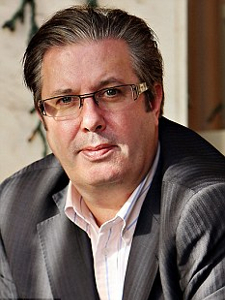
Although there are no discussions between the pair, Kenny confirms he will meet with Foster in Dublin on Tuesday, November 15. The pair are also due to meet in Armagh on Friday, November 18 for a North/South ministerial meeting, where Brexit-related issues are expected to dominate the agenda.
Speaking afterwards, Fitzgerald, whose grandfather served as a soldier in the British army and whose father was a colonel in the Irish Army, says it has been an important engagement. “So many people across the island lost their lives; 50,000 families affected by loss of a loved one during the First World War. We have had a government minister here since 2012 and I think it is really important to come together, to remember together and to look at our shared histories.”
Meanwhile, Heather Humphreys, the Minister for Arts, Heritage, Regional, Rural and Gaeltacht Affairs, dedicates the France-Ireland Memorial at Glasnevin Cemetery. Humphreys is joined by the French Minister of State for Veterans and Remembrance at the Ministry of Defence Jean-Marc Todeschini for the ceremony. The memorial is a gift to Ireland from France in recognition of Irish sacrifices made “in the defence and freedom of France, particularly in the First World War.”
(From: “Taoiseach, Tánaiste attend Remembrance Sunday ceremonies,” Raidió Teilifís Éireann (RTÉ), http://www.rte.ie, November 13, 2016 | Pictured: Taoiseach Enda Kenny lays a wreath of green laurels in Enniskillen)
Gerard “Gerry” Ryan, presenter of radio and television employed by Raidió Teilifís Éireann (RTÉ), becomes the latest homegrown celebrity to feature in the Irish version of Madame Tussauds collection when he unveils a life-size model of himself at the Dublin museum on October 29, 2002.
Ryan is born in Clontarf, County Dublin on June 4, 1956. He describes his father, Vinnie, as a “slightly eccentric” dentist from a Presbyterian background and his mother, Maureen, as “a flamboyant woman” who comes from a theatrical background and works in the theatre. His godfather is broadcaster Eamonn Andrews. He is educated at St. Paul’s College, Raheny.
Ryan presents The Gerry Ryan Show on radio station RTÉ 2fm each weekday morning from 1988 until hours before his sudden death. He is presented with a Jacob’s Award for the show in 1990.
Ryan marries Morah Brennan in 1988 and they have five children: Lottie, Rex, Bonnie, Elliott and Babette. In 1997, Morah famously telephones her husband’s show and, under the name Norah, tells half a million listeners intimate details concerning his personal household habits. Gerry and Morah announce their separation in March 2008, which Ryan calls “a very painful experience.” He soon begins a relationship with the former South African Ambassador to Ireland and the then UNICEF Ireland executive director, Melanie Verwoerd.
Ryan is noted for his love of fine food and wine. He battles a weight problem for several years and takes Reductil (Sibutramine), a “slimming pill,” which he says is effective and safe. Ryan concedes in his autobiography Would the Real Gerry Ryan Please Stand Up, released in October 2008, that he drinks too much for his own good.
Ryan is found dead in the bedroom of his home on Leeson Street, Dublin on April 30, 2010.
Among the dignitaries to send tributes following Ryan’s death are Bono, Bill and Hillary Clinton, TaoiseachBrian Cowen, and PresidentMary McAleese. His funeral takes place on May 6, 2010, and is broadcast on 2fm, the home of Ryan’s radio show and a first for the predominantly youthpop-oriented station. His death also comes sixteen years to the day after he hosted Eurovision 1994.
An inquest shows that the cause of Ryan’s death is cardiac arrhythmia and that traces of cocaine found in Ryan’s system are the “likely trigger” of Ryan’s death. A considerable public controversy erupts when Ryan’s long-term use of cocaine comes to light. RTÉ eventually admits to having given insufficient coverage of Ryan’s cocaine habit in the aftermath of the inquest.
Jack Lynch, in full John Mary Lynch, is born on August 15, 1917, in Cork, County Cork. He serves as Taoiseach of Ireland from 1966 to 1973 and from 1977 to 1979.
Lynch studies law and enters the civil service with the Department of Justice in 1936. He eventually decides on a legal career, is called to the bar in 1945, resigns from the civil service, and practices on the Cork circuit. He already enjoys a national reputation as a sports hero as he had won five All-Ireland medals as a Cork hurler and another as a footballer.
Lemass’s retirement in 1966 causes an internal party conflict over the succession that leads to Lynch’s selection as a compromise candidate, a position he reluctantly accepts. In November 1966 he becomes leader of Fianna Fáil and Taoiseach. In June 1969 he becomes the only Fianna Fáil leader other than de Valera to win an overall majority in a general election.
In 1969–1973 Lynch plays an important role when civil unrest leads to the collapse of the government of Northern Ireland and poses a threat to the stability of the Irish state. He fires two cabinet ministers who are suspected of involvement in smuggling arms to the Provisional Irish Republican Army (IRA). He also creates a consensus in Irish party politics on a policy of conciliation and cooperation with the British government in seeking a solution to the Northern Ireland problem based on establishing power-sharing between the unionist majority and the Roman Catholic minority.
In 1972 Lynch wins an 83% majority in a referendum on Ireland’s entry into the European Economic Community and, on January 1, 1973, Ireland becomes a member. Although he is defeated in the 1973 Irish general election, he again demonstrates his remarkable popularity at the polls in 1977 when Fianna Fáil wins their largest and their last overall majority. In December 1979, however, discouraged by challenges to his authority from party colleagues, he resigns his leadership and soon after retires from politics. He serves on a number of corporate boards after his retirement.
Lynch dies in the Royal Hospital, Donnybrook, Dublin on October 20, 1999, at the age of 82. He is honoured with a state funeral which is attended by the President Mary McAleese, Taoiseach Bertie Ahern, former Taoisigh John Bruton, Albert Reynolds and Charles Haughey, and various political persons from all parties. The coffin is then flown from Dublin to Cork where a procession through the streets of the city draws some of the biggest crowds in the city’s history. Following the Requiem Mass celebrated in his home parish of the Cathedral of St. Mary and St. Anne, his friend and political ally, Desmond O’Malley, delivers the graveside oration, paying tribute to Lynch’s sense of decency. He is buried in St. Finbarr’s Cemetery, Cork.
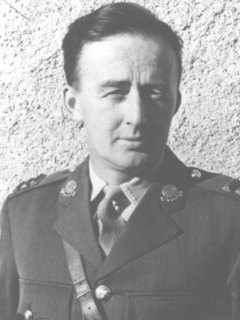
Kelly is the eldest of ten children born into a staunchly Irish republican family. His father, also named James Kelly, had stood for Sinn Féin in local elections in 1918, topping the poll. An ancestor from the late 18th century, Robert Kelly, was a member of the Society of United Irishmen, and was supposedly a Officer Commanding of the United Irishmen in the East Cavan/South Monaghan area. Kelly joins the Irish Army in 1949. By 1960 he has been promoted to captain and appointed to the intelligence section at army headquarters.
Kelly is a central figure in the Arms Trial, having travelled to Hamburg to arrange the purchase of arms. It emerges later that Neil Blaney had ordered him to do so outside normal legal channels, but before the weapons arrive the GardaSpecial Detective Unit has heard of the plan and informs TaoiseachJack Lynch, aborting the importation and resulting in criminal charges for the plotters. Although in his summation the judge says it is no defence for Kelly to say that he believed that the government had authorised the importation of arms, Kelly is acquitted.
Although he is acquitted, Kelly suffers financially because he had felt compelled to resign from the Army even before the prosecution is brought. He prints and publishes a personal memoir in paperback format called Orders for the Captain? in 1971.
Kelly never denies that he had been involved in extra-legal arms purchase talks but contends that he had been ordered to do so by some ministers. A typical version of the events is found in a 1993 hostile biography of Charles Haughey, claiming: “As early as October 1969, to the certain knowledge of Charles Haughey, James Gibbons, the Department of Justice, the Special Branch and Army Intelligence, there were meetings with leading members of the Irish Republican Army (IRA), when they were promised money and arms. The critical encounter took place in Bailieborough [sic], County Cavan, on Saturday, 4 October 1969. It had been arranged by Captain James Kelly, an army intelligence officer, and Cathal Goulding. Kelly, at that stage, was already the subject of several security reports to the Secretary of the Department of Justice, Peter Berry, from the Special Branch, implicating Kelly with subversives and with promises of money and of arms.” Kelly never objects to such versions of the events of 1969.
Following the Arms Trial, Kelly joint-founds Aontacht Éireann, a political party directly born out of the scandal. He is elected vice-chairman of the party and stands in Dáil elections for them unsuccessfully on two occasions in 1973 and 1977 in the Cavan-Monaghan constituency. Aontacht Éireann meets with little success at the polls and by 1980 he has joined Fianna Fáil, becoming a member of its national executive. Following the first applications of the 1987 Extradition (European Convention on the Suppression of Terrorism) Act, he resigns from the party in 1989 in opposition to the extradition of Provisional IRA prisoners to the United Kingdom. He also serves twice as President of the “1916-1921” Club.
Kelly is heavily involved in the Northern Ireland peace process. In 1989 he publishes his own draft on how a peace process could proceed. His document called The Courage of the Brave is launched in Conway Mill, Belfast on August 24, 1989. Present on the platform party at the launch of the document are Fianna Fáil Councillor Macarten McCormack, Ernest Cowan, Chairman of Kentstown Fianna Fáil who had served with Captain Kelly on the Fianna Fáil National Executive, Robert C. Linnon, National President, Irish American Unity Conference, Kate Lavery, representing John J. Finucane, National President, American Irish Political Education Committee and Father Des Wilson of Belfast.
Kelly dies on July 16, 2003, and is buried in Glasnevin Cemetery in Dublin. The epitaph on his grave is “Put not your trust in princes,” which is a quote from Niccolò Machiavelli.
On the foundation of the Sunday Tribune in 1980, Kennedy joins it as the paper’s political correspondent. The paper’s publisher, John Mulcahy, had become familiar with her when she had contributed to his journal Hibernia. When the Tribune briefly ceases production, she moves to the Sunday Press.
In 1982, Kennedy’s telephone, along with those of two other journalists, is tapped by former Minister for JusticeSeán Doherty. Early in 1987, Kennedy successfully sues the incumbent Charles Haughey-led Fianna Fáil government for illegally tapping her phone. The revelation in 1992 that Haughey had ordered the phone taps leads to his resignation as Taoiseach.
Kennedy stands in the 1987 Irish general election as a candidate for the newly formed Progressive Democrats party in Dún Laoghaire. She comes third in the poll, winning 9.4% of the first-preference vote. She is one of fourteen Progressive Democrats TDs elected to Dáil Éireann in that election — a feat the party never achieves again. She is appointed the party’s spokesperson for foreign affairs. She stands again in the 1989 Irish general election and wins 9% of the first-preference vote but fails to retain her seat.
Following her election defeat, Kennedy returns to The Irish Times, then edited by Conor Brady, whom she had worked with at the Tribune when he was the editor. She avoids party-political journalism for several years, but she returns to covering politics in the early 1990s and becomes The Irish Times‘ political editor in 1999. She becomes the newspaper’s first female editor upon the departure of Conor Brady in October 2002. One of her rivals for the editor’s chair is the paper’s high-profile columnist, Fintan O’Toole.
Kennedy is paid more than the editor of Britain’s top non-tabloid newspaper The Daily Telegraph, which has a circulation of about nine times that of The Irish Times. Later columnist Fintan O’Toole tells the Sunday Independent, “We as a paper are not shy of preaching about corporate pay and fat cats but with this there is a sense of excess. Some of the sums mentioned are disturbing. This is not an attack on Ms. Kennedy, it is an attack on the executive level of pay. There is double standard of seeking more job cuts while paying these vast salaries.”
In September 2006, Kennedy approves the publication of an article in The Irish Times giving confidential details of investigations being made into payments purported to have been made in 1993 to Taoiseach Bertie Ahern. She refuses, upon request of the investigating Mahon Tribunal, to provide details of the source of the printed information. She responds that the documents have since been destroyed. Her refusal causes the Tribunal to seek High Court orders compelling her to provide details of the source. On October 23, 2007, the High Court grants the orders compelling her to go before the Tribunal and answer all questions. In its judgment, the High Court, criticising her decision to destroy the documents, says it is an “astounding and flagrant disregard of the rule of law.” In 2009, however, the Supreme Court of Ireland overturns this ruling, holding that the High Court had not struck the correct balance between the journalists’ right to protect their source and the tribunal’s right to confidentiality.
Kennedy announces on March 12, 2011, her intention to retire from The Irish Times by September, after a nine-year term as editor. She actually retires in June, and is succeeded by news editor, Kevin O’Sullivan, who succeeds her as editor on June 23, 2011.
In August 2012, Kennedy is appointed Adjunct Professor of Journalism at the University of Limerick. She has been awarded five honorary doctorates from Irish universities.
The funeral of Liam Cosgrave, Taoiseach from 1973 to 1977, takes place in Dublin on October 7, 2017. In accordance with the wishes of the Cosgrave family, it is not a state funeral. The Requiem Mass takes place at the Church of the Annunciation in Rathfarnham with burial afterwards at Goldenbridge Cemetery in Inchicore, Dublin. Taoiseach Leo Varadkar, members of the Government, and former Taoisigh are in attendance at the ceremony in Rathfarnham. Cosgrave died on October 4, 2017, at the age of 97.
Following tributes from across the political spectrum in Ireland, the Cosgrave family, his three children, Mary, Liam and Ciaran, are offered a state funeral. At their request the funeral Mass and burial has some trappings of state, but it is a private service. His wife Vera died in 2016.
Ten military policemen carry the coffin of Cosgrave as his funeral begins in Dublin. Current Taoiseach Leo Varadkar and his predecessors Enda Kenny and Bertie Ahern are among those who attend the funeral Mass at the Church of the Annunciation in Rathfarnham. Members of the judiciary, Army and police also pay their respects.
Cosgrave is Taoiseach from 1973-1977, some of the most turbulent years of the Northern Ireland Troubles. He has been described as a consistent and courageous voice against terrorism. He is at the head of government on the worst day of atrocities in the Troubles – the Dublin and Monaghan bombings on May 17, 1974, when loyalists kill 33 people, including a pregnant woman at full term.
As a boy Patterson performs with his local parish choir and is involved in maintaining the annual tradition of singing with the “Wrenboys.” He sings in the local St. Mary’s Choral Society and at a production of The Pirates of Penzance performed with both his parents. His interests extend beyond music and as a boy he represents Marlfield GAAhurling club, plays tennis at Hillview and golf at the Mountain Road course. He quits school at an early stage to work in the printing business of his mother’s family. He moves to Dublin in 1961 to enroll at the National Academy of Theatre and Allied Arts where he studies acting while at the same time receiving vocal training from Hans Waldemar Rosen. In 1964, he enters the Feis Ceoil, a nationwide music competition, in which he wins several sections including oratorio, lieder and the German Gold Cup.
Patterson gives classical recitals around Ireland and wins scholarships to study in London, Paris and in the Netherlands. While in Paris, he signs a contract with Philips Records and releases his first record, My Dear Native Land. He works with conductors and some of the most prestigious orchestras in Europe including the London Symphony Orchestra and Orchestre de Paris. He also gains a reputation as a singer of Handel, Mozart, and Bach oratorios and German, Italian and French song. He has a long-running programme on RTÉ titled For Your Pleasure.
Patterson is equally at home in more intimate settings. His singing in the role of the Evangelist in Bach’s St. John Passion is given fine reviews. Further recordings follow, of Beethoven arrangements, Irish songs, Berlioz songs, Purcell songs and others, all on the Philips label.
Patterson performs sold-out concerts from London’s Royal Albert Hall to New York’s Carnegie Hall, and with his family he presents two concerts at the White House, for presidents Ronald Reagan in 1982 and Bill Clinton in 1995. He records over thirty albums in six languages, wins silver, gold and platinum discs and is the first Irish singer to host his own show in Radio City Music Hall in New York.
Rising to greater prominence with the new popularity of Celtic music in the 1990s, Patterson sees many of his past recordings reissued for American audiences, and in 1998 he stars in the PBS special Ireland in Song. His last album outsells Pavarotti.
In 1999, Patterson learns he has a brain tumour. He has several operations in the following year and his condition appears to stabilise. He is diagnosed with a recurrence of his illness on May 7, 2000. He briefly recuperates and resumes performing. His last performance is on June 4, 2000, at Regis College in the Boston suburb of Weston, Massachusetts. Shortly thereafter he is admitted to the Memorial Sloan Kettering Cancer Center in New York where he lapses into a coma and dies on June 10, 2000, at the age of 61.
Blaney is the second eldest of a family of eleven. His father, from whom he got his strong republican views and his first introduction to politics, had been a commander in the Irish Republican Army (IRA) in Donegal during the Irish War of Independence and the Irish Civil War. He is educated locally at Tamney on the rugged Fanad Peninsula and later attends St. Eunan’s College in Letterkenny. He later works as an organiser with the Irish National Vintners and Grocers Association.
Blaney is first elected to Dáil Éireann for the Donegal East constituency in a by-election in December 1948, following the death of his father from cancer. He also becomes a member of the Donegal County Council. He remains on the backbenches for a number of years before he is one of a group of young party members handpicked by Seán Lemass to begin a re-organisation drive for the party following the defeat at the 1954 general election. Within the party he gains fame by running the party’s by-election campaigns throughout the 1950s and 1960s. His dedicated bands of supporters earn the sobriquet “the Donegal Mafia,” and succeed in getting Desmond O’Malley and Gerry Collins elected to the Dáil.
Following Fianna Fáil’s victory at the 1957 general election, Éamon de Valera, as Taoiseach, brings new blood into the Cabinet in the shape of Blaney, Jack Lynch, Kevin Boland and Mícheál Ó Móráin. Blaney is appointed Minister for Posts and Telegraphs however he moves to the position of Minister for Local Government at the end of 1957 following the death of Seán Moylan. He retains the post when Lemass succeeds de Valera as Taoiseach in 1959. During his tenure it becomes possible to pay rates by installment and he also introduces legislation which entitles non-nationals to vote in local elections.
In 1966 Lemass resigns as Taoiseach and Fianna Fáil leader. The subsequent leadership election sees Cork politician Jack Lynch become party leader and Taoiseach. In the subsequent cabinet reshuffle Blaney is appointed Minister for Agriculture and Fisheries.
In 1969, when conflict breaks out in Northern Ireland, Blaney is one of the first to express strong Irish republican views, views which contradict the policy of the Irish Government, in support of Northern nationalists. From around late 1968 onwards, he forms and presides over an unofficial Nationalist group in Leinster House popularly known as “the Letterkenny Table.” The group is dominated by Blaney up until his death.
There is general surprise when, in an incident known as the Arms Crisis, Blaney, along with Charles Haughey, is sacked from Lynch’s cabinet amid allegations of the use of the funds to import arms for use by the IRA. Lynch asked for their resignations but both men refuse, saying they did nothing illegal. Lynch then advises President de Valera to sack Haughey and Blaney from the government. Haughey and Blaney are subsequently tried in court but are acquitted. However, many of their critics refuse to recognise the verdict of the courts. Although Blaney is cleared of wrongdoing, his ministerial career is brought to an end.
Lynch subsequently moves against Blaney so as to isolate him in the party. When Blaney and his supporters try to organise the party’s national collection independently, Lynch acts and in 1972 Blaney is expelled from Fianna Fáil for “conduct unbecoming.”
Following his expulsion from Fianna Fáil, Kevin Boland tries to persuade Blaney to join the Aontacht Éireann party he is creating but Blaney declines. Instead, he contests all subsequent elections for Independent Fianna Fáil – The Republican Party, an organisation that he built up. Throughout the 1970s there are frequent calls for his re-admittance to Fianna Fáil but the most vocal opponents of this move are Fianna Fáil delegates from County Donegal.
Fine Gael is currently the third-largest party in Ireland in terms of members of Dáil Éireann and largest in terms of Irish members of the European Parliament. The party has a membership of 21,000 in 2017. Leo Varadkar succeeds Enda Kenny as party leader on June 2, 2017, and as Taoiseach on June 14. Kenny had been leader since 2002, and Taoiseach since 2011.
Fine Gael is generally considered to be more of a proponent of market liberalism than its traditional rival, Fianna Fáil. Apart from brief minority governments, Fine Gael has rarely governed Ireland without a coalition that also includes the Labour Party, a social-democratic, centre-left party. Fine Gael describes itself as a “party of the progressive centre” which it defines as acting “in a way that is right for Ireland, regardless of dogma or ideology.” The party lists its core values as “equality of opportunity, free enterprise and reward, security, integrity and hope.”
Having governed in coalition with the Labour Party between 2011 and 2016, and in a minority government along with Independent TDs from 2016 to 2020, Fine Gael currently forms part of an historic coalition government with its traditional rival, Fianna Fáil, and the Green Party. On June 27, 2020, Micheál Martin of Fianna Fáil is appointed as Taoiseach and forms a new government. Leo Varadkar serves as Tánaiste with both parties agreeing that in December 2022, Varadkar will serve again as Taoiseach.
Ewart-Biggs is 55 when he is killed by a land mine planted by the IRA on July 21, 1976. He had been taking precautions to avoid such an incident since coming to Dublin only two weeks earlier. Among the measures he employs is to vary his route many times a week however, at a vulnerable spot on the road connecting his residence to the main road, there is only a choice between left or right. He chooses right and approximately 150 yards from the residence he hits a land mine that is later judged to contain hundreds of pounds of explosives. Ewart-Biggs and fellow passenger and civil servant Judith Cooke (aged 26) are killed. Driver Brian O’Driscoll and third passenger Brian Cubbon (aged 57) are injured. Cubbon is the highest-ranking civil servant in Northern Ireland at the time.
The Irish government launches a manhunt involving 4,000 Gardaí and 2,000 soldiers. TaoiseachLiam Cosgrave declares that “this atrocity fills all decent Irish people with a sense of shame.” In London, Prime MinisterJames Callaghan condemns the assassins as a “common enemy whom we must destroy or be destroyed by.” Thirteen suspected members of the IRA are arrested during raids as the British and Irish governments attempt to apprehend the criminals, but no one is ever convicted of the killings. In 2006, released Foreign and Commonwealth Office files reveal that the Gardaí had matched a partial fingerprint at the scene to Martin Taylor, an IRA member suspected of gun running from the United States.
(Pictured: The twisted remains of the car lie upended beside a huge crater after the explosion that killed Christopher Ewart-Biggs and civil servant Judith Cooke)