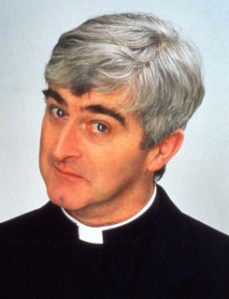
Morgan is born in Dublin on March 31, 1952. Educated at Oatlands College, Stillorgan, and University College, Dublin (UCD), Morgan comes to prominence as part of the team behind the highly successful RTÉ television show The Live Mike. Morgan makes his debut in the media on the Morning Ireland radio show produced by Gene Martin. Between 1979 and 1982 Morgan, who has been a teacher at St. Michael’s College, Ailesbury Road, plays a range of comic characters who appear between segments of the show, including Father Trendy, an unctuous trying-to-be-cool Catholic priest given to drawing ludicrous parallels with non-religious life in two-minute ‘chats’ to camera.
Morgan’s success as Father Trendy and other characters leads him to leave teaching and become a full-time comedian.
Morgan’s biggest Irish broadcasting success occurs in the late 1980s on the Saturday morning radio comedy show Scrap Saturday, which mocks Ireland’s political, business, and media establishment. The show’s treatment of the relationship between the ever-controversial TaoiseachCharles Haughey and his press secretary P.J. Mara prove particularly popular. When RTÉ axes the show in the early 1990s a national outcry ensues. Morgan lashes the decision, calling it “a shameless act of broadcasting cowardice and political subservience.”
Already a celebrity in Ireland, Morgan’s big break comes in Channel 4‘s Irish sitcom Father Ted, which runs for three series from April 21, 1995, until May 1, 1998. Writers Graham Linehan and Arthur Mathews audition many actors for the title role, but Morgan’s enthusiasm wins him the part.
Father Ted centres on three disparate characters. Father Ted Crilly, played by Morgan, lives a frustrated life trapped on the fictional Craggy Island. Irish TV comedy actor Frank Kelly plays Father Jack Hackett, a foul-mouthed and apparently brain-damaged alcoholic, while child-minded Father Dougal McGuire is played by comedian Ardal O’Hanlon. The three priests are looked after by their housekeeper, Mrs. Doyle, played by Pauline McLynn, with whom Morgan had worked on Scrap Saturday. Father Ted enjoys widespread popularity and critical acclaim. In 1998, the show wins a BAFTA award for the best comedy, Morgan wins a BAFTA for best actor, and McLynn is named best actress.
On February 28, 1998, one day after recording the last episode of Father Ted, Morgan has a heart attack while hosting a dinner party at his home in southwest London. He is rushed to hospital but dies soon afterwards. Morgan’s Requiem Mass in St. Therese’s Church in Mount Merrion, south Dublin, is attended by the President of IrelandMary McAleese, her predecessor, Mary Robinson, and by political and church leaders, many of whom had been the targets of his humour in Scrap Saturday. He is cremated at Glasnevin Cemetery and his ashes are buried in the family plot in Deansgrange Cemetery.
Born in Boherbee, County Kerry on January 15, 1926, McEllistrim is the son of the Fianna Fáil politician and Irish War of Independence veteran, Tom McEllistrim. He succeeds his father when he is elected to Dáil Éireann as a Fianna Fáil Teachta Dála (TD) for the Kerry North constituency at the 1969 general election. At the 1977 general election he is elected along with his running mate Kit Ahern. This is the first time that Fianna Fáil wins two seats in the three seat Kerry North constituency. McEllistrim, who is given much credit for this feat, is disappointed not to receive a promotion to a Minister of State.
McEllistrim becomes disillusioned with the Taoiseach and party leader Jack Lynch from then and begins to believe that Charles Haughey is the right candidate for the party leadership. He believes that Lynch is about to retire and is particularly uncomfortable at the thought of George Colley succeeding Lynch. Like his father before him he believes Colley is not right for the role of leader of the party. He is particularly vocal with regard to party policy towards Northern Ireland and, as he sees it, Lynch’s apparent lack of sympathy towards the northern nationalist community.
McEllistrim is a member of the so-called “gang of five” along with Seán Doherty, Mark Killilea Jnr, Jackie Fahey and Albert Reynolds who start a lobbying campaign in favour of Haughey on the backbenches of the party. After Lynch loses two by-elections in his native County Cork he resigns as party leader in December 1979. The leadership contest is called two days later and is a two-way race between Haughey and Colley. Haughey wins the leadership contest by a decisive margin and McEllistrim is rewarded by being appointed Minister of State at the Department of Finance with special responsibility for the Office of Public Works. He serves as a Minister of State again in 1982, this time at the Department of Fisheries and Forestry.
The policy of Irish neutrality during World War II is adopted by the Oireachtas at the instigation of De Valera upon the outbreak of World War II in Europe. It is maintained throughout the conflict, in spite of several Germanairstrikes by aircraft that miss their intended British targets and attacks on Ireland’s shipping fleet by Allies and Axis alike. De Valera refrains from joining either the Allies or Axis powers. While the possibilities of not only a German but also a British invasion are discussed in Dáil Éireann, and either eventuality is prepared for, with the most detailed preparations being done in tandem with the Allies under Plan W, De Valera’s ruling party, Fianna Fáil, supports his neutral policy for the duration of the war.
This period is known in the Republic of Ireland as “The Emergency“, owing to the wording of the constitutional article employed to suspend normal government of the country.
Pursuing a policy of neutrality requires attaining a balance between the strict observance of non-alignment and the taking of practical steps to repel or discourage an invasion from either of the two concerned parties.
Ireland maintains a public stance of neutrality to the end, although this policy leads to a considerable delay in Ireland’s membership of the United Nations (UN). Ireland’s applications for membership are vetoed by the Soviet Union, a permanent member of the United Nations Security Council, from 1946 to December 1955. Seán MacBride considers that the UN boycott of Ireland had been originally agreed upon at the 1945 Yalta Conference by Winston Churchill and Joseph Stalin. Ireland’s acceptance into the UN is finally announced by John A. Costello on December 15, 1955.
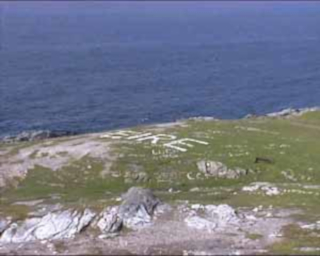
Despite the official position of neutrality, there are many unpublicised contraventions of this, such as permitting the use of the Donegal Corridor to Allied military aircraft, and extensive co-operation between Allied and Irish intelligence, including exchanges of information, such as detailed weather reports of the Atlantic Ocean. For example, the decision to go ahead with the Normandy landings is decided by a weather report from Blacksod Bay, County Mayo.
(Pictured: Markings to alert aircraft to neutral Ireland during World War II on Malin Head, County Donegal)
Desmond is born in Kinsale, County Cork on December 29, 1932. She is educated locally at the Convent of Mercy in Kinsale, where she is one of only two girls in her class to sit the Leaving Certificate examination. Before entering politics, she works as a civil servant with the Department of Posts and Telegraphs. She marries Dan Desmond in 1958.
Desmond is elected to the European Parliament at the 1979 European Parliament election for the Munster constituency. However, her time in Europe is short-lived, as she returns to domestic politics when she is offered a position as Minister and the chance to impact upon national legislation. At the 1981 general election she switches her constituency to Cork South-Central. A Fine Gael–Labour Party coalition comes to power, and she is appointed Minister for Health and Social Welfare.
Desmond’s cabinet appointment is historic, as she is only the second woman to be a member of cabinet since the foundation of the state in 1922, and the first in any Fine Gael or Labour Party cabinet. Countess Markievicz had held the cabinet post of Minister for Labour in the revolutionary First Dáil in 1919, but only one woman had held cabinet office after the foundation of the state, Máire Geoghegan-Quinn of Fianna Fáil who was appointed as Minister for the Gaeltacht in 1979.
Desmond retires from full-time politics at the 1987 general election for health reasons. She dies suddenly in Cork, County Cork on January 6, 2005. Her funeral Mass takes place at Our Lady and St. John’s Church, Carrigaline with burial following in Crosshaven Cemetery.
Childers is educated at Gresham’s School, Holt, and the University of Cambridge, hence his striking British upper-class accent. On November 24, 1922, when he is sixteen, his father, Robert Erskine Childers, is executed by the new Irish Free State on politically inspired charges of gun-possession. The pistol he had been found with had been given to him by Michael Collins. Before his execution, in a spirit of reconciliation, the elder Childers obtains a promise from his son to seek out and shake the hand of every man who had signed his death warrant.
Following his father’s funeral, he returns to Gresham’s, then two years later he goes on to Trinity College, Cambridge. He returns to Ireland in 1932 and becomes advertising manager of The Irish Press, the newly founded newspaper owned by the family of Éamon de Valera.
Childers is nominated as the presidential candidate of Fianna Fáil at the behest of de Valera, who pressures Jack Lynch in the selection of the presidential candidate. He is a controversial nominee, owing not only to his British birth and upbringing but to his Protestantism. However, on the campaign trail his personal popularity proved enormous, and in a political upset at the 1973 Irish presidential election, he is elected the fourth President of Ireland on May 30, 1973, defeating Tom O’Higgins by 635,867 (52%) votes to 578,771 (48%). He becomes the second Protestant to hold the office, the first being Douglas Hyde (1938–1945).
Prevented from transforming the presidency as he desires, Childers instead throws his energy into a busy schedule of official visits and speeches, which is physically taxing.
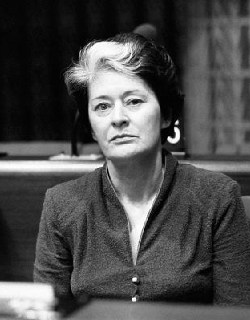
Mary Patricia McAleese (née Leneghan) is inaugurated as the eighth President of Ireland on November 11, 1997. She succeeds Mary Robinson, making her the second female president of Ireland and the first woman in the world to succeed another woman as president. She is the first president to come from Northern Ireland.
Leneghan marries Martin McAleese, an accountant and dentist in 1976. They have three children, Emma, born 1982, and twins Justin and SaraMai, born in 1985.
In 1987, McAleese returns to her Alma Mater, Queen’s University Belfast, to become Director of the Institute of Professional Legal Studies. In 1994, she becomes the first female Pro-Vice-Chancellor of the university.
McAleese wins the presidency with 45.2% of first preference votes. In the second and final count against Banotti, McAleese wins 55.6% of preferences. Within weeks of her November 1997 inauguration, she makes her first official overseas trip to Lebanon.
McAleese describes the theme of her presidency as “building bridges.” The first individual born in Northern Ireland to become President of Ireland, McAleese is a regular visitor to Northern Ireland throughout her presidency, where she is on the whole warmly welcomed by both communities, confounding critics who had believed she would be a divisive figure. While on an official visit to the United States in 1998, Archbishop of BostonCardinalBernard Francis Law tells her he is “sorry for Catholic Ireland to have you as President.” She tells the cardinal that she is the “President of Ireland and not just of Catholic Ireland.”
McAleese’s initial seven-year term of office ends in November 2004, but she stands for a second term in the 2004 presidential election. She is re-elected on October 1, 2004, being the only validly nominated candidate.
McAleese is an experienced broadcaster, having worked as a current affairs journalist and presenter in radio and television with Radio Telefís Éireann. She has a longstanding interest in many issues concerned with justice, equality, social inclusion, anti-sectarianism and reconciliation.
Pearse is born on August 24, 1878, at 27 Great Brunswick Street (now Pearse Street) in Dublin, the eldest child of James Pearse and Margaret Pearse (née Brady), who serves as a Teachta Dála (TD) in the 1920s. She is educated at the Holy Faith Convent in Glasnevin. After leaving school, she trains as a teacher. She helps to found St. Enda’s School with her brothers Patrick and Willie. Following the executions of her brothers in the aftermath of the Easter Rising, she continues to run St. Enda’s, along with Fergus De Búrca, until 1933.
Illness forces Pearse into the Linden Convalescent Home in Blackrock, County Dublin when she is in her 80s. In 1967, when she is 89 years old, her condition is described to be deteriorating. However, in 1968 during the months leading up to her 90th birthday, she leaves the Linden Convalescent Home for a short while in order to spend her birthday at St. Endas in Rathfarnham. The president of Ireland at the time, Éamon de Valera, visits her at St. Endas to congratulate her on her upcoming 90th birthday.
Margaret Pearse dies, unmarried, at the Linden Convalescent Home in Blackrock, County Dublin, on November 7, 1968, and is given a state funeral. President de Valera, the church and the state all pay tribute to her at the funeral. She is buried beside her parents and sister at Glasnevin Cemetery. The Taoiseach, Jack Lynch, says that Margaret Mary Pearse is the last remaining member of the noble Pearse family. He says her life, like her patriotic brothers, was dedicated to Ireland.
As per her mother’s wishes, Pearse bequeaths St. Enda’s to the people of Ireland as a memorial to her brother’s sacrifice. The school is now home to the Pearse Museum.
Lynch is born on August 15, 1917, in Blackpool, on the north side of Cork, County Cork. He is educated at St. Vincent’s Convent on Peacock Lane, and later at the North MonasteryChristian Brothers School. He sits his Leaving Certificate in 1936, after which he moves to Dublin and works with the Dublin District Milk Board, before returning to Cork to take up a position in the Circuit Court Office.
Lemass’s retirement in 1966 causes an internal party conflict over the succession that leads to Lynch’s selection as a compromise candidate, a position he reluctantly accepts. In November of that year, he becomes leader of Fianna Fáil and Taoiseach. In June 1969 he becomes the only Fianna Fáil leader other than de Valera to win an overall majority in a general election. In 1969–1973 Lynch plays an important role when civil unrest leads to the collapse of the government of Northern Ireland and poses a threat to the stability of the Irish state. He fires two cabinet ministers who are suspected of involvement in smuggling arms to the Provisional Irish Republican Army (IRA). He also creates a consensus in Irish party politics on a policy of conciliation and cooperation with the British government in seeking a solution to the Northern Ireland problem based on establishing power-sharing between the unionist majority and the Roman Catholic minority.
In 1972 Lynch wins an 83 percent majority in a referendum on Ireland’s entry into the European Economic Community. On January 1, 1973, Ireland becomes a member. Although he is defeated in the 1973 elections, he again demonstrates his remarkable popularity at the polls in 1977 when Fianna Fáil wins their largest and their last overall majority. In December 1979, however, discouraged by challenges to his authority from party colleagues, he resigns his leadership and soon after retires from politics. He serves on a number of corporate boards after his retirement.
In 1992 Lynch suffers a severe health setback, and in 1993 suffers a stroke in which he nearly loses his sight. Following this he withdraws from public life, preferring to remain at his home with his wife Máirín where he continues to be dogged by ill-health.
Lynch dies in the Royal Hospital, Donnybrook, Dublin on October 20, 1999, at the age of 82. He is honoured with a state funeral which is attended by the President of IrelandMary McAleese, Taoiseach Bertie Ahern, former Taoisigh John Bruton, Albert Reynolds and Charles Haughey, and various political persons from all parties. The coffin is then flown from Dublin to Cork where a procession through the streets of the city draws some of the biggest crowds in the city’s history. After the Requiem Mass celebrated in his home parish of the Cathedral of St. Mary and St. Anne, Lynch’s friend and political ally, Desmond O’Malley, delivers the graveside oration, paying tribute to Lynch’s sense of decency. He is buried in St. Finbarr’s Cemetery in Cork.
Hume, 61, the Catholic head of the Social Democratic and Labor Party, is cited by the Nobel Committee in Oslo for having been the “clearest and most consistent of Northern Ireland’s political leaders in his work for a peaceful solution.”
Trimble, 54, the Protestant leader of the Ulster Unionist Party, is honored for having demonstrated “great political courage when, at a critical stage in the process, he advocated solutions which led to the peace agreement.”
The accord, signed on April 10 and known as the Good Friday Agreement, gives the 1.7 million residents of Northern Ireland a respite from the sectarian violence that has claimed more than 3,200 lives in the previous 30 years. It also opens the possibility of lasting stability for the first time since the establishment of Northern Ireland with partition from Ireland in 1921.
Forging concessions from fiercely antagonistic populations, the accord seeks to balance the Protestant majority’s wish to remain part of Britain with Catholic desires to strengthen ties to the Republic of Ireland to the south. The committee, seeing in Northern Ireland’s two warring groups a dispute with notable similarities to violent tribal confrontations elsewhere, expresses the hope that the accord will serve “to inspire peaceful solutions to other religious, ethnic and national conflicts around the world.”
Adams, in New York on a fund-raising trip for Sinn Féin, welcomes the Oslo announcement and particularly praises Hume, who is widely seen as having helped persuade the IRA to adopt a cease-fire and having eased Sinn Féin’s entry into the talks. “Indeed, there would be no peace process but for his courage and vision,” Adams says, adding, “No one deserves this accolade more.” He also wishes Trimble well and says the prize imposes on everyone the responsibility to “push ahead through the speedy implementation of the agreement.”
In the unforgiving politics of Northern Ireland, the Unionist dissidents and members of other Protestant parties who do not join in the peace talks attack both Trimble and Hume. Ian Paisley Jr., son of the head of the Democratic Unionist Party, calls the Nobel Committee’s decision a “farce” and says of the winners, “These people have not delivered peace, and they are not peacemakers.”
Trimble says he is “slightly uncomfortable” with the award because so many other people have been involved beside him in reaching the settlement and much remains to be done to put it in place. “We know that while we have the makings of peace, it is not wholly secure yet,” he tells the BBC from Denver, where he is on an 11-city North American tour to spur foreign investment in Ulster. “I hope it does not turn out to be premature.”
Hume receives word of the prize at his home in Londonderry and terms it “an expression of the total endorsement of the work of very many people.” He adds, “This isn’t just an award to David Trimble and myself. It is an award to all the people in Northern Ireland.”
In Washington, D.C., President Clinton says “how very pleased” he is, “personally and as President, that the Nobel Prize Committee has rewarded the courage and the people of Northern Ireland by giving the Nobel Peace Prize to John Hume and to David Trimble.” He adds “a special word of thanks” to George Mitchell, who issues a statement praising Hume and Trimble as “fully deserving of this honor.”
The peace talks began in the summer of 1996. They eventually draw the participation of 8 of the 10 Northern Irish parties, with many of the men around the table convicted murderers and bombers who had emerged from prison with a commitment to peaceful resolution to what for nearly a century have been referred to wearily as “the Troubles.” The paramilitary groups had also made the tactical decision that violence would not secure their goals; a shared conviction that gives these talks a chance for success that past fitful attempts at settlement lacked.
The peace talks move in a desultory manner until Blair takes office in May 1997 and highlights the cause of peace in Northern Ireland as an early commitment. At his and Ahern’s urging, the IRA declares a cease-fire in July, and by September Sinn Féin is permitted to join the talks.
Blair also gives Trimble and Adams unprecedented access to 10 Downing Street, and the Ulster Protestants report that they obtained from Clinton the most sympathetic hearing they ever had from an American President, allaying their longtime suspicions of Washington’s bias in favor of the Catholic minority.
(From: “2 Ulster Peacemakers Win the Nobel Prize,” The New York Times, Warren Hoge, October 17, 1998)
Together with Kevin Gildea and Barry Murphy, O’Hanlon founds the International Comedy Cellar, upstairs in the International Bar on Dublin’s South Wicklow Street. Dublin has no comedy scene at the time. As a stand up, he wins the Hackney Empire New Act of the Year competition in 1994. For a time, he is the presenter of The Stand Up Show.
O’Hanlon moves into straight acting alongside Emma Fielding and Beth Goddard in the ITV comedy-drama Big Bad World, which airs for two series in summer 1999 and winter 2001. He also plays a minor role in The Butcher Boy and appears in an episode of the original Whose Line is it Anyway?.
In 2000, O’Hanlon stars in the comedy series My Hero, in which he plays a very naive superhero from the planet Ultron. His character juggles world-saving heroics with life in suburbia. He stays in the role until the first episode of series 6 in July 2006 where he is replaced by James Dreyfus during the same episode.
O’Hanlon also provides the voice of the lead character in the three Christmas television cartoon specials of Robbie the Reindeer. He appears in the 2005 BBC One sitcom Blessed, written by Ben Elton. Towards the end of 2005, he plays an eccentric Scottish character, Coconut Tam, in the family-based film, The Adventures of Greyfriars Bobby. Although more commonly on television, he also appears on radio. In 2015 he appears as incompetent angel Smallbone in the sitcom The Best Laid Plans, also on BBC Radio 4.
In 2006, O’Hanlon writes and presents an RTÉ television series called Leagues Apart, which sees him investigate the biggest and most passionate football rivalries in a number of European countries. He follows this with another RTÉ show, So You Want To Be Taoiseach? in 2007. It is a political series where he gives tongue-in-cheek advice on how to go about becoming Taoiseach of Ireland.
O’Hanlon appears in the Doctor Who episode “Gridlock“, broadcast on April 14, 2007, in which he plays a cat-like creature named Thomas Kincade Brannigan. He appears in Series 3 of the TV show Skins, playing Naomi Campbell’s Politics teacher named Kieran. He then goes on to form a relationship with Naomi’s mother, played by Olivia Colman. He plays the lead role in Irish comedy television programme Val Falvey, TD on RTÉ One.
O’Hanlon has written a novel, The Talk of the Town, which is published in 1998. The novel is about a teenage boy, Patrick Scully, and his friends.
In February 2015 O’Hanlon officially launches the 2015 Sky Cat Laughs Comedy Festival which takes place in Kilkenny from May 28–June 1. In 2015 he plays the role of Peter the Milkman in the Sky One sitcom After Hours.
On February 2, 2017, it is announced O’Hanlon will play the lead role in the BBC crime drama Death in Paradise taking the role of DI Jack Mooney following Kris Marshall‘s departure the same day.