O’Hegarty is born to John and Katherine (née Hallahan) Hegarty. His parents’ families emigrate to the United States after the Great Famine, and his parents are married in Boston, Massachusetts. His father is a member of the Irish Republican Brotherhood (IRB).
O’Hegarty is educated at North Monastery CBS, where he forms an enduring friendship with Terence MacSwiney. In 1888, his father dies of tuberculosis at the age of 42. Left destitute, his mother pawns her wedding ring to pay for an advertisement looking for work, and eventually becomes a cook.
O’Hegarty serves at the main Postal Sorting Office in Mount Pleasant, London, from 1902 to 1913. Along with J. J. Walsh, he spends three years at King’s College London, studying for the Secretary’s Office. While he succeeds in his studies, Walsh does not and returns to Ireland. O’Hegarty becomes the IRB representative for South East England and joins the Gaelic League and Sinn Féin and becomes a strong advocate of the Irish language. In 1905, he is elected secretary of the local Dungannon Club, which draws in as members Robert Lynd, Herbert Hughes and George Cavan. In 1907, as Sinn Féin’s London Secretary, he approves and signs the membership card of Michael Collins, later becoming friend and mentor to Collins.
O’Hegarty has to return to Ireland for a break due to overwork in 1909 and gives up some of his work for the Gaelic League. However, he takes over as editor of the IRB publication, Irish Freedom. It is in this publication that he famously writes, concerning the visit of King George V to Ireland in 1911: “Damn your concessions, England: we want our country!” In 1912, at the height of the Playboy riots, he writes four articles entitled “Art and the Nation” in Irish Freedom, which take a very liberal and inclusionist approach to Anglo-Irish literature and art in general but invokes the wrath of many of the paper’s readers.
In 1913, he is re-posted to Queenstown (present-day Cobh) as postmaster. He continues editing nationalist newspapers such as Irish Freedom (founded in 1910 and suppressed in December 1914 on account of its seditious content) and An tÉireannach and joins the Irish Volunteers. At the outbreak of war he is moved to Shrewsbury, probably on account of his political activities. In 1915, he marries Wilhelmina “Mina” Smyth, a schoolteacher and suffragist, and is then moved to Welshpool, Montgomeryshire. In the aftermath of the 1916 Easter Rising, he is opposed to physical force. In 1918, he refuses to take the British Oath of Allegiance and resigns his position in the Post Office.
O’Hegarty feels that the Abbey Theatre is “doing good for Ireland” and supports W. B. Yeats against attacks from Arthur Griffith and like-minded Nationalists. He opposes the extremist views of D. P. Moran, who seeks a Roman Catholic Irish-speaking Ireland.
O’Hegarty is Secretary of the Irish Department of Post and Telegraphs from 1922 to 1945. He is elected a member of the Irish Academy of Letters in 1954.
O’Hegarty’s son, Seán Ó hÉigeartaigh, is a founder of the Irish-language publishing house Sáirséal agus Dill. His daughter Gráinne, a harpist, marries Senator Michael Yeats, son of W. B. Yeats.
Power is born to Henry Power, a watchmaker, and Mary (née Atkins), an embroideress. He has one older brother, and one younger sister. He attends a Christian Brothersnational school in North Brunswick Street. As a child he plays in local clay brickyards and sculpts busts of his friends. After finishing his primary school education, he trains with a firm of sculptors run by Edward Smyth. In 1884, he enrolls as an evening pupil at the Dublin Metropolitan School of Art (DMSA), later attending as a full-time student from 1906 to 1911. During his time at the DMSA he is taught and strongly influenced by John Hughes, Oliver Sheppard and William Orpen. He wins a number of prizes during his time at the DMSA, including medals, three scholarships, book prizes, and the national gold medal for the best modeling of a nude figure, in Ireland, Scotland, and the Channel Islands in 1911.
Power marries Agnes Kelly in 1903. The couple has ten children, four daughters and six sons, including May and James who also become sculptors.
Power establishes his own stone-carving business in 1912 from his new home at 18 Geraldine Street, Phibsborough, Dublin. As the firm grows, it moves to premises nearby at 15 Berkeley Street from 1930. He executes a wide range of works, including monuments and architectural features in bronze, marble, and stone. Among his notable works are the figure of “Science” designed by Sheppard from the façade of the new Royal College of Science for Ireland (later Government Buildings) on Merrion Street, Dublin, carved motifs and sphinxes for the Gresham Hotel, O’Connell Street, and four statues on the dome of Christ the King church, Carndonagh, County Donegal.
Power is considered the leading Irish sculptor of the 1920s and 1930s. He is a nationalist and promotes the use of Irish materials such as limestone from Durrow and Connemara marble. He is noted for his academic realist style. He exhibits regularly with the Royal Hibernian Academy from 1906, becoming an associate member in 1911, and a full member in 1919. Among those he models sculptures for are James Stephens (1913), W. B. Yeats (1918), and Lord Dunsany (1920). Among his patrons are Oliver St. John Gogarty, and through Gogarty he is commissioned to model a number of prominent Irish nationalists. Gogarty asks him to carve a portrait of Terence MacSwiney in 1920, while MacSwiney is on hunger strike in HM Prison Brixton, London. Smuggled into the prison to do a thumbnail sketch, Power then carves a portrait in the form of a life mask.
On Gogarty’s recommendation, Power is commissioned by the Irish Free State government to create portraits of a number of leading politicians including Arthur Griffith (1922), Michael Collins (1936), and Austin Stack (1939). He is also privately commissioned to execute a portrait of Éamon de Valera in 1944. Among his monumental works are sculptures of Tom Kettle (1919) at St. Stephen’s Green, Dublin, Christ the King in Gort, County Galway, (1933), Pádraic Ó Conaire (1935) at Eyre Square, Galway, and W. B. Yeats (1939) at Sandymount Green, Dublin. He is one of the artists invited to submit designs for the new coinage of the Irish Free State in 1928.
Power dies in Dublin on July 10, 1945, following complications from a double hernia. His is buried in Glasnevin Cemetery, Dublin.
Murray is born in Macroom, County Cork on January 17, 1873, the seventh of the eleven children of Cornelius Murray and Honora Murray (née Kelleher). He is educated at St. Patrick’s Teacher Training College in Drumcondra, Dublin. He works as a schoolteacher and in 1900 is appointed headmaster of the national school in Rathduff, County Cork. His first play, The Wheel of Fortune, is produced in 1909 by the Little Theatre in Cork, a theatre he co-founded with Daniel Corkery, Con O’Leary and Terence MacSwiney. The play is revised and renamed Sovereign Love in 1913. In 1915, he moves to Dublin as headmaster of the Model Schools at Inchicore, where he remains until his retirement from teaching in 1932.
Murray’s play Birthright is performed in the Abbey Theatre in 1910 and establishes him as a writer of force. In all, he writes fifteen plays, all of which are produced by the Abbey. His two most highly regarded works are Maurice Harte (1912) and Autumn Fire (1924). Both of these and Birthright are performed in New York City on Broadway, with Autumn Fire having a run of 71 performances. He also writes an autobiographical novel Spring Horizon (1937).
It has been stated both by A. DeGiacomo and by R. Allen Cave that, in the Art competitions at the 1924 Summer Olympics in Paris, France, Murray is awarded a bronze medal for his play Birthright. However, according to the official record for the games, although Murray is a participant in the literature category with this play and also with Maurice Harte, he does not win a medal.
In his later years, Murray holds a number of significant positions: director of the Authors’ Guild of Ireland, vice-president of the Irish Academy of Letters and president of the Irish Playwrights’ Association. He is awarded an honorary Doctor of Letters (D.Litt.) by the National University of Ireland in 1949. He dies on March 7, 1959, at his home on Sandymount Strand, Ballsbridge, Dublin, of viral pneumonia, his wife having predeceased him by fifteen years. His extensive papers, containing scripts of almost all of his fifteen plays, correspondence, clippings, reviews, and other material, are held in the National Library of Ireland (NLI).
Barry is the fourth of seven children born to Thomas Barry, dairyman, and Mary Barry (née Dowling), both originally from northeast County Carlow. His father dies of heart disease on February 8, 1908, at the age of 56. His mother then moves the family to the family’s farm at Tombeagh, Hacketstown, County Carlow, while retaining the family’s townhouse on Fleet Street. As a child he goes to the National School in Rathvilly. In 1915, he is sent to live in Dublin and attends the O’Connell Schools for three months, before enrolling in the Preparatory Grade at St. Mary’s College, Rathmines, in September 1915. He remains at that school until May 31, 1916, when it is closed by its clerical sponsors. With the closure of St. Mary’s College, he transfers to Belvedere College, a Jesuit school in Dublin. He joins the Irish Volunteers, the forerunner of the IRA, while still at Belvedere College, and enters University College Dublin (UCD) in 1919 to study medicine.
As a member of 1st Battalion, Dublin Brigade of the Irish Volunteers, he takes part in a successful raid for arms on the military post in King’s Inns, Dublin, on June 1, 1920. Within only six minutes the raiders secure rifles, light machine guns, and large quantities of ammunition, and depart the site with no casualties. He also takes part in an abortive attempt to burn Aughavanagh House, Aughrim, County Wicklow in July 1920, and an attack on a British ration party in Church Street, Dublin, on September 20, with the aim of seizing arms. The final operation fails. Gunfire breaks out, three soldiers of around Barry’s own age are killed or fatally wounded, and he becomes the first Volunteer to be captured in an armed attack since 1916.
During interrogation, Barry is threatened with a bayonet and is mistreated. A general court-martial on October 20, which he refuses to recognise, condemns him to death for murdering the three soldiers, although one of the bullets taken from Private Marshall Whitehead’s body is a .45 calibre, while all witnesses state that Barry was armed with a .38 Mauser Parabellum. Despite widespread appeals on grounds of both clemency and expediency, the cabinet in London and officials in Dublin decide separately against a reprieve, probably because of its likely effect on the morale of soldiers and police.
On October 28, the Irish Bulletin, the official propaganda newspaper produced by Dáil Éireann‘s Department of Publicity, publishes Barry’s statement alleging torture. The headline reads English Military Government Torture a Prisoner of War and are about to Hang him. The Irish Bulletin declares Barry to be a prisoner of war, suggesting a conflict of principles is at the heart of the conflict. The British do not recognise a war and treat all killings by the Irish Republican Army (IRA) as murder. The public learns on this day that the date of execution has been fixed for November 1.
He was hanged in Mountjoy Prison, Dublin, on November 1, after hearing two Masses in his cell. The timing of the execution, only seven days after the death by hunger strike of Terence MacSwiney, the republican Lord Mayor of Cork, brings public opinion to a fever-pitch. He is buried in unconsecrated ground on the jail property. His comrade and fellow student Frank Flood is buried alongside him four months later. A plain cross marks their graves and those of Patrick Moran, Thomas Whelan, Thomas Traynor, Patrick Doyle, Thomas Bryan, Bernard Ryan, Edmond Foley and Patrick Maher who are hanged in the same prison before the Anglo-Irish Treaty of July 1921 which ends hostilities between Irish republicans and the British. The graves go unidentified until 1934. They become known as the Forgotten Ten by republicans campaigning for the bodies to be reburied with honour and proper rites. On October 14, 2001, the remains of the ten men are given a state funeral and moved from Mountjoy Prison to be re-interred at Glasnevin Cemetery in Dublin.
Barry is the first person to be tried and executed for a capital offence under the Restoration of Order in Ireland Act 1920, passed twelve weeks earlier. Together with his youth, this makes him a republican martyr celebrated in many ballads and verses. The best-known, set to a tune popular with British servicemen, is recorded by the American singer Paul Robeson, among others. A memorial stained-glass window by Richard King of the Harry Clarke Studio is later installed in the former UCD council chamber (afterward called the Kevin Barry Room), Earlsfort Terrace, Dublin.
O’Hegarty is born on December 29, 1879, at Carrignavar, County Cork, to John and Katherine (née Hallahan) Hegarty. His parents’ families emigrate to the United States after the Great Famine, and his parents are married in Boston, Massachusetts. His father is a member of the Irish Republican Brotherhood (IRB).
He is educated at North Monastery CBS, where he forms an enduring friendship with Terence MacSwiney. In 1888, his father dies of tuberculosis at the age of 42. Left destitute, his mother pawns her wedding ring to pay for an advertisement looking for work, and eventually becomes a cook.
He serves at the main Postal Sorting Office in Mount Pleasant, London, from 1902 to 1913. Along with J. J. Walsh, he spends three years at King’s College London, studying for the Secretary’s Office. While he succeeds in his studies, Walsh does not and returns to Ireland. O’Hegarty becomes the IRB representative for South East England and joins the Gaelic League and Sinn Féin and becomes a strong advocate of the Irish language. In 1905, he is elected secretary of the local Dungannon Club, which draws in as members Robert Lynd, Herbert Hughes and George Cavan. In 1907, as Sinn Féin’s London Secretary, he approves and signs the membership card of Michael Collins, later becoming friend and mentor to Collins.
He has to return to Ireland for a break due to overwork in 1909 and gives up some of his work for the Gaelic League. However, he takes over as editor of the IRB publication, Irish Freedom. It is in this publication that he famously writes, concerning the visit of King George V to Ireland in 1911: “Damn your concessions, England: we want our country!” In 1912, at the height of the Playboy riots, he writes four articles entitled “Art and the Nation” in Irish Freedom, which take a very liberal and inclusionist approach to Anglo-Irish literature and art in general but invokes the wrath of many of the paper’s readers.
In 1913, he is re-posted to Queenstown (present-day Cobh) as postmaster. He continues editing nationalist newspapers such as Irish Freedom (founded in 1910 and suppressed in December 1914 on account of its seditious content) and An tÉireannach and joins the Irish Volunteers. At the outbreak of war he is moved to Shrewsbury, probably on account of his political activities. In 1915, he marries Wilhelmina “Mina” Smyth, a schoolteacher and suffragist, and is then moved to Welshpool, Montgomeryshire. In the aftermath of the 1916 Easter Rising, he is opposed to physical force. In 1918, he refuses to take the British Oath of Allegiance and resigns his position in the Post Office.
O’Hegarty feels that the Abbey Theatre is “doing good for Ireland” and supports W. B. Yeats against attacks from Arthur Griffith and like-minded Nationalists. He opposes the extremist views of D. P. Moran, who seeks a Roman Catholic Irish-speaking Ireland.
He is Secretary of the Irish Department of Post and Telegraphs from 1922 to 1945. He is elected a member of the Irish Academy of Letters in 1954.
His son, Seán Ó hÉigeartaigh, is a founder of the Irish-language publishing house Sáirséal agus Dill. His daughter Gráinne, a harpist, marries Senator Michael Yeats, son of W. B. Yeats.
Whitty is born in on January 7, 1904, in Newbawn, County Wexford. He is a Volunteer in the IRA, who serves in the South Wexford Brigade during the Irish War of Independence. After the signing of the 1921 Anglo-Irish Treaty, he joins the Anti-Treaty side in the Irish Civil War.
In late October 1922, Whitty is arrested (although never charged or convicted of any crime) in a roundup of dissidents. He is initially interned by Irish Free State troops at Wexford Prison and from there is transferred to the Curragh Camp. It has been asserted that his arrest was in revenge for the actions of his brothers who are deeply involved with the IRA. The authorities are unable to locate his brothers, so he is arrested instead.
While at the Curragh Camp, Whitty decides to independently start a hunger strike and dies as a result on August 2, 1923, at the Curragh Camp hospital. At the time, hunger strikes are not an official policy of the IRA and are not directed by its General Headquarters. Instead, each hunger striker makes an individual decision to strike. Due to the newly formed Irish Free State government’s news embargo on conditions in prisons at the time, very little is published on Whitty’s motivations and the circumstances of his hunger strike and death, including the number of days of his strike.
Earlier, the high-profile hunger strike deaths of Thomas Ashe, president of the Irish Republican Brotherhood (IRB) in 1917 and Terence MacSwiney, Lord Mayor of Cork in 1920, bring international attention to the Republicans’ cause. The Irish Government’s news embargo prevents the embarrassment of having to publicly announce the death by hunger strike of a 19-year-old internee. From 1922, hunger strikes are of value only when a government is likely to be embarrassed sufficiently by the death of a prisoner.
With the ending of the 1923 Irish Hunger Strikes in late November 1923, the news embargo is relaxed. The November 20, 1923 death of Denny Barry from County Cork and the November 22, 1923 death of Andy O’Sullivan from County Cavan are widely reported in the media, while Whitty’s earlier death in August remains largely unreported.
After Whitty’s non-sanctioned hunger strike and death, Michael Kilroy, the Officer Commanding (OC) of IRA prisoners in Mountjoy Prison announces that 300 men will go on hunger strike on October 13, 1923. By late 1923, thousands of Irish republican prisoners are on hunger strike in multiple prisons and internment camps across Ireland. The mass hunger strikes of October/November 1923 see around 8,000 of the 12,000 Anti-Treaty republican prisoners on hunger strikes in Irish prisons, protesting internment without charge/trial, poor prison conditions and demanding immediate release of all political prisoners. Previously, the Irish Free State government had passed a motion outlawing the release of prisoners on hunger strike.
With the death of Whitty and two other recent Irish republican hunger strikers, Michael Fitzgerald (died October 17, 1920) and Joe Murphy (died October 25, 1920) and the large numbers of Irish republican prisoners on hunger strike, the Irish Free State Government sends a delegation to speak with IRA leadership in late October 1923. On November 23, 1923, the day after Andy O’Sullivan’s death, the hunger strike is called off, eventually setting off a release program for many of the prisoners, although some are not released until as late as 1932. The mass hunger strike of 1923 lasts for 41 days and met with little success.
Whitty is buried at Ballymore Cemetery. Killinick, County Wexford. The inscription on his grave reads: “In Memory of Joseph Whitty, Connolly St, Wexford. South Wexford Brigade who died for Ireland 2nd August 1923.”
The Sinn Féin Cumann (Association) in Wexford is named after Joe Whitty. The annual Joe Whitty Commemoration is held each year on Easter Saturday evening in Ballymore, County Wexford.
O’Hegarty comes from a family with strong nationalist roots. His parents are John, a plasterer and stucco worker, and Katherine (née Hallahan) Hegarty. His elder brother is Patrick Sarsfield O’Hegarty, the writer. His parents’ families emigrated to the United States after the Great Famine, and his parents married in Boston. His father is a member of the Irish Republican Brotherhood (IRB). In 1888, his father dies of tuberculosis at the age of 42, and his mother has to work to support the family.
O’Hegarty is educated at the Christian BrothersNorth Monastery school in Cork. By 1902, he has left school to work as a sorter in the local post office, rising to post office clerk. He is a supporter of the Gaelic revival, Irish traditional music, and Gaelic games. A committed sportsman, in his twenties he is captain of the Post Office HQ’s hurling team. He follows his brother Patrick into Conradh na Gaeilge and eventually the Irish Volunteers and the Irish Republican Brotherhood. He is a member of the Celtic Literary Society by 1905 and founds the Growney branch of Conradh na Gaeilge in 1907. A puritanical character by nature, he is a non-smoker and never drinks.
O’Hegarty is a founder of the local branch of the Irish Volunteers in Cork in December 1913. In June of the following year, he is appointed to the Cork section of the Volunteer Executive, and then to the Military Council. In October, the Dublin government discovers his illegal activities, and he is dismissed. Excluded from Cork under the Defence of the Realm Act (DORA) regulations, he moves to Ballingeary, where he works as a labourer. From there he moves to Enniscorthy, County Wexford, where he lives with Larry de Lacy. On February 24, 1915, he is arrested and tried under the Defence of the Realm Act for putting up seditious posters. But for this and a second charge of “possession of explosives” he is discharged. The explosives belonged to de Lacy.
The Volunteers appoint O’Hegarty as Commandant of Ballingeary and Bandon. During the Easter Rising, he is stationed in Ballingeary when visited by Michael McCarthy of Dunmanway to propose an attack on a Royal Irish Constabulary (RIC) post at Macroom. But their strength is fatally weakened and, having no reserves, they call off the attempt. In 1917, he becomes Vice-commandant of No.1 Cork Brigade. He works as a storekeeper at the workhouse but is intimidating, and clashes with the Poor Law Guardians.
During the Irish War of Independence, O’Hegarty is one of the most active in County Cork. Like others, he is exasperated with Tomás Mac Curtain’s inactivity and refusal to be more bellicose. One such is battalion commander Richard Langford, who joins with O’Hegarty’s unit to make an unauthorized raid on the RIC post at Macroom. Langford is court-martialed, but O’Hegarty continues to rise in the ranks. When a RIC Inspector is murdered, Mac Curtain condemns the shootings and calls for their end. On March 19, 1920, Mac Curtain is shot and killed in his home in Cork. The coroner blames the British establishment in Dublin, but the police never make any attempt to investigate the killings. Shortly after these events General Hugh Tudor begins the policy of official reprisals.
In January 1920, an inquiry is held into corruption alleged against “Hegarty’s Mob” or “Hegarty’s Crowd” running Cork City. O’Hegarty blames the former mayors for the charges of incompetence but remains on good terms with them.
In a raid on Cork City Hall on August 12, 1920, the British manage to net all the top brass of the IRA in Cork. In an incredible failure of intelligence, they do not identify the leadership as their prisoners. They are all released, including Liam Lynch, and O’Hegarty. Only Terence MacSwiney, the new Lord Mayor of Cork, is kept in custody and sent to England.
On February 25, 1921, the Coolavokig ambush is carried out by the 1st Cork Brigade under O’Hegarty at Ballyvourney village, on the road between Macroom and Ballyvourney. The IRA suffers no casualties; however, the number of British casualties has been disputed to this day.
The brigade commanders in the southern division retain a residual lingering resentment of Dublin GHQ’s lack of leadership and supplies. Seán Moylan, commandant of No. 2 Cork Brigade, thinks good communications with No.1 Brigade are to be vital, but little of this is seen via the organizer, Ernie O’Malley, at GHQ. At a meeting set up for April 26, 1921, when the manual of Infantry Training 1914 is produced, the document raises great anger. The meeting ends in uproar when O’Hegarty, who is “a master of invective, tore the communication and its authors to ribbons.”
O’Malley and Liam Lynch, the general, meet with O’Hegarty in the mountains of West Cork, near a deserted farmhouse, just off the main road. In the retreat that follows, the Irish take heavy casualties and leave their wounded to the good care of the British. These are the “Round-ups” in which the Irish sleep outside in order to avoid being at home when the Army calls. They are told by the Brigade to learn the national anthem of England to avoid arrest.
In East Cork brigade, O’Hegarty uncovers a spy ring. He is ruthless in the treatment of Georgina Lindsay and her chauffeur, who give away information to the Catholic clergy, but is remarkably lenient on brigade traitors within. He is allegedly not too bothered about evidence but is reminded that all executions of a traitor have to be approved by Dublin first.
O’Hegarty becomes more and more aggressive toward the establishment, using tough language to impose his will over the area. He attempts to force the civilian Teachtai Dála (TDs) for Cork to stand down, to give way to military candidates, telling the Dáil in December 1921, that any TD voting for the treaty will be guilty of treason. But Éamon de Valera is decided and overrules any interference with the Civil Government. Like the commanders, de Valera rejects the treaty but has already been defeated in the Dáil on a vote by W. T. Cosgrave‘s majority.
On February 1, 1922, O’Hegarty marries Maghdalen Ni Laoghaire, a prominent member of Cumann na mBan.
O’Hegarty is on the IRA’s Executive Council, but when there is a meeting on April 9, 1922, it is proposed that the Army should oppose the elections by force. As a result, Florence O’Donoghue and Tom Hales join him in resigning. In May, he and Dan Breen enter into negotiations with Free Stater Richard Mulcahy. A statement is published in the press asking for unity and acceptance of the Treaty. During this time, the republicans become very demoralized and ill-disciplined, but they have to gain strength before announcing independence from Dublin. The debate amongst the anti-Treaty IRA command is increasingly rancorous.
The bitter divisions split the anti-treatyites into two camps. Two motions are debated at the Army Convention on June 18, 1922. At first, the motion to oppose the treaty by force is passed. These men include Tom Barry, Liam Mellows, and Rory O’Connor, who are all in favour of continuing the fight until the British are driven out of Ireland altogether. However, one brigade’s votes have to be recounted, and then the motion is narrowly defeated. Joe McKelvey is appointed the new chief of staff, but the IRA is in chaos. While he strongly opposes the Anglo-Irish Treaty, O’Hegarty takes a neutral role in the Irish Civil War and tries to avert hostilities breaking out into full-scale civil war. He emerges as a leader of the “Neutral IRA” with O’Donoghue. This is a “loose” confederation of 20,000 men who have taken part in the pre-truce wars but have remained neutral during the Civil War from January 1923. Over 150 persons attend its convention in Dublin on February 4, 1923. By April 1923, O’Malley is imprisoned in Mountjoy Prison. In a letter to Seamus O’Donovan on April 7, he blames Hegarty for all this compromise and “peace talk.”
It has been alleged by the author Gerard Murphy that O’Hegarty had a role in the assassination of the Commander-in-Chief, Michael Collins, in August 1922, along with Florrie O’Donoghue and Joe O’Connor. It is alleged that as members of the 1st Southern Division Cork, they are actually feigning claims of neutrality but remain part of the IRB in order to set up talks towards peace and the cessation of hostilities at the start of the Irish Civil War.
Although probably an atheist during the Irish War of Independence, O’Hegarty returns to the Catholic church later in life. On forming the Neutral Group of the IRA in December 1922, he tries to unify differences in the volunteers between Republicans and the Free Staters. He communicates with the Papal Nuncio during the inter-war years in an attempt to have Bishop of CorkDaniel Cohalan‘s excommunication bill lifted. Instead, he turns to commemoration as a way to earn favour in Rome, with the dedication of a Catholic church at St. Finbarr’s Cemetery. After his wife’s passing, he becomes a close friend with Florence O’Donoghue until his own death.
In April 1919, Terence MacSwiney proposes the establishment of a daily paper by the Dáil for the purpose of publicity. His suggestion is not implemented until November, when Desmond FitzGerald decides that some form of printed counterpropaganda is vital to republican aims and to take advantage of the success of Sinn Féin and the increasing international interest in Ireland. Fitzgerald succeeds Laurence Ginnell in the Ministry following the latter’s arrest in April 1919, though he does not take up the position until July. At a Cabinet meeting held on November 7, there is agreement that there should be “A scheme for daily news bulletin to foreign correspondents, weekly lists of atrocities; entertainment of friendly journalists approved, and £500 voted for expenses under Mr. Griffith’s personal supervision.” Four days later the Irish Bulletin makes its debut, in a run consisting of just thirty copies. Five issues of the bulletin are issued each week for the next two years, despite efforts by the British authorities to suppress it.
The Irish Bulletin‘s offices are originally located at No. 6 Harcourt Street, Dublin. FitzGerald is the paper’s first editor, until his arrest and replacement by Erskine Childers. In the early days, the paper is produced mainly by Frank Gallagher and Robert Brennan. Brennan, as Sinn Féin’s Director of Publicity since April 1918, had played a leading role in that party’s success in the 1918 Irish General Election.
Following FitzGerald’s arrest in 1921, Childers is appointed Director of Propaganda taking charge of publicity and thus becoming the paper’s new editor. On May 9, 1921, both Childers and Gallagher are arrested and taken to Dublin Castle. Following the intervention of Sir Alfred Cope, both are released that night and go on the run. The hasty release of the two leads to speculation between Art O’Brien and Michael Collins that there is a rift developing between the British military authorities and the civil administration. Despite the arrests, the Irish Bulletin continues to appear on schedule. Alan J. Ellis, a journalist with The Cork Examiner makes occasional contributions to the paper. Kathleen Napoli McKenna is “a key force behind the daily newssheet.”
In the early days, the Irish Bulletin consists mainly of lists of raids by the security forces and the arrests of suspects. In order to stimulate interest, this is expanded in 1921 at the behest of the Irish President, Éamon de Valera, in his direction to Childers to give more detailed accounts of events. Extracts from foreign publications, particularly sympathetic English papers, are frequently included. A regular feature is accounts from the Dáil Courts, which are reported in detail.
The Irish Bulletin is more graphic in its coverage of violence than is usual for its time. An example is its reporting on the deaths of two prominent Sinn Féin leaders, Henry and Patrick Loughnane, from Shanaglish, Gort, County Galway. The men had been handed over by the Royal Irish Constabulary (RIC) to local members of the Auxiliary Division. On December 6, the bodies are found in a pond. The skulls had been battered in and the flesh was hanging loose on both bodies.The two men were evidently tied by the neck to a motor lorry and dragged behind it until they were dead. Before the bodies were hidden in a pond an effort was made to burn them.
On the night of March 26-27, 1921, the offices of the Irish Bulletin are discovered by the British authorities. Captured typewriters and duplicators are used to fabricate bogus issues of the paper. These are distributed to the usual subscribers using lists found at the office. Lord Henry Cavendish-BentinckMP on receiving some of the counterfeit papers through the post, asks in the House that those responsible “not (to) waste their money in sending me any more of their forgeries.” The initial efforts of the forgers, Captains Hugh Pollard and William Darling, are of poor quality and easily identified as counterfeit.
(Pictured: The “Irish Bulletin” issue of October 12, 1920, National Museum of Ireland)
Barry learns Irish from a young age. He attends Ballymartle National School but is unable to attend secondary school due to a lack of facilities in the area. He begins work on the family farm after primary school. In 1903, he moves to Cork to work as a draper‘s apprentice with the firm O’Sullivan and Howard, where he becomes involved in the Gaelic League and the Ancient Order of Hibernians. A successful athlete, he also plays for the Blackrock National Hurling Club and wins four senior county hurling championships between 1910–13.
In 1913, Barry joins the newly formed Irish Volunteers. In 1915, he moves to Kilkenny to take up employment there, where he continues his volunteer activities. Shortly after the 1916 Easter Rising, he is arrested in Kilkenny in a British Government crackdown, and sent to Frongoch internment camp in North Wales. In 1919, he returns to Cork, where he is Commandant of the Irish Republican Police (IRP) in Cork during the Irish War of Independence. In the Cork No. 1 Brigade of the Irish Republican Army (IRA), he helps with prisoner escapes and returning looted goods after the burning of Cork by Black and Tans. After the Anglo-Irish Treaty and the split that follows, he chooses the anti-Treaty branch of the IRA. He is captured by Irish Free State troops and is sent to Newbridge internment camp on October 6, 1922. He is not charged or convicted of any crime.
Irish Republican prisoners in Mountjoy Prison begin the 1923 Irish hunger strikes, protesting being interned without charges or trial and poor prison conditions. The strike quickly spreads to other camps and prisons, and Barry takes part starting on October 16. He dies 35 days later on November 20, 1923, at the hospital at Curragh Camp. IRA Volunteers Joseph Whitty from Newbawn, County Wexford, dies on September 2, 1923 and Andy O’Sullivan from Denbawn, County Cavan, dies as a result of hunger on November 22, 1923, in Mountjoy Prison. The 41-day hunger strike is called off the following day, November 23. Whitty, Barry and O’Sullivan are three of the 22 Irish Republicans who die on hunger-strike during the twentieth century. Barry is initially buried by the Free State army in the Curragh, but three days later, following a court order, his remains are disinterred. He is buried in the Republican plot at St. Finbarr’s Cemetery, Cork.
Prior to Barry’s body arriving in County Cork, the Bishop of Cork, Daniel Cohalan, issues a letter to the Catholic churches which forbids them to open their doors to his body. Bishop Cohalan expresses far different opinions on the 1920 death, also by hunger strike, of the Lord Mayor of CorkTerence MacSwiney. “Terence MacSwiney takes his place among the martyrs in the sacred cause of the Freedom of Ireland. We bow in respect before his heroic sacrifice. We pray that God may have mercy on his soul.”
In Barry’s hometown of Riverstick there stands a stone memorial, unveiled in 1966, in his honor and he is remembered with a wreath-laying commemoration every November.



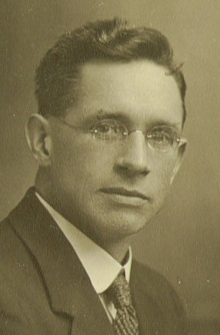


 seamus dubhghaill