seamus dubhghaill

Promoting Irish Culture and History from Little Rock, Arkansas, USA


Leave a comment

Birth of John Kelly, Northern Irish Politician & IRA Volunteer

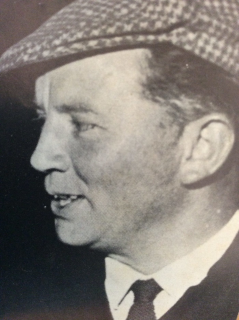
John Kelly, Northern Irish republican politician, is born in the New Lodge area of Belfast, Northern Ireland, on April 5, 1936. He joins the Irish Republican Army (IRA) in the 1950s and is a founder member and a leader of the Provisional Irish Republican Army in the early 1970s.

Kelly is one of five sons and four daughters born to William Kelly, retail and wholesale fruitier, and his wife Margaret (née Maginness). Living off Carlisle Circus in a flashpoint area of north Belfast and close to Crumlin Road Gaol, the Kellys are a strongly republican family, regularly supplying republican inmates with fruit and assisting them on their release.

Later in life Kelly moves to Maghera, County Londonderry, where he lives until his death in 2007. He and his wife have a daughter. He is a dedicated member of local Gaelic Athletic Association (GAA) club Watty Graham’s GAC, Glen and a keen supporter of Gaelic games and the Irish language.

Kelly joins the IRA in the early 1950s when he is eighteen and takes part in the Border Campaign of 1956–62 but is arrested in December 1956 and imprisoned until 1963. He is a member of the Northern Ireland Civil Rights Association (NICRA) in 1967–69 which leads on to sectarian riots in Belfast. A leader of the newly formed Provisional IRA in 1969, he is involved in the formation of “citizens’ defence groups” to protect nationalist areas of Belfast from loyalist rioters who are largely unhampered by the police.

Kelly is jailed on three occasions for IRA related activity spending a total of fifteen years in prison in Northern Ireland and the Republic of Ireland. His first term is for his activity in the 1956 IRA border campaign. He also serves a six-month term in 1973 in the Republic of Ireland for being a member of the IRA.

Commenting later on the Troubles, Kelly says, “Yes, it was a terrible period. But you can’t turn the clock back. The Irish government did not create the Provisional IRA. What happened was as inevitable as the changing seasons.”

The citizens’ defence groups seek help from the government in Dublin in 1969, then led by Jack Lynch. Several ministers respond and arrange a fund of £100,000 but the planned arms shipment fails. Kelly later says, “These discussions were all about guns. The whole thing was government-sponsored, government-backed and government-related.” The planning includes travel to Britain, Europe, and on to the United States where he meets the founders of NORAID. He is one of the co-defendants in the subsequent Dublin “Arms Trial” with ministers Charles Haughey and Neil Blaney, accused of conspiring to import arms illegally into the Republic of Ireland. The trial eventually collapses from a lack of evidence, as the relevant government files are kept secret, but the Irish government sacks several ministers as a result.

Kelly goes into electoral politics, serving on Magherafelt District Council from 1997. At the 1998 Northern Ireland Assembly election he is elected to the Northern Ireland Assembly as a Sinn Féin member for Mid Ulster. He is deselected before the 2003 election, and criticises the decision by the Sinn Féin leadership to support policing reforms. In January 2006 he co-writes a letter with Brendan Hughes which casts doubt on the claims that dissident republicans have threatened Sinn Féin leaders and claims that the real threats are being made by the Sinn Féin leadership against those who seek a debate on policing. He leaves Sinn Féin which he considers too controlled from the centre, opposing the leadership “deceit and the philosophy of creative ambiguity,” and he retires from politics.

Kelly dies in Maghera following a long battle with cancer on September 5, 2007. Many tributes are paid to him including a minute’s silence before the Derry Senior Football Championship quarter final between St. Patrick’s GAC, Loup, and Dungiven GAC on September 8, 2007, at the home of his local club, Watty Graham GAC, Glen. A Na Piarsaigh Belfast GAC jersey is draped over his coffin before he is interred at Maghera Catholic Graveyard.


Leave a comment

1973 Northern Ireland Border Poll

The 1973 Northern Ireland border poll is a referendum held in Northern Ireland on March 8, 1973, on whether Northern Ireland should remain part of the United Kingdom or join with the Republic of Ireland to form a united Ireland. It is the first time that a major referendum has been held in any region of the United Kingdom. The referendum is boycotted by nationalists and results in a conclusive victory for remaining in the UK. On a voter turnout of 58.7 percent, 98.9 percent vote to remain in the United Kingdom, meaning the outcome among registered voters is not affected by the boycott.

The Unionist parties support the “UK” option, as do the Northern Ireland Labour Party (NILP) and the Alliance Party of Northern Ireland (APNI). However, the Alliance Party is also critical of the poll. While it supports the holding of periodic plebiscites on the constitutional link with Great Britain, the party feels that to avoid the border poll becoming a “sectarian head count,” it should ask other relevant questions such as whether the people support the UK’s white paper on Northern Ireland. Nevertheless, on February 5, 1973, the party’s chairman, Jim Hendron, states that “Support for the position of Northern Ireland as an integral part of the United Kingdom is a fundamental principle of the Alliance Party, not only for economic reasons but also because we firmly believe that a peaceful solution to our present tragic problems is only possible within a United Kingdom context. Either a Sinn Féin all-Ireland republic or a Vanguard-style Ulster republic would lead to disaster for all our people.”

The Social Democratic and Labour Party (SDLP), however, calls for a boycott of the referendum, urging its members on January 23, 1973 “to ignore completely the referendum and reject this extremely irresponsible decision by the British Government.” Gerry Fitt, leader of the SDLP, says he has organised a boycott to stop an escalation in violence.

The civil authorities are prepared for violence on polling day. They put in place mobile polling stations which can be rushed into use if there is bomb damage to scheduled poll buildings. Two days before the referendum a British soldier, Guardsman Anton Brown of the 2nd Battalion, Coldstream Guards, is shot dead in Belfast as the army searches for weapons and explosives which can be used to disrupt the upcoming referendum.

Violence by both Republican and Loyalist paramilitaries still takes place on polling day. The Provisional Irish Republican Army (IRA) explode several bombs across Northern Ireland and shoot dead a British soldier guarding a polling station in the area of the Falls Road in Belfast. The Ulster Defence Association (UDA) abducts and kills a Catholic civilian from Ballymurphy. A polling station in East Belfast guarded by the Ulster Defence Regiment (UDR) is also raided by Loyalist paramilitaries who steal several self-loading rifles.

As a political response to the referendum, the Provisional Irish Republican Army also plants four car bombs in London that day, two of which detonate, causing one death and injuring over two hundred.

The vote results in an overwhelming majority of those who voted stating they wish to remain in the UK. The nationalist boycott contributes to a turnout of only 58.7% of the electorate. In addition to taking a majority of votes cast, the UK option receives the support of 57.5% of the total electorate. According to the BBC, less than 1% of the Catholic population turn out to vote.

The referendum electorate consists of 1,030,084 adults registered to vote out of a total population of approximately 1,529,993.

The Government of the United Kingdom takes no action on receipt of the referendum result, as the result is in favour of the status quo (Northern Ireland remaining part of the UK). It is followed by an Assembly election on June 28, 1973.

Brian Faulkner, who had been the sixth and last Prime Minister of Northern Ireland, claims the result leaves “no doubt in any one’s mind what the wishes of Ulster’s people are. Despite an attempted boycott by some, almost 600,000 electors voted for the maintenance of the union with Great Britain.” He also claims that the poll showed that a “quarter of the [N.I.] Catholic population who voted … voted for the maintenance of the union” and that the result is a “blow … against IRA mythology.”

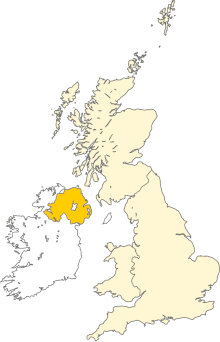
(Pictured: Map of Northern Ireland (yellow) within the United Kingdom.)


2 Comments

Operation Flavius

Operation Flavius (also referred to as the Gibraltar killings) is a military operation in which three members of the Provisional Irish Republican Army (IRA), Seán Savage, Daniel McCann and Mairéad Farrell, are shot dead by the British Special Air Service (SAS) in Gibraltar on March 6, 1988.

The trio is believed to be planning a car bomb attack on British military personnel in Gibraltar. They are shot dead while leaving the territory, having parked a car. All three are found to be unarmed, and no bomb is discovered in the car, leading to accusations that the British government conspired to murder them. An inquest in Gibraltar rules that the authorities had acted lawfully but the European Court of Human Rights holds that, although there had been no conspiracy, the planning and control of the operation is so flawed as to make the use of lethal force almost inevitable. The deaths are the first in a chain of violent events in a fourteen-day period. On March 16, the funeral of the three IRA members is attacked, leaving three mourners dead. At the funeral of one, two British soldiers are murdered after driving into the procession in error.

In late 1987, British authorities become aware of an IRA plan to detonate a bomb outside the governor’s residence in Gibraltar. On the day of the shootings, Savage, a known IRA member, is seen parking a car near the assembly area for the parade. Fellow members McCann and Farrell are seen crossing the border shortly afterward. As SAS personnel move to intercept the three, Savage splits from McCann and Farrell and runs south. Two soldiers pursue him while two others approach McCann and Farrell. The soldiers report seeing the IRA members make threatening movements when challenged, so the soldiers shoot them multiple times. All three are found to be unarmed, and Savage’s car does not contain a bomb.

When the bodies are searched, a set of car keys is found on Farrell. Spanish and British authorities conduct enquiries to trace the vehicle. Two days after the shootings, their enquiries lead them to a red Ford Fiesta in a car park in Marbella, fifty miles from Gibraltar. The car contains a large quantity of Semtex surrounded by 200 rounds of ammunition, along with four detonators and two timers.

The IRA notifies the McCann, Savage, and Farrell families of the deaths on the evening of March 6, and the following day publicly announces that the three were members of the IRA. A senior member of Sinn Féin, Joe Austin, is tasked with recovering the bodies. On March 9, he and Terence Farrell (Mairéad Farrell’s brother) travel to Gibraltar to identify the bodies. A charter aircraft flies the corpses to Dublin on March 14. Two thousand people wait to meet the coffins in Dublin, which are then driven north to Belfast. At the border, the Northern Irish authorities meet the procession with a large number of police and military vehicles, and insist on intervals between the hearses, causing tensions between police and members of the procession.

The joint funeral of McCann, Farrell and Savage takes place on March 16 at Milltown Cemetery in Belfast. The Royal Ulster Constabulary (RUC) agree to maintain a minimal presence at the funeral in exchange for guarantees from the families that there will be no salute by masked gunmen. This agreement is leaked to Michael Stone, who describes himself as a “freelance Loyalist paramilitary.” During the burial, Stone throws grenades into the crowd and begins shooting with an automatic pistol, injuring 60 people. Several mourners chase Stone, throwing rocks and shouting abuse. Stone continues shooting and throwing grenades at his pursuers, killing three of them. He is chased onto a road and his pursuers beat him until the RUC arrive to extract and arrest him.

Two months after the shootings, the documentaryDeath on the Rock” is broadcast on British television. Using reconstructions and eyewitness accounts, it presents the possibility that the three IRA members had been unlawfully killed.

The inquest into the deaths begins in September 1988. The authorities state that the IRA team had been tracked to Málaga, where they were lost by the Spanish police, and that the three did not re-emerge until Savage was seen parking his car in Gibraltar. The soldiers testify that they believed the suspected bombers had been reaching for weapons or a remote detonator. Several eyewitnesses recall seeing the three shot without warning, with their hands up, or while they were on the ground. One witness, who told “Death on the Rock” he saw a soldier fire at Savage repeatedly while he was on the ground, retracts his statement at the inquest, prompting an inquiry into the programme which largely vindicated it. The inquest returns a verdict of lawful killing. Dissatisfied, the families take the case to the European Court of Human Rights. Delivering its judgement in 1995, the court finds that the operation had been in violation of Article 2 of the European Convention on Human Rights as the authorities’ failure to arrest the suspects at the border, combined with the information given to the soldiers, rendered the use of lethal force almost inevitable. The decision is cited as a landmark case in the use of force by the state.

(Pictured: The three IRA members shot in Gibraltar: (l to r) Sean Savage, Mairéad Farrell, Daniel McCann, PA Archive / PA Images)


Leave a comment

The 1991 Cappagh Killings

The 1991 Cappagh killings, a gun attack by the loyalist Ulster Volunteer Force (UVF) in the village of Cappagh, County Tyrone, Northern Ireland, takes place on March 3, 1991. A unit of the UVF’s Mid-Ulster Brigade drive to the staunchly republican village and shoot dead three Provisional Irish Republican Army (IRA) members and a Catholic civilian at Boyle’s Bar. There are allegations of collusion between the UVF and the Ulster Defence Regiment (UDR) in the shootings.

Although nobody is ever charged in connection with the killings, it is widely believed by nationalists and much of the press that the attack had been planned and led by Billy Wright, the leader of the Mid-Ulster Brigade’s Portadown unit. Wright himself takes credit for this and boasts to The Guardian newspaper, “I would look back and say Cappagh was probably our best,” though some sources are sceptical about his claim.

On the evening of Sunday, March 3, 1991, a unit of the UVF’s Mid-Ulster Brigade drive into the heartland of the East Tyrone IRA, intent on wiping out an entire IRA unit that is based in the County Tyrone village of Cappagh. One team of the UVF men wait outside Boyle’s Bar, while a second team waits on the outskirts of the town. At 10:30 p.m. a car pulls into the car park outside the bar and the UVF gunmen open fire with vz. 58 assault rifles, killing Provisional IRA volunteers John Quinn (23), Dwayne O’Donnell (17) and Malcolm Nugent (20). The victims and car are riddled with bullets. According to author Thomas G. Mitchell, Quinn, O’Donnell and Nugent are part of an IRA active service unit (ASU). The gunmen then attempt to enter the pub but are unable to after the civilians inside realise what is happening and barricade the door. Unable to get into the bar, a UVF gunman shoots through a high open toilet window killing local civilian, Thomas Armstrong (50) and badly wounding a 21-year-old man. Their intended target, IRA commander Brian Arthurs, escapes with his life by crouching behind the bar during the shooting. According to the Conflict Archive on the Internet (CAIN), the three IRA volunteers chose to go to the pub “on the spur of the moment,” thus are unlikely to be the UVF’s original target.

After the attack, the UVF issues a statement: “This was not a sectarian attack on the Catholic community, but was an operation directed at the very roots of the Provisional IRA command structure in the Armagh–Tyrone area.” The statement concludes with the promise that “if the Provisional IRA were to cease its campaign of terror, the Ulster Volunteer Force would no longer deem it necessary to continue with their military operations.” Privately the UVF are hugely pleased with the attack in a republican heartland and Billy Wright, leader of the Portadown unit of the UVF’s Mid-Ulster Brigade, who is alleged to be centrally involved, tells Jim Cusack and Henry McDonald the killings were “one of things we did militarily in thirty years. We proved we could take the war to the Provos in one of their strongest areas.” Cusack and McDonald assert that a wealthy UVF supporter with a business in South Belfast helped the UVF purchase the cars used in the attack at auctions in the city.

The Provisional IRA initially does not acknowledge that three of the victims are within its ranks, apparently with the aim of garnering sympathy from the wider world, particularly in the Republic of Ireland, toward nationalists in Northern Ireland.

The first reprisal takes place on April 9, 1991, when alleged UVF member Derek Ferguson, a cousin of local MP Reverend William McCrea, is shot and killed in Coagh by members of the East Tyrone Brigade. His family denies any paramilitary links. In the months following the 1991 shootings, two former UDR soldiers are killed by the IRA near Cappagh. One of them is shot dead while driving along Altmore Road on August 5, 1991. The other former soldier is blown up by an IRA bomb planted inside his car at Kildress on April 25, 1993. It is claimed that he has loyalist paramilitary connections. The 1993 bombing leads to allegations that the IRA is killing Protestant landowners in Tyrone and Fermanagh in an orchestrated campaign to drive Protestants out of the region. There are at least five botched IRA attempts against the life of Billy Wright before the Irish National Liberation Army (INLA) succeeds in killing him in 1997 inside the Maze Prison.

This is not the first time the UVF carries out an attack on Boyle’s Bar in Cappagh. On January 17, 1974, at around 7:40 p.m. two masked UVF gunmen enter the pub and open fire indiscriminately on the customers with a Sterling submachine gun and a Smith & Wesson revolver, firing at least 35 shots. A Catholic civilian and retired farmer Daniel Hughes (73) is shot eleven times and killed in the attack and three other people are injured. A group calling itself the “Donaghmore-Pomeroy Battalion of the UVF” claim responsibility for the shooting. The attack is linked to the notorious Glenanne gang.

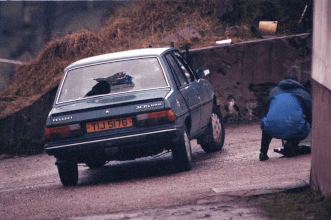
(Pictured: The scene of the UVF attack outside Boyle’s Bar in Cappagh in March 1991. Photo: Pacemaker Archive Belfast 153-91-BW)


1 Comment

The 2006 Dublin Riots

A series of riots in Dublin on February 25, 2006, is precipitated by a proposed march down O’Connell Street of a unionist demonstration. The disturbances begin when members of the Garda Síochána attempt to disperse a group of counterdemonstrators blocking the route of the proposed march. The situation escalates as local youths join forces with the counterdemonstrators.

Love Ulster is a Unionist organisation dedicated to commemorating the Unionist victims of the Troubles in Northern Ireland. It is organised in part by Willie Frazer of Families Acting for Innocent Relatives (FAIR). It is a partisan group established to voice outrage at killings by the Republican paramilitary organisations, but is criticised for not doing the same for victims of loyalist paramilitary organisations.

The Love Ulster march in Dublin is to consist of a uniformed band, several hundred activists (including some from the Orange Order) and relatives of victims, all of whom are to march from Parnell Street north of the River Liffey, down O’Connell Street, past Trinity College Dublin (TCD) onto Nassau Street, Dawson Street and Molesworth Street, and eventually reaching Leinster House, the seat of the Oireachtas, on Kildare Street.

The march of this group in Dublin is viewed as provocative by some Irish nationalists and many Irish republicans, particularly in the context of an Orange Order march. The Orange Order is accused of being a sectarian organisation known for its anti-Catholicism. The right to march is supported by the main Irish political parties and the march is authorised by the Garda Síochána. Love Ulster had organised a similar rally in Belfast in October 2005.

At previous FAIR rallies, a picture of an Ulster Volunteer Force (UVF) member who was allegedly involved in the murder of 26 people in Dublin in the 1974 Dublin and Monaghan bombings, and who was himself killed by the Provisional Irish Republican Army in 1976, had been displayed. An organiser of the Love Ulster demonstration tells a republican newspaper that he cannot guarantee that images of the murder suspect will not be displayed during the demonstration.

Sinn Féin, an Irish republican political party, does not organise a protest and says that the march should be allowed to go ahead, calling for republicans to ignore the march. Republican Sinn Féin, a splinter political party no longer affiliated with Sinn Féin, has an organised presence.

Their protest blocks the northeastern junction of O’Connell Street and Parnell Street. The small Republican Sinn Féin group (and some activists from the Irish Republican Socialist Party) are joined by several hundred local youths. Before the violence breaks out, they chant republican chants. Several thousand bystanders are also on the scene but take no part in the subsequent rioting. When the marchers form up at the top of Parnell Square and their bands begin to play in anticipation of the start of the march, gardaí attempt to disperse the protest at around 12:45 p.m. At this point, scuffles break out between protesters and Gardaí.

After the failure of the initial garda effort to disperse the protesters, the violence escalates. The Garda Public Order Unit is deployed, and stones and metal railings are thrown at gardaí by protesters, as are fireworks, bricks, crude petrol bombs, and other missiles. As the rioting continues, the ranks of the rioters are swelled by many local teenagers who had not taken part in the initial protest. Several barricades are constructed from building materials on the street to impede the march and the Gardaí. The march is due to start at 12:30 p.m., but as the violence goes on the gardaí decide against trying to escort the marchers through O’Connell Street. At about 1:30 p.m. the assembled marchers return to the coaches that had brought them to Dublin from Northern Ireland. The three coaches are then driven to Leinster House, where a small parade is carried out, and a letter is handed to Irish Minister for Justice, Michael McDowell. They are then escorted out of the city. One of the coaches is attacked by stone throwers on the way home.

Violence continues sporadically on O’Connell Street for another hour or so. The Gardaí, advancing from the northern end of the street gradually push the rioters back southward. The most sustained violence takes place around the General Post Office building, where the rioters initially sit down in protest and then, after several of them have been batoned, regroup behind burning barricades and throw rocks, paving slabs and one or possibly two petrol bombs at Gardaí. Several Gardaí, protesters and a number of journalists from RTÉ and TV3 are injured.

While the standoff on O’Connell Street is still going on, several hundred rioters follow the Unionist coaches to the Nassau Street area where they set a number of cars on fire and damage several businesses. Further skirmishes break out around the River Liffey at O’Connell Bridge, Aston Quay, Fleet Street and Temple Bar, as the Gardaí retake O’Connell street, before the rioters disperse.

Having dispersed the rioters, the gardaí then closes O’Connell Street to facilitate a cleanup of the scene by building workers. Media reports estimate the cost of the cleanup job at €50,000, and Dublin Chamber of Commerce places loss of earnings for businesses in the city due to the riots at €10,000,000.

Estimates for the number of unionist marchers before the event are predicted to be over 1,000. However, only eight coach loads turn up in Dublin, indicating a far smaller number, possibly 300 to 400. Estimates for the number of counterdemonstrators vary between 300 and 7,000. The number is made much more difficult to determine by the presence of the several thousand bystanders at the scene who do not take part. Most of the rioters appear to be local youths, though some who brandished leaflets and other political literature are clearly political activists.

A total of 14 people, including six gardaí and a small number of journalists and photographers, are hospitalised as a result of the rioting. A further 41 people are arrested, according to RTÉ news. As of February 27, 2006, thirteen have been charged. Twenty-six people are convicted in January 2009 for their part in the disturbances and given sentences of up to five years. Two are described as “alcoholics.” One of them and a teenage boy are “homeless.” Three are not Irish – a Georgian, a Romanian and a Moldovan are convicted of looting shops on O’Connell Street. Two have travelled from County Offaly, one from County Galway and one from County Donegal for the riot. All the rest come from Dublin.

(Pictured: The Public Order Unit on O’Connell Street during the 2006 Dublin Riots)


Leave a comment

The Killing of Richard Jameson, Businessman & Loyalist

Richard Jameson, Northern Irish businessman and loyalist, who serves as the leader of the paramilitary Ulster Volunteer Force‘s (UVF) Mid-Ulster Brigade, is killed on January 10, 2000, outside his home in Portadown, County Armagh, Northern Ireland, during a feud with the rival Loyalist Volunteer Force (LVF). Following his death, the feud between the UVF and LVF escalates into a series of retaliatory killings. These go on intermittently until the LVF disbands in 2005.

Jameson is born in Portadown to a Protestant Church of Ireland family in about 1953, one of five sons. He has a twin brother, Stuart. A former reservist in the Royal Ulster Constabulary (RUC) (1973-81), he works as a manager in the Jameson Group, a building firm which is a family-owned business. The building firm is regularly awarded government contracts to carry out work for the security forces and it is for this reason that his brother David loses a leg in a 1991 Provisional Irish Republican Army bombing attack. He is a member of the Orange Order‘s Drumherriff Star of Erin LOL 8 Portadown district.

It is not known exactly when Jameson becomes a member of the Ulster Volunteer Force (UVF) nor the leader of its Mid-Ulster Brigade. The Portadown unit of the Mid-Ulster Brigade had been officially stood down by the Brigade Staff in Belfast in August 1996 when it carried out an unauthorised sectarian killing while the UVF were on ceasefire. The Mid-Ulster Brigade’s commander at the time, Billy Wright, was expelled from the UVF. Wright brazenly defies a Combined Loyalist Military Command (CLMC) order to leave Northern Ireland or face execution by establishing the breakaway Loyalist Volunteer Force (LVF), taking most of the Portadown Mid-Ulster UVF with him. The units of the Mid-Ulster Brigade that remain loyal to the Brigade Staff continue to operate and Jameson becomes commander. He is said by The Guardian to be a “staunch supporter of the Good Friday Agreement.”

In the weeks prior to his killing, Jameson is in a violent street altercation with LVF member Muriel Gibson, whom he accuses of involvement in drugs and slaps forcefully in the face. This is followed by a fracas at the Portadown F.C. Social Club on December 27, 1999, where LVF members are commemorating the death of their comrade Billy Wright, shot and killed inside the Maze Prison by the Irish National Liberation Army (INLA) exactly two years previously. When he enters the club, several LVF men begin to push and jostle him and challenge him to a fight, telling him to hit them instead of women. Deeply offended, he leaves and soon returns with a UVF gang armed with pickaxe handles and baseball bats. In the violent brawl that ensues, twelve people, including three LVF prisoners out on Christmas parole, receive severe injuries. The LVF leaders subsequently make the decision that Jameson is to pay for the attack with his life.

One of the LVF members, who lives near Dungannon, gets in touch with a family of north Belfast loyalists who had been members of the UVF but who had left after Wright’s expulsion. From these former UVF members the LVF obtains the gun with which to shoot Jameson. On the evening of January 10, 2000, Jameson returns from work and drives his Isuzu Trooper jeep into the driveway outside his home on the Derrylettiff Road near Portadown. Waiting in ambush, a single gunman suddenly approaches from the passenger side of the parked jeep. Before Jameson can emerge from the vehicle and with the engine still running, the gunman opens fire through the window with a 9mm semi-automatic pistol, shooting Jameson five times in the head and chest. His assassin escapes to a nearby getaway car. He is rushed to Craigavon Area Hospital but dies of his wounds minutes after his arrival. The RUC immediately begins a murder inquiry. Within hours of the killing, the UVF Brigade Staff convene an emergency meeting at “the Eagle,” their headquarters on the Shankill Road, where they compile a list of all those they believe to be involved in Jameson’s death and plan their retaliation against the LVF.

Among those who condemn the killing is Northern Ireland’s First Minister David Trimble who releases the following statement: “This is exactly the sort of thing we thought we had finally put behind us. I’m shocked by the news.”

Jameson’s funeral is held on January 13 at the Tartaraghan Parish Church and attended by several thousand mourners including Progressive Unionist Party (PUP) leaders David Ervine and Billy Hutchinson. Drumcree Orangeman Harold Gracey and Gary McMichael, the son of slain Ulster Defence Association (UDA) brigadier John McMichael, also attend as does local politicians representing the Ulster Unionist Party (UUP) and Democratic Unionist Party (DUP). The service is officiated by Reverend David Hilliard who speaks out against vengeance and describes Jameson as a “man admired and loved by many” and who “had been so cruelly murdered.” He is buried in the adjacent churchyard.

Despite Reverend Hilliard’s pleas and LVF leader Mark “Swinger” Fulton‘s claim that his organisation had nothing to do with Jameson’s shooting, the UVF/LVF feud intensifies. In the immediate aftermath members of Jameson’s family are filmed angrily defacing LVF murals in Portadown. A month after his killing, two Protestant teenagers, Andrew Robb (19) and David McIlwaine (18), are savagely beaten and repeatedly stabbed to death in a country lane outside Tandragee, County Armagh by a local UVF gang. The young men, believed to have been LVF members, are targeted by their UVF killers after they leave a nightclub together in search of a party. However, neither teenager is part of any paramilitary organisation and only Robb had tenuous links to the LVF. It is reported in the Belfast Telegraph that according to court hearings Robb had made disparaging remarks about Jameson’s death. Two of the UVF men, Stephen Leslie Brown and Noel Dillon, are infuriated by the comments and afterward Brown drives the victims to Druminure Road where he, Dillon and another man carry out the double killing. One of Jameson’s brothers, Bobby, is among the mourners at David McIlwaine’s funeral. The West Belfast Brigade of the Ulster Defence Association, whose brigadier Johnny Adair is close to the LVF, briefly becomes involved in the feud after Adair attends Andrew Robb’s funeral and joins LVF members at the Drumcree conflict. After the UVF track down Jameson’s killer to the Oldpark area of Belfast and attempt to shoot him, he is taken away under the protection of the West Belfast Brigade. The tit-for-tat killings continue intermittently until 2005 when the UVF makes a final assault against the LVF, leaving four members dead and the LVF leadership with no alternative but to order its military units to permanently disband.

Jameson’s family has persistently denied that he was a UVF member. They maintain that he was a vigilante who was murdered in retaliation for the firm stand he had taken against drug dealing in the Portadown area. The late PUP leader David Ervine expressed the same opinion the day after the killing by stating, “Mr. Jameson had been murdered by drug dealers masquerading as loyalists because he had been a bulwark in his community against dealers.” Ervine also described him as having been a “fine and honourable man, widely respected in the community.” Northern Ireland security sources, however, have repeatedly named Jameson as the Mid-Ulster UVF commander. He is listed as a UVF member in the CAIN: Sutton Index of Deaths, an online University of Ulster-sponsored project which chronicles the Northern Ireland conflict. It also emerges that for several days prior to his killing, he had been working at the Ballykinler British Army base. Immediately after his murder by the LVF, his family begins an anti-drug campaign in Portadown by putting up posters and handing out leaflets to passing motorists.


Leave a comment

The Reavey and O’Dowd Killings

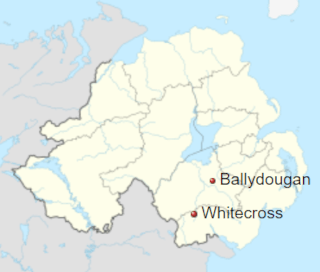
The Reavey and O’Dowd killings are two coordinated gun attacks on January 4, 1976, in County Armagh, Northern Ireland. Six Catholic civilians die after members of the Ulster Volunteer Force (UVF), an Ulster loyalist paramilitary group, break into their homes and shoot them. Three members of the Reavey family are shot at their home in Whitecross and four members of the O’Dowd family are shot at their home in Ballydougan. Two of the Reaveys and three of the O’Dowds are killed outright, with the third Reavey victim dying of brain hemorrhage almost a month later.

In February 1975, the Provisional Irish Republican Army and the British Government enter into a truce and restart negotiations. For the duration of the truce, the IRA agrees to halt its attacks on the British security forces, and the security forces mostly end their raids and searches. However, there are dissenters on both sides. There is a rise in sectarian killings during the truce, which “officially” lasts until February 1976.

The shootings are part of a string of attacks on Catholics and Irish nationalists by the “Glenanne gang,” an alliance of loyalist militants, rogue British soldiers and Royal Ulster Constabulary (RUC) police officers. Billy McCaughey, an officer from the Special Patrol Group (SPG), admits taking part and accuses another officer of involvement. His colleague John Weir says those involved include a British soldier, two police officers and an alleged police agent, Robin “the Jackal” Jackson.

At about 6:10 p.m., at least three masked men enter the home of the Reaveys, a Catholic family, in Whitecross, through a door that had been left unlocked. Brothers John (24), Brian (22) and Anthony Reavey (17) are alone in the house and are watching television in the sitting room. The gunmen open fire on them with two 9mm Sterling submachine guns, a 9mm Luger pistol and a .455 Webley revolver. John and Brian are killed outright. Anthony manages to run to the bedroom and take cover under a bed. He is shot several times and is left for dead. After searching the house and finding no one else, the gunmen leave. Badly wounded, Anthony crawls about 200 yards to a neighbour’s house to seek help. He dies of a brain haemorrhage on January 30. Although the pathologist says the shooting played no part in his death, Anthony is listed officially as a victim of the Troubles. A brother, Eugene Reavey, says “Our entire family could have been wiped out. Normally on a Sunday, the twelve of us would have been home, but that night my mother took everybody [else] out to visit my aunt.” Neighbours claim there had been two Royal Ulster Constabulary (RUC) checkpoints set up — one at either end of the road — around the time of the attack. These checkpoints are to stop passers-by from seeing what is happening. The RUC denies having patrols in the area at the time but says there could have been checkpoints manned by the British Army‘s Ulster Defence Regiment (UDR).

At about 6:20 p.m., three masked men burst into the home of the O’Dowds, another Catholic family, in Ballydougan, about fifteen miles away. Sixteen people are in the house for a family reunion. The male family members are in the sitting room with some of the children, playing the piano. The gunmen spray the room with bullets, killing Joseph O’Dowd (61) and his nephews Barry (24) and Declan O’Dowd (19). All three are members of the Social Democratic and Labour Party (SDLP) and the family believes this is the reason they are targeted. Barney O’Dowd, Barry and Declan’s father, is also wounded by gunfire. The RUC concludes that the weapon used is a 9mm Sterling submachine gun, although Barney believes a Luger pistol with a suppressor was also used. The gunmen had crossed a field to get to the house, and there is evidence that UDR soldiers had been in the field the day before.

The following day, gunmen stop a minibus carrying ten Protestant workmen near Whitecross and shoot them dead by the roadside. This becomes known as the Kingsmill massacre. The South Armagh Republican Action Force (SARAF) claims responsibility, saying it is retaliation for the Reavey and O’Dowd killings. Following the massacre, the British Government declares County Armagh to be a “Special Emergency Area” and announces that the Special Air Service (SAS) is being sent into South Armagh.

Some of the Reavey family come upon the scene of the Kingsmill massacre while driving to the hospital to collect the bodies of John and Brian. Some members of the security forces immediately begin a campaign of harassment against the Reavey family and accuse Eugene Reavey of orchestrating the Kingsmill massacre. On their way home from the morgue, the Reavey family are stopped at a checkpoint. Eugene claims the soldiers assaulted and humiliated his mother, put a gun to his back, and danced on his dead brothers’ clothes. The harassment would later involve the 3rd Battalion, Parachute Regiment. In 2007, the Police Service of Northern Ireland (PSNI) apologises for the “appalling harassment suffered by the family in the aftermath at the hands of the security forces.”

After the killings of the Reavey brothers, their father makes his five surviving sons swear not to retaliate or to join any republican paramilitary group.

In 1999, Democratic Unionist Party (DUP) leader Ian Paisley states in the House of Commons that Eugene Reavey “set up the Kingsmill massacre.” In 2010, a report by the police Historical Enquiries Team clears Eugene of any involvement. The Reavey family seeks an apology, but Paisley refuses to retract the allegation and dies in 2014.


Leave a comment

Beginning of the Belfast City Hall Flag Protests

On the evening of December 3, 2012, hundreds of protesters gather outside Belfast City Hall as the Belfast City Council votes to limit the days that the Union Jack, the flag of the United Kingdom, flies from City Hall. Since 1906, the flag has been flown every day of the year. This is reduced to eighteen specific days a year, the minimum requirement for UK government buildings. The move to limit the number of days is backed by the council’s Irish nationalists while the Alliance Party abstains from the vote. It is opposed by the unionist councillors.

Minutes after the vote, protesters break into the back courtyard and try to force open the doors of the building. Two security staff and a press photographer are injured, and windows of cars in the courtyard are smashed. Protesters then clash with the police, injuring fifteen officers.

Ulster loyalists and British nationalists hold street protests throughout Northern Ireland. They see the council’s decision as part of a wider “cultural war” against “Britishness” in Northern Ireland. Throughout December and January, protests are held almost daily and most involve the protesters blocking roads while carrying Union Flags and banners. Some of these protests lead to clashes between loyalists and the police, sparking riots. Rioters attack police with petrol bombs, bricks, stones and fireworks. Police respond with plastic bullets and water cannon. Alliance Party offices and the homes of Alliance Party members are attacked, while Belfast City Councillors are sent death threats. According to police, some of the violence is orchestrated by high-ranking members of the Ulster Volunteer Force (UVF) and Ulster Defence Association (UDA). Loyalists also put up thousands of Union flags in public places, which further heightened tension.

After February 2013, the protests become smaller and less frequent, and lead to greater loyalist protests about related issues, such as restrictions on traditional loyalist marches.

Prime Minister of the United Kingdom David Cameron condemns the protests, saying “violence is absolutely unjustified in those and in other circumstances.” MP Naomi Long says that Northern Ireland is facing “an incredibly volatile and extremely serious situation.” She also calls on Cameron to intervene after a police car outside her office is firebombed with a policewoman escaping injury in early December.

The Police Service of Northern Ireland‘s (PSNI) Chief Constable Matt Baggott blames the violence on the UVF for “orchestrating violence for their own selfish motives. Everyone involved needs to step back. The lack of control is very worrying. The only answer is a political solution. Otherwise, this will eat into our ability to deal with drugs, into our ability to deal with alcohol issues, and deal with what is a very severe dissident threat.”

United States Secretary of State Hillary Clinton calls for an end to the protests during a trip to Belfast on December 7.

In September 2013, business representatives in Belfast reveal that the flag protests had resulted in losses totaling £50 million in the year to July 2013.

(Pictured: The Union Flag flying atop Belfast City Hall in 2006. The statue of Queen Victoria is in the foreground.)


Leave a comment

Death of Roger McCorley, Irish Republican Activist

Roger McCorleyIrish republican activist, dies on November 13, 1993.

McCorley is born into a Roman Catholic family at 67 Hillman Street in Belfast on September 6, 1901. He is one of three children born to Roger Edmund McCorley, a meat carver in a hotel, and Agnes Liggett. He has two elder brothers, Vincent and Felix. He joins the Fianna in his teens. His family has a very strong republican tradition, and he claims to be the great-grandson of the United Irishmen folk hero Roddy McCorley, who was executed for his part in the Irish Rebellion of 1798.

McCorley is a member of the Belfast Brigade of the Irish Republican Army (IRA) during the Irish War of Independence (1919–22). He is commandant of the Brigade’s first battalion, eventually becoming Commandant of the Belfast Brigade. In June 1920, he is involved in an attack on a Royal Irish Constabulary (RIC) police barracks at CrossgarCounty Down. On Sunday, August 22, 1920, in Lisburn, he is involved in the assassination of RIC District Inspector Oswald Swanzy, who was held responsible by Michael Collins for the assassination of Tomás Mac CurtainLord Mayor of Cork.

McCorley is noted for his militancy, as he is in favour of armed attacks on British forces in Belfast. The Brigade’s leaders, by contrast, in particular, Joe McKelvey, are wary of sanctioning attacks for fear of loyalist reprisals on republicans and the Catholic population in general. In addition, McCorley is in favour of conducting an armed defense of Catholic areas, whereas McKelvey does not want the IRA to get involved in what he considers to be sectarian violence. McCorley writes later that in the end, “the issue settled itself within a very short space of time, when the Orange mob was given uniforms, paid for by the British, and called the Ulster Special Constabulary (USC).” The role of the USC, a temporary police force raised for counter-insurgency purposes, in the conflict is still debated, but republicans maintain that the organization was responsible for the indiscriminate killings of Catholics and nationalists.

On January 26, 1921, McCorley, is involved in the fatal shooting of three Auxiliary Division officers in their beds in the Railway View hotel in central Belfast. Shortly afterwards, he and another IRA man, Seamus Woods, organize an active service unit (ASU) within the first battalion of the Belfast Brigade, with the intention of carrying out attacks, with or without the approval of the Brigade leadership. The unit consists of 32 men. McCorley later writes, “I issued a general order that, where reprisal gangs [State forces] were cornered, no prisoners were to be taken.” In March 1921, he personally leads the ASU in the killing of three Black and Tans in Victoria Street in central Belfast. He is responsible for the deaths of two more Auxiliaries in Donegall Place in April. In reprisal for these shootings, members of the RIC assassinate two republican activists, the Duffin brothers in Clonard Gardens in west Belfast. On June 10, 1921, both and Woods and McCorley units are involved in the killing a RIC man who is suspected in the revenge killings of the Duffin brothers. Two RIC men and a civilian are also wounded in that attack.

Thereafter, there is what historian Robert Lynch has described as a “savage underground war” between McCorley’s ASU and RIC personnel based in Springfield Road barracks and led by an Inspector Ferris. Ferris is accused of murdering the Lord Mayor of Cork Thomas Mac Curtain and had been posted to Lisburn for his safety. Ferris himself is among the casualties, being shot in the chest and neck, but surviving. McCorley claims to have been one of the four IRA men who shot Ferris. In addition, his men bomb and burn a number of businesses including several cinemas and a Reform Club. In May 1921, however, thirteen of his best men are arrested when surrounded by British troops during an operation in County Cavan. They are held in Crumlin Road Gaol and sentenced to death.

On June 3, McCorley organizes an attack on Crumlin Road Gaol in an attempt to rescue the IRA men held there before they are executed. The operation is not a success; however, the condemned men are reprieved after a truce is agreed between the IRA and British forces in July 1921. On Bloody Sunday (July 10, 1921), he is a major leader in the defense of nationalist areas from attacks by both the police and loyalists. On that day twenty people are killed before he negotiates a truce beginning at noon on July 11. At least 100 people are wounded, about 200 houses are destroyed or badly damaged – most of them Catholic homes, leaving 1,000 people homeless.

In April 1922, McCorley becomes leader of the IRA Belfast Brigade after Joe McKelvey goes south to Dublin to join other IRA members who are against the Anglo-Irish Treaty. With McKelvey’s departure, Seamus Woods becomes Officer Commanding of the IRA’s 3rd Northern Division, which has up to 1,000 members, with McCorley designated as Vice Officer Commanding. McCorley for his part, supports the Treaty, despite the fact that it provides for the partition of Ireland and the continued British rule in Northern Ireland. The reason for this is that Michael Collins and Eoin O’Duffy have assured him that this is only a tactical move and indeed, Collins sends men, money and weapons to the IRA in the North throughout 1922.

However, McCorley’s command sees the collapse of the Belfast IRA. In May 1922, the IRA launches an offensive with attacks all across Northern Ireland. In Belfast, he carries out an assault on Musgrave Street RIC barracks. He also conducts an arson campaign on businesses in Belfast. His men also carry out a number of assassinations, including that of Ulster Unionist Party MP William J. Twaddell, which causes the internment of over 200 Belfast IRA men.

To escape from the subsequent repression, McCorley and over 900 Northern IRA men flee south, to the Irish Free State, where they are housed in the Curragh. McCorley is put in command of these men. In June 1922, the Irish Civil War breaks out between Pro and Anti-Treaty elements of the IRA. He takes the side of the Free State and Michael Collins. After Collins is killed in August 1922, his men are stood down. About 300 of them join the National Army and are sent to County Kerry to put down anti-Treaty guerrillas there. In the Spring of 1923, bitterly disillusioned by the brutal counterinsurgency against fellow republicans, he resigns his command.

McCorley later asserts that he “hated the Treaty” and only supported it because it allowed Ireland to have its own armed forces. Both he and Seamus Woods are severe critics of the Irish Free State inertia towards Northern Ireland after the death of Michael Collins. He comments that when Collins was killed “the Northern element gave up all hope.”

In 1936 McCorley is instrumental in the establishment of the All-Ireland Old IRA Men’s Organization, serving as Vice-President with President Liam Deasy (Cork No. 3 Brigade) and Secretary George Lennon (Waterford No. 2 Brigade).

In the 1940s, McCorley is a founding member of Córas na Poblachta, a political party which aspires to a United Ireland and economic independence from Britain. He dies on November 13, 1993, and is buried in the Republican Plot of Glasnevin Cemetery.


Leave a comment

Birth of Billy McKee, Founding Member of the Provisional IRA

Billy McKee (Irish: Liam Mac Aoidh), Irish republican and a founding member and leader of the Provisional Irish Republican Army, is born on November 12, 1921, in Belfast, Northern Ireland.

McKee joins Fianna Éireann in 1936. He is arrested following a raid on a Gaelic Athletic Association (GAA) club in 1938, being imprisoned in Crumlin Road Gaol for several months. Following his release from prison, he joins the Irish Republican Army (IRA) in 1939. During World War II, the IRA carries out a number of armed actions in Northern Ireland known as the Northern Campaign. He is arrested and imprisoned in Crumlin Road Gaol until 1946 for his role in this campaign. In 1956, the IRA embarks on another armed campaign against partition, known as the Border Campaign. He is again arrested and interned for the duration of the campaign. He is released in 1962.

Upon release, McKee becomes Officer Commanding (OC) of the IRA’s Belfast Brigade. However, he resigns this position in 1963, after a dispute with other republicans due to him acceding to a Royal Ulster Constabulary (RUC) demand that he not fly an Irish tricolour during a republican march. He is succeeded by Billy McMillen.

As the 1960s proceed, McKee drifts away from the IRA. He grows very disillusioned with the organisation’s increasing emphasis on socialism and reformist politics over “armed struggle.” He is a devout Roman Catholic, who attends Mass daily. As a result, he is very uncomfortable with what he feels are “communist” ideas coming into the republican movement.

During the 1969 Northern Ireland riots, severe rioting breaks out in Belfast between Irish Catholic nationalists, Protestant loyalists, and the RUC. McKee is highly critical of the IRA’s failure to defend Catholic areas during these disturbances. On August 14, 1969, McKee, Joe Cahill and a number of other Irish Republican activists occupy houses at Kashmir Street, however, being poorly armed they fail to prevent Irish Catholics in Bombay Street and parts of Cupar Street and Kashmir Street being driven from their homes in the sectarian rioting that engulfs parts of the city. In the aftermath of the riots, he accuses Billy McMillen, the IRA’s Belfast commander, and the Dublin-based IRA leadership, of having failed to direct a clear course of action for the organization in civil disturbances. On September 22, 1969, he and a number of other IRA men arrive with weapons at a meeting called by McMillen and try to oust him as head of the Belfast IRA. They are unsuccessful but announce that they will no longer be taking orders from the IRA leadership in Dublin. In December 1969, the IRA splits into the Provisional IRA which is composed of traditional militarists like McKee, and the Official IRA which is composed of the remnants of the pre-split Marxist leadership and their followers. He sides with the Provisionals and joins the IRA Army Council in September 1970.

McKee becomes the first OC of the Provisional IRA Belfast Brigade. From the start, there is intermittent feuding between McKee’s men and his former comrades in the Official IRA, as they vie for control of nationalist areas. However, the Provisionals rapidly gain the upper hand, due to their projection of themselves as the most reliable defenders of the Catholic community.

McKee himself contributes greatly to this image by an action he undertakes on June 27, 1970, the Battle of St Matthew’s. Rioting breaks out in the Ardoyne area of north Belfast after an Orange Order parade, and three Protestants are killed in gun battles between the Provisional IRA and loyalists. In response, loyalists prepare to attack the vulnerable Catholic enclave of Short Strand in east Belfast. When McKee hears about this, he drives to Short Strand with some men and weapons and takes up position at St Matthew’s Church. In the ensuing five-hour gun battle, he is wounded and one of his men is killed, along with at least four Protestants.

On April 15, 1971, McKee, along with Proinsias Mac Airt, is arrested by the British Army when found in possession of a handgun. He is charged and convicted for possession of the weapon and imprisoned in Crumlin Road Gaol, and Joe Cahill takes over as OC of the Belfast Brigade.

In 1972, McKee leads a hunger strike protest in an effort to win recognition of IRA prisoners as political prisoners. Republicans who are interned already have special status, but those convicted of crimes do not. On June 19, the 35th day of hunger strike, he is close to death, William Whitelaw concedes Special Category Status (SCS) which, although not officially awarding political status, is tacit recognition of the political nature of the incarceration. Prisoners wear their own clothes, have no prison work, can receive one visit and food parcel per week and unlimited letters.

McKee is released on September 4, 1974, and resumes his position as OC of the Belfast Brigade. At this time the Provisional IRA calls a ceasefire, and he is involved, with Ruairí Ó Brádaigh, in secret peace talks in Derry with the Northern Ireland Office. He is also involved in talks with Protestant clergy in Feakle, County Clare, in December 1974, where he voices his desire to end the violence.

However, in the same period, McKee authorises a number of sectarian attacks on Protestants as well as renewed attacks on rival republicans in the Official IRA. For this he is heavily criticised by a group of Provisional IRA activists grouped around Gerry Adams.

A faction led by Adams manages to get McKee voted off the IRA Army Council in 1977, effectively forcing him out of the leadership of the organisation. His health suffers in this period, and he does not resume his IRA activities. He joins Republican Sinn Féin after a split in Sinn Féin in 1986. At age 89, reflecting on his involvement in the Republican cause he says, “From the time I was 15 until 65 I was in some way involved. I have had plenty of time since to think if I was right or I was wrong. I regret nothing.”

In later years McKee, Brendan Hughes and Tommy McKearney are critical of the Belfast Agreement and of the reformist politics of Sinn Féin. In 2016 he sends a message of support to the launch of the hardline new Republican party Saoradh, reportedly the political wing of the New IRA.

McKee dies in Belfast at the age of 97 on June 11, 2019. His funeral takes place on June 15, 2019, in west Belfast. His coffin is carried on a gun carriage. He is buried in Milltown Cemetery.