seamus dubhghaill

Promoting Irish Culture and History from Little Rock, Arkansas, USA


Leave a comment

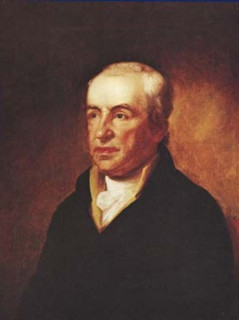
Jack Lynch Resigns as Taoiseach of Ireland

Jack Lynch, Irish politician and Taoiseach of Ireland from 1966 to 1973 and from 1977 to 1979, resigns as Taoiseach and leader of Fianna Fáil on December 5, 1979.

In 1946, Lynch has his first involvement in politics when he is asked by his local Fianna Fáil cumann to stand for Dáil Éireann in a by-election. Over the next 35 years he serves as Parliamentary Secretary to the Taoiseach (1951-54), Parliamentary Secretary to the Minister for Lands (1951-54), Minister for the Gaeltacht (March 1957-June 1957), Minister for Education (1957-59), Minister for Industry and Commerce (1959-65), Minister for Finance (1965-66), Leader of Fianna Fáil (1966-79), Leader of the Opposition (1973-77), and 5th Taoiseach of Ireland (1977-79).

The year 1979 proves to be the year in which Lynch finally realises that his grip on power has slipped. The first direct elections to the European Parliament take place in June and see the electorate severely punishing the ruling Fianna Fáil party. A five-month postal strike also led to deep anger amongst people all over the country. On 27 August 1979, the Provisional Irish Republican Army assassinates Earl Mountbatten of Burma in County Sligo. On the same day the IRA kills 18 British soldiers at Warrenpoint in County Down.

A radical security review and greater cross-border co-operation are discussed with the new British Prime Minister, Margaret Thatcher. These discussions lead Síle de Valera, a backbench TD, to directly challenge the leadership in a speech at the Liam Lynch commemoration at Fermoy, County Cork, on September 9. Although Lynch quickly tries to impose party discipline, attempting to discipline her for opposing party policy at a parliamentary party meeting held on September 28, de Valera correctly points out that she had not opposed the party policy regarding the North which called for the declaration of the British intent to withdraw from the north. The result is embarrassing for Lynch.

The visit of Pope John Paul II to Ireland in September proves to be a welcome break for Lynch from the day-to-day running of the country. In November, just before he departs on a visit to the United States, he decides that he will resign at the end of the year. This would allow him to complete his term as President of the European Community. The defining event which makes up his mind is the news that Fianna Fáil had lost two by-elections on November 7 in his native Cork (Cork City and Cork North-East).

In addition, during the trip Lynch claims in an interview with The Washington Post that a five-kilometre air corridor between the border had been agreed upon during the meeting with Thatcher to enhance security co-operation. This is something highly unsavory to many in Fianna Fáil. When Lynch returns, he is confronted openly by Síle de Valera, Dr. Bill Loughnane, a noted hardline Republican backbencher, along with Tom McEllistrim, a member of Charles Haughey‘s gang of five, at a parliamentary party meeting. Lynch stated that the British do not have permission to overfly the border. Afterwards Loughnane goes public with the details of the meeting and accuses Lynch of deliberately misleading the party. An attempt to remove the whip from Loughnane fails.

At this stage Lynch’s position has become untenable, with supporters of Haughey caucusing opinion within the party. George Colley, the man whom Lynch sees as his successor, comes to him and encourages him to resign sooner. Colley is convinced that he has enough support to defeat the other likely candidate, Charles Haughey, and that Lynch should resign early to catch his opponents on the hop. Lynch agrees to this and resigns as leader of Fianna Fáil on December 5, 1979, assured that Colley has the votes necessary to win. However, Haughey and his supporters have been preparing for months to take over the leadership and Lynch’s resignation comes as no surprise. He narrowly defeats Colley in the leadership contest and succeeds Lynch as Taoiseach.

Lynch remained on in Dáil Éireann as a TD until his retirement from politics at the 1981 Irish general election.


Leave a comment

Mary Robinson Inaugurated 7th President of Ireland

Mary Robinson, Irish lawyer, independent politician, and diplomat born Mary Teresa Winifred Bourke, is inaugurated as the seventh President of Ireland on December 3, 1990, becoming the first woman to hold the office. She later serves as United Nations High Commissioner for Human Rights (UNHCHR) from September 1997 – September 2002.

Robinson is born on May 21, 1944, in Ballina, County Mayo. She is educated at Trinity College and the King’s Inns in Dublin and at Harvard Law School in the United States. She serves at Trinity College (University of Dublin) as Reid Professor of penal legislation, constitutional and criminal law, and the law of evidence (1969–1975) and lecturer in European Community law (1975–1990). In 1988 she and her husband establish the Irish Centre for European Law at Trinity College.

A distinguished constitutional lawyer and a renowned supporter of human rights, Robinson is elected to the Royal Irish Academy and is a member of the International Commission of Jurists in Geneva (1987–1990). She sits in Seanad Éireann, the upper house of the Oireachtas, for the University of Dublin constituency (1969–1989) and serves as whip for the Labour Party until resigning from the party over the Anglo-Irish Agreement of 1985, which she feels ignores unionist objections. She is also a member of the Dublin City Council (1979–1983) and runs unsuccessfully in 1977 and 1981 for Dublin parliamentary constituencies.

Nominated by the Labour Party and supported by the Green Party and the Workers’ Party, Robinson becomes Ireland’s first woman president in 1990 by mobilizing a liberal constituency and merging it with a more conservative constituency opposed to the Fianna Fáil party. As president, she adopts a much more prominent role than her predecessors and she does much to communicate a more modern image of Ireland. Strongly committed to human rights, she is the first head of state to visit Somalia after it suffers from civil war and famine in 1992 and the first to visit Rwanda after the genocide in that country in 1994.

Shortly before her term as president expires, Robinson accepts the post of United Nations High Commissioner for Human Rights (UNHCHR). As high commissioner, she changes the priorities of her office to emphasize the promotion of human rights at the national and regional levels. She was the first UNHCHR to visit China, and she also helps to improve the monitoring of human rights in Kosovo. In 2001 she serves as secretary-general of the World Conference against Racism held in Durban, South Africa. In 1998 she is elected chancellor of Trinity College, a post she holds until 2019.

After stepping down as UNHCHR, Robinson founds the nongovernmental organization Realizing Rights: The Ethical Globalization Initiative (2002–2010). Its central concerns include equitable international trade, access to health care, migration, women’s leadership and corporate responsibility. She is also a founding member of the Council of Women World Leaders, serves as honorary president of Oxfam International, a private organization that provides relief and development aid to impoverished or disaster-stricken communities worldwide, and is a member of the Club of Madrid, which promotes democracy. She also holds various posts at the United Nations, and in 2010, she establishes the Mary Robinson Foundation—Climate Justice, which operates until 2019.

Robinson is the recipient of numerous honours. In 2004 Amnesty International awards her its Ambassador of Conscience Award for her human rights work. In 2009 she receives the United States Presidential Medal of Freedom from President Barack Obama. Her memoir, Everybody Matters: My Life Giving Voice (cowritten with Tessa Robinson), is published in 2012.

(Pictured: Mary Robinson during her inauguration as president in 1990, photograph by Matt Kavanagh)


Leave a comment

First Issue of “The Irish People” Printed in Dublin

The Irish People, a nationalist weekly newspaper supportive of the Fenian movement, is first printed in Dublin on November 28, 1863. It is suppressed by the British Government in 1865.

Other republican newspapers namely, the United Irishman, The Irish Tribune, The Irish Felon, and then the Repeal Association-supporting paper, The Nation, are suppressed in 1848 after their writers, Young Irelanders and members of the Irish Confederation, are accused of promoting sedition. James Stephens is a Young Irelander and part of the Young Ireland rebellion of 1848 that follows the closures of these newspapers. He flees to France after the rebellion’s failure. In 1856, he returns to Ireland and makes connections with former rebels. Two years later, he founds the Irish Republican Brotherhood (IRB).

In 1863, Stephens tells friends he is to start a newspaper. With funds through John O’Mahony, founder of the Fenian Brotherhood in the United States, he sets up an office at 12 Parliament Street. John O’Leary becomes the editor, with Thomas Luby, Charles Kickham, and Denis Mulcahy as editorial staff and Luby as a proprietor. Jeremiah O’Donovan Rossa is the business manager and James O’Connor his assistant and bookkeeper. The newspaper is printed by John Haltigan. Most of the articles are written by O’Leary and Kickham. The first issue comes out on Saturday, November 28, 1863. Its sympathies are clear. A front-page advertisement offers to ship old copies of the United Irishman and The Irish Felon to any address in the UK and editorial content is critical of the political status quo. Superintendent Daniel Ryan of G Division of the Dublin Metropolitan Police, which is largely concerned with Fenianism, notes the new publication’s birth and comments on its low circulation.

Plans for a rising in Ireland, hatched in the United States, are found at Kingstown station in July 1865 in an envelope containing a £500 New York bankers’ draft payable to Stephens’ brother-in-law. This is handed over to Dublin Castle and the link proves to be decisive for what follows. Later, a letter to the Tipperary IRB calling for a nationalist uprising is found by Pierce Nagle, a police informer working for The Irish People. Nagle had visited British officials while in New York in 1864 and offers his services after being upset by Stephens’ manner. After Nagle provides the information, the offices of The Irish People are raided on September 15. The last issue comes out the following day.

The paper is suppressed by the Lord Lieutenant of Ireland, John Wodehouse. Luby, O’Leary, O’Donovan Rossa and O’Connor are arrested and held at Richmond Bridewell prison. Stephens and Kickham join them a month later. Stephens escapes from prison on November 24. A Special Commission is opened on November 27 and forty-one people are charged are ultimately charged. Luby, O’Leary, O’Connor, O’Donovan Rossa and Kickham are charged with the most serious crime of treason felony, first used against the republicans of 1848. Evidence used for the prosecution includes the letter found by Nagel and his testimony about Fenian connections, articles from The Irish People as far back as the first issue, in which Irish Catholic judges including one of the presiding judges, the current Attorney-General for Ireland and Privy Councillor William Keogh, had been strongly criticised, and a devastating secret document from 1864 written by Stephens and entrusted to Luby granting Luby, O’Leary and Kickham executive powers over the IRB. Kickham is unaware of the document. The conflicts of interest, also with the other judge, John David FitzGerald, who is involved in the defendants’ arrest, are highlighted by the defending counsel, former Tory MP Isaac Butt. Also noted is the striking, if not unusual, jury packing, an act where in a mostly Catholic land, some of the juries involved are entirely Protestant.

Luby, O’Leary and O’Connor receive sentences of twenty years. O’Donovan Rossa is sentenced to life imprisonment because of his previous convictions. The frail Kickham, lifelong near blind and deaf, gets twelve years. Judge Keogh praises his intellect and expresses sympathy with his plight, despite having refused his request for a writ of corpus to bring Luby and Charles Underwood O’Connell to his trial concerning his ignorance of the “executive document,” as Luby had already begun his sentence in Pentonville Prison.

(Pictured: The masthead of the first issue of The Irish People | This file is licensed under the Creative Commons Attribution 4.0 International license)


Leave a comment

Death of John Dunlap, Printer of the Declaration of Independence

John Dunlap, Irish printer who printed the first copies of the United States Declaration of Independence and one of the most successful Irish American printers of his era, dies in Philadelphia, Pennsylvania on November 27, 1812.

Dunlap is born in 1747 in Strabane, County Tyrone, in what is now Northern Ireland. When he is ten years old, he goes to work as an apprentice to his uncle, William Dunlap, a printer and bookseller in Philadelphia. In 1766, William Dunlap leaves the business in the care of his nephew, who eventually purchases the business. Initially he makes a living by printing sermons, broadsides and handbills. In November 1771, he begins the publication of the Pennsylvania Packet, or General Advertiser, a weekly newspaper. In 1773 he marries Elizabeth Hayes Ellison.

During the American Revolutionary War, Dunlap becomes an officer in the First Troop Philadelphia City Cavalry and sees action with George Washington at the battles of Trenton and Princeton. He continues in the First City Troop after the war, rising to the rank of major, and leading Pennsylvania’s cavalry militia to help suppress the Whiskey Rebellion in 1794.

In 1776, Dunlap secures a lucrative printing contract for the Continental Congress. In July 1776, fighting between the American colonists and the British forces had been going on for over a year. On July 2, the Second Continental Congress votes on the Lee Resolution to secede. Two days later, they approve the final wording of a public declaration regarding their decision, which ultimately comes to be known as the Declaration of Independence. President of Congress John Hancock signs the fair copy with Secretary of Congress Charles Thomson attesting it. That evening Hancock orders Dunlap to print broadside copies of the declaration. He prints perhaps 200 broadsides, since known as the Dunlap broadsides, which are the first published versions of the Declaration.

Dunlap also prints items for Pennsylvania’s revolutionary government. In 1777 he takes over the printing of the Journals of the Continental Congress from Robert Aitken, but loses the contract in 1779 after printing in his newspaper a letter from Thomas Paine that leaks news of the secret French aid to the Americans.

In 1784, Dunlap’s paper becomes a daily with a new title: the North American and United States Gazette. It is not the first daily in the United States as the Pennsylvania Evening Post is the first in 1783, but it becomes the first successful daily.

Continuing to serve the changing needs of the government, Dunlap and his partner David Claypoole print the Constitution of the United States on September 19, 1787 for use by the Constitutional Convention, and later publish it for the first time in the Pennsylvania Packet.

Dunlap’s major financial success comes from real estate speculation. During the American Revolutionary War, he purchases property confiscated from Loyalists who refuse to take Pennsylvania’s new loyalty oath. After the war, he purchases land in Kentucky. By 1795, when he is forty-eight, he is able to retire with a sizable estate. Retirement does not agree with him, however. According to his friend, Dr. Benjamin Rush, he becomes a drunkard in his final years. He dies in Philadelphia on November 27, 1812.


Leave a comment

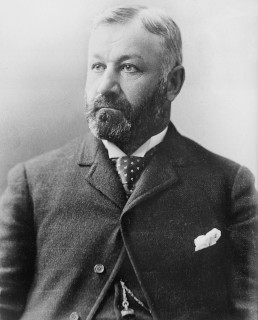
Birth of Richard Croker, Leader of New York’s Tammany Hall

Richard Welstead Croker, American politician who is a leader of New York City‘s Tammany Hall and a political boss also known as “Boss Croker, is born in the townland of Ballyva, in the parish of Ardfield, County Cork on November 24, 1843.

Croker is the son of Eyre Coote Croker (1800–1881) and Frances Laura Welsted (1807–1894). He is taken to the United States by his parents when he is just two years old. There are significant differences between this family and the typical family leaving Ireland at the time. They are Protestant and are not land tenants. Upon arrival in the United States, his father is without a profession but has a general knowledge of horses and soon becomes a veterinary surgeon. During the American Civil War, he serves in that same capacity under General Daniel Sickles.

Croker is educated in New York public schools but drops out at age twelve or thirteen to become an apprentice machinist in the New York and Harlem Railroad machine shops. Not long after, he becomes a valued member of the Fourth Avenue Tunnel Gang, a street gang that attacks teamsters and other workers that gather around the Harlem line’s freight depot. He eventually becomes the gang’s leader. He joins one of the Volunteer Fire Departments in 1863, becoming an engineer of one of the engine companies. That is his gateway into public life.

James O’Brien, a Tammany associate, takes notice of Croker after he wins a boxing match against Dick Lynch whereby, he knocks out all of Lynch’s teeth. He becomes a member of Tammany Hall and active in its politics. In the 1860s he is well known for being a “repeater” at elections, voting multiple times at the polls. He is an alderman from 1868–1870 and Coroner of New York City from 1873–1876. He is charged with the murder of John McKenna, a lieutenant of James O’Brien, who is running for United States Congress against the Tammany-backed Abram S. Hewitt. John Kelly, the new Tammany Hall boss, attends the trial and Croker is freed after the jury is undecided. He moves to Harrison, New York by 1880. He is appointed the New York City Fire Commissioner in 1883 and 1887 and city Chamberlain from 1889-1890.

After the death of Kelly, Croker becomes the leader of Tammany Hall and almost completely controls the organization. As head of Tammany, he receives bribe money from the owners of brothels, saloons and illegal gambling dens. He is chairman of Tammany’s Finance Committee but receives no salary for his position. He also becomes a partner in the real estate firm Meyer and Croker with Peter F. Meyer, from which he makes substantial money, often derived from sales under the control of the city through city judges. Other income comes by way of gifts of stock from street railway and transit companies, for example. At the time, the city police are largely still under the control of Tammany Hall, and payoffs from vice protection operations also contribute to Tammany income.

Croker survives Charles Henry Parkhurst‘s attacks on Tammany Hall’s corruption and becomes a wealthy man. Several committees are established in the 1890s, largely at the behest of Thomas C. Platt and other Republicans, to investigate Tammany and Croker, including the 1890 Fassett Committee, the 1894 Lexow Committee, during which Croker leaves the United States for his European residences for three years, and the Mazet Investigation of 1899.

Croker’s greatest political success is his bringing about the 1897 election of Robert Anderson Van Wyck as first mayor of the five-borough “greater” New York. During Van Wyck’s administration Croker completely dominates the government of the city.

In 1899, Croker has a disagreement with Jay Gould‘s son, George Jay Gould, president of the Manhattan Elevated Railroad Company, when Gould refuses his attempt to attach compressed-air pipes to the Elevated company’s structures. He owns many shares of the New York Auto-Truck Company, a company which would benefit from the arrangement. In response to the refusal, he uses Tammany influence to create new city laws requiring drip pans under structures in Manhattan at every street crossing and the requirement that the railroad run trains every five minutes with a $100 fine for every violation. He also holds 2,500 shares of the American Ice Company, worth approximately $250,000, which comes under scrutiny in 1900 when the company attempts to raise the price of ice in the city.

After Croker’s failure to carry the city in the 1900 United States presidential election and the defeat of his mayoralty candidate, Edward M. Shepard, in 1901, he resigns from his position of leadership in Tammany and is succeeded by Lewis Nixon. He departs the United States in 1905.

Croker operates a stable of thoroughbred racehorses during his time in the United States in partnership with Michael F. Dwyer. In January 1895, they send a stable of horses to England under the care of trainer Hardy Campbell, Jr. and jockey Willie Simms. Following a dispute, the partnership is dissolved in May but Croker continues to race in England. In 1907, his horse Orby wins Britain’s most prestigious race, The Derby. Orby is ridden by American jockey John Reiff whose brother Lester had won the race in 1901. Croker is also the breeder of Orby’s son, Grand Parade, who wins the Derby in 1919.

Croker returns to Ireland in 1905 and dies on April 29, 1922, at Glencairn House, his home in Stillorgan outside Dublin. His funeral, celebrated by South African bishop William Miller, draws some of Dublin’s most eminent citizens. The pallbearers are Arthur Griffith, the President of Dáil Éireann; Laurence O’Neill, the Lord Mayor of Dublin; Oliver St. John Gogarty; Joseph MacDonagh; A.H. Flauley, of Chicago; and J.E. Tierney. Michael Collins, Chairman of the Provisional Government of the Irish Free State, is represented by Kevin O’Shiel; the Lord Lieutenant of Ireland, Edmund Bernard FitzAlan-Howard, 1st Viscount FitzAlan of Derwent, is represented by his under-secretary, James MacMahon.

In 1927, J. J. Walsh claims that just before his death Croker had accepted the Provisional Government’s invitation to stand in Dublin County in the imminent 1922 Irish general election.


Leave a comment

Birth of Willie Fay, Actor & Theatre Producer

William George “Willie” Fay, actor and theatre producer who, along with William Butler Yeats and others, is one of the co-founders of Dublin‘s Abbey Theatre, is born in Dublin on November 12, 1872.

Fay attends Belvedere College in Dublin. He works for a time in the 1890s with a touring theatre company in Ireland, Scotland, and Wales. When he returns to Dublin, he works with his brother Frank, staging productions in halls around the city. Finally, they form W. G. Fay’s Irish National Dramatic Company, focused on the development of Irish acting talent.

The brothers participate in the founding of the Abbey Theatre and are largely responsible for evolving the Abbey style of acting. After a falling-out with the Abbey directors in 1908, the brothers emigrate to the United States to work in theatre there.

Fay moves to London in 1914, working as an actor on stage and in films. One of his most notable film roles is as Father Tom in Carol Reed‘s Belfast-set Odd Man Out (1947), whose cast is dense with actors from the Abbey Theatre. His memoir, The Fays of the Abbey Theatre, appears in 1935.

Willie Fay dies in London on October 27, 1947, at the age of 74.

(Pictured: William George Fay 1903, Dublin City Council Image Galleries, http://www.dublincity.ie)


Leave a comment

Second Inauguration of Mary McAleese

Mary McAleese is inaugurated as President of Ireland for a second term on November 11, 2004, becoming the fourth president up to that point to secure a second term, joining Sean T. O’Kelly, Éamon de Valera and Patrick Hillery. As of this writing in 2020, Michael D. Higgins is currently serving his second term as president.

McAleese’s initial seven-year term of office ends in November 2004, but she stands for a second term in the 2004 Irish presidential election. Following the failure of any other candidate to secure the necessary support for nomination, the incumbent president stands unopposed, with no political party affiliation, and is declared elected on October 1, 2004.

McAleese is re-inaugurated at the commencement of her second seven-year term on November 11, 2004. Her very high approval ratings are widely seen as the reason for her re-election, with no opposition party willing to bear the cost, financial or political, of competing in an election that would prove difficult to win.

Following the inauguration ceremony earlier in the day in Dublin Castle, McAleese attends a reception there hosted by the Government to mark the beginning of her second term of office. The 700 invited guests include members of the Government, the Oireachtas, the judiciary and dignitaries from Christian churches and other faiths.

McAleese identifies the need for strong and resilient communities as the theme of her second term in office. Speaking after her inauguration in the afternoon, she says, “The cushion of consumerism is no substitute for the comfort of community.” Speaking on the Northern Ireland peace process, she urges the hesitant to “muster the courage to complete the journey to a bright new landscape of hope.”

McAleese’s first term is distinguished by her work following the Omagh bombing and the September 11 terror attacks in the United States, as well as her behind-the-scenes work to open a dialogue with loyalists after the Good Friday Agreement.

Prevented by the Constitution of Ireland from running for a third term, McAleese leaves office in 2011 as one of Ireland’s most popular and respected presidents.

(Pictured: the second inauguration of Mary McAleese, November 11, 2004, President of Ireland website, http://www.president.ie)


Leave a comment

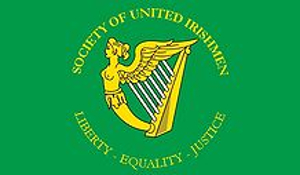
First Meeting of the Dublin United Irishmen

James Napper Tandy convenes the first meeting of the Society of United Irishmen in Dublin on November 9, 1791. The group had met the previous month in Belfast.

Spurred on by Theobold Wolfe Tone’s pamphlet titled An Argument on Behalf of the Catholics of Ireland, these young radicals propose three resolutions, which are to guide the new movement forward and which leave a lasting impression on generations of Irish men and women.

Firstly, that there exists the need for “a cordial union among all the people of Ireland.” Secondly, that a complete and radical reform of the representation of the people in Parliament is needed and, thirdly, that this reform should include “Irishmen of every religious persuasion.” The new organisation immediately tries to bring about change and Wolfe Tone, through his work as secretary of the Catholic Committee, organises a Catholic Convention in Dublin in 1792.

Although a Catholic Relief Act is passed in 1793, which rescinds some of the harsh Penal Laws, the United Irishmen soon turn their attention to France where they are heavily influenced by the French revolutionary ideals of “Liberty, Equality, Fraternity.”

When the United Irishmen are proclaimed a secret society and members arrested, Wolfe Tone travels to the United States and then France, making known his objectives for Irish Independence and that he wishes:

“To unite the whole people of Ireland, to abolish the memory of all past dissensions, and to substitute the common name of Irishman in place of the denominations of Protestant, Catholic and Dissenter – these were my means.”

The Irish Rebellion of 1798 soon follows and, although achieving initial success is brutally suppressed, thereby ending the ideals of the United Irishmen in uniting the people of Ireland.

(From: “Society of United Irishmen formed in Dublin 09 November 1791” posted on November 9, 2019, Irish News Archives, http://www.irishnewsarchives.com)


Leave a comment

Birth of John Mitchel, Nationalist Activist & Journalist

John Mitchel, Irish nationalist activist, author, and political journalist, is born in Camnish, near Dungiven, County Derry on November 3, 1815.

Mitchel is the son of a Presbyterian minister. At the age of four, he is sent to a classical school, run by an old minister named Moor, nicknamed “Gospel Moor” by the students. He reads books from a very early age. When a little over five years old, he is introduced to Latin grammar by his teacher and makes quick progress. In 1830, not yet 15 years old, he enters Trinity College, Dublin and obtains a law degree in 1834.

In the spring of 1836 Mitchel meets Jane Verner, the only daughter of Captain James Verner. Though both families are opposed to the relationship, they become engaged in the autumn and are married on February 3, 1837, by the Rev. David Babington in Drumcree Church, the parish church of Drumcree.

Mitchel works in a law office in Banbridge, County Down, where he eventually comes into conflict with the local Orange Order. He meets Thomas Davis and Charles Gavan Duffy during visits to Dublin. He joins the Young Ireland movement and begins to write for The Nation. Deeply affected by the misery and death caused by the Great Famine, he becomes convinced that nothing will ever come of the constitutional efforts to gain Irish freedom. He then forms his own paper, United Irishmen, to advocate passive resistance by Ireland’s starving masses.

In May 1848, the British tire of Mitchel’s open defiance. Ever the legal innovators in Ireland, they invent a crime especially for the Young Irelanders – felony-treason. They arrest him for violating this new law and close down his paper. A rigged jury convicts him, and he is deported first to Bermuda and then to Australia. However, in June 1853, he escapes to the United States.

Mitchel works as a journalist in New York City and then moves to the South. When the American Civil War erupts, he is a strong supporter of the Southern cause, seeing parallels with the position of the Irish. His family fully backs his commitment to the Southern cause. He loses two sons in the war, one at the Battle of Gettysburg in 1863 and another at the Battle of Fort Sumter in 1864, and another son loses an arm. His outspoken support of the Confederacy causes him to be jailed for a time at Fort Monroe, where one of his fellow prisoners is Confederate President Jefferson Davis.

In 1874, the British allow Mitchel to return to Ireland and in 1875 he is elected in a by-election to be a member of the Parliament of the United Kingdom representing the Tipperary constituency. However, his election is invalidated on the grounds that he is a convicted felon. He contests the seat again in the resulting by-election and is again elected, this time with an increased vote.

Unfortunately, Mitchel, one of the staunchest enemies to English rule of Ireland in history, dies in Newry on March 20, 1875, and is buried there. Thirty-eight years later, his grandson, John Purroy Mitchel, is elected Mayor of New York City.


Leave a comment

Birth of Sarah Makem, Traditional Irish Singer

Sarah Makem, traditional Irish singer, is born in Keady, County Armagh on October 18, 1900. She is the wife of fiddler Peter Makem, mother of musicians Tommy Makem and Jack Makem, and grandmother of musicians Tom Sweeney, Jimmy Sweeney (of Northern Irish Canadian group Barley Bree), Shane Makem, Conor Makem and Rory Makem. Makem and her cousin, Annie Jane Kelly, are members of the Singing Greenes of Keady.

Makem lives in Keady her entire life. Living in the border region of Ulster and in a market town, she is influenced by Irish, Scottish, and English traditions. She learns songs from her mother while she is doing household chores such as cooking, often picking up these songs while sitting with her mother after just one repetition. She also learns some of her repertoire from songs the children sing in school.

Makem leaves school early to work as a factory weaver as many of the girls do in her town. She works from 7:00 AM until 6:30 PM and then comes home to have sessions with many of the other musicians living in the same area. She marries Peter Makem in 1919.

Makem does not consider herself a musician, however, she has a vast musical career. She is a ballad singer who has over five hundred songs in memory. These songs she describes as life stories of murder and love and emigration songs. She records many of her songs, mostly for collection purposes.

In the 1950s, song collectors from the United States tour Ireland recording its musical heritage. Makem is visited and recorded by, among others, Diane Guggenheim Hamilton, Jean Ritchie, Peter Kennedy and Sean O’Boyle. Her rendition of “As I Roved Out” is used to open the BBC Radio folk music programme of the same name in the 1950s. She does not intend to use this recording as such and is very embarrassed to know her voice will be heard every day across Ireland.

Makem dies in Keady, County Armagh on April 20, 1983. She is buried in St. Patrick’s RC Graveyard in Keady.