Threatened by lung trouble in 1879, Plunkett goes to the United States and spends ten years as a cattle rancher in the Bighorn Mountains of Wyoming. He returns to Ireland in 1889 and devotes himself to the agricultural cooperative movement, first organizing creameries and then, in 1894, the Irish Agricultural Organisation Society, a forerunner of similar societies in England, Wales, and Scotland. A moderate Unionist member of Parliament for South County Dublin from 1892 to 1900, he becomes vice president (1899–1907) of the new Department of Agriculture and Technical Instruction for Ireland, which he has been instrumental in creating.
Plunkett’s later experience convinces him of the need for the independence of an Ireland without partition inside the Commonwealth, and he fights strongly for this goal, as chairman of the Irish Convention (1917–18) and, in 1919, as founder of the Irish Dominion League and of the Plunkett Foundation for Cooperative Studies, an agricultural research and information centre. He is appointed to the first Senate of the Irish Free State (1922–23). His house in Dublin is bombed and burned during in the Irish Civil War and he lives in England thereafter. In 1924 the Plunkett Foundation also moves to England. In 1924 he presides over a conference in London on agricultural co-operation in the British Commonwealth and in 1925 he visits South Africa to help the movement there.
Harris is born James Thomas Harris on February 14, 1855, in Galway, County Galway, to Welsh parents. While living with his older brother he is, for a year or more, a pupil at The Royal School, Armagh. At the age of twelve he is sent to Wales to continue his education as a boarder at the Ruabon Grammar School in Denbighshire, a time he is to remember later in My Life and Loves. Harris is unhappy at the school and runs away within a year.
Harris runs away to the United States in late 1869, arriving in New York City virtually penniless. The 13-year-old takes a series of odd jobs to support himself, working first as a shoeshiner, a porter, a general laborer, and a construction worker on the erection of the Brooklyn Bridge. He later turns these early occupational experiences into art, incorporating tales from them into his book The Bomb.
From New York Harris moves to the American Midwest, settling in Chicago, where he takes a job as a hotel clerk and eventually a manager. Owing to Chicago’s central place in the meat packing industry, Harris makes the acquaintance of various cattlemen, who inspire him to leave the big city to take up work as a cowboy. He eventually grows tired of life in the cattle industry and enrolls at the University of Kansas, where he studies law and earns a degree, gaining admission to the Kansas state bar association.
Harris is not cut out to be a lawyer and soon decides to turn his attention to literature. He returns to England in 1882, later traveling to various cities in Germany, Austria, France, and Greece on his literary quest. He works briefly as an American newspaper correspondent before settling down in England to seriously pursue the vocation of journalism.
From 1908 to 1914 Harris concentrates on working as a novelist, authoring a series of popular books such as The Bomb, The Man Shakespeare, and The Yellow Ticket and Other Stories. With the advent of World War I in the summer of 1914, Harris decides to return to the United States.
From 1916 to 1922 he edits the U.S. edition of Pearson’s Magazine, a popular monthly which combines short story fiction with socialist-tinted features on contemporary news topics. One issue of the publication is banned from the mails by United States Postmaster GeneralAlbert S. Burleson during the period of American participation in the Great War. Despite this Harris manages to navigate the delicate situation which faces the left wing press and to keep the Pearson’s Magazine functioning and solvent during the war years.
Harris becomes an American citizen in April 1921. In 1922 he travels to Berlin to publish his best-known work, his autobiography My Life and Loves. It is notorious for its graphic descriptions of Harris’ purported sexual encounters and for its exaggeration of the scope of his adventures and his role in history. Years later, Time Magazine reflects in its March 21, 1960 issue “Had he not been a thundering liar, Frank Harris would have been a great autobiographer….he had the crippling disqualification that he told the truth, as Max Beerbohm remarked, only ‘when his invention flagged’.” A fifth volume, supposedly taken from his notes but of doubtful provenance, is published in 1954, long after his death.
Harris also writes short stories and novels, two books on Shakespeare, a series of biographical sketches in five volumes under the title Contemporary Portraits and biographies of his friends Oscar Wilde and George Bernard Shaw. His attempts at playwriting are less successful. Only Mr. and Mrs. Daventry (1900), which is based on an idea by Oscar Wilde, is produced on the stage.
Married three times, Harris dies of a heart attack in Nice at the age of 75 on August 26, 1931. He is subsequently buried at Cimetière Caucade in the same city. Just after his death a biography written by Hugh Kingsmill (pseudonym of Hugh Kingsmill Lunn) is published.
Traynor is an Irish politician and republican born into a strongly nationalist family in Dublin on March 21, 1886. He serves in a number of cabinet positions, most notably as the country’s longest-serving Minister for Defence. He is educated by the Christian Brothers in Dublin. In 1899 he is apprenticed to John Long, a famous woodcarver. As a young man he is a noted footballer and tours Europe as a goalkeeper with Belfast Celtic F.C. whom he plays with from 1910 to 1912.
Traynor joins the Irish Volunteers and takes part in the Easter Rising in 1916, following which he is interned in Wales. During the Irish War of Independence, he is brigadier of the Dublin Brigade of the Irish Republican Army. He leads the attack on The Custom House in 1921 and an ambush on the West Kent Regiment at Claude Road, Drumcondra on June 16, 1921, when the Thompson submachine gun is fired for the first time in action. When the Irish Civil War breaks out in June 1922, Traynor takes the republican side.
The Dublin Brigade is split however, with many of its members following Michael Collins in taking the pro-Treaty side. On June 29, 1922, Traynor and his supporters occupy O’Connell Street in an attempt to help the republicans who have occupied the Four Courts but are under attack by Free State forces. Traynor and his men hold out for a week of street fighting before making their escape. He organises guerilla activity in south Dublin and County Wicklow, before being captured by Free State troops in September. He is then imprisoned for the remainder of the war.
On March 11, 1925, Traynor is elected to Dáil Éireann in a by-election as a Sinn FéinTeachta Dála (TD) for the Dublin North constituency, though he does not take his seat due to the abstentionist policy of Sinn Féin. He is re-elected as one of eight members for Dublin North in the June 1927 Irish general election but just one of six Sinn Féin TDs. Once again, he does not take his seat. He does not contest the second general election called that year but declares his support for Fianna Fáil. He stands again in the 1932 general election and is elected as a Fianna Fáil TD for Dublin North.
In 1936 Traynor is first appointed to the Cabinet as Minister for Posts and Telegraphs. In September 1939 he is appointed Minister for Defence and holds the portfolio until February 1948. In 1948 he becomes President of the Football Association of Ireland, a position he holds until his death. He serves as Minister for Defence in several Fianna Fáil governments and as Minister for Justice, where he is undermined by his junior minister, and later Taoiseach, Charles Haughey, before he retires in 1961.
Oscar Traynor dies on December 15, 1963, in Dublin at the age of seventy-seven. He has a road named in his memory on the Coolock to Santry stretch in North Dublin.
Wyatt has a prolific and distinguished career, being elected President of the Royal Institute of British Architects (1870–1873) and being awarded its Royal Gold Medal for Architecture in 1873. His reputation during his lifetime is largely as a safe establishment figure, and critical assessment has been less favourable more recently, particularly in comparison with his younger brother, the better-known Matthew Digby Wyatt.
Wyatt’s father, Matthew Wyatt (1773–1831), is a barrister and police magistrate for Roscommon and Lambeth. Wyatt is presumed to have moved to Lambeth with his father in 1825 and then initially embarks on a career as a merchant sailing to the Mediterranean, particularly Malta.
Wyatt marries his first cousin Arabella Montagu Wyatt (1807–1875). She is the second daughter of his uncle Arthur who is agent to the Duke of Beaufort. This consolidates his practice in Wales. He lives at and practises from 77 Great Russell Street in Bloomsbury, London.
Wyatt begins practice on his own account in 1832 when he is appointed District Surveyor for Hackney, a post he holds until 1861. By 1838 he has acquired substantial patronage from the Duke of Beaufort, the Earl of Denbigh and Sidney Herbert and David Brandon join him as partner. This partnership lasts until 1851. Wyatt’s son Matthew (1840–1892) becomes his father’s partner in 1860.
Wyatt works in many styles ranging from the Italianate of Wilton through to the Gothic of many of his churches. His practice is extensive with a large amount of work in Wiltshire largely as a result of his official position and the patronage of the Herbert family and in Monmouthshire through the Beaufort connection.
Thomas Henry Wyatt dies at his Great Russell Street home on August 5, 1880, leaving an estate of £30,000. He is buried at St. Lawrence’s Church, Weston Patrick.
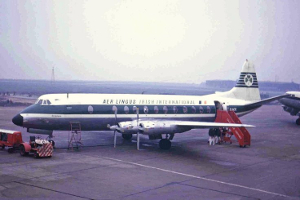
Aer Lingus Flight 712 crashes enroute from Cork to London on March 24, 1968 killing all 61 passengers and crew. The aircraft, a Vickers Viscount 803 named “St. Phelim,” crashes into the sea off Tuskar Rock, County Wexford. Although the investigation into the crash lasts two years, a cause is never determined. There has long been popular speculation that the aircraft was shot down by a British experimental missile. Aberporth in west Wales is at the time the most advanced British missile testing station.
The flight leaves Cork Airport at 10:32 AM for London. The flight proceeds normally until a call is heard with the probable contents “twelve thousand feet descending spinning rapidly.” There is no further communications with the aircraft and London ATC informs Shannon ATC that they have no radio contact with EI-AOM. London ATC requests Aer Lingus Flight EI 362, flying a Dublin to Bristol route, to search west of Strumble. This search at 500 feet in good visibility turns up nothing. At 11:25 AM a full alert is declared. By 12:36 PM there is a report of wreckage sighted at position 51°57′N, 06°10′W. Searching aircraft, however, find nothing and the report is cancelled. Aircraft and ships from the UK resume the search the following day and wreckage is sighted and bodies are recovered 6 nautical miles northeast of Tuskar Rock with more wreckage scattered an additional 6 nautical miles to the northwest.
Thirteen bodies are recovered over the next few days. Another body is recovered later. The main wreckage is located on the sea bed by trawling 1.72 nautical miles from Tuskar Rock at 39 fathoms.
In the years since the crash several witnesses have come forward with evidence to support the missile theory, including a crew member of the British ship HMS Penelope. He alleges that part of the wreckage was recovered by Penelope and removed to the UK.
An investigation report is produced in 1970, a review is undertaken between 1998 and 2000, and an independent study is commissioned in 2000.
However, in 2002 a review process conducted by the Air Accident Investigation Unit (AAIU) discloses that Aer Lingus paperwork relating to a routine maintenance inspection carried out on the aircraft in December 1967 is found to be missing in 1968. Moreover, a large body of research is done by the investigators after the accident, regarding the maintenance operating plan used for EI-AOM and defects on the aircraft found during analysis of the maintenance records. This research is not referred to in the 1970 report. A new board of investigation is set up by the Irish Government and finds that the crash is the consequence of a chain of events starting with a failure to the left tail-plane caused by metal fatigue, corrosion, flutter, or a bird strike, with the most likely cause being a flutter-induced fatigue failure of the elevator trim tab operating mechanism.
In March 2007 retired RAF Squadron Leader Eric Evers, who is previously chief flying instructor with the British military in RAF Little Rissington, makes a claim that the accident is in fact caused by a mid-air collision between the Aer Lingus Vickers Viscount and a French-built Fouga Magister military aircraft which is training with the Irish Air Corps. Evers maintains that both the French and Irish authorities colluded in a subsequent cover-up, and the Magister wreckage may still be on the seabed. Evers claims have been largely disputed.
Aer Lingus still uses this flight number for a daily flight from Cork to London’s Heathrow Airport, contrary to airline convention of discontinuing a flight number following a crash. The route is operated with an aircraft from the Airbus A320 family.
Sir Richard Steele, Irish writer and politician, remembered as co-founder, with his friend Joseph Addison, of the magazine Tatler, is born in Dublin on March 12, 1672.
Steele is born to Richard Steele, an attorney, and Elinor Symes (née Sheyles). He is largely raised by his uncle and aunt, Henry Gascoigne and Lady Katherine Mildmay. A member of the Protestant gentry, he is educated at Charterhouse School, where he first meets Addison. After starting at Christ Church, Oxford, he goes on to Merton College, Oxford, then joins the Life Guards of the Household Cavalry in order to support King William’s wars against France. He is commissioned in 1697 and rises to the rank of captain within two years. Steele leaves the army in 1705, perhaps due to the death of the 34th Foot’s commanding officer, Robert Lucas, which limits his opportunities of promotion.
Steele’s first published work, The Christian Hero (1701), attempts to point out the differences between perceived and actual masculinity. Written while he serves in the army, it expresses his idea of a pamphlet of moral instruction. The Christian Hero is ultimately ridiculed for what some thought was hypocrisy because Steele did not necessarily follow his own preaching.
Steele writes a comedy that same year entitled The Funeral. This play meets with wide success and is performed at the Theatre Royal, Drury Lane, London, bringing him to the attention of the King and the Whig party. Next, Steele writes The Lying Lover, one of the first sentimental comedies, but a failure on stage. In 1705, he writes The Tender Husband, and later that year writes the prologue to The Mistake, by John Vanbrugh.
The Tatler, Steele’s first journal, is first published on April 12, 1709, and appears three times a week. Steele writes this periodical under the pseudonym Isaac Bickerstaff and gives Bickerstaff an entire, fully developed personality. Steele describes his motive in writing Tatler as “to expose the false arts of life, to pull off the disguises of cunning, vanity, and affectation, and to recommend a general simplicity in our dress, our discourse, and our behavior.”
The Tatler is closed down to avoid the complications of running a Whig publication that has come under Tory attack. Addison and Steele then found The Spectator in 1711 and also The Guardian in 1713.
Steele becomes a Whig Member of Parliament in 1713, for Stockbridge. He is soon expelled for issuing a pamphlet in favour of the Hanoverian succession. When George I of Great Britain comes to the throne in the following year, Steele is knighted and given responsibility for the Theatre Royal, Drury Lane, London. He returns to parliament in 1715, for Boroughbridge.
While at Drury Lane, Steele writes and directs the sentimental comedyThe Conscious Lovers, which is an immediate hit. However, he falls out with Addison and with the administration over the Peerage Bill (1719), and in 1724 he retires to his wife’s homeland of Wales, where he spends the remainder of his life.
Steele remains in Carmarthen after his wife Mary’s death, and is buried there, at St. Peter’s Church. During restoration of the church in 2000, his skull is discovered in a lead casket, having previously been accidentally disinterred during the 1870s.
Although a Protestant country-gentleman, O’Brien supports Catholic Emancipation while remaining a supporter of British-Irish union. In 1843, in protest against the imprisonment of Daniel O’Connell, he joins O’Connell’s anti-union Repeal Association.
Three years later, O’Brien withdraws the Young Irelanders from the association. In January 1847, along with Thomas Francis Meagher, he founds the Irish Confederation, although he continues to preach reconciliation until O’Connell’s death in May 1847. He is active in seeking relief from the hardships of the famine. In March 1848, he speaks out in favour of a National Guard and tries to incite a national rebellion. He is tried for sedition on May 15, 1848, but is not convicted.
On July 29, 1848, O’Brien and other Young Irelanders lead landlords and tenants in a rising in three counties, with an almost bloodless battle against police at Ballingarry, County Tipperary. In O’Brien’s subsequent trial, the jury finds him guilty of high treason. He is sentenced to be hanged, drawn, and quartered. Petitions for clemency are signed by 70,000 people in Ireland and 10,000 people in England.
In Dublin on June 5, 1849, the sentences of O’Brien and other members of the Irish Confederation are commuted to transportation for life to Van Diemen’s Land, which is Tasmania in present-day Australia.
O’Brien attempts to escape from Maria Island off Tasmania but is betrayed by Captain Ellis of the schooner hired for the escape. He is sent to Port Arthur where he meets up with John Mitchel, who had been transported prior to the rebellion. The cottages which O’Brien lives in on Maria Island and Port Arthur have been preserved in their 19th century state as memorials.
Having emigrated to the United States, Ellis is tried by another Young Irelanders leader, Terence MacManus, at a lynch court in San Francisco for the betrayal of O’Brien. He is freed for lack of evidence.
In 1854, after five years in Tasmania, O’Brien is released on the condition he never return to Ireland. He settles in Brussels. In May 1856, he is granted an unconditional pardon and returns to Ireland that July. He contributes to The Nation newspaper but plays no further part in politics.
In 1864 he visits England and Wales, with the view of rallying his failing health, but no improvement takes place, and he dies at Bangor, Wales on June 16, 1864.
Arthur Shields, Irish actor on television, stage, and film, is born on February 15, 1896, into an Irish Protestant family in Portobello, Dublin. Shields starts acting in the Abbey Theatre when he is 17 years old. He is the younger brother of Oscar-winning actor Barry Fitzgerald. They are the sons of Adolphus Shields, who is well-known in Dublin as a labor organizer although the 1901 census lists his occupation as “press reader,” and Fanny Sophia Sheilds.
Shields returns to the Abbey Theatre and has a varied career there from 1914-1939 as actor, assistant director, director, and stage manager. He appears in more than 300 roles in 350 plays while he is at the Abbey. Three of the productions he appears in are by Irish playwright Teresa Deevy – The Reapers, Temporal Powers, and Katie Roche. Three times he brings the Abbey Company to the United States.
Shields dies of complications related to emphysema on April 27, 1970, in Santa Barbara, California. He is survived by his wife, actress Laurie Bailey, a daughter, a son, and four great-grandchildren. His body is cremated, with the ashes taken to Dublin, where a burial with full military honors takes place.
Richard John Griffith, Irish geologist, mining engineer, and chairman of the Board of Works of Ireland, is born in Hume Street, Dublin, on September 20, 1784. He completed the first complete geological map of Ireland and is author of the valuation of Ireland, known ever since as Griffith’s Valuation.
In 1799 he obtains a commission in the Royal Irish Artillery, but a year later, when the corps is incorporated with that of England, he retires, and devotes his attention to civil engineering and mining. He studies chemistry, mineralogy, and mining for two years in London under William Nicholson and afterwards examines the mining districts in various parts of England, Wales, and Scotland.
While in Cornwall he discovers ores of nickel and cobalt in material that has been rejected as worthless. He completes his studies under Robert Jameson and others at Edinburgh, is elected a Fellow of the Royal Society of Edinburgh in 1807, a member of the newly established Geological Society of London in 1808, and in the same year he returns to Ireland.
In 1809, he is appointed by the commissioners to inquire into the nature and extent of the bogs in Ireland and the means of improving them. In 1812 he is elected Professor of Geology and Mining Engineer to the Royal Dublin Society. Shortly afterwards he expresses his intention of preparing a geological map of Ireland. During subsequent years he makes many surveys and issues many reports on mineral districts in Ireland. These form the foundation of his first geological map of the country in 1815. He also succeeds Dr. Richard Kirwan as government inspector of mines in Ireland. In 1822 Griffith becomes engineer of public works in Cork, Kerry, and Limerick, and is occupied until 1830 in repairing old roads and in laying out many miles of new roads in some of the most inaccessible parts of the country.
Meanwhile, in 1825, he is appointed by the government to carry out a boundary survey of Ireland. He is to mark the boundaries of every county, barony, civil parish, and townland in preparation for the first Ordnance Survey. He is also called upon to assist in the preparation of a parliamentary Bill to provide for the general valuation of Ireland, which passes in 1826. Griffith is appointed Commissioner of Valuation in 1827 but does not start work until 1830 when the new 6″ maps become available from the Ordnance survey and which he is required to use as provided for by statute. He continues to work on this until 1868. On Griffith’s valuation the various local and public assessments are made.
His extensive investigations furnish him with ample material for improving his geological map and the second edition is published in 1835. A third edition on a larger scale (1 in. to 4 m.) is issued under the Board of Ordnance in 1839 and it is further revised in 1855. For this great work and his other services to science Griffith is awarded the Wollaston Medal by the Geological Society in 1854. In 1850 he is made chairman of the Irish Board of Works and in 1858 he is created a baronet.
Griffith dies at the age of 95 at his residence in Dublin on September 22, 1878. At the time of his death, he is the oldest surviving fellow of the Geological Society of London and is the last survivor of the long-since disbanded Royal Irish Regiment of Artillery. He is buried alongside his wife, Maria Jane, in Mount Jerome Cemetery, Harold’s Cross, Dublin.





 seamus dubhghaill