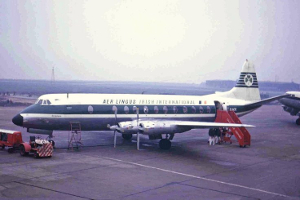
Aer Lingus Flight 712 crashes enroute from Cork to London on March 24, 1968 killing all 61 passengers and crew. The aircraft, a Vickers Viscount 803 named “St. Phelim,” crashes into the sea off Tuskar Rock, County Wexford. Although the investigation into the crash lasts two years, a cause is never determined. There has long been popular speculation that the aircraft was shot down by a British experimental missile. Aberporth in west Wales is at the time the most advanced British missile testing station.
The flight leaves Cork Airport at 10:32 AM for London. The flight proceeds normally until a call is heard with the probable contents “twelve thousand feet descending spinning rapidly.” There is no further communications with the aircraft and London ATC informs Shannon ATC that they have no radio contact with EI-AOM. London ATC requests Aer Lingus Flight EI 362, flying a Dublin to Bristol route, to search west of Strumble. This search at 500 feet in good visibility turns up nothing. At 11:25 AM a full alert is declared. By 12:36 PM there is a report of wreckage sighted at position 51°57′N, 06°10′W. Searching aircraft, however, find nothing and the report is cancelled. Aircraft and ships from the UK resume the search the following day and wreckage is sighted and bodies are recovered 6 nautical miles northeast of Tuskar Rock with more wreckage scattered an additional 6 nautical miles to the northwest.
Thirteen bodies are recovered over the next few days. Another body is recovered later. The main wreckage is located on the sea bed by trawling 1.72 nautical miles from Tuskar Rock at 39 fathoms.
In the years since the crash several witnesses have come forward with evidence to support the missile theory, including a crew member of the British ship HMS Penelope. He alleges that part of the wreckage was recovered by Penelope and removed to the UK.
An investigation report is produced in 1970, a review is undertaken between 1998 and 2000, and an independent study is commissioned in 2000.
However, in 2002 a review process conducted by the Air Accident Investigation Unit (AAIU) discloses that Aer Lingus paperwork relating to a routine maintenance inspection carried out on the aircraft in December 1967 is found to be missing in 1968. Moreover, a large body of research is done by the investigators after the accident, regarding the maintenance operating plan used for EI-AOM and defects on the aircraft found during analysis of the maintenance records. This research is not referred to in the 1970 report. A new board of investigation is set up by the Irish Government and finds that the crash is the consequence of a chain of events starting with a failure to the left tail-plane caused by metal fatigue, corrosion, flutter, or a bird strike, with the most likely cause being a flutter-induced fatigue failure of the elevator trim tab operating mechanism.
In March 2007 retired RAF Squadron Leader Eric Evers, who is previously chief flying instructor with the British military in RAF Little Rissington, makes a claim that the accident is in fact caused by a mid-air collision between the Aer Lingus Vickers Viscount and a French-built Fouga Magister military aircraft which is training with the Irish Air Corps. Evers maintains that both the French and Irish authorities colluded in a subsequent cover-up, and the Magister wreckage may still be on the seabed. Evers claims have been largely disputed.
Aer Lingus still uses this flight number for a daily flight from Cork to London’s Heathrow Airport, contrary to airline convention of discontinuing a flight number following a crash. The route is operated with an aircraft from the Airbus A320 family.
Sir Richard Steele, Irish writer and politician, remembered as co-founder, with his friend Joseph Addison, of the magazine Tatler, is born in Dublin on March 12, 1672.
Steele is born to Richard Steele, an attorney, and Elinor Symes (née Sheyles). He is largely raised by his uncle and aunt, Henry Gascoigne and Lady Katherine Mildmay. A member of the Protestant gentry, he is educated at Charterhouse School, where he first meets Addison. After starting at Christ Church, Oxford, he goes on to Merton College, Oxford, then joins the Life Guards of the Household Cavalry in order to support King William’s wars against France. He is commissioned in 1697 and rises to the rank of captain within two years. Steele leaves the army in 1705, perhaps due to the death of the 34th Foot’s commanding officer, Robert Lucas, which limits his opportunities of promotion.
Steele’s first published work, The Christian Hero (1701), attempts to point out the differences between perceived and actual masculinity. Written while he serves in the army, it expresses his idea of a pamphlet of moral instruction. The Christian Hero is ultimately ridiculed for what some thought was hypocrisy because Steele did not necessarily follow his own preaching.
Steele writes a comedy that same year entitled The Funeral. This play meets with wide success and is performed at the Theatre Royal, Drury Lane, London, bringing him to the attention of the King and the Whig party. Next, Steele writes The Lying Lover, one of the first sentimental comedies, but a failure on stage. In 1705, he writes The Tender Husband, and later that year writes the prologue to The Mistake, by John Vanbrugh.
The Tatler, Steele’s first journal, is first published on April 12, 1709, and appears three times a week. Steele writes this periodical under the pseudonym Isaac Bickerstaff and gives Bickerstaff an entire, fully developed personality. Steele describes his motive in writing Tatler as “to expose the false arts of life, to pull off the disguises of cunning, vanity, and affectation, and to recommend a general simplicity in our dress, our discourse, and our behavior.”
The Tatler is closed down to avoid the complications of running a Whig publication that has come under Tory attack. Addison and Steele then found The Spectator in 1711 and also The Guardian in 1713.
Steele becomes a Whig Member of Parliament in 1713, for Stockbridge. He is soon expelled for issuing a pamphlet in favour of the Hanoverian succession. When George I of Great Britain comes to the throne in the following year, Steele is knighted and given responsibility for the Theatre Royal, Drury Lane, London. He returns to parliament in 1715, for Boroughbridge.
While at Drury Lane, Steele writes and directs the sentimental comedyThe Conscious Lovers, which is an immediate hit. However, he falls out with Addison and with the administration over the Peerage Bill (1719), and in 1724 he retires to his wife’s homeland of Wales, where he spends the remainder of his life.
Steele remains in Carmarthen after his wife Mary’s death, and is buried there, at St. Peter’s Church. During restoration of the church in 2000, his skull is discovered in a lead casket, having previously been accidentally disinterred during the 1870s.
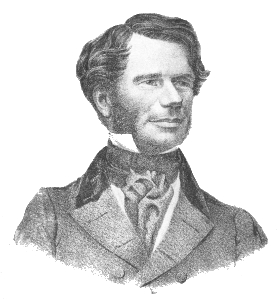
Although a Protestant country-gentleman, O’Brien supports Catholic Emancipation while remaining a supporter of British-Irish union. In 1843, in protest against the imprisonment of Daniel O’Connell, he joins O’Connell’s anti-union Repeal Association.
Three years later, O’Brien withdraws the Young Irelanders from the association. In January 1847, along with Thomas Francis Meagher, he founds the Irish Confederation, although he continues to preach reconciliation until O’Connell’s death in May 1847. He is active in seeking relief from the hardships of the famine. In March 1848, he speaks out in favour of a National Guard and tries to incite a national rebellion. He is tried for sedition on May 15, 1848, but is not convicted.
On July 29, 1848, O’Brien and other Young Irelanders lead landlords and tenants in a rising in three counties, with an almost bloodless battle against police at Ballingarry, County Tipperary. In O’Brien’s subsequent trial, the jury finds him guilty of high treason. He is sentenced to be hanged, drawn, and quartered. Petitions for clemency are signed by 70,000 people in Ireland and 10,000 people in England.
In Dublin on June 5, 1849, the sentences of O’Brien and other members of the Irish Confederation are commuted to transportation for life to Van Diemen’s Land, which is Tasmania in present-day Australia.
O’Brien attempts to escape from Maria Island off Tasmania but is betrayed by Captain Ellis of the schooner hired for the escape. He is sent to Port Arthur where he meets up with John Mitchel, who had been transported prior to the rebellion. The cottages which O’Brien lives in on Maria Island and Port Arthur have been preserved in their 19th century state as memorials.
Having emigrated to the United States, Ellis is tried by another Young Irelanders leader, Terence MacManus, at a lynch court in San Francisco for the betrayal of O’Brien. He is freed for lack of evidence.
In 1854, after five years in Tasmania, O’Brien is released on the condition he never return to Ireland. He settles in Brussels. In May 1856, he is granted an unconditional pardon and returns to Ireland that July. He contributes to The Nation newspaper but plays no further part in politics.
In 1864 he visits England and Wales, with the view of rallying his failing health, but no improvement takes place, and he dies at Bangor, Wales on June 16, 1864.
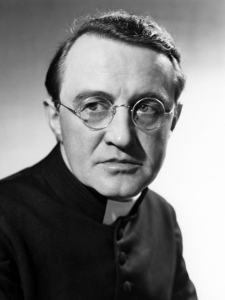
Arthur Shields, Irish actor on television, stage, and film, is born on February 15, 1896, into an Irish Protestant family in Portobello, Dublin. Shields starts acting in the Abbey Theatre when he is 17 years old. He is the younger brother of Oscar-winning actor Barry Fitzgerald. They are the sons of Adolphus Shields, who is well-known in Dublin as a labor organizer although the 1901 census lists his occupation as “press reader,” and Fanny Sophia Sheilds.
Shields returns to the Abbey Theatre and has a varied career there from 1914-1939 as actor, assistant director, director, and stage manager. He appears in more than 300 roles in 350 plays while he is at the Abbey. Three of the productions he appears in are by Irish playwright Teresa Deevy – The Reapers, Temporal Powers, and Katie Roche. Three times he brings the Abbey Company to the United States.
Shields dies of complications related to emphysema on April 27, 1970, in Santa Barbara, California. He is survived by his wife, actress Laurie Bailey, a daughter, a son, and four great-grandchildren. His body is cremated, with the ashes taken to Dublin, where a burial with full military honors takes place.
Richard John Griffith, Irish geologist, mining engineer, and chairman of the Board of Works of Ireland, is born in Hume Street, Dublin, on September 20, 1784. He completed the first complete geological map of Ireland and is author of the valuation of Ireland, known ever since as Griffith’s Valuation.
In 1799 he obtains a commission in the Royal Irish Artillery, but a year later, when the corps is incorporated with that of England, he retires, and devotes his attention to civil engineering and mining. He studies chemistry, mineralogy, and mining for two years in London under William Nicholson and afterwards examines the mining districts in various parts of England, Wales, and Scotland.
While in Cornwall he discovers ores of nickel and cobalt in material that has been rejected as worthless. He completes his studies under Robert Jameson and others at Edinburgh, is elected a Fellow of the Royal Society of Edinburgh in 1807, a member of the newly established Geological Society of London in 1808, and in the same year he returns to Ireland.
In 1809, he is appointed by the commissioners to inquire into the nature and extent of the bogs in Ireland and the means of improving them. In 1812 he is elected Professor of Geology and Mining Engineer to the Royal Dublin Society. Shortly afterwards he expresses his intention of preparing a geological map of Ireland. During subsequent years he makes many surveys and issues many reports on mineral districts in Ireland. These form the foundation of his first geological map of the country in 1815. He also succeeds Dr. Richard Kirwan as government inspector of mines in Ireland. In 1822 Griffith becomes engineer of public works in Cork, Kerry, and Limerick, and is occupied until 1830 in repairing old roads and in laying out many miles of new roads in some of the most inaccessible parts of the country.
Meanwhile, in 1825, he is appointed by the government to carry out a boundary survey of Ireland. He is to mark the boundaries of every county, barony, civil parish, and townland in preparation for the first Ordnance Survey. He is also called upon to assist in the preparation of a parliamentary Bill to provide for the general valuation of Ireland, which passes in 1826. Griffith is appointed Commissioner of Valuation in 1827 but does not start work until 1830 when the new 6″ maps become available from the Ordnance survey and which he is required to use as provided for by statute. He continues to work on this until 1868. On Griffith’s valuation the various local and public assessments are made.
His extensive investigations furnish him with ample material for improving his geological map and the second edition is published in 1835. A third edition on a larger scale (1 in. to 4 m.) is issued under the Board of Ordnance in 1839 and it is further revised in 1855. For this great work and his other services to science Griffith is awarded the Wollaston Medal by the Geological Society in 1854. In 1850 he is made chairman of the Irish Board of Works and in 1858 he is created a baronet.
Griffith dies at the age of 95 at his residence in Dublin on September 22, 1878. At the time of his death, he is the oldest surviving fellow of the Geological Society of London and is the last survivor of the long-since disbanded Royal Irish Regiment of Artillery. He is buried alongside his wife, Maria Jane, in Mount Jerome Cemetery, Harold’s Cross, Dublin.
In 484, Brendan is born in Tralee, County Kerry, in the province of Munster. He is born among the Altraige, a tribe originally centred around Tralee Bay, to parents called Finnlug and Cara. He is baptised at Tubrid, near Ardfert by Saint Erc, and is originally to be called “Mobhí” but signs and portents attending his birth and baptism lead to him being christened “Broen-finn” or “fair-drop.” For five years he is educated under Saint Ita, “the Brigid of Munster.” When he is six, he is sent to Saint Jarlath‘s monastery school at Tuam to further his education. Brendan is one of the “Twelve Apostles of Ireland,” one of those said to have been tutored by the great teacher, Finnian of Clonard.
At the age of twenty-six, Brendan is ordained a priest by Saint Erc. Afterwards, he founds a number of monasteries. Brendan’s first voyage takes him to the Aran Islands, where he founds a monastery. He also visits Hinba, an island off Scotland where he is said to meet Columcille. On the same voyage he travels to Wales, and finally to Brittany, on the northern coast of France. Between the years 512 and 530 Brendan builds monastic cells at Ardfert and, at the foot of Mount Brandon, Shanakeel— Seana Cill, usually translated as “the old church.” From here he supposedly sets out on his famous seven-year voyage for Paradise.
St. Brendan is chiefly renowned for his legendary journey to the Isle of the Blessed as described in the ninth century Voyage of St. Brendan the Navigator. Many versions exist that tell of how he sets out onto the Atlantic Ocean with sixteen pilgrims searching for the Garden of Eden. One of these companions is said to be Saint Malo, the namesake of Saint-Malo. This occurs sometime between 512 and 530 AD, before his travel to the island of Great Britain. On the trip, Brendan supposedly sees Saint Brendan’s Island, a blessed island covered with vegetation. He also encounters a sea monster, an adventure he shares with his contemporary, Saint Columba. The most commonly illustrated adventure is his landing on an island which turns out to be a giant sea monster called Jasconius or Jascon. This too, has its parallels in other stories, not only in Irish mythology but in other traditions, from Sinbad the Sailor to Pinocchio.
Brendan travels to Wales and the holy island of Iona, off the west coast of Scotland. Returning to Ireland, he founds a monastery at Annaghdown, where he spends the rest of his days. He also founds a convent at Annaghdown for his sister Briga. Having established the bishopric of Ardfert, St. Brendan proceeds to Thomond and founds a monastery at Inis-da-druim, in the present parish of Killadysert, County Clare, about the year 550. He then journeys to Wales and studies under Saint Gildas at Llancarfan, and then to Iona, for it is said that he leaves traces of his apostolic zeal at Kil-brandon and Kil-brennan Sound. After a three years’ mission in Britain, he returns to Ireland, and does more proselytising in various parts of Leinster, especially at Dysart, Killiney, and Brandon Hill. He establishes churches at Inchiquin, County Clare and at Inishglora, County Mayo, and founds Clonfert in County Galway around 557 AD.
Brendan dies on May 16, 577 at Annaghdown, while visiting his sister Briga. Fearing that after his death his devotees might take his remains as relics, Brendan arranges before his death to have his body secretly carried back to the monastery he founded at Clonfert concealed in a luggage cart. He is buried in Clonfert Cathedral.
Diarmait Mac Murchada, Irish King of Leinster whose appeal to the English for help in settling an internal dispute leads to the Anglo-Norman invasion and conquest of Ireland by England, dies on May 1, 1171, of “an insufferable and unknown disease.”
Mac Murchada is born around 1110, the son of Donnchad mac Murchada, King of Leinster and Dublin. His father is killed in battle in 1115 by his cousin Sigtrygg Silkbeard, king of the Dublin Vikings, and is buried by them in Dublin along with the body of a dog which is considered to be a huge insult.
After the death of Énna Mac Murchada, his older brother, Mac Murchada unexpectedly becomes King of Leinster. This is opposed by the High King of Ireland, Toirdelbach Ua Conchobair, who fears that Mac Murchada will become a rival. Toirdelbach sends one of his allied Kings, the belligerent Tigernán Ua Ruairc, to conquer Leinster and oust the young Mac Murchada. Ua Ruairc goes on a brutal campaign slaughtering the livestock of Leinster and thereby trying to starve the province’s residents. Mac Murchada is ousted from his throne but is able to regain it with the help of Leinster clans in 1132. Two decades of an uneasy peace followed between Ua Conchobair and Mac Murchada. In 1152 he even assists the High King in a raid of the land of Ua Ruairc who has become a renegade.
As King of Leinster, between 1140–70, Mac Murchada commissions Irish Romanesque churches and abbeys at Baltinglass, Glendalough, Ferns, and Killeshin. He sponsors convents at Dublin, two at Aghade, County Carlow, and at Kilculliheen near Waterford city. He also sponsors the successful career of churchman St. Lorcán Ua Tuathail and presides at the synod of Clane in 1161 when Ua Tuathail is installed as archbishop of Dublin.
In 1166, Ireland’s new High King and Mac Murchada’s only ally, Muirchertach Ua Lochlainn, has fallen and a large coalition led by Mac Murchada’s arch enemy, Tigernán Ua Ruairc, marches on Leinster. The High King deposes Mac Murchada from the throne of Leinster, and he flees to Wales and from there to England and France seeking the support of Henry II of England in the recruitment of soldiers to reclaim his kingship. Henry authorises Mac Murchada to seek help from the soldiers and mercenaries in his kingdom. Those who agreed to help include Richard de Clare (Strongbow) and half-brothers Robert FitzStephen and Maurice FitzGerald.
In Mac Murchada’s absence, Ruaidrí Ua Conchobair, son of Mac Murchada’s former enemy, the High King Toirdelbach Ua Conchobair, has become the new High King of Ireland.
Mac Murchada brings an advance party of adventurers back to Ireland in 1167, recaptures Wexford, and waits for Strongbow to arrive. From his base in Wales, Strongbow launches an offensive in 1170, capturing Waterford and Dublin, taking control of the East coast, much to the dismay of the Gaelic Chieftains and Ua Conchobair. To cement the alliance, Mac Murchada marries his daughter, Aoife, to Strongbow, in Christ Church Cathedral in Dublin 1170.
The Irish Chieftains do not allow the invaders to settle, however, and they are continually attacked and harassed. It begins to appear likely that they will be driven from Ireland. However, they receive support from Henry II, who has become concerned about the amount of power and influence that Strongbow is amassing in Ireland. The subsequent domination of South Wales by the Normans is a result of the need to keep supply lines into Eastern Ireland open.
Mac Murchada dies on May 1, 1171, leaving Strongbow to declare himself King of Leinster. Mac Murchada is buried in the Cathedral graveyard of Ferns village.
In 1167, Diarmait Mac Murchada is deprived of the Kingdom of Leinster by the High King of Ireland, Ruaidrí Ua Conchobair. To recover his kingdom, Mac Murchada solicits help from King Henry II of England. Henry provides a letter of comfort for willing supporters of Mac Murchada’s cause in his kingdom. However, after his return to Wales, he fails to rally any forces to his standard. He eventually meets Richard de Clare and other barons of the Welsh Marches. Mac Murchada comes to an agreement with de Clare where, for the Earl’s assistance with an army the following spring, he can have Mac Murchada’s eldest daughter, Aoife, in marriage and the succession to Leinster.
Mac Murchada and Richard de Clare raise a large army, which includes Welsh archers and arranges for Raymond FitzGerald to lead it. The force takes the Ostman towns of Wexford, Waterford, and Dublin in rapid succession between 1169 and 1170. Richard de Clare, however, is not with the first invading party and arrives later, in August 1170.
In May 1171, Diarmait Mac Murchada dies and his son, Donal MacMurrough-Kavanagh claims the kingdom of Leinster in accordance with his rights under the Brehon Laws. Richard de Clare also claims the kingship in the right of his wife. At this time, Strongbow sends his uncle, Hervey de Montmorency, on an embassy to Henry II, which is necessary to appease the King who is growing restive at the count’s increasing power. Upon his return, de Montmorency conveys the King’s terms – the return of Richard de Clare’s lands in France, England, and Wales as well as leaving him in possession of his Irish lands. In return, Richard de Clare surrenders Dublin, Waterford, and other fortresses to the English king. Henry’s intervention is successful and both the Gaelic and Norman lords in the south and east of Ireland accept his rule. Richard de Clare also agrees to assist Henry II in his upcoming war in France.
Richard de Clare dies on April 20, 1176, of an infection in his leg or foot. He is buried in Holy Trinity Church in Dublin with his uncle-in-law, Lorcán Ua Tuathail, Archbishop of Dublin, presiding. King Henry II takes all of Strongbow’s lands and castles for himself and places a royal official in charge of them.
Unknown to many, Fitzgerald is also a patriot. In 1916 he is a member of the Irish Volunteers and is prepared to fight in the Easter Rising on Easter Sunday when the orders are countermanded. On Easter Monday the revolution is on again, and Shields goes to the Abbey Theatre and retrieves his rifle from under the stage. He goes around the corner to Liberty Hall and joins with James Connolly’s Irish Citizen Army.
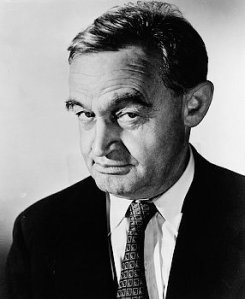
Fitzgerald goes to Hollywood to star in another O’Casey work, The Plough and the Stars (1936), directed by John Ford. He has a successful Hollywood career in such films as The Long Voyage Home (1940), How Green Was My Valley (1941), And Then There Were None (1945), The Naked City (1948), and The Quiet Man (1952). Fitzgerald achieves a feat unmatched in the history of the Academy Awards. He is nominated for both the Best Actor Oscar and the Best Supporting Actor Oscar for the same performance, as Father Fitzgibbon in Going My Way (1944). He wins the Best Supporting Actor Award. This feat will likely never be matched as the Academy Award rules have since been changed to prevent this. During World War II, Oscar statues are made of plaster rather than gold due to wartime metal shortages. Being an avid golfer, Fitzgerald later breaks the head off his Oscar statue while practicing his golf swing.
Fitzgerald has two stars on the Hollywood Walk of Fame, one for films located at 6220 Hollywood Blvd. and one for television located at 7001 Hollywood Blvd.
Fitzgerald returns to live in Dublin in 1959. He dies of heart failure on January 14, 1961, and is buried at Deansgrange Cemetery in Dublin.