At 12:25 PM on December 11, 1971, when the Shankill Road is packed with Saturday shoppers, a green car pulls up outside the Balmoral Furniture Company at the corner of Carlow Street and Shankill Road. The shop is locally known as “Moffat’s” although Balmoral Furniture Company is its official name. One of the occupants gets out of the car and leaves a box containing a bomb on the step outside the front door. The person gets back into the car, and it speeds away. The bomb explodes moments later, bringing down most of the building on top of those inside the shop and on passersby outside.
Four people are killed as a result of the massive blast, including two babies, Tracey Munn (age 2 years) and Colin Nichol (age 17 months), who both die instantly when part of the wall crashes down upon the pram they are sharing. Two employees working inside the shop are also killed, Hugh Bruce (age 70 years) and Harold King (age 29 years). Unlike the other three victims, who are Protestant, King is a Catholic. Bruce, a former soldier and a Corps of Commissionaires member, is the shop’s doorman and is nearest to the bomb when it explodes. Nineteen people are injured in the bombing, including Tracey’s mother. The building, which was built in the Victorian era, has load-bearing walls supporting upper floors on joists. It is unable to withstand the blast and collapses, adding to the devastation and injury count.
The bombing causes bedlam in the crowded street. Hundreds of people rush to the scene where they form human chains to help the British Army and Royal Ulster Constabulary (RUC) free those trapped beneath the rubble by digging with their bare hands. Peter Taylor describes the scene as “reminiscent of the London Blitz” in World War II.
The Balmoral Furniture Company bombing is one of the catalysts that spark the series of tit-for-tat bombings and shootings by loyalists, republicans and the security forces that make the 1970s the bloodiest decade in the 30-year history of The Troubles.
(Pictured: Fireman is shown removing the body of one of the victims of the bombing at the Balmoral Furniture Showroom, December 11, 1971)
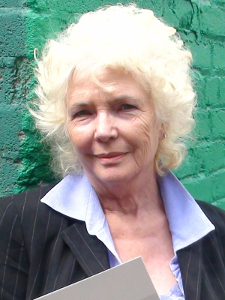
Flanagan is the daughter of Rosanna (née McGuirk) and Terence Niall Flanagan, an Irish Army officer and Communist who had fought in the International Brigade in the Spanish Civil War against General Francisco Franco. Although her parents are not Irish speakers, they want Fionnula and her four siblings to learn the Irish language, thus she grows up speaking English and Irish fluently. She is educated in Switzerland and England. She trains extensively at the Abbey Theatre in Dublin and travels throughout Europe before settling in Los Angeles, California in early 1968.
Flanagan comes to prominence in Ireland in 1965 as a result of her role as Máire in the Telefís Éireann production of the Irish language play An Triail, for which she receives the Jacob’s Award in Dublin for her “outstanding performance.” With her portrayal of Gerty McDowell in the 1967 film version of Ulysses, she establishes herself as one of the foremost interpreters of James Joyce. She makes her Broadway debut in 1968 in Brian Friel‘s Lovers, then appears in The Incomparable Max (1971) and such Joycean theatrical projects as Ulysses in Nighttown and James Joyce’s Women (1977-1979), a one-woman show written by Flanagan and directed for the stage by Burgess Meredith. It is subsequently filmed in 1983, with Flanagan both producing and playing all six main female roles.
Nearly 150,000 people take to the streets on December 9, 2005, as the Irish Ferries protest mushrooms into the largest public demonstration the country has seen for two decades.
An Garda Síochána estimate that 40,000 people take part in the march in Dublin, although organisers claim the figure is far higher. Gerry Adams of Sinn Féin, Pat Rabbitte of the Labour Party and John Gormley of the Green Party participate in the march in the capital. Staff on board the MS Isle of Inismore in Pembroke and the four engineers holed up in the ships control room say they are overwhelmed by the level of support shown by marchers in the rallies.
Bus and rail services are disrupted during the protest but return to normal for evening rush hour.
The Irish Small & Medium Enterprises Association (ISME) strongly criticises the National Day of Protest. In a statement, ISME Chief Executive Mark Fielding says the protest is undermining the industrial relations process in this country and has very little to do with the Irish Ferries dispute and is in fact an attempt by the unions to influence negotiations in advance of any new national pay agreement.
Director General of the Irish Business and Employers Confederation (IBEC) Turlough O’Sullivan says there is nothing to be gained from disrupting business and the general public. He adds that whatever one’s views on the Irish Ferries dispute, nothing can justify calling a national work stoppage when discussions are already underway in a bid to resolve the row.
Mellows is born at Hartshead Military Barracks, Ashton-Under-Lyne, Lancashire, England, to William Joseph Mellows, a British Armynon-commissioned officer, and Sarah Jordan, of Inch, County Wexford. His family moves to 10 Annadale Avenue, Fairview, Dublin, in February 1895 when Sergeant Mellows is transferred there, however Liam remains in Wexford with his grandfather Patrick Jordan due to ill health. He attends the military school in Wellington Barracks in Cork and the Portobello garrison school in Dublin but ultimately refuses a military career much to his father’s disappointment, instead working as a clerk in several Dublin firms, including the Junior Army & Navy Stores on D’Olier Street.
A nationalist from an early age, Mellows approaches Thomas Clarke, who recruits him to Fianna Éireann, an organisation of young republicans.
Mellows leads roughly 700 Volunteers in abortive attacks on Royal Irish Constabulary stations at Oranmore and Clarinbridge in County Galway and takes over the town of Athenry. However, his men are very badly armed and supplied and they disperse after a week, when British troops and the cruiser HMS Gloucester are sent west to attack them.
After this insurrection fails, Mellows escapes to the United States, where he is arrested and detained without trial in The Tombs in Lower Manhattan, New York, on a charge of attempting to aid the German side in World War I. After his release in 1918, he works with John Devoy and helps to organise Éamon de Valera’s fund-raising visit to America in 1919–1920.
Mellows returns to Ireland to become Irish Republican Army “Director of Supplies” during the Irish War of Independence, responsible for buying arms. At the 1918 general election of December, he is elected to the First Dáil as a Sinn Féin candidate for both East Galway and for North Meath. He considers the Anglo-Irish Treaty as signed to be a betrayal of the Irish Republic. A conference of 9 TDs is deputed to meet privately on January 5, 1922, to resolve the dispute and to achieve a unified front by compromise. The four other anti-Treaty TDs say there is agreement but Mellows does not and is seen thereafter by pro-Treaty TDs as one of their most implacable opponents. The following day the Dáil votes to approve the Treaty by a majority of 64 to 57.
Mellows is one of the more strident TDs on the approach to the Irish Civil War. In June 1922, he and fellow republicans Rory O’Connor, Joe McKelvey and Richard Barrett, among others, enters the Four Courts, which has been occupied by anti-Treaty forces since April. However, they are bombarded by pro-Treaty Free State forces and surrender after two days. Mellows has a chance to escape along with Ernie O’Malley but does not take it. Imprisoned in Mountjoy Gaol, Mellows, O’Connor, McKelvey and Barrett are executed by firing squad on December 8, 1922, in reprisal for the shooting of TD Seán Hales. Mellows is buried in Castletown cemetery, County Wexford, a few miles from Arklow. An annual commemoration ceremony is held at his grave site, in which a wreath is laid by a member of the Liam Mellows Commemoration committee.
Mellows is commemorated by statues in Oranmore and Eyre Square in Galway, in the official name of the Irish Defence Forces army barracks at Renmore and in the naming of Mellows Bridge in Dublin. Mellows Avenue in Arklow is named in his honour. He is also commemorated in the names of two hurling clubs, one in Galway and one in Wexford, and by Unidare RFC in Ballymun and their “Liam Mellows Perpetual Cup.”
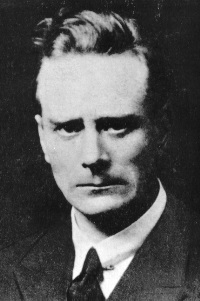
Cary is born into an old Anglo-Irish family, and at age 16 he studies painting in Edinburgh and then in Paris. From 1909 to 1912 he is at Trinity College, Oxford, where he reads law. Having joined the colonial service in 1914, he serves in the Nigeria Regiment during World War I. He is wounded while fighting in Cameroon and returns to civil duty in Nigeria in 1917 as a district officer. West Africa becomes the locale of his early novels.
Resolved to become a writer, Cary settles in Oxford in 1920. Although that year he publishes ten short stories in The Saturday Evening Post, he decides he knows too little about philosophy, ethics, and history to continue writing in good conscience. Study occupies the next several years, and it is only in 1932 that his first novel, Aissa Saved, appears. The story of an African girl converted to Christianity but still retaining pagan elements in her faith, it is followed by three more African novels — An American Visitor (1933), The African Witch (1936), and Mister Johnson (1939) — and a novel about the decline of the British Empire, Castle Corner (1938). Childhood is the theme of his next two novels, his own in A House of Children (1941) and that of a cockney wartime evacuee in the country in Charley Is My Darling (1940).
Cary’s trilogy on art begins with the first-person narration of a woman, Sara Monday, in Herself Surprised (1941) and follows with that of two men in her life, the lawyer Tom Wilcher in To Be a Pilgrim (1942) and the artist Gulley Jimson in The Horse’s Mouth(1944), his best-known novel. Monday is portrayed as a warm-hearted, generous woman who is victimized both by the conservative upper-class Wilcher and by the talented but disreputable painter Jimson. The latter character is a social rebel and visionary artist whose humorous philosophy and picaresque adventures in The Horse’s Mouth helped make him one of the best-known characters in 20th-century fiction.
Similarly, Cary’s other trilogy is seen from the vantage of a politician’s wife in A Prisoner of Grace (1952), the politician himself in Except the Lord (1953), and the wife’s second husband in Not Honour More (1955).
In 1952, Cary has some muscle problems which are originally diagnosed as bursitis, but as more symptoms are noted over the next two years, the diagnosis is changed to that of motor neuron disease (known as Lou Gehrig’s disease (ALS) in North America), a wasting and gradual paralysis that is terminal. As his physical powers fail, Cary has to have a pen tied to his hand and his arm supported by a rope to write. Finally, he resorts to dictation until unable to speak, and then ceases writing for the first time since 1912. His last work, The Captive and the Free (1959), first volume of a projected trilogy on religion, is unfinished at his death on March 29, 1957. His short stories are collected in Spring Song (1960).
Graves is born to John Crosbie Graves (1776–1835), Chief Police Magistrate for Dublin, and Helena Perceval, the daughter and co-heiress of the Rev. Charles Perceval (1751–1795) of Bruhenny, County Cork. Educated at Trinity College, Dublin, he wins a scholarship in Classics, and in 1834 graduates BA as Senior Moderator in mathematics, getting his MA in 1838. He plays cricket for Trinity, and later in his life does much boating and fly-fishing. It is intended that he join the 18th Royal Irish Regiment of Foot under his uncle, Major-General James William Graves (1774–1845), and in preparation he becomes an expert swordsman and rider.
After leaving Trinity College, Graves follows in the steps of his grandfather, Thomas Graves, who was appointed Dean of Ardfert in 1785 and Dean of Connor in 1802, and his great uncle, Richard Graves. He is appointed a fellow of Trinity College from 1836 to 1843 before taking the professorship of mathematics, a position he holds until 1862.
Graves is elected a member of the Royal Irish Academy in 1837 and subsequently holds various officerships, including President from 1861 to 1866. In 1860 he is appointed Dean of the Chapel Royal and, from 1864 to 1866, he is the Dean of Clonfert before being consecrated as Bishop of Limerick, Ardfert and Aghadoe, a position he holds for 33 years until his death on July 17, 1899. He is elected a Fellow of the Royal Society in 1880 and receives the honorary degree of DCL from Oxford University in 1881.
In 1841 Graves publishes an original mathematical work and he embodies further discoveries in his lectures and in papers read before and published by the Royal Irish Academy. He is a colleague of Sir William Rowan Hamilton and, upon the latter’s death, Graves gives a presidential panegyric containing a valuable account both of Hamilton’s scientific labours and of his literary attainments.
Graves is very interested in Irish antiquarian subjects. He discovers the key to the ancient Irish Ogham script which appears as inscriptions on cromlechs and other stone monuments. He also prompts the government to publish the old Irish Brehon Laws, Early Irish law. His suggestion is adopted, and he is appointed a member of the Commission to do this.
Graves’ official residence is The Palace at Limerick, but from the 1850s he takes the lease of Parknasilla House, County Kerry, as a summer residence. In 1892 he buys out the lease of the house and a further 114 acres of land that includes a few islands. In 1894 he sells it to Great Southern Hotels, who still own it to this day.
Atherton is born in 1598 in Somerset, England. He studies at Oxford University and joins the ranks of the Anglican clergy. In 1634 he becomes Bishop of Waterford and Lismore in the Church of Ireland. In 1640 he is accused of buggery with a man, John Childe, his steward and titheproctor. They are tried under a law that Atherton himself had helped to institute. They are both condemned to death, and Atherton is executed in St. Stephen’s Green, Dublin. Reportedly, he confesses to the crime immediately before his execution, although he had proclaimed his innocence before that.
More recently, some historical evidence has been developed that shows Atherton might have been a victim of a conspiracy to discredit him and his patrons. This is attributable to Atherton’s status as an astute lawyer, who seeks to recover lost land for the relatively weak Protestant Church of Ireland during the 1630s. Unfortunately for Atherton, this alienates him from large landowners, who then allegedly use his sexuality to discredit him.
English Puritan, Congregationalist and Independent activists, as well as English and Scottish Presbyterian activists, contemporaneously campaign to abolish Episcopacy (bishops) within the embattled Church of England, Church of Scotland and Church of Ireland, notionally expediting the political interest in Atherton’s downfall.
Posthumous accusations of sexual wrongdoing also include allegations of “incest” with his sister-in-law, and infanticide of the resultant child, as well as zoophilia with cattle. However, these allegations begin to be circulated several months after his death in an anonymous pamphlet, and may have been intended to further discredit the bishop’s campaign to restore the finances of the Church of Ireland.
(Pictured: Anonymous pamphlet of the hangings of John Atherton and John Childe, 1641)
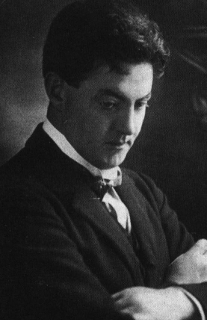
Harty’s father teaches him the viola, the piano and counterpoint, and, at the age of twelve, he follows his father’s profession and is appointed organist of Magheracoll Church, County Antrim.
Harty takes further posts in his teenage years as a church organist in Belfast and Bray. While in the latter, he comes under the influence of Michele Esposito, professor of piano at the Royal Irish Academy of Music, who encourages him to pursue a career as a piano accompanist. As Bray is only twelve miles from Dublin, Harty is able go into the city to hear an orchestra for the first time in his life.
After his early career as a church organist in his native Ireland, Harty moves to London at about age 20, soon becoming a well-known piano accompanist. The Musical Times calls him “the prince of accompanists.” As a composer he writes throughout his career, many of his works being well received, though few are regularly performed in the 21st century.
In his career as a conductor, which begins in 1904, Harty is particularly noted as an interpreter of the music of Hector Berlioz. From 1920 to 1933 he is the chief conductor of The Hallé symphony orchestra in Manchester, which he returns to the high standards and critical acclaim that it had enjoyed under its founder, Charles Hallé. His last permanent post is with the London Symphony Orchestra, but it lasts only two years, from 1932 to 1934, as Harty does not prove to be a box-office draw. According to a historian of the orchestra, Richard Morrison, Harty is “brutally and hurtfully” dropped in 1934.
During his conducting career, Harty makes some recordings with his orchestras. Shortly after his dismissal by the London Symphony Orchestra, Harty begins to suffer the symptoms of a brain tumor. After surgery which includes the removal of his right eye, he resumes his career until 1940, but the tumour returns to cause his death at the age of 61 in Hove on February 19, 1941. He is cremated, and his ashes are interred in the grounds of Hillsborough parish church, near the front door. There is a separate memorial in the church.
Patrick John Hillery, Irish politician, is inaugurated as the sixth President of Ireland on December 3, 1976. He serves two terms in the presidency and, though widely seen as a somewhat lacklustre President, is credited with bringing stability and dignity to the office. He also wins widespread admiration when it emerges that he has withstood political pressure from his own Fianna Fáil party during a political crisis in 1982.
Hillery is born in Spanish Point, County Clare on May 2, 1923. He is educated locally at Milltown Malbay national school before later attending Rockwell College. At third level he attends University College Dublin where he qualifies with a degree in medicine. Upon his conferral in 1947 he returns to his native town where he follows in his father’s footsteps as a doctor.
Following Ireland’s successful entry into Europe in 1973, Hillery is rewarded by becoming the first Irishman to serve on the European Commission, serving until 1976 when he becomes President. In 1976 the Fine Gael–Labour Party National Coalition under Liam Cosgrave informs him that he is not being re-appointed to the Commission. He considers returning to medicine; however, fate takes a turn when Minister for DefencePaddy Donegan launches a ferocious verbal attack on President Cearbhall Ó Dálaigh, calling him “a thundering disgrace” for referring anti-terrorist legislation to the courts to test its constitutionality. When a furious President Ó Dálaigh resigns, a deeply reluctant Hillery agrees to become the Fianna Fáil candidate for the presidency. Fine Gael and Labour decide it is unwise to put up a candidate in light of the row over Ó Dálaigh’s resignation. As a result, Hillery is elected unopposed, becoming President of Ireland on December 3, 1976.
When Hillery’s term of office ends in September 1983, he indicates that he does not intend to seek a second term, but he changes his mind when all three political parties plead with him to reconsider. He is returned for a further seven years without an electoral contest. After leaving office in 1990, he retires from politics.
Hillery’s two terms as president, from 1976 to 1990, end before the 1998 Good Friday Agreement, which sets terms for an end to violence in Northern Ireland. But he acts at crucial moments as an emollient influence on the republic’s policies toward the north and sets a tone that helps pave the way for eventual peace.
Patrick Hillery dies on April 12, 2008, in his Dublin home following a short illness. His family agrees to a full state funeral for the former president. He is buried at St. Fintan’s Cemetery, Sutton, Dublin. In the graveside oration, TánaisteBrian Cowen says Hillery was “A humble man of simple tastes, he has been variously described as honourable, decent, intelligent, courteous, warm and engaging. He was all of those things and more.”
The Kildare Place Society, known officially as the Society for the Promotion of the Education of the Poor of Ireland, is formed on December 2, 1811, to maintain non-denominational schools and to promote the education of the poor. It is the most successful of all the voluntary educational agencies founded in the years prior to the establishment of the National Board of Education in 1831.
Set up in 1811 explicitly to cater to the demand for education among the Catholic poor, the Kildare Place Society aims to provide a Bible-based but non-denominational education that is acceptable to Catholics. In 1816 the society petitions the Parliament of the United Kingdom and is awarded 10,000 pounds, an amount that is greatly increased over the following decade. This money allows the society to spread across the country and to establish the rudiments of a national system of primary education. The society aims to modernize the teaching profession with a training college and an inspectorate, decent schoolhouses, and regular salaries for teachers. It also produces reading material aimed at a popular audience, which competes very favorably with the much-derided chapbooks that are the staple of popular reading material at the time.
Despite the commitment of the founders, many of whom are members of the Society of Friends, to respect denominational differences, and despite the allocation of seats for Catholics on the board of trustees, the society is increasingly drawn into quarrels over the use of the Protestant Bible for educational purposes during the second decade of the 19th century.
Particularly significant is the influence of the evangelical members of the board, especially Chief Justice Thomas Lefroy, who insists on the compulsory use of the Bible “without note or comment” in the Kildare Place schools. This measure is openly and stridently criticized by the Reverend John MacHale in the famous Hierophilus Letters of 1820 and is the immediate cause of the resignations of Daniel O’Connell and Valentine Lawless, 2nd Baron Cloncurry from the society’s board in 1821. This gesture is followed in short order by directives to Catholic parents to withdraw their children from the schools.
The substance of O’Connell’s and MacHale’s attacks on the Kildare Place Society is that its policies are in line with the more overtly proselytizing societies associated with the “Second Reformation” and are therefore unsuitable for Catholic children. The society does not survive the challenge. As a result of the ideological conflict over education, the government inaugurates a series of inquiries to determine what kind of educational system would be acceptable to the different denominations in Ireland, and the outcome is the establishment of the National Board of Education in 1831. Although the Kildare Place Society continues its work into the 1830s, its school system suffers an inevitable decline with the spread of the new national system.
(Pictured: The main offices of the Kildare Place Society in Kildare Place, Dublin)







 seamus dubhghaill