seamus dubhghaill

Promoting Irish Culture and History from Little Rock, Arkansas, USA


Leave a comment

Birth of Molesworth Phillips, Companion of Captain Cook

molesworth-phillips

Molesworth Phillips, sailor and companion of Captain James Cook, is born in Swords, County Dublin on August 15, 1755.

Phillips is the son of John Phillips of Swords. His father is a natural son of Richard Molesworth, 3rd Viscount Molesworth, whence Phillips acquires his Christian name. He first enters the Royal Navy, but on the advice of his friend Sir Joseph Banks he accepts a commission as second lieutenant in the Royal Marines on January 17, 1776. In this capacity he is selected to accompany Captain Cook on his last voyage, extending over nearly three years. He sails with Cook from Plymouth on July 12, 1776, and is with the marines who escort Cook when he lands at Hawaii on February 14, 1779.

In John Webber‘s painting “The Death of Captain Cook” Phillips is represented kneeling and firing at a native who is clubbing Cook. Phillips is himself wounded, but, after swimming back to the boat, he turns back and helps another wounded marine to the boats.

On November 1, 1780, Phillips is promoted to captain. On January 10, 1782, he marries Susanna Elizabeth, third daughter of Dr. Charles Burney (1726-1814), and sister of Frances Burney and of James Burney, Phillips’s friend, who, like him, had accompanied Cook on his last voyage. He has no further active service, but is promoted brevet major on March 1, 1794, and brevet lieutenant colonel on January 1, 1798. From 1784, for the sake of his wife’s health, he lives for a time at Boulogne, but after the French Revolution he resides chiefly at Mickleham, Surrey, not far from Juniper Hall, where Frances Burney entertains numbers of French emigres. From 1796 to 1799, during the alarm of a French invasion of Ireland, Phillips feels it his duty to reside on the Irish estates at Beleotton, which he had inherited from an uncle. On January 6, 1800, his wife dies.

After the Treaty of Amiens, Phillips visits France in 1802, and he is one of those who are seized by Napoleon on the renewal of the war. He is detained in France until the peace of 1814. During this detention he makes friends with the Prince of Talleyrand and other well-known Frenchmen. After his return to England, he becomes acquainted with Robert Southey, Mary and Charles Lamb, who describe him as “the high-minded associate of Cook, the veteran colonel, with his lusty heart still sending cartels of defiance to old Time,” and with John Thomas Smith (1766-1833), whom he supplies with various anecdotes for his Nollekens and his Times.

Phillips dies of cholera at his house in Lambeth on September 11, 1832, and is buried in St. Margaret’s, Westminster, where an inscription commemorates him and James and Martin Burney (1788-1852).

(Pictured: Etching of Molesworth Phillips by Andrew Geddes, circa 1825, bequeathed by Frederick Leverton Harris, 1927, National Portrait Gallery, London)
Leave a comment

Death of Nathaniel Hone The Elder

nathaniel-hone-the-elder

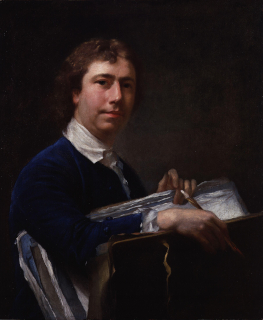
Nathaniel Hone the Elder, Irish-born portrait and miniature painter, and one of the founder members of the Royal Academy of Arts in 1768, dies in London on August 14, 1784.

Hone is born in Dublin on April 24, 1718, the son of a Dublin-based Dutch merchant. He moves to England as a young man and, after marrying Molly Earle, daughter of the John Campbell, 4th Duke of Argyll, in 1742, eventually settles in London, by which time he has acquired a reputation as a portrait painter. While his paintings are popular, his reputation is particularly enhanced by his skill at producing miniatures and enamels. He interrupts his time in London by spending two years (1750–52) studying in Italy.

As a portrait painter, several of Hone’s works are now held at the National Portrait Gallery in London. His sitters include magistrate Sir John Fielding and Methodist preacher John Wesley, and General Richard Wilford and Sir Levett Hanson in a double portrait. He often uses his son John Camillus Hone (1745-1836) in some of his works, including his unique portrait of “The Spartan Boy,” painted in 1774.

Hone courts controversy in 1775 when his satirical picture The Conjurer (National Gallery of Ireland, Dublin) is seen to attack the fashion for Italian Renaissance art and to ridicule Sir Joshua Reynolds, leading the Royal Academy to reject the painting. It also originally includes a nude caricature of fellow Academician Angelica Kauffman in the top left corner, which is painted out by Hone after Kauffman complains to the academy. The combination of a little girl and an old man has also been seen as symbolic of Kauffman and Reynolds’s closeness, age difference, and rumoured affair. To show that his reputation is undamaged, Hone organises a one-man retrospective in London, the first such solo exhibition of an artist’s work.

The Hone family is related to the old Dutch landed family the van Vianens, who hold the hereditary title of Vrijheer. His great-grand-nephew shares the same name and is also a notable Irish painter, known as Nathaniel Hone the Younger (1831–1917). He is also a relation to painter Evie Hone.

Nathaniel Hone the Elder dies in London at the age of 66 on August 14, 1784.

(Pictured: Oil on canvas self-portrait by Nathaniel Hone, circa 1760)


Leave a comment

Birth of Otto Moses Jaffe, Lord Mayor of Belfast

otto-jaffe

Sir Otto Moses Jaffe, German-born British businessman who is twice elected Lord Mayor of Belfast, is born in Hamburg on August 13, 1846. He is the first non-Protestant to hold the office of Lord Mayor of Belfast.

Jaffe is born into a Jewish family, one of four boys and five girls born to Daniel Joseph and Frederiké Jaffe. In 1852, his parents bring their family to Belfast. His father, along with his older brothers, Martin, John and Alfred, set up a business exporting linen. He is educated at Mr. Tate’s school in Holywood, County Down, and later in Hamburg and Switzerland.

Jaffe marries Paula Hertz, daughter of Moritz Hertz from Braunschweig, on March 8, 1879. They have two sons, Arthur Daniel and William Edward Berthold Jaffe. Daniel Joseph Jaffé is his nephew, son of his brother Martin.

From 1867 to 1877 Jaffe lives and works in New York. In 1877, his brothers retire so he returns to Belfast to head the family business, The Jaffe Brothers, at Bedford Street. He builds it up to become the largest linen exporter in Ireland. He is a member of the Belfast Harbour Commission and becomes a naturalised citizen in 1888. In 1894, he successfully agitates for the reporting and destruction of shipwrecks in the North Atlantic Ocean.

Jaffe is a Justice of the Peace, a governor of the Royal Hospital, a member of the Irish Technical Education Board and a member of the Senate of Queen’s College, which later becomes Queen’s University Belfast. He is the German consul in Belfast. He is an active member of the committee which gets the Public Libraries Act extended to Belfast, leading to the first free library being established there. In 1910 he erects the Jaffe Spinning Mill on the Newtownards Road, also known as Strand Spinning. This provides work for 350 people, rising to 650 in 1914 when the company expands to make munitions. He is lavishly charitable and contributes to Queen’s College.

Jaffe takes a keen interest in the Jewish community of Belfast. He is life-president of the Belfast Hebrew Congregation, which worships at the Great Victoria Street, Belfast synagogue. His father established it on July 7, 1871. Between 1871 and 1903 the congregation increases from fifty-five to over a thousand. He pays most of the £4,000 cost of building the synagogue in Annesley Street. He opens it in 1904 wearing his mayoral regalia. Three years later with his wife, they set up the Jaffe Public Elementary School on the Cliftonville Road.

Jaffe is a member of the Irish Unionist Party. He represents St. Anne’s Ward for the Belfast Corporation in 1894 and is elected Lord Mayor of Belfast in 1899. As mayor, he launches an appeal for the dependents of soldiers fighting in the Second Boer War. On March 5, 1900, he is knighted at Dublin Castle by George Cadogan, 5th Earl Cadogan, Lord Lieutenant of Ireland. In 1901 he is High Sheriff of Belfast and in 1904 is again elected Lord Mayor.

The outbreak of war sees anti-German sentiment and when the RMS Lusitania passenger liner is torpedoed by a German U-boat of the coast of County Cork on May 7, 1915, resulting in the death of 1,000 people, anti-German feeling in Britain and Ireland rise to breaking point. Even though he is loyal to the Crown, and his eldest son Arthur and his nephew are serving in the British Army, Jaffe is accused of being a German spy. Society women refuse support for the Children’s Hospital so long as Jaffe and his wife remain on the board. He is “overwhelmed with pain and sorrow.”

After twenty-five years of service, Jaffe resigns his post as Alderman of Windsor Ward for Belfast City Council in June 1916 when he is almost 70 years of age and takes up residence in London, where he dies on April 29, 1929. Lady Jaffe is too ill to attend his funeral, and she dies a few months later, in August 1929.


Leave a comment

20th Anniversary of the 1981 IRA Hunger Strikes

hunger-strike-20th-anniversary

On August 12, 2001, loyalist protesters block a main road in north Belfast to prevent the republican Wolfe Tone Flute band from joining a parade in the Ardoyne district commemorating the 20th anniversary of the 1981 Irish Republican Army (IRA) hunger strikes.

The 20-minute blockade of the Ligoniel Road is in response to the local branch of the loyalist Apprentice Boys of Derry organisation being refused permission to drive their bus past the nationalist Ardoyne the previous day.

Billy Hutchinson, the Progressive Unionist Party Assembly member for Belfast North says, “Nationalists are saying that the Apprentice Boys can’t come down the Crumlin Road on a bus because it is seen to be a parade.” He adds further, “I think loyalists are saying if the Apprentice Boys can’t go down on a bus why should the Wolfe Tone band be allowed to go down on a bus?”

On August 11, police officers prevent the Ligoniel Walker Club of the Apprentice Boys of Derry from driving their bus down the Crumlin Road past the Ardoyne shops because it constitutes a parade and breaches a ruling by the Parades Commission. The club is prevented by the Commission from marching through the area and tries in vain to broker a last minute compromise to use their bus.

Gerry Kelly, Sinn Féin Assembly member for Belfast North, describes the loyalist protest as a “nonsense,” adding he does not believe that nationalist residents had objected to the organisation using their bus. “That is a decision the RUC (Royal Ulster Constabulary) took on the ground. I don’t think there would have been a problem from the people of Ardoyne,” he adds.

The Apprentice Boys vow to seek a judicial review into the decision to prevent them from traveling through the area to get to their main parade in Derry.

After a six and a half hour stand-off, Apprentice Boys representative Tommy Cheevers brands the Parades Commission a “farce.”

(From: “Hunger strike march blocked by loyalists” from The Irish Times, Sunday, August 12, 2001 | Photo credit: PA:Press Association)


Leave a comment

The 1979 Fastnet Race

fastnet-race-memorial

Nineteen people lose their lives during the 1979 Fastnet Race, which begins on August 11, 1979. The race is the 28th Royal Ocean Racing Club‘s Fastnet Race, a yachting race held generally every two years since 1925 on a 605-mile course from Cowes direct to the Fastnet Rock and then to Plymouth via south of the Isles of Scilly. In 1979, it is the climax of the five-race Admiral’s Cup competition, as it has been since 1957.

A worse-than-expected storm on the third day of the race wreaks havoc on over 303 yachts that started the biennial race resulting in 24 yachts being abandoned, of which five are lost and believed to be sunk due to high winds and severe sea conditions. The nineteen fatalities consist of fifteen yachtsmen and four spectators.

Rescue efforts begin after 6:30 AM on August 14, once the winds drop to severe gale Force 9 on the Beaufort scale. Emergency services, naval forces, and civilian vessels from around the west side of the English Channel are summoned to aid what becomes the largest ever rescue operation in peacetime. This involves some 4,000 people, including the entire Irish Naval Service‘s fleet, lifeboats, commercial boats, tugs, trawlers, tankers and helicopters.

The handicap winner is the yacht Tenacious, designed by Sparkman & Stephens, owned and skippered by Ted Turner. The winner on elapsed time in the race is the 77-foot Condor of Bermuda, skippered by Peter Blake, which gains around 90 minutes on the leader at the Fastnet rock, the Kialoa IV, by chancing a spinnaker. Jim Kilroy of the Kialoa IV has broken his ribs and there is damage to the yacht’s runners. Condor of Bermuda breaks the Fastnet record by nearly eight hours (71h 25m 23s).

The disaster results in a major rethink of racing, risks and prevention.

(Pictured: Memorial to those who died in the 1979 Fastnet Race, Lissarnona, Cape Clear Island, Cork, Ireland)


1 Comment

Death of Poet & Journalist John Boyle O’Reilly

john-boyle-o-reilly

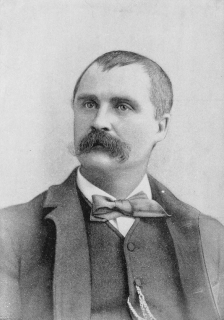
John Boyle O’Reilly, Irish American poet, journalist, author and activist, dies on August 10, 1890, in Hull, Massachusetts, due to accidental poisoning. His literature and work with civil rights have been celebrated throughout the years.

O’Reilly is born on June 28, 1844, at Dowth Castle to William David O’Reilly (1808–1871) and Eliza O’Reilly (née Boyle) (1815–1868) near Drogheda. His father is a headmaster. He is the third of six children. A year after his birth, the Great Famine begins, an event that shapes his life and beliefs. Most of his closest family manage to survive the famine, however many of his classmates lose their lives to the famine.

O’Reilly moves to his aunt’s residence in England as a teenager and becomes involved in journalism and shortly after becomes involved in the military. He leaves the military, however, in 1863 after becoming angry with the military’s treatment of the Irish and returns to Ireland the same year.

In 1864 O’Reilly joins the Irish Republican Brotherhood under an assumed name and is part of the group for two years until he and many others are arrested by authorities in early 1866. After a trial that same year he is sentenced to death, but the sentence is later commuted to 20 years’ penal servitude. In 1867 he is transported to Western Australia and moves to the town of Bunbury where he escapes two years later. He is assisted in escaping by a Fr. Patrick McCabe from Arnaghan, Gowna, County Cavan.

Following his escape O’Reilly moves to Boston, Massachusetts and embarks on a successful writing and journalism career that produces works such as Moondyne (1879) and Songs from the Southern Seas (1873), and poems such as The Cry of the Dreamer and The White Rose and In Bohemia (1886). He becomes a prominent spokesperson for the Irish community and culture through his editorship of the Boston newspaper The Pilot, his prolific writing and his lecture tours.

O’Reilly marries Mary Murphy (1850-1897), a journalist who writes for the Young Crusader under the name of Agnes Smiley, on August 15, 1872, and has four daughters. In the final four years of his life, he suffers various health issues.

On August 9, 1890, O’Reilly takes an early boat to his residence in Hull, Massachusetts. He has been suffering from bouts of insomnia during this time. That evening he takes a long walk with his brother-in-law, John R. Murphy, hoping that physical fatigue will induce the needed sleep. Later on that night he takes some of his wife’s sleeping medicine, which contains chloral hydrate.

In the early morning hours of August 10 his wife wakes up to find O’Reilly unconscious, sitting in a chair with one hand resting on the table near a book and a cigar in the other. She sends a servant for the family’s physician, Dr. Litchfield, and he spends nearly an hour trying to revive him, but O’Reilly dies shortly before 5:00 AM. Public announcements attribute O’Reilly’s death to heart failure but the official death register claims “accidental poisoning.” His memorial service held at Tremont Temple in Boston is a major public event.

The song “Van Diemen’s Land” on U2‘s Rattle and Hum (1988) album refers to and is dedicated to O’Reilly.


Leave a comment

The Ballymurphy Massacre

ballymurphy-massacre-mural

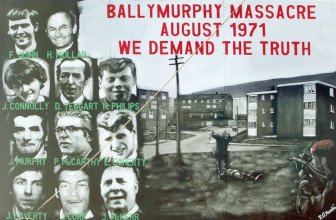
The Ballymurphy Massacre is a series of incidents that take place over a three-day period beginning on August 9, 1971, in which the 1st Battalion, Parachute Regiment of the British Army kill eleven civilians in Ballymurphy, Belfast, Northern Ireland, as part of Operation Demetrius. The shootings are later referred to as Belfast’s Bloody Sunday, a reference to the killing of civilians by the same battalion in Derry a few months later.

Two years into The Troubles and Belfast is particularly affected by political and sectarian violence. The British Army had been deployed in Northern Ireland in 1969, as events had grown beyond the control of the Royal Ulster Constabulary.

On the morning of Monday, August 9, 1971, the security forces launch Operation Demetrius. The plan is to arrest and intern anyone suspected of being a member of the Provisional Irish Republican Army. The unit selected for this operation is the Parachute Regiment. Members of the Parachute Regiment state that, as they enter the Ballymurphy area, they are shot at by republicans and return fire.

Mike Jackson, later to become head of the British Army, includes a disputed account of the shootings in his autobiography and his then role as press officer for the British Army stationed in Belfast while the incidents happened. This account states that those killed in the shootings were Republican gunmen. This claim has been strongly denied by the Catholic families of those killed in the shootings, in interviews conducted during the documentary film The Ballymurphy Precedent.

In 2016, Sir Declan Morgan, the Lord Chief Justice of Northern Ireland, recommends an inquest into the killings as one of a series of “legacy inquests” covering 56 cases related to the Troubles.

These inquests are delayed, as funding had not been approved by the Northern Ireland Executive. The former Stormont first minister Arlene Foster of the Democratic Unionist Party (DUP) defers a bid for extra funding for inquests into historic killings in Northern Ireland, a decision condemned by the human rights group Amnesty International. Foster confirms she had used her influence in the devolved power-sharing executive to hold back finance for a backlog of inquests connected to the conflict. The High Court says her decision to refuse to put a funding paper on the Executive basis was “unlawful and procedurally flawed.”

Fresh inquests into the deaths open at Belfast Coroner’s Court in November 2018 under Presiding Coroner Mrs. Justice Siobhan Keegan. The final scheduled witnesses give evidence on March 2-3, 2020, around the fatal shootings of Father Hugh Mullan and Frank Quinn on waste ground close to an army barracks at Vere Foster school in Springmartin on the evening of August 9. Justice Keegan sets a date of March 20 for final written submissions from legal representatives. A decision is still pending.

The killings are the subject of the August 2018 documentary The Ballymurphy Precedent, directed by Callum Macrae and made in association with Channel 4.

(Pictured: A mural in Belfast commemorating the victims of the Ballymurphy Massacre)


Leave a comment

Birth of Philosopher Francis Hutcheson

francis-hutcheson

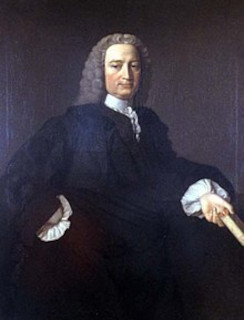
Francis Hutcheson, Scotch-Irish philosopher and major exponent of the theory of the existence of a moral sense through which man can achieve right action, is born on August 8, 1694, in Saintfield, County Down, Ulster. He is remembered for his book A System of Moral Philosophy. He is an important influence on the works of several significant Enlightenment thinkers, including David Hume and Adam Smith.

The son of a Presbyterian minister, Hutcheson is educated at Killyleagh in modern day Northern Ireland and studies philosophy, classics, and theology at the University of Glasgow (1710–1716). While a student, he works as tutor to William Boyd, 3rd Earl of Kilmarnock. Following his return to Ireland, he founds a private academy in Dublin in 1719 and teaches there for ten years. In 1729 he returns to Glasgow to succeed his old master, Gershom Carmichael, as Professor of Moral Philosophy at the University of Glasgow, a position he holds until his death.

Hutcheson is licensed as a preacher in 1719 by Irish Presbyterians in Ulster, but in 1738 the Glasgow presbytery challenges his belief that people can have a knowledge of good and evil without, and prior to, a knowledge of God. His standing as a popular preacher is undiminished, however, and the celebrated Scottish philosopher David Hume seeks his opinion of the rough draft of the section “Of Human Morals” in Hume’s A Treatise of Human Nature.

Hutcheson’s ethical theory is propounded in his Inquiry into the Original of Our Ideas of Beauty and Virtue (1725), in Essay on the Nature and Conduct of the Passions and Affections (1728) and Illustrations upon the Moral Sense (1728), and in the posthumous A System of Moral Philosophy (1755). In his view, besides his five external senses, man has a variety of internal senses, including a sense of beauty, of morality, of honour, and of the ridiculous. Of these, Hutcheson considers the moral sense to be the most important. He believes that it is implanted in man and pronounces instinctively and immediately on the character of actions and affections, approving those that are virtuous and disapproving those that are vicious. His moral criterion is whether or not an act tends to promote the general welfare of mankind. He thus anticipates the utilitarianism of the English thinker Jeremy Bentham, even to his use of the phrase “the greatest happiness for the greatest number.” Hutcheson is also influential as a logician and theorist of human knowledge.

Hutcheson spends time in Dublin and dies while on a visit to the city on August 8, 1746, his fifty-second birthday. He is buried in the churchyard of Saint Mary’s, which is also the final resting place of his cousin William Bruce. Today Saint Mary’s is a public park located in what is now Wolfe Tone Street. He lies in what is now an unmarked grave in the Dublin he loved and where his best work was done.


Leave a comment

Death of Irish Artist Sarah Henrietta Purser

sarah-purser-by-john-butler-yeats

Sarah Henrietta Purser, Irish artist mainly noted for her work with stained glass, dies in Dublin on August 7, 1943.

The Purser family had come to Ireland from Gloucestershire in the eighteenth century. Purser is born in Kingstown (now Dún Laoghaire) in County Dublin on March 22, 1848. She is raised in Dungarvan, County Waterford, one of the numerous children of Benjamin Purser, a prosperous flour miller and brewer, and his wife Anne Mallet. She is related to Sir Frederic William Burton, RHA (1816-1900), who is a son of Hannah Mallet. Two of her brothers, John and Louis, become professors at Trinity College Dublin. Her niece Olive Purser, daughter of her brother Alfred, is the first woman scholar at Trinity.

At thirteen Purser attends the Moravian school, Institution Evangélique de Montmirail, Switzerland where she learns to speak fluent French and begins painting. In 1873 her father’s business fails and she decides to become a full-time painter. She attends classes at the Dublin Metropolitan School of Art and joins the Dublin Sketching Club, where she is later appointed an honorary member. In 1874 she distinguishes herself in the National Competition. In 1878 she again contributes to the Royal Hibernian Academy (RHA), and for the next fifty years becomes a regular exhibitor, mainly portraits, and shows an average of three works per show.

In 1878-1879, Purser studies at the Académie Julian in Paris where she meets the German painter Louise Catherine Breslau, with whom she becomes a lifelong friend.

Purser becomes wealthy through astute investments, particularly in Guinness, for which several of her male relatives have worked over the years. She is very active in the art world in Dublin and is involved in the setting up of the Municipal Gallery of Modern Art, persuading the Irish government to provide Charlemont House in Parnell Square to house the gallery.

Purser works mostly as a portraitist. Through her talent and energy and owing to her friendship with the Gore-Booths, she is very successful in obtaining commissions. When the Lord Lieutenant of Ireland commissions her to portray his children in 1888, his choice reflects her position as the country’s foremost portraitist. Various portraits painted by Purser are held in the National Gallery of Ireland.

Purser finances An Túr Gloine (The Tower of Glass), a stained-glass cooperative, at 24 Upper Pembroke and runs it from its inauguration in 1903 until her retirement in 1940. Michael Healy is the first of a number of distinguished recruits, such as Catherine O’Brien, Evie Hone, Wilhelmina Geddes, Beatrice Elvery and Ethel Rhind. She is determined the stained-glass workshop should adhere to true Arts and Crafts philosophy. An Túr Gloine archive is held in the Centre for the Study of Irish Art, National Gallery of Ireland.

Purser does not produce many items of stained glass herself. Most of the stained-glass works are painted by other members of the co-operative, presumably under her direction. Two early works are St. Ita (1904) for St. Brendan’s Cathedral, Loughrea and The Good Shepard (1904) for St. Columba’s College, Dublin. Her last stained-glass work is believed to be The Good Shepard and the Good Samaritan (1926) for the Church of Ireland at Killucan, County Westmeath.

Until her death Purser lives for many years in Mespil House, a Georgian mansion with beautiful plaster ceilings on Mespil Road, on the banks of the Grand Canal. Here she is “at home” every Tuesday afternoon to Dublin’s writers and artists. Her afternoon parties are a fixture of Dublin literary life.

Purser dies in Dublin on August 7, 1943, and is buried in Mount Jerome Cemetery beside her brothers John and Louis. Mespil House is demolished after her death and developed into apartments.

Purser is the second woman to sit on the Board of Governors and Guardians, National Gallery of Ireland, 1914-1943. She is made an Honorary Member of the Royal Hibernian Academy in 1890, becoming the first female Associate Member in 1923 and the first female Member in 1924. Also, in 1924 she initiates the movement for the launching of the Friends of the National Collection of Ireland. Archives relating to Sarah Purser are housed in the Centre for the Study of Irish Art, National Gallery of Ireland.

(Pictured: Portrait of Sarah Purser by John Butler Yeats, c. 1880–1885)


Leave a comment

The Battle of Utoy Creek

*

The 10th Tennessee Infantry (Irish) fights at the Battle of Utoy Creek on August 6, 1864, during the American Civil War. Known as the “Bloody Tinth,” it is one of only two Irish Catholic regiments in the Confederate States Army, although their elected officers are mostly Ulster Scots Protestants. They are deployed as sharpshooters through the tough campaigns at Chickamauga, Chattanooga and Atlanta.

The Battle of Utoy Creek is fought August 4–7, 1864, during the Atlanta Campaign of the American Civil War. Major General William Tecumseh Sherman‘s Union armies have partially encircled the city of Atlanta, Georgia, which is being held by Confederate forces under the command of General John Bell Hood. Sherman has at this point adopted a strategy of attacking the railroad lines into Atlanta, hoping to cut off his enemies’ supplies. This is the third direct attack on Confederate positions during the campaign and the effect of success would have ended the siege and won Atlanta on August 6, 1864.

After failing to envelop Hood’s left flank at the Battle of Ezra Church, Sherman still wants to extend his right flank to hit the railroad between East Point and Atlanta. He transfers Maj. Gen. John McAllister Schofield‘s XXIII Corps of the U.S. Army of the Ohio from his left to his right flank and sends him to the north bank of Utoy Creek.

Although Schofield’s troops are at Utoy Creek on August 2, they, along with the XIV Corps, Army of the Cumberland, do not cross until August 4. An initial attack by the Regular Brigade against James Patton Anderson‘s Division CSA of Stephen Dill Lee‘s Corps is unsuccessful. In addition, the Confederates dismount a brigade of cavalry, Armstrong’s, in the front of the federals in a deception plan, a feinted attack that is successful in delaying the combined force of the XXIII and XIV Corps USA.

Schofield makes an additional movement to exploit this situation on the morning of August 5. Although initially successful, Schofield has to regroup his forces, which takes the rest of the day. The delay allows the Confederates to strengthen their defenses with an abatis, which slows the Union attack when it restarts on the morning of August 6. The Federals are repulsed with heavy losses by William Brimage Bate‘s division and fail in an attempt to break the main defenses to gain the railroad.

On August 7, the Union troops move toward the Confederate main line skirmishing and extending to their right and entrench. Several attacks are made at Sandtown Road (Campbellton at Adams Park) on August 10 and East Point on August 18. Here US Forces remain, as far south as the Atlanta Christian College, until late August 1864 when the failure of Schofield’s offensive operations convinces Sherman to move on the Confederate lines of communication and supply.