seamus dubhghaill

Promoting Irish Culture and History from Little Rock, Arkansas, USA


Leave a comment

The Ordination of Sinéad O’Connor

sinead-oconnor

Sinéad O’Connor, Irish singer-songwriter also known as Magda Davitt, is ordained as a priest in Lourdes on April 22, 1999, by Bishop Michael Cox of the Irish Orthodox Catholic and Apostolic Church, an Independent Catholic group not in communion with the Catholic Church.

The Roman Catholic Church considers ordination of women to be invalid and asserts that a person attempting the sacrament of ordination upon a woman incurs excommunication. The bishop had contacted her to offer ordination following her appearance on RTÉ’s The Late Late Show, during which she tells the presenter, Gay Byrne, that had she not been a singer, she would have wished to have been a Catholic priest. After her ordination, she indicates that she wishes to be called Mother Bernadette Mary.

In a July 2007 interview with Christianity Today, O’Connor states that she considers herself a Christian and that she believes in core Christian concepts about the Trinity and Jesus Christ. She says, “I think God saves everybody whether they want to be saved or not. So, when we die, we’re all going home… I don’t think God judges anybody. He loves everybody equally.” In an October 2002 interview, she credits her Christian faith in giving her the strength to live through, and then overcome the effects of, her child abuse.

On March 26, 2010, O’Connor appears on CNN‘s Anderson Cooper 360° to speak out about the Catholic sexual abuse scandal in Ireland. Two days later she has an opinion piece published in the Sunday edition of The Washington Post in which she writes about the scandal and her time in a Magdalene asylum as a teenager. Writing for the Sunday Independent she labels the Vatican as “a nest of devils” and calls for the establishment of an “alternative church,” opining that “Christ is being murdered by liars” in the Vatican. Shortly after the election of Pope Francis she describes the office of the Pope as an “anti-Christian office.”

Asked whether from her point of view, it is therefore irrelevant who is elected to be Pope, O’Connor replies, “Genuinely I don’t mean disrespect to Catholic people because I believe in Jesus Christ, I believe in the Holy Spirit, all of those, but I also believe in all of them, I don’t think it cares if you call it Fred or Daisy, you know? Religion is a smokescreen; it has everybody talking to the wall. There is a Holy Spirit who can’t intervene on our behalf unless we ask it. Religion has us talking to the wall. The Christ character tells us himself: you must only talk directly to the Father; you don’t need intermediaries. We all thought we did, and that’s OK, we’re not bad people, but let’s wake up… God was there before religion; it’s there [today] despite religion; it’ll be there when religion is gone.”


Leave a comment

Death of Songwriter & Lyricist Jimmy Kennedy

jimmy-kennedy

James Kennedy, a Northern Irish songwriter and lyricist, dies in Cheltenham, Gloucestershire, England on April 6, 1984. In a career spanning more than fifty years, he writes some 2,000 songs, of which over 200 become worldwide hits and about 50 are all-time popular music classics. Until the duo of John Lennon and Paul McCartney, Kennedy has more hits in the United States than any other Irish or British songwriter.

Kennedy is born near Omagh, County Tyrone, Northern Ireland. His father, Joseph Hamilton Kennedy, is a policeman in the Royal Irish Constabulary, which exists before the partition of Ireland. While growing up in Coagh, Kennedy writes several songs and poems. He is inspired by local surroundings such as the view of the Ballinderry river, the local Springhill house and the plentiful chestnut trees on his family’s property, as evidenced in his poem Chestnut Trees. Kennedy later moves to Portstewart, a seaside resort.

Kennedy graduates from Trinity College, Dublin, before teaching in England. He is accepted into the Colonial Service, as a civil servant, in 1927.

While awaiting a Colonial Service posting to the colony of Nigeria, Kennedy embarks on a career in songwriting. His first success comes in 1930 with The Barmaid’s Song, sung by Gracie Fields. Fellow lyricist Harry Castling introduces him to Bert Feldman, a music publisher based in London‘s “Tin Pan Alley,” for whom Kennedy starts to work. In the early 1930s he writes a number of successful songs, including Oh, Donna Clara (1930), My Song Goes Round the World (1931), and The Teddy Bears’ Picnic (1933), in which he provides new lyrics to John Walter Bratton‘s tune from 1907.

In 1934, Feldman turns down Kennedy’s song Isle of Capri, but it becomes a major hit for a new publisher, Peter Maurice. He writes several more successful songs for Maurice, including Red Sails in the Sunset (1935), inspired by beautiful summer evenings in Portstewart, Northern Ireland, Harbor Lights (1937) and South of the Border (1939), inspired by a holiday picture postcard he receives from Tijuana, Mexico, and written with composer Michael Carr. Kennedy and Carr also collaborate on several West End theatre shows in the 1930s, including London Rhapsody (1937). My Prayer, with original music by Georges Boulanger, has English lyrics penned by Kennedy in 1939. It is originally written by Boulanger with the title Avant de Mourir in 1926.

During the early stages of World War II, while serving in the British Army‘s Royal Artillery, where he rises to the rank of Captain, Kennedy writes the wartime hit, We’re Going to Hang out the Washing on the Siegfried Line. His hits also include Cokey Cokey (1945), and the English lyrics to Lili Marlene. After the end of the war, his songs include Apple Blossom Wedding (1947), Istanbul (Not Constantinople) (1953), and Love Is Like a Violin (1960). In the 1960s he writes the song The Banks of the Erne, for recording by his friend from the war years, Theo Hyde, also known as Ray Warren.

Kennedy is a patron of the Castlebar International Song Contest from 1973 until his death in 1984 and his association with the event adds great prestige to the contest. He wins two Ivor Novello Awards for his contribution to music and receives an honorary degree from the New University of Ulster. He is awarded the Order of the British Empire (OBE) in 1983.

Jimmy Kennedy dies in Cheltenham on April 6, 1984, at the age of 81, and was interred in Taunton, Somerset. In 1997 he is posthumously inducted into the Songwriter’s Hall of Fame.


Leave a comment

Death of Showband Icon Butch Moore

butch-moore

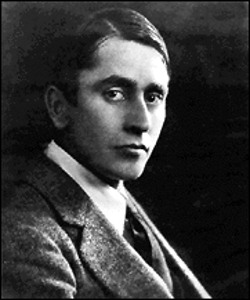
Butch Moore, born James Augustine Moore, Irish singer and showband icon during the 1960s, dies in Massachusetts on April 3, 2001. He is born in Dublin on January 10, 1938.

Moore plays with a number of bands before securing his big break with the Capitol Showband in 1958. Its lineup includes band leader, Des Kelly, and Paddy Cole, who is still involved in the entertainment business, and an early songwriter for the band is Phil Coulter. The Capitol achieves a considerable degree of success in the early 1960s attracting huge crowds in the State’s many ballrooms. It tours the United States in 1961, and two years later becomes the first showband to appear on the new RTÉ Television service. The Capitol plays in the London Palladium in 1964 on a night when the lineup includes Roy Orbison.

Moore marries Norah Sheridan in 1962. They have three children – Karen, Grainne and Gary.

Moore achieves celebrity status as Ireland’s first contestant in the Eurovision Song Contest in 1965. At the height of his success, he wins the National Song Contest to represent Ireland in the Eurovision Song Contest 1965, in Naples, singing Walking the Streets in the Rain. The song reaches number one on the Irish Singles Chart but fails to chart in the United Kingdom.

As the lead singer with the Capitol Showband, he rivals the Royal Showband’s Brendan Bowyer as Ireland’s most popular showband vocalist. His marriage to Norah breaks down in 1969 and his career begins to decline. He emigrates to the United States in 1970, where he spends the last 31 years of his life.

Moore marries Irish ballad singer Maeve Mulvany in 1972 in the United States. They form a very successful group known as “Butch N Maeve” with a mixture of ballads and pop. They also own a pub in Massachusetts named after one of their songs, The Parting Glass. They have three children, Rory, Tara and Thomas.

Although suffering from cancer of the esophagus, Butch Moore dies of a heart attack on April 3, 2001. His body is returned to Dublin and a funeral Mass is celebrated at St. Canice’s Church in Finglas. After his death, Maeve makes plans to move back to Ireland where she has bought a house in Cormeen, County Cavan, but she dies on February 14, 2004.


Leave a comment

Birth of Playwright Seán O’Casey

sean-ocasey

Seán O’Casey, Irish playwright renowned for realistic dramas of the Dublin slums in war and revolution, in which tragedy and comedy are juxtaposed in a way new to the theatre of his time, is born at 85 Upper Dorset Street in Dublin on March 30, 1880.

Born as John Casey into a lower middle-class Irish Protestant family, his father dies when he is six, and thereafter the family becomes progressively poorer. With only three years of formal schooling, he educates himself by reading. He starts work at 14, mostly at manual labour, including several years with the Irish railways.

O’Casey becomes caught up in the cause of Irish nationalism, and he changes his name to its Irish form and learns the Irish language. His attitudes are greatly influenced by the poverty and squalor he witnesses in Dublin’s slums and by the teachings of the Irish labour leader Jim Larkin. He becomes active in the labour movement and writes for The Irish Worker. He also joins the Irish Citizen Army, a paramilitary arm of the Irish labour unions, and draws up its constitution in 1914. At this time, he becomes disillusioned with the Irish nationalist movement because its leaders put nationalist ideals before socialist ones. He does not take part in the 1916 Easter Rising against the British authorities.

Disgusted with the existing political parties, he turns his energies to drama. His tragicomedies reflect in part his mixed feelings about his fellow slum dwellers, seeing them as incapable of giving a socialist direction to the Irish cause but at the same time admirable for their unconquerable spirit.

After several of his plays have been rejected, the Abbey Theatre in Dublin produces The Shadow of a Gunman (1923), set during the guerrilla warfare between the Irish Republican Army and British forces. In 1924 the Abbey stages Juno and the Paycock, his most popular play, set during the period of civil war over the terms of Irish independence. The Plough and the Stars (1926), with the 1916 Easter Rising as its background, causes riots at the Abbey by patriots who think the play denigrates Irish heroes. When first produced in the 1920s, these plays have an explosive effect on the audiences at the Abbey and help to enlarge the theatre’s reputation.

O’Casey goes to England in 1926, meets the Irish actress Eileen Carey Reynolds, marries her, and henceforth makes England his home. His decision to live outside Ireland is motivated in part by the Abbey’s rejection of The Silver Tassie, a partly Expressionist antiwar drama produced in England in 1929. Another Expressionist play, Within the Gates (1934), follows, in which the modern world is symbolized by the happenings in a public park. The Star Turns Red (1940) is an antifascist play, and the semiautobiographical Red Roses for Me (1946) is set in Dublin at the time of the Irish railways strike of 1911.

O’Casey’s later plays, given to fantasy and ritual and directed against the life-denying puritanism he believes has beset Ireland, include Cock-a-Doodle Dandy (1949), The Bishop’s Bonfire (1955), and The Drums of Father Ned (1958). His last full-length play is a satire on Dublin intellectuals, Behind the Green Curtains, published in 1961.

O’Casey’s three indisputably great plays are The Shadow of a Gunman, Juno and the Paycock, and The Plough and the Stars. All are tragicomedies set in the slums of Dublin during times of war and revolution. Violent death and the everyday realities of tenement life throw into relief the blustering rhetoric and patriotic swagger of men caught up in the struggle for Irish independence. The resulting ironic juxtapositions of the comic and tragic reveal the waste of war and the corrosive effects of poverty. His gifts are for vivid characterization and working-class language and, though he portrays war and poverty, he writes some of the funniest scenes in modern drama. His later plays are not considered as powerful or moving as his earlier realistic plays. In his later plays he tends to abandon vigorous characterization in favour of expressionism and symbolism, and sometimes the drama is marred by didacticism.

Six volumes of O’Casey’s autobiography appeared from 1939 to 1956. They are later collected as Mirror in My House (1956) in the United States and as Autobiographies (1963) in Great Britain. O’Casey’s letters from 1910 to 1941 are edited by David Krause in two volumes (1975, 1980).

Sean O’Casey dies of a heart attack at the age of 84 on September 18, 1964, in Torquay, Devon. He is cremated at the Golders Green Crematorium.


Leave a comment

Birth of Harry Furniss, Artist & Illustrator

harry-furniss

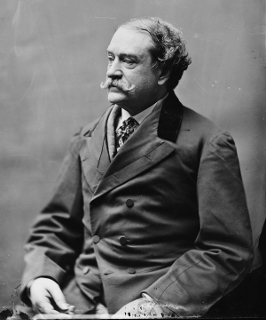
Harry Furniss, artist and illustrator, is born in Wexford, County Wexford on March 26, 1854. His father is English and his mother Scottish, Furniss identifying himself as English. He is educated at Wesley College in Dublin.

Furniss’s first job as an illustrator is for the Illustrated Sporting and Dramatic News, and when it is purchased by the owner of The Illustrated London News he moves to that magazine. There he produces illustrations of social events such as the The Boat Race, Goodwood Racecourse and even the annual fancy dress ball at Brookwood Asylum, as well as acting as a special correspondent reporting on less pleasant aspects of life in contemporary England, such as the scandalous divorce trial of Lady Colin Campbell.

After some years Furniss moves to The Graphic, initially writing and illustrating a series of supplements titled “Life in Parliament,” and he comments that “from this time forward it would be difficult to name any illustrated paper with which I have not at some time or other been connected.”

Furniss’s most famous humorous drawings are published in Punch, for which he starts working in 1880, and to which he contributes over 2,600 drawings. He leaves Punch in 1894 when its owners discover that he has sold one of his Punch drawings to Pears Soap for use in an advertising campaign.

He illustrates Lewis Carroll‘s novel Sylvie and Bruno in 1889 and Sylvie and Bruno Concluded in 1893. Carroll and Furniss sometimes produce both pictures and text simultaneously. Carroll exerts strong control over Furniss’s illustration, to such an extent that Furniss pretends to be out when Carroll calls at his home. After completing Sylvie and Bruno Concluded Furniss vows never to work for the author again. In 1890, he illustrates the Badminton Library‘s volume on Golf.

Upon leaving Punch, Furniss brings out his own humorous magazine, Lika Joko, but when this fails, he moves to the United States where he works as a writer and actor in the fledgling film industry and where, in 1914, he pioneers the first animated cartoon film for Thomas Edison.

His two-volume autobiography, titled The Confessions of a Caricaturist is published in 1902, and a further volume of personal recollections and anecdotes, Harry Furniss At Home, is published in 1904.

Furniss writes and illustrates 29 books of his own, including Some Victorian Men and Some Victorian Women and illustrates 34 works by other authors, including the complete works of Charles Dickens and William Makepeace Thackeray. On some projects, like his illustrations for G. E. Farrow‘s Wallypug books, Furniss collaborates with his daughter, fellow artist Dorothy Furniss.

Harry Furniss dies on January 14, 1925, in London, England.


1 Comment

Death of Harpist & Composer Turlough O’Carolan

turlough-ocarolan

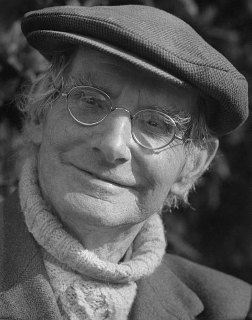
Turlough O’Carolan, a blind early Irish harper, composer and singer whose great fame is due to his gift for melodic composition, dies in Ballyfarnon, County Roscommon on March 25, 1738.

Although not a composer in the classical sense, O’Carolan is considered by many to be Ireland’s first great composer. Harpers in the old Irish tradition are still living as late as 1792, and ten, including Arthur O’Neill, Patrick Quin and Donnchadh Ó hAmhsaigh, attend the Belfast Harp Festival. Ó hAmhsaigh plays some of O’Carolan’s music but dislikes it for being too modern. Some of O’Carolan’s own compositions show influences of the style of continental classical music, whereas others such as O’Carolan’s Farewell to Music reflect a much older style of “Gaelic Harping.”

O’Carolan is born in 1670 in Nobber, County Meath, where his father is a blacksmith. The family moves from Meath to Ballyfarnon in 1684. In Roscommon, his father takes a job with the MacDermott Roe family of Alderford House. Mrs. MacDermott Roe gives Turlough an education, and he shows talent in poetry. After being blinded by smallpox at the age of eighteen O’Carolan is apprenticed by Mrs. MacDermott Roe to a good harper. At the age of twenty-one, being given a horse and a guide, he sets out to travel Ireland and compose songs for patrons.

For almost fifty years, O’Carolan journeys from one end of Ireland to the other, composing and performing his tunes. One of his earliest compositions is about Brigid Cruise, with whom he is infatuated. Brigid is the teenage daughter of the schoolmaster at the school for the blind attended by O’Carolan in Cruisetown. In 1720, at age 50, O’Carolan marries Mary Maguire. Their first family home is a cottage on a parcel of land near the town of Manachain, now Mohill, in County Leitrim, where they settle. They have seven children, six daughters and one son. Mary dies in 1733.

Turlough O’Carolan dies at Alderford House on March 25, 1738. He is buried in the MacDermott Roe family crypt in Kilronan Burial Ground near Ballyfarnon, County Roscommon. The annual O’Carolan Harp Festival and Summer School commemorates his life and work in Keadue, County Roscommon.

A bronze monument by sculptor Oisín Kelly depicting Turlough O’Carolan playing his harp is erected on a plinth at the Market Square, Mohill, on August 10, 1986, and is unveiled by Patrick Hillery, President of Ireland.

A statue is erected to him at his place of birth in 2002, during the Annual O’Carolan Harp Festival, the first of which is held in Nobber in 1988.


Leave a comment

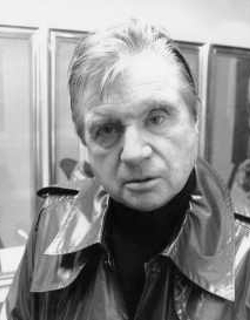
Birth of Artist & Illustrator Harry Clarke

harry-clarke

Henry Patrick (Harry) Clarke, Irish stained-glass artist and book illustrator, is born in Dublin on March 17, 1889. He is a leading figure in the Irish Arts and Crafts movement.

Clarke is the younger son and third child of Joshua Clarke and Brigid Clarke (née MacGonigal). Church decorator Joshua Clarke moves to Dublin from Leeds in 1877 and starts a decorating business, Joshua Clarke & Sons, which later incorporates a stained-glass division. Through his work with his father, Clarke is exposed to many schools of art but Art Nouveau in particular.

Clarke is educated at the Model School in Marlborough Street, Dublin and Belvedere College, which he leaves in 1905. After his mother’s death in 1903, he is apprenticed into his father’s studio and attends evening classes in the Metropolitan College of Art and Design. His The Consecration of St. Mel, Bishop of Longford, by St. Patrick wins the gold medal for stained glass work in the 1910 Board of Education National Competition. At the art school in Dublin, he meets fellow artist and teacher Margaret Crilley. They marry on October 31, 1914.

Clarke moves to London to seek work as a book illustrator. Picked up by London publisher George G. Harrap and Co., he starts with two commissions which are never completed. Difficulties with these projects makes Fairy Tales by Hans Christian Andersen his first printed work, in 1916. It includes 16 colour plates and more than 24 halftone illustrations. This is followed by illustrations for an edition of Edgar Allan Poe‘s Tales of Mystery and Imagination, the second version of which, published in 1923, makes his reputation as a book illustrator. His work can be compared to that of Aubrey Beardsley, Kay Nielsen, and Edmund Dulac. His final book, Selected Poems of Algernon Charles Swinburne, is published in 1928.

Clarke also continues to work in stained-glass, producing more than 130 windows. His glass is distinguished by the finesse of its drawing and his use of rich colours. He is especially fond of deep blues. His use of heavy lines in his black-and-white book illustrations echoes his glass techniques.

Clarke’s stained-glass work includes many religious windows, including the windows of the Honan Chapel in University College Cork. He also produces much secular stained glass such as a window illustrating John KeatsThe Eve of St. Agnes (now in the Hugh Lane Gallery in Dublin) and the Geneva Window, (now in the Wolfsonian Museum, Miami Beach, Florida). Perhaps his most seen works are the windows he creates for Bewley’s on Dublin’s Grafton Street.

Clarke is plagued with ill health, in particular respiratory problems. He is diagnosed with tuberculosis in 1929 and goes to a sanatorium in Davos, Switzerland. Fearing that he will die abroad, he begins his journey back to Dublin in 1931, but dies on this journey on January 6, 1931, in Chur where he is buried. A headstone is erected but local law requires that the family pledge to maintain the grave 15 years after the death. This is not explained to the Clarke family and Harry Clarke’s remains are disinterred in 1946 and reburied in a communal grave.


Leave a comment

First Performance of “She Stoops to Conquer”

she-stoops-to-conquer

She Stoops to Conquer, a comedy by the Anglo-Irish author Oliver Goldsmith, is first performed at Covent Garden Theatre, London on March 15, 1773, and is an immediate success. Lionel Brough is supposed to have played Tony Lumpkin 777 times. Lillie Langtry has her first big success in this play in 1881.

She Stoops to Conquer is a stage play in the form of a comedy of manners, which ridicules the manners of a certain segment of society, in this case the upper class. The play is also sometimes termed a drawing room comedy. The play uses farce, including many mix-ups, and satire to poke fun at the class-consciousness of eighteenth-century Englishmen and to satirize what Goldsmith calls the “weeping sentimental comedy so much in fashion at present.”

Most of the play takes place in the Hardcastle mansion in the English countryside, about sixty miles from London during the eighteenth century. The mansion is an old but comfortable dwelling that resembles an inn. A brief episode takes place at a nearby tavern, The Three Pigeons Alehouse.

She Stoops to Conquer is a favourite for study by English literature and theatre classes in the English-speaking world. It is one of the few plays from the 18th century to have retained its appeal and continues to be performed regularly. The play has been adapted into a film several times, including in 1914 and 1923. Initially the play was titled Mistakes of a Night and the events within the play take place in one long night. In 1778 John O’Keeffe wrote a loose sequel, Tony Lumpkin in Town.

Perhaps one of the most famous modern incarnations of She Stoops to Conquer is Peter Hall‘s version, staged in 1993 and starring Miriam Margolyes as Mrs. Hardcastle. The most famous TV production is the 1971 version featuring Ralph Richardson, Tom Courtenay, Juliet Mills and Brian Cox, with Trevor Peacock as Tony Lumpkin. It is shot on location near Ross-on-Wye, Herefordshire and is part of the BBC archive.

(Pictured: Kyrle Bellew and Eleanor Robson in a scene from She Stoops to Conquer in 1905)


Leave a comment

Birth of Irish Composer Gráinne Mulvey

grainne-mulvey

Irish composer Gráinne Mulvey is born on March 10, 1966, in Dún Laoghaire, County Dublin. Her music is timbrally and rhythmically complex — a legacy of her work in the electroacoustic field. Her microtonally-inflected language derives ultimately from the natural harmonic series, placing her somewhat in the spectral tradition.

Mulvey studies with Eric Sweeney at Waterford Regional Technical College, Hormoz Farhat at Trinity College Dublin and Agustín Fernández at Queen’s University, Belfast. In 1999 she gains a DPhil in Composition at the University of York under Nicola LeFanu. In 2001 she is appointed Head of Composition at Dublin Institute of Technology Conservatory of Music and Drama.

Mulvey is appointed as one of the Course Directors of the IMRO Summer School of Composition in 2014. In 2001, 2010 and 2011, she was on the adjudicator’s panel for the Guido d’Arezzo Composers’ Composition Competition in Italy. She has curated concerts for the Contemporary Music Centre, Ireland in 2011 and 2012, the Association of Irish Composers in May 2016 and a retrospective concert of her work at The Carlow Arts Festival in June 2016.

Mulvey’s music has been widely performed both in Ireland and abroad and her works have been broadcast by radio stations across the globe. One of her earliest works Étude, for piano (1994), is selected for that year’s International Rostrum of Composers in Paris, an honour that is to be repeated with 2004’s orchestral work Scorched Earth, and in 2015 with Diffractions for orchestra, in Slovenia. She is a featured composer in the 2007 Horizons concert series, with the RTÉ National Symphony Orchestra, conductor Robert Houlihan, performing three of her orchestral works. She has the distinction of being selected for the ISCM World Music Days in consecutive years with Akanos (Vilnius, Lithuania, 2008 and Växjö, Sweden, 2009).

In April 2010, Mulvey is elected to membership of Aosdána, the State-recognised affiliation of creative artists in Ireland. A CD Akanos & Other Works, dedicated to her recent work, is released in February 2014 on the Navona label.


Leave a comment

Bill Whelan Receives IMRO Lifetime Achievement Award

bill-whelan

Taoiseach Bertie Ahern presents Irish composer and musician Bill Whelan with the IMRO Lifetime Achievement Award at Dublin Castle on March 2, 2001. Such big names as The Corrs, Brian Kennedy, Jean Butler, Jim Sheridan, Paul McGuinness and Moya Doherty join him to celebrate the award.

Whelan is best known for composing a piece for the interval of the 1994 Eurovision Song Contest. The result, Riverdance, is a seven-minute display of traditional Irish dancing that becomes a full-length stage production and spawns a worldwide craze for Irish dancing and Celtic music and also wins him a Grammy Award. It is released as a single in the United Kingdom in 1994, credited to “Bill Whelan and Anúna featuring the RTÉ Concert Orchestra.” It reaches number 9 and stays in the charts for 16 weeks. The album of the same title reaches number 31 in the album charts in 1995. He also composes a symphonic suite version of Riverdance, with its premiere performed by the Ulster Orchestra on BBC Radio 3 in August 2014.

Whelan is a native of Limerick and is educated at Crescent College, University College Dublin and the King’s Inns. While he is best known for his Riverdance composition, he has been involved in many ground-breaking projects in Ireland since the 1970s. As a producer he has worked with U2 (on their War album), Van Morrison, Kate Bush, The Dubliners, Planxty, Andy Irvine & Davy Spillane, Patrick Street, Stockton’s Wing and fellow Limerickman Richard Harris.

In theatre, Whelan receives a Laurence Olivier Award nomination for his adaption of Gilbert and Sullivan‘s H.M.S. Pinafore. He writes original music for fifteen of William Butler Yeats‘s plays for Dublin‘s Abbey Theatre and his film credits include Dancing at Lughnasa (starring Meryl Streep), Some Mother’s Son, Lamb (starring Liam Neeson) and the award-winning At the Cinema Palace.