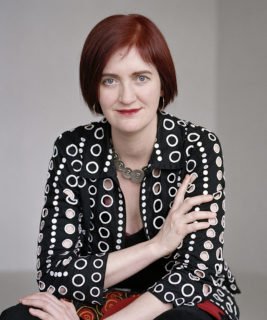
Donoghue is the youngest of eight children, the daughter of Frances (née Rutledge) and academic and literary critic Denis Donoghue. She has a first-class honours Bachelor of Arts degree from University College Dublin (UCD) in English and French as well as a PhD in English from Girton College, Cambridge. While at Cambridge she lives in a women’s co-operative, an experience which inspires her short story “The Welcome.” Her thesis is on friendship between men and women in 18th-century fiction.
At Cambridge, she meets her future wife, Christine Roulston, a Canadian who is now professor of French and Women’s Studies at the University of Western Ontario. They move permanently to Canada in 1998 and Donoghue becomes a Canadian citizen in 2004. She lives in London, Ontario, with Roulston and their two children.
Donoghue has spoken of the importance of the writing of Emily Dickinson, of Jeanette Winterson‘s novel The Passion and Alan Garner‘s Red Shift in the development of her work. She says that she aims to be “industrious and unpretentious” about the process of writing, and that her working life has changed since having children.
Donoghue’s novels include Stir Fry (1994), a finalist for the Lambda Literary Award in 1994, Slammerkin (2000), a finalist in the 2001 Irish Times Irish Literature Prize for Fiction and winner of the 2002 Ferro-Grumley Award for Lesbian Fiction, Landing (2007), The Sealed Letter (2008), joint winner of the 2009 Lambda Literary Award for Lesbian Fiction, Room (2010), winner of the Irish Book Award 2010, Frog Music (2014), The Wonder (2016), shortlisted for the Scotiabank Giller Prize, Akin (2019), The Pull of the Stars (2020), longlisted for the Giller Prize in 2020, and Haven (2022).
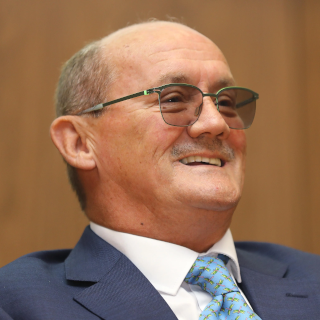
Colley is the son of Harry and Christina Colley. His father is a veteran of the 1916 Easter Rising and a former adjutant in the Irish Republican Army (IRA), who is elected to Dáil Éireann in 1944, as a Fianna Fáil candidate. He is educated at St. Joseph’s Secondary C.B.S. in Fairview, where one of his classmates and closest friends is Charles Haughey, who later becomes his political archrival. He studies law at University College Dublin (UCD) and qualifies as a solicitor in the mid-1940s. He remains friends with Haughey after leaving school and, ironically, encourages him to become a member of Fianna Fáil in 1951. Haughey is elected to Dáil Éireann in the 1957 Irish general election, ousting Colley’s father in the process. This puts some strain on the relationship between the two young men.
Colley is elected to the Dáil at the 1961 Irish general election, reclaiming his father’s old seat in the Dublin North-East constituency. Furthermore, he is elected in the same constituency as Haughey, thereby accentuating the rivalry. Thereafter, he progresses rapidly through the ranks of Fianna Fáil. He becomes a member of the Dáil at a time when a change from the older to the younger generation is taking place, a change facilitated by TaoiseachSeán Lemass.
Colley is active in the Oireachtas as chairman of some of the Joint Labour Committees, which are set up under the Labour Court, to fix legally enforceable wages for groups of workers who have not been effectively organised in trade unions. He is also leader of the Irish parliamentary delegation to the Consultative Assembly of the Council of Europe. His work as a backbencher is rewarded by his appointment as Parliamentary Secretary to the Minister for Lands in October 1964.
Following the return of Lemass’s government at the 1965 Irish general election, Colley joins the cabinet as Minister for Education. He introduces a plan to establish comprehensive schools, set up an advisory council on post-primary school accommodation in Dublin, and introduces a school psychological service.
Colley is promoted as Minister for Industry and Commerce in a cabinet reshuffle in July 1966, and he continues the government policy of economic expansion that had prevailed since the late 1950s.
In November 1966, Seán Lemass resigns suddenly as party leader. Colley contests the subsequent leadership election. He is the favoured candidate of party elders such as Seán MacEntee and Frank Aiken, the latter managing Colley’s campaign. Charles Haughey and Neil Blaney also declare their interest in the leadership; however, both withdraw when the Minister for Finance, Jack Lynch, announces his candidacy. Colley does not back down, and the leadership issue goes to a vote for the first time in the history of the Fianna Fáil party. The leadership election takes place on November 9, 1966, and Lynch beats Colley by 59 votes to 19. When the new Taoiseach announces his cabinet, Colley retains the Industry and Commerce portfolio.
In the wake of the Arms Crisis in 1970, a major reshuffle of the cabinet takes place, with four Ministers either removed, or resigned, or simply retired from the government due to the scandal. Colley remains loyal to the party leader and is rewarded by his appointment as Minister for Finance, the second most important position in government.
In 1973, Fianna Fáil are ousted after sixteen years in government when the national coalition of Fine Gael and the Labour Party come to power. Colley is appointed opposition Spokesman on Finance, in the new Fianna Fáil front bench. As the 1977 Irish general election approaches, Colley and Martin O’Donoghue are the main architects of Fianna Fáil’s election manifesto.
Fianna Fáil sweeps to power at the 1977 Irish general election, with a 20-seat Dáil majority, contrary to opinion polls and political commentators. Colley is re-appointed as Minister for Finance and Minister for the Public Service, and is also appointed as Tánaiste, establishing him firmly as the heir apparent to Taoiseach Jack Lynch.
In December 1979, Jack Lynch resigns unexpectedly as Taoiseach and as Fianna Fáil leader. Colley and Charles Haughey seek the leadership position and are evenly matched. A secret ballot is taken on December 7, 1979. The Minister for Foreign Affairs, Michael O’Kennedy, announces his support for Haughey on the eve of the election. This apparently swings the vote, and Haughey beats Colley by 44 votes to 38. Colley remains as Tánaiste but demands and receives a veto on Haughey’s ministerial appointments to the departments of Justice and Defence.
Fianna Fáil loses power at the 1981 Irish general election. Haughey delays naming a new opposition front bench, but Colley remains a key member of the Fianna Fáil hierarchy. The party regains office at the February 1982 Irish general election. He demands the same veto as before on Haughey’s Defence and Justice appointments but is refused. When it is revealed that Ray MacSharry is to be appointed Tánaiste in his stead, he declines another ministerial position. This effectively brings his front bench political career to an end, but he remains a vocal critic of the party leadership from the backbenches.
When the Fianna Fáil government collapses and are replaced by another coalition government after the November 1982 Irish general election, a number of TDs and Senators express lack of confidence in Haughey’s leadership once again. Several unsuccessful leadership challenges take place in late 1982 and early 1983, with Colley now supporting Desmond O’Malley and the Gang of 22 who oppose Haughey.
Colley dies suddenly on September 17, 1983, aged 57, while receiving treatment for a heart condition at Guy’s Hospital, Southwark, London. He is survived by his wife, three sons, and four daughters, one of whom, Anne Colley, becomes a TD as a member of the Progressive Democrats party.
Durcan grows up in Dublin and in Turlough, County Mayo. His father, John, is a barrister and circuit court judge. He has a difficult and formal relationship with his father. He enjoys a warmer and more natural relationship with his mother, Sheila MacBride Durcan, through whom he is a great-nephew of both Maud Gonne, the Irish social and political activist, and John MacBride, one of the leaders of the Easter Rising, which begins the Irish War of Independence leading to the foundation of the Irish Free State.
In 1966, Durcan moves to London, where he works at the North Thames Gas Board. He meets Nessa O’Neill in 1967 and they marry and have two daughters, Sarah and Siabhra. They live in South Kensington, then move to Cork, where his wife teaches in a prison. The marriage ends in early 1984.
Durcan’s main published collections include A Snail in my Prime, Crazy About Women, Greetings to Our Friends in Brazil and Cries of an Irish Caveman. He appears on the 1990 Van Morrison album Enlightenment, giving an idiosyncratic vocal performance on the song “In The Days Before Rock’n’Roll,” which he also co-writes.
In 2003, Durcan publishes a collection of his weekly addresses to the nation, Paul Durcan’s Diary, on RTÉ Radio 1 programme Today with Pat Kenny. He gets his inspiration from Paidraig Whitty, a local Wexford poet. He is shortlisted in 2005 for the Poetry Now Award for his collection The Art of Life (The Harvill Press, 2004). In 2009, he is conferred with an honorary degree by Trinity College, Dublin. He is the Ireland Fund Artist-in-Residence in the Celtic Studies Department of St. Michael’s College at the University of Toronto in October 2009. In 2011 he is conferred with an honorary doctorate from University College Dublin.
Between 2004 and 2007 Durcan is the third Ireland Professor of Poetry. He is a member of Aosdána. Awards he has received include the Patrick Kavanaugh Poetry Award (1974), the Irish American Culture Institute Poetry Award (1989), the Whitbread Prize for Daddy, Daddy (1990) and the London Poetry Book Society choice for The Berlin Wall Café.
A number of poems from Durcan’s poetry career are studied by Irish students who take the Leaving Certificate.
Following the Irish War of Independence, Mountjoy Prison is transferred to the control of the Irish Free State, which becomes the State of Ireland in 1937. In the 1920s, the families of the dead men request their remains be returned to them for proper burial. This effort is joined in the later 1920s by the National Graves Association. Through the efforts of the Association, the graves of the men are identified in 1934, and in 1996 a Celtic cross is erected in Glasnevin Cemetery, Dublin, to commemorate them.
The campaign to rebury the men drags on for 80 years from their deaths. Following an intense period of negotiations, the Irish government relents. Plans to exhume the bodies of the ten men are announced on November 1, 2000, the 80th anniversary of the execution of Kevin Barry. On October 14, 2001, the Forgotten Ten are afforded full state honours, with a private service at Mountjoy Prison for the families of the dead, a Requiem Mass at St. Mary’s Pro-Cathedral and burial in Glasnevin Cemetery.
According to The Guardian, some criticise the event as glorifying militant Irish republicanism. It coincides with the Fianna FáilArdfheis. The progress of the cortège through the centre of Dublin is witnessed by crowds estimated as being in the tens of thousands who break into spontaneous applause as the coffins pass. On O’Connell Street, a lone piper plays a lament as the cortège pauses outside the General Post Office (GPO), the focal point of the 1916 Easter Rising. In his homily during the Requiem Mass, CardinalCahal Daly, a long-time critic of the IRA campaign in Northern Ireland, insists that there is a clear distinction between the conflict of 1916–22 and the paramilitary-led violence of the previous 30 years:
“The true inheritors today of the ideals of the men and women of 1916 to 1922 are those who are explicitly and visibly committed to leaving the physical force tradition behind… Surely this state funeral can be an occasion for examination of conscience about the ideals of the men who died, and about our responsibility for translating those ideals into today’s realities.”
In his graveside oration TaoiseachBertie Ahern echoes these sentiments and also pays tribute to the Ten:
“These 10 young men were executed during the War of Independence. The country was under tremendous pressure at the time. There was a united effort. Meanwhile, elected by the people, Dáil Éireann was developing, in spite of a war going on. Democracy was being put to work. Independent civic institutions, including the Dáil courts, were beginning to function. Before their deaths, the ten had seen the light of freedom. They understood that Ireland would be free and independent.”
The state funeral, broadcast live on national television and radio, is only the 13th since independence. Patrick Maher is not reburied with his comrades. In accordance with his wishes, and those of his family, he is reinterred in Ballylanders, County Limerick.
A feature length Irish language documentary on the re-interments, An Deichniúr Dearmadta (The Forgotten Ten) airs on TG4 on March 28, 2002.
(Pictured: The grave of nine of the Forgotten Ten in Glasnevin Cemetery, Dublin)
Guinness is born on November 10, 1847 at St. Anne’s, Clontarf, County Dublin, the youngest of three sons of Sir Benjamin Lee Guinness, brewer, of Dublin, and Elizabeth, third daughter of Edward Guinness of Dublin. He is not sent to public school but is taught at home by a private tutor before entering Trinity College Dublin, where he takes his degree in 1870. His father dies in 1868, leaving him a share in the brewery, and he takes over management of the business with his brother Arthur, who in 1876 sells his shares, making Edward sole proprietor.
Guinness is also prominent in municipal life, holding the offices of Sheriff of Dublin City in 1876 and High Sheriff of the County of Dublin in 1885, the year in which he is created a baronet. He is a brilliantly effective businessman, with close attention to detail and a focus solely on the brewery, to the extent of remaining independent from the rest of the brewing trade. In 1888 he bluntly tells the Country Brewers’ Association, “I have always declined to identify myself with any trade question, or to take any side in a controversy on the liquor question, and to this I must adhere.” In 1886 Guinness is floated as a public company, a superbly successful venture with applications for shares exceeding £100 million, and Edward remains as chairman until 1890, although his formal retirement in that year brings little reduction in his involvement with the company, and he continues to make the final decision on many minor matters as well as all major questions of policy.
Socially innovative, with a concern for the welfare of employees, from as early as 1870 Guinness establishes a free dispensary for his workforce and makes provisions for pension and other allowances – acts of social reform that are remarkable for the time. To mark his retirement in 1890 he places in trust £250,000 to be expended in the erection of working-class housing in London and Dublin. Both funds are administered from London until 1903, when the Dublin fund is amalgamated by the Iveagh Trust act with other schemes carried out in Dublin by Edward, who had been raised to the peerage of the United Kingdom in 1891 as Baron Iveagh of Iveagh, County Down. The funds, which increase considerably from the original amount, are thereafter managed entirely in Dublin as a separate undertaking under the name of the Iveagh Trust, still in existence in the early twenty-first century.
As one of the pioneers of the voluntary housing movement Guinness is essentially carrying on the tradition of “merchant prince and city father” established by his father and shared by his brother. Wealthy, ambitious, and resolutely unionist, he gives generous financial support to the Irish Unionist Alliance, and is also public-spirited, religious, and devoted to duty. Acknowledging that the Iveagh Trust is essentially ameliorative, he believes that major social change will only be achieved if numerous other wealthy people follow his example. He insists that gifts of money from the fund are permissible only to assist individuals to improve their condition “without placing them in the position of being the recipients of a bounty.” Numerous other philanthropic donations follow, including another £250,000 for slum clearance in the Bull Alley district of Dublin; various contributions to Dublin hospitals, particularly in 1903 and 1911 on the occasion of royal visits; and in 1907 the opening of the Iveagh Markets, situated in the Francis Street and Patrick Street areas of Dublin, are made possible with his financial backing. Generous contributions are also made to Trinity College Dublin, of which he is elected chancellor in 1908, and he donates land in Iveagh Gardens to University College Dublin (UCD).
In 1905 Guinness is raised to a viscountcy and in September 1909 the nationalist corporation of Dublin presents him with an address of thanks for his many gifts, and even discusses the possibility of offering him the lord mayoralty of the city, which he declines owing to his political affiliations. By this time he lives chiefly in England, having bought Elveden Hall in Suffolk, where he frequently entertains royalty. He also purchases Lord Kensington’s London estate and makes many donations to medical research societies in England, and in conjunction with Sir Ernest Cassel he founds the London Radium Institute, as well as donates £250,000 to the Laster Institute of Tropical Medicine for the endowment of bacteriological research.
In 1919 Guinness is elevated to an earldom and in 1925 purchases the remainder of the Kenwood estate to the north of Hampstead Heath and arranges for it to become public property, ensuring the estate will not be sold for building purposes, and also bequeaths to the nation a valuable collection of art for use in the gallery at the same location. As well as being elected a fellow of the Royal Society, he is awarded honorary doctorates from the University of Dublin and the University of Aberdeen.
In 1873, Guinness marries his third cousin Adelaide Maud, nicknamed “Dodo.” She is descended from the banking line of Guinnesses, and is the daughter of Richard Samuel Guinness, barrister and MP, and his wife Katherine, a daughter of Sir Charles Jenkinson. They have three sons, the eldest of whom, Rupert Edward Cecil Lee, succeeds his father as 2nd Earl of Iveagh.
Guinness dies at his London home in Grosvenor Place on October 7, 1927, and is buried at Elveden, Suffolk. He leaves an estate valued at £11 million.
In field hockey, Kyle gains 58 Irish caps as well as representing three of the four Irish provinces (Leinster, Munster and Ulster) at different stages of her career. She is named in the World All Star team in 1953 and 1959. She is also a competitor in tennis, swimming, sailing and cricket and works as a coach. She is chair of Coaching NI. In 2006, she is awarded the honorary degree of Doctor of the University (DUniv) from the University of Ulster.
Kyle is awarded the Lifetime Achievement Award at the 2006 Coaching Awards in London in recognition of her work with athletes at the Ballymena and Antrim Athletics Club. Earlier in 2006 she is one of 10 players who are initially installed into Irish hockey’s Hall of Fame. She is appointed Officer of the Order of the British Empire (OBE) in the 2008 New Year Honours.
Larry Cunningham, Irish country music singer, who is one of the leading figures of the Irish showband scene in the 1960s and 1970s, dies in Dublin on September 28, 2012, following a lengthy illness. He is regarded as a “trailblazer” and “legend” in the music industry.
Cunningham is born in Clooneen, Mullinalaghta, County Longford on February 13, 1938. He grows up in a farming family of seven children. After leaving school at the age of sixteen, he goes to England and works as a carpenter, playing Irish traditional music and Gaelic football during his spare time. In 1958 he returns to Ireland. Still working as a carpenter, he soon joins the part-time Gowna-based Grafton Showband, but leaves it in 1961 to become fully professional as the lead singer of the Mighty Avons, based in Cavan. That band initially specialises in covers of Jim Reeves songs and similar country material.
The band’s first taste of fame comes when they are supporting Jim Reeves during the Irish leg of his European tour in 1963. When Reeves walks off the stage during a concert in Lifford in protest at the poor condition of the supplied piano, the Avons, as they later become popularly called, take over and entertain the crowd, to much subsequent publicity and acclaim.
In December 1964, Cunningham and the Mighty Avons have a Top-10 hit with the song Tribute to Jim Reeves, which also enters the British charts and is played on Top of the Pops, both firsts for an Irish artist, which further boosts their career. Their major hit is Lovely Leitrim in September 1965, which stays at number one in the charts for four weeks. As well as regularly touring Ireland to large crowds, the Avons make many appearances on television, and often played in Britain, the United States, and other places.
In late 1969, Cunningham leaves the Mighty Avons and merges with Edenderry band The Fairways to form Larry Cunningham and the Country Blue Boys, leaving Gene Stuart to front the Avons. He continues having success with his new band, but after his marriage to Beatrice Nannery in February 1972 he gives up regular touring in favour of occasional concerts and recording. He continues to have top-10 hits until the mid-1970s, and still performs occasionally for the remainder of his life. In recent years, audio and video compilations of his music have been released, as well as a biography.
Cunningham dies in Dublin on September 28, 2012, following a lengthy illness. Among those to pay tribute are U.S. country singer Robert Mizzell who says, “I am so saddened to hear of the passing of country legend Larry. I admired his talent and quick humour. My thoughts are with his family, friends, and the fans who loved the big deep voice that rattled the radio waves.”
Thomas F. Kilroy, Irish playwright and novelist, is born on September 23, 1934, in Green Street, Callan, County Kilkenny. He is a difficult writer to categorize, having written plays ranging from the conventional The Death and Resurrection of Mr. Roche to more technically innovative and avant-garde works such as Talbot’s Box and The Secret Fall of Constance Wilde. Nevertheless, common thematic concerns run throughout many of his plays, including the issue of personal and cultural—specifically, Irish versus English—identity and the mythologizing of the past. Best known as a playwright, he is also the author of the Booker Prize-shortlisted novel The Big Chapel (1971).
Kilroy is the son of Thomas and Mary (née Devine) Kilroy. He attends St. Kieran’s College and plays hurling for the school team, captaining the senior team in 1952. He studies at University College Dublin, where his first play, The Death and Resurrection of Mr. Roche, is produced to great success at the Olympia Theatre. In his early career he is play editor at the Abbey Theatre in Dublin. In the 1980s, he sits on the board of Field Day Theatre Company, founded by Brian Friel and Stephen Rea in 1980, and is Director of its touring company.
In 1978, Kilroy is appointed Professor of English at University College Galway, a post from which he resigns in 1989 to concentrate on writing.
In 2008, Kilroy receives the Irish PEN Award, given to honour an Irish-born writer who has made an outstanding contribution to Irish literature.
While some of Kilroy’s plays hit a lighter note than others, the common thread in most of them is his attempt to address some of the social upheavals that have occurred in Ireland in the past and present. This has been a concern of his since he was in his twenties and wrote in the 1959 essay “Groundwork for an Irish Theatre” that his contemporaries were “inclined to shirk the painful, sometimes tragic problems of a modern Ireland which is undergoing considerable social and ideological stress.” Although he has not been one of Ireland’s most prolific playwrights, his plays may certainly be considered important contributions to the modern stage.
During the 1940s, there are in effect, two Ireland teams, chosen by two rival associations — the Northern Ireland-based Irish Football Association (IFA) and the Republic of Ireland-based Football Association of Ireland (FAI). Both organisations claim jurisdiction over the whole of Ireland and select players from the whole island. As a result, several notable Irish players from this era play for both teams. The IFA XI had played England regularly since 1882, and claim their first victory, by a score of 3–0, on English soil at Ayresome Park, Middlesbrough, on February 14, 1914, but this is only the second time England and the FAI XI have met. Despite this, several members of the FAI XI had played against England several times before while representing the IFA XI. Striker Davy Walsh had previously scored three times against England.
The FAI XI plays England for the first time at Dalymount Park on September 30, 1946. A team, featuring Johnny Carey, Con Martin and Billy Walsh, are narrowly defeated 1–0 when Tom Finney scores the winner in the 82nd minute. Two days earlier, on September 28, Carey and Tom Aherne had been included in the IFA XI that had been heavily defeated 7–2 by the same England side. The next time the IFA XI play England, on November 5, 1947, their team includes six players — Carey, Martin, Billy Walsh, Peter Farrell, Davy Walsh and Tommy Eglington — who had previously played for the FAI XI. Davy Walsh scores the opening goal in a 2–2 draw at Goodison Park. Carey, Martin, Farrell and Walsh also play for the IFA XI in their 6–2 defeat by England at Windsor Park on October 10, 1948. Davy Walsh also scores both goals that day.
The early pattern of the game sees England launch wave after wave of attacks. However Tommy Godwin is in inspired form and Con Martin, Tom Aherne and Johnny Carey prove too difficult for England to get past. Carey is also effective in keeping Tom Finney quiet, while wing-halves Billy Walsh and Tommy Moroney gradually take the sting out of the English front line. Ireland takes the lead in the 33rd minute when Peter Desmond, after collecting a pass from Tommy O’Connor, bursts into the England penalty area and is brought down. Con Martin then converts the subsequent penalty kick. During the second half the wave of England attacks continues. Peter Harris hits the bar and Jesse Pye also goes close. However, Peter Farrell, playing at his club Everton’s home ground, makes victory certain in the 85th minute. O’Connor slips the ball to Farrell and as the English goalkeeper Bert Williams advances, Farrell lofts the ball into the net.
(Pictured: The Irish team which beat England 2-0 at Goodison Park in 1949. Back Row (L to R): Con Martin, Tommy Aherne, Tommy Godwin, Tommy Moroney and Willie Walsh. Seated (L to R): Peter Corr, Tommy O’Connor, Johnny Carey, Peter Desmond, Peter Farrell and Davy Walsh.)
Brendan O’Carroll, Irish actor, comedian, director, producer and writer, is born in Finglas, Dublin, on September 17, 1955. He is best known for portraying foul-mouthed matriarch Agnes Brown on stage and in the BBC and RTÉ television sitcom Mrs. Brown’s Boys. In 2015, he is awarded the Irish Film and Television Academy Lifetime Achievement Award for his contribution to Irish television.
O’Carroll is the youngest of eleven children. His mother, Maureen, is a Labour PartyTD and his father, Gerard O’Carroll, is a carpenter. His father dies in 1962 when O’Carroll is six years old, and his mother raises the eleven children with little money. He attends Saint Gabriel’s National School and leaves at the age of twelve. He has a string of occupations, including being a waiter and a milkman.
Having become well known as a comedy guest on The Late Late Show, O’Carroll releases four stand-up videos, titled How’s your Raspberry Ripple, How’s your Jolly Roger, How’s your Snowballs and How’s your Wibbly Wobbly Wonder.
O’Carroll writes the screenplay to Sparrow’s Trap, a boxing movie. The film, which has Stephen Rea cast in the lead role, runs into financing difficulties midway through the shoot when the distributor withdraws, and it is abandoned. Incurring debts of over €1 million, he becomes bankrupt, and the film has never been produced.
O’Carroll presents a quiz show called Hot Milk and Pepper on RTÉ One, with long-term collaborator Gerry Browne.
In 1992, O’Carroll performs a short radio play titled Mrs. Brown’s Boys and shortly afterwards he writes four books titled The Mammy, The Granny, The Chisellers and The Scrapper. In 1999, a movie named Agnes Browne, starring Anjelica Huston, is released, based on his book The Mammy. He also co-writes the screenplay. He then decides to put together his own family theatre company, Mrs. Browne’s Boys, and dresses up as a woman to play his part, as the actress he had originally hired did not show up.
From 1999 to 2009, O’Carroll writes and performs in five plays. Since 2011, the stage shows have been re-toured across the UK. In 2011, his plays are adapted into a television sitcom, with the name “Browne” shortened to “Brown.” From its beginning in 2011 through January 2022, 28 episodes have aired, across three series, several Christmas-special episodes and a one-off live episode that aired in 2016 on RTÉ One and BBC One. Mrs. Brown’s Boys D’Movie is released on June 27, 2014, and is a significant success in the UK, staying at number one in the box office for two consecutive weeks. However, the film has negative reviews with one saying it is not just unfunny but “close to anti-funny.” O’Carroll’s wife, his sister Eilish, his son Danny, and his daughter Fiona all appear or have appeared on episodes of Mrs. Brown’s Boys.
It is announced in January 2015 that the BBC wants O’Carroll to do “other stuff,” due to the fact that Mrs. Brown’s Boys has become so successful. He reveals plans to adapt his first ever written play, patser grey, into a television sitcom.
O’Carroll is married to Doreen O’Carroll from 1977 to 1999. He marries Jennifer Gibney in 2005. They live in Davenport, Florida. He has three surviving children: Fiona, Danny, and Eric. Their first son Brendan dies of spina bifida at just a few days old. He has six grandchildren, four children from Fiona and two children from Danny.
O’Carroll’s paternal grandfather, Peter O’Carroll, a father of seven and a prominent republican, is shot dead on October 16, 1920, at his home in Manor Street, Dublin. Two of his sons are Irish Republican Army volunteers. The incident is investigated in the television series Who Do You Think You Are?
In March 2016 O’Carroll appears in the BBC Two documentary Brendan O’Carroll – My Family at War, which explores the involvement of three of his uncles — Liam, James and Peadar O’Carroll — in the Easter Rising.



 seamus dubhghaill