seamus dubhghaill

Promoting Irish Culture and History from Little Rock, Arkansas, USA


Leave a comment

Founding of the Football Association of Ireland

The Football Association of Ireland (Irish: Cumann Peile na hÉireann), the governing body for association football in the Republic of Ireland, is founded on September 2, 1921.

In the 19th century, association football outside of Ulster is largely confined to Dublin and a few provincial towns. The British Army teams play a role in the spread of the game to these areas, especially in Munster, as local clubs are initially reliant on them to form opposition teams, leading to the nickname “the garrison game.” Association football is played in relatively few Catholic schools as middle-class schools favour rugby union while others favour Gaelic games. The Irish Football Association (IFA) had been founded in 1880 in Belfast as the football governing body for the whole of Ireland, which was then a part of the United Kingdom and considered a Home Nation. The Leinster Football Association was an affiliate, founded in 1892 to foster the game in Leinster, outside of the Ulster heartlands. This was followed by the establishment of the Munster Football Association in 1901.

By 1913, the Leinster FA becomes the largest divisional association within the IFA, displacing the North East Ulster Football Association, yet all but two clubs in the 1913–14 Irish League are based in Ulster. While this largely reflects the balance of footballing strength within Ireland, southern members feel the IFA is doing little to promote the game outside of the professional clubs in its northern province. In the other provinces, association football is also under pressure from the Gaelic Athletic Association (GAA), which has banned members from playing or watching the sport as it is considered a “foreign” game. Furthermore, there is a growing feeling in Dublin of alleged Belfast bias when it comes to hosting matches and player selection for internationals. This view is not helped by the composition of the IFA’s sub-committees, with over half of the membership consisting of delegates hailing from the North-East, and the International Committee, who chooses the national team, containing just one member from Leinster. The Belfast members are mainly unionist, while the Dublin members are largely nationalistWorld War I increases the gulf between the northern teams and the clubs in the south as the Irish League is suspended and replaced by regional leagues, foreshadowing the ultimate split. Tensions are then exacerbated by the Irish War of Independence of 1919–21, which disrupts contact between northern and southern clubs further and prevents resumption of the Irish League. The security situation prompts the IFA to order the March 1920-21 Irish Cup semi-final replay between Glenavon and Shelbourne to be replayed in Belfast, rather than in Dublin as convention dictates. This proves to be the final straw and the Leinster FA confirms their decision to disaffiliate from the IFA at a meeting on June 8, 1921.

The Football Association of Ireland (FAI) is formed in Dublin on September 2, 1921, by the Leinster FA. The Free State League (originally the Football League of Ireland and now the League of Ireland) is founded in June of that year when the Leinster FA withdraws from the IFA. This is the climax of a series of disputes about the alleged Belfast bias of the IFA. Both bodies initially claim to represent the entire island. The split between Southern Ireland (which becomes the Irish Free State in December 1922) and Northern Ireland (which comes into existence as a jurisdiction in 1921) does not produce a split in the governing bodies of other sports, such as the Irish Rugby Football Union (IRFU). The Munster Football Association, originally dominated by British Army regiments, falls into abeyance on the outbreak of World War I, and is re-established in 1922 with the help of the FAI, to which it affiliates. The Falls League, based in the Falls Road of nationalist West Belfast, affiliates to the FAI, and from there Alton United wins the FAI Cup in 1923. However, when the FAI applies to join FIFA in 1923, it is admitted as the Football Association of the Irish Free State (FAIFS) based on a 26-county jurisdiction. (This jurisdiction remains, although Derry City, from Northern Ireland, are given an exemption, by agreement of FIFA and the IFA, to join the League of Ireland in 1985.) Attempts at reconciliation followed. At a 1923 meeting, the IFA rejects an FAIFS proposal for it to be an autonomous subsidiary of the FAIFS. A 1924 meeting in Liverpool, brokered by the English FA, almost reaches agreement on a federated solution, but the IFA insists on providing the chairman of the International team selection committee. A 1932 meeting agrees on sharing this role, but founders when the FAIFS demands one of the IFA’s two places on the International Football Association Board (IFAB). Further efforts to reach agreement are made through a series of conferences between the IFA and FAI from 1973 to 1980 during the height of the Troubles in Northern Ireland.

The IFA does not feel obliged to refrain from selecting Free State players for its international team. The name Football Association of Ireland is readopted by the FAIFS in 1936, in anticipation of the change of the state’s name in the pending Constitution of Ireland, and the FAI begins to select players from Northern Ireland based on the Constitution’s claim to sovereignty there. A number of players play for both the FAI “Ireland” (against FIFA members from mainland Europe) and the IFA “Ireland” (in the British Home Championship, whose members had withdrawn from FIFA in 1920). Shortly after the IFA rejoins FIFA in 1946, the FAI stops selecting Northern players. The IFA stops selecting southern players after the FAI complains to FIFA in 1950.

From the late 1960s, association football begins to achieve more widespread popularity. Donogh O’MalleyTD and then Minister for Education, begins a new programme of state-funded schools in 1966, many with association football pitches and teams. The Gaelic Athletic Association’s ban on members playing “foreign” games is lifted in 1971.  RTÉ television, founded in 1962, and British television (available nearly everywhere on cable or microwave relay from the 1970s), broadcast association football regularly. Above all, the increasing success of the international side from the late 1980s gives increased television exposure, more fans, and more funds to the FAI.

However, increased media exposure also highlights some inadequacies of its hitherto largely amateur organisation. In January 1999, the FAI announces a planned national association football stadium, to be called Eircom Park after primary sponsors Eircom. This is to be a 45,000-seat stadium in City West, modeled on the GelreDome in Arnhem. It gradually becomes apparent that the initial forecasts of cost and revenue have been very optimistic. FAI and public support for the project is also undermined by the announcement of the Stadium Ireland in Abbotstown, which would have 65,000 seats and be available free to the FAI, being funded by the state. The Eircom Park project is finally abandoned in March 2001, amid much rancour within the FAI.

During preparation for the 2002 FIFA World Cup, the captain of the senior football team, Roy Keaneleaves the training camp and returns to his home. He is critical of many aspects of the organisation and preparation of the team for the upcoming games, and public opinion in Ireland is divided. As a result of the incident, the FAI commissions a report from consultants Genesis into its World Cup preparations. The “Genesis Report” makes a number of damning criticisms regarding corruption and cronyism within the association, but is largely ignored. The complete report is never published for legal reasons. The FAI subsequently produces its own report of itself titled “Genesis II” and implements a number of its recommendations.

In 2002, the FAI announces a deal with British Sky Broadcasting to sell broadcasting rights to Ireland’s international matches, as well as domestic association football, to be televised on its satellite subscription service. The general public feels it should be on RTÉ, the free-to-air terrestrial service, in spite of their offering much lower rates. Faced with the prospect of the government legislating to prevent any deal, the FAI agrees to accept an improved, but still lower, offer from RTÉ.

In 2002, the FAI makes an unsuccessful bid with the Scottish Football Association to host UEFA Euro 2008.

Following the respectable performance of the national team in the 2002 FIFA World Cup, the team’s fortunes decline under the management of Mick McCarthyBrian Kerr and Steve Staunton.

In September 2006, Lars-Christer Olsson, CEO of UEFA, is quoted as anticipating that Lansdowne Road in Dublin (actually owned by the Irish Rugby Football Union) will stage the UEFA Cup Final in 2010, and that the FAI and the IFA will co-host the 2011 UEFA European Under-21 Championship. The 2010 final is ultimately awarded to Hamburg, but in January 2009, UEFA nameS Lansdowne Road as the host stadium for the renamed 2011 UEFA Europa League Final. In August 2010, an FAI spokesman says they will have repaid all of their stadium debt of €46 million within 10 years despite the disastrous sale of 10-year tickets for premium seats at the Aviva Stadium.

In November 2007, the FAI moves to new headquarters at the National Sports Campus in Abbotstown. Its headquarters since the 1930s had been a Georgian terraced house at 80 Merrion Square, which is sold for a sum variously reported as “in excess of €6m” and “almost €9m.”


Leave a comment

The Irish Brigade Fights at the Battle of Chiari

On September 1, 1701, the Irish Brigade of France fights at the Battle of Chiari in northern Italy during the War of the Spanish Succession. The engagement is part of Prince Eugene of Savoy‘s campaign to seize the Spanish controlled Duchy of Milan in the Italian peninsula, and follows his victory over Marshal Nicolas Catinat at the Battle of Carpi in July. Marshal François de Neufville, 2nd Duke of Villeroy, replaces Catinat as commander of the Franco–Spanish–Savoyard forces in the theatre, carrying with him orders from King Louis XIV to push the Imperialists out of Italy.

Eugene welcomes the prospect of a decisive battle, and waits on the eastern side of the Oglio to be attacked. The Imperial commander has chosen his ground carefully, entrenching his troops and guns in front of the small fortress of Chiari. Streams protect his position on three sides so, as there is not enough room for a cavalry engagement, Eugene can count on a frontal attack by the French infantry. Two battalions and a few pieces of artillery are placed in Chiari itself.

Villeroy ignores Catinat’s warning that Eugene is in a strong position, remarking that the King, “had not sent so many brave men just to look at the enemy through their spy glasses.” On September 1, the Franco-Spanish infantry advances. Deceived by the report of spies that the Imperialists are retiring, Villeroy crosse the Oglio and pushes on to Chiari expecting to attack their rearguard. The attack begins around 2:00 p.m. when three French brigades approach Chiari and overpower the Imperial troops there without much difficulty. However, instead of facing the rearguard, the French commander encounters the whole Imperial army securely entrenched in their positions. As the Bourbons’ army approaches the Imperial positions, Eugene forbids his men to fire. Loading their artillery with canister shot, they only unleash a withering fire when the Bourbon army enters point-blank range. This disorders the attackers and chaos ensues which the French and Spanish commanders cannot suppress. While this is going on, Chiari is recaptured by the Imperials after a fierce struggle. The Bourbons are driven back with heavy casualties in a contest as destructive as any battle during the war in Italy. With only minor losses, the Imperial army inflicts over 3,000 casualties in the ranks, and over 250 officers. This number grows rapidly as fever attacks the wounded.

Villeroy loses personal control during the battle, and Catinat, despite being wounded, has to organise a retreat. The French dig themselves in only a mile or so away from the Austrians on the same side of the Oglio. Here, the two opposing sides remain for the next two months: the French are too much discouraged by their repulse to resume the assault, and Eugene is unwilling to risk the advantages he had gained by attacking the French in their strong defensive position. However, as autumn advances, conditions deteriorate in both camps: fodder is so short that Eugene’s horses are forced to eat fallen leaves. But the French, whose camp is built on marshy ground, suffers most, and they move out first in mid-November, crossing the Oglio before entering winter quarters in the Duchy of Milan.

In Milan, the French presence proves increasingly unpopular: five million French livres for soldiers’ pay and lodgings, and two million for fodder, has soon been imposed on the local population, most of which has to be taken by force. For his winter quarters, Eugene proceeds to reduce the whole Duchy of Mantua, except the capital and Goito, which he closely blockades. Shortly after he occupies Mirandola and Guastalla. Eugene’s relationship with the local population has been good and he has kept a tight control: he has executed 48 of his men for looting, telling the Emperor that he had “imposed more severe discipline than has possibly ever been seen in an army.” Eugene receives little cash from the Emperor, far less than he expects, but he secures a sound footing in northern Italy and, as hoped, his success helps to encourage the Maritime Powers to come to the aid of Leopold I. Since the beginning of the year Count Johann Wenzel Wratislaw von Mitrowitz has been in London as Imperial minister, pressing for assistance. With Eugene’s two victories (Carpi and Chiari), Leopold I has proven he would fight to protect his interests, giving Wratislaw the arguments he needs to push through the alliance with the Maritime Powers. On September 7, 1701, within a week of the battle, England and the Dutch Republic sign the second treaty of the Grand Alliance, backing the Emperor’s claims to the Spanish possessions in Italy.

The French are still in Milan, but their position is weak: morale is poor and desertion is high. Louis XIV writes to Villeroy urging him to work closely with Catinat and “not again to attack the enemy without advantage.” “If you do … the King, my grandson, will lose Italy.” By October, French optimism for the campaign is gone, but Louis XIV hopes to send reinforcements for the next year’s campaign, believing the Emperor will not be able to make a comparable increase in Eugene’s strength. However, the campaign season is not yet over. As Villeroy settles down for the winter, Eugene is preparing to attack him at his headquarters in Cremona.


Leave a comment

Birth of Mario Rosenstock, Actor, Comedian, Impressionist & Musician

Mario Rosenstock, Irish actor, comedianimpressionist and musician, is born in London, England, on August 31, 1970.

Rosenstock first comes to the attention of the Irish public playing the role of Dr. David Hanlon in the soap opera Glenroe in the 1990s.

However, he is now best known for the popular Gift Grub segments which have featured on The Ian Dempsey Breakfast Show on Today FM since May 1999 which Rosenstock creates alongside Paul McLoone, a radio presenter with Today FM and frontman of the Northern Irish pop-punk/new-wave band, The Undertones.

Gift Grub is a series of comic sketches, impersonations and parodies that featured Rosenstock assuming the personae of Bertie AhernRonan KeatingColin Farrell and Roy Keane among many others. He also provides the manic voice of Right Price Tiles radio spokesperson “Daft Dave.”

Rosenstock performs an impersonation of José Mourinho in a parody of a song from the musical Joseph and the Amazing Technicolor Dreamcoat. This spreads like wildfire on Internet message boards and eventually it is played on a Sky Sports broadcast. Mourinho hears the song and enjoys the impersonation so much he asks Rosenstock to perform a private show for him and the Chelsea F.C. squad. Rosenstock later releases, with Mourinho’s blessing, a single version of “José and his Amazing Technicolor Overcoat.” He also releases another song (“I Sign a Little Player or Two“) on the internet with a parody of Mourinho in an interview then breaking into song.

In 2005, Rosenstock stars as Keano in the comedy musical play I, Keano, which concerns Keane storming out of the Republic of Ireland national football squad during preparations for the 2002 FIFA World Cup.

In 2005, Rosenstock achieves the Christmas number one single in the Irish Singles Chart, with a parody of Will Young‘s song Leave Right Now (which itself is a Christmas number-one in 2003). The parody concerned Roy Keane’s controversial departure from Manchester United and his falling-out with Alex Ferguson

Between December 2007 and May 2009, Rosenstock works on a puppet comedy series entitled Special 1 TV (originally known as I’m on Setanta Sports), which is presented as a parody weekly football talk show hosted by “José Mourinho.” He voices all the puppet characters on the sketch, with the exception of “Rafael Benitez,” who is performed by Keith Burke, including the main character Mourinho, his studio co-hosts “Sven-Göran Eriksson” and “Wayne Rooney,” and regular phone-in callers like “Alex Ferguson,” “Arsène Wenger,” “Roy Keane” and “Mick McCarthy,” as well as the non-football-related characters, Nelson MandelaWillie NelsonBarack Obama and Tom Cruise.

Rosenstock receives the Outstanding Achievement Award at the 11th annual PPI (Phonographic Performance Ireland) Radio Awards in 2011.

In November 2012 his new show called The Mario Rosenstock Show starts on RTÉ2. A second series of the show begins to air in September 2013.

Rosenstock is married, with two children. His uncle, Gabriel Rosenstock, is one of Ireland’s most notable Irish language poets and member of Innti with Michael DavittNuala Ní Dhomhnaill and Liam Ó Muirthile. Rosenstock’s grandfather George is a doctor and writer from Schleswig-Holstein, Germany. He never speaks German again after the war out of shame. His grandmother is a nurse from AthenryCounty Galway.


Leave a comment

Death of Hedges Eyre Chatterton, Irish Conservative Party MP

Hedges Eyre Chatterton, Irish Conservative Party Member of Parliament (MP) in the Parliament of the United Kingdom and subsequently Vice-Chancellor of Ireland, dies on August 30, 1910.

Chatterton is born in 1819 in Cork, County Cork, the eldest son of Abraham Chatterton, a solicitor, and Jane Tisdall of Kenmare, County Kerry. He attends Trinity College Dublin (TCD), before being called to the Irish Bar in 1843. He becomes a Queen’s Counsel (QC) in 1858. He is Solicitor-General for Ireland from 1866 to 1867 and Attorney-General for Ireland in 1867. He is made a member of the Privy Council of Ireland on March 30, 1867. He is elected MP for Dublin University in 1867. He leaves the House of Commons on his appointment to the newly created judicial office of Vice-Chancellor of Ireland in 1867, an office which is abolished when he retires in 1904.

He marries firstly Mary Halloran of Cloyne, County Cork, in 1845. She dies in 1901. In the year of his retirement, he remarries Florence Henrietta Gore, widow of Edward Croker. He has no children. James Joyce remarks in Ulysses that his second marriage at the age of 85 infuriates his nephew, who had been waiting patiently for years to inherit his money.

Despite his many years of service on the Bench, Chatterton does not seem to be highly regarded as a judge. On his retirement the Bar pays tribute to his good qualities but adds several qualifications: “there might have been on the Bench lawyers more profound, reasoners more acute…” In his first decade on the Bench, Chatterton has to endure the continual denigration of Jonathan Christian, the Lord Justice of Appeal in Chancery. Christian is notoriously bitter-tongued, and while he despises most of his colleagues, he seems to have a particular dislike of Chatterton. He regularly votes on appeal to overturn his judgments, and frequently adds personal insults. Nor does he confine his attacks to the courtroom: there is controversy in 1870 when remarks of Christian that Chatterton is “lazy, stupid, conceited and so incompetent that he ought to be pensioned off” find their way into The Irish Times. The hint about pensioning off Chatterton is not taken up, no doubt because he enjoys the confidence of the Lord Chancellor of IrelandThomas O’Hagan, 1st Baron O’Hagan, who is also on bad terms with Christian. In an appeal from Chatterton in 1873, the two appeal judges clash publicly, with O’Hagan reprimanding Christian for insulting a judge who is not there to defend himself.

Chatterton becomes involved in controversy in 1885, over the first attempt to rename Sackville Street to O’Connell StreetDublin Corporation votes for the name change, but it arouses considerable objections from local residents, one of whom seeks an injunction. Chatterton grants the injunction on the ground that the corporation has exceeded its statutory powers. Rather unwisely, he also attacks the merits of the decision, accusing the Corporation of “sentimental notions.” The corporation is angered by both the decision and the criticisms: while it may have been a coincidence, the fact that Temple Street is briefly renamed Chatterton Street is interpreted by some as an insult to the judge, since the street is much frequented by prostitutes. The controversy is short-lived as the corporation is granted the necessary statutory powers in 1890, and the new name becomes official in 1924, by which time it has gained popular acceptance.

Chatterton dies on August 30, 1910, and is buried in Dean’s Grange Cemetery in the suburban area of Deansgrange in Dún Laoghaire–RathdownCounty Dublin.


Leave a comment

Birth of Seán Cronin, Journalist & Irish Army Officer

Seán Gerard Croninjournalist and former Irish Army officer and twice Chief of Staff of the Irish Republican Army (IRA), is born in Dublin on August 29, 1922.

Cronin is the only son among three children of Con Cronin, a member of the Irish Republican Army (IRA), and his wife Kate. After his father’s death, his mother works as a cook in a boarding school while the children are brought up by relatives in Ballinskelligs in the County Kerry Gaeltacht. Educated locally, he is deeply influenced by his Gaeltacht childhood; his later writings often refer to the hypocrisy of a state that romanticises the Gaeltacht while neglecting its social problems.

During World War II, Cronin’s sisters emigrate to England to train as nurses while he works as a labourer for Kerry County Council. In December 1941, he joins the Irish Army and is selected in 1943 for an officers’ training course, on which he forms a lifelong friendship with the future theatre director Alan Simpson. He is commissioned and remains in the army until 1948.

Shortly thereafter Cronin emigrates to New York City, where he finds work as a journalist writing for The Advocate, an Irish American newspaper. He is strongly influenced by interviewing 1916 veterans for The Advocate and by contact with left-wing Irish American associates of Michael Quill, who played leading roles in the foundation of the Transport Workers Union of America. He becomes active in the semi-secret separatist organisation Clan na Gael, and in autumn 1955 returns to Ireland with the aim of helping the IRA to prepare for another military campaign.

Cronin begins work as a sub-editor with the Evening Press and also contributes summaries of world affairs to The Irish Times.

Cronin establishes contact with the IRA, and his military experience leads to his rapid assignment to GHQ staff. He is initially placed in charge of training and instruction, composing a manual on guerrilla warfare and twelve lectures on battlefield training. He teaches new military techniques and new recruits, such as the future IRA Chief of Staff Ruairí Ó Brádaigh, find him deeply impressive.

Cronin becomes a leading advocate of an early IRA campaign against Northern Ireland and becomes the chief strategist for Operation Harvest, a campaign which sees the carrying out of a range of military operations from direct attacks on security installations to disruptive actions against infrastructure. He is arrested on January 8, 1957, near the border in County Cavan. He is imprisoned several times over the course of the campaign (1956–1962).

Most of the IRA and Sinn Féin leadership are interned by the Dublin government on July 6, 1957. Cronin, one of the few to escape, becomes IRA Chief of Staff. He also acts for a time as editor of the movement’s newspaper, United Irishman. He tries to secure weapons from various sources, leading an unsuccessful raid on a British Army base at Blandford Camp in Dorset on February 16, 1958, and through contacts with Spanish republican exiles in Paris. The Irish American community remains the IRA’s main source of external support.

Cronin is arrested on September 30, 1958, and interned, causing considerable disarray, as he had been running much of the campaign single-handed. When the internees are released in March 1959, he resumes his position as Chief of Staff after a factional dispute causes the resignations of Tomás Óg Mac Curtain and the former Chief of Staff Tony Magan. He continues to argue that a sustained guerrilla campaign might yet succeed, but in June 1960 is again arrested and imprisoned for six months.

In November 1960, the Irish Freedom Committee (IFC), a Clan na Gael splinter group, accuses Cronin of being a communist and a “Free State agent,” supposedly implicated in the 1944 execution of Charlie Kerins. The IRA supports Cronin, but he nevertheless decides to resign successively as Chief of Staff, as a member of the Army Council, and as an IRA volunteer, on the grounds that his presence endangers the American support necessary for the continuance of the campaign. He then secures a job as a journalist on the Irish Independent. He withdraws his resignation in November 1961 after the Irish government reinstates military tribunals to try suspected IRA men. He is subsequently sentenced to six months’ imprisonment by a military tribunal and is in prison when the border campaign ends on February 26, 1962. Released on amnesty on April 19, 1962, he finally resigns from the IRA the next day.

By February 1966, Cronin has returned to the United States, where he resides for the remainder of his life, with regular visits to Ireland. He works as a journalist on the Newark Evening News and the Dow Jones News Service and is the U.S. correspondent of The Irish Times from 1967 to 1991, becoming that paper’s first Washington, D.C. correspondent.

In the 1970s Cronin takes a degree at New York University, then teaches and studies for a doctorate at The New School for Social Research in New York under Hans Morgenthau. His dissertation forms the basis for his magnum opusIrish nationalism: its roots and ideology (1980). Although limited by its colonial model and socialist-republican intellectual framework, this historically oriented account draws on his extensive research and personal contacts to some effect.

Cronin is the author of a dozen books and pamphlets, including a biography of republican Frank RyanWashington’s Irish Policy 1916-1986: independence, partition, neutrality (1987), an authoritative account of Irish-US relations, Our Own Red Blood: The Story of the 1916 Rising (1966), and a number of works on guerrilla strategy, including an early Sinn Féin pamphlet Resistance under the pseudonym of J. McGarrity.

After the death of his first wife in 1974, Cronin marries Reva Rubinstein, a toxicologist. In 1980 they move to Washington, D.C. He has no children by either marriage, though his second wife brings him a stepson. After several years of illness, he dies in Baltimore, Maryland, on March 9, 2011. He is survived by his second wife, Reva Rubenstein Cronin.


Leave a comment

Birth of William La Touche, Founder of the Bank of Ireland

William George Digges La Touche, diplomat and banker, is born in Dublin on August 28, 1747, the third son of James Digges La Touche and his second wife, Martha (née Thwaites) of St. Stephen’s Green, Dublin. He is admitted to St. Paul’s School, London, on August 30, 1757. In 1764, he accompanies “Mr. Moore,” the British resident at Basra, to the Persian Gulf. La Touche acts as personal secretary to Moore for a number of years before succeeding him as British resident. Basra is then one of the key trading places for the East India Company, and both the British and Dutch governments have official representation there. La Touche obtains the respect of both Arabs and Europeans. At the siege of Basra in 1775, he gives refuge to prominent citizens of the city and their families. When Az Zubayr is captured by the Persians in the same year, La Touche allegedly ransoms all of the inhabitants at his own expense to save them from slavery.

While serving in the east for twenty years, La Touche collects illuminated Persian manuscripts, some of which come from the royal library at Shiraz. A number of these volumes are presented to Trinity College Dublin (TCD) in 1786 and 1787. He returns to London around 1784 and marries Grace, daughter of John Puget, a wealthy London-based banker of Huguenot origins.

By 1786, he settles in Dublin and becomes a partner of the La Touche bank. In the years 1786, 1788, 1790, 1792, 1794, and 1796, he sits on the board of the Bank of Ireland. He is an active opponent of the Acts of Union and chairs a large meeting on the subject in 1798. Like other members of his family, he gives large sums to charity and is a governor of Dr. Steevens’ Hospital and the Lying-in Hospital, Dublin, and a director of the Grand Canal Company. He lives on St. Stephen’s Green, Dublin, and at Sans Souci, a country estate that he purchases at Booterstown, Dublin.

La Touche dies in Dublin on November 6, 1803, leaving four sons. A small pastel portrait of him, and another of his wife Grace, probably by Hugh Douglas Hamilton is in the Bank of Ireland collection. Lye is known to have had his portrait painted in oils by Gilbert Stuart.

(From: “La Touche, William George Digges,” by Daniel Beaumont, Dictionary of Irish Biography, http://www.dib.ie, October 2009)


Leave a comment

Death of Jimmy Nesbitt, RUC Detective Chief Inspector

James Nesbitt MBE, a Royal Ulster Constabulary (RUC) Detective Chief Inspector who is best known for heading the Murder Squad team investigating the notorious Shankill Butchers‘ killings in the mid-1970s, dies on August 27, 2014, following a brief illness.

Nesbitt is born on September 29, 1934, in BelfastNorthern Ireland, the son of James, an electrician, and Ellen. He is brought up in the Church of Ireland religion and lives with his parents and elder sister, Maureen, in a terraced house in Cavehill Road, North Belfast, which is considered to be a middle class area at the time. Having first attended the Model Primary School in Ballysillan Road, in 1946 he moves on to Belfast Technical High School where he excels as a pupil. From an early age, he is fascinated by detective stories and dreams about becoming a detective himself.

As a child, Nesbitt avidly reads about all the celebrated murder trials in the newspapers. At the age of 16, he opts to leave school and goes to work as a sales representative for a linen company where he remains for seven years.

At the age of 23, Nesbitt seeks a more exciting career and realises his childhood dream by joining the Royal Ulster Constabulary as a uniformed constable. He applies at the York Road station in Belfast and passes his entry exams. His first duty station is at SwatraghCounty Londonderry. During this period, the Irish Republican Army‘s Border Campaign is being waged. He earns two commendations during the twelve months he spends at the Swatragh station, having fought off two separate IRA gun attacks which had seen an Ulster Special Constabulary man shot. In 1958, he is transferred to the Coleraine RUC station where his superiors grant him the opportunity to assist in detective work. Three years later he is promoted to the rank of detective.

Nesbitt marries Marion Wilson in 1967 and begins to raise a family. By 1971 he is back in his native Belfast and holds the rank of Detective Sergeant. He enters the RUC’s Criminal Investigation Department (CID) section and is based at Musgrave Street station. Many members of the RUC find themselves targeted by both republican and loyalist paramilitaries as the conflict known as The Troubles grows in intensity during the late 1960s and early 1970s.

In September 1973, Nesbitt is promoted to Detective Inspector and moves to head up the RUC’s C or “Charlie” Division based in Tennent Street, off the Shankill Road, the heartland of loyalism and home of many loyalist paramilitaries. C Division covers not only the Shankill but also the republican Ardoyne and “The Bone” areas. Although he encounters considerable suspicion from his subordinates when he arrives at Tennent Street, he manages to eventually create much camaraderie within the ranks of those under his command when before there had been rivalry and discord. C Division loses a total of twelve men as a result of IRA attacks. During his tenure as Detective Chief Inspector at Tennent Street, he and his team investigate a total of 311 killings and solve around 250 of the cases.

By 1975, Nesbitt is encountering death and serious injury on a daily basis as the violence in Northern Ireland shows no signs of abating. However, toward the end of the year, he is faced with the first of a series of brutal killings that add a new dimension to the relentless tit-for-tat killings between Catholics and Protestants that has already made 1975 “one of the bloodiest years of the conflict.”

The Shankill Butchers are an Ulster loyalist paramilitary gang, many of whom are members of the Ulster Volunteer Force (UVF), that is active between 1975 and 1982 in Belfast. It is based in the Shankill area and is responsible for the deaths of at least 23 people, most of whom are killed in sectarian attacks.

The gang kidnaps, tortures and murders random civilians suspected of being Catholics. Each is beaten ferociously and has their throat slashed with a butcher knife. Some are also tortured and attacked with a hatchet. The gang also kills six Ulster Protestants over personal disputes and two other Protestants mistaken for Catholics.

Most of the gang are eventually caught by Nesbitt and his Murder Squad and, in February 1979, receive the longest combined prison sentences in United Kingdom legal history.

In 1991, after Channel 4 broadcasts a documentary claiming that the Ulster Loyalist Central Co-ordinating Committee had been reorganised as an alliance between loyalist paramilitaries, senior RUC members and leader figures in Northern Irish business and finance, Nesbitt and Detective Inspector Chris Webster are appointed by Chief Constable Hugh Annesley to head up an internal inquiry into the collusion allegations. The investigation delivers its verdict in February 1993 and exonerates all those named as Committee members who did not have previous terrorist convictions arguing that they are “respectable members of the community” and in some cases “the aristocracy of the country.”

Prior to his retirement, Nesbitt has received a total of 67 commendations, which is the highest number ever given to a policeman in the history of the United Kingdom. In 1980, he is awarded the MBE “in recognition of his courage and success in combating terrorism.”

Nesbitt dies on August 27, 2014, after a brief illness.


Leave a comment

Death of Piers Butler, 8th Earl of Ormond

Piers Butler, 8th Earl of Ormond, 1st Earl of Ossory, also known as Red Piers, dies on August 26, 1539. He is from the Polestown branch of the Butler family of Ireland. In the succession crisis at the death of Thomas Butler, 7th Earl of Ormond, he succeeds to the earldom as heir male, but loses the title in 1528 to Thomas Boleyn. He regains it after Boleyn’s death in 1538.

Butler is born c. 1467, the third son of James Butler and Sabh Kavanagh. His father is Lord Deputy of Ireland, Lord of the Manor of Advowson of Callan (1438–87). His father’s family is the Polestown cadet branch of the Butler dynasty that started with Sir Richard Butler of Polestown, second son of James Butler, 3rd Earl of Ormond. His mother, whose first name is variously given as Sabh, Sadhbh, Saiv, or Sabina, is a princess of Leinster, eldest daughter of Donal Reagh Kavanagh, MacMurrough (1396–1476), King of Leinster.

In 1485, Butler marries Lady Margaret FitzGerald, daughter of Gerald FitzGerald, 8th Earl of Kildare and Alison FitzEustace. The marriage is political, arranged with the purpose of healing the breach between the two families. In the early years of their marriage, Margaret and her husband are reduced to penury by James Dubh Butler, a nephew, heir to the earldom and agent of the absentee Thomas Butler, 7th Earl of Ormond, who resides in England. Butler retaliates by murdering James Dubh in an ambush in 1497. He is pardoned for his crime on February 22, 1498.

Butler and Margaret have three sons: James (1496–1546), also called “the Lame,” who succeeds him as the 9th Earl, Richard (1500–1571), who becomes the 1st Viscount Mountgarret, and Thomas, who is slain by Dermoid Mac Shane, MacGillaPatrick of Upper Ossory, and six daughters: Margaret, Catherine (1506–53), Joan (born 1528), married James Butler, 10th Baron Dunboyne, Ellice (1481–1530), Eleanor, married Thomas Butler, 1st Baron Cahir, and Helen, also called Ellen (1523–97), married Donough O’Brien, 2nd Earl of Thomond.

Butler also has an illegitimate son, Edmund Butler, who becomes Archbishop of Cashel and conforms to the established religion in 1539.

During the prolonged absence from Ireland of the earls, Butler’s father lays claim to the Ormond land and titles. This precipitates a crisis in the Ormond succession when the seventh earl later dies without a male heir. On March 20, 1489, King Henry VII appoints him High Sheriff of County Kilkenny. He is knighted before September 1497. The following year (1498) he seizes Kilkenny Castle and with his wife, the dynamic daughter of the Earl of Kildare, likely improve the living accommodations there. On February 28, 1498, he receives a pardon for crimes committed in Ireland, including the murder of James Ormonde, heir to the 7th Earl. He is also made Seneschal of the Liberty of Tipperary on June 21, 1505, succeeding his distant relation, James Butler, 9th Baron Dunboyne. 

Henry VII is succeeded by Henry VIII in 1509. On the death of Thomas Butler, 7th Earl of Ormonde on August 3, 1515, Butler becomes the 8th Earl of Ormond.

In March 1522, Henry VIII appoints him Chief Governor of Ireland as Lord Deputy. He holds this office until August 1524 when he is succeeded by Thomas FitzGerald, 10th Earl of Kildare. However, he holds on to the position of Lord Treasurer.

One of the heirs general to the Ormond inheritance is Thomas Boleyn, whose mother is Lady Margaret Butler, second daughter of the 7th Earl. Thomas Boleyn is the father of Anne, whose star is rising at the court of King Henry VIII. As the king wants the titles of Ormond and Wiltshire for Thomas Boleyn, he induces Butler and his coheirs to resign their claims on February 17, 1528. Aided by the king’s Chancellor, Cardinal Thomas Wolsey, Butler is created Earl of Ossory instead. On February 22, 1538, the earldom of Ormond is restored to him.

Butler dies on August 26, 1539, and is buried in St. Canice’s Cathedral, Kilkenny.


Leave a comment

Death of Johnny Hayes, Member of the Irish American Athletic Club

John Joseph Hayes, an American athlete and a member of the Irish American Athletic Club, dies on August 25, 1965, in Englewood, New Jersey. He is the winner of the men’s marathon race at the 1908 Summer Olympics in London. His Olympic victory contributes to the early growth of long-distance running and marathoning in the United States.

Born in New York City on April 10, 1886, to a family of Irish emigrants from NenaghCounty Tipperary, Hayes is probably best known for winning the controversial marathon race at the London Olympics. He is one of only three male American athletes to win the Olympic Marathon, the other two being Thomas Hicks in 1904 and  Frank Shorter in 1972.

In 1905, Hayes joins Bloomingdale Brothers as an assistant to the manager of the sporting goods department. At night, he trains on a cinder track on the roof of the Bloomingdale’s building in New York. He is promoted to manager of the department after returning from his Olympic victory.

Hayes starts his athletics career with a fifth-place finish at the 1906 Boston Marathon, running for the St. Bartholemew Athletic Club in a time of 2:55:38. He improves on that the following year by finishing third in Boston with a time of 2:30:38 and winning the inaugural Yonkers Marathon. In 1908, he finishes second, 21 seconds behind Thomas Morrissey in the Boston Marathon with a time of 2:26:04 and thus qualifies for the Olympic Games held in London that same year.

The British Olympic Association wants to start the race in front of Windsor Castle and finish in front of the royal reviewing stand at the White City Stadium. As a result, the distance is 26 miles and 385 yards (42.195 km). It takes until 1921 for the IAAF to codify that distance as the official length of the marathon. Prior to this, races are usually about 25 miles (40 km).

At the race itself, Dorando Pietri from Italy is the first to enter the stadium. But Pietri has depleted himself to open a more than 10 minute lead over the field and is suffering extreme fatigue and dehydration. When he enters the stadium, he takes the wrong path, and when umpires redirect him, he falls down for the first time. He gets up with their help in front of 75,000 spectators.

Pietri falls four more times, and each time, the umpires help him up. He manages to finish the race first, with a time of 2 hours, 54 minutes, 46 seconds. During all these stumbles and the direct aid from the officials, Hayes has now entered the stadium, finishing the race second, with a time of 2 hours, 55 minutes, 18 seconds.

Pietri is disqualified after the U.S. officials file a protest. Despite the official result, Pietri achieves much more fame than Hayes when Queen Alexandra awards him a special silver cup.

All of the Olympic officials are British, and the Pietri incident joins a list of other controversial calls in the 1908 Olympics, prompting the International Olympic Committee to start appointing judges from a wide variety of countries instead of only the host country.

After the dramatic Olympic battle between Pietri and Hayes, public interest is such that a match race is organized by professional promoters in November 1908 at Madison Square Garden. Pietri wins the race by 75 yards. A second match race is held on March 15, 1909, and again Pietri wins. Both Pietri and Hayes turn professional after the Olympics and achieve great fame.

Hayes is a trainer for the U.S. team for the 1912 Summer Olympics. He later teaches physical education and is a food broker. Hayes dies on August 25, 1965, in Englewood, New Jersey.

The Shore Athletic Club of New Jersey (Shore AC) holds the Johnny Hayes collection as lifetime trustees. Included in the collection are numerous trophies, as well as the 1908 Olympic gold medal for the marathon. This represents the first Olympic gold medal to be won at the modern marathon distance of 26 miles, 385 yards.

Hayes is a guest on the television show I’ve Got a Secret as one of five former Olympic champions, which airs on October 13, 1954.

In 2002, three statues honoring Olympic champions with links to Nenagh, Matt McGrath, Johnny Hayes and Bob Tisdall, are unveiled in front of the Nenagh Courthouse.


Leave a comment

Birth of William Kenny, Victoria Cross Recipient

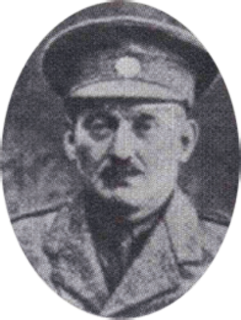
William Kenny VC, an Irish recipient of the Victoria Cross, the highest and most prestigious award for gallantry in the face of the enemy that can be awarded to British and Commonwealth forces, is born on August 24, 1880, in Drogheda, County Louth.

Kenny is 34 years old, and a Drummer in the 2nd Battalion, Gordon HighlandersBritish Army during World War I when the following deed takes place for which he is awarded the Victoria Cross.

On October 23, 1914, near YpresBelgium, Drummer Kenny rescues wounded men on five occasions under very heavy fire. Twice previously he saves machine guns by carrying them out of action, and on numerous occasions he conveys urgent messages under very dangerous circumstances over fire-swept ground.

In addition to the Victoria Cross, Kenny earns the rank of Drum-Major and is also awarded the following medals: Queen’s South Africa Medal with bars, King’s South Africa Medal with bars, 1914 Star with bar, British War MedalVictory Medal with oak-leaf, Delhi Durbar Medal, and the Cross of St. George (Russia).

Kenny dies on January 10, 1936, at Hammersmith, West London, England. He is buried in the Corps of Commissionaires plot at Brookwood Cemetery, Brookwood, Surrey, England, but the original marker is lost.

On March 20, 1999, Kenny’s grave receives a new headstone, arranged by The Gordon Highlanders London Association (Lt. Col. M. H. Burge). He is not otherwise commemorated. His Victoria Cross and other medals are on display at the Gordon Highlanders MuseumAberdeen, Scotland.