On January 31, 1972, the day after Bloody Sunday, British Home SecretaryReginald Maudling announces a tribunal of inquiry “into the circumstances of the march and the incidents leading up to the casualties which resulted.”
The official British Army position, backed by Maudling in the House of Commons, is that the paratroopers reacted to gun and nail bomb attacks from suspected Irish Republican Army (IRA) members. Apart from the soldiers, all eyewitnesses — including marchers, local residents, and British and Irish journalists present — maintain that soldiers fired into an unarmed crowd or were aiming at fleeing people and those tending the wounded, whereas the soldiers themselves were not fired upon. No British soldier is wounded by gunfire or reports any injuries, nor are any bullets or nail bombs recovered to back up their claims.
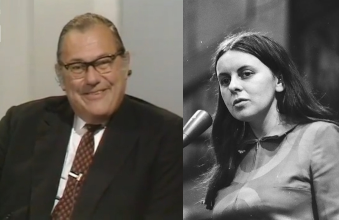
In the days following Bloody Sunday, Bernadette Devlin, the independent Irish nationalistMember of Parliament (MP) for Mid Ulster, expresses anger at what she perceives as British government attempts to stifle accounts being reported about the shootings. Having witnessed the events firsthand, she is infuriated that the Speaker of the House of Commons, Selwyn Lloyd, consistently denies her the chance to speak in Parliament about the shootings, although parliamentary convention decrees that any MP witnessing an incident under discussion will be granted an opportunity to speak about it in Parliament. Devlin slaps Reginald Maudling and calls him a “murdering hypocrite” when he makes a statement to Parliament that the British Army had fired only in self-defence. She is temporarily suspended from Parliament as a result.
An inquest into the deaths is held in August 1973. The city’s coroner, Hubert O’Neill, a retired British Army major, issues a statement at the completion of the inquest. He declares:
“This Sunday became known as Bloody Sunday and bloody it was. It was quite unnecessary. It strikes me that the Army ran amok that day and shot without thinking what they were doing. They were shooting innocent people. These people may have been taking part in a march that was banned but that does not justify the troops coming in and firing live rounds indiscriminately. I would say without hesitation that it was sheer, unadulterated murder. It was murder.”
(Pictured: Home Secretary Reginald Maudling (left) and Member of Parliament for Mid Ulster Bernadette Devlin)
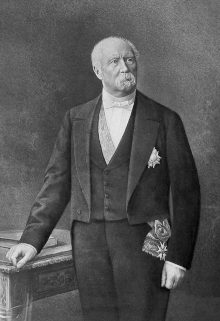
Patrice de MacMahon, a descendant of an Irish family, resigns as president of France on January 30, 1879, and retires to private life. His resignation comes after he dissolves the Chamber of Deputies, resulting in public outrage and a Republican electoral victory earlier in the month.
Born Marie Edme Patrice Maurice de MacMahon on July 13, 1808, in Sully, France, he serves as Marshal of France and second president of the French Third Republic. During his presidency the Third Republic takes shape, the new constitutional laws of 1875 are adopted, and important precedents are established affecting the relationship between executive and legislative powers.
MacMahon begins his army career in 1827 in Algeria and distinguishes himself during the Siege of Constantine (1837) and in the Crimean War (1853–56). The climax of his military career comes in the Italian campaign of 1859, when his victory at Magenta results in his being created Duke of Magenta. In 1864 he becomes Governor General of Algeria. Commanding the I Army Corps in Alsace during the Franco-Prussian War (1870–71), he is wounded and defeated at the Battle of Wörth. After a short convalescence at Sedan, he is appointed head of the army of the French Third Republic, which defeats the Paris Commune revolt in May 1871.
When Adolphe Thiers resigns as president of the republic on May 24, 1873, French rightists turn to MacMahon as his successor. He is elected president the same day. On November 20, 1873, the National Assembly passes the Law of the Septennate, conferring upon him presidential power for seven years. He assumes his presidential duties somewhat reluctantly, for he dislikes publicity and lacks an understanding of the complex political issues of his day.
During MacMahon’s term the French Constitutional Laws of 1875 are promulgated. The National Assembly dissolves itself, and the elections of 1876 returns a large majority of republicans to the new chamber. The first crisis comes in December 1876, when the republican chamber compels him to invite the moderate republican Jules Simon to form a government. The conservative Senate disapproves of Simon because he had purged some rightist officials, and, on May 16, 1877, MacMahon posts a letter to Simon that is tantamount to dismissal. Premier Simon’s resignation precipitates the crise du seize mai. When MacMahon commissions conservative Albert de Broglie to form a ministry and wins the Senate’s assent to dissolve the chamber on June 25, 1877, the question of whether the President or Parliament would control the government is squarely posed.
The new elections to the chamber return a majority of republicans, and the de Broglie ministry is given a vote of “no confidence.” The succeeding ministry, headed by Gaëtan de Rochebouët, also collapses. By December 13, 1877, MacMahon gives in to the extent of accepting a ministry led by conservative republican Jules Dufaure and composed mostly of republicans. On January 5, 1879, the republicans gain a majority in the Senate, and MacMahon resigns on January 30. The constitutional crisis during his presidency is resolved in favour of parliamentary as against presidential control, and thereafter during the Third Republic the office of president becomes largely an honorific post.
From 1887 to 1893, MacMahon directs the Société de secours aux blessés militaires (S.S.B.M) – Rescue Society of Wounded Military, which in 1940 becomes the French Red Cross.
Gearóid O’Sullivan, soldier and politician, is born on January 28, 1891, at Coolnagrane, near Skibbereen, County Cork, fourth son among six sons and three daughters of Michael O’Sullivan, farmer, of Loughine, and Margaret Sullivan (née McCarthy) of Coolnagrane.
Christened Jeremiah but known in later life as Gearóid, O’Sullivan is an outstanding pupil at national school and secondary school in Skibbereen. Encouraged by his teachers, he acquires a love of the Irish language. Not yet ten, he joins the Gaelic League in Skibbereen in October 1900. He takes part in the Oireachtas debates of 1909. In 1911 he qualifies at St. Patrick’s College, Dublin, as a national schoolteacher and teaches at Kildorrery, County Cork, but returns to Dublin in 1912 to take up a post at St. Peter’s National School, Phibsborough. He takes an honours degree in Celtic studies at University College Dublin (UCD) (1913), an H.Dip.Ed. (1914), and an M.Ed. (1915). At the same time, he is an organiser and teacher with the Gaelic League, a member of its Keating branch at Parnell Square, Dublin, and a founder of the League’s “fáinne” proficiency badge.
O’Sullivan joins the F Company, 1st Battalion, Dublin Brigade of the Irish Volunteers at their foundation in November 1913, is aide-de-camp to Seán Mac Diarmada during the 1916 Easter Rising and is ordered by Patrick Pearse to raise the flag of rebellion over the General Post Office (GPO) stronghold in Dublin. Interned at Frongoch internment camp in Wales after the rising, he belongs to the Irish Republican Brotherhood (IRB) group of prisoners closely linked with Michael Collins, a proximity that continues throughout the crisis years to follow. Released in the amnesty of December 1916, he intensifies his Volunteer activity, playing a prominent role in Carlow Brigade, for which he is briefly detained while working as a teacher at St. Mary’s Knockbeg College, County Carlow. When the Irish Volunteers become the Irish Republican Army (IRA) in 1919, he is arrested again and goes on hunger strike at Mountjoy Prison, which leads to his release. Active throughout the Irish War of Independence (1919–21) and narrowly avoiding recapture during meetings with Collins, he joins the supreme council of the IRB in November 1921, remaining there for the remainder of his military career.
From February 1920, O’Sullivan replaces Collins as adjutant general of the IRA, a position he retains until the Anglo–Irish Treaty of December 1921 (which he supports), resuming it a month later as a lieutenant general of the new National Army, responsible for personnel and promotions. He is also elected to Dáil Éireann for Carlow–Kilkenny in 1921 and again in 1922, retiring in 1923. His intellectual and organisational abilities guarantee that his position within the army is safe after the death in August 1922 of Collins, to whom he owes much for his initial rise to prominence. On August 28 he is appointed to the newly created army council, whose most draconian prerogative becomes the military execution of republican prisoners.
After the Irish Civil War (1922–23), wholesale demobilisation of officers and other ranks takes place, but O’Sullivan and his council colleagues Richard Mulcahy, Seán Mac Mahon, and Seán Ó Murthuile survive the fiscal axe. Their privileged position angers some officers, led by Major GeneralLiam Tobin, alarmed at the rate of demobilisation and the state’s apparent abandonment of Collins’s republican ideals. Through the Irish Republican Army Organisation, they deplore the devaluation of their pre-treaty IRA service and the retention of certain former British Army officers and instructors. O’Sullivan’s brief time as adjutant general places him in the role of personnel manager. As the Defence Forces (Temporary Provisions) Act, 1923, transforms the National Army into the defence forces of an Irish dominion, he is clearly in the sights of those who disagree with how these forces took shape.
As demobilisation continues and former British personnel become more evident, O’Sullivan and his colleagues become targets of suspicion that a hostile IRB clique had controlled the army council since its formation after the death of Collins. Exaggerated or not, such claims precipitate the army crisis of March 1924, in which O’Sullivan personally orders a raiding party under Colonel Hugo MacNeill to arrest its leaders. To defuse the crisis, he and his army council colleagues are forced to stand down, while the arrested dissidents are summarily retired. The subsequent army inquiry (April–June 1924) absolves him and his colleagues of any wrongdoing, but their active military careers are over. O’Sullivan, however, is for some time secretary of the military service pensions board.
Civilian life treats O’Sullivan well, as he enters a legal career and in 1926 is called to the bar. In 1927 he is appointed Judge Advocate General and remains so until 1932. After the assassination of Minister for JusticeKevin O’Higgins in July 1927, he fills the vacated Dublin County seat in a by-election in August, retaining it at subsequent elections until 1937. In August 1928 he is a Free State delegate to the Empire Parliamentary Association conference in Canada. Openly supporting Gen. Eoin O’Duffy and the short-lived ‘Blueshirts’ vanguard of the fledgling Fine Gael party during 1933–34, he pointedly refuses to surrender his legally held revolver when gardaí demand it as a precaution against a feared Blueshirt coup d’étât. In 1937 he becomes a barrister on the western circuit, and in 1940 commissioner for special purposes of the income tax acts, a post he holds for life.
O’Sullivan lives at St. Kevin’s Park, Dartry, Dublin, where he dies at the age of 57 on March 26, 1948. His military funeral to Glasnevin Cemetery, with his coffin draped in the same flag that had covered the coffin of Michael Collins, reflects his high national profile.
In 1922, O’Sullivan marries Maude Kiernan, sister of Kitty Kiernan and daughter of Peter and Bridget Kiernan, whose family is closely involved with the Irish political leadership, notably Michael Collins and Harry Boland. After Maude’s death he marries Mary Brennan of Belfast. They have three daughters and a son, all of whom survive him. O’Sullivan is commemorated in County Cork by a plaque at Skibbereen town hall.
Sackville then enters the army. He is elected Grandmaster of the Grand Lodge of Ireland in 1751, serving in this post for two years. He marries Diana Sambrooke, daughter of John Sambrooke and Elizabeth Forester, on September 3, 1754. They have two sons and three daughters.
In 1747 and 1748, Sackville again joins the Duke of Cumberland. He becomes colonel of the 7th Irish horse and serves in Holland. There is a break in his military career between wars (1750-1755) when he serves as first secretary to his father.
In June 1758 Sackville is second in command of a British expedition led by Marlborough which attempts an amphibious Raid on St. Malo. While it fails to take the town as instructed, the raid is still considered to be largely successful as a diversion. Follow-up raids are considered against Le Havre, Caen and other targets in Normandy, but no further landings are attempted, and the force returns home. Later in 1758 they join the allied forces of Duke Ferdinand of Brunswick in Germany. When Marlborough dies, Sackville becomes Commander of the British contingent of the army, although still under the overall command of the Duke of Brunswick.
In the Battle of Minden on August 1, 1759, British and Hanoverian infantry of the centre make an advance on the French cavalry and artillery in that sector. As the disrupted French begin to fall back on Minden, Ferdinand calls for a British cavalry charge to complete the victory, but Sackville withholds permission for their advance repeatedly. For this action, he is cashiered and sent home. John Manners, Marquess of Granby, replaces him as commander of the British contingent for the remainder of the war.
Sackville refuses to accept responsibility for refusing to obey orders. Back in England, he demands a court-martial and makes it a large enough issue that he obtains his demand in 1760. The court finds him guilty, and the verdict not only upholds his discharge, but rules that he is “…unfit to serve His Majesty in any military Capacity whatever.” The king has his name struck from the Privy Council rolls.
Sackville is a Member of Parliament at intervals from 1733. He serves terms in both the Dublin and the Westminster bodies, sometimes simultaneously, but does not take sides in political wrangles. Between 1750 and 1755 he serves as Chief Secretary for Ireland, during his father’s second term as Lord Lieutenant of Ireland.
On November 10, 1775, Sackville is appointed Secretary of State for the Colonies replacing William Legge, 2nd Earl of Dartmouth in the post. He becomes a target for the opposition and is eventually persuaded to step down in exchange for a peerage, and in February 1782 he is made Baron Bolebrooke, in the County of Sussex, and Viscount Sackville, of Drayton in the County of Northamptonshire. His political career ends with the fall of the North government in March 1782.
The controversy over Sackville’s handling of the war continues. Some members are opposed to his taking a seat in the House of Lords, an almost unprecedented incident. In spite of this he is admitted to the Lords, where he is staunchly defended by Edward Thurlow, 1st Baron Thurlow, and his declining health soon makes the issue irrelevant. He retires to his country home at Stoneland Lodge and dies there on August 26, 1785. He maintains to his dying day that he had not been a coward at Minden. Following his death, a defence of his reputation, The character of the late Viscount Sackville, is written by Richard Cumberland.
(Pictured: “George Germain,” 1766 painting by George Romney (1734-1802))
Born on January 29, 1932, in Clara, County Offaly, Cowen is the son of Christy Cowen, a cattle dealer and a Fianna Fáil member who served as a member of Offaly County Council from 1932 until his death in 1967. He is educated at Clara National School and subsequently attends TullamoreCBS. After completion of his secondary schooling, he works in the family business which includes a public house and a butcher shop. He later becomes an auctioneer.
Cowen first becomes involved in politics in 1967, when he is co-opted onto Offaly County Council, following the death of his father. Later that year he heads the poll in the Tullamore area and retains his seat until his death.
Cowen returns to the Dáil following the 1977 Irish general election, when Fianna Fáil returns to power in a landslide. Once again, he remains on the backbenches.
In 1979, Jack Lynch resigns as Taoiseach and Leader of Fianna Fáil. Cowen supports the bid of Charles Haughey for the leadership. Haughey wins the subsequent leadership election. In spite of offering his support, Cowen fails to secure promotion to ministerial office.
A period of political instability follows with three general elections being held throughout 1981 and 1982. Cowen retains his seat in all of these elections. In March 1982, he is finally promoted to junior ministerial level, when he is appointed Minister of State at the Department of Agriculture with special responsibility for disadvantaged areas. He holds that position until December of the same year, when Fianna Fáil loses power.
While attending a meeting of Offaly County Council in January 1984, Cowen is taken ill. He is taken to St. Vincent’s Hospital in Dublin where he dies several days later on January 24, 1984. He is survived by his wife, Mary, and three sons. The consequent by-election for his seat in the 24th Dáil, is won by his second son, Brian, who goes on to serve as Taoiseach from 2008 to 2011. In 2011, Cowen’s youngest son, Barry, is elected to the seat previously held by his father and brother, having previously been an Offaly County Councillor for the Tullamore electoral area.
Gill is born on October 25, 1858, in Ballygraigue, Nenagh, County Tipperary, the first of four sons of Robert Gill, a civil engineer who is assistant county surveyor, and Mary (née Clampett), daughter of a woolen merchant, James Clampett of Mount Kennett, County Limerick. He attends St. Joseph’s CBS Nenagh, St. John’s College, Kilkenny, and Trinity College Dublin becoming a journalist, firstly as editor of the Catholic World magazine of New York, and an associate editor of the North American Review (1883–85). He marries Annie Fennell of Dublin in 1882 and they have two sons, Donat and Roy, and a daughter Finola.
Gill is a friend and political ally of Charles Stewart Parnell. After the death of Parnell, he remains with the Irish Parliamentary Party. He works with Horace Plunkett in developing the Irish co-operative movement. He is member and honorary secretary to the 1895 Recess Committee which leads to the formation of both the Department of Agriculture and Technical Instruction (DATI), forerunner of the Irish Department of Agriculture, and the Vocational Education Committee (VEC). His key work for the Recess Committee is research into the state aid to agriculture in France and Denmark. In February 1900, he is appointed Secretary of the new Department of Agriculture and Technical Instruction in Ireland. In 1907, he is appointed Chairman of the Departmental Committee on Irish Forestry. He also serves on a number of governmental committees concerning agriculture and agricultural production. He is President of the Irish Technical Instruction Association from 1925 to 1929.
A raconteur with, in the words of R. A. Anderson, ‘a queer charm about him,’ Gill moves in Dublin literary circles, and in his retirement, he makes a translation of Louis Paul-Dubois’ Le drame irlandais et l’Irlande nouvelle (1927), published posthumously as The Irish struggle and its results (1934).
(Pictured: “Portrait of T.P. Gill, Journalist, Secretary, Department of Agriculture and Technical Instruction,” oil on canvas by Sarah Purser, 1898, National Gallery of Ireland)
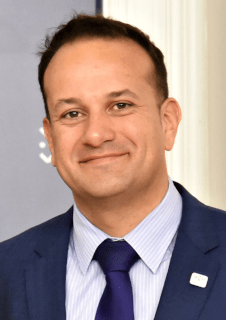
In May 2017, Kenny announces that he is planning to resign as Taoiseach and Fine Gael leader. Varadkar stands in the leadership election to replace him. Although more party members vote for his opponent, Simon Coveney, he wins by a significant margin among Fine Gael members of the Oireachtas and is elected leader on June 2. Twelve days later, he is appointed Taoiseach, and at 38 years of age becomes the youngest person to hold the office. He is Ireland’s first, and the world’s fourth, openly gay head of government and the first Taoiseach of Indian heritage.
In 2020, Varadkar calls a general election to be held in February. While polls in 2019 have suggested a favourable result for Fine Gael, they ultimately come in third in terms of seats and votes, behind Fianna Fáil and Sinn Féin, with 35 seats, a loss of 15 seats for the party from the previous general election, when it had finished in first position. He resigns and is succeeded by Micheál Martin as Taoiseach. He is subsequently appointed Tánaiste and Minister for Enterprise, Trade and Employment as part of a three-party coalition composed of Fianna Fáil, Fine Gael and the Green Party.
Cowen is exposed to politics at a young age. His grandfather was a councillor in the Fianna Fáil party, and his father, Bernard Cowen, held a seat in Dáil Éireann, the lower house of the Oireachtas (Irish parliament). He is an exemplary debater in school and often speaks at his father’s election rallies. He studies at University College Dublin and at the Incorporated Law Society of Ireland, where he is trained as a solicitor. His father’s death in 1984 prompts a by-election for the seat he had held in the Dáil. At the age of 24, he captures the seat, becoming one of the youngest members ever to sit in the Dáil.
Cowen’s political mentor is Albert Reynolds, who becomes Taoiseach in 1992 when Fianna Fáil is in a coalition government with the Progressive Democrats. He is an outspoken critic of the coalition, famously stating about the Progressive Democrats, “When in doubt, leave them out!” He serves as Minister for Labour (1992–93), and in 1993, after the breakup of the Fianna Fáil–Progressive Democrats government, he helps to negotiate the short-lived coalition of Fianna Fáil and the Labour Party. He then serves as Minister for Transport, Energy, and Communications (1993–94), leaving office after Fianna Fáil is forced into opposition by the formation of a Fine Gael–Labour–Democratic Left coalition.
During Fianna Fáil’s years out of government, Cowen serves successively as opposition Spokesperson for Agriculture, Food, and Forestry (1994–97) and Spokesperson for Health (1997). Following elections in 1997, Fianna Fáil leader Bertie Ahern forms a coalition government with the Progressive Democrats, and the party once again returns to power. Cowen serves as Minister for Health and Children (1997–2000), Minister for Foreign Affairs (2000–04), and Minister for Finance (2004–08). In June 2007 he was appointed Tánaiste.
Cowen is known for his sharp tongue and sometimes rough-hewn manner, but he is also recognized for his fierce intelligence, wit, and jovial demeanour. A combative politician and loyal party member, he is for many years seen as an obvious successor to Ahern. In April 2008, amid an investigation into possible past financial misconduct, Ahern announces that he will resign as Taoiseach and Leader of Fianna Fáil the following month. Cowen, who had remained supportive of Ahern throughout, is elected Leader of Fianna Fáil in April 2008. He becomes Taoiseach the following month and is faced with leading the country amid the global financial crisis that creates Ireland’s worst economy since the 1930s.
Cowen’s government oversees the bailout of Ireland’s banking system, which had been thrown into crisis by the collapse of the housing market, but the rescue comes at the cost of a skyrocketing deficit. As the country’s economic difficulties deepen, he seeks a cure that he hopes would obviate the need of foreign intervention, proposing an increase in income taxes and cuts in services. In November 2010, however, as concern for Ireland’s financial stability grows among its eurozone partners, he agrees to accept a bailout of more than $100 million from the European Union and the International Monetary Fund. There is concern in Ireland that one condition for foreign aid might be an increase in Ireland’s comparatively low corporate taxes. The Green Party, Fianna Fáil’s junior partner in the governing coalition, responds to the situation by calling for early elections.
In mid-January 2011 Cowen’s leadership of Fianna Fáil is challenged by Minister for Foreign Affairs Micheál Martin, partly in response to rumours that had swirled of a golf course meeting that had taken place between the Taoiseach and the former head of the Anglo Irish Bank before the government’s bailout of the Irish banking industry. He survives a leadership vote, but about one-third of the party’s parliamentary bloc votes against him. In a rapid succession of events that occur over the course of a few days, an unsuccessful reshuffle of the cabinet follows the resignation of six cabinet ministers, after which Cowen calls for an election to be held on March 11 and then announces that he will step down as party leader but continue as caretaker Taoiseach until the election. The Green Party then withdraws from the ruling coalition, forcing an even earlier election. Waiting until the parliament passes a finance bill that is necessary to meet the conditions of an International Monetary Fund–European Union loan but which imposes austerity measures that had proved very unpopular with much of the Irish public, he officially calls the election for February 25. Martin takes over as the Leader of Fianna Fáil, which suffers a crushing defeat in the election at the hands of Fine Gael.
In May 2014, Cowen becomes part of the board of Topaz Energy. He is appointed to the board of Beacon Hospital in February 2015. In July 2017, he is conferred with an honorary doctorate from the National University of Ireland. During his 50-minute acceptance speech he criticises the EU for its behaviour towards Ireland during the financial crisis and expresses regret that so many jobs were lost during the recession. Following the conferring ceremony, the NUI faces considerable public criticism for deciding to make the award to Cowen. Former (and founding) President of the University of Limerick, Edward M. Walsh, announces that he will hand back his own honorary doctorate in protest, and does so on November 14, 2018.
On July 5, 2019, Cowen is admitted to Beacon Hospital after suffering a major brain hemorrhage. He is then transferred to St. Vincent’s University Hospital where he spends five months before transferring to a physical rehabilitation facility. As of late 2020, while he is still in hospital following a stroke the previous year, he has been making steady progress.
Craig is the seventh of nine children of James Craig (1828–1900), a wealthy whiskey distiller who had entered the firm of Dunville & Co. as a clerk and by age 40 is a millionaire and a partner in the firm. Craig Snr. owns a large house called Craigavon, overlooking Belfast Lough. His mother, Eleanor Gilmore Browne, is the daughter of Robert Browne, a prosperous man who owned property in Belfast and a farm outside Lisburn. Craig is educated at Merchiston Castle School in Edinburgh, Scotland. After school he begins work as a stockbroker, eventually opening his own firm in Belfast.
Craig enlists in the 3rd (Militia) battalion of the Royal Irish Rifles on January 17, 1900, to serve in the Second Boer War. He is seconded to the Imperial Yeomanry, a cavalry force created for service during the war, as a lieutenant in the 13th battalion on February 24, 1900, and leaves Liverpool for South Africa on the SS Cymric in March 1900. After arrival he is soon sent to the front and is taken prisoner in May 1900, but released by the Boers because of a perforated colon. On his recovery he becomes deputy assistant director of the Imperial Military Railways, showing the qualities of organisation that are to mark his involvement in both British and Ulster politics. In June 1901 he is sent home suffering from dysentery, and by the time he is fit for service again the war is over. He is promoted to captain in the 3rd Royal Irish Rifles on September 20, 1902, while still seconded to South Africa.
On June 7, 1921, Craig is appointed the first Prime Minister of Northern Ireland by the Lord Lieutenant of Ireland. The House of Commons of Northern Ireland assembles for the first time later that day.
Craig had made his career in British as well as Northern Irish politics, but his premiership shows little sign of his earlier close acquaintance with the British political world. He becomes intensely parochial and suffers from his loss of intimacy with British politicians in 1938, when the British government concludes agreements with Dublin to end the Anglo-Irish trade war between the two countries. He never tries to persuade Westminster to protect Northern Ireland‘s industries, especially the linen industry, which is central to its economy. He is anxious not to provoke Westminster, given the precarious state of Northern Ireland’s position. In April 1939, and again in May 1940 during World War II, he calls for conscription to be introduced in Northern Ireland (which the British government, fearing a backlash from nationalists, refuses). He also calls for Winston Churchill to invade Ireland using Scottish and Welsh troops in order to seize the valuable ports and install a Governor-General at Dublin.
While still prime minister, Craig dies peacefully at his home at Glencraig, County Down at the age of 69 on November 24, 1940. He is buried on the Stormont Estate on December 5, 1940, and is succeeded as the Prime Minister of Northern Ireland by the Minister of Finance, J. M. Andrews.
(Pictured: James Craig, 1st Viscount Craigavon, bromide print by Olive Edis, National Portrait Gallery, London)
Gregory becomes involved in republican politics, joining Sinn Féin and the Irish Republican Army (IRA) in 1964. In UCD he helps found the UCD Republican Club, despite pressure from college authorities, and becomes involved with the Dublin Housing Action Committee. Within the party he is a supporter of Wicklow Republican Seamus Costello. Costello, who is a member of Wicklow County Council, emphasises involvement in local politics and is an opponent of abstentionism. Gregory sides with the Officials in the 1970 split within Sinn Féin. Despite having a promising future within the party, he resigns in 1972 citing frustration with ideological infighting in the party. Later, Costello, who had been expelled by Official Sinn Féin, approaches him and asks him to join his new party, the Irish Republican Socialist Party. He leaves the party after Costello’s assassination in 1977. He is briefly associated with the Socialist Labour Party.
Gregory contests the 1979 local elections for Dublin City Council as a “Dublin Community Independent” candidate. At the February 1982 general election, he is elected to Dáil Éireann as an Independent TD. On his election he immediately achieves national prominence through the famous “Gregory Deal,” which he negotiates with Fianna Fáil leader Charles Haughey. In return for supporting Haughey as Taoiseach, he is guaranteed a massive cash injection for his inner-city Dublin constituency, an area beset by poverty and neglect.
Although Gregory is reviled in certain quarters for effectively holding a government to ransom, his uncompromising commitment to the poor is widely admired. Fianna Fáil loses power at the November 1982 general election, and many of the promises made in the Gregory Deal are not implemented by the incoming Fine Gael–Labour Party coalition.
Gregory is involved in the 1980s in tackling Dublin’s growing drug problem. Heroin had largely been introduced to Dublin by the Dunne criminal group, based in Crumlin, in the late 1970s. In 1982 a report reveals that 10% of 15- to 24-year-olds have used heroin at least once in the north inner city. The spread of heroin use also leads to a sharp increase in petty crime. He confronts the government’s handling of the problem as well as senior Gardaí, for what he sees as their inadequate response to the problem. He co-ordinates with the Concerned Parents Against Drugs group in 1986, who protest and highlight the activities of local drug dealers and defend the group against accusations by government Ministers Michael Noonan and Barry Desmond that it is a front for the Provisional IRA. He believes that the solution to the problem is multi-faceted and works on a number of policy level efforts across policing, service co-ordination and rehabilitation of addicts. In 1995 in an article in The Irish Times, he proposes what would later become the Criminal Assets Bureau, which is set up in 1996, catalysed by the death of journalistVeronica Guerin. His role in its development is later acknowledged by then Minister for JusticeNora Owen.
Gregory also advocates for Dublin’s street traders. After attending a sit-down protest with Sinn Féin Councillor Christy Burke, and future Labour Party TD Joe Costello on Dublin’s O’Connell Street in defence of a street trader, he, Burke and four others are arrested and charged with obstruction and threatening behaviour. He spends two weeks in Mountjoy Prison after refusing to sign a bond to keep the peace.
Gregory remains a TD from 1982 and, although he never holds a government position, remains one of the country’s most recognised Dáil deputies. He always refuses to wear a tie in the Dáil chamber stating that many of his constituents could not afford them.
Gregory dies on January 2, 2009, following a long battle with cancer. Following his death, tributes pour in from politicians from every party, recognising his contribution to Dublin’s north inner city. During his funeral, politicians from the Labour Party, Fianna Fáil and Fine Gael are told that although they speak highly of Gregory following his death, during his time in the Dáil he had been excluded by many of them and that they were not to use his funeral as a “photo opportunity.” He is buried on January 7, with the Socialist Party‘s Joe Higgins delivering the graveside oration.





 seamus dubhghaill