seamus dubhghaill

Promoting Irish Culture and History from Little Rock, Arkansas, USA


Leave a comment

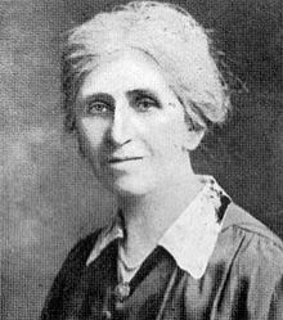
Birth of Matilda Cullen Knowles, Pioneer in Irish Lichenology

matilda-cullen-knowles

Matilda Cullen Knowles, considered the founder of modern studies of Irish lichens following her work in the early twentieth century on the multi-disciplinary Clare Island Survey, is born on January 31, 1864 in Cullybackey near Ballymena, County Antrim, Northern Ireland. Her work is said to have “formed an important baseline contribution to the cryptogamic botany of Ireland and western oceanic Europe.”

Knowles’ early interest in botany is encouraged by her father, William James Knowles, himself an amateur scientist who takes Matilda and her sister to meetings of the Belfast Naturalists’ Field Club. This is where she first meets Robert Lloyd Praeger who continues to be a lifelong influence. In 1895 she is introduced to the Derry botanist Mary Leebody and together they work on a supplement to Samuel Alexander Stewart‘s and Thomas Hughes Corey‘s 1888 book the Flora of the North-east of Ireland.

Knowles then volunteers to help with the crowdsourcing of material about the plants of County Tyrone. While completing this work Knowles publishes her own first paper about Tyrone’s flowering plants in 1897. She eventually sends in over 500 examples that are considered for inclusion in the Irish Topographical Botany, which Praeger publishes in 1901.

In 1902, after attending the Royal College of Science for Ireland for a year, Knowles is appointed a temporary assistant in the then Botanical Section of the National Science and Art Museum. She works closely with Professor Thomas Johnson to continue the development of the Herbarium collection. She also co-authors with him the Hand List of Irish Flowering Plants and Ferns (1910).

One of Knowles’ first works is The Maritime and Marine Lichens of Howth, which the Royal Dublin Society publishes in 1913. Knowles had gathered the knowledge and experience to do this while diligently assisting with a survey of Clare Island as suggested by Praeger. This novel survey involves not only Irish but also several European scientists including prominent UK lichenologist, Annie Lorrain Smith. This is claimed as the most extensive piece of field work at the time. As a result, Knowles is able to create a foundation for her later specialism in lichens.

Knowles publishes more than thirty scientific papers on a wide range of botanical subjects between 1897 and 1933. It is while studying the lichens of Howth that she discovers how lichens by the shore grow in distinct tidal zones that can be distinguished by their colour: black, orange and grey.

Her major work is The Lichens of Ireland which adds over 100 species of lichen to the Irish List and records the distribution of the eight hundred species identified in Ireland. She achieves this task with the collaboration of thirty other natural scientists. It is published in 1929 and includes twenty lichens that had previously not been identified as Irish.

Professor Thomas Johnson retires in 1923, allowing Knowles to take over curatorship, working with Margaret Buchanan. As she becomes older Knowles’ hearing begins to fail such that she has to rely on an ear trumpet. Despite her deafness she still attends meetings. She cares for and adds to the National Museum Herbarium collection although never gets the credit she deserves. In 1933 she plans to retire but pneumonia ends her life before she ends her career. Knowles dies in Dublin on April 27, 1933.

Knowles is honoured with a commemorative plaque by the Irish National Committee for Science and Engineering in October 2014 to mark the 150th anniversary of her birth.


Leave a comment

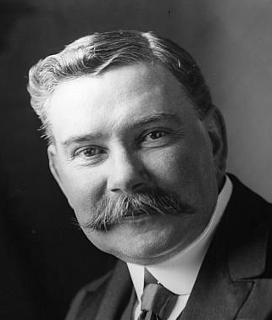
Birth of Louis Brennan, Irish Australian Inventor

louis-brennan

Louis Brennan, Irish Australian mechanical engineer and inventor, is born in Castlebar, County Mayo on January 28, 1852.

Brennan moves to Melbourne, Australia in 1861 with his parents. He starts his career as a watchmaker and a few years later is articled to Alexander Kennedy Smith, a renowned civil and mechanical engineer of the period. He serves as a sergeant in the Victorian Engineers under the command of Captain John James Clark. He invents the idea of a steerable torpedo in 1874, from observing that if a thread is pulled on a reel at an angle with suitable leverage, the reel will move away from the thread side. He spends some years working out his invention and receives a grant of £700 from the Victorian government towards his expenses. He patents the Brennan torpedo in 1877. The idea is trialed at Camden Fort near Crosshaven, County Cork.

Brennan goes to England in 1880 and brings his invention before the War Office. Sir Andrew Clarke alerts the authorities to the possibilities of the torpedo if used in the defence of harbours and channels, and the patent is eventually bought for a sum believed to be more than £100,000 (£ 9,331,100 in 2019). In 1887 he is appointed superintendent of the Brennan torpedo factory and is consulting engineer from 1896 to 1907.

Brennan does much work on a gyro monorail locomotive which is kept upright by a gyrostat. In 1903 he patents a gyroscopically balanced monorail system that he designs for military use. He successfully demonstrates the system on November 10, 1909, at Gillingham, England, but fears that the gyroscopes might fail prevents adoption of the system for widespread use.

From 1916 to 1919 Brennan serves in the munition invention department. From 1919 to 1926 he is engaged by the air ministry in aircraft research work at the Royal Aircraft Establishment, Farnborough, and gives much time to the invention of a helicopter. The government spends a large sum of money on it, but in 1926 the air ministry gives up working on it, much to Brennan’s disappointment.

Brennan marries Anna Quinn on 10 September 10, 1892. The marriage results in a son and a daughter. He is created a Companion of the Order of the Bath in 1892 and is foundation member of the National Academy of Ireland in 1922.

In January 1932 Brennan is knocked down by a car at Montreux, Switzerland, and dies on January 17, 1932. He is buried at St. Mary’s Catholic Cemetery, Kensal Green, London, in an unmarked plot numbered 2454 that is opposite the Chapel record office. On March 11, 2014, Taoiseach Enda Kenny unveils a new gravestone for Brennan at St. Mary’s in a ceremony honouring the inventor’s life and career.

Gillingham Library retains the archive of his papers.


Leave a comment

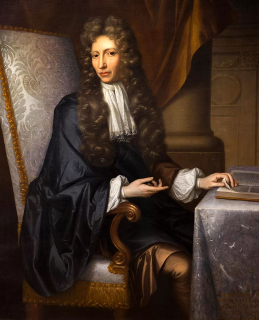
Death of Robert Boyle, Philosopher & Writer

robert-boyle

Robert Boyle, Anglo-Irish natural philosopher, theological writer, chemist, physicist, inventor and a preeminent figure of 17th-century intellectual culture, dies on December 31, 1691, in London.

Boyle is born on January 25, 1627, at Lismore Castle, in County Waterford. At age eight, he begins his formal education at Eton College, where his studious nature quickly becomes apparent. In 1639 he and his brother Francis embark on a grand tour of the continent together with their tutor Isaac Marcombes. In 1642, owing to the Irish rebellion, Francis returns home while Robert remains with his tutor in Geneva and pursues further studies.

Boyle returns to England in 1644, where he takes up residence at his hereditary estate of Stalbridge in Dorset. There he begins a literary career writing ethical and devotional tracts, some of which employ stylistic and rhetorical models drawn from French popular literature, especially romance writings. In 1649 he begins investigating nature via scientific experimentation. From 1647 until the mid-1650s, he remains in close contact with a group of natural philosophers and social reformers gathered around the intelligencer Samuel Hartlib. This group, the Hartlib Circle, includes several chemists who heighten his interest in experimental chemistry.

Boyle spends much of 1652–1654 in Ireland overseeing his hereditary lands and performing some anatomic dissections. In 1654 he is invited to Oxford, and he takes up residence at the university until 1668. In Oxford he is exposed to the latest developments in natural philosophy and becomes associated with a group of notable natural philosophers and physicians, including John Wilkins, Christopher Wren, and John Locke. These individuals, together with a few others, form the “Experimental Philosophy Club.” Much of Boyle’s best known work dates from this period.

In 1659 Boyle and Robert Hooke, the clever inventor and subsequent curator of experiments for the Royal Society, complete the construction of their famous air pump and use it to study pneumatics. Their resultant discoveries regarding air pressure and the vacuum appear in Boyle’s first scientific publication, New Experiments Physico-Mechanicall, Touching the Spring of the Air and Its Effects (1660). Boyle and Hooke discover several physical characteristics of air, including its role in combustion, respiration, and the transmission of sound. One of their findings, published in 1662, later becomes known as “Boyle’s law.” This law expresses the inverse relationship that exists between the pressure and volume of a gas, and it is determined by measuring the volume occupied by a constant quantity of air when compressed by differing weights of mercury.

Among Boyle’s most influential writings are The Sceptical Chymist (1661), which assails the then-current Aristotelian and especially Paracelsian notions about the composition of matter and methods of chemical analysis, and the Origine of Formes and Qualities (1666), which uses chemical phenomena to support the corpuscularian hypothesis. He argues so strongly for the need of applying the principles and methods of chemistry to the study of the natural world and to medicine that he later gains the appellation of the “father of chemistry.”

Boyle is a devout and pious Anglican who keenly champions his faith. He sponsors educational and missionary activities and writes a number of theological treatises. He is deeply concerned about the widespread perception that irreligion and atheism are on the rise, and he strives to demonstrate ways in which science and religion are mutually supportive. For Boyle, studying nature as a product of God’s handiwork is an inherently religious duty. He argues that this method of study would, in return, illuminate God’s omnipresence and goodness, thereby enhancing a scientist’s understanding of the divine. The Christian Virtuoso (1690) summarizes these views and may be seen as a manifesto of his own life as the model of a Christian scientist.

In 1668 Boyle leaves Oxford and takes up residence with his sister Katherine Jones, Vicountess Ranelagh, in her house on Pall Mall in London. There he sets up an active laboratory, employs assistants, receives visitors, and publishes at least one book nearly every year. Living in London also provides him the opportunity to participate actively in the Royal Society.

Boyle is a genial man who achieves both national and international renown during his lifetime. He is offered the presidency of the Royal Society and the episcopacy but declines both. Throughout his adult life, he is sickly, suffering from weak eyes and hands, recurring illnesses, and one or more strokes. He dies at age 64 on December 31, 1691, after a short illness exacerbated by his grief over Katherine’s death a week earlier. He leaves his papers to the Royal Society and a bequest for establishing a series of lectures in defense of Christianity. These lectures, now known as the Boyle Lectures, continue to this day.


Leave a comment

Death of Thomas Andrews, Chemist & Physicist

thomas-andrews

Thomas Andrews, chemist and physicist who does important work on phase transitions between gases and liquids, dies in Belfast on November 26, 1885. He is a longtime professor of chemistry at Queen’s University Belfast.

Andrews is born in Belfast on December 19, 1813, where his father is a linen merchant. He attends the Belfast Academy and the Royal Belfast Academical Institution, where at the latter of which he studies mathematics under James Thomson. In 1828 he goes to the University of Glasgow to study chemistry under Professor Thomas Thomson, then studies at Trinity College, Dublin, where he gains distinction in classics as well as in science. Finally, at the University of Edinburgh in 1835, he is awarded a doctorate in medicine.

Andrews begins a successful medical practice in his native Belfast in 1835, also giving instruction in chemistry at the Royal Belfast Academical Institution. In 1842, he marries Jane Hardie Walker. They have six children, including the geologist, Mary Andrews.

Andrews first becomes known as a scientific investigator with his work on the heat developed in chemical actions, for which the Royal Society awards him a Royal Medal in 1844. Another important investigation, undertaken in collaboration with Peter Guthrie Tait, is devoted to ozone. In 1845 he is appointed vice-president and professor of chemistry of the newly established Queen’s University Belfast. He holds these two offices until his retirement in 1879 at the age of 66.

His reputation mainly rests on his work with liquefaction of gases. In the 1860s he carries out a very complete inquiry into the gas laws — expressing the relations of pressure, temperature, and volume in carbon dioxide. In particular, he establishes the concepts of critical temperature and critical pressure, showing that a substance passes from vapor to liquid state without any breach of continuity.

In Andrews’ experiments on phase transitions, he shows that carbon dioxide may be carried from any of the states we usually call liquid to any of those we usually call gas, without losing homogeneity. The mathematical physicist Josiah Willard Gibbs cites these results in support of the Gibbs free energy equation. They also set off a race among researchers to liquify various other gases. In 1877-78 Louis Paul Cailletet is the first to liquefy oxygen and nitrogen.

Thomas Andrews dies in Belfast on November 26, 1885, and is buried in the city’s Borough Cemetery.


Leave a comment

Transatlantic Cable Brought Ashore at Killala

transatlantic-cable-county-mayo

A $300 million transatlantic cable is brought ashore on Ross Strand in Killala, County Mayo on August 14, 2015. The fiber optic cable will enable a super-fast Internet connection and is expected to be a major economic boost for the West.

The Irish Lights vessel Granuaile begins laying the cable a few hundred metres offshore. Divers pull the cable ashore while the ship continues laying to a point about 4 km offshore. From there another vessel, the Reliance, takes over the task, relay-race like, and begins laying further out towards the United States.

The fiber optic cable is owned and operated by Irish company Aqua Comms and will run directly from Ross Strand in Killala to Long Island, New York. It has the capacity to handle up to one third of the world’s telephone calls and can cover the entire Internet traffic of Europe and the United States. The system will enable 53.8 millisecond transfer speeds across the Atlantic Ocean when it goes live in early 2016.

Silicon Republic describes Mayo as “Europe’s entry point to a vastly superior service when construction is completed by next year.” These connections are expected to create “thousands of jobs” in data centre operations. It will have a 53.8 millisecond latency and be capable of handling a third of the world’s phone calls, with over 1.6 million simultaneous Ultra HD video channels, or over 32 million LTE wireless callers.

CEO Martin Roche says, “It will also be the most secure transatlantic cable system, due to the carefully mapped route and the design built into the construction of this project.”

Taoiseach Enda Kenny says, “This new digital infrastructure is essential to help create jobs and new business opportunities across Ireland.” He also added, “This is the most important landing since [French general] Humbert in 1798.”

Local councillor Jarlath Munnelly says the project could “transform” Killala and the north Mayo region. “This is an exciting project, which I am enthusiastically supportive of. It has the potential to transform North Mayo, not just Killala, by enhancing the telecommunications infrastructure in the area, and putting Ireland and Mayo into the centre of a global network,” said the councillor.


Leave a comment

Birth of Mathematician William Rowan Hamilton

william-rowan-hamilton

Sir William Rowan Hamilton, Irish mathematician who makes important contributions to classical mechanics, optics, and algebra, is born in Dublin on August 4, 1805.

Hamilton is the fourth of nine children born to Sarah Hutton (1780–1817) and Archibald Hamilton (1778–1819). He is part of a small but well-regarded school of mathematicians associated with Trinity College, Dublin, which he enters at age eighteen. He is said to have shown immense talent at a very early age. Astronomer Bishop Dr. John Brinkley remarks of the 18-year-old Hamilton, “This young man, I do not say will be, but is, the first mathematician of his age.”

Trinity College awards him two Optimes, or off-the-chart grades. He studies both classics and mathematics, and is appointed Professor of Astronomy just prior to his graduation. He then takes up residence at Dunsink Observatory where he spends the rest of his life.

Although Hamilton regards himself as a pure mathematician rather than a physicist, his work is of major importance to physics, particularly his reformulation of Newtonian mechanics, now called Hamiltonian mechanics. This work has proven central to the modern study of classical field theories such as electromagnetism, and to the development of quantum mechanics. In pure mathematics, he is best known as the inventor of quaternions.

Hamilton’s scientific career includes the study of geometrical optics, classical mechanics, adaptation of dynamic methods in optical systems, applying quaternion and vector methods to problems in mechanics and in geometry, development of theories of conjugate algebraic couple functions, solvability of polynomial equations and general quintic polynomial solvable by radicals, the analysis on Fluctuating Functions, linear operators on quaternions and proving a result for linear operators on the space of quaternions, which is a special case of the general theorem which today is known as the Cayley–Hamilton theorem. He also invents Icosian calculus, which he uses to investigate closed edge paths on a dodecahedron that visit each vertex exactly once.

Hamilton retains his faculties unimpaired to the very last, and steadily continues the task of finishing the Elements of Quaternions which occupies the last six years of his life. He dies on September 2, 1865, following a severe attack of gout precipitated by excessive drinking and overeating. He is buried in Mount Jerome Cemetery in Dublin.


Leave a comment

Birth of Geologist Richard Dixon Oldham

richard-dixon-oldham

Richard Dixon Oldham, British geologist who makes the first clear identification of the separate arrivals of P-waves, S-waves and surface waves on seismograms and the first clear evidence that the Earth has a central core, is born in Dublin on July 31, 1858.

Born to Thomas Oldham, a Fellow of the Royal Society and a geologist, Oldham is educated at Rugby School and the Royal School of Mines.

In 1879 Oldham becomes an assistant-superintendent with the Geological Survey of India (GSI), working in the Himalayas. He writes about 40 publications for the Survey on geological subjects including hot springs, the geology of the Son Valley and the structure of the Himalayas and the Indo-Gangetic plain. His most famous work is in seismology. His report on the 1897 Assam earthquake goes far beyond reports of previous earthquakes. It includes a description of the Chedrang fault, with uplift up to 35 feet and reported accelerations of the ground that have exceeded the Earth’s gravitational acceleration. His most important contribution to seismology is the first clear identification of the separate arrivals of P-waves, S-waves and surface waves on seismograms. Since these observations agree with theory for elastic waves, they show that the Earth can be treated as elastic in studies of seismic waves.

In 1903, Oldham resigns from the GSI due to ill health and returns to the United Kingdom, living in Kew and various parts of Wales. In 1906 he writes a paper analyzing seismic arrival times of various recorded earthquakes. He concludes that the earth has a core and estimates its radius to be less than 0.4 times the radius of the Earth.

In 1908 Oldham is awarded the Lyell Medal, in 1911 made a Fellow of the Royal Society and from 1920 to 1922 serves as the President of the Geological Society of London.

Richard Dixon Oldham dies at Llandrindod Wells in Wales on July 15, 1936.


Leave a comment

Transplant Patient Adele Chapman Leaves the Hospital

adele-chapmanSeven-year old Adele Chapman from Belfast, Britain’s first triple-organ transplant child, leaves the hospital on July 20, 1998. Twelve weeks earlier, she undergoes a pioneering liver, pancreas, and small intestine transplant at Birmingham Children’s Hospital.

Chapman has to wait two years for a donor to come forward. The hospital releases pictures of Adele in March 1998 in a bid to get donors to come forward. Her donor is of a similar age to her and also donates her heart and kidneys for transplants.

The youngest of five children, Chapman says the first thing she plans to do when she gets home is to “give my daddy and brothers and sisters a hug and a kiss.” Her mother Doreen says the family has been on a “roller coaster of emotion” over the past two years. At times, they had thought Adele would not survive. “Three months ago she was lying absolutely devastated on the bed and could not move. The transformation is just wonderful,” she said. “Now we are looking to the future.”

Chapman’s complex 10-hour operation is carried out by a team led by Jean de Ville de Goyet from Birmingham Children’s Hospital and David Mayer from the Queen Elizabeth Hospital in Birmingham. The Children’s Hospital is the only centre in the United Kingdom which can perform small intestine and liver transplants on children.

Chapman had a rare bowel disease which prevented her from eating solid food for two years. But only four weeks after her operation she is tucking into toast and doughnuts. Shortly after the surgery, the hospital says there has been no major medical or surgical problems as a result of the operation, although she still has a single feeding tube attached to her nose.

Chapman’s family calls for more donors to come forward. Donor organisations are trying to get more people signed up to the national organ donor register. The number of transplants has fallen by 10% in the years prior to 1998. Beverley Cornforth, a transplant educationalist, says the real problem is the 30% who say no to donating organs. This is often because people who die have not stated in advance that they would like to donate their organs and families are too distressed to decide for them.

(From BBC News, July 20, 1998)


Leave a comment

Death of William James MacNeven, Physician & Writer

william-james-macneven-1

William James MacNeven, Irish American physician and writer, dies in New York City on July 12, 1841.

MacNeven is born on March 21, 1763, at Ballinahown, Aughrim, County Galway. The eldest of four sons, at the age of 12 MacNeven is sent by his uncle Baron MacNeven to receive his education abroad as the Penal Laws render education impossible for Catholics in Ireland. He makes his collegiate studies in Prague. His medical studies are made in Vienna where he is a pupil of Pestel and takes his degree in 1784. He returns to Dublin in the same year to practise.

MacNeven becomes involved in the Society of United Irishmen with such men as Lord Edward Fitzgerald, Thomas Addis Emmet, and his brother Robert Emmet. He is arrested in March 1798 and confined in Kilmainham Gaol, and afterwards in Fort George, Scotland, until 1802, when he is liberated and exiled. In 1803, he is in Paris seeking an interview with Napoleon Bonaparte in order to obtain French troops for Ireland. Disappointed in his mission, MacNeven comes to the United States, landing at New York City on July 4, 1805.

In 1807, he delivers a course of lectures on clinical medicine in the recently established College of Physicians and Surgeons. Here in 1808, he receives the appointment of professor of midwifery. In 1810, at the reorganization of the school, he becomes the professor of chemistry, and in 1816 is appointed to the chair of materia medica. In 1826 with six of his colleagues, he resigns his professorship because of a misunderstanding with the New York Board of Regents and accepts the chair of materia medica at Rutgers Medical College, a branch of the New Jersey institution of that name, established in New York as a rival to the College of Physicians and Surgeons. The school at once becomes popular because of its faculty, but after four years is closed by legislative enactment on account of interstate difficulties. The attempt to create a school independent of the regents results in a reorganization of the University of the State of New York.

MacNeven, affectionately known as “The Father of American Chemistry,” dies in New York City on July 12, 1841. He is buried on the Riker Farm in the Astoria section of Queens, New York.

One of the oldest obelisks in New York City is dedicated to him in the Trinity Church, located between Wall Street and Broadway, New York. The obelisk is opposite to another commemorated for his friend Thomas Emmet. MacNeven’s monument features a lengthy inscription in Irish, one of the oldest existent dedications of this kind in the Americas.


Leave a comment

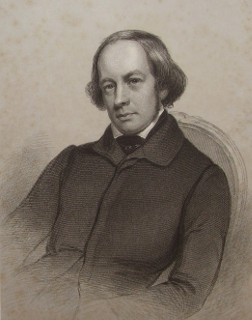
Death of Inventor Alexander Mitchell

alexander-mitchell

Alexander Mitchell, Irish engineer who from 1802 is blind, dies on June 25, 1868. He is known as the inventor of the screw-pile lighthouse.

Mitchell is born in Dublin on April 13, 1780. His family moves to Belfast while he is a child. He receives his formal education at Belfast Academy where he excels in mathematics. He begins to notice that his eyesight is failing. By the age of 16 he can no longer read and by the age of 22 he is completely blind.

Undeterred, Mitchell borrows £100 and starts up a successful business making bricks in the Ballymacarrett area of Belfast. This enables him to start building his own houses and he completes approximately twenty in the city. It is during this period that his talent for inventing comes to the fore and he fabricates several machines for use in brickmaking and the building trade.

Mitchell patents the screw-pile in 1833, for which he later gains some fame. The screw-pile is used for the erection of lighthouses and other structures on mudbanks and shifting sands, including bridges and piers. His designs and methods are employed all over the world from the Portland, Maine breakwater to bridges in Bombay. Initially it is used for the construction of lighthouses on Maplin Sands in the Thames Estuary in 1838, at Fleetwood Lancashire (UK) Morecambe Bay in 1839 and at Belfast Lough where his lighthouse is finished in July 1844.

In 1848 Mitchell is elected member of the Institution of Civil Engineers (ICE) and receives the Telford Medal the following year for a paper on his invention.

In May 1851 Mitchell moves to Cobh to lay the foundation for the Spit Bank Lighthouse. The success of these undertakings leads to the use of his invention on the breakwater at Portland, the viaduct and bridges on the Bombay, Baroda and Central India Railway and a broad system of Indian telegraphs.

Mitchell becomes friendly with astronomer John Thomas Romney Robinson and mathematician George Boole.

Alexander Mitchell dies at Glen Devis near Belfast on June 25, 1868, and is buried in the old Clifton graveyard in Belfast. His wife and daughter predecease him.