seamus dubhghaill

Promoting Irish Culture and History from Little Rock, Arkansas, USA


Leave a comment

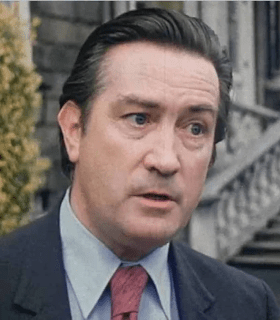
Death of Justin Keating, Politician, Broadcaster & Journalist

Justin Pascal Keating, Irish Labour Party politician, broadcaster, journalist, lecturer and veterinary surgeon, dies at Ballymore Eustace, County Kildare, on December 31, 2009. In later life he is president of the Humanist Association of Ireland.

Keating is twice elected to Dáil Éireann and serves in Liam Cosgrave‘s cabinet as Minister for Industry and Commerce from 1973 to 1977. He also gains election to Seanad Éireann and is a Member of the European Parliament (MEP). He is considered part of a “new wave” of politicians at the time of his entry to the Dáil.

Keating is born in Dublin on January 7, 1930, a son of the noted painter Seán Keating and campaigner May Keating. He is educated at Sandford Park School, and then at University College Dublin (UCD) and the University of London. He becomes a lecturer in anatomy at the UCD veterinary college from 1955 until 1960 and is senior lecturer at Trinity College Dublin from 1960 until 1965. He is RTÉ‘s head of agricultural programmes for two years before returning to Trinity College in 1967. While at RTÉ, he scripts and presents Telefís Feirme, a series for the agricultural community, for which he wins a Jacob’s Award in 1966.

In the 1950s and 1960s Keating is a member of the communist Irish Workers’ Party. He is first elected to the Dáil as a Labour Party Teachta Dála (TD) for the Dublin County North constituency at the 1969 Irish general election. From 1973 to 1977 he serves in the National Coalition government under Liam Cosgrave as Minister for Industry and Commerce. In 1973 he is appointed a Member of the European Parliament from the Oireachtas, serving on the short-lived first delegation.

During 1975 Keating introduces the first substantial legislation for the development of Ireland’s oil and gas. The legislation is modelled on international best practice and intended to ensure the Irish people would gain substantial benefit from their own oil and gas. Under his legislation the state could by right acquire a 50% stake in any viable oil and gas reserves discovered. Production royalties of between 8% and 16% with corporation tax of 50% would accrue to the state. The legislation specifies that energy companies would begin drilling within three years of the date of the issue of an exploration license.

Keating loses his Dáil seat at the 1977 Irish general election but is subsequently elected to Seanad Éireann on the Agricultural Panel, serving there until 1981. He briefly serves again in the European Parliament from February to June 1984 when he replaces Séamus Pattison.

In the aftermath of President of Iran Mahmoud Ahmadinejad‘s “World Without Zionism” speech in 2005, Keating publishes an op-ed in The Dubliner magazine, expressing his views on Israel. The article starts by claiming that “the Zionists have absolutely no right in what they call Israel.” He then proceeds to explain why he thinks Israel has no right to exist, claiming that the Ashkenazi Jews are descended from Khazars.

Keating dies at Ballymore Eustace, County Kildare, on December 31, 2009, at the age of 79, one week before his 80th birthday. Tributes come from the leaders of the Labour Party and Fine Gael at the time of his death, Eamon Gilmore and Enda Kenny, as well as former Fine Gael leader and Taoiseach John Bruton.
Leave a comment

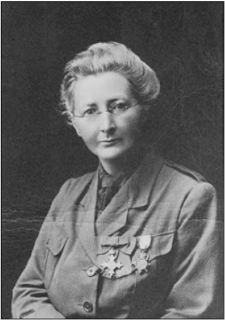
Death of Florence Stoney, First Female Radiologist in the UK

Florence Ada Stoney, Irish physician who is the first female radiologist in the United Kingdom, dies of vertebral cancer in Bournemouth, Dorset, England, on October 7, 1932. During World War I she serves abroad as head of the X-ray department and of staff in makeshift hospitals.

Stoney is born in Dublin on February 4, 1870, to George and Margaret Sophia Stoney. Her father is a mathematical physicist who later serves as Secretary of Queen’s University of Ireland and is an advocate for women’s right to higher education in Ireland. His efforts are considered to be among the principal reasons that women can qualify for a medical license. Of weak health as a child, she is at first privately educated in the home but then attends the Royal College for Science of Ireland with her sister Edith. In 1883, the Stoney family moves to London in order to provide higher education for the daughters since this is unavailable for women in Ireland at the time. She attends the London School of Medicine for Women where she is a distinguished student with great academic achievements in subjects such as anatomy and physiology. She obtains her MBBS with honours in 1895 and a Doctor of Medicine in 1898, going on to specialise in radiology.

Stoney works as an ENT clinical assistant at the Royal Free Hospital as well as spending six years as a demonstrator in anatomy at the London School of Medicine for Women.

After this she spends a short amount of time in the Victoria Hospital for Sick Children in Kingston upon Hull and then goes on to establish an X-ray department in the Elizabeth Garret Anderson Hospital for Women in London in 1902. At the hospital she carries out a variety of work but mainly deals with X-rays, often developing the radiographic plates at her own house. She is the first female radiologist to work in the United Kingdom at a time when knowledge on radiology and the equipment involved is still in its developmental stages. She is forced to work in poor conditions with badly ventilated rooms and a lack of space for X-ray work. She is given no assistance and has to do the majority of the work on her own. Furthermore, she is excluded as a member of the medical staff and from the X-ray department committee. In 1906 she sets up a practice in Harley Street.

Stoney leaves the hospital at the start of the war. She has 13 years of experience in her field when World War I breaks out in August 1914. She and her sister Edith, a medical physicist, volunteer to assist the British Red Cross, but both are refused by surgeon Frederick Treves since they were women. Despite the refusal, Stoney prepares an X-ray installation and helps to organise a unit of women volunteers alongside Mrs. St. Clair Stobart, Women’s Imperial Service League and the Belgian Red Cross to aid the Belgian soldiers in Antwerp. The team converts an abandoned music hall into a makeshift hospital where she manages the surgical unit as head of the medical staff and radiologist. The hospital comes under fire and after enduring ongoing shellfire for 18 hours, the hospital is evacuated. The team walks to Holland, where they manage to cross the Scheldt River on buses carrying ammunition, twenty minutes before the bridge is blown up. She and her unit earn the 1914 Star for bravery.

Stoney continues working in a hospital near Cherbourg in France, mainly dealing with cases relating to compound fractures and locating bullet fragments in wounds. During this time, she becomes experienced in recognizing dead bone and discovers that removing it will speed up recovery.

In March 1915, the Cherbourg hospital is no longer needed, and Stoney moves back London. She begins full-time work at the 1,000-bed Fulham Military Hospital. She is one of the first female physicians granted to serve as a full-time worker under the British War Office and goes on to receive the Order of the British Empire in June 1919. She works as the Head of the X-ray and Electrical Department and remains there until 1918.

In her later years, Stoney suffers from ill health, largely attributed to her over-exposure to radiation in her work. It is reported that she has X-ray dermatitis of her left hand, a painful skin condition associated in modern times with radiation therapy as a treatment for cancer. She moves to the south coastal town of Bournemouth in England where she is on the staff of two hospitals, practicing radiology part-time. She occupies the position of Honorary Medical Officer to the Electrical Department of the Royal Victoria and West Hants Hospital in Bournemouth. She is the founder and president of the Wessex branch of the British Institute of Radiology. She serves as the consulting actinotherapist at the Victoria Cripples Home. During retirement she pens a number of articles in contribution to the medical literature of the time. She publishes research on topics such as fibroids, goitre, Graves’ disease, soldier’s heart, rickets and osteomalacia.

Stoney retires from all of her hospital positions in 1928 at the age of 58. She, along with her older sister Edith, travel in retirement. One trip is to India, where she writes her final scientific paper, the subject of which is osteomalacia (bone softening), in particular in relation to pelvic deformities in childbirth. She studies and investigates this topic overseas, and specifically the association between UV exposure, vitamin D and skeletal development. In India, she also uses her expertise to advise on the use of UV light in hospitals.

Stoney dies at the age of 62, on October 7, 1932. She is suffering from a long and painful illness, vertebral cancer, again largely attributed to her work in the presence of high levels of radiation. Her funeral takes place on October 11 at Golders Green Crematorium, London. The British Journal of Radiology publishes her official obituary which spans five pages, containing many warm personal testimonials. After her sister’s death, Edith Stoney continues to travel and research.


Leave a comment

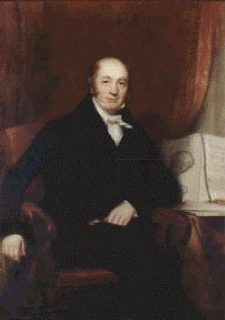
Birth of Abraham Colles, Professor & President of the RCSI

Abraham Colles, Professor of Anatomy, Surgery and Physiology at the Royal College of Surgeons in Ireland (RCSI) and the President of RCSI in 1802 and 1830, is born in Millmount, County Kilkenny, on July 23, 1773. A prestigious Colles Medal & Travelling Fellowship in Surgery is awarded competitively annually to an Irish surgical trainee embarking on higher specialist training abroad before returning to establish practice in Ireland.

Descended from a Worcestershire family, some of whom had sat in Parliament, Colles is born to William Colles and Mary Anne Bates of Woodbroak, County Wexford. The family lives near Millmount, a townland near Kilkenny, County Kilkenny, where his father owns and manages his inheritance which is the extensive Black Quarry that produces the famous Kilkenny black marble. His father dies when he is 6 years old, but his mother takes over the management of the quarry and manages to give her children a good education. While at Kilkenny College, a flood destroys a local physician’s house. He finds an anatomy book belonging to the doctor in a field and returns it to him. Sensing the young man’s interest in medicine, the physician lets him keep the book.

Colles goes on to enroll in Trinity College Dublin in 1790 and is indentured to Philip Woodroffe, studying at Dr. Steevens’ Hospital, The Foundlings’ Hospital and the House of Industry hospitals. He receives the Licentiate Diploma of the Royal College of Surgeons in 1795 and goes on to study medicine at the University of Edinburgh Medical School, receiving his MD degree in 1797. Afterward, he lives in London for a short period, working with the famous surgeon Sir Astley Cooper in his dissections of the inguinal region.

Following his return to Dublin, in 1799, Colles is elected to the staff at Dr. Steevens’ Hospital where he serves for the next 42 years. In October 1803, he is appointed Surgeon to Cork-street Fever Hospital, and subsequently becomes Consulting Surgeon to the Rotunda Hospital, City of Dublin Hospital, and Victoria Lying-in Hospital. He is a well-regarded surgeon and is elected as president of the Royal College of Surgeons in Ireland (RCSI) in 1802 at the age of 28 years, subsequently also serving as president in 1830. In 1804, he is appointed Professor of Anatomy, Physiology, and Surgery at RCSI.

In 1811, Colles writes an important treatise on surgical anatomy and some terms he introduces have survived in surgical nomenclature until today. He is remembered as a skillful surgeon and for his 1814 paper On the Fracture of the Carpal Extremity of the Radius. This injury continues to be known as Colles’ fracture. This paper, describing distal radial fractures, is far ahead of its time, being published decades before X-rays come into use. He also describes the membranous layer of subcutaneous tissue of the perineum, which comes to be known as Colles’ fascia. He also extensively studies the inguinal ligament, which is sometimes called Colles’ ligament. He is regarded as the first surgeon to successfully ligate the subclavian artery.

In 1837, Colles writes “Practical observations on the venereal disease, and on the use of mercury” in which he introduces the hypothesis of maternal immunity of a syphilitic infant when the mother has not shown signs of the disease. His principal textbook is the two-volume Lectures on the theory and practice of surgery. His writings are important, though not voluminous. Some of his papers are collected and edited by his son, William Colles, and published in the Dublin Journal of Medical Science. Selections from the works of Abraham Colles, chiefly relative to the venereal disease and the use of mercury, comprise Volume XOII. of the Library of the New Sydenham Society, published in 1881. They are edited and annotated by one of the most distinguished Fellows of the RCSI, Robert McDonnell. His Lectures on Surgery are edited by Simon M’Coy and published in 1850. In tribute to his distinguished career, he is awarded a baronetcy in 1839, which he refuses.

Upon Colles’s retirement as Professor of Surgery, the Members of RCSI pass a resolution which includes “We have also to assure you that it is the unanimous feeling of the College, that the exemplary and efficient manner in which you have filled this chair for thirty-two years, has been a principal cause of the success and consequent high character of the School of Surgery in this country.”

Colles dies on November 16, 1843, from gout. He is buried in Mount Jerome Cemetery, Dublin.

In 1807, Colles marries Sophia Cope. His son William follows in his footsteps, being elected to the Chair of Anatomy in the Royal College of Surgeons in Ireland in 1863. Another of his sons, Henry, marries Elizabeth Mayne, a niece of Robert James Graves. His grandson is the eminent music critic and lexicographer H. C. Colles. His granddaughter Frances marries the judge Lord Ashbourne, and her sister Anna marries his colleague Sir Edmund Thomas Bewley.


Leave a comment

Birth of Sylvester O’Halloran, Surgeon & Historian

Sylvester O’Halloran, Irish surgeon with an abiding interest in Gaelic poetry and history, is born on December 31, 1728, at Caherdavin, County Limerick. For most of his life he lives and practises in Limerick and is later elected a member of the Royal Irish Academy (RIA).

O’Halloran is the third son of Michael O’Halloran, a prosperous farmer, and his wife Mary McDonnell. He is named after Sylvester Lloyd, the titular Catholic bishop of Killaloe (1728–39). His mother’s cousin, Sean Claragh McDonnell, teaches him much at an early age, including some Greek and Latin. He goes on to a Limerick school run by Robert Cashin, a Protestant clergyman, which is unusual at the time as the O’Hallorans are Roman Catholics during the difficult time of the Penal Laws.

O’Halloran and his brothers engage successfully in areas of life that work around the restrictions of the Penal Laws. Joseph becomes a Jesuit and holds chairs in rhetoric, philosophy and divinity at the Jesuit College at Bordeaux in France. George becomes a jeweler and in time a property-owner. O’Halloran goes to London to learn medicine at the age of 17, particularly studying the methods of Richard Mead, as well as the oculists Taylor and Hillmer. After further study at Leiden, and in Paris under the anatomist and academician Antoine Ferrein, he sets up practice as a surgeon in Limerick in early 1749.

O’Halloran writes several learned treatises on medical matters, and his fame is acknowledged by his membership of the RIA in 1787. He is a founder of the County Limerick Infirmary that starts with four beds in 1761 before moving to larger premises at St. Francis’s Abbey in 1765. The foundation stone of the original infirmary is now preserved in the Sylvester O’Halloran Post Graduate Centre at the Mid-Western Regional Hospital, Limerick.

While in France, O’Halloran is very impressed with the Académie Royale de Chirurgie, which had been founded in Paris in 1731 during the reign of Louis XV. He is subsequently instrumental in founding the Royal College of Surgeons in Ireland (RCSI), by writing its blueprint, Proposals for the Advancement of Surgery in Ireland, in 1765. In 1780, he is made an honorary member of the new Dublin Society of Surgeons and, when the RCSI receives its charter in 1784, is again elected an honorary member, equivalent to a Fellowship today.

As well as his scientific knowledge, O’Halloran’s interest in the arts begins with his collection of Gaelic poetry manuscripts and this leads on to an interest in Irish history. Given his background, he argues to validate the pre-Norman history of Ireland which had often been dismissed as a period of barbarism.

O’Halloran’s correspondents include Edmund Burke on early history. With Charles O’Conor of Bellanagare he discusses James Macpherson‘s translated version of Ossian and advises him about an eye complaint.

In 1789, Charlotte Brooke publishes the first English-language compendium of Irish poetry, the seminal “Reliques of Irish Poetry”, giving full due to O’Halloran for lending her his manuscript collection and for having written the essential history underlying her anthology.

In 1752, O’Halloran marries Mary Casey of Ballycasey, County Limerick, and they have four sons and a daughter. Their homes are in Change Lane and then on Merchants’ Quay. One of their sons is Major-General Sir Joseph O’Halloran, the father of Thomas Shuldham O’Halloran, after whom the Adelaide, South Australia suburb of O’Halloran Hill is named. Mary dies in 1782.

After a stroke, O’Halloran is infirm and confined to his chair for some time before his death on August 11, 1807, at his home on Limerick’s Merchant Quay. His is buried at St. Munchin’s graveyard at Killeely, which is now a suburb of Limerick.

Though politically restricted in his life by the Penal Laws, O’Halloran helps establish the county Infirmary, is elected President of the city’s Free Debating Society in 1772 and is elected to a committee in 1783 that examines the River Shannon navigation. Appropriately, a Limerick bridge over the River Shannon has been named after him.


Leave a comment

Birth of John Hogan, the “Greatest of Irish Sculptors”

Irish sculptor John Hogan, described in some sources as the “greatest of Irish sculptors,” is born in Tallow, County Waterford, on October 14, 1800. According to the Dictionary of Irish Biography he is responsible for “much of the most significant religious sculpture in Ireland” during the 19th century. Working primarily from Rome, among his best-known works are three versions of The Dead Christ, commissioned for churches in Dublin, Cork, and the Basilica of St. John the Baptist in St. John’s, Newfoundland and Labrador, Canada.

Hogan is the third child of John Hogan, a carpenter and builder of Cove Street, Cork, County Cork, and Frances Cos, the great-granddaughter of Sir Richard Cox, Lord Chancellor of Ireland from 1703 to 1707. As the family feels that she had married beneath her station, she is disinherited.

At the age of fourteen, Hogan is placed as clerk to an attorney, where he spends much of his time carving figures in wood. After two years, he chooses to be apprenticed to the architect Sir Thomas Deane, where his talents for drawing and carving are developed. He carves balusters, capitals, and ornamental figures for Deane’s buildings. At the completion of his apprenticeship in March 1820, Deane encourages him to consider taking up sculpture as a profession. For the next three years, he attends lectures on anatomy, copies casts of classic statuary in the Gallery of the Cork Society of Arts, and makes anatomical studies in wood of feet, hands, and legs. Among the first of his works to attract notice is a life-size figure of Minerva for an insurance building built by Deane.

In 1821, Hogan carves twenty-seven statues in wood for the North Chapel in Cork for the reredos behind the high altar. After subsequent cathedral renovations, these are now positioned in decorative plasterwork over the nave. He also does a bas-relief of the “Last Supper” for the altar. This work keeps him employed for about a year.

In 1823, the engraver William Paulet Carey visits Cork, and impressed with Hogan’s talent, begins to publicise his work in order to raise subscriptions for him to study in Italy. Hogan arrives in Rome, by way of Dublin and Liverpool, in 1824. He works in the galleries of the Vatican but cannot afford a studio. Additional subscriptions allow him to improve his situation, rent a studio, purchase marble, and hire models. Danish sculptor Bertel Thorvaldsen says to him, “My son, you are the best sculptor I leave after me in Rome.”

In 1829, Hogan visits Ireland, bringing several works with him. The Royal Arts Society provides a venue for an exhibition. The Royal Dublin Society awards him a gold medal.

Hogan’s best-known work and masterpiece are the three versions of the statue of The Dead Christ or The Redeemer in Death. Created in flawless Carrara marble, the first version (1829) is located in St. Therese’s Church, Dublin, the second (1833) in St. Finbarr’s (South) Church, Cork, and the third and final version (1854) is located in the Basilica of St. John the Baptist, Newfoundland. His other works include the Sleeping Shepherd and The Drunken Faun. He assures his international reputation in 1829 with The Dead Christ. Thereafter, his creations are snapped up by Irish bishops visiting his Rome studio.

In 1837 Hogan is elected a member of the Virtuosi del Pantheon. During the next several years, he has several works in hand, including a marble statue of Daniel O Connell, for the Repeal Association. The statue stands today at City Hall, Dublin, the same spot where O’Connell gave his first speech against the Acts of Union in 1800.

In 1840, a monumental group in memory of Bishop James Warren Doyle, founder of the Cathedral of the Assumption in Carlow, is brought to Dublin and exhibited at the Royal Exchange. The statue of Bishop Doyle is in the Cathedral of the Assumption, as is a second Hogan work depicting the Holy Family.

Hogan marries Cornelia Bevignani in Rome in 1838. The figure of Hibernia, in Hogan’s work Hibernia with the Bust of Lord Cloncurry (1844), is reportedly modelled on his wife. A representation of this work is later used as the watermark on all Series A banknotes printed in Ireland from the 1920s to the 1970s. The couple has four sons and eight daughters.

With the revolutionary movement growing in Italy during the 1840s, and after spending twenty-four years in Rome, Hogan returns with his family to Ireland in 1848. At first, he finds little work in the aftermath of the Great Famine, but gradually commissions increase. He can be impatient with ignorance, intolerant of professional inferiority, and independent. He holds aloof from other artists and refuses to join the Royal Hibernian Academy.

Hogan has a stroke in 1855 and, though he recovers somewhat, his health begins to fail. By the year prior to his death, he can no longer work and his sons, John Valentine Hogan and James Cahill, assist at his studio and complete some of the work.

Hogan dies at his home at 14 Wentworth Place (later renamed Hogan Place), Dublin, on March 27, 1858. He is buried at Glasnevin Cemetery in Dublin.

(Pictured: Scan of a drawing depicting the Irish sculptor John Hogan with his sculpture The Drunken Faun in background, published in the Dublin University Magazine, January 1850)


Leave a comment

Death of Abraham Colles, Professor & President of the RCSI

Abraham Colles, Professor of Anatomy, Surgery and Physiology at the Royal College of Surgeons in Ireland (RCSI) and the President of RCSI in 1802 and 1830, dies on November 16, 1843. A prestigious Colles Medal & Travelling Fellowship in Surgery is awarded competitively annually to an Irish surgical trainee embarking on higher specialist training abroad before returning to establish practice in Ireland.

Descended from a Worcestershire family, some of whom had sat in Parliament, Colles is born to William Colles and Mary Anne Bates of Woodbroak, County Wexford, on July 23, 1773. The family lives near Millmount, a townland near Kilkenny, County Kilkenny, where his father owns and manages his inheritance which is the extensive Black Quarry that produces the famous Kilkenny black marble. His father dies when he is 6 years old, but his mother takes over the management of the quarry and manages to give her children a good education. While at Kilkenny College, a flood destroys a local physician’s house. He finds an anatomy book belonging to the doctor in a field and returns it to him. Sensing the young man’s interest in medicine, the physician lets him keep the book.

Colles goes on to enroll in Trinity College Dublin in 1790 and is indentured to Philip Woodroffe, studying at Dr. Steevens’ Hospital, The Foundlings’ Hospital and the House of Industry hospitals. He receives the Licentiate Diploma of the Royal College of Surgeons in 1795 and goes on to study medicine at the University of Edinburgh Medical School, receiving his MD degree in 1797. Afterward, he lives in London for a short period, working with the famous surgeon Sir Astley Cooper in his dissections of the inguinal region.

Following his return to Dublin, in 1799, Colles is elected to the staff at Dr. Steevens’ Hospital where he serves for the next 42 years. In October 1803, he is appointed Surgeon to Cork-street Fever Hospital, and subsequently becomes Consulting Surgeon to the Rotunda Hospital, City of Dublin Hospital, and Victoria Lying-in Hospital. He is a well-regarded surgeon and is elected as president of the Royal College of Surgeons in Ireland (RCSI) in 1802 at the age of 28 years, subsequently also serving as president in 1830. In 1804, he is appointed Professor of Anatomy, Physiology, and Surgery at RCSI.

In 1811, Colles writes an important treatise on surgical anatomy and some terms he introduces have survived in surgical nomenclature until today. He is remembered as a skillful surgeon and for his 1814 paper On the Fracture of the Carpal Extremity of the Radius. This injury continues to be known as Colles’ fracture. This paper, describing distal radial fractures, is far ahead of its time, being published decades before X-rays come into use. He also describes the membranous layer of subcutaneous tissue of the perineum, which comes to be known as Colles’ fascia. He also extensively studies the inguinal ligament, which is sometimes called Colles’ ligament. He is regarded as the first surgeon to successfully ligate the subclavian artery.

In 1837, Colles writes “Practical observations on the venereal disease, and on the use of mercury” in which he introduces the hypothesis of maternal immunity of a syphilitic infant when the mother has not shown signs of the disease. His principal textbook is the two-volume Lectures on the theory and practice of surgery. His writings are important, though not voluminous. Some of his papers are collected and edited by his son, William Colles, and published in the Dublin Journal of Medical Science. Selections from the works of Abraham Colles, chiefly relative to the venereal disease and the use of mercury, comprise Volume XOII. of the Library of the New Sydenham Society, published in 1881. They are edited and annotated by one of the most distinguished Fellows of the RCSI, Robert McDonnell. His Lectures on Surgery are edited by Simon McCoy and published in 1850. In tribute to his distinguished career, he is awarded a baronetcy in 1839, which he refuses.

Upon Colles’s retirement as Professor of Surgery, the Members of RCSI pass a resolution which includes “We have also to assure you that it is the unanimous feeling of the College, that the exemplary and efficient manner in which you have filled this chair for thirty-two years, has been a principal cause of the success and consequent high character of the School of Surgery in this country.”

Colles dies on November 16, 1843, from gout. He is buried in Mount Jerome Cemetery, Dublin.

In 1807, Colles marries Sophia Cope. His son William follows in his footsteps, being elected to the Chair of Anatomy in the Royal College of Surgeons in Ireland in 1863. Another of his sons, Henry, marries Elizabeth Mayne, a niece of Robert James Graves. His grandson is the eminent music critic and lexicographer H. C. Colles. His granddaughter Frances marries the judge Lord Ashbourne, and her sister Anna marries his colleague Sir Edmund Thomas Bewley.


Leave a comment

Birth of Ophthalmologist Arthur Jacob

Arthur Jacob, Irish ophthalmologist, is born on June 13, 1790, at Knockfin, near Maryborough, Queens County (now Portlaoise, County Laois). He is known for founding several hospitals, a medical school, and a medical journal. He contributes to science and academia through his 41-year term as Professor of Anatomy at the Royal College of Surgeons in Ireland (RCSI) and as the first Irish ocular pathologist. He is elected President of RCSI in 1837 and 1864.

Jacob is the second son of John Jacob, M.D. (1754–1827), surgeon to the Queen’s County infirmary, Maryborough, by his wife Grace (1765–1835), only child of Jerome Alley of Donoughmore. He studies medicine with his father and at Dr. Steevens’s Hospital, Kilmainham, Dublin, under Abraham Colles. Having graduated M.D. at the University of Edinburgh in 1814, he sets out on a walking tour through the United Kingdom, crossing the English Channel at Dover, and continuing his walk from Calais to Paris.

Jacob studies at Paris until Napoleon‘s return from Elba. He subsequently pursues his studies in London under Sir Benjamin Collins Brodie, Sir Astley Cooper, and Sir W. Lawrence. In 1819 he returns to Dublin and becomes demonstrator of anatomy under Dr. James Macartney at Trinity College Dublin. Here his anatomical research gains for him a reputation, and he collects a museum, which Macartney afterwards sells to the University of Cambridge.

On leaving Macartney, Jacob joins with Robert James Graves and others in founding the Park Street School of Medicine. In 1826 he is elected Professor of Anatomy and Physiology at Royal College of Surgeons in Ireland (RCSI) and holds the chair until 1869. He is elected President of RCSI in 1837 and 1864. He founds an Ophthalmic Hospital in Pitt (now Balfe) Street in 1829 and in 1832, in conjunction with Charles Benson and others, he founds the Baggot Street Hospital, Baggot Street, and later practices there after the opening of a dedicated eye ward. His younger rival, Sir William Wilde, subsequently founds the competing St. Mark’s Ophthalmic Hospital in Lincoln Place (beside Trinity College) in 1844.

In 1839, with Dr. Henry Maunsell, Jacob starts the Dublin Medical Press, a weekly journal of medical science, and edits forty-two volumes from 1839 to 1859, in order “to diffuse useful knowledge… to instil honourable principles, and foster kind feelings in the breast of the student” among other desirable aims. He also contributes to the Dublin Journal of Medical Science. He takes an active part in founding the Royal Medical Benevolent Fund Society of Ireland and the Irish Medical Association.

At the age of seventy-five Jacob retires from the active pursuit of his profession. His fame rests on his anatomical and ophthalmological discoveries.

In December 1860 a medal bearing Jacob’s likeness is struck and presented to him, and his portrait, bust, and library are later placed in the Royal College of Surgeons in Ireland. He dies at Newbarnes, Barrow-in-Furness, Cumbria, England, on September 21, 1874. He is buried at Mount Jerome Cemetery, Dublin.

In 1819 Jacob announces the discovery, which he had made in 1816, of a previously unknown membrane of the eye, in a paper in the Philosophical Transactions of the Royal Society. The membrane has been known since as membrana Jacobi and forms the retina. Apart from his discovery of the membrana Jacobi, he describes Jacob’s ulcer, and revives cataract surgery through the cornea with a curved needle, Jacob’s needle. To the Cyclopædia of Anatomy he contributes an article on the eye, and to the Cyclopædia of Practical Medicine treatises on Ophthalmia and Amaurosis.

In 1824 Jacob marries Sarah, daughter of Coote Carroll, of Ballymote, County Sligo. The marriage produces five sons. She dies on January 6, 1839.

(Pictured: Photograph of a marble bust of Arthur Jacob on the main staircase of the Royal Victoria Eye and Ear Hospital, Dublin, Ireland)


Leave a comment

Birth of William Ireland de Courcy Wheeler, Surgeon

William Ireland de Courcy Wheeler, surgeon, is born on May 9, 1879, in Dublin, fourth son among six sons and four daughters of William Ireland de Courcy Wheeler, a distinguished doctor, and Frances Victoria Wheeler (née Shaw), cousin of George Bernard Shaw.

Wheeler is educated at Trinity College Dublin (TCD) and loses an eye as a result of an accident but overcomes the disability. He wins a moderatorship, a medal, and prizes and graduates BA (1899) in anatomy, natural science, and experimental science and, following postgraduate study in Berne, an MB, B.Ch., and MD (1902). The following year he receives the Dublin University Biological Association’s medal for his paper Deaths under chloroform. He is appointed demonstrator and assistant to the professor of the TCD anatomy department before becoming honorary surgeon (1904–32) to Mercer’s Hospital, Dublin. He is also attached to several other institutions including the Rotunda Hospital and the National Children’s Hospital. An outstanding teacher, he attracts large numbers to his clinical classes and lectures in surgery to postgraduates at TCD.

Ambitious and abounding in self-confidence, Wheeler dedicates all his indomitable energy and time to his work, is a frequent visitor to foreign clinics, becomes a skilled general surgeon and a specialist in orthopaedics, and earns an international reputation. During World War I he serves in the Royal Army Medical Corps (RAMC) and from 1915 converts his private hospital, 33 Upper Fitzwilliam Street, into the Dublin Hospital for Wounded Officers and makes it available to the St. John’s Ambulance brigade and the British Red Cross. He acts as honorary officer in charge and is also surgeon to the Duke of Connaught‘s Hospital for Limbless Soldiers, and honorary surgeon to the forces in Ireland.

In 1916, Wheeler visits the western front, tours the hospitals in Boulogne, and is attached to a casualty clearing station at Remy Siding near Ypres. Returning to Dublin on the request of Robert Jones, he organises the Dublin Military Orthopaedic Centre, Blackrock, where he serves as surgeon (1916–21). His advice is widely sought, and he serves on several committees, including the War Office Council of Consulting Surgeons (1917) and the Ministry of Pensions Medical Advisory Council on Artificial Limbs. Promoted to lieutenant colonel in 1918, he receives the General Service Medal and is twice mentioned in dispatches, having courageously treated wounded soldiers under fire during the 1916 Easter Rising. Appointed surgeon-in-ordinary to the lord-lieutenant, he is knighted in 1919.

Principal founder of the Dublin Hospitals’ Club (1922), Wheeler publishes two textbooks, A Handbook of Operative Surgery (1906) and Selected Papers on Injuries and Diseases of Bone (1928). He contributes numerous authoritative papers on a variety of surgical subjects to professional journals and edits the chapter on general surgery in the Medical Annual from 1916 to 1936. Inspector of examinations for the Medical Research Council of Ireland, he is external examiner to universities in Ireland and Scotland. Interested in hospital policy and nursing, he advocates the federation of the smaller hospitals and is chairman of the City of Dublin Nursing Institute. Fellow (1905) and council member (1906), he follows in his father’s footsteps and is elected president (1922–24) of the Royal College of Surgeons in Ireland. He is also president of the Dublin University Biological Association and of the surgical section of the Royal Academy of Medicine in Ireland and is awarded an honorary ChM from Cairo University in 1928.

Troubled and bewildered by the political situation in Ireland, Wheeler is persuaded by Rupert Guinness, 2nd Earl of Iveagh, to accept the position of visiting surgeon (1932) to the new hospital at Southend-on-Sea, Essex, to which Iveagh had donated £200,000. The departure of such a leading figure in Irish medical circles is widely regretted. His posts in London include surgeoncies to All Saints Hospital for Genito-Urinary Diseases and to the Metropolitan Ear, Nose, and Throat Hospital. The diversity of his interests and his general competence make him a valued member of the editorial staff of several journals including the British Journal of Surgery, the British Journal of Urology, and the American Journal of Surgery, Gynaecology, and Obstetrics. He is also a member of the American Editors Association. He enjoys many affiliations with America, where he is well known and honoured by being elected honorable fellow of the American College of Surgeons and selected as their John B. Murphy orator (1932), and by election as honorary member and president of the Post Graduate Assembly of North America. An active member of the British Medical Association, he is president of the Leinster branch (1925–26) and of the Orthopaedic section (1933), vice-president of the Surgical section (1930, 1932), and chairman of the council and president of the Metropolitan Counties Branch (1938). President of the Irish Medical Schools and Graduates Association, he is awarded their Arnott gold medal in 1935.

During World War II Wheeler serves as consultant surgeon to the Royal Navy in Scotland, with the rank of rear admiral (1939–43) and is posted to Aberdeen. Strong-minded, unconventional, and often controversial, he has a gift for friendship, is charming and good-humoured, and excels in the art of the after-dinner speech. Immensely proud of Dublin’s medical and surgical traditions, he always eagerly returned to Ireland, where he planned to retire and write his memoirs.

Wheeler dies suddenly on September 11, 1943, at his home in Aberdeen and is cremated at the Aberdeen crematorium. As a memorial to his father, he bequeaths his library and that of his father to the Royal College of Surgeons in Ireland, and also leaves a fund for the Sir William Wheeler memorial medal in surgery.


Leave a comment

Birth of Sir Richard Quain, Physician to Queen Victoria

richard-quain-1881

Sir Richard Quain, physician to Queen Victoria, is born in Mallow, County Cork on October 30, 1816.

Quain is the eldest child of John Quain of Carraig Dhúin (Carrigoon), Cork and Mary, daughter of Michael Burke of Mallow, Cork. He is sent to the Diocesan School at Cloyne for his early education and then, at age 15, apprentices to the surgeon-apothecary Fraser in Limerick for five years. In 1837 he enrolls in medicine at the University College London, where his cousins, Jones Quain (1796–1865), the anatomist, and Richard Quain, FRCS, hold teaching posts. He graduates M.B. with honours in 1840.

In 1842, Quain receives the gold medal for achievements in physiology and comparative anatomy, and later he becomes successively house surgeon and house physician at the University College Hospital and commences practice in London, being in particular a protégé of Professor Charles James Blasius Williams (1805–1889). He soon has a busy practice, numbering an important clientele, with contacts to the most highly recognised persons.

Quain is chosen in 1846 to be an assistant-physician to the Brompton Hospital for Diseases of the Chest. He retains his connection with that institution until his death, first as full physician (1855), and subsequently as consulting physician (1875). He holds the same rank at the Seamen’s Hospital, Greenwich, and the Royal Hospital for Consumption in Ventnor.

Also in 1846, Quain becomes a member of the Royal College of Physicians and a fellow in 1851. In 1850, he vacates the Chair of Anatomy at the University College London and is succeeded by George Viner Ellis. He is an early member of the Pathological Society of London in 1862, being elected its president in 1869. He is also a fellow and vice-president of the Royal Medical and Chirurgical Society and the Medical Society of London, as well as President of the Harveian Society of London (1853) and fellow of the Royal Statistical Society. He is elected a Fellow of the Royal Society in 1871.

In 1881, Quain is asked by Queen Victoria to attend prime minister Benjamin Disraeli during his last few days. In 1890, he becomes physician-extraordinary to the Queen and is created a baronet of Harley Street in the County of London and of Carrigoon in Mallow in the County of Cork, in the following year.

Quain is the author of several memoirs, dealing for the most part with disorders of the heart, but his name will be best remembered by the Dictionary of Medicine, the preparation of which occupies him from 1875 to 1882 (2nd edition, 1894; 3rd, 1902).

Sir Richard Quain dies at the age of 81 on March 13, 1898.


Leave a comment

Birth of Surgeon Edward Hallaran Bennett

edward-hallaran-bennettEdward Hallaran Bennett, surgeon, is born at Charlotte Quay, Cork, County Cork on April 9, 1837, the son of a barrister. He is best remembered for describing Bennett’s fracture.

Bennett attends Hamblin and Porter’s School in Cork, and the Academic Institute in Hardcourt Street. He enrolls in medical school at Trinity College, Dublin in 1854 at the age of 17. At college he studies under professor Robert Smith, under whom he develops an interest in bone fractures. He gains the degrees of BA and MB before graduating with a M.Ch. in 1859 and MD in 1864. He is conferred with a fellowship of the Royal College of Surgeons in Ireland (RCSI) in 1863.

Following a period as an anatomy demonstrator Bennett is appointed as Surgeon to Sir Patrick Dun’s Hospital in 1864. He succeeds Robert Smith as Professor of Surgery in 1873 following his death. He studies fractures, joint dislocations and bone diseases, recording them at the Pathology Museum at Trinity College. He describes his eponymous fracture at the British Medical Association meeting in Cork in 1880 and today he is best remembered for the fracture he describes which still bears his name. Perhaps more importantly, however, he is accredited with having introduced antiseptic techniques to Dublin hospitals. Bennett also serves as President of the RCSI.

Edward Hallaran Bennett dies in Dublin on June 21, 1907.