seamus dubhghaill

Promoting Irish Culture and History from Little Rock, Arkansas, USA


Leave a comment

Birth of George Plant, Member of the Irish Republican Army

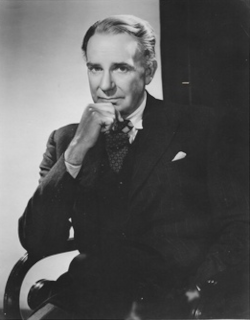
George Plant, Irish Republican Army (IRA) member who is executed by the Irish Government in 1942, is born into a Church of Ireland farming family in Fethard, County Tipperary, on January 5, 1904.

Plant is the second eldest child and son in a family of six children. His parents are John William Albert Plant, a farmer, and Catherine Hayden.

One Sunday in 1916 George and his older brother Jimmy are arrested by the Royal Irish Constabulary (RIC) after being seen speaking to two well-known republicans, Seán Hayes and Dan Breen. In custody the two brothers are beaten and mistreated resulting in a hatred of the RIC. He serves with the Irish Republican Army during the Irish War of Independence and with the Anti-Treaty IRA in the Irish Civil War.

In 1923 George and Jimmy leave Ireland for Canada and the United States but continue as active IRA members. In 1929 they return to Ireland and carry out a bank raid in Tipperary on behalf of the IRA. They are arrested two days later at the family farm and subsequently sentenced to 7 years in prison. They are released in a general amnesty after the Fianna Fáil and Éamon de Valera election victory in 1932. He is a strong supporter of Seán Russell. In 1939 following the outbreak of World War II, known in Ireland as The Emergency, de Valera is determined to maintain Irish neutrality and is not going to allow the IRA to jeopardize this. The IRA links with Germany and campaign in Britain are severely straining Anglo-Irish relations so emergency legislation is introduced.

Russell, the IRA Chief of Staff, dies in August 1940 after taking ill on board a U-boat and Stephen Hayes from County Wexford becomes IRA Chief of Staff. In late August 1940 an address on Lansdowne Road Dublin is raided by the Garda Síochána. Among the men arrested is Michael Devereux, a 24-year-old married truck driver from County Wexford who is also Quartermaster of the IRAs Wexford Brigade. He is released after three days without charge. Shortly afterwards Gardaí in County Wexford find an IRA arms dump. Many in the IRA suspect that Devereux had turned informer, so Stephen Hayes orders Devereux’s execution. George Plant and another man, Michael Walsh from County Kilkenny, are ordered to carry out the order. Devereux meets Plant and Walsh who tell Devereux that Tom Cullimore, the Wexford Brigade’s OC is blamed for the arms dump and that they have shot him. They order Devereux to drive them to an IRA safe house at Grangemockler in south County Tipperary. Devereux, believing he is the prime suspect in a murder, stays willingly at the safe house. A week later, on September 27, 1940, Devereux is invited to go for a walk with Plant and Paddy Davern, the owner of the safe house. Somewhere along the walk Plant accuses Devereux of being an informer and shoots him dead. Plant is arrested nine weeks later on suspicion of IRA membership and brought before the Special Criminal Court in Dublin. On February 10, 1941, Radio Éireann broadcasts a radio appeal for Michael Devereux on behalf of his wife.

In September 1941 Stephen Hayes is accused of being an informer by a group of Northern IRA members led by Seán McCaughey. He manages to escape to a garda station. Shortly afterwards a large force of Garda Síochána and Irish Army descend on the area around the Davern farmhouse where they find Devereux’s car buried under an onion bed and eventually discover Devereux’s body, a year to the day after his death. Two weeks later, Plant, already in prison on IRA membership charges, is charged with Devereux’s murder. A trial is held with a senior IRA officer, Joseph o’Connor, also charged with Devereux’s murder. The first trial collapses after two days when Paddy Davern and Micheal Walsh, two of the prosecution witnesses, refuse to give evidence. This result leads to the court issuing a nolle prosequi order which should have meant the end of the affair, however both men are rearrested and recharged with the same offence, under Emergency Order 41f. Minister for Justice Gerald Boland transfers the case to a Special Military Court with army officers acting as judges. In addition to Plant, Paddy Davern and Michael Walsh are also now charged with Devereux’s murder. The second trial begins at Collins Barracks, Dublin in February 1942 with Seán MacBride, a former IRA Chief of Staff and future government minister as the defendant’s barrister. Davern states his original statement was given at gunpoint but under the new order even statements given under duress are admissible. The court only has two sentencing options – death or acquittal. Joseph O’Connor is acquitted and despite MacBride’s best efforts the other three are sentenced to death. Davern and Walsh have their sentences commuted to life imprisonment and are both released in 1946.

Just one week after sentence is passed, Plant is executed in Portlaoise Prison by a six-man firing squad drawn from the Irish Army. Much bitterness is caused by the treatment of Plant’s relatives. Neither his wife or mother or infant son are allowed to visit him in the week before his execution. Censorship ensures there is little mention in the newspapers, so his family only learns of his execution from a brief radio broadcast shortly before they receive a telegram. He is buried in the grounds of Portlaoise Prison, but is reinterred in 1948, when he is buried with full IRA military honours in his local church St. Johnstown in County Tipperary, and a Celtic cross is erected over his grave.

Plant’s wife moves to the United States where she remarries. His brother Jimmy dies in London in 1978. The Plant’s family farm is now part of the Coolmore Estate.


Leave a comment

Death of Samuel Henry Butcher, Scholar & Politician

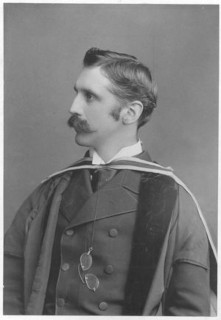
Samuel Henry Butcher, Anglo-Irish classical scholar and politician, dies in London on December 29, 1910.

Butcher is born in Dublin on April 16, 1850, the son of Samuel Butcher, Bishop of Meath, and Mary Leahy. John Butcher, 1st Baron Danesfort, is his younger brother. He is educated at Marlborough College in Wiltshire and then receives a place at Trinity College, Cambridge, attending between 1869 and 1873 where he is Senior Classic and Chancellor’s medalist. He is elected fellow of Trinity in 1874.

Butcher leaves Trinity on his marriage, in 1876, to Rose Julia Trench (1840-1902), the daughter of Archbishop Richard Chenevix Trench. The marriage produces no children.

From 1876 to 1882 Butcher is a fellow of University College, Oxford, and tutors there. From 1882 to 1903 he is Professor of Greek at the University of Edinburgh succeeding Prof. John Stuart Blackie. During this period, he lives at 27 Palmerston Place in Edinburgh‘s West End. He is succeeded at the University of Edinburgh by Prof. Alexander William Mair.

Butcher is one of the two Members of Parliament for Cambridge University, between 1906 and his death, representing the Liberal Unionist Party. He is President of the British Academy from 1909 to 1910.

Butcher dies in London on December 29, 1910, and his body is returned to Scotland and interred at the Dean Cemetery in Edinburgh with his wife. His grave has a pale granite Celtic cross and is located near the northern path of the north section in the original cemetery.

Butcher’s many publications include, in collaboration with Andrew Lang, a prose translation of Homer‘s Odyssey which appears in 1879 and the OCT edition of Demosthenes, Orationes, vol. I (Or. 1-19, Oxford, 1903), II.i (Or. 20–26, Oxford, 1907).


Leave a comment

Birth of Anew McMaster, Anglo-Irish Stage Actor

Anew McMaster, Anglo-Irish stage actor, is born in Birkenhead, England, on December 24, 1891. During his nearly 45 year acting career he tours Ireland, Britain, Australia and the United States. For almost 35 years he tours as actor-manager of his own theatrical company performing the works of Shakespeare and other playwrights.

McMaster is born as Andrew McMaster, the son of Liverpool-born Andrew McMaster (1855–1940), a master stevedore, and Alice Maude née Thompson (1865–1895). A number of sources make the erroneous claims, based on details supplied by McMaster himself, that he is born in 1893 or 1894 or even 1895 in County Monaghan in Ireland but, according to the Birth Register and the 1901 United Kingdom Census, he is actually born in 1891 in Birkenhead, England. Like his future brother-in-law Micheál Mac Liammóir, who is born in London as Alfred Willmore but claims to have been born in Cork to Gaelic-speaking parents, McMaster reinvents himself as Irish and claims for himself the town of Monaghan as his birthplace, and Warrenpoint, County Down, as the scene of his earliest memories.

At the age of nineteen McMaster gives up a career in banking to pursue one on the stage. He moves to Ireland and tours the country with the O’Brien-Ireland theatrical company from 1910 to 1914. Success quickly follows with his appearance as Jack O’Hara in Paddy the Next Best Thing at the Savoy Theatre (1920). From 1921 he tours Australia in this and other plays, and in 1925 forms his own company, the McMaster Intimate Theatre Company, a ‘fit-up‘ company to tour in the works of Shakespeare, mainly in Ireland but also in Britain and Australia, touring with his theatrical company until 1959. One of the last actor-managers “of the old school – and an epitome of the type,” on occasions he persuades a ‘big name’ to act with his company as a draw for audiences. Frank Benson (1928), Sara Allgood (1929) and Mrs. Patrick Campbell appear with him.

In 1933 at the Shakespeare Memorial Theatre in Stratford-upon-Avon McMaster appears as Hamlet opposite Esme Church as Gertrude, Coriolanus, Macduff in Macbeth, Leonato in Much Ado About Nothing, Prince Escalus in Romeo and Juliet, and Petruchio in The Taming of the Shrew. His greatest roles are as Othello and as Shylock in The Merchant of Venice, to which he adds King Lear in 1952. Just before World War II he and his company appear at the Chiswick Empire in a Shakespeare season. He tours the United States as James Tyrone in Eugene O’Neill‘s Long Day’s Journey into Night in 1956. Having ‘a great organ voice,’ Harold Pinter, who acts in his company in Ireland from 1951 to 1953 and calls him ‘perhaps the greatest actor-manager of his time,’ later describes McMaster as ‘evasive, proud, affectionate, shrewd, merry.’ In his brief biography Mac (1968), Pinter recalls, “Mac gave about a half dozen magnificent performances of Othello while I was with him… At his best he was the finest Othello I have seen. [He] stood dead in the centre of the role, and the great sweeping symphonic playing would begin, the rare tension and release within him, the arrest, the swoop, the savagery, the majesty and repose.”

McMaster’s only film role is an uncredited appearance as the Judge in Sword of Sherwood Forest (1960).

In 1924 McMaster marries the actress and designer Marjorie Willmore (1894–1970), the sister of Micheál Mac Liammóir. They have two children, the actors John Christopher McMaster (1925–1995) and Mary-Rose McMaster (1926–2018).

Anew McMaster dies at the age of 70 at his home in Dublin on August 24, 1962. He is buried with his wife in Deans Grange Cemetery in County Dublin.

McMaster trains a generation of actors who tour with his company and go on to achieve success as actors. These include Pauline Flanagan, Milo O’Shea, T. P. McKenna, Kenneth Haigh, Henry Woolf, Harold Pinter, Donal Donnelly and Patrick Magee. It is while they are touring with McMaster’s company that the actor and dramatist Micheál Mac Liammóir and the actor and producer Hilton Edwards first meet and begin their lifelong partnership.

McMaster’s biography, A Life Remembered: A Memoir of Anew McMaster by his daughter Mary-Rose McMaster, is published in 2017. Harold Pinter also publishes a short biography, Mac, in 1968.


Leave a comment

Birth of William Grattan Tyrone Power, Stage Actor, Comedian & Author

William Grattan Tyrone Power, Irish stage actor, comedian, author and theatrical manager known professionally as Tyrone Power, is born in Kilmacthomas, County Waterford, on November 20, 1797. He is an ancestor of actor Tyrone Power and is also referred to as Tyrone Power I.

Power is the son of Tyrone Power, reported to be “a minstrel of sorts,” by his marriage to Maria Maxwell, whose father had been killed while serving in the British Army during the American Revolutionary War. His father is related to the Powers who are of the Anglo-Irish landed gentry and to George de la Poer Beresford, 1st Marquess of Waterford.

The young Power takes to the stage, achieving prominence throughout the world as an actor and manager. He is well known for acting in such Irish-themed plays as Catherine Gore‘s King O’Neil (1835), his own St. Patrick’s Eve (1837), Samuel Lover‘s Rory O’More (1837) and The White Horse of the Peppers (1838), Anna Maria Hall‘s The Groves of Blarney (1838), Eugene Macarthy’s Charles O’Malley (1838), and William Bayle Bernard‘s His Last Legs (1839) and The Irish Attorney (1840). In his discussion of these works, Richard Allen Cave argues that Power, both in his acting as well as his choice of plays, seeks to rehabilitate the Irishman from the derogatory associations with “stage Irishmen.”

Power has a number of notable descendants by his wife Anne, daughter of John Gilbert of the Isle of Wight:

  • Sir William James Tyrone Power (1819–1911), Commissary General in Chief of the British Army and briefly Agent-General for New Zealand
  • Norah Power, who married Dr. Thomas Guthrie
  • Sir Tyrone Guthrie, British theatrical director (1900–1971)
  • Maurice Henry Anthony O’Reilly Power (1821–1849), trained as a barrister but later took up acting
  • Frederick Augustus Dobbyn Nugent Power (1823–1896), civil engineer, left a large estate of £197,000, equivalent to £15.6 million or 28 million US dollars in 2006
  • Clara Elizabeth Murray Power (born 1825)
  • Mary Jane Power (born 1827)
  • Harold Littledale Power (1833–1901), actor, wine merchant, mine agent & engineer
  • Tyrone Power, Sr. (1869–1931), English theatre and silent movie star
  • Tyrone Power (1914–1958), American Hollywood star of the 1930s to 1950s
  • Romina Power (born 1951), American singer and film actress
  • Taryn Power (1953–2020), film actress
  • Tyrone Power, Jr. (born 1959), American film actor

Power is said to have purchased the land that is later occupied by Madison Square Garden, New York, shortly before his death. The lawyer who holds the papers cannot be found so the Power family is unable to claim right to the property.

Power is lost at sea on March 17, 1841, when the SS President disappears without trace in the North Atlantic shortly after departing for England. Anne Power is buried in the churchyard of St. Mary The Virgin Church in High Halden, Kent, England.


Leave a comment

Birth of David Whyte, Anglo-Irish Poet

David Whyte, Anglo-Irish poet, is born in Mirfield, West Yorkshire, England on November 2, 1955. He has said that all of his poetry and philosophy are based on “the conversational nature of reality.” His book The Heart Aroused: Poetry and the Preservation of the Soul in Corporate America (1994) topped the best-seller charts in the United States.

Whyte’s mother is from Waterford, County Waterford, and his father is a Yorkshireman. He attributes his poetic interest to both the songs and the poetry of his mother’s Irish heritage and to the landscape of West Yorkshire. He grows up in West Yorkshire and comments that he had “a Wordsworthian childhood,” in the fields and woods and on the moors. He has a degree in marine zoology from Bangor University, a public university in Bangor, Gwynedd, Wales.

During his twenties, Whyte works as a naturalist and lives in the Galápagos Islands, where he experiences a near drowning on the southern shore of Hood Island. He leads anthropological and natural history expeditions in the Andes, the Amazon and the Himalayas.

Whyte moves to the United States in 1981 and begins a career as a poet and speaker in 1986. From 1987, he begins taking his poetry and philosophy to larger audiences, including consulting and lecturing on organisational leadership models in the United States and UK exploring the role of creativity in business. He has worked with companies such as Boeing, AT&T, NASA, Toyota, the Royal Air Force and the Arthur Andersen accountancy group.

Work and vocation, and “Conversational Leadership” are the subjects of several of Whyte’s prose books, including Crossing the Unknown Sea: Work as Pilgrimage of Identity, The Three Marriages: Reimagining Work, Self and Relationship, and The Heart Aroused: Poetry and the Preservation of The Soul in Corporate America which tops the business best seller lists, selling 155,000 copies.

Whyte has written ten volumes of poetry and four books of prose. Pilgrim, published in May 2012, is based on the human need to travel, “From here to there.” The House of Belonging looks at the same human need for home. He describes his collection Everything Is Waiting For You (2003) as arising from the grief at the loss of his mother. His latest book is Consolations: The Solace, Nourishment and Underlying Meaning of Everyday Words, an attempt to ‘rehabilitate’ many everyday words we often use only in pejorative or unimaginative ways. He has also written for newspapers, including The Huffington Post and The Observer. He leads group poetry and walking journeys regularly in Ireland, England and Italy.

Whyte has an honorary degree from Neumann College, Pennsylvania, and from Royal Roads University, British Columbia, and is Associate Fellow of both Templeton College, Oxford, and the Saïd Business School, Oxford.

Whyte has spent a portion of every year for the last twenty-five years in County Clare. Over the years and over a number of volumes of poetry he has built a cycle of poems that evoke many of the ancient pilgrimage sites of The Burren mountains of North Clare and of Connemara.

Whyte runs the “Many Rivers” organisation and “Invitas: The Institute for Conversational Leadership,” which he founds in 2014. He has lived in Seattle and on Whidbey Island and currently lives in the U.S. Pacific Northwest. He holds U.S., British and Irish citizenship. He is married to Gayle Karen Young, former Chief Talent and Culture Officer of the Wikimedia Foundation. He has a son, Brendan, from his first marriage to Autumn Preble and a daughter, Charlotte, from his second marriage to Leslie Cotter. He has practised Zen and was a regular rock climber. He is a close friend of the late Irish poet John O’Donohue.


Leave a comment

Birth of Classical Scholar Sir William Ridgeway

Sir William Ridgeway, FBA, Anglo-Irish classical scholar and the Disney Professor of Archaeology at the University of Cambridge, is born on August 6, 1853, at Ballydermot, Kings County (now County Offaly).

Ridgeway is the son of Rev. John Henry Ridgeway and Marianne Ridgeway. He is a direct descendant of one of Oliver Cromwell’s settlers in Ireland. He is educated at Portarlington School and Trinity College Dublin, after which he studies at Peterhouse, Cambridge then Gonville and Caius College, Cambridge, completing the Classical tripos there in 1880.

In 1880, Ridgeway marries Lucinda Maria Kate Samuels in Rathdown, County Dublin. Their daughter Lucy Marion Ridgeway (1882–1958) marries economist John Archibald Venn in 1906.

In 1883, Ridgeway is elected Professor of Greek at Queen’s College, Cork, then Disney Professor of Archaeology at Cambridge in 1892. He also holds tenure as Gifford lecturer in Religion at the University of Aberdeen from 1909 to 1911 from which is published The Evolution of Religions of Ancient Greece and Rome.

Ridgeway contributes articles to the Encyclopedia Biblica (1903), Encyclopædia Britannica (1911) and writes The Origin of Metallic Currency and Weight Standards (1892), and The Early Age of Greece (1901) which are significant works in Archaeology and Anthropology.

Ridgeway is President of the Royal Anthropological Institute of Great Britain and Ireland from 1908-10 and is instrumental in the foundation of the Cambridge school of Anthropology.

Ridgeway receives an honorary Doctorate of Letters (D.Litt.) from the University of Dublin in June 1902 and is elected a Fellow of the British Academy in 1904. For his research on horses, he receives the Doctor of Science (Sc.D.) of Cambridge in 1909. He is knighted in the 1919 Birthday Honours list.

Ridgeway dies on August 12, 1926.

(Pictured: “Sir William Ridgeway” by Richard Jack (1866-1952), oil on canvas, 1921, Gonville & Caius College, University of Cambridge)


Leave a comment

Death of Leland Bardwell, Poet, Novelist & Playwright

Constan Olive Leland Bardwell, Irish poet, novelist, and playwright, dies at the age of 94 on June 28, 2016, in Sligo, County Sligo.

Bardwell is born Leland Hone in India on February 25, 1922, to Irish parents William Hone and Mary Collise, and moves to Ireland at the age of two. Her father’s family are of the Anglo-Irish Hone family. She grows up in Leixlip, County Kildare. She is educated at Alexandra School and later at the University of London.

Bardwell realises from childhood that a writing life is inevitable. In her memoirs she records: “Since the age of six writing had been not an ambition but a condition.” However, there are years of editorial rejections before she blossoms into a writer of the poetry, short stories for radio, plays and autobiographical novels that flowed, due in part to the encouragement of the coterie assembled there, from her basement flat in Dublin.

Bardwell’s five volumes of acclaimed poetry are The Mad Cyclist (1970), The Fly and the Bed Bug (1984), Dostoevsky’s Grace (1991), her “new and selected” The White Beach (1998) and The Noise of Masonry Settling (2005).

Bardwell is considered an important poet by her contemporaries. On the publication of her fourth collection of poetry, The White Beach, Eiléan Ní Chuilleanáin states, “it is good to see her work of the decades collected – it has inspired many Irish poets, male and female, and should be much more widely known,” adding that her work is “witty, full of sharp intimate honesty, full of truth and surprises.”

In 1975, along with Pearse Hutchinson, Eiléan Ní Chuilleanáin, and Macdara Woods, she co-founds the long running literary magazine Cyphers.

Bardwell’s novel Girl on a Bicycle, originally published in 1977, is republished by Irish publisher Liberties Press in 2009.

Bardwell lives in Sligo and is a member of Aosdána. She dies in Sligo on June 28, 2016. One of her children is the composer, John McLachlan.

(Photo by Pat Boran)


Leave a comment

Birth of Anne Wellesley, Countess of Mornington

Anne Wellesley, Countess of Mornington (née Hill-Trevor), Anglo-Irish aristocrat, is born on June 23, 1742. She is the wife of Garret Wesley, 1st Earl of Mornington, and mother of the victor of the Battle of Waterloo, Arthur Wellesley, 1st Duke of Wellington.

Wellesley is born the Hon. Anne Hill-Trevor, the eldest daughter of the banker Arthur Hill-Trevor, 1st Viscount Dungannon, and his wife Anne Stafford. She is a friend of Lady Eleanor Butler and Sarah Ponsonby, the famous Ladies of Llangollen.

Wellesley marries Garrett Wesley, the Earl of Mornington, in 1759. The marriage is said to be a happy one. They have nine children together, with seven of them surviving to adulthood:

Lord Mornington dies on May 22, 1781, leaving Wellesley and their eldest son Richard, who is 21 years old at the time, to raise the rest of the family. She dislikes Arthur when he is young. She says that he is “food for powder and nothing more” and constantly worries about his future. In 1785, she goes to Brussels to live, as a way to economise. She takes Arthur with her and sends him to the Royal Academy of Equitation at Angers, in Anjou, after she returns to Britain in 1786. She is granted a pension of £600 in 1813 by Parliament after Arthur’s success in the Peninsular War.

Wellesley’s husband’s titles are in the Irish peerage, entitling him to sit in the Irish House of Lords, which disbands following the Acts of Union 1800 with Great Britain. Four of her five sons who survive to adulthood earn titles in Peerage of the United Kingdom, entitling them to sit in the United Kingdom House of Lords, while the fifth, Gerald Valerian, becomes a bishop, giving him precedence comparable to a peer.

Wellesley dies at the age of 89 on September 10, 1831.

(Pictured: Portrait of Anne Wellesley, Countess of Mornington, the mother of Arthur Wellesley, 1st Duke of Wellington, 1839, from the Welsh Portrait Collection at the National Library of Wales)


Leave a comment

Birth of Astronomer William Parsons, 3rd Earl of Rosse

William Parsons, 3rd Earl of Rosse, Anglo-Irish astronomer, naturalist, and engineer, is born in York, England on June 17, 1800. He is President of the Royal Society (UK), the most important association of naturalists in the world in the nineteenth century. He builds several giant telescopes. His 72-inch telescope, built in 1845 and colloquially known as the “Leviathan of Parsonstown,” is the world’s largest telescope, in terms of aperture size, until the early 20th century. From April 1807 until February 1841, he is styled as Baron Oxmantown.

Parsons is the son of Lawrence Parsons, 2nd Earl of Rosse, and Alice Lloyd. He is educated at Trinity College, Dublin and Magdalen College, Oxford, graduating with first-class honours in mathematics in 1822. He inherits an earldom and a large estate in King’s County (now County Offaly) in Ireland when his father dies in February 1841.

Parsons marries Mary Field, daughter of John Wilmer Field, on April 14, 1836. They have thirteen children, of which four sons survive to adulthood: Lawrence, 4th Earl of Rosse, Rev. Randal Parsons, the Hon. Richard Clere Parsons, and the Hon. Sir Charles Algernon Parsons.

In addition to his astronomical interests, Parsons serves as a Member of Parliament (MP) for King’s County from 1821 to 1834, president of the British Science Association in 1843–1844, an Irish representative peer after 1845, president of the Royal Society (1848–1854), and chancellor of Trinity College, Dublin (1862–1867).

During the 1840s, Parsons has the Leviathan of Parsonstown built, a 72-inch telescope at Birr Castle, Parsonstown, County Offaly. He has to invent many of the techniques he uses for constructing the Leviathan, both because its size is without precedent and because earlier telescope builders had guarded their secrets or had not published their methods. Details of the metal, casting, grinding and polishing of the 3-ton ‘speculum’ are presented in 1844 at the Belfast Natural History Society. His telescope is considered a marvelous technical and architectural achievement, and images of it are circulated widely within the British commonwealth. Building of the Leviathan begins in 1842, and it is first used in 1845, with regular use waiting another two years due to the Great Famine. Using this telescope, he sees and catalogues a large number of nebulae, including a number that would later be recognised as galaxies.

Parsons performs astronomical studies and discovers the spiral nature of some nebulas, today known to be spiral galaxies. His telescope Leviathan is the first to reveal the spiral structure of M51, a galaxy nicknamed later as the “Whirlpool Galaxy,” and his drawings of it closely resemble modern photographs.

Parsons dies at the age of 67 on October 31, 1867, at Monkstown, County Dublin.

Parsons’s son publishes his father’s findings, including the discovery of 226 New General Catalogue of Nebulae and Clusters of Stars (NGC) objects in the publication Observations of Nebulae and Clusters of Stars Made With the Six-foot and Three-foot Reflectors at Birr Castle From the Year 1848 up to the Year 1878, Scientific Transactions of the Royal Dublin Society Vol. II, 1878.


Leave a comment

Birth of Elizabeth Bowen, Novelist & Short Story Writer

Elizabeth Dorothea Cole Bowen CBE, Anglo-Irish novelist and short story writer notable for her fiction about life in wartime London, is born at 15 Herbert Place in Dublin on June 7, 1899.

Bowen is baptised in St. Stephen’s Church on Upper Mount Street. Her parents, Henry Charles Cole Bowen and Florence (née Colley) Bowen, later bring her to Bowen’s Court at Farahy, near Kildorrery, County Cork, where she spends her summers. When her father becomes mentally ill in 1907, she and her mother move to England, eventually settling in Hythe. After her mother dies in 1912, she is raised by her aunts. She is educated at Downe House School under the headship of Olive Willis. After some time at art school in London she decides that her talent lay in writing. She mixes with the Bloomsbury Group, becoming good friends with Rose Macaulay who helps her seek out a publisher for her first book, a collection of short stories entitled Encounters (1923).

In 1923 Bowen marries Alan Cameron, an educational administrator who subsequently works for the BBC. The marriage has been described as “a sexless but contented union.” She has various extra-marital relationships, including one with Charles Ritchie, a Canadian diplomat seven years her junior, which lasts over thirty years. She also has an affair with the Irish writer Seán Ó Faoláin and a relationship with the American poet May Sarton. She and her husband first live near Oxford, where they socialize with Maurice Bowra, John Buchan and Susan Buchan, and where she writes her early novels, including The Last September (1929). Following the publication of To the North (1932) they move to 2 Clarence Terrace, Regent’s Park, London, where she writes The House in Paris (1935) and The Death of the Heart (1938). In 1937, she becomes a member of the Irish Academy of Letters.[3]

In 1930 Bowen becomes the first (and only) woman to inherit Bowen’s Court, but remains based in England, making frequent visits to Ireland. During World War II she works for the British Ministry of Information, reporting on Irish opinion, particularly on the issue of neutrality. Her political views tend towards Burkean conservatism. During and after the war she writes among the greatest expressions of life in wartime London, The Demon Lover and Other Stories (1945) and The Heat of the Day (1948). She is awarded the CBE the same year.

Bowen’s husband retires in 1952 and they settle in Bowen’s Court, where he dies a few months later. Many writers visit her at Bowen’s Court from 1930 onwards, including Virginia Woolf, Eudora Welty, Carson McCullers, Iris Murdoch, and the historian Veronica Wedgwood. For years Bowen struggles to keep the house going, lecturing in the United States to earn money. In 1957 her portrait is painted at Bowen’s Court by her friend, painter Patrick Hennessy. She travels to Italy in 1958 to research and prepare A Time in Rome (1960), but by the following year she is forced to sell her beloved Bowen’s Court, which is demolished in 1960. In the following months, she writes for CBS the narrative of the documentary titled Ireland the Tear and the Smile which is realized in collaboration with Robert Monks as cameraman and associate producer. After spending some years without a permanent home, she finally settles at “Carbery”, Church Hill, Hythe, in 1965.

Bowen’s final novel, Eva Trout, or Changing Scenes (1968), wins the James Tait Black Memorial Prize in 1969 and is shortlisted for the Man Booker Prize in 1970. Subsequently, she is a judge that awards the 1972 Man Booker Prize to John Berger for G. She spends Christmas 1972 at Kinsale, County Cork with her friends, Major Stephen Vernon and his wife, Lady Ursula, daughter of Hugh Grosvenor, 2nd Duke of Westminster, but is hospitalised upon her return. Here she is visited by Cyril Connolly, Lady Ursula Vernon, Isaiah Berlin, Rosamund Lehmann, and her literary agent, Spencer Curtis Brown, among others.

In 1972 Bowen develops lung cancer. She dies at the age of 73 in University College Hospital in London on February 22, 1973. She is buried with her husband in St. Colman’s churchyard in Farahy, close to the gates of Bowen’s Court, where there is a memorial plaque to the author at the entrance to St. Colman’s Church, where a commemoration of her life is held annually.