Edward Bruce is proclaimed the last High King of Ireland on June 29, 1315. He is crowned in 1316. He reigns between 1315 and 1318. The English colonists in Ireland vehemently oppose him.
Bruce, the brother of the King of Scots, Robert the Bruce, leads a three-year military campaign, known as the Bruce campaign, against the Anglo-Norman lordship of Ireland. This invasion, which lasts from 1315 to 1318, ultimately gives rise to the two nations we recognize now as Ireland and Scotland.
In May 1315, a Scots army of up to six thousand soldiers lands on the Antrim coast. That June, near Carrickfergus, many Gaelic lords led by Donnell O’Neill of Ulster join Bruce. “All the Gaels of Ireland agreed to grant him lordship and they called him King of Ireland,” declares the Irish annals.
The invasion coincides with the Great European Famine (1315-1317), which brings hardship and disillusionment among Bruce’s followers. The annals ruefully comment, “falsehood and famine and homicide filled the country, and undoubtedly men ate each other in Ireland.”
In February 1317, Dublin, the capital of the English royal administration in Ireland, comes close to being captured by the Bruce brothers. The brothers encamp at Castleknock within sight of the city walls. The panicking Dubliners burn the suburbs of the city. In order to re-fortify the city walls, they dismantle the Dominicanpriory north of the River Liffey and tear down the bridge across the river. The Bruce brothers do not lay siege to the city and instead move south to Munster.
In 1318, the invasion is brought to an end when, after marching south from Ulster for one last push, Bruce risks an open battle with an English army north of Dundalk at Faughart and is killed. His corpse is dismembered, and portions of it hung over the gates of various Irish towns. His decapitated head is brought to King Edward II of England by the victor, John de Bermingham, a minor Anglo-Irish baron who is elevated to the status of “Earl of Louth” for bringing the Bruce campaign in Ireland to an end.
A conference at Trinity College Dublin, in 2015, entitled The Irish-Scottish World in the Middle Ages, explores this key moment in the history of Ireland and Scotland. “The Bruce Invasion was a watershed moment in that story,” says Seán Duffy, Professor of Medieval Irish History and one of the organizers of the conference.
“Although Edward Bruce was defeated and killed in 1318, the effect of the invasion was far-reaching. The tide of Anglo-Norman expansion in Ireland turned back and the late Middle Ages saw the flowering of a Gaelic literary and cultural revival. Scotland, meanwhile, was galvanized by its victory over the English at Bannockburn which secured its path to independent nationhood.”
“Few peoples have as much in common as the Irish and the Scots. The very name Scotland is an ever-present reminder of that connection, because, in the Latin of the early Middle Ages, a Scotus was an Irishman, and the homeland of the Scoti was Ireland. That the name came to be applied to the northern part of Britain is testament to the strength of Irish influence on what we now know today as Scotland.”
(From: “On This Day: Edward Bruce, the last High King of Ireland, dies in 1318” by IrishCentral Staff, http://www.irishcentral.com, October 2022 | Pictured: Grave of Edward de Bruce, High King of Ireland, in Faughart Cemetery, County Louth)
Mayhew is knighted in 1983. On June 1997, he is given a life peerage as Baron Mayhew of Twysden, of Kilndown in the County of Kent. He retires from the House of Lords on June 1, 2015.
Mayhew suffers from cancer and Parkinson’s disease in his later years. He dies at the age of 86 on June 25, 2016, in his home in Kent.
Stewart is born in 28 Henry Street, in Dublin’s Northside. He is the second and only surviving child of Robert Stewart (the elder) and his wife Sarah Frances Seymour-Conway. His parents marry in 1766. He has recurring health problems throughout his childhood, and is sent to The Royal School, Armagh, rather than to England for his secondary education. At the encouragement of Charles Pratt, 1st Earl Camden, who takes a great interest in him and treats him as if he is a grandson by blood, he later attends St. John’s College, Cambridge (1786–87), where he applies himself with greater diligence than expected from an aristocrat and excels in his first-year examinations. But he then withdraws, pleading an illness that he admits to Camden is something “which cannot be directly acknowledged before women,” i.e. something sexually transmitted.
Stewart organises and finances the alliance that defeats Napoleon, bringing the powers together at the Treaty of Chaumont in 1814. After Napoleon’s second abdication in 1815, he works with the European courts represented at the Congress of Vienna to frame the territorial, and broadly conservative, continental order that holds until mid-century. He blocks harsh terms against France believing that a treaty based on vengeance and retaliation will upset a necessary balance of powers. France is restored to the frontiers of 1791, and her British-occupied colonies are returned. In 1820 Stewart enunciates a policy of non-intervention, proposing that Britain hold herself aloof from continental affairs.
After 1815, at home, Stewart supports repressive measures that link him in public opinion to the Peterloo Massacre of 1819. Widely reviled in both Ireland and Great Britain, overworked, and personally distressed, he commits suicide on August 12, 1822. He is found in a dressing room seconds after he has cut his own throat using a small knife. He collapses and dies almost instantly.
(Pictured: “Robert Stewart, 2nd Marquess of Londonderry,” oil on canvas by Thomas Lawrence, National Portrait Gallery)
At the Athyby-election on June 12, 1741, following the death of Sir Walter Dixon Borrowes, James FitzGerald, styled Lord Ophaly and later 1st Duke of Leinster, is returned. In the course of the election there is a duel between William Paul Warren and Jack Hardy, which leads to Hardy’s right hand and arm being shattered. It is thought that it might have to be amputated.
In 1761 FitzGerald is created Earl of Offaly and Marquess of Kildare in the Peerage of Ireland and in 1766 he is further honoured when he is made Duke of Leinster, becoming by this time the Premier Duke, Marquess and Earl in the Peerage of Ireland.
FitzGerald dies at Leinster House, Dublin, on November 19, 1773, aged 51, and is buried in the city’s Christ Church Cathedral. He is succeeded by his second (but eldest surviving) son, William, Marquess of Kildare. The Duchess of Leinster causes a minor sensation by marrying her lover William Ogilvie in 1774 but continues to be known as The Dowager Duchess of Leinster. She has a further three children by him. She dies in London on March 27, 1814, aged 82.
In 1999, Irish Screen, BBC America and WGBH produce Aristocrats, a six-part limited television series based on the lives of Emily Lennox and her sisters. FitzGerald is portrayed by Ben Daniels.
Wilde is born in March 1815 at Kilkeevin, near Castlerea, County Roscommon, the youngest of the three sons and two daughters of a prominent local medical practitioner, Thomas Wills Wilde, and his wife, Amelia Flynne. His family are members of the Church of Ireland, and he is descended from a Dutchman, Colonel de Wilde, who came to Ireland with King William of Orange‘s invading army in 1690, and numerous Anglo-Irish ancestors. He receives his initial education at the Elphin Diocesan School in Elphin, County Roscommon. In 1832, he is bound as an apprentice to Abraham Colles, the pre-eminent Irish surgeon of the day, at Dr. Steevens’ Hospital in Dublin. He is also taught by the surgeons James Cusack and Sir Philip Crampton and the physician Sir Henry Marsh. He also studies at the private and highly respected school of anatomy, medicine, and surgery in Park Street (later Lincoln Place), Dublin. In 1837, he earns his medical degree from the Royal College of Surgeons in Ireland. In the same year, he embarks on an eight-month-cruise to the Holy Land with a recovering patient, visiting various cities and islands throughout the Mediterranean. Porpoises are flung on board the ship, Crusader, and Wilde dissects them. Taking notes, he eventually composes a two-volume book on the nursing habits of the creatures. Among the places he visits on this tour is Egypt. In a tomb he finds the mummified remains of a dwarf and salvages the torso to bring back to Ireland. He also collects embalmed ibises.
Wilde runs his own hospital, St. Mark’s Ophthalmic Hospital for Diseases of the Eye and Ear, in Dublin and is appointed to serve as Oculist-in-ordinary to Queen Victoria. At one point, he performs surgery on the father of another famous Irish dramatist, George Bernard Shaw.
Wilde had a very successful medical practice and is assisted in it by his natural son, Henry Wilson, who had been trained in Dublin, Vienna, Heidelberg, Berlin, and Paris. Wilson’s presence enables him to travel, and he visits Scandinavia, where he receives an honorary degree from Uppsala University, and is welcomed in Stockholm by Anders Retzius, among others. King Charles XV of Sweden confers on him the Nordstjärneorden (Order of the Polar Star). In 1853, he is appointed Surgeon Occulist in Ordinary to the Queen in Ireland, the first position of its kind, probably created for him.
Wilde is awarded a knighthood in a ceremony at Dublin Castle on January 28, 1864, more for his involvement with the Irish census than for his medical contributions, although he had been appointed medical commissioner to the Irish census in 1841. In 1845, he becomes editor of the Dublin Journal of Medical & Chemical Science, to which he contributes many articles.
Wilde marries the poet Jane Francesca Agnes Elgee on November 12, 1851, who writes and publishes under the pen name of Speranza. The couple has two sons, William (Willie) and Oscar, and a daughter, Isola Francesca, who dies in childhood.
In addition to his children with his wife, Wilde is the father of three children born out of wedlock before his marriage: Henry Wilson, born in 1838, and Emily and Mary Wilde, born in 1847 and 1849, respectively, of different parentage to Henry. He acknowledges paternity of his illegitimate children and provides for their education, but they are reared by his relatives rather than with his wife and legitimate children. Emily and Mary both die in 1871 following a Halloween party at which their dresses accidentally catch fire.
From 1855 until his death in 1876, Wilde lives at 1 Merrion Square, now the headquarters of American College Dublin. The building is named Oscar Wilde House after William Wilde’s son, who also lives at the address from 1855 until 1878. There is a plaque at 1 Merrion Square dedicated to him.
Wilde’s reputation suffers when Mary Travers, a long-term patient of his and the daughter of a colleague, claims that he had seduced her two years earlier. She writes a pamphlet crudely parodying Wilde and Lady Wilde as Dr. and Mrs. Quilp, and portraying Dr. Quilp as the rapist of a female patient anaesthetised under chloroform. She distributes the pamphlets outside the building where Wilde is about to give a public lecture. Lady Wilde complains to Mary’s father, Robert Travers, which results in Mary bringing a libel case against her. Mary Travers wins her case but is awarded a mere farthing in damages by the jury. Legal costs of £2,000 are awarded against Lady Wilde. The case is the talk of all Dublin, and Wilde’s refusal to enter the witness box during the trial is widely held against him as ungentlemanly behaviour.
From this time onwards, Wilde begins to withdraw from Dublin to the west of Ireland, where he had started in 1864 to build what becomes Moytura, his house overlooking Lough Corrib in Connemara, County Galway. His health deteriorates in 1875. He dies, likely of cancer, at the age of 61 on April 19, 1876. He is buried in Mount Jerome Cemetery in Dublin.
(Pictured: Sketch of William Wilde by J.H. Maguire, 1847)
Mary Parsons (née Field), Countess of Rosse, Anglo-Irish amateur astronomer, architect, furniture designer, and pioneering photographer, is born on April 14, 1813, at Heaton Hall, Heaton, Bradford, West Yorkshire, England. Often known simply as Mary Rosse, she is one of the early practitioners of making photographs from waxed-paper negatives.
Field is the daughter of John Wilmer Field, a wealthy estate owner. She has a sister, Delia, and they are educated at home by Susan Lawson, a governess who encourages her creativity and broad interests, including astronomy. The sisters are joint heirs to their father’s fortune.
Through her family Field meets William Parsons, then Lord Oxmantown and the future 3rd Earl of Rosse, an Anglo-Irish astronomer and naturalist, and they are married on April 14, 1836, her 23rd birthday. In February 1841, Lord Oxmantown succeeds his father in the family peerage to become the 3rd Earl of Rosse. She, Baroness Oxmantown since her marriage, thus now becomes the Countess of Rosse.
In the early 1840s the couple becomes interested in astronomy, and the Countess of Rosse helps her husband build a number of giant telescopes, including the so-called Leviathan of Parsonstown, that is considered a technical marvel in its time. The author, Henrietta Heald, contends that she is not only a financial support to the building of the telescope, but is also involved in a practical and intellectual capacity. The Leviathan of Parsontown is completed in 1845 and holds the record as the world’s largest telescope for over 70 years. It is mentioned in Jules Verne’s science fiction novel, From the Earth to the Moon.
The Countess of Rosse is an accomplished blacksmith, which is very unusual for higher class women of the time, and she may have constructed some of the iron work that supports the telescope. Other metal cast items around the castle grounds are designed by her, including bronze gates.
During the Great Famine of 1845–47 in Ireland, the Countess of Rosse is responsible for keeping over five hundred men employed in work in and around Birr Castle, where she and her husband live.
The Countess of Rosse creates a huge dining room at Birr Castle in which to entertain scientific guests, which becomes increasingly used when Lord Rosse becomes President of the Royal Society of London in 1848. Guests include mathematicianWilliam Rowan Hamilton, who writes her a sonnet about his experience of gazing through the Leviathan.
In 1842, Lord Rosse begins experimenting in daguerreotype photography, possibly learning some of the art from his acquaintance William Henry Fox Talbot. In 1854, he writes to Fox Talbot saying that the Countess too has just commenced photography and sends some examples of her work. Fox Talbot replies that some of her photographs of the telescope “are all that can be desired.”
The Countess of Rosse becomes a member of the Dublin Photographic Society, and in 1859 she receives a silver medal for “best paper negative” from the Photographic Society of Ireland. Many examples of her photography are in the Birr Castle Archives. Much of the topography of Birr Castle that she portrayed has changed very little, and it is possible to compare many of her photographs with the actual places. She records the Leviathan in her photographs including one image showing her three sons, Clere, Randal and Charles along with her sister-in-law, Jane Knox, standing upright at the mouth of the telescope.
The Countess of Rosse gives birth to eleven children, but only four survive to adulthood:
Berkeley is the eldest son of William Berkeley, a cadet of the noble family of Berkeley whose ancestry can be traced back to the Anglo-Saxon period and who had served as feudal lords and landowners in Gloucester, England. Little is known of his mother. He is educated at Kilkenny College and attends Trinity College Dublin, where he is elected a Scholar in 1702, being awarded BA in 1704 and MA and a Fellowship in 1707. He remains at Trinity College after completion of his degree as a tutor and Greek lecturer.
Berkeley’s earliest publication is on mathematics, but the first that brings him notice is his An Essay Towards a New Theory of Vision, first published in 1709. In the essay, he examines visual distance, magnitude, position and problems of sight and touch. While this work raises much controversy at the time, its conclusions are now accepted as an established part of the theory of optics.
The next publication to appear is A Treatise Concerning the Principles of Human Knowledge in 1710, which has great success and gives him a lasting reputation, though few accept his theory that nothing exists outside the mind. This is followed in 1713 by Three Dialogues between Hylas and Philonous, in which he propounds his system of philosophy, the leading principle of which is that the world, as represented by our senses, depends for its existence on being perceived.
For this theory, the Principles gives the exposition and the Dialogues the defence. One of his main objectives is to combat the prevailing materialism of his time. The theory is largely received with ridicule, while even those such as Samuel Clarke and William Whiston, who do acknowledge his “extraordinary genius,” are nevertheless convinced that his first principles are false.
Shortly afterwards, Berkeley visits England and is received into the circle of Joseph Addison, Alexander Pope and Richard Steele. In the period between 1714 and 1720, he intersperses his academic endeavours with periods of extensive travel in Europe, including one of the most extensive Grand Tours of the length and breadth of Italy ever undertaken. In 1721, he takes holy orders in the Church of Ireland, earning his doctorate in divinity, and once again chooses to remain at Trinity College Dublin, lecturing this time in Divinity and in Hebrew. In 1721-22 he is made Dean of Dromore and, in 1724, Dean of Derry.
In 1723, following her violent quarrel with Jonathan Swift, who had been her intimate friend for many years, Esther Vanhomrigh names Berkeley her co-heir along with the barrister Robert Marshall. Her choice of legatees causes a good deal of surprise since she does not know either of them well, although Berkeley as a very young man had known her father. Swift says generously that he does not grudge Berkeley his inheritance, much of which vanishes in a lawsuit in any event. A story that Berkeley and Marshall disregarded a condition of the inheritance that they must publish the correspondence between Swift and Vanhomrigh is probably untrue.
In 1725, Berkeley begins the project of founding a college in Bermuda for training ministers and missionaries in the colony, in pursuit of which he gives up his deanery with its income of £1100.
In 1728, Berkeley marries Anne Forster, daughter of John Forster, Chief Justice of the Irish Common Pleas, and his first wife Rebecca Monck. He then goes to America on a salary of £100 per annum. He lands near Newport, Rhode Island, where he buys a plantation at Middletown – the famous “Whitehall.” He purchases several enslaved Africans to work on the plantation. He also brings John Smibert to New England, the Scottish artist he “discovered” in Italy, who is generally regarded as the founding father of American portrait painting. Meanwhile, he draws up plans for the ideal city he plans to build on Bermuda. He lives at the plantation while he waits for funds for his college to arrive. The funds, however, are not forthcoming and he leaves America and returns to London in 1732.
Berkeley and his wife have four children who survive infancy: Henry, George, William and Julia, and at least two other children who die in infancy. William’s death in 1751 is a great cause of grief to his father.
Berkeley is nominated to be the Bishop of Cloyne in the Church of Ireland on January 18, 1734. He is consecrated as such on May 19, 1734. He is the Bishop of Cloyne until his death on January 14, 1753, although he dies at Oxford.
While living in London’s Saville Street, Berkeley takes part in efforts to create a home for the city’s abandoned children. The Foundling Hospital is founded by royal charter in 1739, and Berkeley is listed as one of its original governors.
Berkeley’s last two publications are Siris: A Chain of Philosophical Reflexions and Inquiries Concerning the Virtues of Tarwater, And divers other Subjects connected together and arising one from another (1744) and Further Thoughts on Tar-water (1752). Pine tar is an effective antiseptic and disinfectant when applied to cuts on the skin, but he argues for the use of pine tar as a broad panacea for diseases. His 1744 work on tar-water sells more copies than any of his other books during Berkeley’s lifetime.
Berkeley remains at Cloyne until 1752, when he retires. With his wife and daughter Julia, he goes to Oxford to live with his son George and supervise his education. He dies soon afterwards and is buried in Christ Church Cathedral, Oxford. His affectionate disposition and genial manners make him much loved and held in warm regard by many of his contemporaries. Anne outlives her husband by many years, dying in 1786.
(Pictured: “Bishop George Berkeley,” oil on canvas portrait by John Smibert, c. 1727)
Plant is born into a Church of Ireland farming family in Fethard, County Tipperary, on January 5, 1904, the second eldest child and son in a family of six children. His parents are John William Albert Plant, a farmer, and Catherine Hayden.
One Sunday in 1916, George and his older brother Jimmy are arrested by the Royal Irish Constabulary (RIC) after being seen speaking to two well-known republicans, Seán Hayes and Dan Breen. In custody the two brothers are beaten and mistreated resulting in a hatred of the RIC. He serves with the Irish Republican Army during the Irish War of Independence and with the Anti-Treaty IRA in the Irish Civil War.
In 1923, George and Jimmy leave Ireland for Canada and the United States but continue as active IRA members. In 1929 they return to Ireland and carry out a bank raid in Tipperary on behalf of the IRA. They are arrested two days later at the family farm and subsequently sentenced to seven years in prison. They are released in a general amnesty after the Fianna Fáil and Éamon de Valera election victory in 1932. He is a strong supporter of Seán Russell. In 1939 following the outbreak of World War II, known in Ireland as The Emergency, de Valera is determined to maintain Irish neutrality and is not going to allow the IRA to jeopardize this. The IRA links with Germany and campaign in Britain are severely straining Anglo-Irish relations so emergency legislation is introduced.
Russell, the IRA Chief of Staff, dies in August 1940 after taking ill on board a U-boat and Stephen Hayes from County Wexford becomes IRA Chief of Staff. In late August 1940 an address on Lansdowne Road, Dublin, is raided by the Garda Síochána. Among the men arrested is Michael Devereux, a 24-year-old married truck driver from County Wexford who is also Quartermaster of the IRAs Wexford Brigade. He is released after three days without charge. Shortly afterwards Gardaí in County Wexford find an IRA arms dump. Many in the IRA suspect that Devereux had turned informer, so Stephen Hayes orders Devereux’s execution. George Plant and another man, Michael Walsh from County Kilkenny, are ordered to carry out the order. Devereux meets Plant and Walsh who tell Devereux that Tom Cullimore, the Wexford Brigade’s OC is blamed for the arms dump and that they have shot him. They order Devereux to drive them to an IRA safe house at Grangemockler in south County Tipperary. Devereux, believing he is the prime suspect in a murder, stays willingly at the safe house. A week later, on September 27, 1940, Devereux is invited to go for a walk with Plant and Paddy Davern, the owner of the safe house. Somewhere along the walk Plant accuses Devereux of being an informer and shoots him dead. Plant is arrested nine weeks later on suspicion of IRA membership and brought before the Special Criminal Court in Dublin. On February 10, 1941, Radio Éireann broadcasts a radio appeal for Michael Devereux on behalf of his wife.
In September 1941, Stephen Hayes is accused of being an informer by a group of Northern IRA members led by Seán McCaughey. He manages to escape to a garda station. Shortly afterwards a large force of Garda Síochána and Irish Army descend on the area around the Davern farmhouse where they find Devereux’s car buried under an onion bed and eventually discover Devereux’s body, a year to the day after his death. Two weeks later, Plant, already in prison on IRA membership charges, is charged with Devereux’s murder. A trial is held with a senior IRA officer, Joseph O’Connor, also charged with Devereux’s murder. The first trial collapses after two days when Paddy Davern and Micheal Walsh, two of the prosecution witnesses, refuse to give evidence. This result leads to the court issuing a nolle prosequi order which should have meant the end of the affair, however both men are rearrested and recharged with the same offence, under Emergency Order 41f. Minister for JusticeGerald Boland transfers the case to a Special Military Court with army officers acting as judges. In addition to Plant, Paddy Davern and Michael Walsh are also now charged with Devereux’s murder. The second trial begins at Collins Barracks, Dublin in February 1942 with Seán MacBride, a former IRA Chief of Staff and future government minister as the defendant’s barrister. Davern states his original statement was given at gunpoint but under the new order even statements given under duress are admissible. The court only has two sentencing options – death or acquittal. Joseph O’Connor is acquitted and despite MacBride’s best efforts the other three are sentenced to death. Davern and Walsh have their sentences commuted to life imprisonment and are both released in 1946.
Just one week after sentence is passed, Plant is executed on March 5, 1942, in Portlaoise Prison by a six-man firing squad drawn from the Irish Army. Much bitterness is caused by the treatment of Plant’s relatives. Neither his wife or mother or infant son are allowed to visit him in the week before his execution. Censorship ensures there is little mention in the newspapers, so his family only learns of his execution from a brief radio broadcast shortly before they receive a telegram. He is buried in the grounds of Portlaoise Prison, but is reinterred in 1948, when he is buried with full IRA military honours in his local church St. Johnstown in County Tipperary, and a Celtic cross is erected over his grave.
Plant’s wife moves to the United States where she remarries. His brother Jimmy dies in London in 1978. The Plant’s family farm is now part of the Coolmore Estate.
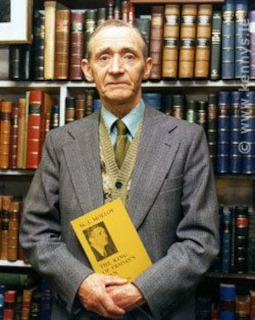
Molloy is the fifth in a family of five boys and three girls. Two other children die at birth. He is educated at Milltown national school and St. Jarlath’s College, Tuam, County Galway, from 1927 to 1931. His father dies when he is six years old and his uncle, Sonny Tucker, becomes an important influence, encouraging his life-long habit of extensive reading. In 1931 he goes to St. Columba’s Seminary at Dalgan Park, Shrule, County Mayo, but discontinues his studies for the priesthood when he contracts tuberculosis. He undergoes several operations, has to use crutches for three years, and is left with a permanent limp. While under the care of the sanatorium in Newcastle, County Wicklow, in the late 1930s, he is encouraged by a friend to attend a performance of two plays by George Bernard Shaw, Candida and Village Wooing, at the Abbey Theatre, Dublin. He becomes a regular playgoer and is inspired to begin a career as a dramatist.
Having lived in the family home at Milltown until 1955, he takes up residence at a nearby farmhouse on the marriage of his brother Christy. Despite his handicap, he works the small farm for the rest of his life to supplement the irregular income from his plays. He never marries and is attended by his housekeeper, Agnes Johnston. He is a familiar sight as he travels around his local area on the high bicycle he had fitted with one fixed pedal. The purpose of these journeys is to collect folklore, which provides a rich body of material for his plays and which he gathers into a prose volume, though this remains unpublished and privately held.
Molloy has nine of his thirteen plays produced at the Abbey Theatre, from Old Road in 1943 to Petticoat Loose in 1979. His plays reveal him as a folklorist in the line of John Millington Synge and draw on the same mixture of Christian and pagan beliefs, but with a more sympathetic understanding of his characters’ Catholicism. There is also the same strong vein of grotesque physical humour. His accomplished one-act play The Paddy Pedlar (1953) is based on a folk tale about a man carrying the body of his dead mother around in a sack and takes its bearings from an extraordinary amalgam of beliefs about the afterlife.
Molloy’s history plays re-create a world that shows the oppressions of colonialism on a subject race who respond with a wild anarchy mixed with subdued acceptance. His plays with a contemporary setting most often take emigration as their theme and are prophetic of later work by John B. Keane and Brian Friel. He writes in a heightened folk idiom, which only rarely loses touch with natural speech. Old Road wins an Abbey Prize and is staged in 1943 with Cyril Cusack as the young farm labourer trying to decide whether to emigrate to England or to stay in Ireland. Joseph Holloway gives a touching account of the shy author taking his curtain at this first production, who, though his lips move, is unable to say anything. The Visiting House follows in 1946, and dramatises a night of singing, dancing, and storytelling, peopled by a richly diverse cast of characters.
Molloy’s first masterpiece, The King of Friday’s Men, is launched in 1948. It takes the uncompromising theme of the droit du seigneur exercised by an eighteenth-century Anglo-Irish landlord on the most beautiful young women on his estate. His latest prey seeks to evade her fate by enticing the aged faction fighter, Bartley Dowd, to fight the landlord on her behalf. The play recreates that eighteenth-century world with colour, immediacy, and a strong sense of how the colonial system envelops all of the characters save the marginalised Bartley, who in the first production is played by the actor and author Walter Macken.
Molloy’s even greater The Wood of the Whispering follows in 1953 at the Queen’s Theatre, where the Abbey company is now playing. It is his most probing treatment of the effects of emigration, an issue of which Molloy, living in Galway, is only too aware. It is the most Beckettian of Irish plays, with its old tramp, Sanbatch Daly, and a host of older characters who are not so much eccentric as damaged in some profound way. At the play’s close Sanbatch feigns madness to gain entry to the asylum, though he is not in truth far from genuine madness. The various younger couples agree to stay and marry in Ireland rather than go their separate ways back to England. This idea of cultural renewal also underscores the importance Molloy places on the staging of his plays by amateur drama companies.
From the 1960s onwards Molloy’s plays are less readily accepted by the Abbey Theatre and a Dublin audience, but they still find a ready reception in his native place. In later works, such as Daughter from Over the Water (1963), the older characters retain their exuberance, but the younger ones seem beyond his reach. His last play, The Bachelor’s Daughter, is given its first performance by the Tuam Theatre Guild on March 3, 1985. The revival by Galway’s Druid Theatre of The Wood of the Whispering in 1983, which Molloy lives to see, is a revelation, and a reminder to the wider theatrical and academic world of the continuing importance of this playwright, not just as the ‘missing link’ between Synge and Keane but as an original in his own right.
In later years Molloy is a member of Aosdána. He dies of aortic aneurysms at Galway Hospital on May 27, 1994. He remains a committed Catholic all his life and his tombstone reads: “Woe to those who call evil good and who call good evil” (Isaiah, 5: 20).
(From: “Molloy, Michael Joseph” by Anthony Roche, Dictionary of Irish Biography, http://www.dib.ie, October 2009)
Bardwell is born to Irish parents William Hone and Mary Collise and moves to Ireland at the age of two. Her father’s family are of the Anglo-IrishHone family. She has a difficult childhood growing up in Leixlip, County Kildare. She is educated at Alexandra College and briefly studies in Switzerland. She works in a variety of jobs in Ireland and later Scotland, where, in 1948, she meets poet Michael Bardwell. The couple has two children and later separate.
Bardwell becomes a part of the literary scene of Soho in London, where she socialises with fellow writers, including Anthony Cronin, Francis Bacon, Patrick Kavanagh and Anthony Burgess. In the 1950s, she meets Fintan McLachlan, with whom she has three children, including the composer, John McLachlan. The family moves back to Dublin, where she works as a reviewer for Hibernia magazine and as a poetry editor.
From 1970 onward, Bardwell’s work is published regularly, starting with her first volume of poetry, The Mad Cyclist, which is later followed by her first novel, Girl on a Bicycle. She writes a number of plays and short stories, such as Outpatients, and her works are produced for RTÉ and the BBC. In 1984, she writes a musical play, No Regrets, based on the life of Édith Piaf. It opens at the Gaiety Theatre starring Anne Bushnell, and later tours across Ireland.
Bardwell’s work is heavily influenced by her difficult upbringing and her experiences in London and Dublin. In her memoir, A Restless Life, she describes her life as “a crescendo of madness.” She is considered an important poet by her contemporaries, who include Patrick Kavanagh, John Jordan, Paul Durcan, Macdara Woods and Michael Hartnett. On the publication of her fourth collection of poetry, The White Beach, Eilean Ni Chuilleanain states “it is good to see her work of the decades collected – it has inspired many Irish poets, male and female, and should be much more widely known,” adding that her work is “witty, full of sharp intimate honesty, full of truth and surprises.”
In 1975, Bardwell co-founds the long running literary magazine Cyphers with Eiléan Ní Chuilleanáin and Macdara Woods, and acts as a co-editor until 2012. She is the recipient of the Marten Toonder Award in 1993, and the Dede Korkut Short Story Award from Turkish PEN in 2010.
In later life, Bardwell moves to Annamakarraig in County Monaghan and later to Cloonagh in County Sligo, where in 1993 she co-founds the Scríobh Literary Festival. She is a member of the Irish artists’ association Aosdána and acts as one of Patrick Kavanagh’s literary executors.
Bardwell dies at the age of 94 in Sligo, County Sligo, on June 28, 2016.