seamus dubhghaill

Promoting Irish Culture and History from Little Rock, Arkansas, USA


Leave a comment

Birth of Thomas Russell, Founding Member of the Society of United Irishmen

Thomas Paliser Russell, founding member and leading organiser of the Society of United Irishmen, is born in Dromahane, County Cork, on November 21, 1767.

Born into an Anglican family with a military tradition. Russell is intended for an ecclesiastical career in the Church of Ireland, but in 1783 sails with his brother’s regiment to India and fights at the battle of Cannanore. He is, however, disgusted by what he regards as “the unjust and rapacious conduct pursued by the authorities in the case of two native women,” and returns disaffected to Ireland in 1786. After briefly studying for the church ministry, he spends the next four years as a half-pay officer in Dublin pursuing studies of science, philosophy and politics.

In 1790, Russell meets Theobald Wolfe Tone in the visitors’ gallery of the Irish House of Commons and a lifelong friendship begins. At the end of the year, he is commissioned to Belfast as an ensign in the 64th infantry regiment of foot. Being convivial, good looking, charismatic and charming, he fits quickly into Belfast society. He is deeply religious and holds strong millennialist beliefs. On the other hand, he is also of a restless nature, drinks heavily, and is highly promiscuous.

Russell becomes a founder member of the first Society of United Irishmen in Belfast in 1791, writes for the Northern Star, and acts as secretary for the Dublin United Irishmen. He is the most socially radical of all United Irish leaders, an outspoken opponent of slavery and industrial exploitation.

Russell posts bail for a friend in order to secure his release from a debtor’s prison. When the friend defaults, Russell has to sell his ensigncy in July 1791. After several months, and to avoid further debt, he accepts the offer of Thomas Knox, 1st Viscount Northland, the father of an old army friend, to become seneschal (a kind of stipendiary magistrate) to the Northlands’ manor court at Dungannon. However, he resigns within a year, apparently disgusted by the sectarian animosities there. His financial situation worsens until he becomes librarian at the Belfast Society for Promoting Knowledge (the later Linen Hall Library) in 1794.

Russell is arrested on September 16, 1796, is charged with treason, and detained without trial in Newgate Prison, Dublin, until March 1799. He is then sent to Fort George in the north of Scotland. The longest serving United Irish prisoner, he is released in June 1802 on condition of exile to Hamburg. However, he soon makes his way to Paris where he meets Robert Emmet who, with William Putnam McCabe are advancing the plans for insurrection pending the French renewal of the war against England. Having little confidence in the French, however, he returns to Ireland in March 1803 to organise the North in conjunction with the veteran of the Battle of Antrim, James Hope. However, he meets with little success as much of the North is subdued following the suppression of the Irish Rebellion of 1798.

In 1803 Russell joins a general insurrection that is to take place throughout Ireland with blows being struck simultaneously at Dublin, Belfast, and Downpatrick. Unknown to him, Robert Emmet is unable to secure help and promised firearms. In Dublin after a brief street battle on the evening of July 23, 1803, Emmett calls off the rising.

Russell manages to hide for a number of weeks in Dublin but is caught in the authorities’ dragnet on September 9. He is sent under heavy escort to Downpatrick Gaol. There, convicted of high treason, he is hung and beheaded on October 12, 1803. His remains are buried in the graveyard of the parish church, Down Cathedral, in a grave paid for by his friend Mary Ann McCracken.

Leave a comment

Death of Thomas Derrig, Fianna Fáil Politician

Thomas Derrig (Irish: Tomás Ó Deirg), Irish Fianna Fáil politician, dies in Dublin on November 19, 1956. He serves as Minister for Lands from 1939 to 1943 and 1951 to 1954, Minister for Education from 1932 to 1939 and 1940 to 1948 and Minister for Posts and Telegraphs in September 1939. He serves as a Teachta Dála (TD) from 1921 to 1923 and 1927 to 1957.

Derrig is born on November 26, 1897, in Westport, County Mayo. He is educated locally and later at University College Galway. During his time in college, he organises a corps of the Irish Volunteers. After the 1916 Easter Rising, he is arrested and imprisoned, and sent to the prisons of Woking, Wormwood Scrubs and Frongoch internment camp. He is arrested in 1918 and is accused of attempting to disarm a soldier. He is sentenced to five months imprisonment by a court in Belfast. When he is released, he supports Joseph MacBride at the 1918 Irish general election. He also graduates from college and becomes headmaster in a technical college in Mayo.

During the Irish War of Independence (1919-21) Derrig is the commander of the Westport Brigade of the Irish Republican Army (IRA), before being captured and interned at the Curragh Camp. While there he is elected a Sinn Féin TD for Mayo North and West.

Derrig takes the Republican/Anti-treaty side during the Irish Civil War (1922-23). During the war he is an auxiliary assistant to Liam Lynch. He is later captured by the Irish Free State army. While in custody of the Criminal Investigation Department (CID) he is severely injured, having an eye shot out by CID detectives.

At the June 1927 Irish general election Derrig is elected to Dáil Éireann as a Fianna Fáil TD for Carlow–Kilkenny. In Éamon de Valera‘s first government in 1932 Derrig is appointed Minister for Education. He initiates a review of industrial and reformatory schools and the rules under the Children Act 1908, resulting in the critical 1936 Cussen Report that follows which he shelves, and a report in 1946-48 by the Irish American priest Father Edward J. Flanagan, which is also shelved. His lack of action wis noted in 2009 when the Ryan Report examines the subsequent management of these “residential institutions.” He is the first Minister to seek a report that could result in much-needed reforms. It is suggested that he does not want to follow British law reforms in the 1920s and 1930s, because of his strong anti-British views, and that Irish children have suffered needlessly as a result. From 1939 to 1943, he serves as Minister for Lands. He is re-appointed to Education in 1943 until 1948. During this period a bitter teachers’ strike, involving the Irish National Teachers Organisation (INTO), takes place, lasting from March 20 to October 30. Between 1951 and 1954, he becomes Minister for Lands again.

Derrig marries Sinéad Mason, an Irish civil servant and Michael Collins‘s personal secretary, in 1928. They live with their two daughters, Úna and Íosold, at 58 Dartmouth Square and 33 Pembroke Road, Dublin.

Derrig dies in Dublin on November 19, 1956, seven days before his 59th birthday.

(Pictured: Photograph of Irish politician Thomas Derrig, circa 1932, taken from a Fianna Fáil election poster)


Leave a comment

Birth of Roy McFadden, Poet, Editor & Lawyer

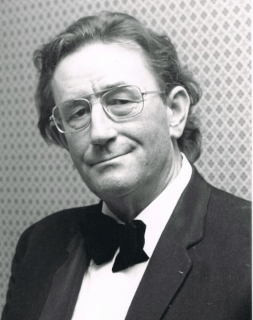
Roy McFadden, Northern Irish poet, editor, and lawyer, is born in Downpatrick, County Down, on November 14, 1921.

McFadden is born to Roland Victor MCFadden and his wife Maud Steele. A short time after his birth the family relocates to Belfast. He is educated at Knock Grammar School, Regent House School in Newtownards, and later graduates in Law from Queen’s University Belfast in 1944. He becomes a prominent lawyer and an influential figure in the Belfast literary scene.

McFadden’s first poem is published before he is thirteen. His earliest influences are from magazines and journals that his father brings home, and by Francis Turner Palgrave‘s Golden Treasury. He first comes to prominence as a promoter of Ulster literature in the 1940s when he edits two anthologies of poetry, Ulster Voices and Irish Voices in 1943. In 1948, he co-founds with Barbara Edwards (née Hunter) the Northern Irish poetry magazine Rann and then, co-edits it with her during its whole run, until 1953. Like its predecessor Lagan, it is unapologetically regionalist.

McFadden is the author of nine volumes of poetry, from Swords and Ploughshares (1943) to the posthumously published Last Poems (2002). Among his poems are “Saint Francis and the Birds” and “Independence”. His book, The Garryowen, is published by Chatto & Windus in the Phoenix Living Poets series. Most recently, his poem “Post-War” has been anthologised in Armistice: A Laureate’s Choice of Poems of War and Peace (Faber Poetry) (2018). There is a long gap between 1947 and 1971 when he publishes no collections of his work, however he continues to write and publishes in periodicals and newspapers such as The Irish Times where in that time he has sixty poems printed. His voice is well known on local BBC Radio through the Poetry Notebooks series, and he also has several verse-plays broadcast.

In 1952 McFadden marries Margaret Ferguson. Together they produce three sons and two daughters. He lives for a number of years in Lisburn, County Antrim. Inspired by Herbert Read and Alex Comfort, he describes himself as a pacifist and an anarchist in 1999. McFadden dies at his Belfast home on September 15, 1999.

The Roy McFadden Papers, comprising the poet’s personal manuscripts and papers, are lodged at Queen’s University Belfast. The Roy McFadden Library at Trinity College Dublin comprises books and journals on Irish and world literature from his collection. A comprehensive collection of his published work is held at the National Poetry Library, Southbank Centre, London.


Leave a comment

The Shankill Road Bombing

The Shankill Road bombing is carried out by the Provisional Irish Republican Army (IRA) on October 23, 1993 and is one of the most notorious incidents of the Troubles in Northern Ireland.

During the early 1990s, loyalist paramilitaries drastically increase their attacks on the Irish Catholic and Irish nationalist community and, for the first time since the beginning of the Troubles, are responsible for more deaths than the republicans. The Ulster Defence Association‘s (UDA) West Belfast brigade, and its commander, Johnny Adair, play a key role in this. Adair had become the group’s commander in 1990.

The UDA’s Shankill headquarters is above Frizzell’s fish shop on the Shankill Road. The UDA’s Inner Council and West Belfast brigade regularly meets there on Saturdays. Peter Taylor says it is also the office of the Loyalist Prisoners’ Association (LPA), and on Saturday mornings is normally crowded, as that is when money is given to prisoners’ families. According to Henry McDonald and Jim Cusack, the IRA have had the building under surveillance for some time. They say that the IRA decides to strike when one of their scouts spots Adair entering the building on the morning of Saturday, October 23, 1993. Later, in a secretly-recorded conversation with police, Adair confirms that he had been in the building that morning.

The IRA’s Belfast Brigade launches an operation to assassinate the UDA’s top commanders, whom it believes are at the meeting. The plan allegedly is for two IRA members to enter the shop with a time bomb, force out the customers at gunpoint and flee before it explodes, killing those at the meeting. As they believe the meeting is being held in the room above the shop, the bomb is designed to send the blast upwards. IRA members maintain that they would have warned the customers as the bomb was primed. It has an eleven-second fuse, and the IRA state that this would allowed just enough time to clear the downstairs shop but not enough for those upstairs to escape.

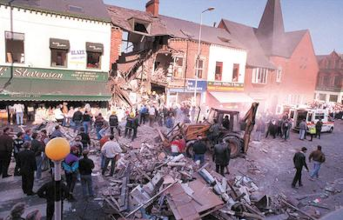
The operation is carried out by Thomas Begley and Seán Kelly, two IRA members in their early twenties from Ardoyne. They drive from Ardoyne to the Shankill in a hijacked blue Ford Escort, which they park on Berlin Street, around the corner from Frizzell’s. Dressed as deliverymen, they enter the shop with the five-pound bomb in a holdall. It is shortly after 1:00 PM on a Saturday afternoon and the area is crowded with mostly women and children. While Kelly waits at the door, Begley makes his way through the customers towards the counter, where the bomb detonates prematurely. Forensic evidence shows that Begley had been holding the bomb over the refrigerated serving counter when it exploded. Begley is killed along with nine other people, two of them children. They are the owner John Frizzell (63), his daughter Sharon McBride (29), Leanne Murray (13), UDA member Michael Morrison (27), his partner Evelyn Baird (27) and their daughter Michelle (7), George Williamson (63) and his wife Gillian (49), and Wilma McKee (38). The force of the blast causes the old building to collapse into a pile of rubble. The upper floor comes down upon those inside the shop, crushing many of the survivors under the rubble, where they remain until rescued some hours later by volunteers and emergency services. About 57 people are injured. At the scene during the rescue operation are several senior loyalists, including Adair and Billy McQuiston. The latter had been in a pub on the nearest corner when the bomb went off. Among those rescued from the rubble is the badly-wounded Seán Kelly.

Unknown to the IRA, if a UDA meeting had taken place, it had ended early and those attending it had left the building before the bomb exploded. McDonald and Cusack state that Adair and his men had stopped using the room for important meetings, allegedly because a sympathiser within the Royal Ulster Constabulary (RUC) told Adair that the police had it bugged.

There was great anger and outrage in the Shankill in the wake of the bombing. Billy McQuiston tells journalist Peter Taylor that “anybody on the Shankill Road that day, from a Boy Scout to a granny, if you’d given them a gun they would have gone out and retaliated.” Many Protestants see the bombing as an indiscriminate attack on them. Adair believes that the bomb was meant for him. Two days after the bombing, as Adair is driving away from his house, he stops and tells a police officer, “I’m away to plan a mass murder.”

In the week following the bombing, the UDA and UVF launch a wave of “revenge attacks,” killing 14 civilians. The UDA shoots a Catholic delivery driver in Belfast after luring him to a bogus call just a few hours after the bombing. He dies on October 25. On 26 October, the UDA shoots dead another two Catholic civilians and wounds five in an indiscriminate attack at a Council Depot on Kennedy Way, Belfast. On October 30, UDA members enter a pub in Greysteel frequented by Catholics and again open fire indiscriminately. Eight civilians, six Catholics and two Protestants, are killed and 13 are wounded. This becomes known as the Greysteel massacre. The UDA states it is a direct retaliation for the Shankill Road bombing.

Seán Kelly, the surviving IRA member, is badly wounded in the blast, having lost his left eye and is unable to move his left arm. Upon his release from hospital, however, he is arrested and convicted of nine counts of murder, each with a corresponding life sentence. In July 2000, he is released under the terms of the Good Friday Agreement. In an interview shortly after his release, he says he had never intended to kill innocent people and regrets what happened.


Leave a comment

Birth of Dawn Purvis, Former Member of the Northern Ireland Assembly

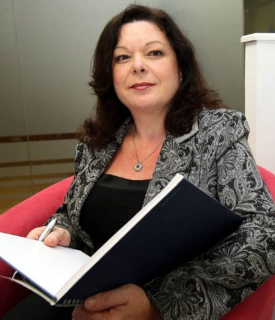
Dawn Purvis, former Independent Unionist member of the Northern Ireland Assembly, is born in the Donegall Pass area of Belfast on October 22, 1966. She is previously the leader of the Progressive Unionist Party (PUP) until she resigns in 2010. She loses her seat in the Assembly in the 2011 Northern Ireland Assembly election.

Purvis joins the Progressive Unionist Party in 1994. She stands for the party in the 1996 Northern Ireland Forum election in Belfast South and then in the 1998 Northern Ireland Assembly election in Belfast South, here taking only 271 votes. By 1999, she is the Progressive Unionist Party’s Spokesperson on Women’s Affairs. She takes a degree in Women’s Studies, Social Policy and Social Anthropology and begins working full-time for the party.

Purvis stands in Belfast South in the 2001 United Kingdom general election, finishing in sixth place with a total of 1,112 votes (2.9%). In 2006, she is appointed to the Northern Ireland Policing Board. Her appointment is later criticised by the Democratic Unionist Party (DUP), because of the Progressive Unionist Party’s links with the paramilitary Ulster Volunteer Force (UVF).

In January 2007, Purvis succeeds the late David Ervine as leader of the Progressive Unionist Party and Member of the Legislative Assembly (MLA) for Belfast East. Commenting on her new role she says, “I am deeply honoured to have been made the leader of the PUP. However, this is also tinged with sadness given the huge loss of David. It is a huge challenge to step into this role, especially after the good work he did. But this gives us an opportunity to rebuild and continue to serve working class loyalists and unionist communities.”

In her maiden speech in the Assembly, Purvis says “As long as there is poverty, and as long as there is inequality in education, health and gender, it will be my duty to articulate the needs of the working and workless classes in East Belfast.”

Purvis is re-elected in the constituency at the Northern Ireland Assembly election held on March 7, 2007, on the tenth and final round of counting.

In June 2010, Purvis resigns as leader, and as a member, of the Progressive Unionist Party because of its relationship with the UVF and the murder of Bobby Moffet which is attributed to that group by the Independent Monitoring Commission.

In the 2011 Northern Ireland Assembly election Purvis defends her seat as an independent candidate with Progressive Unionist Party leader Brian Ervine running against her. In the end neither candidate is elected and instead the Alliance Party of Northern Ireland gains a second Belfast East seat.

Purvis is now the director of the Marie Stopes clinic in Belfast. In November 2014 Bernadette Smyth, founder of the Precious Life organisation, is found guilty of the harassment of Purvis, but the verdict is later quashed.


Leave a comment

Death of Sir Denis Stanislaus Henry, 1st Baronet

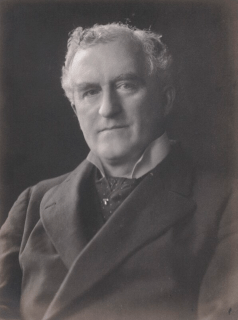
Sir Denis Stanislaus Henry, 1st Baronet, KBE, PC (Ire), QC, Irish lawyer and politician who becomes the first Lord Chief Justice of Northern Ireland, dies in Belfast on October 1, 1925.

Henry is born on March 7, 1864, in Cahore, Draperstown, County Londonderry, the son of a prosperous Roman Catholic businessman. He is educated at Marist College, Dundalk, Mount St. Mary’s College, Chesterfield, Derbyshire (a Jesuit foundation) and Queen’s College, Belfast, where he wins every law scholarship available to a student in addition to many other prizes and exhibitions. In 1885, he is called to the Bar of Ireland.

During the 1895 United Kingdom general election in Ireland campaign, Henry speaks in support of unionist candidates in two constituencies: Thomas Lea in South Londonderry, Henry’s native constituency, and E. T. Herdman in East Donegal.

Henry’s legal career flourishes. He becomes Queen’s Counsel in 1896, a Bencher of the King’s Inns in 1898 and ultimately Father of the North-West Circuit – but his interest in politics does not diminish. In March 1905, he is a delegate at the inaugural meeting of the Ulster Unionist Council and in the 1907 North Tyrone by-election he is the Unionist candidate, losing by a mere seven votes.

On May 23, 1916, Henry is elected as an MP in the South Londonderry by-election, the first by-election to be held in Ireland after the Easter Rising, which occurred a month earlier. The rebellion has had no discernible impact on the contest.

In November 1918, Henry becomes Solicitor-General for Ireland and in July 1919, Attorney-General for Ireland. He later serves as the first Lord Chief Justice of Northern Ireland from 1921 to 1925. In 1923, he becomes a Baronet, of Cahore in the County of Londonderry.

Henry marries Violet Holmes, daughter of Hugh Holmes, a judge of the Court of Appeal in Ireland, and Olivia Moule. They have five children, including James Holmes Henry, who succeeds as second baronet. It is a mixed marriage as Violet is and remains a staunch member of the Church of Ireland. Despite their religious differences, the marriage is said to be happy.

Henry dies in Belfast on October 1, 1925, aged 61, and is buried near his native Draperstown.

(Pictured: Sir Denis Stanislaus Henry, 1st Baronet, bromide print by Walter Stoneman, 1920, National Portrait Gallery, London)


Leave a comment

Birth of A. J. Potter, Composer & Teacher

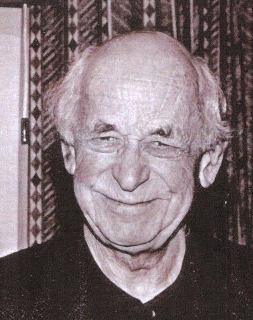
Archibald James (Archie) Potter, Irish composer and teacher who writes hundreds of works including operas, a mass, and four ballets, as well as orchestral and chamber music, is born in Belfast on September 22, 1918.

Potter is born to a Presbyterian family who, oddly, lives on the Falls Road, a republican (Catholic) stronghold. His father is a church organist and piano tuner who has been blind since childhood. His mother is, in Potter’s own words, “a raging alcoholic.” He escapes a rather grim childhood when he goes to live with an aunt in Kent, England.

Possessed of a good voice and natural musical ability, Potter is accepted as a treble by the world-famous choir of All Saints, Margaret Street. In 1933, after four years as a chorister, he is sent to Clifton College, Bristol. From there he goes to the Royal College of Music on a scholarship and studies composition under Vaughan Williams. While at the Royal College he wins the Cobbett prize for chamber music.

World War II interrupts Potter’s music education, and he leaves college to serve with the London Irish Rifles in Europe and the Far East. After the war he settles in Dublin, where he continues his studies at Trinity College, Dublin, gaining a Doctorate in Music in 1953.

Potter had already started composing chamber and vocal music before the war. Now, established in Dublin, he chooses the orchestra as his principal means of expression. His early pieces, such as Rhapsody under a High Sky and Overture to a Kitchen Comedy, show that he has absorbed Vaughan Williams’ pastoral style and his love of folk music. In 1952, both pieces are awarded Radio Éireann‘s “Carolan Prize” for orchestral composition by the adjudicator Arnold Bax. A year later Potter repeats this success when his Concerto da Chiesa, a concerto for piano and orchestra, also wins the Carolan Prize.

In 1955 Potter is appointed Professor of Composition at the Royal Irish Academy of Music, where he becomes an effective administrator and inspiring teacher.

In the 1960s, Potter turns to ballet, writing four orchestral scores for the Cork Ballet company. The first of these, Careless Love, becomes the composer’s own favourite of all his compositions. Several years later, following a successful battle with alcoholism, he writes what some regard as his magnum opus, Sinfonia “de Profundis” (1969). The première is given at the Gaiety Theatre, Dublin on March 23, 1969 in a performance by the RTÉ Symphony Orchestra under the baton of Albert Rosen. The Irish Times refers to the concert as a “major national event.” In December 1969, he receives a Jacob’s Award for the composition.

Potter’s last substantial work, an opera entitled The Wedding, receives its first public performance in Dublin in 1981, almost a year after his death.

Potter dies suddenly at his home in Greystones, County Wicklow on July 5, 1980, at the age of 61. He is buried in the nearby Redford cemetery.


Leave a comment

Founding of Cliftonville Football Club

Cliftonville Football & Athletic Club, the oldest association football club in Ireland, is founded on September 20, 1879, by John McCredy McAlery in the suburb of Cliftonville in north Belfast.

Since 1890, the club has played home matches at Solitude. Cliftonville contests the North Belfast derby with nearest rivals Crusaders F.C., and also has historical rivalries with Glentoran F.C. and Linfield F.C. The club has won the NIFL Premiership five times outright including one shared title, the Irish Cup eight times and the Irish League Cup five times.

The foundation of Cliftonville F.C. is announced on September 20, 1879 in notices in the Belfast News Letter and Northern Whig, which asks “gentlemen desirous of becoming members” of the “Cliftonville Association Football Club (Scottish Association Rules)” to communicate with John McAlery, a young Belfast businessman and manager of the “Irish Tweed House”, Royal Avenue, and later with premises in Rosemary Street, or R.M. Kennedy, and advertising an “opening practice today at 3:30.”

Only one week after the advertisement is published, Cliftonville plays its first recorded game at Cliftonville Cricket Ground on September 29, 1879, against a selection of rugby players known as Quidnunces. The newly formed club, however, is beaten 2–1. In its first match against the Scottish club Caledonian, it fares worse, suffering a 1–9 defeat.

In 1880, it is again John McAlery who is the moving spirit in the formation of the Irish Football Association. He issues an invitation to interested parties in Belfast and district for a meeting to be called. The first meeting takes place on November 18, 1880, at Queen’s Hotel, Belfast, presided over by John Sinclair, from which the Irish Football Association is formed. While Lord Spencer Chichester is appointed president, McAlery becomes the honorary secretary of the association. This meeting also paves the way for the Irish Cup.

The first Irish Cup final, played at Cliftonville on April 9, 1881, sees a 1–0 defeat against Moyola Park F.C., an opponent that is well known for “rough and brutal play.” In the following year Cliftonville loses again in the Irish Cup final, 1–0 against Queen’s Island F.C. In 1883 Cliftonville wins the cup for the first time with a 5–0 win over Ulster F.C.

The club celebrates its 142nd anniversary in September 2021.


Leave a comment

Sinn Féin Joins Northern Ireland Peace Process

Sinn Féin, the political wing of the Irish Republican Army (IRA), joins the Northern Ireland peace process on September 9, 1997 that aims to determine the future of Northern Ireland, after renouncing violence as a political tool.

The move paves the way for Sinn Féin’s first face-to-face talks with British Cabinet ministers since 1921, when the country was partitioned. Sinn Féin leader Gerry Adams, chief negotiator Martin McGuinness and party secretary Lucilita Bhreatnach agree behind closed doors at Stormont Castle in east Belfast to abide by the guiding principles underlying the Northern Ireland all-party talks.

These principles were set up in January 1996 by former United States Senator George J. Mitchell, former Canadian Chief of the Defence Staff Gen. John de Chastelain and former Prime Minister of Finland Harri Holkeri. They are generally referred to as the “Mitchell Principles,” and require negotiators to affirm their commitment to the tenets listed below:

  • Democratic and peaceful means of resolving political issues. Total disarmament of all paramilitary organizations. The disarmament must be verifiable to the satisfaction of an independent commission.
  • Renounce for themselves and oppose any effort by others to use force or threaten to use force to influence the course or outcome of all-party negotiations.
  • Abide by the terms of any agreement reached in all-party negotiations and to resort to democratic and exclusively peaceful methods in trying to alter any aspect of that outcome with which they may disagree.
  • Urge that “punishment” killings and beatings stop, and take effective steps to prevent such actions.

Sinn Féin pledges to honor the Mitchell Principles exactly 51 days after the IRA stopped its decades-old violent campaign against British rule of Northern Ireland. “This is a watershed. There is an expectation and understanding out there of the importance of this moment,” Adams says.

Paul Murphy, minister for political development in the province, says the Sinn Féin pledge marks a new phase in the peace process. “The significance I am sure is that we are now entering a new era … in the sense that the gun is going out of politics in Northern Ireland and that here Sinn Féin is ascribing to those principles of nonviolence, of democratic government.”

“I believe people outside these buildings, outside Stormont, are of the view that enough is enough, and that change must come,” Murphy adds. “But that change must be change which encompasses everybody’s aspirations and which will last for generations.”

The pledge to honor the Mitchell Principles means that the ten parties involved can proceed with round-table talks on the future of Northern Ireland on Monday, September 15, as planned.

However, two mainstream Protestant parties that favor continued British rule of Northern Ireland, the Democratic Unionist Party (DUP) and the UK Unionist Party (UKUP), plan to boycott the talks. In addition, the powerful Ulster Unionist Party (UUP), is expected to decide on Saturday, September 13, whether to attend the crucial new round of negotiations.

In a statement, the Ulster Unionists call Sinn Féin’s commitment “a charade.” “The subscription of Sinn Féin to the Mitchell Principles will completely lack credibility. Actions matter much more than words,” the statement says.

The London and Dublin governments agree that sovereignty in Northern Ireland can only be changed through the ballot box. While Protestants generally are determined to remain British, most Catholics favor making Northern Ireland part of Ireland.

(From: “Sinn Fein gains access to Northern Ireland talks” on CNN.com, http://www.cnn.com, September 9, 1997)


Leave a comment

Death of Oliver Bond, Member of the Society of United Irishmen

Oliver Bond, Irish merchant and a member of the Leinster directorate of the Society of United Irishmen, dies in prison in Dublin on September 6, 1798 following the Irish Rebellion of 1798.

Born in St. Johnston, County Donegal around 1760, Bond is the son of a dissenting minister and is connected with several respectable families. In his early years, he works as an apprentice haberdasher in Derry before relocating to Dublin.

In the capital, Bond is in business as a merchant in the woollen trade, and becomes wealthy. Initially, he is based in Pill Lane (now Chancery Street), before moving to 9 Lower Bridge Street in 1786. In 1791, he marries Eleanor ‘Lucy’ Jackson, daughter of the iron founder Henry Jackson, who like Bond is to become a leading United Irishman.

Bond is an early member in the movement planning for a union in Ireland across religious lines to press for reform of the Parliament of Ireland and for an accountable government independent of the Privy Council of the United Kingdom and cabinet. When, following the Belfast example, the Society of United Irishmen forms in Dublin in November 1791, Bond becomes a member.

Bond is secretary of the meeting, with the barrister Simon Butler presiding, when in February 1793 the society passes resolutions which, in addition to the call for Catholic emancipation and parliamentary reform, condemn as unconstitutional the repressive measures of the government, and deplore war against the new French Republic. A result is a summons to appear before the bar of the Irish House of Lords in Dublin where, in consequence of the their defiant performance, Bond and Butler are charged and convicted of libel, fined and confined for six months in Newgate Prison.

Despairing of their efforts to secure full emancipation and advance parliamentary reform, and in anticipation of French assistance, the United Irishmen resolve on an insurrection to depose the Crown‘s Dublin Castle executive and the Protestant Ascendancy Lords and Commons, and to establish Ireland as an independent republic. Bond becomes a member of the United Irishmen’s northern executive committee and of the Leinster directorate, the meetings of which are generally held at his house on Lower Bridge Street.

There, on February 19, 1798, the famous resolution is passed: “We will pay no attention to any measure which the Parliament of this kingdom may adopt, to divert the public mind from the grand object we have in view; as nothing short of the entire and complete regeneration of our country can satisfy us.”

Through the treachery of Thomas Reynolds, Bond’s house is surrounded by military on the morning of March 12, 1798, and fourteen members of the Leinster Directory are seized. The insurrection goes forward in their absence to defeat in the early summer. Following suppression of the rebellion, Bond goes to trial. The efforts of his defence counsel, John Philpot Curran, to discredit Reynold’s testimony are unavailing. On July 27, 1798, Bond is convicted of treason and sentenced to hang.

It is mainly to prevent Bond’s execution that Thomas Addis Emmet and other state prisoners enter a compact with government whereby (without incriminating further individuals) they agree to testify on the activities of Union Irishmen before a parliamentary committee, and to accept permanent exile. With the endorsement of Charles Cornwallis, 1st Marquess Cornwallis, the Commander-in-Chief, Ireland, Bond’s sentence is commuted. He survives, however, but five weeks, dying in prison of apoplexy at the age of 36 on September 6, 1798.

Bond is buried in the cemetery of St. Michan’s Church, Dublin. The “enlightened republican” principles of Bond are eulogised by his political associate and fellow-prisoner, William James MacNeven. Bond’s widow Lucy moves with her family from Ireland to the United States, and dies in Baltimore, Maryland in 1843.

The Oliver Bond flats in The Liberties area of Dublin are named after him.