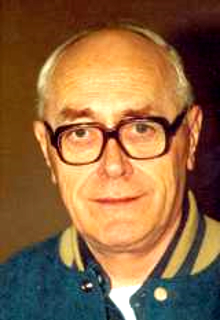
Harty’s father teaches him the viola, the piano and counterpoint, and, at the age of twelve, he follows his father’s profession and is appointed organist of Magheracoll Church, County Antrim.
Harty takes further posts in his teenage years as a church organist in Belfast and Bray. While in the latter, he comes under the influence of Michele Esposito, professor of piano at the Royal Irish Academy of Music, who encourages him to pursue a career as a piano accompanist. As Bray is only twelve miles from Dublin, Harty is able go into the city to hear an orchestra for the first time in his life.
After his early career as a church organist in his native Ireland, Harty moves to London at about age 20, soon becoming a well-known piano accompanist. The Musical Times calls him “the prince of accompanists.” As a composer he writes throughout his career, many of his works being well received, though few are regularly performed in the 21st century.
In his career as a conductor, which begins in 1904, Harty is particularly noted as an interpreter of the music of Hector Berlioz. From 1920 to 1933 he is the chief conductor of The Hallé symphony orchestra in Manchester, which he returns to the high standards and critical acclaim that it had enjoyed under its founder, Charles Hallé. His last permanent post is with the London Symphony Orchestra, but it lasts only two years, from 1932 to 1934, as Harty does not prove to be a box-office draw. According to a historian of the orchestra, Richard Morrison, Harty is “brutally and hurtfully” dropped in 1934.
During his conducting career, Harty makes some recordings with his orchestras. Shortly after his dismissal by the London Symphony Orchestra, Harty begins to suffer the symptoms of a brain tumor. After surgery which includes the removal of his right eye, he resumes his career until 1940, but the tumour returns to cause his death at the age of 61 in Hove on February 19, 1941. He is cremated, and his ashes are interred in the grounds of Hillsborough parish church, near the front door. There is a separate memorial in the church.
Lewis is born in Belfast on November 29, 1898. When he is seven, his family moves into “Little Lea,” the family home of his childhood, in the Strandtown area of East Belfast. He was schooled by private tutors until age 9, when his mother dies from cancer. His father then sends him to live and study at Wynyard School in Watford, Hertfordshire. The school closes soon afterwards due to a lack of pupils. He then attends Campbell College in the east of Belfast about a mile from his home, but leaves after a few months due to respiratory problems. He is then sent to the health-resort town of Malvern, Worcestershire, where he attends the preparatory school Cherbourg House. It is during this time that Lewis abandons his childhood Christian faith and becomes an atheist. In September 1913, he enrolls at Malvern College, where he remains until the following June. After leaving Malvern, he studies privately with William T. Kirkpatrick, his father’s old tutor and former headmaster of Lurgan College.
Lewis and fellow novelist J.R.R. Tolkien are close friends. They both serve on the English faculty at Oxford University, and are active in the informal Oxford literary group known as the Inklings. According to Lewis’s memoir Surprised by Joy, he is baptised in the Church of Ireland, but fell away from his faith during adolescence. He returns to Anglicanism at the age of 32, owing to the influence of Tolkien and other friends, and he becomes an “ordinary layman of the Church of England.” His faith profoundly affects his work, and his wartime radio broadcasts on the subject of Christianity bring him wide acclaim.
Lewis writes more than 30 books, which have been translated into more than 30 languages and have sold millions of copies. The books that make up The Chronicles of Narnia have sold the most and have been popularised on stage, TV, radio, and cinema. His philosophical writings are widely cited by Christian apologetics from many denominations.
In early June 1961, Lewis begins suffering from nephritis, which results in blood poisoning. His illness causes him to miss the autumn term at Cambridge, though his health gradually begins improving in 1962 and he returns that April. His health continues to improve and he is fully himself by early 1963. On July 15 of that year he falls ill and is admitted to hospital. At 5:00 PM the following day he suffers a heart attack and lapses into a coma, unexpectedly awaking the following afternoon. After he is discharged from the hospital he is too ill to return to work. As a result, he resigns from his post at Cambridge in August. His condition continues to decline, and in mid-November he is diagnosed with end-stage renal failure. On November 22, exactly one week before his 65th birthday, he collapses in his bedroom at 5:30 PM and dies a few minutes later. He is buried in the churchyard of Holy Trinity Church, Headington, Oxford.
Media coverage of Lewis’s death is almost completely overshadowed by news of the assassination of U.S. President John F. Kennedy, which occurs on the same day approximately 55 minutes following Lewis’s collapse, as does the death of English writer Aldous Huxley, author of Brave New World.
In 2013, on the 50th anniversary of his death, Lewis is honoured with a memorial in Poets’ Corner in Westminster Abbey. His works enter the public domain in 2014 in countries where copyright expires 50 years after the death of the creator, such as Canada.
Since 1995, Mitchell has been active in the Northern Ireland peace process, having served as the United States Special Envoy for Northern Ireland under President Bill Clinton. He first leads a commission that establishes the principles on non-violence to which all parties in Northern Ireland have to adhere and subsequently chairs the all-party peace negotiations, which lead to the Belfast Peace Agreement signed on Good Friday 1998, known since as the “Good Friday Agreement.” Mitchell’s personal intervention with the parties is crucial to the success of the talks. He is succeeded as special envoy by Richard Haass.
For his involvement in the Northern Ireland peace negotiations, Mitchell is awarded the Presidential Medal of Freedom on March 17, 1999, and the Philadelphia Liberty Medal on July 4, 1998. In accepting the Liberty Medal, he states, “I believe there’s no such thing as a conflict that can’t be ended. They’re created and sustained by human beings. They can be ended by human beings. No matter how ancient the conflict, no matter how hateful, no matter how hurtful, peace can prevail.”
Crawford works as an engineer for White Star Line in the 1880s, before returning from Australia in 1892. In 1894 he enlists with the Mid Ulster Artillery regiment of the British Army, before being transferred to the Donegal Artillery, with which he serves during the Boer Wars, earning himself the rank of major.
In 1898, Crawford is appointed governor of Campbell College in Belfast. In 1911 he becomes a member of the Ulster Unionist Council. On September 28, 1912, he is in charge of the 2,500 well-dressed stewards and marshals that escort Edward Carson and the Ulster unionist leadership from the Ulster Hall in Belfast to the City Hall for the signing of the Ulster Covenant, which he is alleged to sign in his own blood. With the formation of the Ulster Volunteers in 1913, he is made their Director of Ordnance.
Crawford in regard to Irish Home Rule is strongly partisan and backs armed resistance in opposing it, being contemptuous of those who use political bluffing. In 1910 the Ulster Unionist Council plans for the creation of an army to oppose Home Rule, and approaches Crawford to act as their agent in securing weapons and ammunition. He tries several times to smuggle arms into Ulster, however vigilant customs officials seize many of them at the docks. Despite this, the meticulously planned and audacious Larne gun-running of April 1914, devised and carried out by Crawford, is successful in bringing in enough arms to equip the Ulster Volunteers.
By the 1920s Crawford remains as stoic in his belief’s remarking in a letter in 1920 that “I am ashamed to call myself an Irishman. Thank God I am not one. I am an Ulsterman, a very different breed.” In 1921 he attempts to create an organisation called the Ulster Brotherhood, the aims of which are to uphold the Protestant religion, political and religious freedom as well as use by all means to “destroy and wipe out the Sinn Féin conspiracy of murder, assassination and outrage.” However, this organisation only lasts completely unofficially for a few months after failing to gain acceptance with the political authorities. Also, in 1921 he is included in the Royal Honours List and granted a CBE. In 1934 he writes his memoirs, entitled Guns for Ulster.
Frederick Hugh Crawford dies November 5, 1952, and is buried in the City Cemetery, Falls Road, Belfast. Upon news of his death, he is described by the then Prime Minister of Northern Ireland, Sir Basil Brooke, as being “as a fearless fighter in the historic fight to keep Ulster British.”
(Pictured: Colonel Crawford is shown second from the left in this loyalist mural in East Belfast’s Ballymacarrett Road)
In a final week of farewell flights around the United Kingdom, a British Airways Concorde visits Birmingham on October 20, Belfast on October 21, Manchester on October 22, Cardiff on October 23, and Edinburgh on October 24. Each day the aircraft makes a return flight out and back into Heathrow Airport to the cities concerned, often overflying those cities at low altitude. Over 650 competition winners and 350 special guests are carried.
On the evening of October 23, 2003, Queen Elizabeth II consents to the illumination of Windsor Castle as Concorde’s final west-bound commercial flight departs London and flies overhead. This is an honour normally reserved for major state events and visiting dignitaries.
British Airways retires its aircraft the next day, October 24. G-BOAG leaves New York City to a fanfare similar to her Air France predecessor’s, while two more made roundtrips, G-BOAF over the Bay of Biscay, carrying VIP guests including many former Concorde pilots, and G-BOAE to Edinburgh. The three aircraft then circle over London, having received special permission to fly at low altitude, before landing in sequence at Heathrow.
The two round-trip Concordes land at 4:01 and 4:03 PM BST, followed at 4:05 by the one from New York. All three aircraft then spend 45 minutes taxiing around the airport before finally disembarking the last supersonic fare-paying passengers. The pilot of the New York to London flight is Mike Bannister.
All of British Airway’s Concordes have been grounded, have lost their airworthiness certificates and have been drained of hydraulic fluid. Ex-chief Concorde pilot and manager of the fleet, Jock Lowe, estimates it would cost £10-15 million to make G-BOAF airworthy again. British Airways maintains ownership of the Concordes and has stated that their Concordes will not be flown again.
In the late 1960s, a civil rights campaign develops in Northern Ireland. Adams is an active supporter and joins the Northern Ireland Civil Rights Association in 1967. However, the civil rights movement is met with violence from loyalist counterdemonstrations and the Royal Ulster Constabulary. In August 1969, Northern Ireland cities like Belfast and Derry erupt in major rioting.
Adams has been the president of Sinn Féin since 1983. Since that time the party has become the third-largest party in the Republic of Ireland, the second-largest political party in Northern Ireland and the largest Irish nationalist party in that region. In 1984, Adams is seriously wounded in an assassination attempt by several gunmen from the Ulster Defence Association (UDA), including John Gregg. From the late 1980s onwards, Adams is an important figure in the Northern Ireland peace process, initially following contact by the then-Social Democratic and Labour Party (SDLP) leader John Hume and then subsequently with the Irish and British governments.
In 1986, Sinn Féin, under Adams, changes its traditional policy of abstentionism towards the Oireachtas, the parliament of the Republic of Ireland, and later takes seats in the power-sharing Northern Ireland Assembly. In 2005, the Provisional Irish Republican Army (IRA) states that its armed campaign is over and that it is exclusively committed to democratic politics.
In September 2017, Adams says Sinn Féin will begin a “planned process of generational change” after its November ardfheis and will allow his name to go forward for a one-year term as Uachtaran Shinn Fein (President Sinn Fein).
The Irish Republican Army (IRA) hunger strike is called off at Long Kesh prison – later known as HM Prison Maze – on October 3, 1981. While the IRA does not win immediate concessions, in some ways it is a Pyrrhic victory for Margaret Thatcher’s government. It galvanises support and membership for the IRA and generates huge sympathy for the strikers in the United States where fund-raising is a major priority. The death of the first hunger striker, Bobby Sands, creates a martyr and an iconic figure.
In January 1981, prison authorities begin to supply the prisoners with officially issued civilian clothing, whereas the prisoners demand the right to wear their own clothing. On February 4, the prisoners issue a statement saying that the British government has failed to resolve the crisis and declares their intention of a hunger strike. The hunger strike begins on March 1, when Bobby Sands, the IRA’s former officer commanding (OC) in the prison, refuses food. Unlike the first hunger strike the previous year, the prisoners join one at a time and at staggered intervals, which they believe would arouse maximum public support and exert maximum pressure on Prime Minister Margaret Thatcher.
The republican movement initially struggles to generate public support for the second hunger strike. The Sunday before Sands begins his strike, 3,500 people march through west Belfast. During the first hunger strike four months earlier, the marchers had numbered 10,000. Five days into the strike, Independent Republican MP for Fermanagh and South TyroneFrank Maguire dies, resulting in a by-election. There is debate among nationalists and republicans regarding who should contest the election. After negotiations they agree not to split the nationalist vote by contesting the election and Sands stands as an Anti H-Block candidate against Ulster Unionist Party candidate Harry West. Following a high-profile campaign, the election takes place on April 9, and Sands is elected to the British House of Commons with 30,492 votes to West’s 29,046.
Sands’ election victory raises hopes that a settlement can be negotiated, but Thatcher stands firm in refusing to give concessions to the hunger strikers. The world’s media descends on Belfast, and several intermediaries visit Sands in an attempt to negotiate an end to the hunger strike, including Síle de Valera, granddaughter of Éamon de Valera, Pope John Paul II‘s personal envoy John Magee, and European Commission of Human Rights officials. With Sands close to death, the government’s position remains unchanged.
On 5 May, Sands dies in the prison hospital on the 66th day of his hunger strike, prompting rioting in nationalist areas of Northern Ireland. More than 100,000 people line the route of his funeral, which is conducted with full IRA military honours. Margaret Thatcher shows no sympathy for his death.
In the two weeks following Sands’ death, hunger strikers Francis Hughes, Raymond McCreesh and Patsy O’Hara die. Following the deaths of Joe McDonnell and Martin Hurson, the families of some of the hunger strikers attend a meeting on July 28 with Catholic priest Father Denis Faul. The families express concern at the lack of a settlement to the priest, and a decision is made to meet with Gerry Adams later that day. The following day Adams holds a meeting with six of the hunger strikers to outline a proposed settlement on offer from the British government should the strike be brought to an end. The six men reject the settlement, believing that accepting anything less than the “Five Demands” would be a betrayal of the sacrifice made by Bobby Sands and the other hunger strikers who had died.
The hunger strike begins to break on July 31, when the mother of Paddy Quinn insists on medical intervention to save his life. The following day Kevin Lynch dies, followed by Kieran Doherty on August 2, Thomas McElwee on August 8 and Michael Devine on August 20. On September 6, the family of Laurence McKeown becomes the fourth family to intervene and asks for medical treatment to save his life, and Cahal Daly issues a statement calling on republican prisoners to end the hunger strike.
The strike is called off at 3:15 PM on October 3, 1981. Three days later, James Prior, the new Secretary of State for Northern Ireland, announces partial concessions to the prisoners including the right to wear their own clothes at all times. The only one of the “Five Demands” still outstanding is the right not to do prison work. Following sabotage by the prisoners and the Maze Prison escape in 1983, the prison workshops are closed, effectively granting all of the “Five Demands” but without any formal recognition of political status from the government.
(Pictured: A Belfast mural of the Long Kesh hunger strikers)
Thomas James Carr, British artist who is associated with the Euston Road School in the 1930s and has a long career as a painter of domestic scenes and landscapes, is born in Belfast to a well-to-do family on September 21, 1909.
Although essentially a realist painter, Carr is included in the 1934 Objective Abstractionists exhibition at Zwemmer’s Gallery. In 1937, he shares an exhibition with Victor Pasmore and Claude Rogers at the Storran Gallery and subsequently becomes associated with the representational style of the Euston Road School. Starting in 1940, at Georges Wildenstein‘s gallery, he holds a series of one-man exhibitions at various galleries including at the Leicester Galleries, The Redfern Gallery and also at Thomas Agnew & Sons.
After the war, Carr teaches at the Belfast College of Art and moves to Belfast in 1955. After the death of his wife in 1995, he moves to Norfolk, England to be nearer one of his three daughters and her family. He continues to paint into old age and tends to concentrate on landscape painting.
Known as “Van the Man,” Morrison starts his professional career when, as a teenager in the late 1950s, he plays a variety of instruments including guitar, harmonica, keyboards and saxophone for various Irish showbands, covering the popular hits of the time. He rises to prominence in the mid-1960s as the lead vocalist of the Northern Irish R&B band Them, with whom he records the garage band classic “Gloria.” His solo career begins under the pop-hit oriented guidance of Bert Berns with the release of the hit single “Brown Eyed Girl” in 1967. After Berns’ death, Warner Bros. Records buys out his contract and allows him three sessions to record Astral Weeks (1968). Though this album gradually garners high praise, it is initially a poor seller.
Moondance (1970) establishes Morrison as a major artist, and he builds on his reputation throughout the 1970s with a series of acclaimed albums and live performances. He continues to record and tour, producing albums and live performances that sell well and are generally warmly received, sometimes collaborating with other artists, such as Georgie Fame and The Chieftains.
Van Morrison has received six Grammy Awards, the 1994 Brit Award for Outstanding Contribution to Music, and has been inducted into both the Rock and Roll Hall of Fame and the Songwriters Hall of Fame. In 2016, he is knighted for his musical achievements and his services to tourism and charitable causes in Northern Ireland.
(Pictured: Van Morrison performing at Glasgow Royal Concert Hall on January 26, 2015 | Image: Getty)
Heaney is born near Castledawson, County Londonderry, in Northern Ireland. The family moves to nearby Bellaghy when he is a boy. After attending Queen’s University Belfast, Heaney becomes a lecturer at St. Joseph’s College in Belfast in the early 1960s and begins to publish poetry. He lives in Sandymount, Dublin from 1976 until his death. He also lives part-time in the United States from 1981 to 2006. Heaney is recognised as one of the principal contributors to poetry during his lifetime.
American poet Robert Lowell describes Heaney as “the most important Irish poet since Yeats,” and many others, including the academic John Sutherland, have said that he is “the greatest poet of our age.” Robert Pinsky has stated that “with his wonderful gift of eye and ear Heaney has the gift of the storyteller.” Upon his death in 2013, The Independent describes him as “probably the best-known poet in the world.” One of his best-known works is Death of a Naturalist, published in 1966.
Seamus Heaney dies in the Blackrock Clinic in Dublin on August 30, 2013, aged 74, following a short illness. After a fall outside a restaurant in Dublin, he enters the hospital for a medical procedure, but dies at 7:30 the following morning before it takes place. His funeral is held in Donnybrook, Dublin, on the morning of September 2, 2013, and he is buried in the evening in the Cemetery of St. Mary’s Church, Bellaghy, County Londonderry, Northern Ireland, in the same graveyard as his parents, young brother, and other family members. His son Michael reveals at the funeral mass that his father texted his final words, “Noli timere” (Latin: “Do not be afraid”), to his wife, Marie, minutes before he died. Shortly after Heaney’s death, graffiti artist Maser paints a mural in Dublin referencing this message.
On September 1, the day after his death, a crowd of 81,553 spectators applaud Heaney for three minutes at a semi-final match of the 2013 All-Ireland Senior Football Championship. His funeral is broadcast live the following day on RTÉ television and radio and is streamed internationally at RTÉ’s website. RTÉ Radio 1 Extra transmits a continuous broadcast, from 8:00 AM until 9:15 PM on the day of the funeral, of his Collected Poems album, recorded in 2009. His poetry collections sell out rapidly in Irish bookshops immediately following his death.